Sifting Through 500+ Resumes This Week? How to Instantly Summarize CVs and Generate Interview Rubrics
Uyen Hoang
July 6, 2026
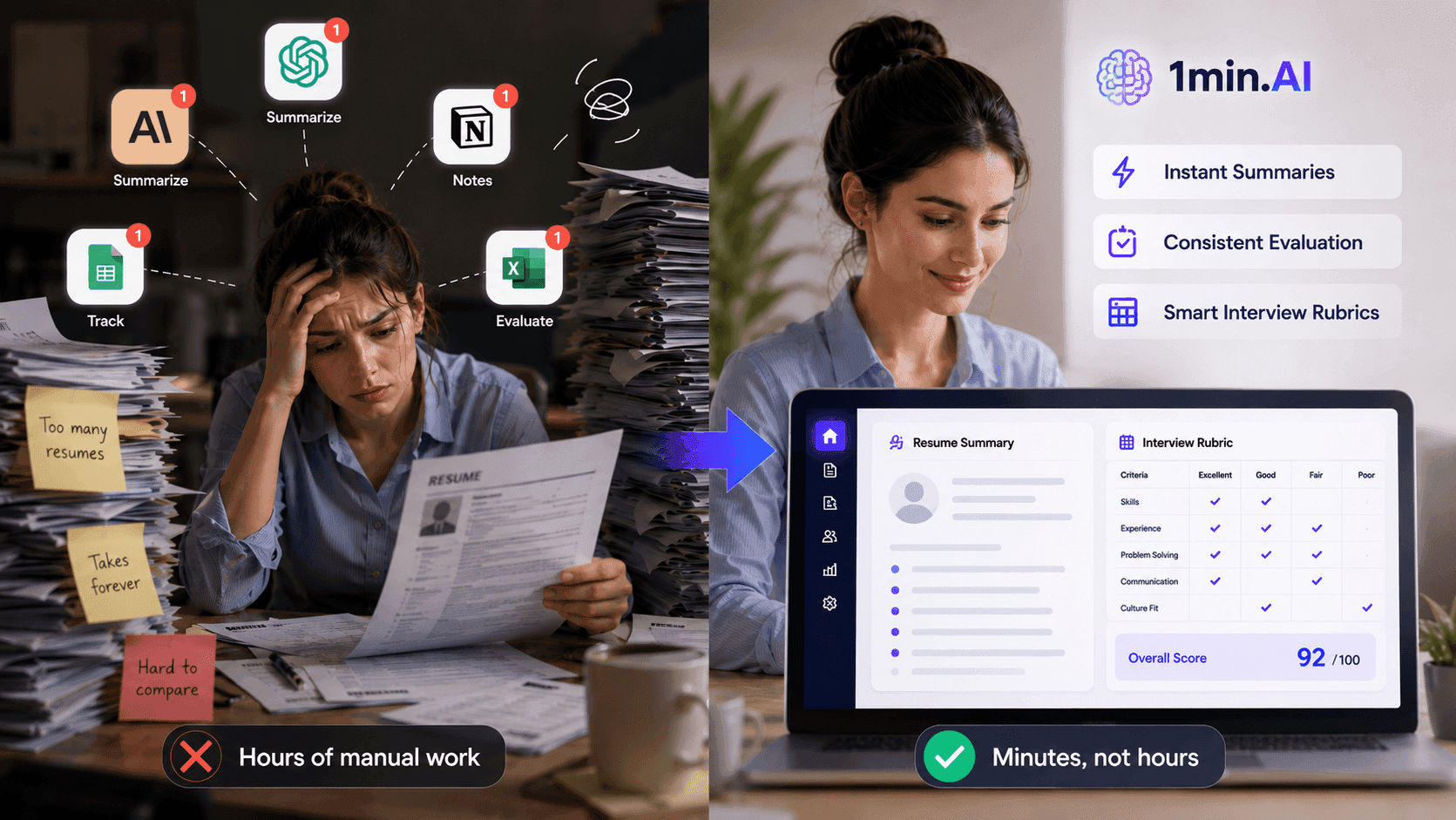
Drowning in a sea of applicant resumes? Discover how a unified multi-model workspace simplifies candidate screening and builds structured interview scorecards.
Every recruiter knows the dread of opening their ATS on a Monday morning to find 500 unread applications for a single open role. You already know 90% of them are completely irrelevant, but finding the 10% of golden candidates means sacrificing your entire week to manual page-scanning. While most teams try to survive by stacking single-feature screening bots, the top 1% of talent acquisition teams are handling the heavy lifting inside a unified workspace. Here is exactly how to break the resume sorting logjam without burning out your recruiters or blowing your software budget using a model-flexible approach to recruitment admin automation.
Why the Resume Backlog Quietly Sabotages Your Hiring Velocity
Across high-growth HR and recruiting teams in 2026, the traditional pipeline mechanics have completely broken down. Modern job distribution networks make it incredibly easy for candidates to mass-apply with one click. Yet, this convenience creates an administrative landslide on the receiving end. The bottleneck never disappeared; it just moved from finding applicants to manually processing the paperwork needed to properly evaluate them.
The 'Ctrl+F' Illusion: Why Keyword Matching Misses Top Talent`
Relying on basic keyword searches or basic automated filters to sort through a mountain of CVs is a trap. Brilliant candidates often use non-traditional phrasing, unique project descriptions, or diverse industry terminology that rigid filters skip entirely. When your recruiters spend hours manually cross-checking layouts against checklists, they aren't screening for true capability, they are simply filtering for compliance, letting elite talent slip through the cracks while wasting time on resumes that just happen to feature the right buzzwords.
The Real Cost of Delayed Candidate Feedback`
In a hyper-competitive hiring market, top talent interest carries a remarkably strict expiration date. If a standout candidate has to wait two weeks for an initial screening call because your team is buried under a backlog of PDFs, they will accept a competitor's offer before you even finish downloading their profile. Slowness kills applicant experience, forcing your team to lose the race for elite hires before the interview stage even begins. Centralizing your workflow with automated candidate screening is no longer a luxury; it is the only way to maintain hiring velocity.
Breaking the Sorting Logjam with Specialized HR Tools
The breakthrough behind optimizing your pipeline isn't about letting a single chat box guess who you should hire. It is about deploying highly specialized text modules to handle structural parsing, logical summarizing, and rubric building so your team can focus entirely on real human evaluation.
An effective talent acquisition assistant needs to handle three distinct tasks seamlessly before a candidate moves to the hiring manager:
• Contextual Copywriting: Crafting tailored LinkedIn outreach hooks, engaging job postings, and empathetic candidate rejection letters that protect your employer brand.
• Logical Structuring: Drafting rigorous interview rubrics, role-specific scorecard templates, and customized onboarding checklists based on original job descriptions.
• Data Analysis & Processing: Instantly extracting core technical proficiencies, parsing chaotic CV formats, and highlighting employment gaps without manual reading errors.
Handling all three requirements means giving the workspace broad context, allowing recruiters to feed raw candidate backgrounds directly into the system to generate outputs aligned with specific hiring profiles.
So What’s the Best AI for Recruitment? It Depends on the Task
Most standard HR tools lock teams into a single, generic model. The problem is that different recruitment tasks require completely different cognitive strengths.
Based on performance metrics:
• Claude excels at understanding massive documents, empathetic tone setting, and long-form structural patterns. This makes it the ideal choice for parsing multi-page executive CVs, rewriting complex internal rubrics, and drafting sensitive candidate communication.
• GPT-5 performs exceptionally well when reasoning through dense data logic, checking role compliance, and handling accurate technical skill mappings.
• DeepSeek offers a highly cost-efficient option for high-volume operational tasks, such as summarizing hundreds of inbound application notes or performing initial sorting on sourcing target lists without driving up operational costs.
For high-performing HR teams, this model choice matters. Instead of using a one-size-fits-all model for every applicant, 1min.AI’s Text Generator and Workspace let you pick the specific model that fits the complexity, volume, and exact objective of your recruitment document. A routine sourcing message can rely on a fast, low-cost model, while an exhaustive technical portfolio can be analyzed and built using a stronger reasoning model before human review begins.
- Centralizing the Tech Stack: Why High-Growth HR Leaders Choose 1min.AI
Choosing the best ai tools doesn't mean purchasing separate software licenses for drafting, summarizing, translating, and short-form writing. True efficiency relies on an all-in-one workspace that fits into your day-to-day work while remaining entirely transparent about its capabilities.
One Workspace to Pick the Perfect Engine`
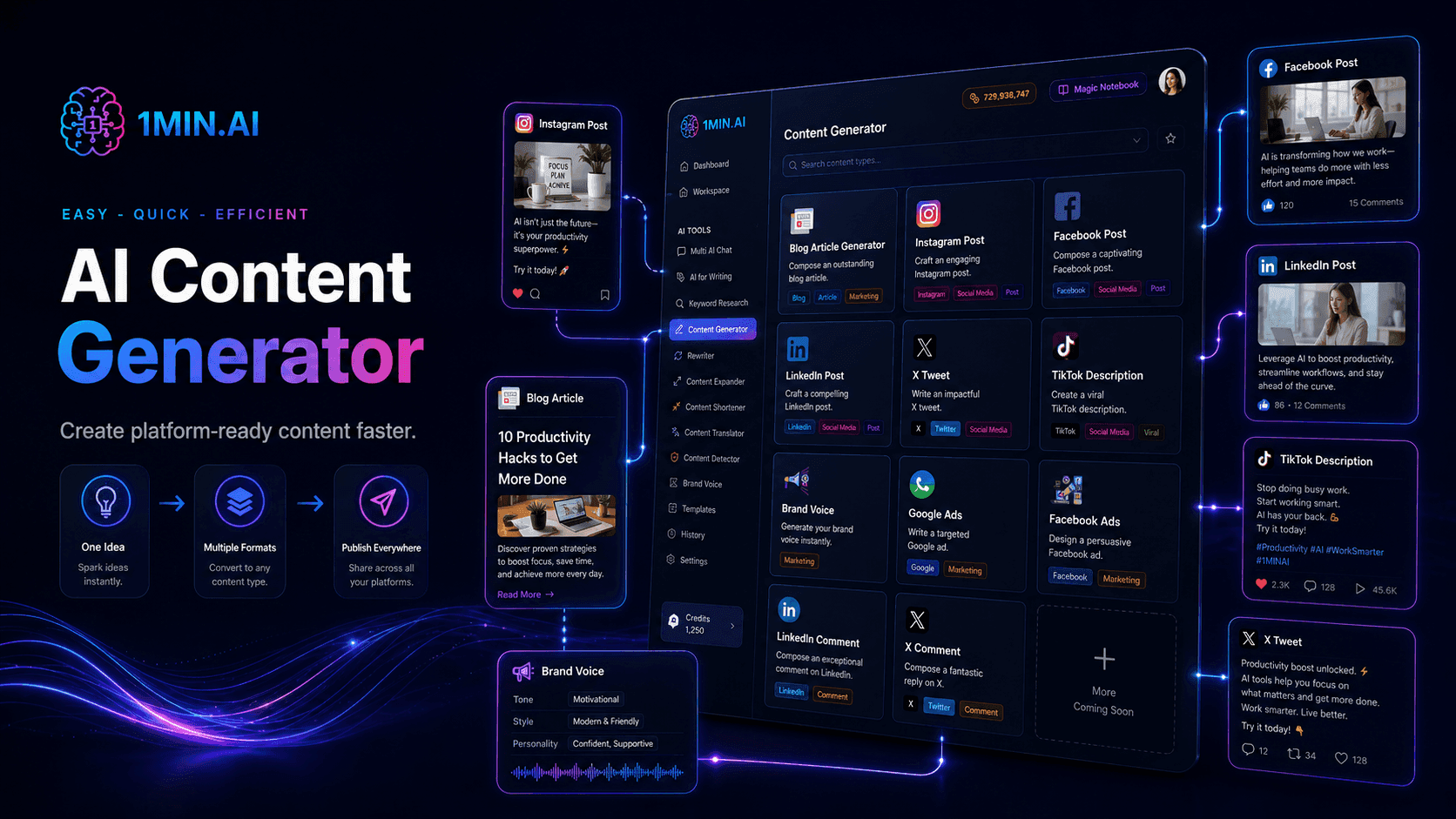
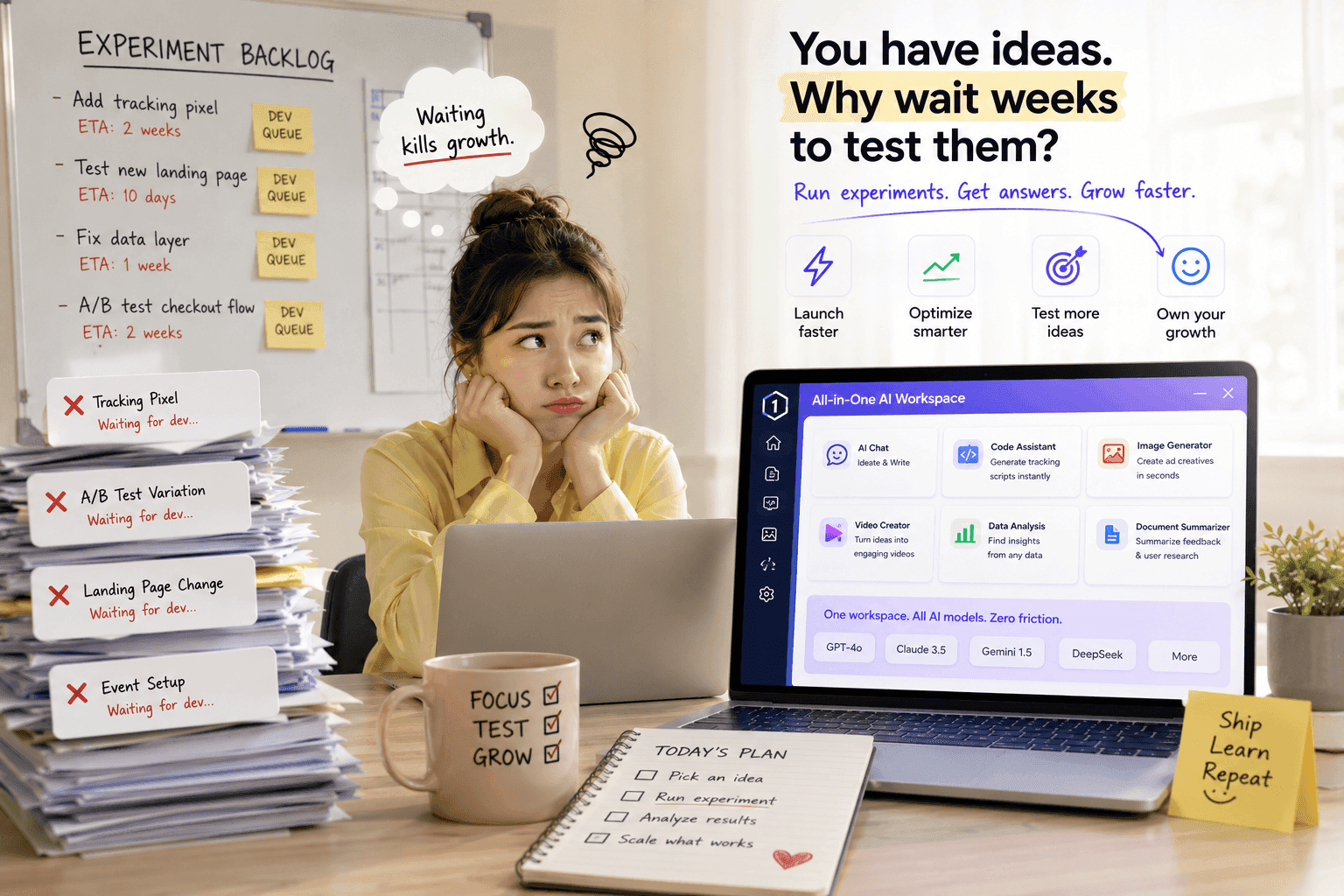
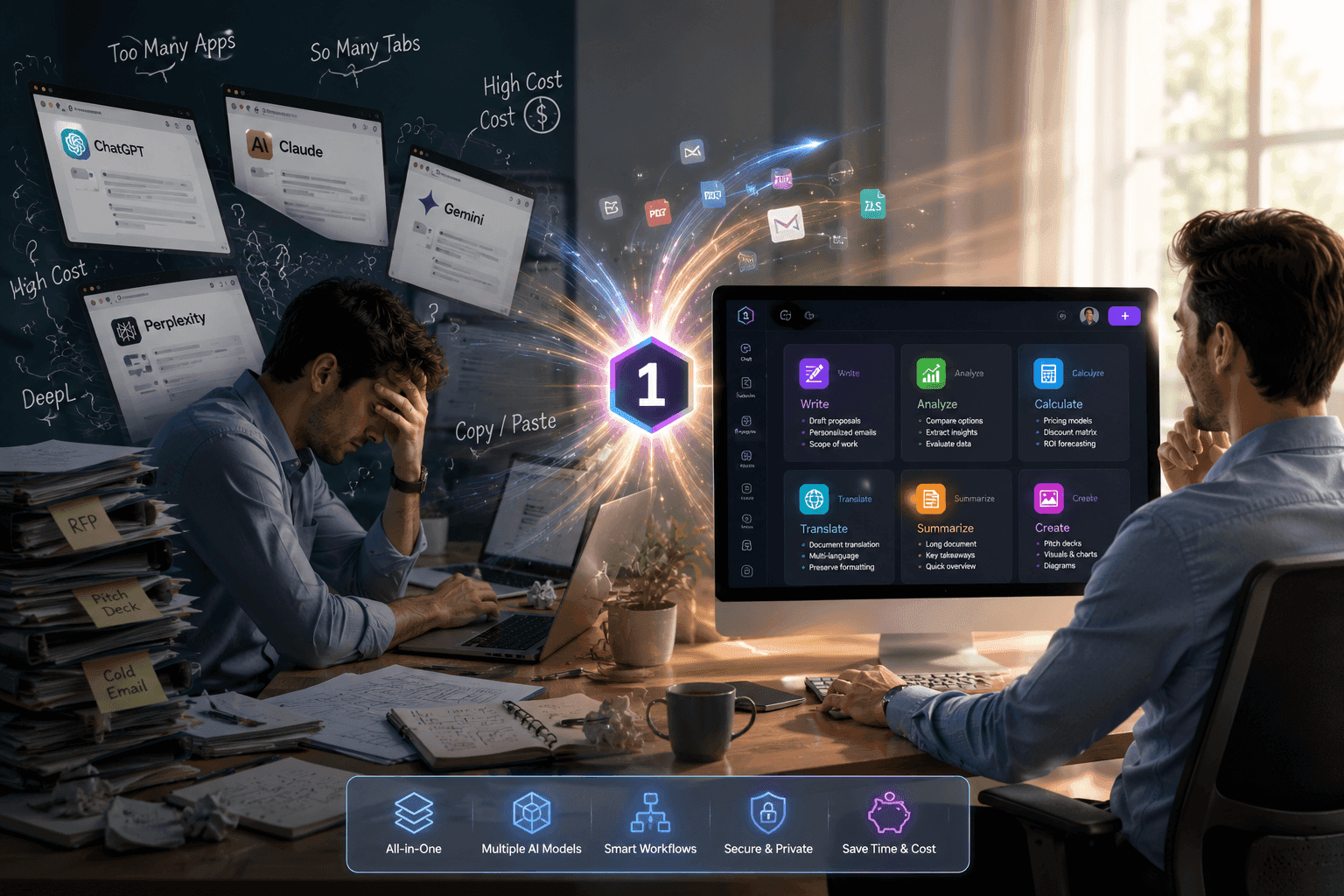
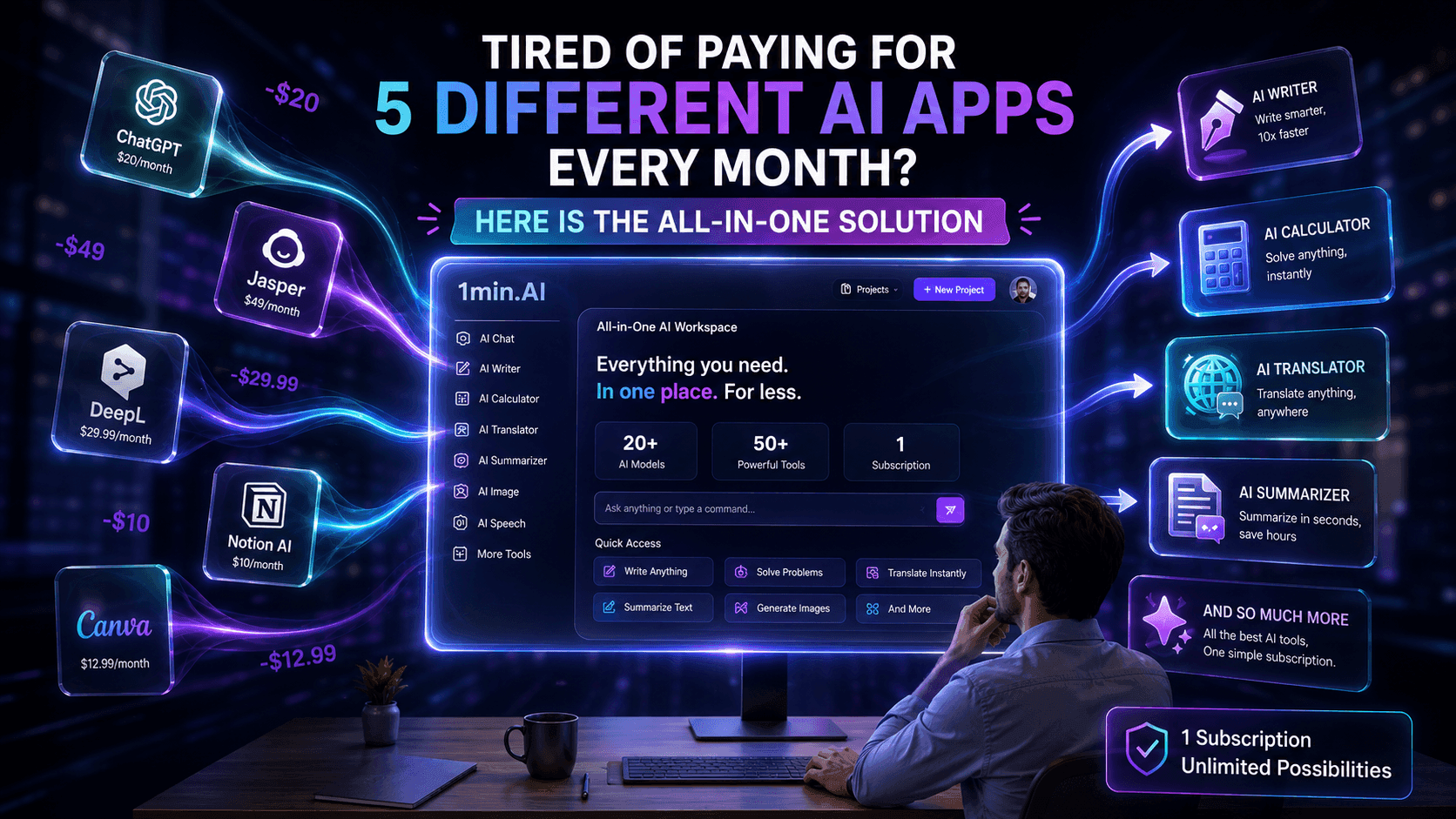
1min.AI consolidates all your necessary document optimization tools directly into one dashboard. Instead of overpaying for 5 separate applications, your team gets instant access to leading reasoning models using fast, low-cost engines for standard high-volume resume sorting, and switching to heavy-hitting models for critical executive scorecard designs. You paste the raw background notes, select your tool, and receive perfectly formatted evaluation assets within seconds.
Transparent Boundaries: What 1min.AI Does and Does Not Do`
To maintain absolute clarity: 1min.AI operates as a highly responsive, model-rich document, screening, and copywriting assistant workspace. It is not an autonomous Applicant Tracking System (ATS), nor does it run background checks or send automated emails without your explicit approval. You remain the director of your pipelineyou provide the parameters, resumes, and job details.
What it executes flawlessly is the exact phase that drains your team's energy: instantly summarizing endless pages of text and formatting structured evaluation rubrics across your choice of market-leading models, fast, at an agile cost that scales with your actual usage rather than an overpriced per-seat fee.
Your talent acquisition team should be spending their best hours on the phone interviewing elite talent and building culture, not buried under a landslide of unread PDFs and repetitive evaluation formatting. With 1min.AI, you gain access to a flexible workspace that lets you choose the perfect reasoning model for every resume evaluation, automate interview rubric drafting, and crush HR admin tasks all in one single interface.
Start a free trial today and see how much active screening time your recruitment team reclaims this week.
Have compliance or integration questions before bringing your talent team onto the platform? Reach out to our support at 1min.AI, and we will help you map our multi-model workspace directly to your current HR tech stack.