5 UGC Hook Ideas for Affiliate Creators Who Feel Stuck
Lien Anh Vu
July 7, 2026
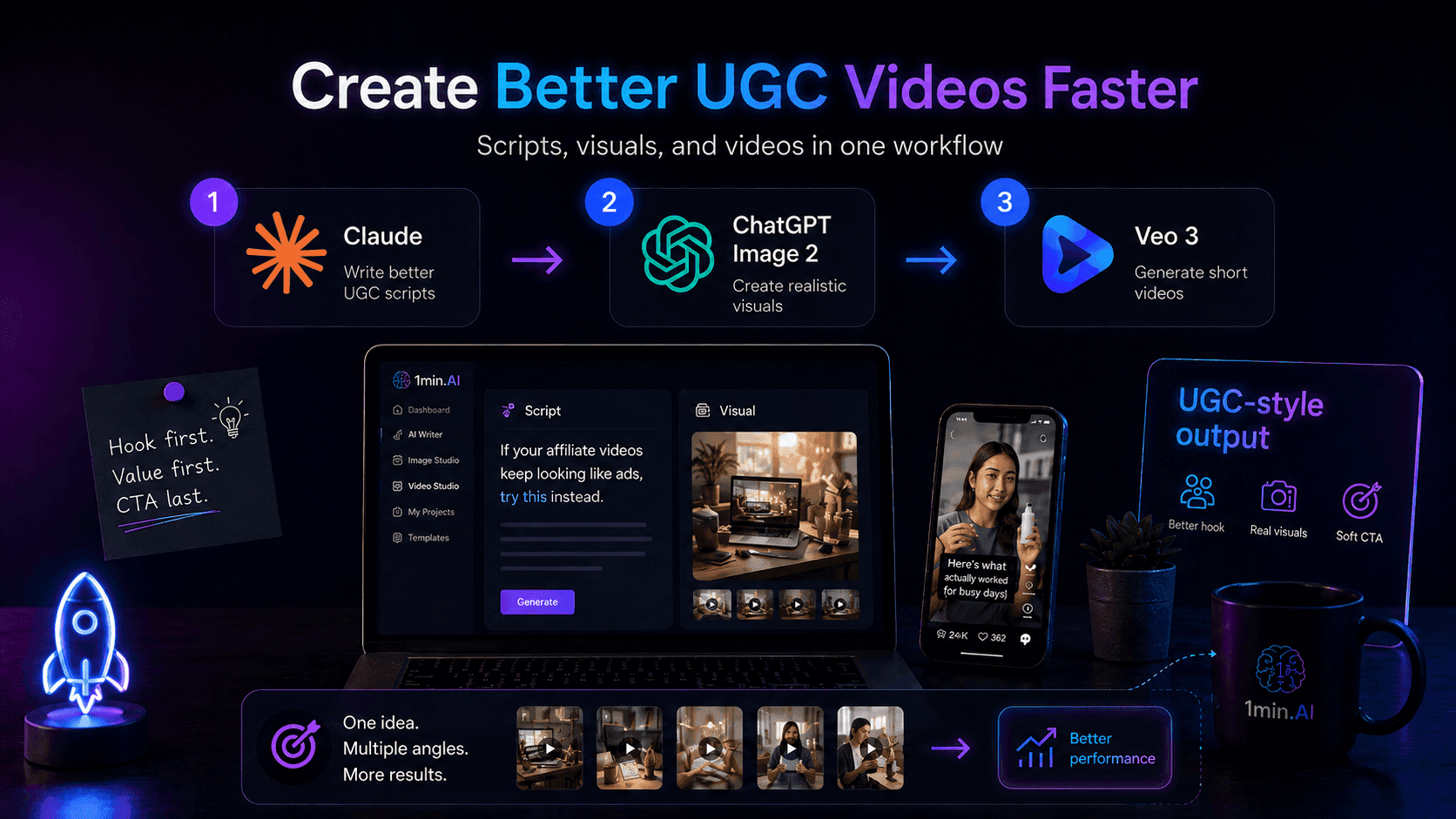
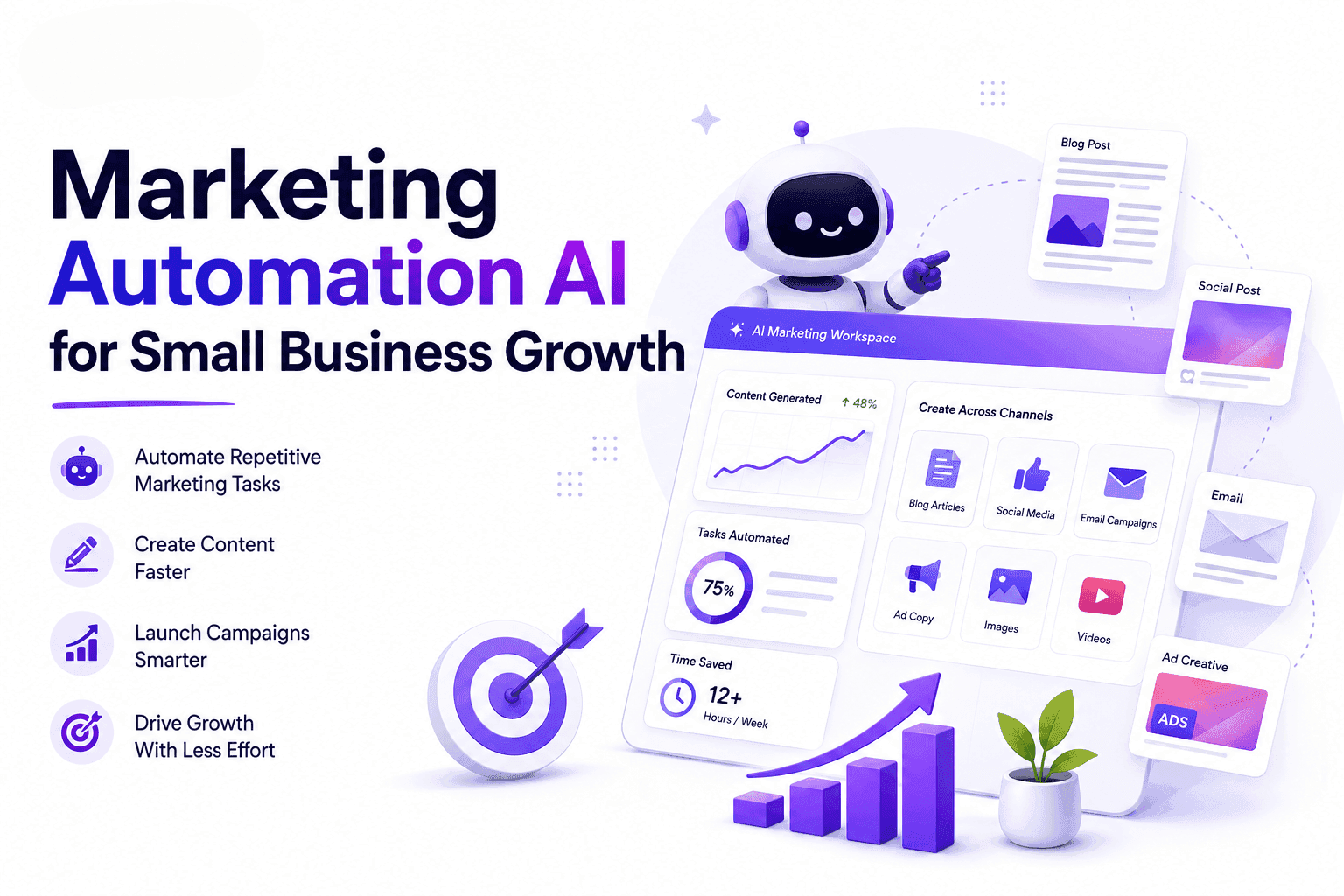
Stuck on affiliate video ideas? Discover 5 UGC hook ideas to make product videos feel more natural, less scripted, and easier to turn into short-form content with 1min.AI.
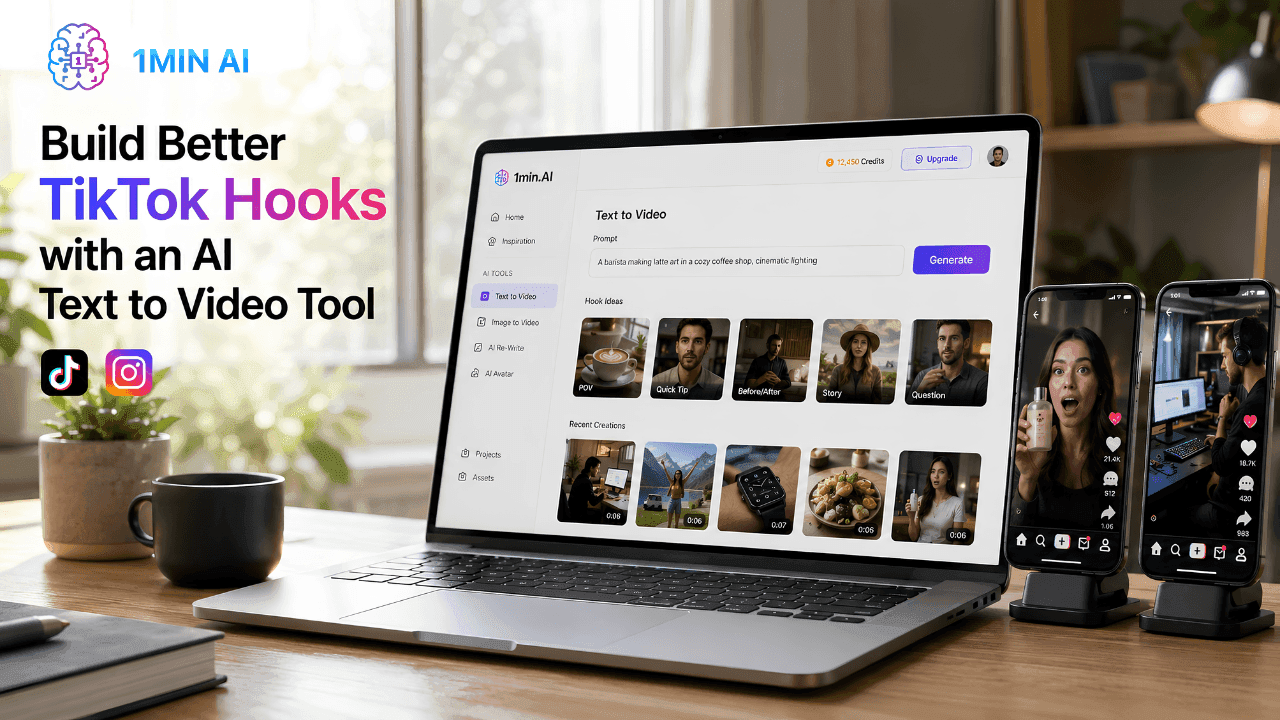
Running out of affiliate video ideas does not always mean you need a new product to promote. Sometimes, you just need a better hook angle. Here are five UGC-style hooks affiliate creators can use to make product videos feel more natural, less scripted, and easier to turn into short-form content with 1min.AI.
You are not out of ideas, you are probably out of angles
Affiliate creators often think they are out of content ideas when they are actually repeating the same angle too many times. They may have a good product, a clear offer, and a real audience, but every video starts to sound the same: “You need this tool,” “This changed everything,” or “This is perfect for creators.”
The problem is that these hooks do not give the viewer a reason to care. They introduce the product too early, sound too promotional, and make the video feel like an ad before the viewer understands the problem being solved.
A stronger UGC hook works differently. It starts with the viewer’s situation, not the product. It makes the right person feel like, “This is about me.” Then the product can appear naturally as part of the solution.
That is why affiliate creators do not always need more products. They need more ways to introduce the same product from different angles.
What makes a UGC hook work for affiliate videos?
A good UGC hook should feel specific, casual, and problem-driven. It should not sound like a brand slogan or a hard sell. The viewer should feel like they are watching a creator share something useful, not a product pitch written for everyone.
For affiliate videos, the strongest hooks usually do one of four things: they name a problem, call out a mistake, show a before-and-after shift, or introduce a faster workflow. These angles work because they create context before the product appears.
A simple structure creators can follow is:
Problem → Context → Product as workflow → Result → Soft CTA
This keeps the video from feeling too promotional. Instead of forcing the product into the first few seconds, the hook gives the viewer a reason to keep watching.
1. Start with the problem, not the product
Hook format:
“If your [problem] keeps happening, try this instead.”
This hook works because it begins with something the viewer already recognizes. It does not ask them to care about the product immediately. It first shows that the video understands their problem.
Instead of saying:
“This AI video generator is amazing.”
Try:
“If your affiliate videos keep looking like ads, try this instead.”
This version is stronger because it names the real issue. The viewer does not feel like they are being sold to right away. They feel like the creator is about to show them a better way to solve a problem.
More examples:
“If your TikTok videos are getting views but no clicks, try this instead.”
“If your product videos keep sounding scripted, try this instead.”
“If you keep spending too long making one short-form video, try this instead.”
This hook is useful for affiliate creators promoting tools, apps, software, AI platforms, creator products, or productivity workflows. It gives the product a clear role: it becomes the better option after the problem is understood.
How 1min.AI helps
With 1min.AI, creators can start with the problem and build the video around it. They can use Claude to turn the hook into a natural UGC-style script, ChatGPT Image 2 to create realistic lifestyle visuals, and Veo 3 to turn the idea into a short-form video.
Example prompt:
“Write a 30-second UGC-style affiliate video script using this hook: ‘If your affiliate videos keep looking like ads, try this instead.’ Make it sound like a solo creator sharing a useful workflow, not a hard sell.”
2. Show the shift from old way to new way
Hook format:
“I stopped doing [old way] and started doing this.”
This hook works because it creates a simple before-and-after story. The viewer sees that the creator changed their process, which makes the video feel more personal and believable.
Affiliate videos often feel fake when they only talk about the product. This hook avoids that by talking about the creator’s workflow first.
Instead of saying:
“This tool helps you make videos faster.”
Try:
“I stopped starting every affiliate video with the product and started doing this instead.”
This creates curiosity because the viewer wants to know what changed. It also gives the product a more natural role. The tool becomes part of a better process, not the entire message.
More examples:
“I stopped writing affiliate scripts from scratch and started using this workflow.”
“I stopped filming every product video manually and started testing video angles first.”
“I stopped using generic hooks and started building each video around the viewer’s problem.”
This hook is strong because it feels like a creator sharing a lesson, not a brand pushing a claim.
How 1min.AI helps
Creators can use 1min.AI to turn this before-and-after hook into a clear video structure:
Old way → Problem with old way → New workflow → Result → Soft CTA
Example script idea:
“I used to start every affiliate video by introducing the product, but it always sounded like an ad. Now I start with the viewer’s problem first, then use 1min.AI to turn that angle into a hook, script, visual, and short video.”
This makes 1min.AI feel useful because it is connected to a real workflow improvement.
3. Call out the mistake viewers may not notice
Hook format:
“The reason your [result] is not working might be this.”
This hook works because it points to a hidden mistake. It makes the viewer pause and think, “Am I doing that too?”
For affiliate creators, mistake-based hooks are useful because they create tension without sounding too dramatic. The video can teach something while still introducing the product naturally.
Instead of saying:
“Here is a tool for better affiliate videos.”
Try:
“The reason your affiliate videos are not converting might be the first three seconds.”
This hook is specific and problem-driven. It does not promise a vague benefit. It points to one part of the video that may be causing the problem.
More examples:
“The reason your product video feels fake might be the hook.”
“The reason people scroll past your affiliate content might be how early you introduce the product.”
“The reason your CTA feels pushy might be that you have not shown enough value yet.”
This type of hook works well for educational affiliate content because the creator can explain the mistake, show a better approach, and introduce the product as part of the solution.
How 1min.AI helps
With 1min.AI, creators can generate multiple mistake-based hooks from one product idea. This is useful when they want to test different angles without starting from scratch every time.
Example prompt:
“Create 10 mistake-based UGC hooks for an affiliate video promoting an AI video generator. Focus on why affiliate videos look fake, sound too scripted, or fail to convert.”
Possible outputs:
“The reason your affiliate video feels fake is probably the first three seconds.”
“The mistake is not the product. It is how you introduce it.”
“Your CTA might feel rushed because the video has not built trust yet.”
From there, the creator can choose the strongest angle and build the full script around it.
4. Turn the product into a faster workflow
Hook format:
“I tested a faster way to [desired outcome].”
This hook works because it feels practical. It does not overpromise or sound too polished. It simply tells the viewer that the creator tested a faster way to get a result they probably want.
For affiliate creators, this is useful because many viewers care about saving time, simplifying workflows, or creating more content from fewer ideas.
Instead of saying:
“This tool saves time.”
Try:
“I tested a faster way to turn one product idea into three short-form videos.”
This version is more concrete. It gives the viewer a result they can understand, and it makes the video feel like a process instead of a pitch.
More examples:
“I tested a faster way to write affiliate video hooks.”
“I tested a faster way to turn a product description into a UGC-style script.”
“I tested a faster way to create affiliate videos without filming every version from scratch.”
This hook is especially strong for AI tools because it naturally connects the product to speed, workflow, and output without using generic claims like “best” or “amazing.”
How 1min.AI helps
1min.AI fits this hook because it helps creators move through the full affiliate content workflow faster:
Product idea → Hook → Script → Visual → Video → Caption → CTA
A creator can start with one product idea, use Claude to generate several hook angles, use ChatGPT Image 2 to create lifestyle visuals, and use Veo 3 to turn the concept into short-form video assets.
Example script idea:
“I tested a faster way to turn one affiliate product idea into multiple video angles. Instead of starting with the product, I used 1min.AI to build the video around the viewer’s problem first, then turned that angle into a hook, script, visual, and short video.”
This keeps the video focused on the creator’s process while introducing 1min.AI naturally.
5. Make the product feel like part of the process
Hook format:
“Here is how I use [tool/product] without making it feel like an ad.”
This hook is strong because it directly addresses one of the biggest problems in affiliate content: sounding too promotional.
Many affiliate creators know their videos feel like ads, but they do not always know how to fix them. This hook promises a practical solution without pretending the product is not being promoted.
Instead of saying:
“Here is why you should use this tool.”
Try:
“Here is how I use 1min.AI to make affiliate videos feel less like ads.”
This hook is honest and specific. It makes the product part of the workflow, but it does not force the viewer into a hard sell immediately.
More examples:
“Here is how I promote a product without starting with the product.”
“Here is how I make affiliate videos feel more like real UGC.”
“Here is how I turn one product idea into a natural short-form video.”
This hook works well for tutorial-style affiliate content, creator workflow videos, and product demos that need to feel more casual.
How 1min.AI helps
With this hook, the video can walk through the full 1min.AI workflow. The creator can start with the product idea, turn it into a viewer problem, generate UGC hooks with Claude, create realistic visuals with ChatGPT Image 2, and turn the concept into a short video with Veo 3.
Example script idea:
“Here is how I use 1min.AI to make affiliate videos feel less like ads. I start by turning the product into a viewer problem, then use Claude to write a natural hook and script. After that, I create a realistic lifestyle visual with ChatGPT Image 2 and turn the idea into a short video with Veo 3.”
This works because it teaches the viewer a process instead of only asking them to click.
How 1min.AI helps turn one hook into a full affiliate video
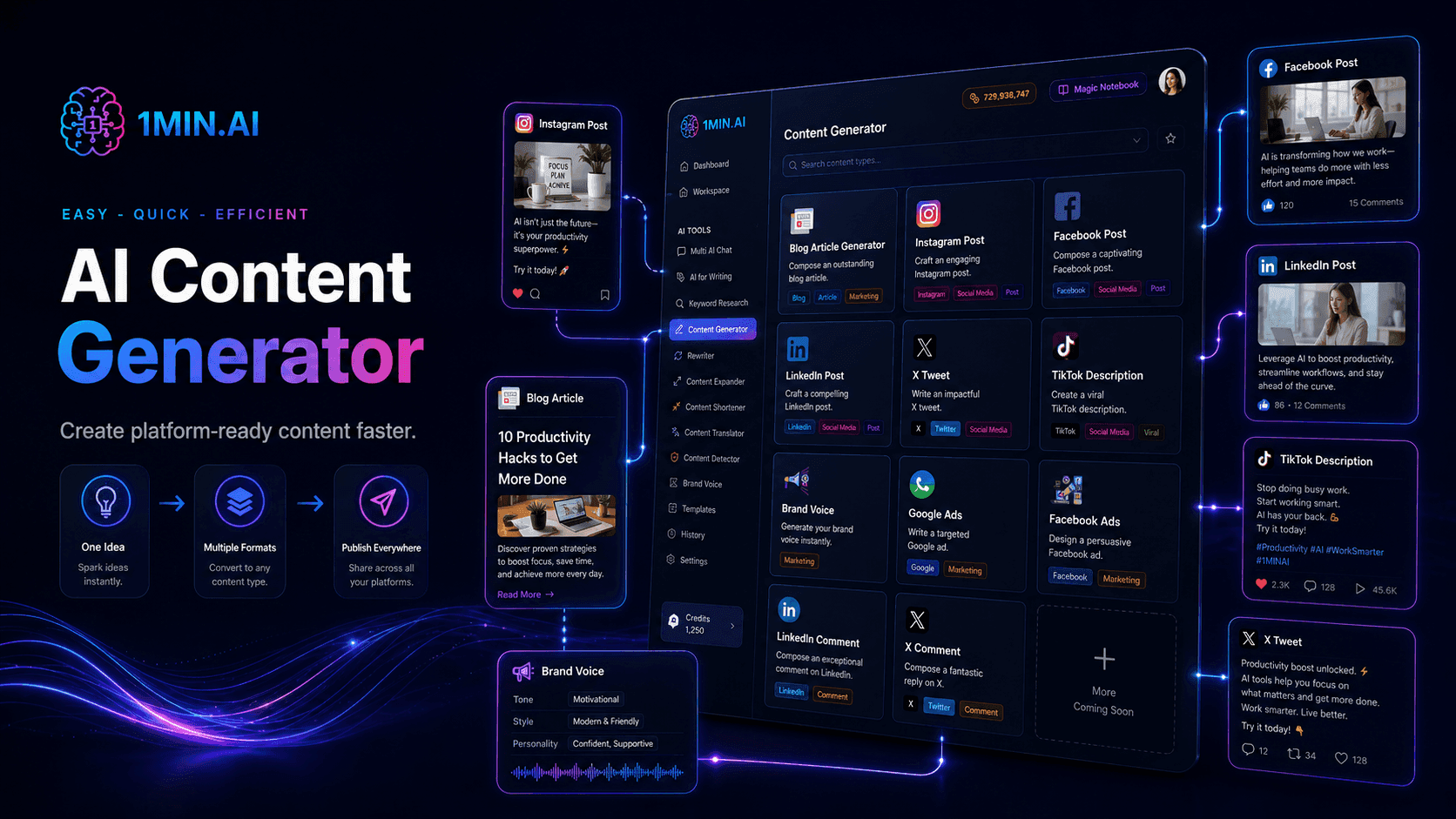
The biggest challenge for affiliate creators is not only coming up with hooks. It is turning those hooks into complete videos. A hook may stop the scroll, but the rest of the video still needs a natural script, believable visuals, a clear result, and a soft CTA.
That is where 1min.AI becomes useful as a full creative workflow. Instead of using one tool for hooks, another for scripts, another for images, and another for videos, creators can move through the process in one place.
A practical workflow looks like this:
Product idea → Viewer problem → UGC hook → Script → Visual → Video → Caption → CTA
With Claude, creators can turn one product idea into multiple UGC-style hooks and scripts. With ChatGPT Image 2, they can create realistic lifestyle visuals that match the video concept. With Veo 3, they can turn text prompts into short-form videos for TikTok, Reels, Shorts, ads, or product showcases.
This is helpful because affiliate creators rarely need just one video. They need variations. One product idea can become a problem-first video, a before-and-after video, a mistake-based video, a workflow video, and a soft product demo.
Example: one product idea, five UGC hook angles
Product idea:
An AI video generator for creators who want to make affiliate videos faster.
Five possible UGC hook angles:
“If your affiliate videos keep looking like ads, try this instead.”
“I stopped starting every product video with the product and built the video around the problem first.”
“The reason your affiliate content feels fake might be the first three seconds.”
“I tested a faster way to turn one product idea into three short-form video angles.”
“Here is how I use 1min.AI to make affiliate videos feel more like real UGC.”
From there, each hook can become a different video angle. The creator does not need five new products. They need five better ways to introduce the same product.
That is the real value of a strong UGC hook. It helps the product feel relevant before it feels promotional.
Turn one product idea into UGC hooks, scripts, visuals, and short-form videos faster with 1min.AI: https://app.1min.ai