Why Your Affiliate Video Looks Like a Fake Ad
Lien Anh Vu
July 7, 2026
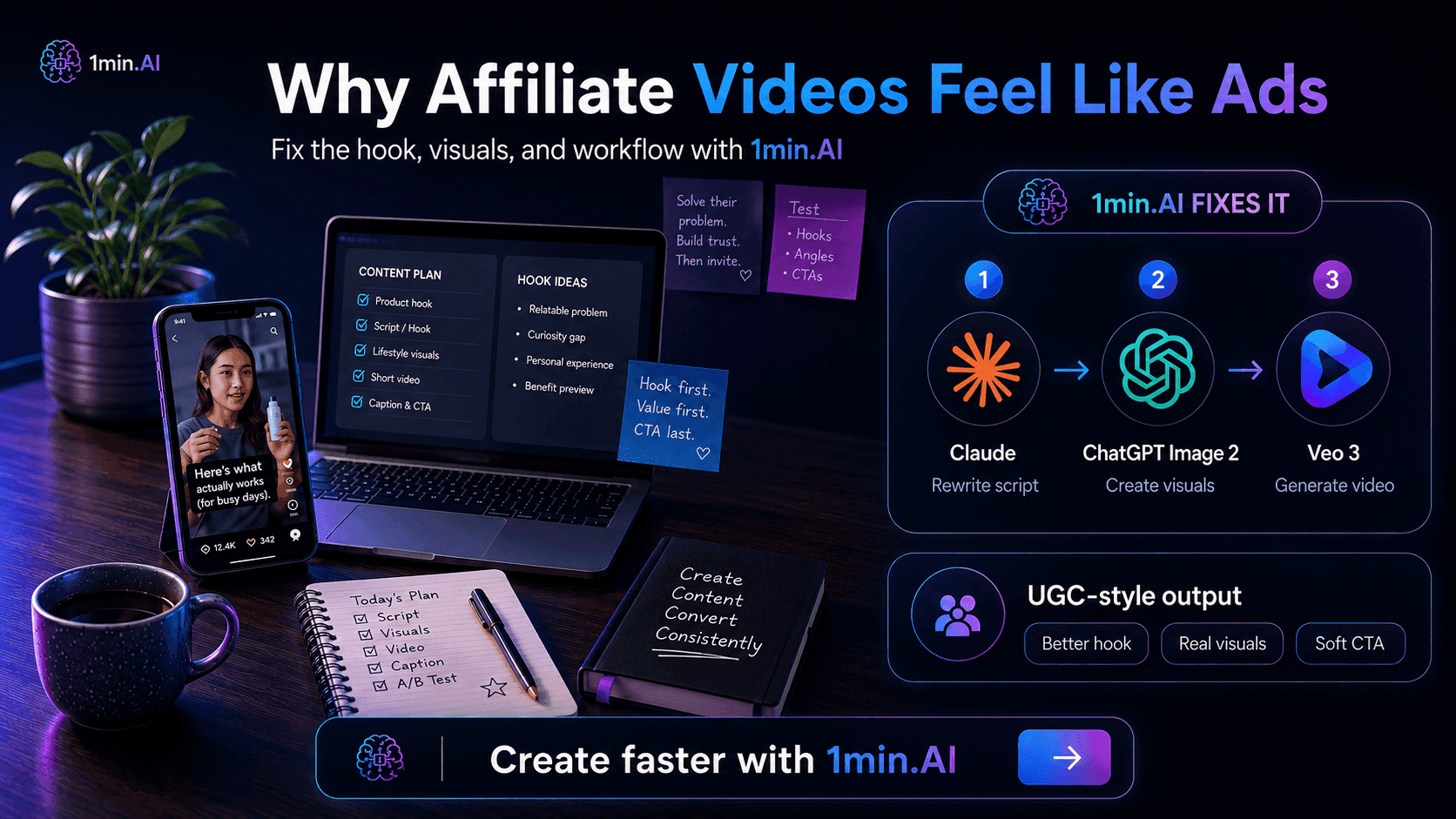
Learn why affiliate videos often look fake, why viewers lose trust so quickly, and how creators can use 1min.AI’s text to video workflow with Claude, ChatGPT Image 2, and Veo 3 to create more natural UGC-style videos.
Affiliate videos still work, but only when they feel like real recommendations instead of obvious sales pitches. This article explains why many affiliate videos lose trust too early — and how creators can use 1min.AI to build more natural UGC-style videos from hook and script to visuals, text-to-video content, and CTA.
Affiliate videos are not failing because of the product
Most affiliate videos do not fail because the product is bad. They fail because the product is introduced before the viewer has a reason to care. When a video opens with a generic hook, polished visuals, a product claim, and a rushed CTA, viewers quickly understand that they are being sold to. Once that happens, the video stops feeling like a recommendation and starts feeling like an ad.
That distinction matters because affiliate marketing is built on trust. Nielsen’s Global Trust in Advertising report found that 83% of global respondents trust recommendations from friends and family, while 66% trust consumer opinions posted online. This shows that people are more likely to believe a message when it feels personal, specific, and grounded in real experience, not when it sounds like a brand speaking through a creator.
A weak affiliate video might say: “This AI video generator is perfect for creators. It helps you make videos quickly. Click the link and try it today.” The message is clear, but it is not persuasive because it starts from the seller’s point of view. The viewer does not yet know what problem is being solved, why the product matters, or why they should trust the recommendation.
A stronger version starts from the viewer’s problem: “I realized my affiliate videos were getting views but not clicks because every version sounded too much like an ad. So I tested a workflow that helped me turn one product idea into a hook, script, visual, and short video without starting from scratch every time.”
That version feels more believable because it begins with a real creator situation. The product is not forced into the first second; it enters the story as part of the solution.
Why affiliate videos often feel fake
Short-form platforms like TikTok, Reels, and Shorts are already crowded with ads, sponsored posts, product demos, and creator promotions. Sprout Social notes that social networks are more saturated than ever, while consumers continue to demand authentic, original content from the businesses they buy from. For affiliate creators, that means the video has to feel native to the feed before it feels promotional.
Most fake-looking affiliate videos make the same mistake: they try to sell before they earn attention. The script sounds like a product description, the hook is too broad, the visuals look too polished, and the CTA comes before the viewer has seen enough value. A better affiliate video should follow a more natural structure:
Problem → Frustration → Discovery → Process → Result → Soft CTA
This structure works because it mirrors how people actually recommend products. They usually do not start with features. They start with the situation that made the product useful.
1. The script sounds too much like a sales pitch
The script is often where fake-looking affiliate content starts. Many creators write affiliate videos like product descriptions: “This tool is fast, easy to use, and perfect for content creators.” That may be true, but it does not feel human. It gives the viewer information, but it does not give them a reason to care.
Real UGC-style content usually begins with tension. The creator is struggling with something, testing a new process, or sharing a small discovery. Instead of saying, “This is the best AI video generator,” a stronger opening would be: “I kept rewriting the same affiliate video script because every version sounded too much like an ad.”
That small shift makes the video more believable because it starts with a problem the viewer can recognize. The product is no longer the main character from the first second. It becomes part of the solution.
How 1min.AI helps
With 1min.AI, creators can use Claude to turn a sales-heavy script into a more natural UGC-style narrative. Instead of writing, “This is the best AI video generator for creators. You can make videos fast. Click the link and try it now,” a creator can rewrite it as:
“I noticed my affiliate videos were starting to sound too much like ads. The problem was not the product — it was the way I was introducing it. So I started building each video around the viewer’s problem first, then used 1min.AI to turn that idea into a hook, script, visual, and short video.”
This version works better because it does not ask the viewer to trust the product immediately. It first explains why the workflow matters.
2. The hook is too generic to stop the right viewer
Generic hooks are another reason affiliate videos feel fake. Lines like “You need this tool,” “This changed everything,” or “I wish I knew this sooner” may grab attention for a second, but they do not build relevance. A strong hook should not only stop people from scrolling; it should stop the right people from scrolling.
Instead of saying, “This AI tool is amazing,” a more specific hook would be: “If your affiliate videos look like ads, your hook is probably the reason.” Instead of “This saves so much time,” try: “I turned one product idea into three affiliate video angles before filming anything.”
The difference is specificity. A generic hook talks to everyone, while a specific hook makes the right viewer feel understood. That matters because affiliate content can be powerful when the recommendation feels relevant. According to Adobe Analytics data reported by Business Insider, influencers and other affiliate marketers drove about 20% of U.S. e-commerce revenue on Cyber Monday 2024, and products promoted through affiliate links were six times as likely to lead to a purchase compared with social content without an affiliate or comparable promotional link.
How 1min.AI helps
With 1min.AI, creators can use Claude to generate multiple hook angles from one product idea. For example:
“Create 10 short-form video hooks for an affiliate video promoting an AI video generator. Target TikTok creators, solo creators, and social media marketers. Make the hooks specific, problem-driven, and natural for UGC-style videos.”
Possible hooks could include:
“If your affiliate videos look like ads, start with the problem instead.”
“I turned one product idea into three short video hooks without filming anything.”
“The reason your affiliate video feels fake is probably the first three seconds.”
“Stop introducing the product first. Start with what the viewer is struggling with.”
This helps creators test different angles before committing to one final video.
3. The visuals look too polished or too generic
Even when the script is strong, the video can still lose credibility if the visuals do not match the message. A perfect office setup, glowing laptop, or abstract “AI tool” image may look clean, but it does not feel like something a TikTok creator would naturally post.
UGC-style visuals work better when they feel specific and lived-in: a laptop on a slightly messy desk, a phone showing a short-form draft, sticky notes, coffee, a casual screen recording, or a creator editing late at night. These details make the video feel closer to a real working moment instead of a staged advertisement.
How 1min.AI helps
Inside 1min.AI, creators can use ChatGPT Image 2 to create lifestyle visuals that match the script. Instead of prompting, “Create an image of an AI video generator,” a better prompt would be:
“Create a realistic lifestyle image of a solo TikTok creator sitting at a desk, looking at a laptop with a video script draft open and a phone showing a short-form video preview. The workspace should feel casual, slightly messy, and authentic. Natural lighting, realistic UGC style, not a polished stock photo.”
The goal is not to make the content look expensive. The goal is to make it feel believable.
4. The CTA comes before the viewer is ready
The CTA is another reason affiliate videos feel fake. Many videos ask for the click too early with lines like “Click the link and try it now.” The CTA is clear, but clarity is not enough. If the viewer has not yet understood the problem, seen the process, or believed the result, the CTA feels transactional.
A stronger CTA should feel like the natural next step after the video has already shown something useful. For example: “If you want to test this workflow, try turning one product idea into a script, visual, and short video with 1min.AI.” This feels less aggressive because the CTA connects directly to the process the viewer just watched.
How 1min.AI helps creators build better affiliate videos
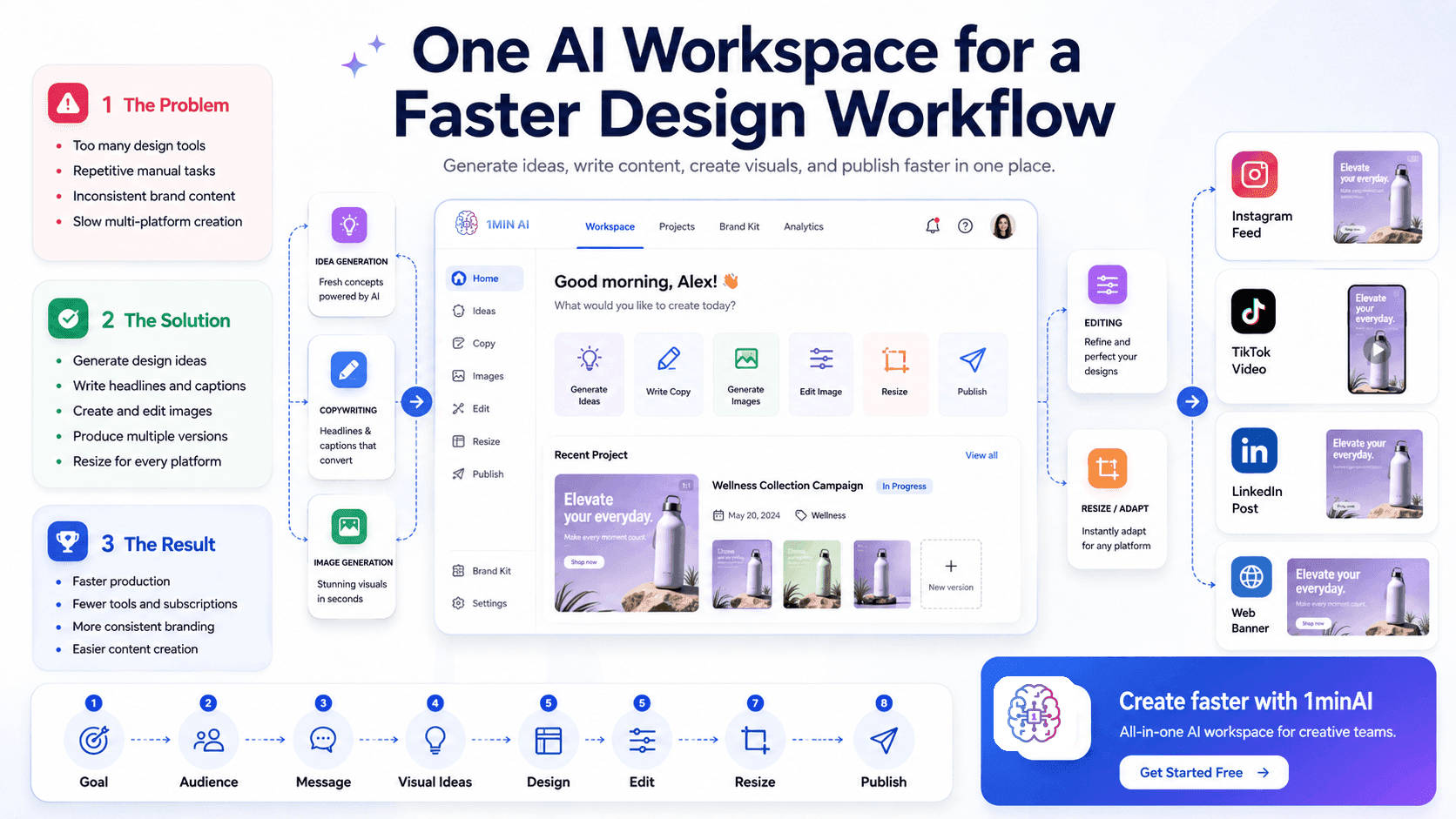
The deeper problem with fake-looking affiliate videos is not just execution. It is the workflow. Many creators jump straight from product description to final video, skipping the creative steps that make content feel natural: identifying the viewer’s real problem, testing hooks, rewriting the script in a UGC tone, creating visuals that match the viewer’s world, and connecting the CTA to the value of the video.
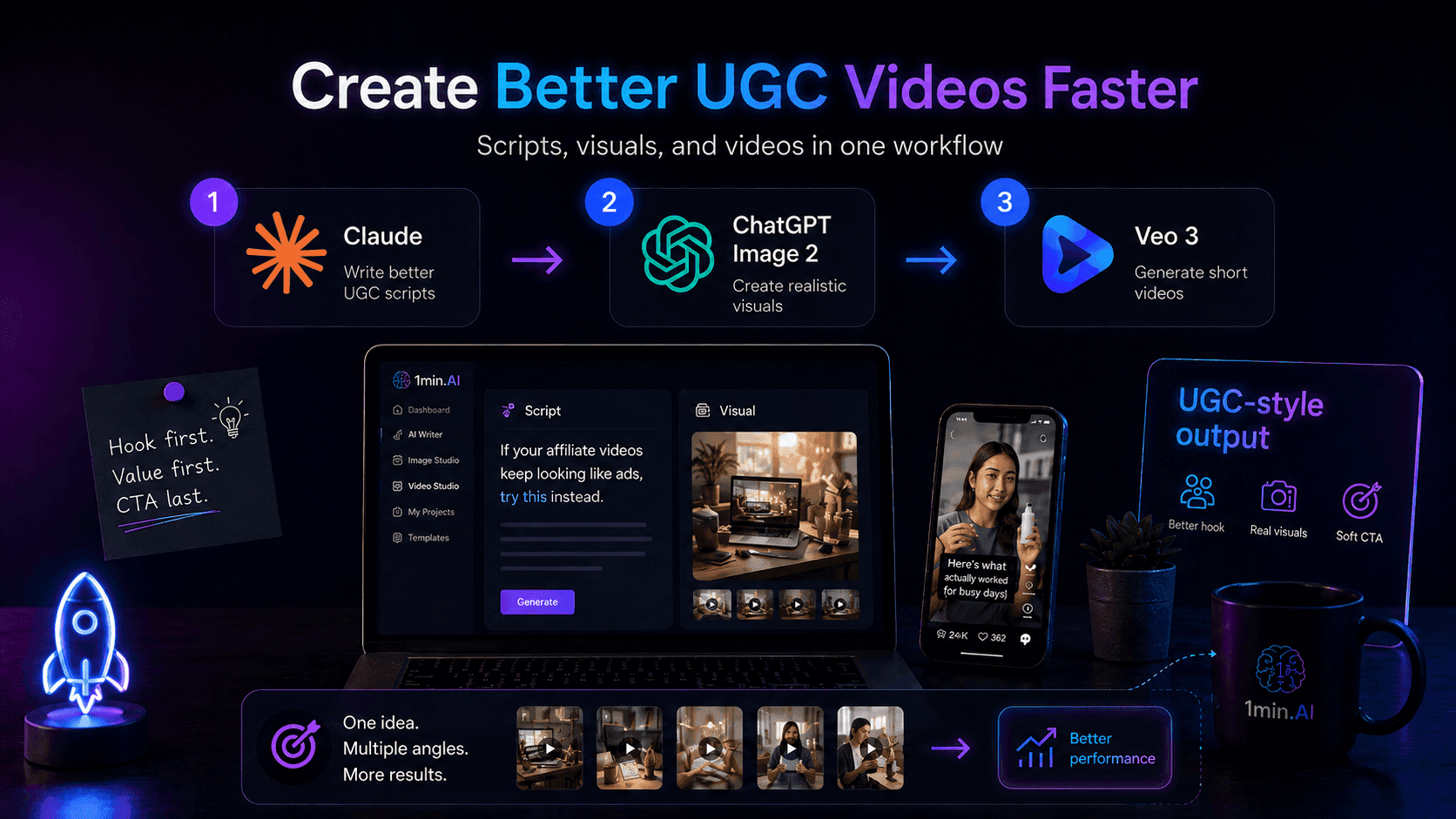
This is where 1min.AI becomes useful, not just as an AI video generator, but as a full creative workflow for affiliate content:
Product concept → Claude script → ChatGPT Image 2 visual → Veo 3 video → Caption → CTA
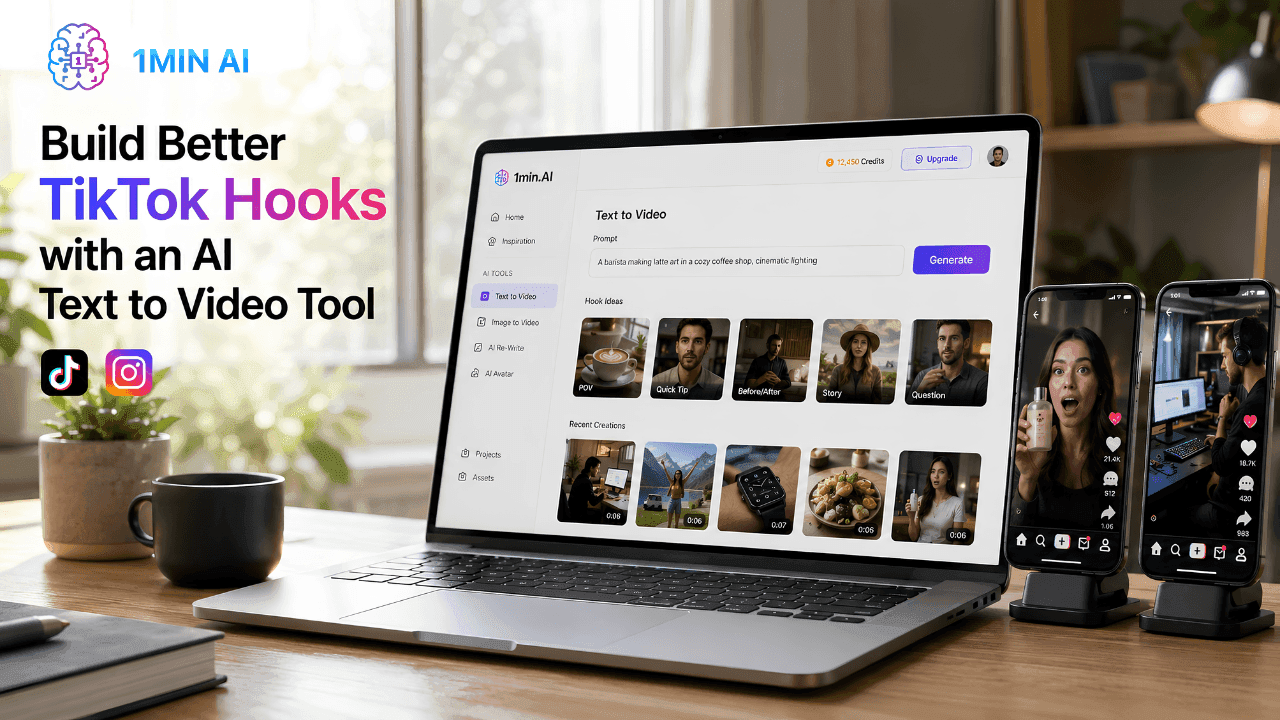
With Claude, creators can rewrite sales-heavy scripts into more natural narratives. With ChatGPT Image 2, they can create lifestyle visuals that match the script instead of relying on generic stock-style images. With Veo 3, they can turn the idea into a short-form video for TikTok, Reels, Shorts, ads, or product showcases.
For example, instead of starting with “This AI video generator helps you make videos fast,” a creator could start with: “My affiliate videos were starting to sound too much like ads, so I tested a workflow that helped me build the video around the viewer’s problem first.” From there, Claude can shape the script, ChatGPT Image 2 can create a realistic creator workspace visual, and Veo 3 can turn the concept into a short text-to-video clip.
Before and after example
Fake-looking affiliate version
“This AI video generator is perfect for creators. It helps you make videos quickly. Click the link and try it today.”
This version tells the viewer what the product does, but it does not build trust. It starts with the product instead of the problem, sounds promotional, gives no real creator context, and asks for the click too early.
More natural UGC version
“I realized my affiliate videos were starting to sound too much like ads. The problem was not the product — it was the way I was introducing it. So I used 1min.AI to start with a better hook, rewrite the script with Claude, create a realistic lifestyle visual with ChatGPT Image 2, and turn the idea into a short text-to-video clip with Veo 3. Now I can test different video angles without filming every version from scratch.”
The second version works better because it follows the logic of a real recommendation: problem first, process second, product third, and CTA last. It shows why the workflow matters, then introduces 1min.AI as the tool that makes the process easier.
👉Create affiliate videos that feel less like ads and more like real creator content with 1min.AI — from script and visuals to short-form video in one workflow: https://app.1min.ai