AI Coding Assistant That Ends Context Switching
Trang Tran
July 6, 2026
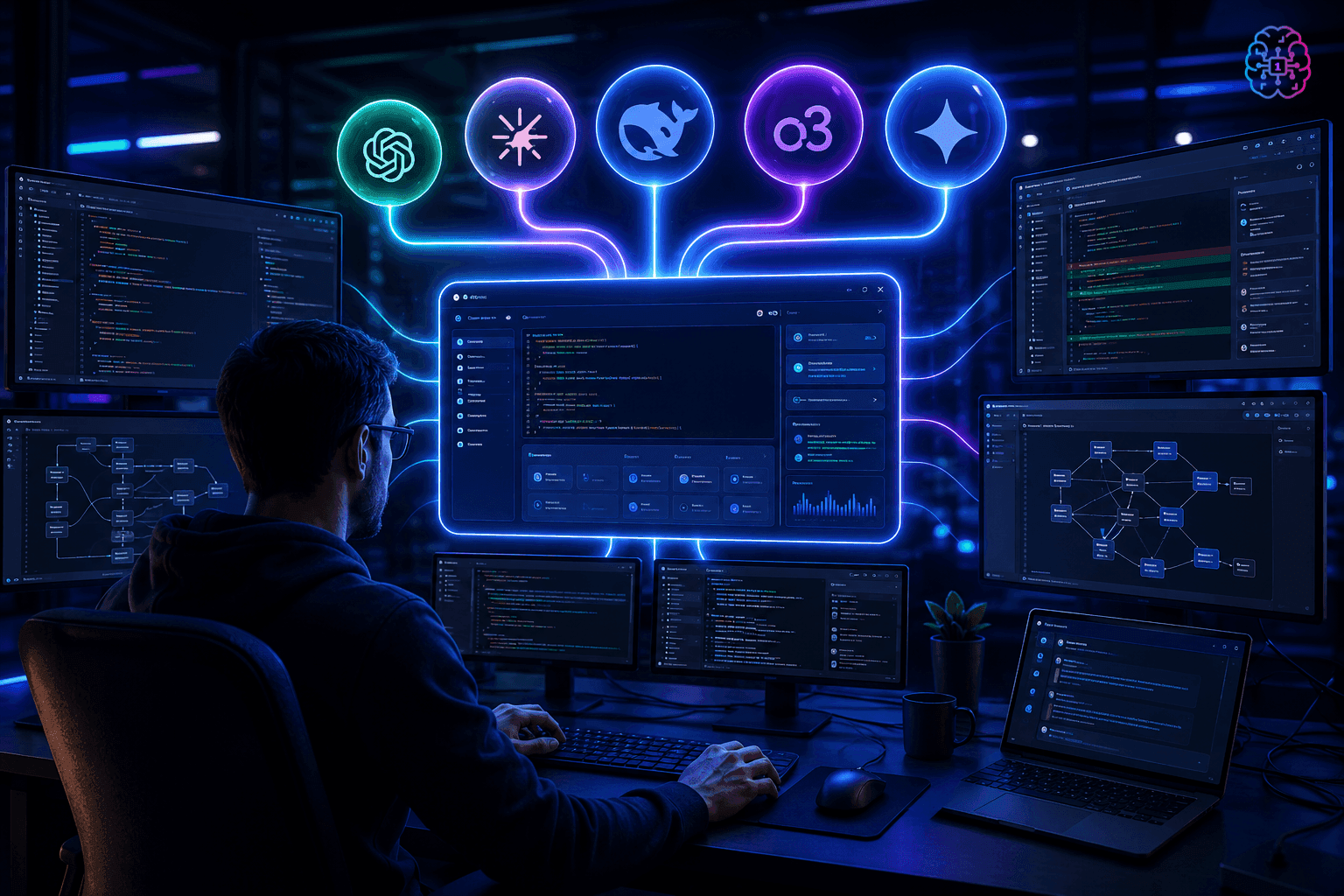
Tired of juggling Copilot, ChatGPT, and five other tabs? 1min.ai brings GPT-5, Claude, DeepSeek, and o3 into one AI coding assistant built for senior engineers.
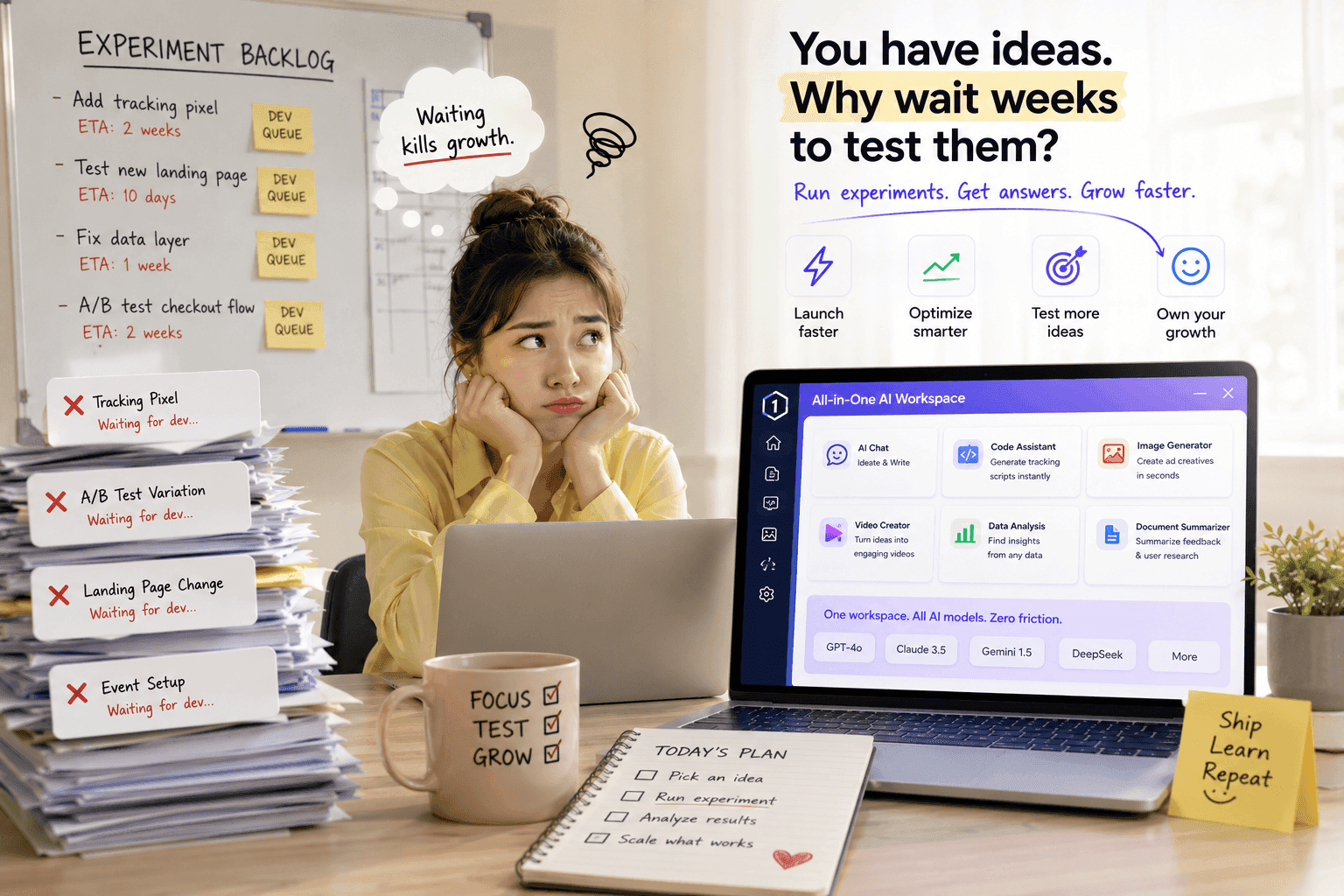
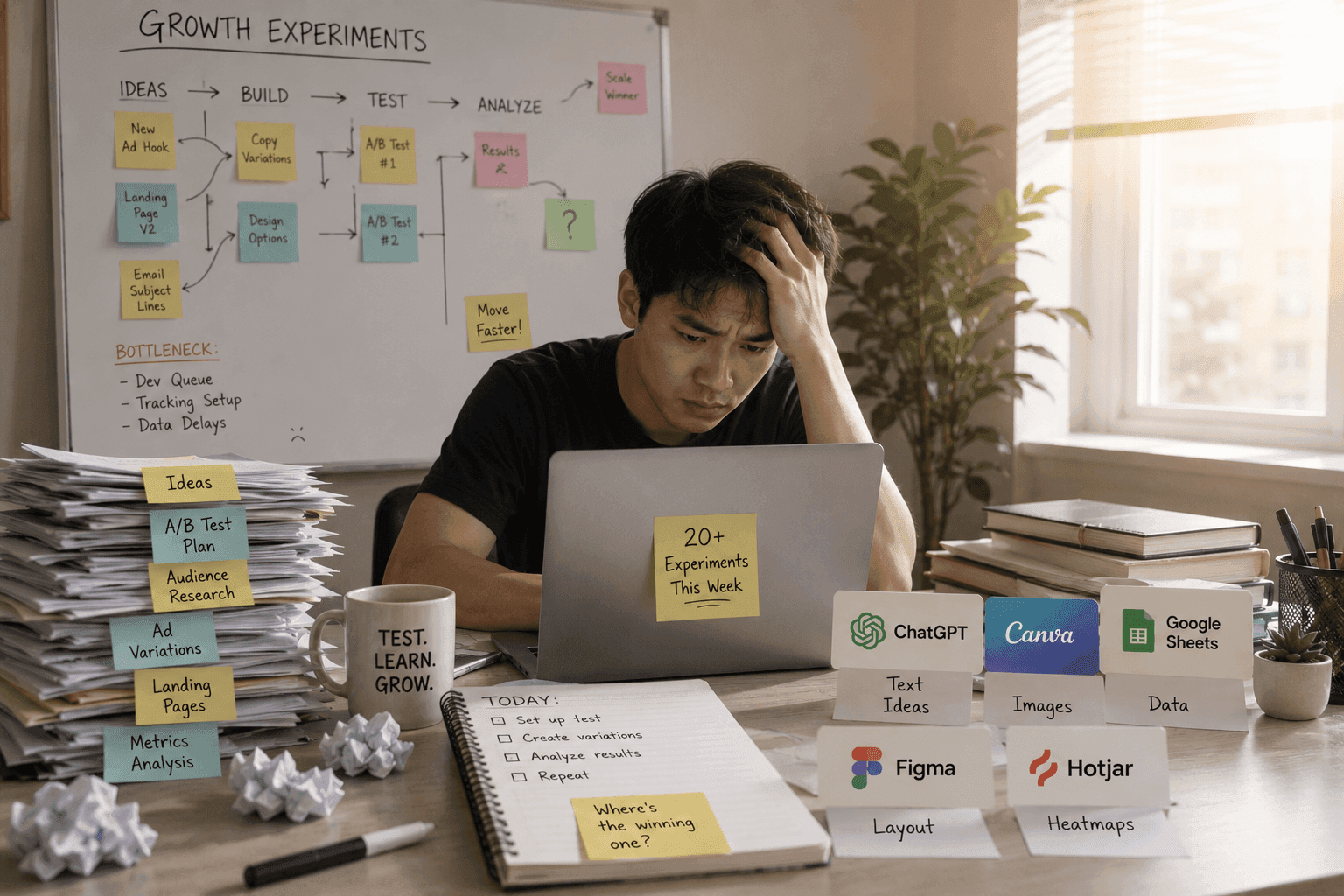
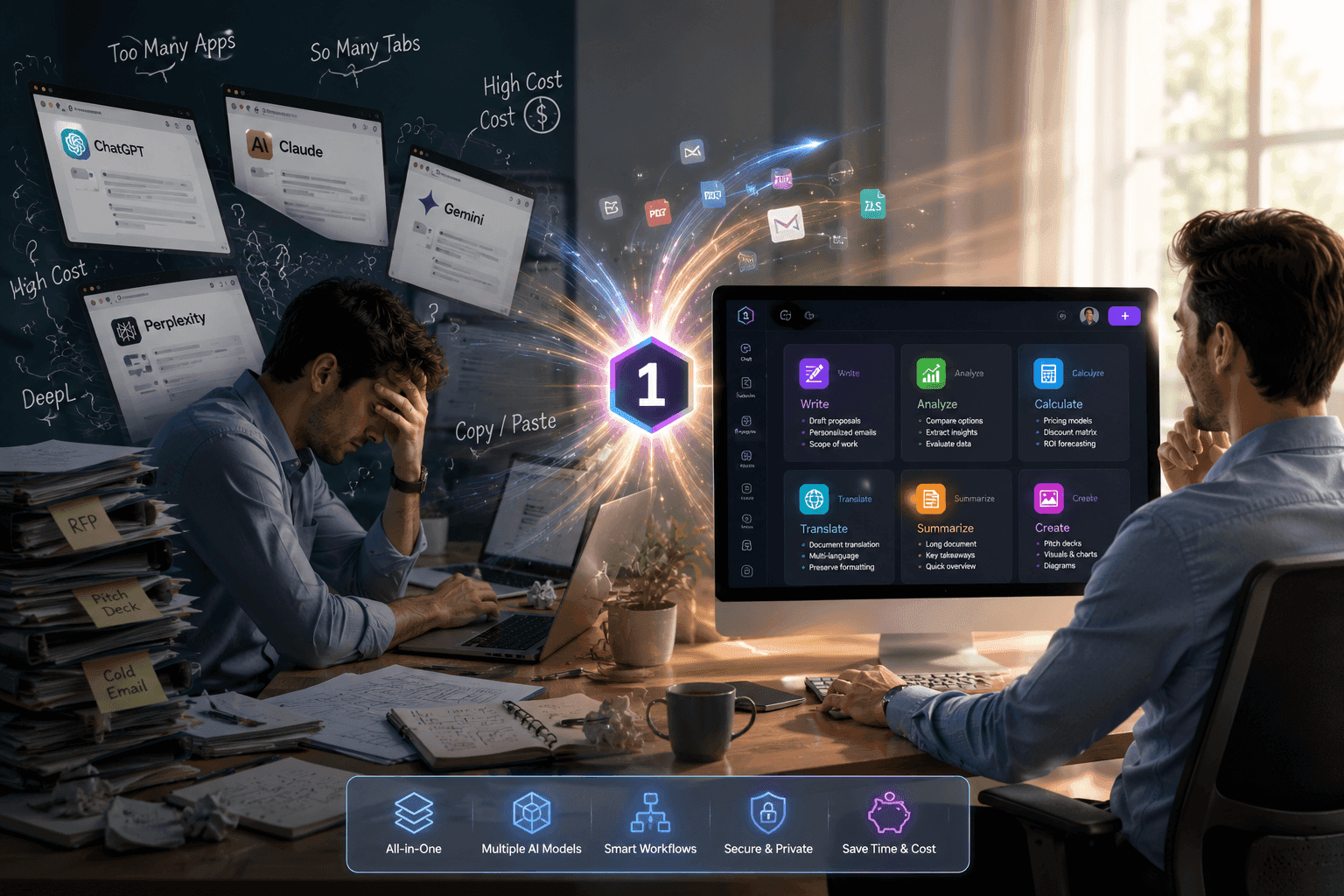
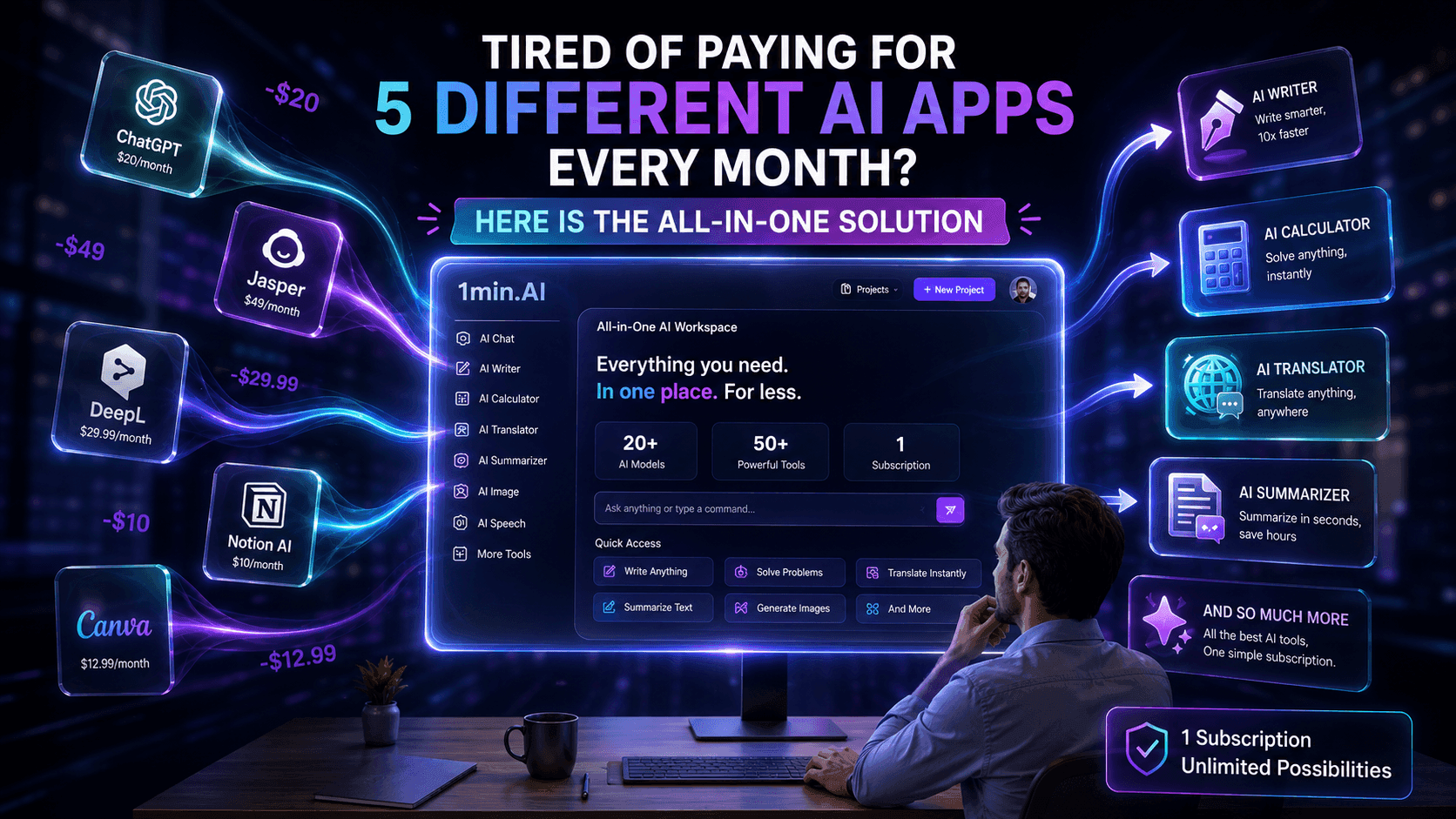
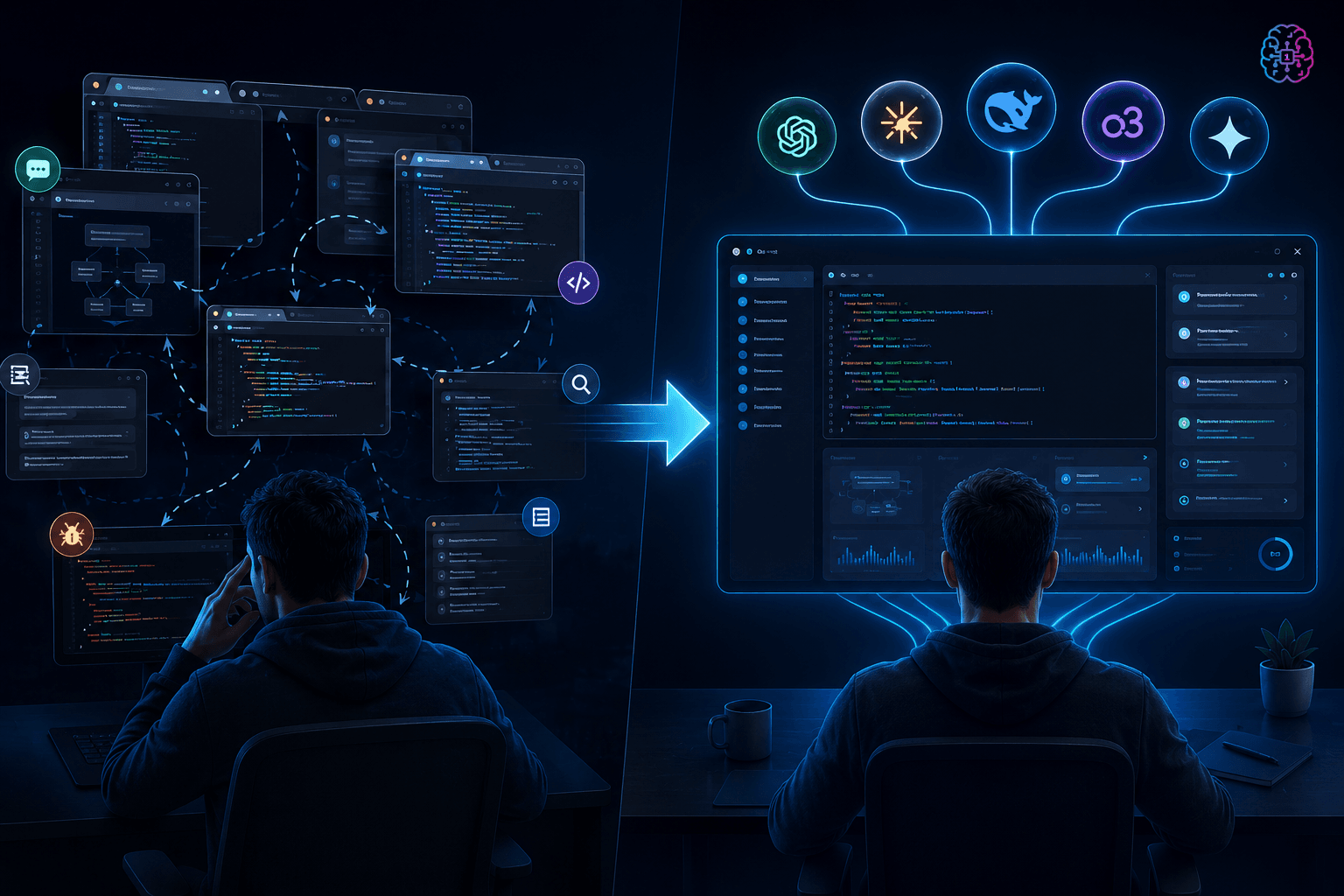
Most senior engineers today don't have one AI coding assistant. They have five. GitHub Copilot for autocomplete, ChatGPT for explanations, Claude for code review, and a rotating cast of others for debugging and documentation. The context switching is constant, the costs add up, and recommending a single tool to your team feels impossible.
This guide compares how the best AI coding assistants actually perform for senior engineering workflows and shows how 1min.ai consolidates GPT-5, Claude, DeepSeek, o3, and more into one workspace purpose-built for developers.
Why Senior Engineers Need a Better AI Coding Setup
The Hidden Cost of a Fragmented AI Stack
The average tech lead in 2026 manages subscriptions to at least three AI tools. Each one has a different context window, a different pricing model, and a different interface. Switching between them mid-task breaks flow, loses context, and creates inconsistent output quality across the team.
This is not a workflow preference. It is a productivity and governance problem. When tooling decisions are fragmented at the individual level, code review standards suffer, security posture weakens, and adoption across the team stalls.
What AI Code Review and AI Pair Programming Actually Require
IDE autocomplete tools like GitHub Copilot solve one narrow problem well: inline suggestions as you type. But senior engineers spend more time reviewing code, debugging across services, writing documentation, and evaluating architecture than they do writing net-new lines.
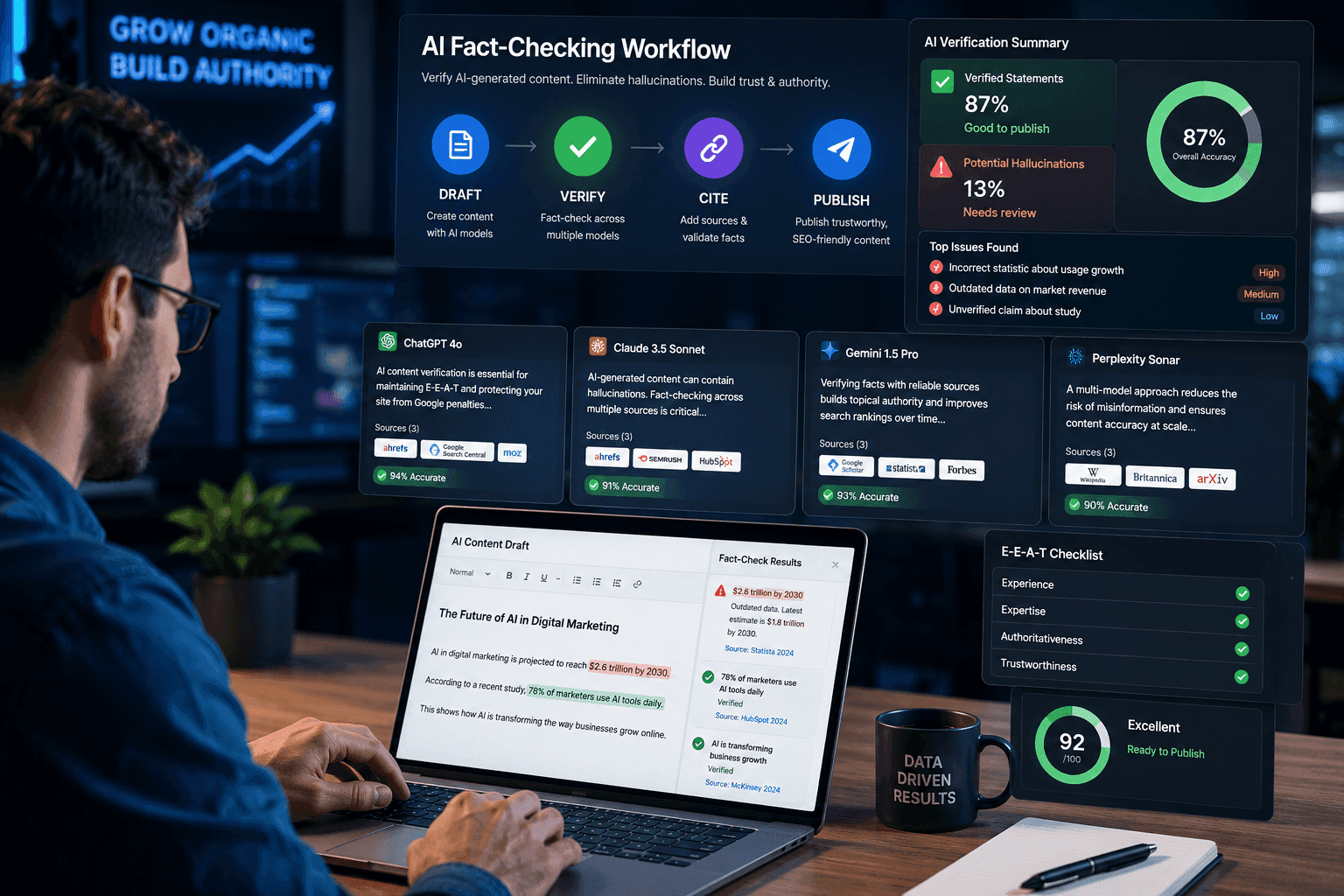
A true AI pair programmer needs to reason about your entire codebase context, adapt to different model strengths depending on the task (reasoning vs. speed vs. cost), and support workflows beyond the IDE.
How to Evaluate an AI Coding Assistant as a Senior Engineer
The Three Criteria That Actually Matter
Most comparison articles optimize for junior developer use cases. For tech leads and staff engineers making tooling decisions, the relevant criteria are different:
- Model flexibility: Can you switch between GPT-5, Claude Opus, DeepSeek, and o3 without leaving the platform? Different tasks require different models.
- Context handling: Does the tool understand multi-file context, architecture decisions, and your team's coding standards?
- Workflow coverage: Does it go beyond autocomplete to support code review, documentation, debugging, and communication?
AI Coding Tool Comparison at a Glance
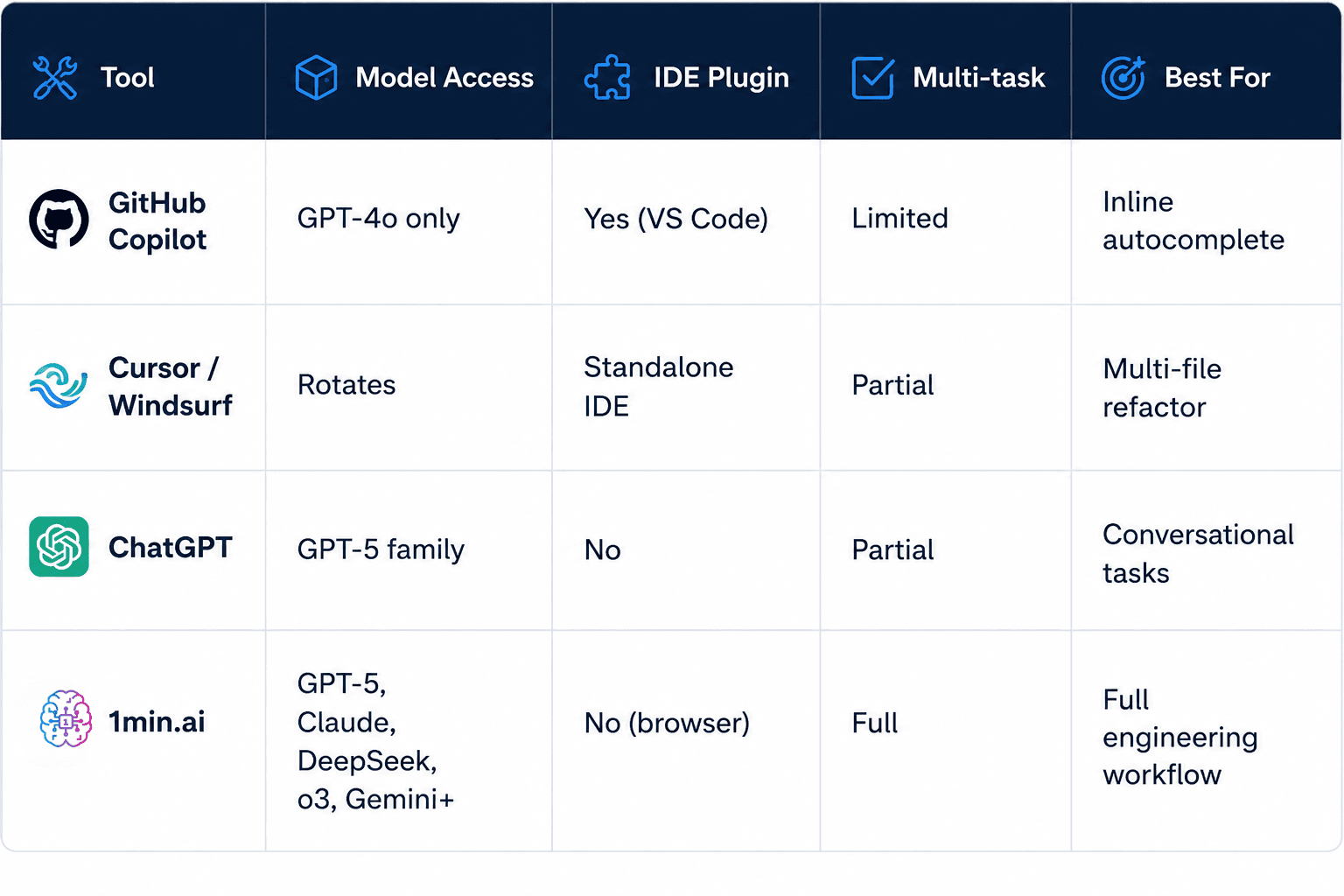
What 1min.ai Offers for Developers and Engineering Teams
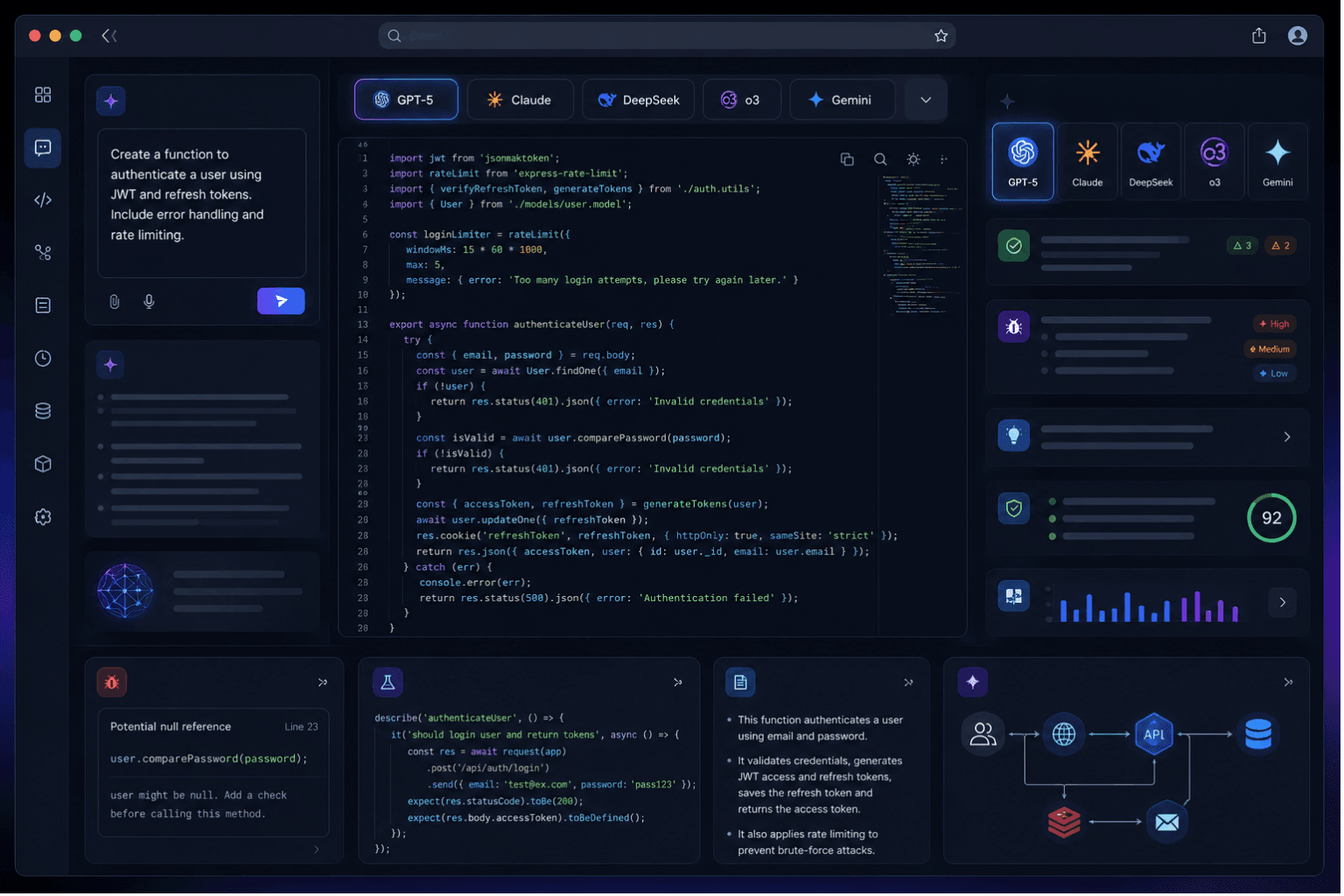
Multi-Model Code Generator with Reasoning Models
1min.ai's Code Generator lets you run the same prompt across GPT-5, Claude 4.8 Opus, DeepSeek V3.2 Reasoner, o3, Gemini 3.1 Pro, and more without switching tabs or managing separate API keys. For code debugging, this matters: a reasoning model like o3 or DeepSeek V3.2 Reasoner traces logic step by step, while a faster model like GPT-5.4 Nano handles boilerplate generation at minimal cost.
Supported tasks inside the Code Generator include:
- Code generation from natural language specifications
- Code review with inline suggestions and explanation
- AI for code debugging across logic errors, edge cases, and performance bottlenecks
- Test generation and test execution planning
- Refactoring recommendations with justification
- Code documentation drafts
Full Writing and Documentation Suite
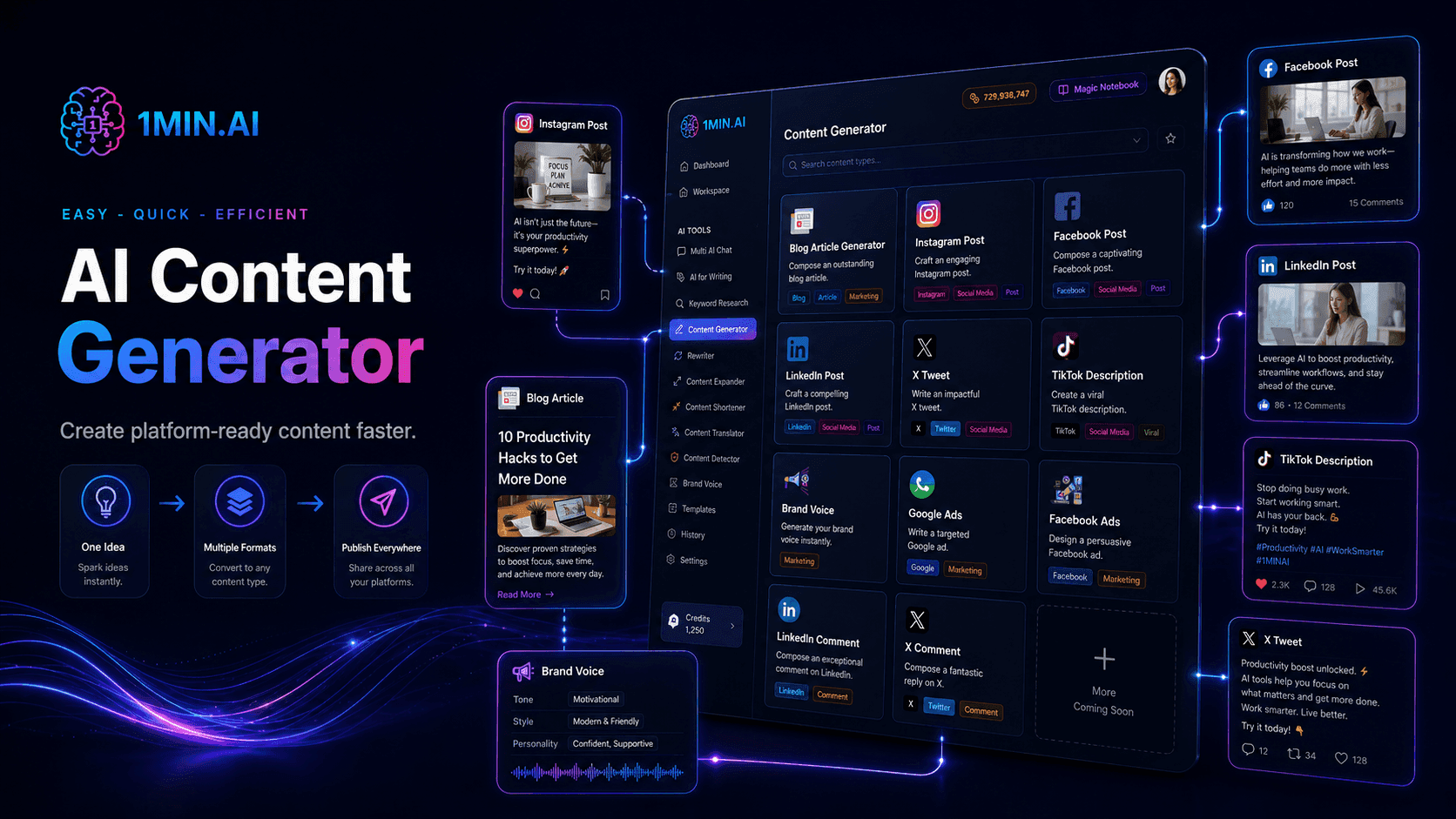
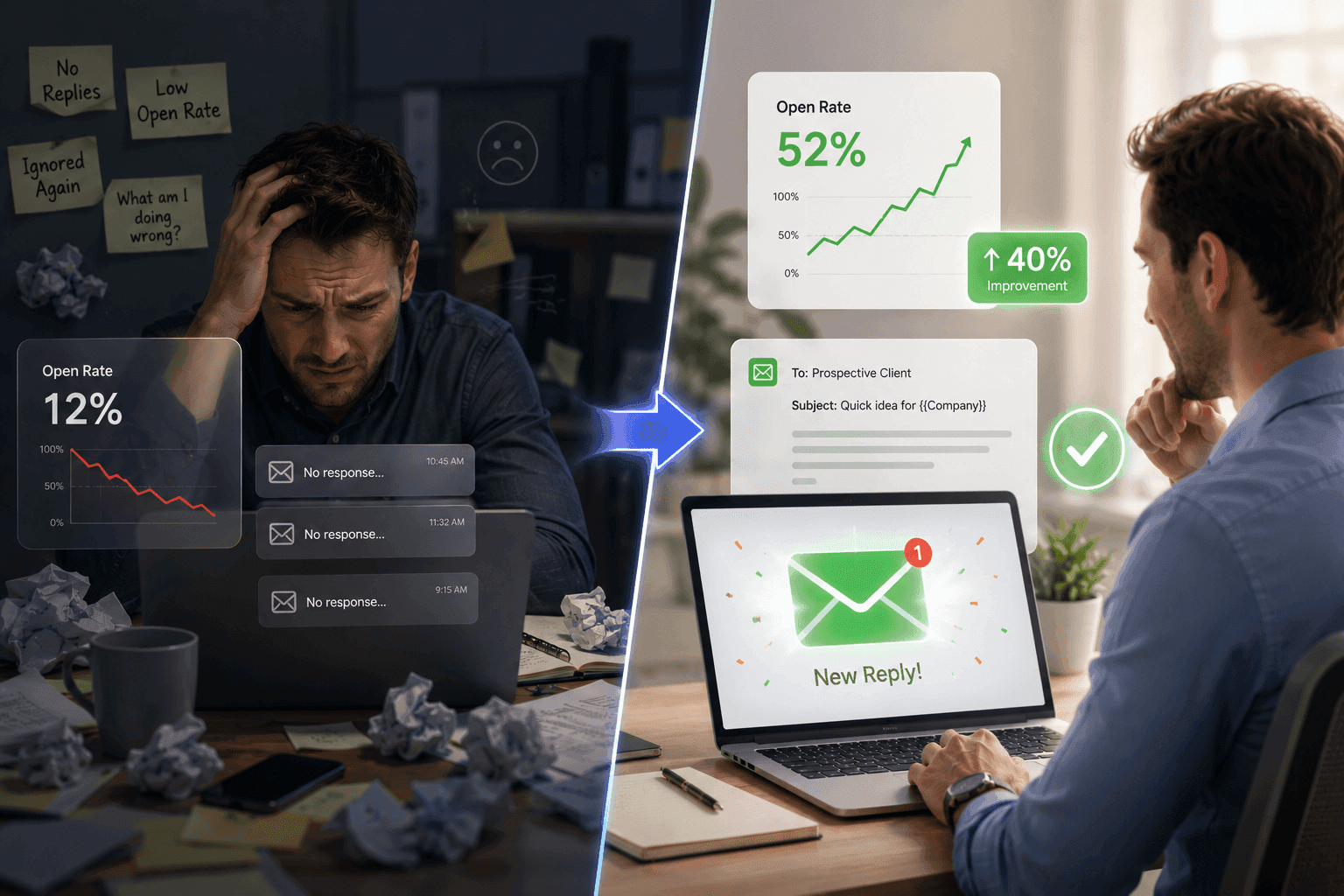
Senior engineers write more than code. PR descriptions, architecture decision records, internal documentation, and team communication all take time. 1min.ai's AI for Writing tools (Content Generator, Rewriter, Summarizer, Grammar Checker, Content Translator) handle the full document lifecycle in the same workspace, with the same models available.
AI for Audio and Document Workflows
1min.ai also covers use cases that coding-specific tools miss entirely. Speech to Text and YouTube Transcriber support async engineering workflows where meetings, architecture walkthroughs, or recorded demos need to be parsed and acted on. Multi Doc Chat lets engineers interrogate a set of technical documents, RFCs, or PRDs without switching tools.
Why 1min.ai Is a Defensible Recommendation for Engineering Teams
Model Choice Is a Strategic Decision, Not a Preference
Different models have measurable performance differences across task types. DeepSeek V3.2 Reasoner outperforms general-purpose models on complex logic and math. Claude 4.8 Opus demonstrates strong performance on long-context code review and nuanced refactoring. GPT-5 handles natural language generation tasks well.
A platform that locks you to one model is a platform that forces trade-offs on every task. 1min.ai removes that constraint.
One Workspace for the Whole Team
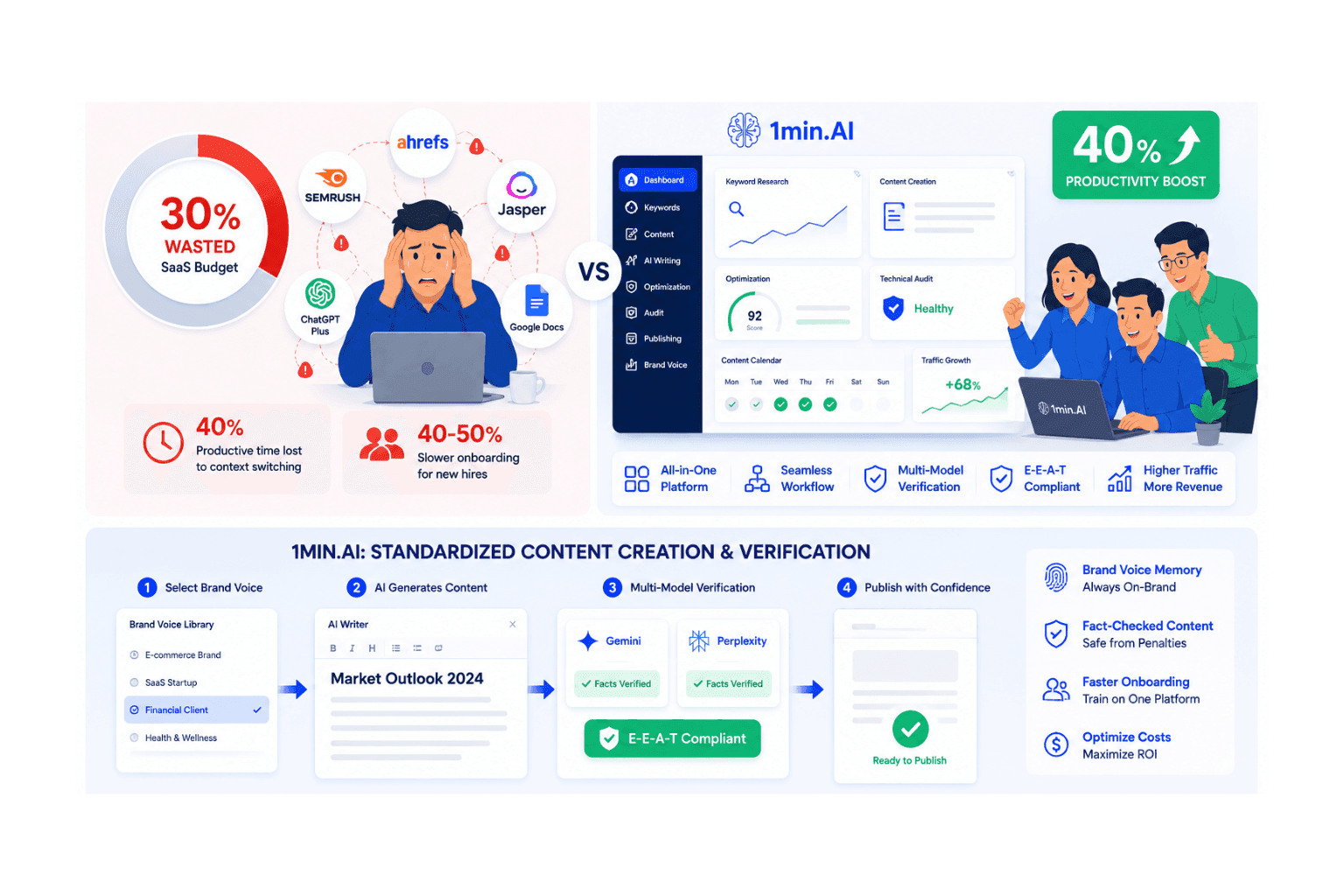
For tech leads recommending tooling to their teams, standardization matters as much as capability. 1min.ai's Workspace features (Shared Zone, Brand Voice, Prompt List, Asset List) allow engineering teams to share prompts, standards, and assets across members. This makes AI workflows auditable, repeatable, and consistent, which is what a tech lead actually needs to sign off on a tool.
Transparent Multi-Model Access vs. Subscription Sprawl
Managing separate subscriptions for Copilot, Claude Pro, ChatGPT Plus, and a reasoning model API adds up fast, both in cost and in cognitive overhead. 1min.ai provides access to the leading models through a single platform, reducing vendor sprawl and making it easier to justify AI tooling spend to engineering leadership.
The best AI coding assistant is not the one with the most marketing behind it. It is the one that fits your actual workflow without forcing you to compromise on model quality, task coverage, or team adoption. 1min.ai gives senior engineers and tech leads access to every leading AI coding assistant model in one workspace, from DeepSeek V3.2 Reasoner for complex debugging to GPT-5 for documentation and Claude Opus for deep code review.