
One Product, 10 UGC Creatives: How AI Makes Content Testing Easier

Lien Anh Vu
September 23, 2026
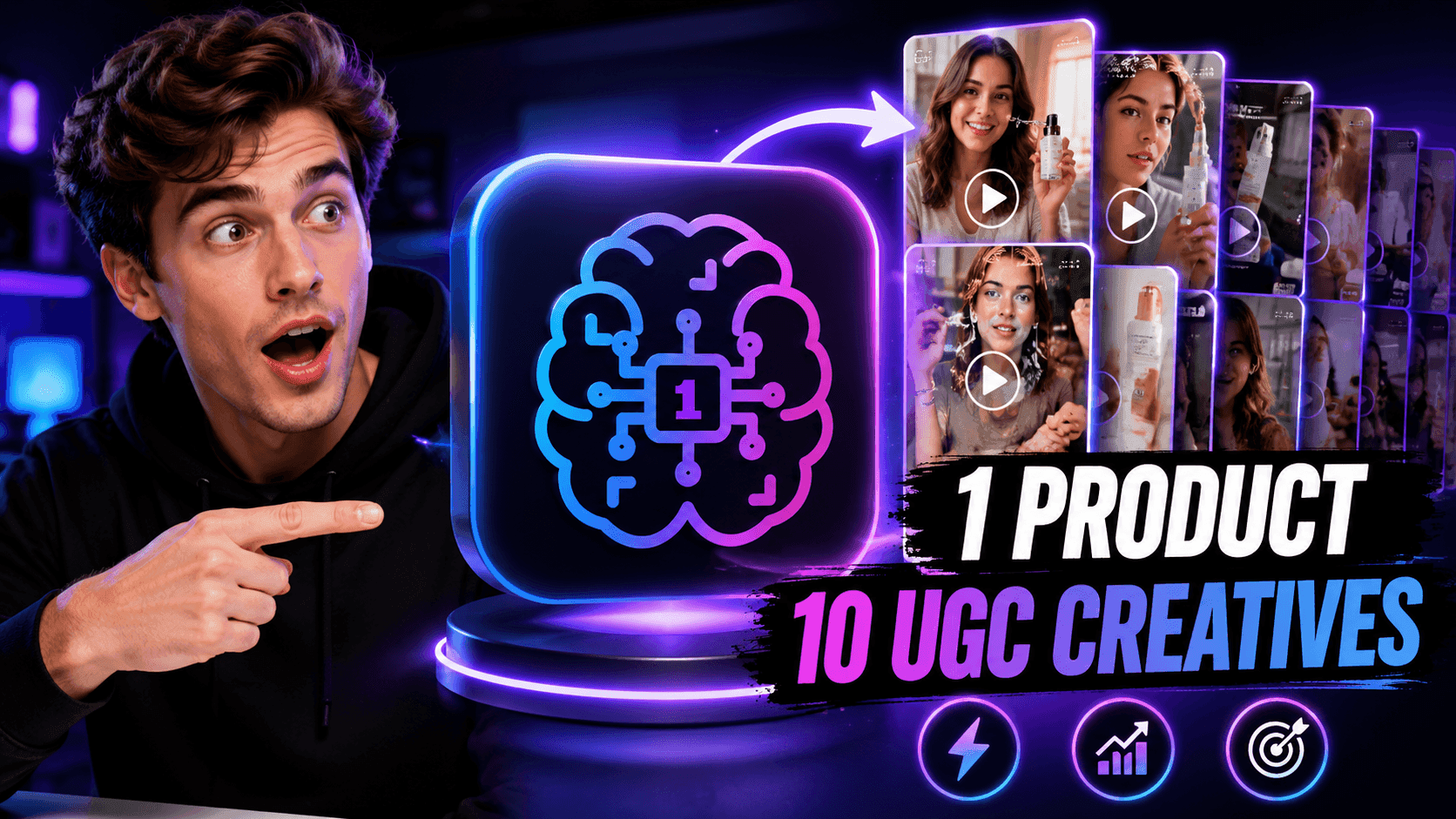
Create more authentic UGC with an AI UGC video generator, test more creative angles and scale affiliate content without filming every version.
For affiliate creators, testing different hooks and product angles can quickly become a repetitive cycle of scripting, filming, and editing. As the number of content variations grows, production becomes harder to manage and scale, while repeated formats can make UGC feel less authentic. The challenge is not simply creating more videos, but finding more creative ways to test what resonates with your audience. AI can help make this process faster and more flexible.
What Is an AI UGC Video Generator?
An AI UGC video generator is a tool that helps creators develop UGC-style video content without having to produce every variation entirely from scratch. Instead of repeating the same process for each new hook or product angle, creators can use AI to explore different creative concepts and turn selected ideas into visual and video content.
For affiliate creators, this can be particularly useful when testing multiple ways to present the same product. A single product may work with a problem-focused story, a personal experience, or a product demonstration, but producing each version manually can require significant time and resources. AI helps reduce the production effort behind these variations, making it easier to explore more creative directions before deciding which concepts are worth developing further.
Why Scaling UGC Creatives Is a Challenge
One Product Should Not Mean Repeating the Same Production Process
One product can support many different creative directions. You might test a problem-focused hook in one video, a personal-experience angle in another, or a product demonstration in a third. Each variation gives you a different way to understand what resonates with your audience.
The challenge is that traditional UGC production requires almost the same amount of work for every variation. A new hook may require another filming session, while a different product angle can mean setting up another scene and editing another video. Even a small change to the script can add more work to the production process. As creators increase the number of variations they want to test, production can quickly become the bottleneck. This makes it harder to experiment with new ideas and learn from content performance.
When UGC Looks Too Much Like an Ad, Buyer Trust Can Drop
More production does not always mean better UGC. When every video uses highly polished visuals, promotional language, and the same product presentation, the content can start to feel more like a traditional advertisement than creator content.
UGC works because it can feel personal, relatable, and natural to the platform where it appears. Scaling UGC therefore is not only about producing more videos. It is about creating different creative directions while keeping the content relevant to the product and audience.
AI Can Make UGC Testing More Flexible
AI can help reduce the production pressure that comes with testing multiple UGC variations. Instead of starting from scratch for every new video, creators can use AI to explore different hooks, storylines, visual concepts, and video directions around the same product.
The goal is not to replace the creator or make every video look the same. It is to make experimentation easier. A single product idea can be developed into several creative concepts before the creator decides which ones are worth producing and testing. This allows creators to explore more possibilities without investing the same amount of time and resources in every variation.
The value of AI is not simply producing content faster. It gives creators more room to test different creative hypotheses, learn from performance, and identify which directions are worth developing further.
The Real Growth Opportunity Is Testing More Creative Directions
More Views Do Not Automatically Mean More Affiliate Clicks
A video can generate views without giving viewers a compelling reason to explore the product.
For affiliate creators, the more useful question is not simply:
“How many people watched this?”
It is:
“Which creative idea made people interested enough to take the next step?”
Different hooks and angles can produce very different responses, even when they promote the same product. Testing these variations helps creators understand which message, benefit, or problem resonates most with their audience.
One Product Can Support Multiple UGC Angles
Instead of creating one generic video, creators can build several creative hypotheses around the same product:
- Problem angle: Start with a problem the audience already experiences and show how the product can help solve it.
- Personal experience: Frame the product around a relatable creator-style experience, making the content feel more personal and natural.
- Product demonstration: Show how the product works or how it can solve a specific problem in a practical situation.
- Curiosity angle: Create an open loop or unexpected hook that gives viewers a reason to keep watching.
- Objection angle: Address a common concern or reason someone might hesitate before buying the product.
- Benefit angle: Focus on one specific outcome the audience cares about instead of trying to communicate every feature at once.
These angles give creators different ways to communicate the same product while testing different audience motivations. For example, a problem-focused video may attract viewers who are actively looking for a solution, while a curiosity-driven video may work better for generating initial interest. A personal-experience angle can make the product feel more relatable, while a demonstration can help viewers understand its practical value.
The goal is not to assume which angle will perform best before testing. Each variation acts as a creative hypothesis that can be tested, measured, and refined based on audience response. Over time, these insights can help creators identify which hooks, messages, and product benefits are worth developing into more UGC variations.
🚀 How 1min.AI Turns One Product Into a More Scalable UGC Workflow
Instead of treating AI as a tool for generating one finished video, creators can use it as part of a broader creative testing workflow. 1min.AI allows the process to move from developing creative ideas and prompts to generating visual concepts and producing video variations, making it easier to explore different directions from the same product.
The workflow can be broken down into five steps:
Step 1: Turn One Product Into Multiple Creative Ideas
Start with Multi AI Chat by providing information about the product, target audience, key benefits, common objections, and the goal of the content.
Rather than asking for one script, use Multi AI Chat to explore different UGC directions around the same product. ChatGPT Astra 6 can help structure content ideas, develop alternative hooks, and create prompts for image and video generation. Claude Opus can be used to develop more detailed storytelling concepts and natural-sounding scripts, while also helping turn those ideas into prompts for specific scenes or creative angles.
This gives you more creative options before production begins. Instead of moving directly from a product description to one script, you can explore several directions and choose the concepts that best fit your audience.
Step 2: Develop UGC-Style Visual Concepts
Once you have your creative ideas, use the AI Image Generator with GPT Image 2 to turn them into visual concepts. You can place the same product in different settings depending on the UGC angle you want to test.
For example, you could show the product in an everyday situation, a problem-and-solution scene, or a simple product demonstration. GPT Image 2 helps bring these ideas to life based on the prompts you create, making it easier to explore different visual directions for the same product.
You can also use the prompts created in Multi AI Chat as a starting point for image generation. This helps keep the visuals aligned with your original UGC concept while giving you more variations to test.
Step 3: Turn Selected Concepts Into Video Variations
After developing your visual concepts, turn the strongest ideas into short-form videos using Text to Video or Image to Video.
Different video models can be used depending on the type of content you want to create. Seedance 2.5 can be used to explore dynamic product scenes and movement-driven concepts. Sora can help turn creative ideas into short-form storytelling scenarios, while Veo 3 can be explored for realistic product and lifestyle scenes. Kling AI Omi can support creator-style concepts that involve product interaction and controlled movement.
The goal is not to use one model for every video. Instead, you can choose a model based on the creative direction and experiment with different prompts and visual references to see how the concept translates into video.
Step 4: Build Multiple Creative Variations From One Idea
Now combine your strongest hooks, visuals, and video concepts into different creative variations.
For example:
Hook A + Visual A + Product Demo
Hook B + Visual B + Personal Experience
Hook C + Visual C + Objection
Each version communicates the same core product value from a different perspective.
This is where AI can reduce the friction of creative production: instead of starting from zero every time, you can build variations from the same underlying product information.
Step 5: Test, Learn, and Iterate
The final step is not simply publishing the videos and moving on.
Use the results to identify which creative directions deserve another iteration.
A simple workflow looks like:
One Product → Multiple Hooks → Multiple Angles → Multiple Visuals → Multiple Video Concepts → Test → Learn → Iterate
If one hook generates stronger engagement, develop more variations around that concept.
If a particular product benefit drives more clicks, make that benefit the focus of additional creatives.
If an angle underperforms, change the hook, visual, or message rather than immediately abandoning the entire product.
This turns AI video generation into an ongoing creative testing workflow, rather than a one-time content generation task.
Frequently Asked Questions
What is an AI UGC video generator?
An AI UGC video generator uses AI to create creator-style video content, helping creators produce scripts, visuals, videos, and creative variations without filming every version manually.
How can I create multiple UGC videos from one product?
Generate multiple hooks and angles, create different visual concepts, turn the strongest ideas into videos, and test the variations to see what resonates with your audience.
What UGC angles should affiliate creators test?
Start with problem/solution, personal experience, product demonstration, curiosity, benefits, and objection-based angles to discover which creative direction drives the strongest response.
🚀 Start with one product in 1min.AI, create multiple UGC variations, and test what resonates with your audience.
Alternatives
Discover the best alternatives to 1minAI and compare features, pricing, and use cases.

1min.AI vs OpenRouter
1min.AI vs. OpenRouter: Compare the ready-to-use AI creation product against the technical API tool. Find out if you need a zero-code creative studio or a coding infrastructure hub.
 Ngoc Hong
1min.AI vs Jarvis AI
Compare 1min.AI vs Jarvis AI to discover which AI platform is better for writing, research, automation, and content creation. Find the best AI assistant for your workflow.
Ngoc Hong
1min.AI vs Taskade
Compare 1min.AI vs Taskade for AI content creation, automation, agents, and creative workflows to find the right workspace.
Ngoc HongAI Tools
Discover the best AI tools to boost productivity, creativity, and everyday work.
Create Consistent Cartoon Content in Just a Few Steps
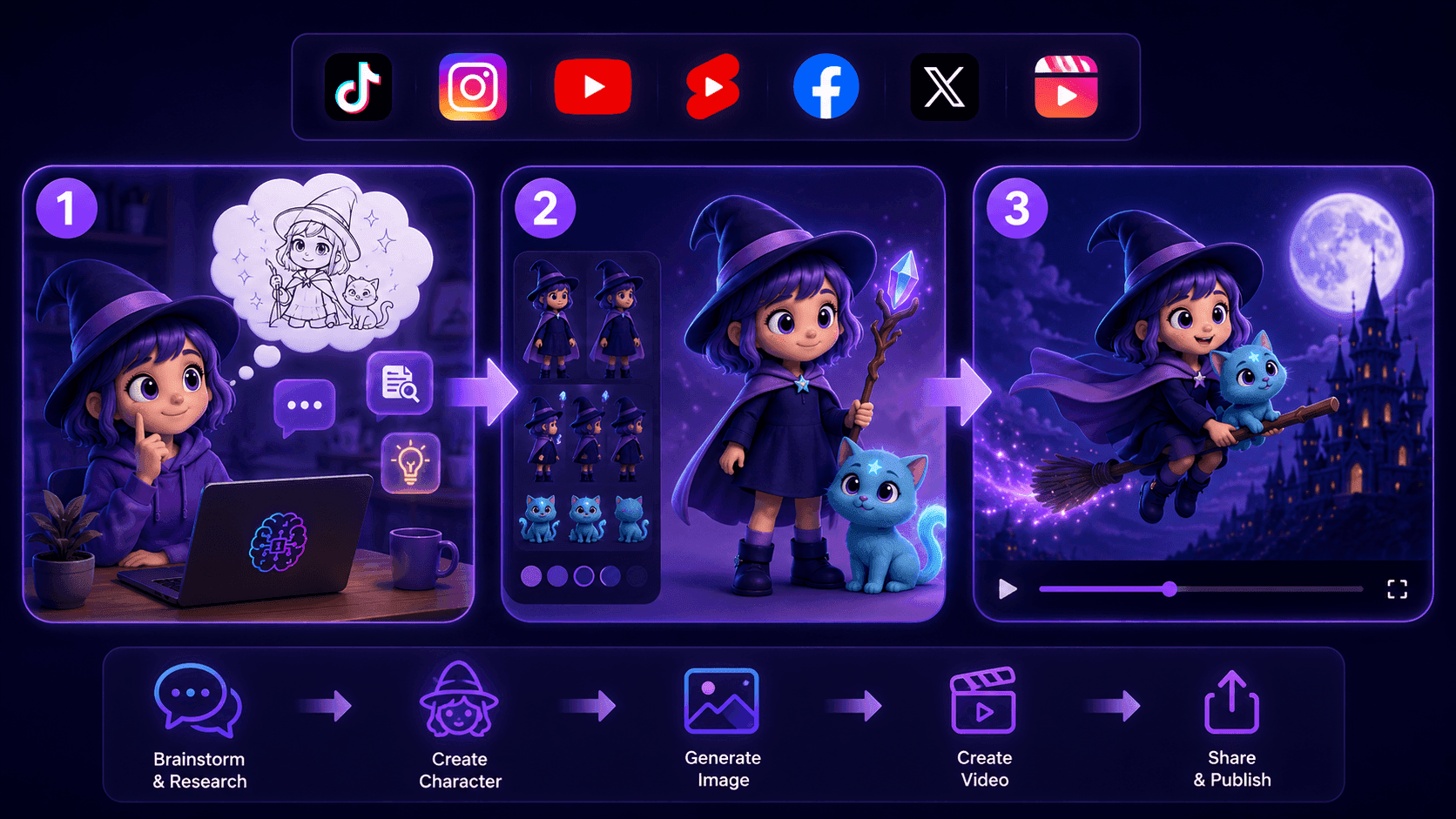
Create engaging cartoon videos for TikTok and Reels with 1min.AI. Research ideas, create characters, and turn images into animated videos in 3 simple steps.
 Lien Anh Vu
One Product, 10 UGC Creatives: How AI Makes Content Testing Easier
Create more authentic UGC with an AI UGC video generator, test more creative angles and scale affiliate content without filming every version.
Lien Anh Vu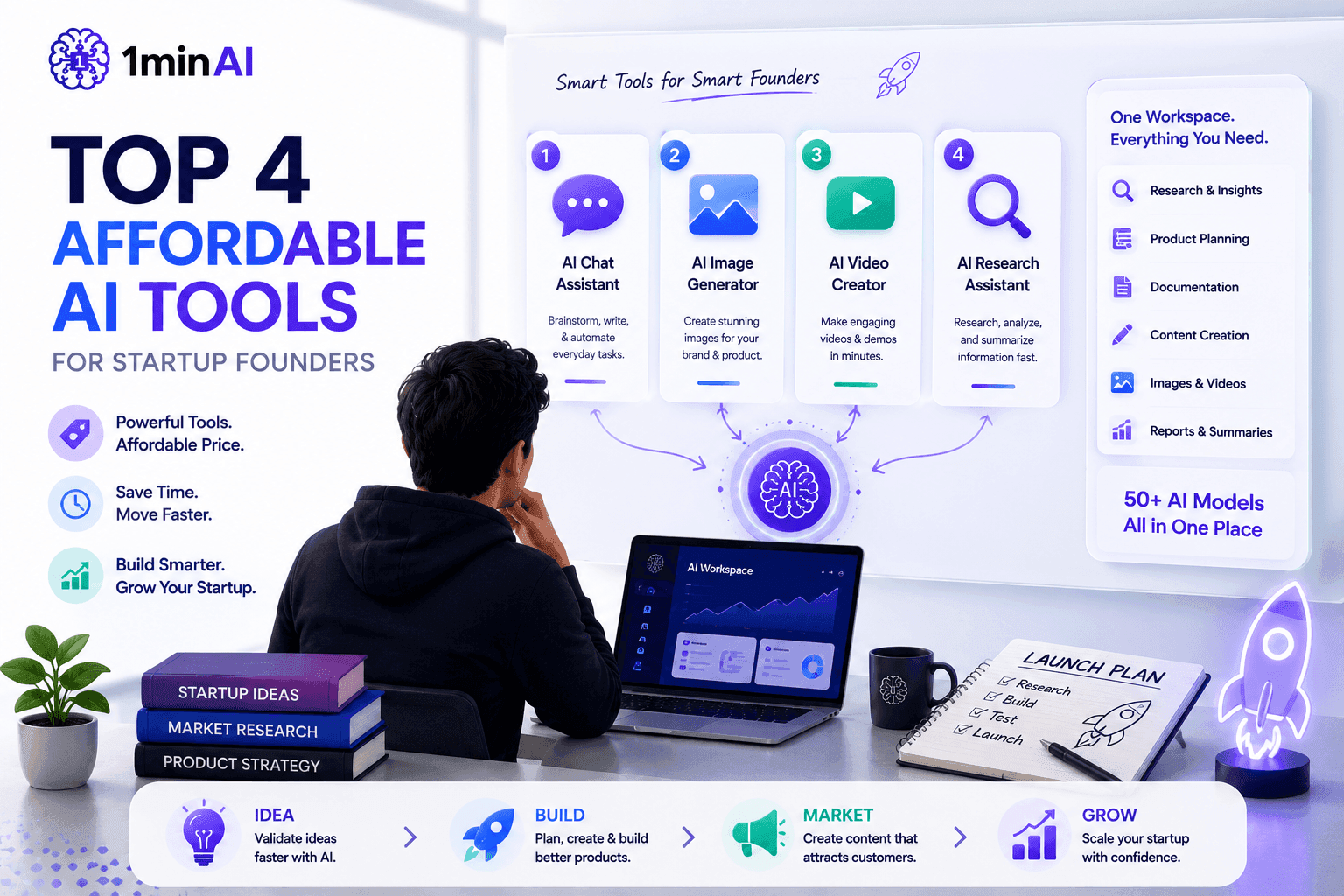
Top 4 Affordable AI Tools for Startup Founders
Discover the top 4 affordable AI tools for startup founders to validate ideas, build products, create content, and launch faster without overspending.
 Tram Ta
AI Features
Comprehensive AI features that streamline workflows, improve efficiency, and empower teams to achieve more.
Create Consistent Cartoon Content in Just a Few Steps
Create engaging cartoon videos for TikTok and Reels with 1min.AI. Research ideas, create characters, and turn images into animated videos in 3 simple steps.
Lien Anh VuOne Product, 10 UGC Creatives: How AI Makes Content Testing Easier
Create more authentic UGC with an AI UGC video generator, test more creative angles and scale affiliate content without filming every version.
Lien Anh Vu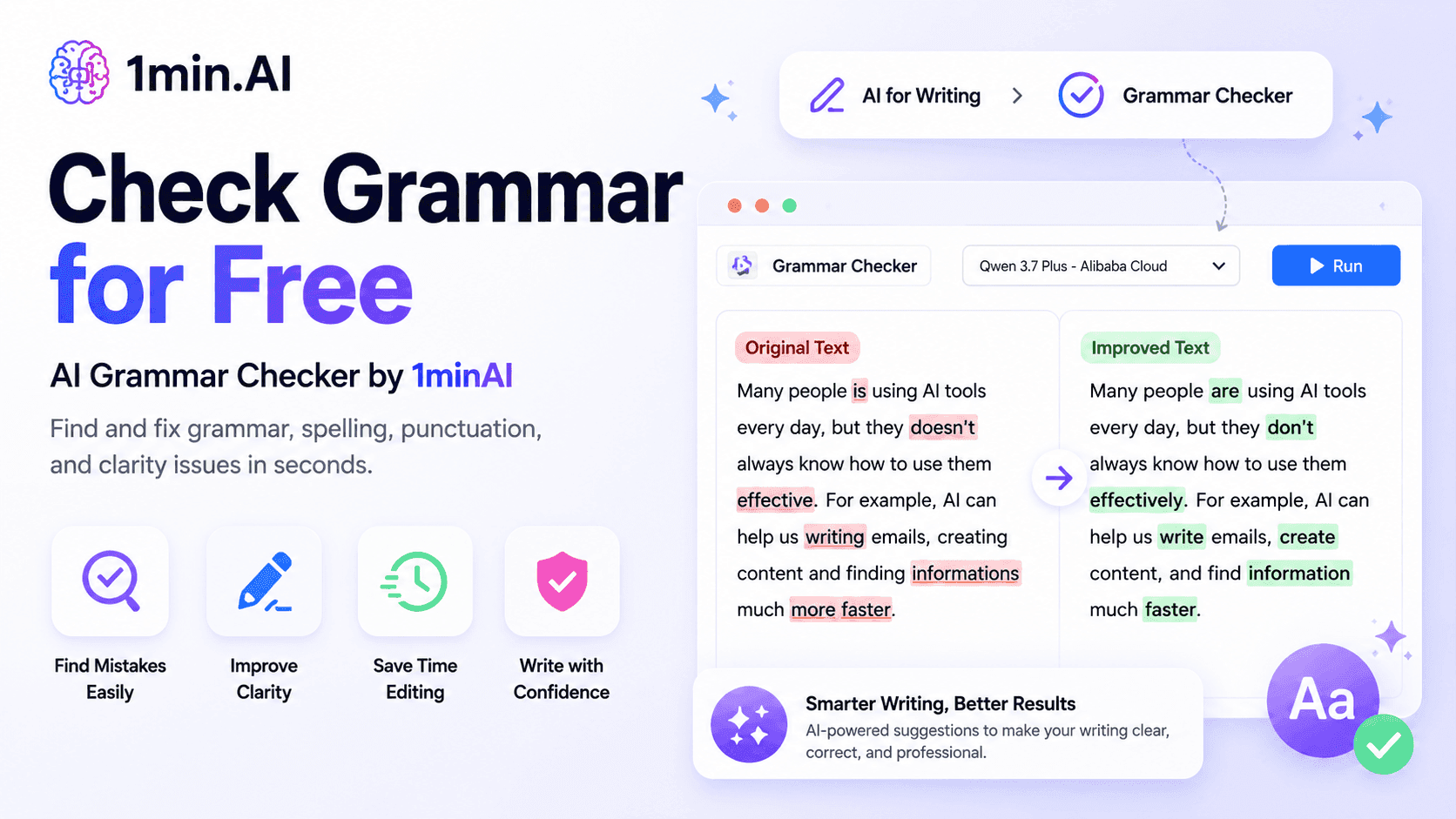
1minAI: Free AI Grammar Checker
Check grammar for free with 1minAI’s AI grammar checker. Find grammar, spelling, and writing mistakes, improve clarity, and polish your content in seconds.
Tram TaAI Use Cases
A curated collection of AI use cases for business, productivity, and industry-specific applications.
Create Consistent Cartoon Content in Just a Few Steps
Create engaging cartoon videos for TikTok and Reels with 1min.AI. Research ideas, create characters, and turn images into animated videos in 3 simple steps.
Lien Anh VuOne Product, 10 UGC Creatives: How AI Makes Content Testing Easier
Create more authentic UGC with an AI UGC video generator, test more creative angles and scale affiliate content without filming every version.
Lien Anh Vu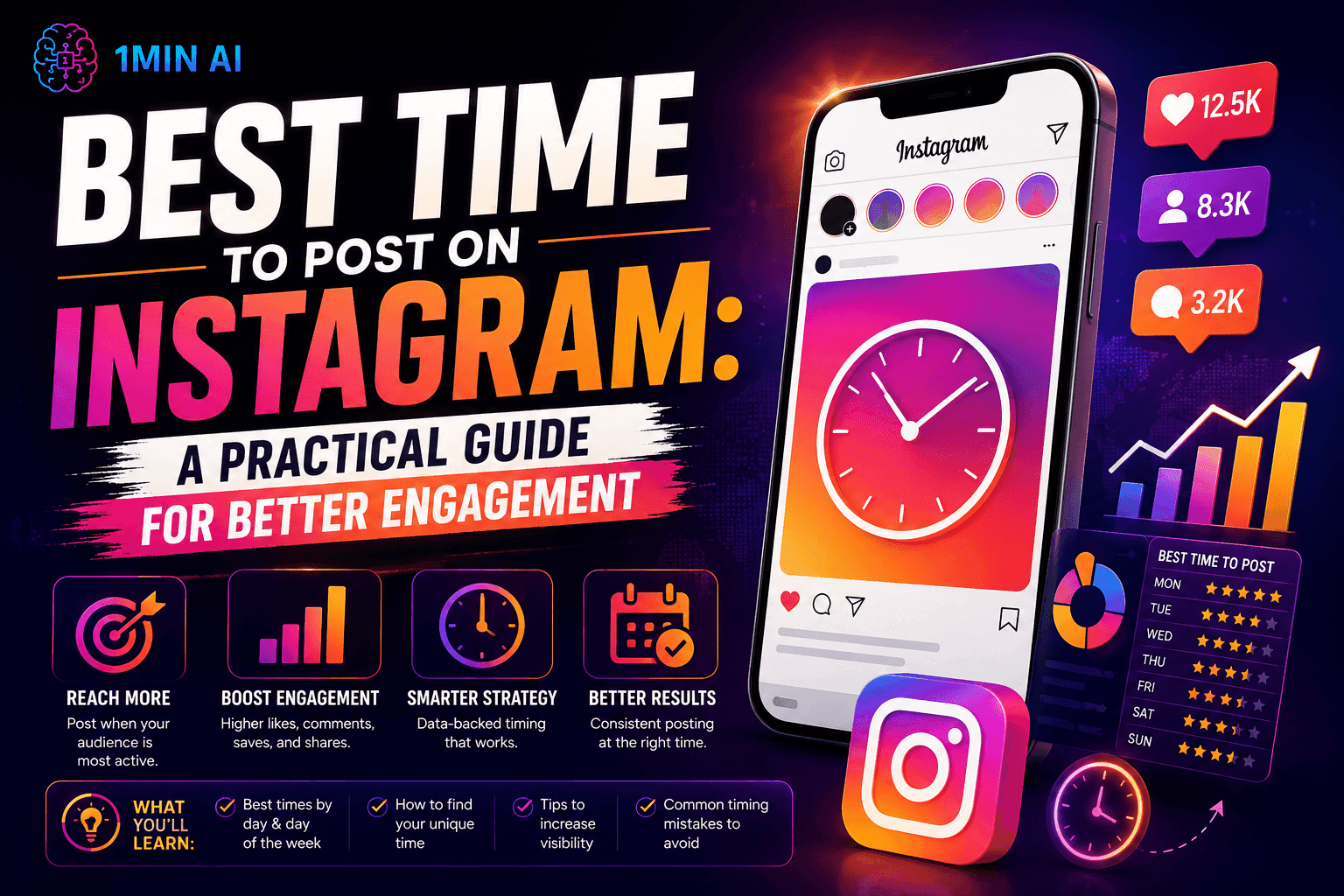
Best Time to Post on Instagram: A Practical Guide for Better Engagement
Discover the best time to post on Instagram, including the best days and times for different audiences, plus tips to find the ideal posting schedule for your account.
Tram TaAI Tutorials
Learn how to use AI with practical, step-by-step tutorials.
Black Friday AI Tool Deals in 2026
Discover what Black Friday AI tool deals 2026 has to offer. Find out how to secure the 1min.AI lifetime deal via AppSumo, Dealify, Stack Social, and verify on Trustpilot, Slashdot, and Software Advice.
 Hang Nguyen
Create Consistent Cartoon Content in Just a Few Steps
Create engaging cartoon videos for TikTok and Reels with 1min.AI. Research ideas, create characters, and turn images into animated videos in 3 simple steps.
Lien Anh Vu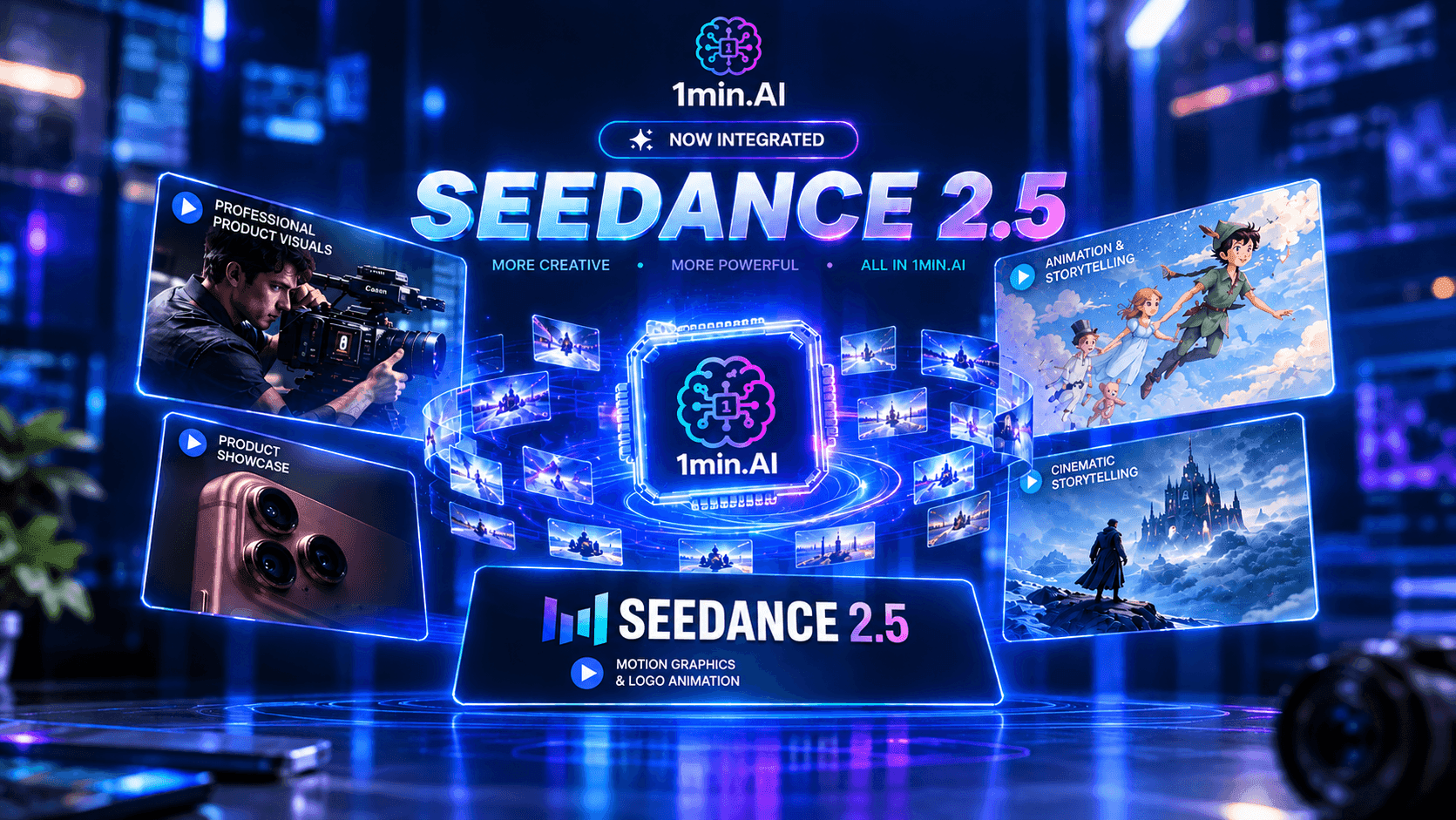
[Seedance 2.5 New] Better AI Product Videos, Less Rework in 1min.AI
Use Seedance 2.5 image to video on 1min.AI to create more consistent AI product videos, reduce failed generations, save credits, and improve UGC workflows.
Lien Anh VuAI Guides
Learn AI faster with practical guides, real-world examples, and actionable best practices.

Safely Buy AI Tools Online: 2026 Black Friday Guide
Discover how to find and secure the best Black Friday AI deals online. Learn expert strategies to avoid scams, combat subscription fatigue, and verify software.
Hang NguyenCreate Consistent Cartoon Content in Just a Few Steps
Create engaging cartoon videos for TikTok and Reels with 1min.AI. Research ideas, create characters, and turn images into animated videos in 3 simple steps.
Lien Anh Vu[Seedance 2.5 New] Better AI Product Videos, Less Rework in 1min.AI
Use Seedance 2.5 image to video on 1min.AI to create more consistent AI product videos, reduce failed generations, save credits, and improve UGC workflows.
Lien Anh VuAI Solutions
Browse the best AI solutions for automation, coding, research, productivity, customer support, marketing, and business workflows.
Safely Buy AI Tools Online: 2026 Black Friday Guide
Discover how to find and secure the best Black Friday AI deals online. Learn expert strategies to avoid scams, combat subscription fatigue, and verify software.
Hang NguyenCreate Consistent Cartoon Content in Just a Few Steps
Create engaging cartoon videos for TikTok and Reels with 1min.AI. Research ideas, create characters, and turn images into animated videos in 3 simple steps.
Lien Anh VuOne Product, 10 UGC Creatives: How AI Makes Content Testing Easier
Create more authentic UGC with an AI UGC video generator, test more creative angles and scale affiliate content without filming every version.
Lien Anh VuAI Models
Explore the world's leading AI models in one place.
Create Consistent Cartoon Content in Just a Few Steps
Create engaging cartoon videos for TikTok and Reels with 1min.AI. Research ideas, create characters, and turn images into animated videos in 3 simple steps.
Lien Anh VuOne Product, 10 UGC Creatives: How AI Makes Content Testing Easier
Create more authentic UGC with an AI UGC video generator, test more creative angles and scale affiliate content without filming every version.
Lien Anh Vu[Seedance 2.5 New] Better AI Product Videos, Less Rework in 1min.AI
Use Seedance 2.5 image to video on 1min.AI to create more consistent AI product videos, reduce failed generations, save credits, and improve UGC workflows.
Lien Anh VuAI Comparisons
Compare AI tools, models, and platforms to find the best fit for your needs.
Kling AI Vs Veo 3: Which Model Wins?
Kling AI vs Veo 3: compare motion, native audio, pricing & free tiers to see which AI video generator wins for your project - try both on 1min.AI.
 Trang Tran
[Seedance 2.5 New] Better AI Product Videos, Less Rework in 1min.AI
Use Seedance 2.5 image to video on 1min.AI to create more consistent AI product videos, reduce failed generations, save credits, and improve UGC workflows.
Lien Anh Vu
DeepSeek V4 Pro vs Flash Comparison
Compare DeepSeek V4 Pro vs DeepSeek V4 Flash metrics. Optimize your agentic apps and improve AI fact checking on 1min.ai today.
Ngoc HongAI Integrations
Seamlessly integrate AI with the tools you already use to automate work and boost productivity.
POV: You Have 10+ Posts to Make Every Day
Learn how to build an AI content workflow that helps content creators produce 10+ social media posts a day faster with AI brainstorming, image generation, and content creation.
Lien Anh Vu
How to Use an AI Fashion Video Generator for Fashion Week 2026
Turn Fashion Week 2026 ideas into stunning fashion videos with AI. Learn how to brainstorm, create visuals, and transform images into videos with one simple workflow.
Lien Anh Vu
Stop Switching Between AI Apps: How AI Integration Transforms Employer Branding
Discover how AI integration helps HR teams streamline employer branding by combining AI writing, documents, images, video, and multiple AI models into one workspace.
Tram TaAI for Industries
Find the best AI tools and workflows for healthcare, finance, education, legal, manufacturing, retail, real estate, and more
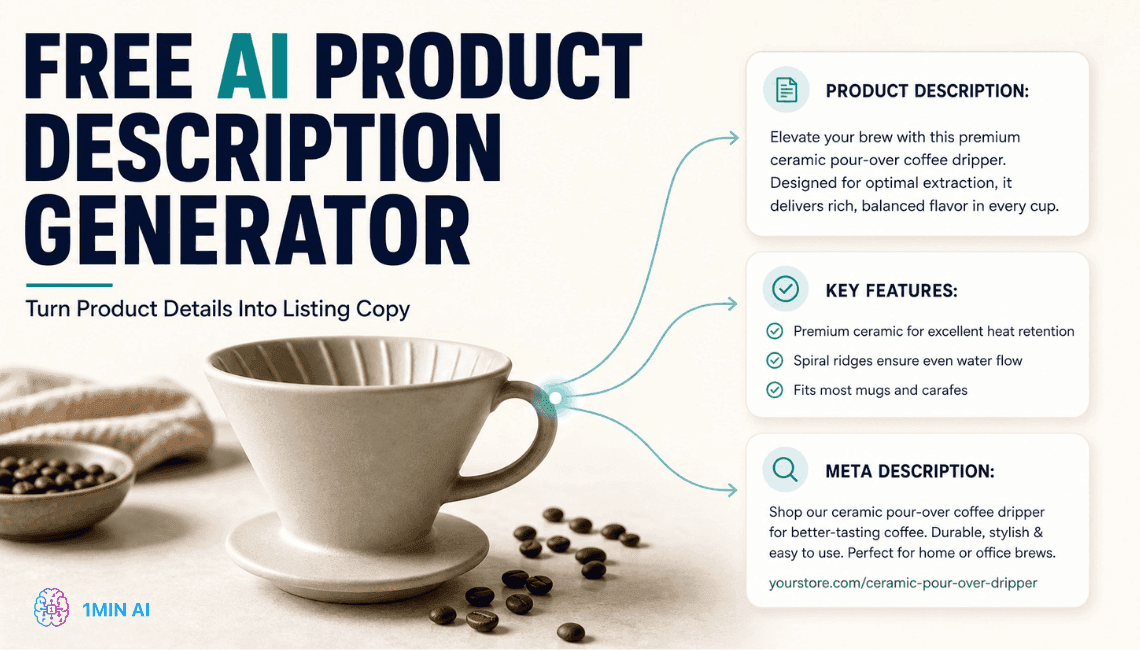
Free AI Product Description Generator
Write product descriptions that sell in minutes. Use this free AI product description generator to turn details or a photo into on-brand copy. Try 1min.AI.
Trang Tran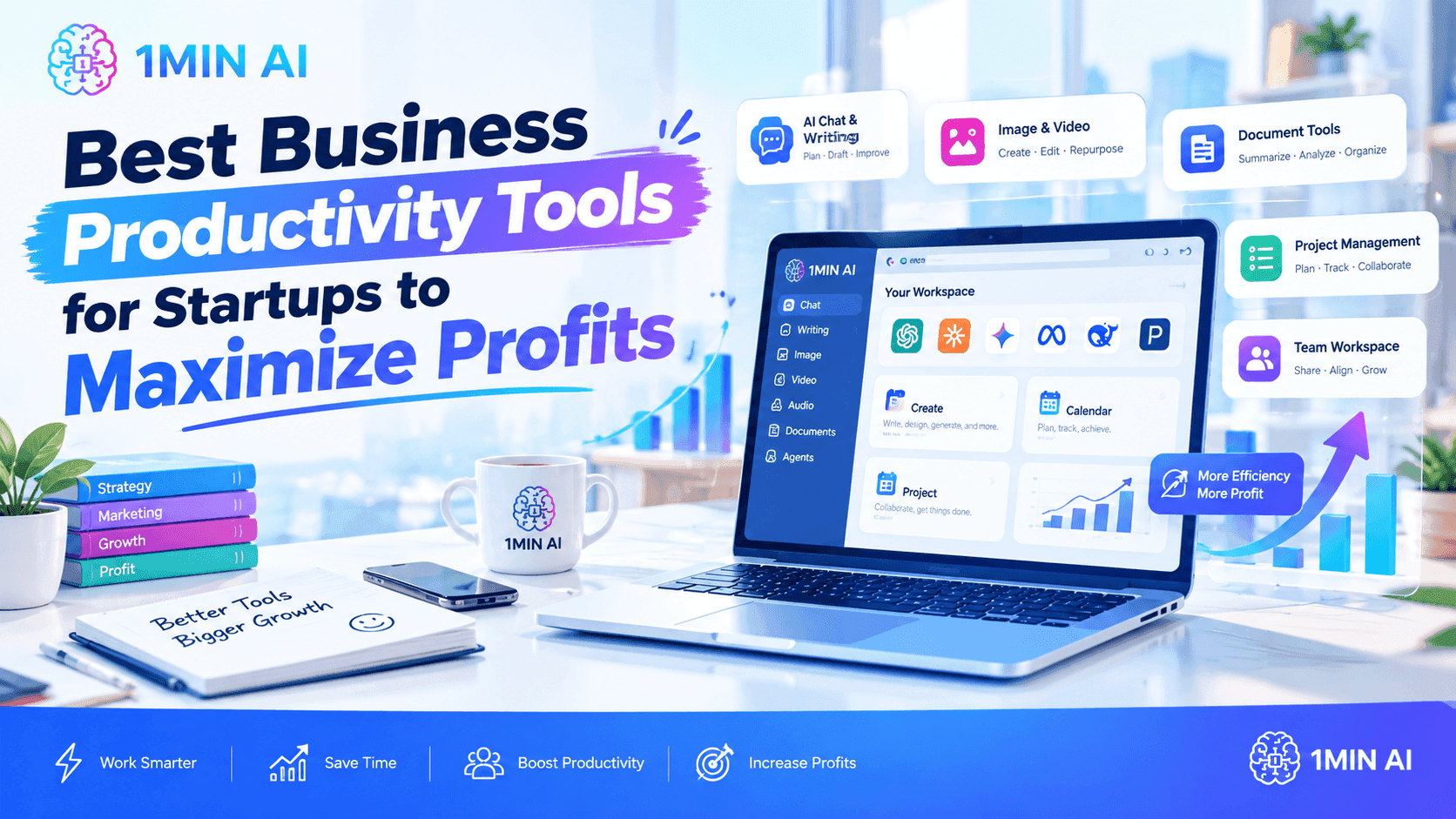
Best Business Productivity Tools for Startups to Maximize Profits | 1minAI
Discover the best business productivity tools for startups to save time, streamline workflows, reduce repetitive tasks, and support profitable growth with AI.
Tram Ta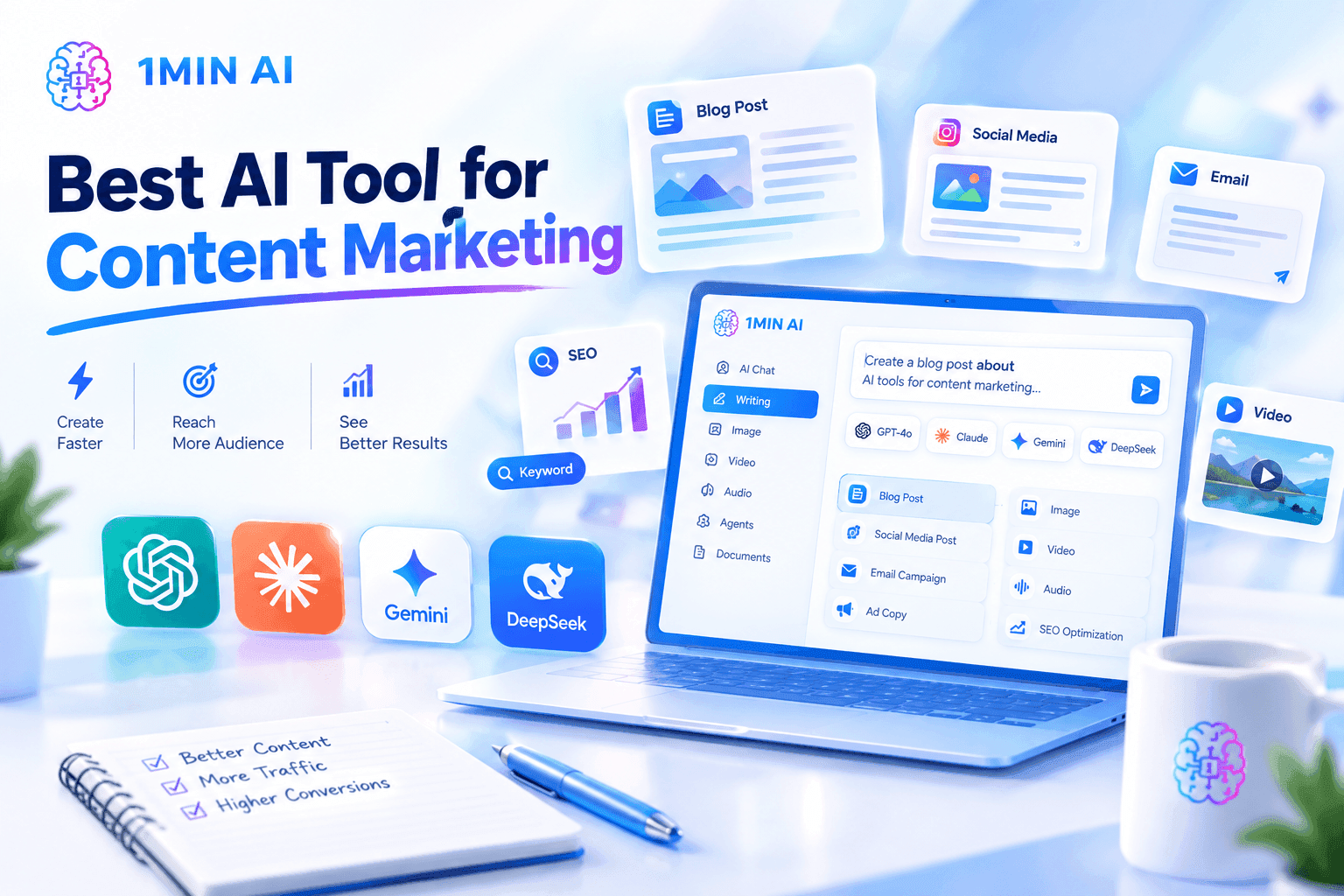
Best AI Tool for Content Marketing |1minAI
Looking for the best AI tool for content marketing? See how 1minAI helps marketers research, write, repurpose, create visuals, and scale content from one AI workspace.
Tram TaAI Agents
Discover and run AI agents to automate tasks across your work and daily life.
1minAI: Free AI Grammar Checker
Check grammar for free with 1minAI’s AI grammar checker. Find grammar, spelling, and writing mistakes, improve clarity, and polish your content in seconds.
Tram Ta
AI Agents for Facebook
Use an AI Agent for Facebook to create content, generate images, schedule posts, and publish from your documents and conversations.
Ngoc Hong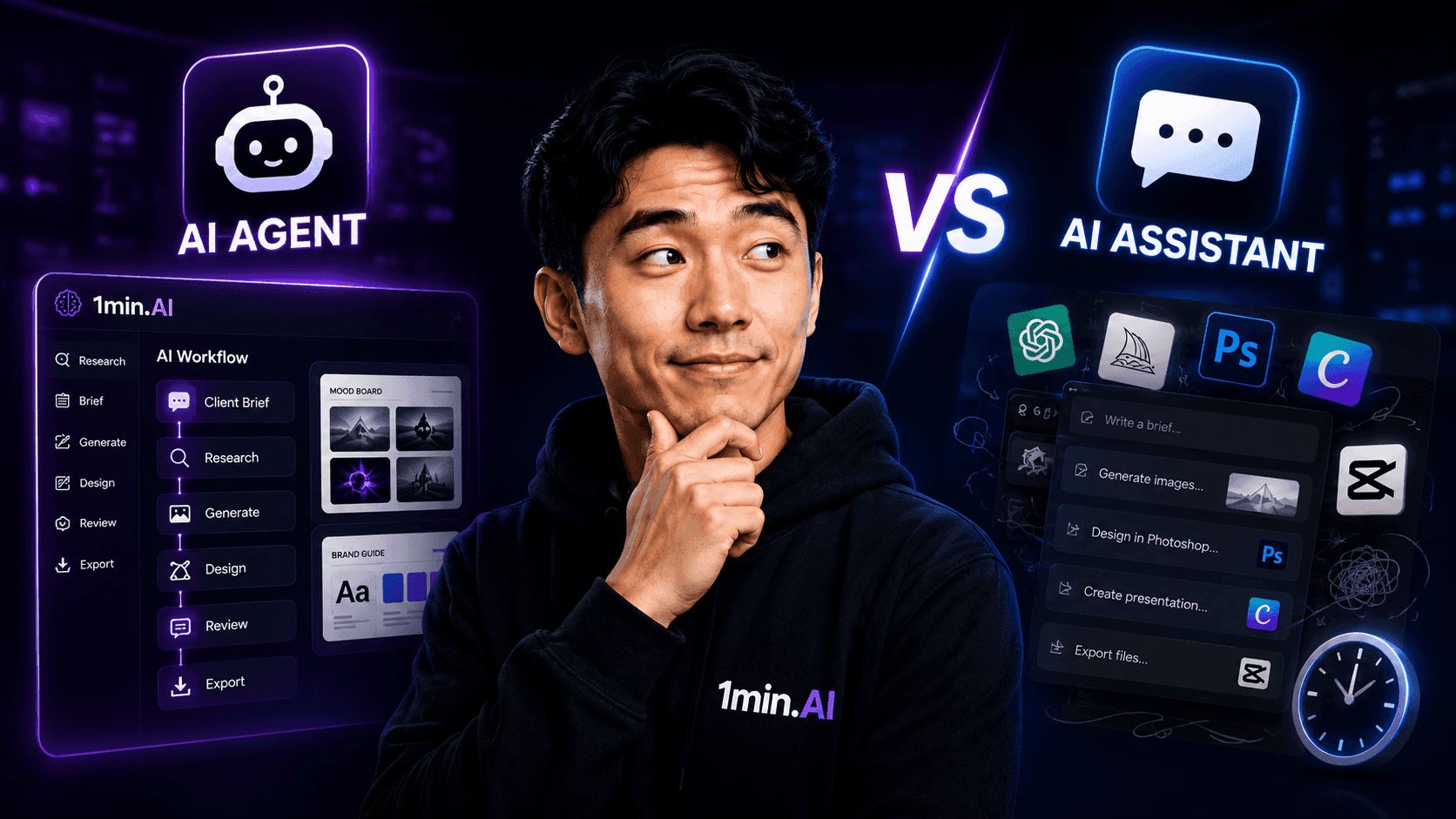
AI Agent vs AI Assistant: Which One Actually Saves Designers More Time?
Learn the difference between AI Agent vs AI Assistant and discover which solution helps designers automate repetitive work, reduce revisions, and save more time.
Lien Anh VuAI Workflows
Explore ready-to-use AI workflows for productivity, marketing, sales, support, and more.
Create Consistent Cartoon Content in Just a Few Steps
Create engaging cartoon videos for TikTok and Reels with 1min.AI. Research ideas, create characters, and turn images into animated videos in 3 simple steps.
Lien Anh VuOne Product, 10 UGC Creatives: How AI Makes Content Testing Easier
Create more authentic UGC with an AI UGC video generator, test more creative angles and scale affiliate content without filming every version.
Lien Anh VuPOV: You Have 10+ Posts to Make Every Day
Learn how to build an AI content workflow that helps content creators produce 10+ social media posts a day faster with AI brainstorming, image generation, and content creation.
Lien Anh VuNewsletter
Weekly AI Innovations with 1minAI
🔮 Weekly AI Innovations #141: Seedance 2.5 & Stable Audio 3: Next-Gen AI
Explore Seedance 2.0, 2.5, and StabilityAI's Stable Audio 3 on 1min.ai. Generate studio-grade audio and synchronized motion with next-gen generative AI.
Hang Nguyen
🔮 Weekly AI Innovations #140: Deepseek 4.1 Flash & Gemini Upgrades
Explore Deepseek 4.1 Flash and new Gemini models on 1min.ai. Plus, check our update on your Billing - Usage page for better clarity.
Hang Nguyen
🔮 Weekly AI Innovations #139: Dawn of the next-gen AI
Discover the immense power of GPT-6 Astra and Claude Fable 5.1. Unlock next-generation AI models on 1min.ai to solve complex tasks effortlessly.
Hang Nguyen