Create Consistent Cartoon Content in Just a Few Steps

Lien Anh Vu
September 23, 2026
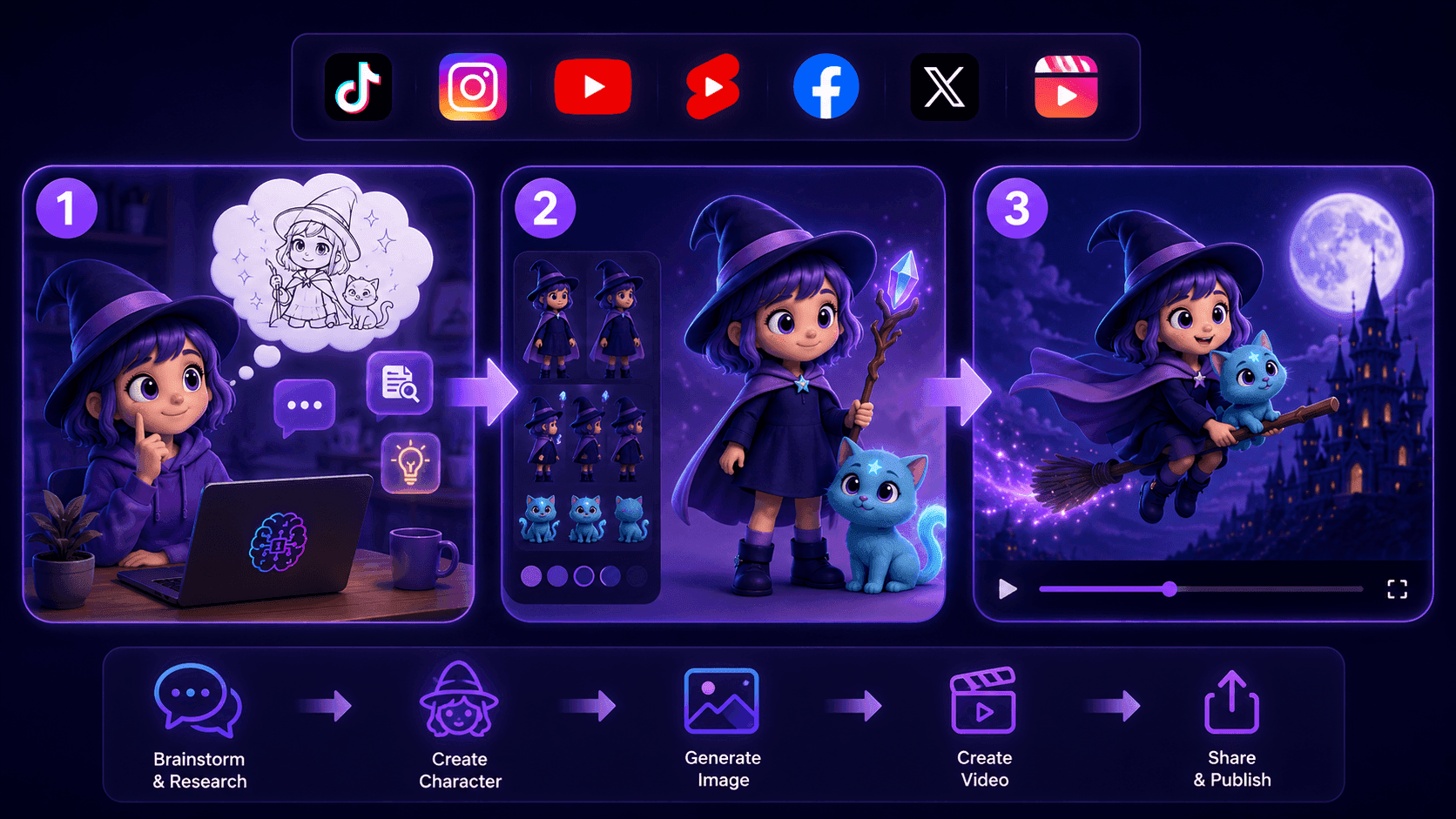
Create engaging cartoon videos for TikTok and Reels with 1min.AI. Research ideas, create characters, and turn images into animated videos in 3 simple steps.
Creators often don’t struggle with a lack of ideas. The real challenge is turning those ideas into finished content, especially when research, character creation, visual design, and video production require multiple tools. A simple, streamlined workflow can reduce creative friction, maintain production speed, and help prevent burnout. In this guide, we’ll show you how to use an AI cartoon video generator to turn an idea into a finished cartoon video in just three steps.
Why Creating Cartoon Content Can Become a Burnout Cycle
Too Many Steps Between an Idea and a Finished Video
A cartoon video may begin with a simple idea, but turning that idea into a finished piece of content involves far more than generating a character and adding movement. Creators often need to research topics, develop a story, write a script, define a visual style, create characters, generate scenes, animate the visuals, and edit the final video. Each stage requires different creative decisions, which can make even a short video feel like a much larger production task.
The challenge becomes more noticeable when these stages are spread across different tools. You may need one platform to research an idea, another to generate images, another to animate them, and a separate editor to assemble the final video. Moving between platforms means repeatedly switching workflows, copying prompts, downloading assets, and checking whether the output still matches the original concept.
This creates creative friction. Instead of spending most of your time developing the story or improving the visual concept, part of your attention is consumed by managing the production process itself. A small change, such as giving the character a different outfit or changing the setting, can also require you to go back through several previous steps.
For creators who publish regularly, these small tasks accumulate quickly. The problem is not necessarily that any individual step is difficult. It is that the same decisions and production work have to be repeated for every new video. Over time, this can make content creation feel less like a creative process and more like a production checklist.
Why Creators Need a Faster and More Repeatable Workflow
Consistency is one of the biggest challenges for short form creators. Publishing regularly requires more than having new ideas. You also need a production process that allows you to turn those ideas into finished videos without exhausting the time and creative energy needed for the next one.
This is where a repeatable workflow becomes useful. Instead of approaching every cartoon video as a completely new project, creators can separate the process into clear stages and reuse the same structure:
Research and brainstorm → Develop the concept → Create the character → Generate the scene → Turn the image into video
A structured workflow also makes it easier to identify where changes should be made. If the story is weak, you can refine the concept before generating visuals. If the character does not match the idea, you can adjust the image before moving to video generation. If the movement feels unnatural, you can refine the video prompt instead of rebuilding the entire project.
This matters because creative experimentation often requires iteration. You may want to test a different hook, character expression, setting, visual style, or story direction before deciding what works best. When every experiment requires starting from scratch, creators may avoid testing new ideas simply because the production cost is too high.
With a repeatable process, you can keep the core workflow consistent while changing individual creative elements. The same character can appear in different stories, the same visual style can be applied to new topics, and different hooks can be tested without rebuilding the entire production system. The goal is not simply to create cartoon videos faster, but to make the production process flexible enough that creators can spend more of their energy on ideas, storytelling, and experimentation.
How to Create Cartoon Videos With AI in 3 Simple Steps
Step 1: Brainstorm and Research Your Cartoon Idea With Multi AI Chat
Before generating any visuals, start with the idea.
Use Multi AI Chat with ChatGPT 5 Opus to research your topic, explore different creative directions, develop a simple story concept, and turn your idea into usable prompts for the next stages of production.
Instead of asking AI only to "give me a cartoon idea," give it a specific content goal.
For example, you could ask:
"Research current short form content trends and suggest five cartoon video concepts for TikTok that can be told in under 30 seconds. Make each concept visually engaging, easy to understand without sound, and suitable for a recurring cartoon character."
From there, you can choose your strongest concept and ask ChatGPT 5 Opus to develop the details, including:
- Character appearance
- Personality and expressions
- Setting and environment
- Story progression
- Key actions
- Image generation prompt
- Video generation prompt
This is where the workflow becomes more efficient because your research and creative development happen before you start generating visuals.
You are not randomly creating images and trying to figure out a story afterward. Instead, you already have a clear creative direction that can guide the image and video generation stages.
You can also continue refining the idea before moving to visual generation. If the first concept feels too generic, ask ChatGPT 5 Opus to suggest alternative storylines, stronger hooks, different character personalities, or new settings. Making these creative decisions earlier can reduce the need to repeatedly regenerate images or videos later.
Step 2: Create Your Cartoon Character Image
Once your concept is ready, move from text to visuals. Use GPT Image 2 in the Image feature to turn your visual prompt into a cartoon character. Based on the character direction developed in the first step, you can create a detailed visual reference that will later guide the video generation process.
For better consistency, describe the character clearly rather than relying on a short generic prompt. Include details such as appearance, hairstyle, clothing, facial features, color palette, proportions, personality, and visual style.
When writing your prompt for GPT Image 2, describe the character’s appearance, hairstyle, clothing, facial features, color palette, proportions, personality, and visual style. The more consistent these details are, the easier it becomes to maintain the character’s identity across different scenes.
For example:
"Create a cute cinematic cartoon girl with short blue purple hair, large expressive eyes, a rounded face, a dark navy pointed witch hat, lavender cape, dark blue dress, and small dark boots. Use a polished fantasy animation style with soft lighting and expressive facial features."
The goal is not simply to create one attractive image. You are creating a visual reference for your character that can guide the video generation stage.
If your content is built around a recurring character, keeping important visual details consistent becomes even more valuable. You can reuse the character description and visual reference when creating future scenes, allowing your content to develop a recognizable visual identity instead of looking completely different from one video to the next.
You can also create several versions of the same character before moving to animation. Try different expressions, poses, environments, or compositions while keeping the core character details consistent. This gives you more visual options and makes it easier to choose a character reference that fits the story and video concept you want to create.
Step 3: Turn Your Cartoon Image Into a Video
Now bring your character to life.
Use your generated cartoon image as the visual reference in Sora Pro, then describe how you want the character and environment to move.
Instead of focusing only on what the character looks like, your video prompt should explain movement, action, camera direction, and atmosphere.
For example:
"The cartoon witch girl walks through an enchanted forest while her magical cat follows beside her. She looks around curiously as glowing particles float through the air. The camera slowly moves forward with a smooth cinematic motion while her cape and hair gently move in the breeze."
This gives the AI a much clearer understanding of how the still image should become a moving scene.
You can also specify details such as:
- Character movement
- Facial expressions
- Environmental animation
- Camera movement
- Lighting changes
- Object interaction
- Pacing and mood
Before generating the final version, review the prompt and reference image together. If the character, movement, or visual direction does not match your original idea, refine the image or prompt first rather than repeatedly generating random variations.
Sora Pro can then use the character image and your motion prompt to turn the static cartoon reference into an animated scene. By combining a consistent visual reference with clear instructions for movement and camera direction, you can have more control over how the final scene develops.
Once everything looks right, run the video generation and turn your cartoon character into a finished animated scene.
Build a Faster Cartoon Content Workflow With 1min.AI
From Research to Cartoon Video in One Connected Workflow
The biggest advantage of this process is not simply having access to an AI cartoon video generator. It is having a workflow that connects the major creative stages. You can start with Multi AI Chat and ChatGPT 5 Opus to research and develop the idea, use GPT Image 2 to create the character and visual reference, then bring that image into Sora Pro to transform it into an animated scene. That means the process becomes much more straightforward:
Idea → ChatGPT 5 Opus → GPT Image 2 → Sora Pro → Finished Video
Instead of spending your time moving between disconnected platforms, you can focus more of your energy on creative direction and storytelling.
This connected approach can also reduce the need to recreate the same information across different tools. The ideas, prompts, character references, and visual direction developed earlier in the process can continue to guide the next production stage. As a result, creators can move from one stage to another with less repetitive setup and fewer interruptions. For short form creators, that matters because speed is often part of the creative advantage. The faster you can move from an idea to a publishable video, the easier it becomes to experiment with new concepts and respond to trends while they are still relevant.
Make the Workflow Repeatable for Your Next TikTok or Reel
Once you have created your first cartoon video, do not treat the workflow as a one time process. Reuse it.
For your next video, you can follow the same structure:
1. Research and brainstorm the concept with Multi AI Chat and ChatGPT 5 Opus.
2. Create or update the cartoon character image with GPT Image 2.
3. Turn the image into an animated video with Sora Pro.
You can then experiment with different stories, locations, characters, visual styles, and hooks without completely rebuilding your production process every time.
This is especially useful when your goal is to create a recurring cartoon series for TikTok or Instagram Reels. Instead of constantly asking yourself how to make the next video, you already have a system that tells you what to do next. Over time, this can turn individual videos into a repeatable content system. You can keep the same character or visual identity while experimenting with new stories, hooks, settings, and topics. This makes it easier to build a recognizable series without having to reinvent the production process for every post.
FAQs
Can I create cartoon videos with AI without animation experience?
Yes. An AI cartoon video generator can simplify the process by helping you create characters, generate visuals, and animate scenes from text prompts or reference images.
How can I keep my cartoon character consistent across videos?
Create a detailed character reference with consistent features, clothing, colors, and visual style, then reuse that reference when generating new scenes.
Can I use AI cartoon videos for TikTok and Instagram Reels?
Yes. You can create short, visually engaging cartoon videos designed for vertical short form platforms such as TikTok and Instagram Reels.
🚀 Start creating cartoon content with Content Creator Studio and turn your next idea into engaging content with AI.
Alternatives
Discover the best alternatives to 1minAI and compare features, pricing, and use cases.
1min.AI vs OpenRouter
1min.AI vs. OpenRouter: Compare the ready-to-use AI creation product against the technical API tool. Find out if you need a zero-code creative studio or a coding infrastructure hub.
 Ngoc Hong
1min.AI vs Jarvis AI
Compare 1min.AI vs Jarvis AI to discover which AI platform is better for writing, research, automation, and content creation. Find the best AI assistant for your workflow.
Ngoc Hong
1min.AI vs Taskade
Compare 1min.AI vs Taskade for AI content creation, automation, agents, and creative workflows to find the right workspace.
Ngoc HongAI Tools
Discover the best AI tools to boost productivity, creativity, and everyday work.
Create Consistent Cartoon Content in Just a Few Steps
Create engaging cartoon videos for TikTok and Reels with 1min.AI. Research ideas, create characters, and turn images into animated videos in 3 simple steps.
 Lien Anh Vu
One Product, 10 UGC Creatives: How AI Makes Content Testing Easier
Create more authentic UGC with an AI UGC video generator, test more creative angles and scale affiliate content without filming every version.
Lien Anh Vu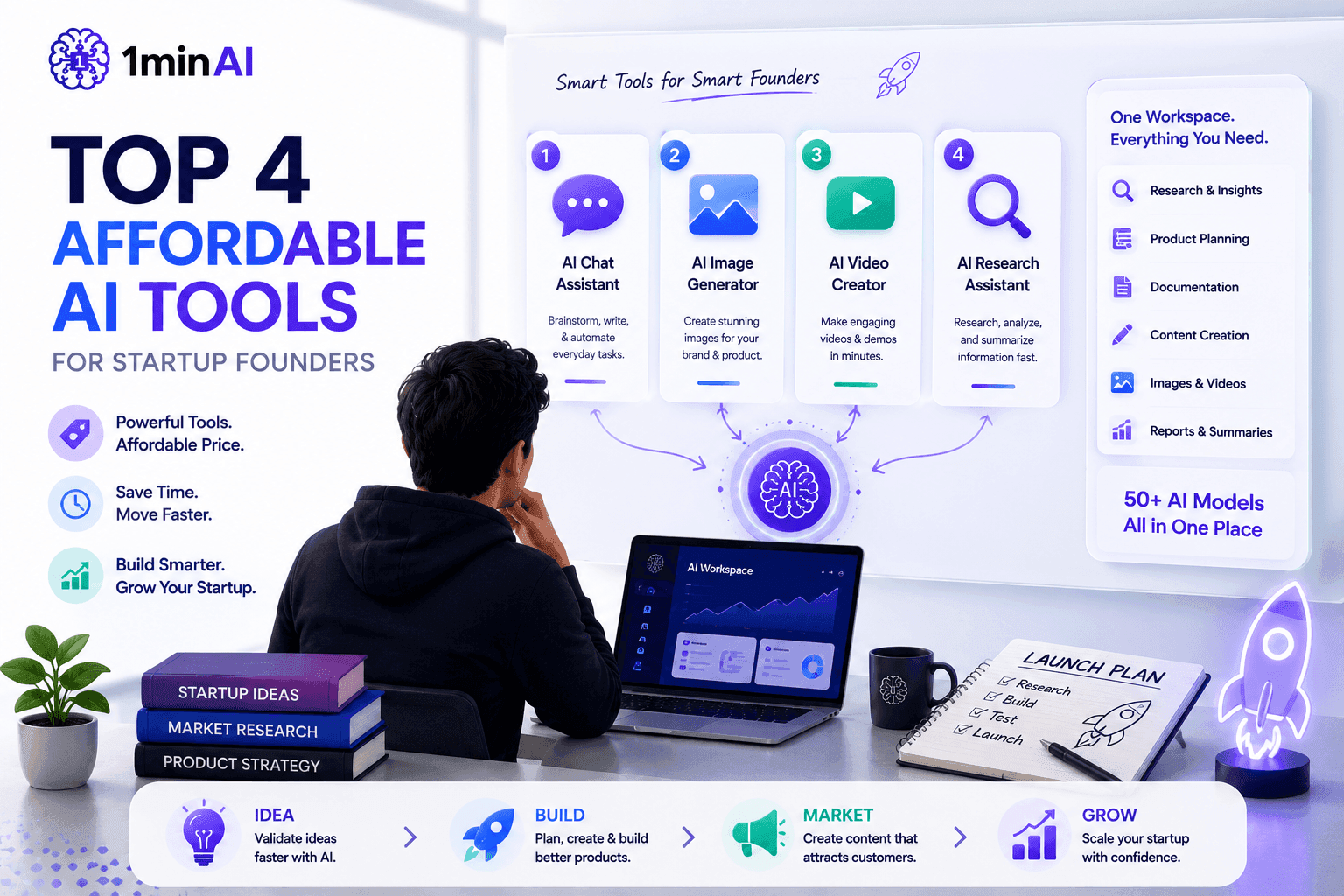
Top 4 Affordable AI Tools for Startup Founders
Discover the top 4 affordable AI tools for startup founders to validate ideas, build products, create content, and launch faster without overspending.
 Tram Ta
AI Features
Comprehensive AI features that streamline workflows, improve efficiency, and empower teams to achieve more.
Create Consistent Cartoon Content in Just a Few Steps
Create engaging cartoon videos for TikTok and Reels with 1min.AI. Research ideas, create characters, and turn images into animated videos in 3 simple steps.
Lien Anh VuOne Product, 10 UGC Creatives: How AI Makes Content Testing Easier
Create more authentic UGC with an AI UGC video generator, test more creative angles and scale affiliate content without filming every version.
Lien Anh Vu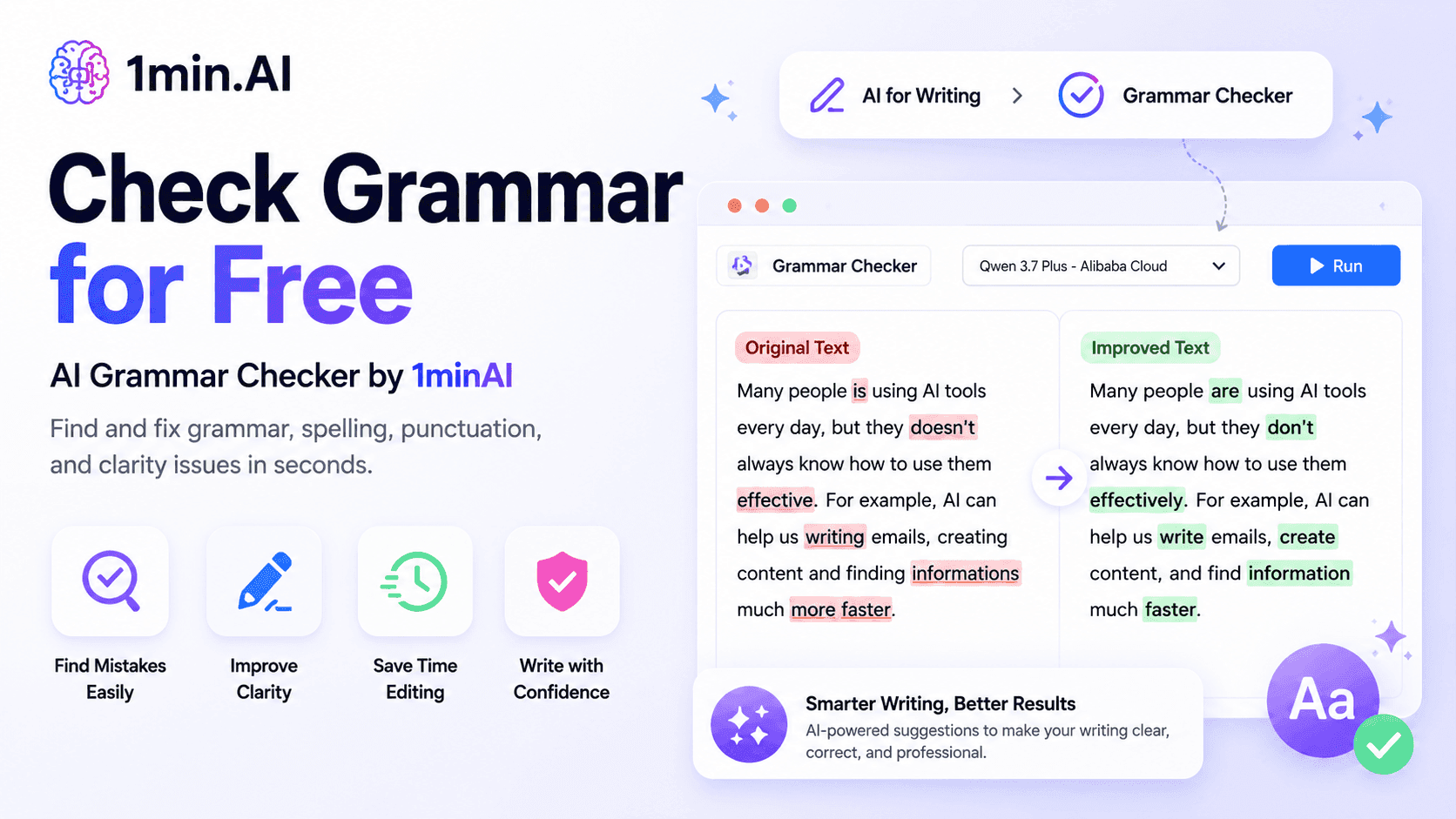
1minAI: Free AI Grammar Checker
Check grammar for free with 1minAI’s AI grammar checker. Find grammar, spelling, and writing mistakes, improve clarity, and polish your content in seconds.
Tram TaAI Use Cases
A curated collection of AI use cases for business, productivity, and industry-specific applications.
Create Consistent Cartoon Content in Just a Few Steps
Create engaging cartoon videos for TikTok and Reels with 1min.AI. Research ideas, create characters, and turn images into animated videos in 3 simple steps.
Lien Anh VuOne Product, 10 UGC Creatives: How AI Makes Content Testing Easier
Create more authentic UGC with an AI UGC video generator, test more creative angles and scale affiliate content without filming every version.
Lien Anh Vu
Best Time to Post on Instagram: A Practical Guide for Better Engagement
Discover the best time to post on Instagram, including the best days and times for different audiences, plus tips to find the ideal posting schedule for your account.
Tram TaAI Tutorials
Learn how to use AI with practical, step-by-step tutorials.

Black Friday AI Tool Deals in 2026
Discover what Black Friday AI tool deals 2026 has to offer. Find out how to secure the 1min.AI lifetime deal via AppSumo, Dealify, Stack Social, and verify on Trustpilot, Slashdot, and Software Advice.
 Hang Nguyen
Create Consistent Cartoon Content in Just a Few Steps
Create engaging cartoon videos for TikTok and Reels with 1min.AI. Research ideas, create characters, and turn images into animated videos in 3 simple steps.
Lien Anh Vu
[Seedance 2.5 New] Better AI Product Videos, Less Rework in 1min.AI
Use Seedance 2.5 image to video on 1min.AI to create more consistent AI product videos, reduce failed generations, save credits, and improve UGC workflows.
Lien Anh VuAI Guides
Learn AI faster with practical guides, real-world examples, and actionable best practices.

Safely Buy AI Tools Online: 2026 Black Friday Guide
Discover how to find and secure the best Black Friday AI deals online. Learn expert strategies to avoid scams, combat subscription fatigue, and verify software.
Hang NguyenCreate Consistent Cartoon Content in Just a Few Steps
Create engaging cartoon videos for TikTok and Reels with 1min.AI. Research ideas, create characters, and turn images into animated videos in 3 simple steps.
Lien Anh Vu[Seedance 2.5 New] Better AI Product Videos, Less Rework in 1min.AI
Use Seedance 2.5 image to video on 1min.AI to create more consistent AI product videos, reduce failed generations, save credits, and improve UGC workflows.
Lien Anh VuAI Solutions
Browse the best AI solutions for automation, coding, research, productivity, customer support, marketing, and business workflows.
Safely Buy AI Tools Online: 2026 Black Friday Guide
Discover how to find and secure the best Black Friday AI deals online. Learn expert strategies to avoid scams, combat subscription fatigue, and verify software.
Hang NguyenCreate Consistent Cartoon Content in Just a Few Steps
Create engaging cartoon videos for TikTok and Reels with 1min.AI. Research ideas, create characters, and turn images into animated videos in 3 simple steps.
Lien Anh VuOne Product, 10 UGC Creatives: How AI Makes Content Testing Easier
Create more authentic UGC with an AI UGC video generator, test more creative angles and scale affiliate content without filming every version.
Lien Anh VuAI Models
Explore the world's leading AI models in one place.
Create Consistent Cartoon Content in Just a Few Steps
Create engaging cartoon videos for TikTok and Reels with 1min.AI. Research ideas, create characters, and turn images into animated videos in 3 simple steps.
Lien Anh VuOne Product, 10 UGC Creatives: How AI Makes Content Testing Easier
Create more authentic UGC with an AI UGC video generator, test more creative angles and scale affiliate content without filming every version.
Lien Anh Vu[Seedance 2.5 New] Better AI Product Videos, Less Rework in 1min.AI
Use Seedance 2.5 image to video on 1min.AI to create more consistent AI product videos, reduce failed generations, save credits, and improve UGC workflows.
Lien Anh VuAI Comparisons
Compare AI tools, models, and platforms to find the best fit for your needs.
Kling AI Vs Veo 3: Which Model Wins?
Kling AI vs Veo 3: compare motion, native audio, pricing & free tiers to see which AI video generator wins for your project - try both on 1min.AI.
 Trang Tran
[Seedance 2.5 New] Better AI Product Videos, Less Rework in 1min.AI
Use Seedance 2.5 image to video on 1min.AI to create more consistent AI product videos, reduce failed generations, save credits, and improve UGC workflows.
Lien Anh Vu
DeepSeek V4 Pro vs Flash Comparison
Compare DeepSeek V4 Pro vs DeepSeek V4 Flash metrics. Optimize your agentic apps and improve AI fact checking on 1min.ai today.
Ngoc HongAI Integrations
Seamlessly integrate AI with the tools you already use to automate work and boost productivity.
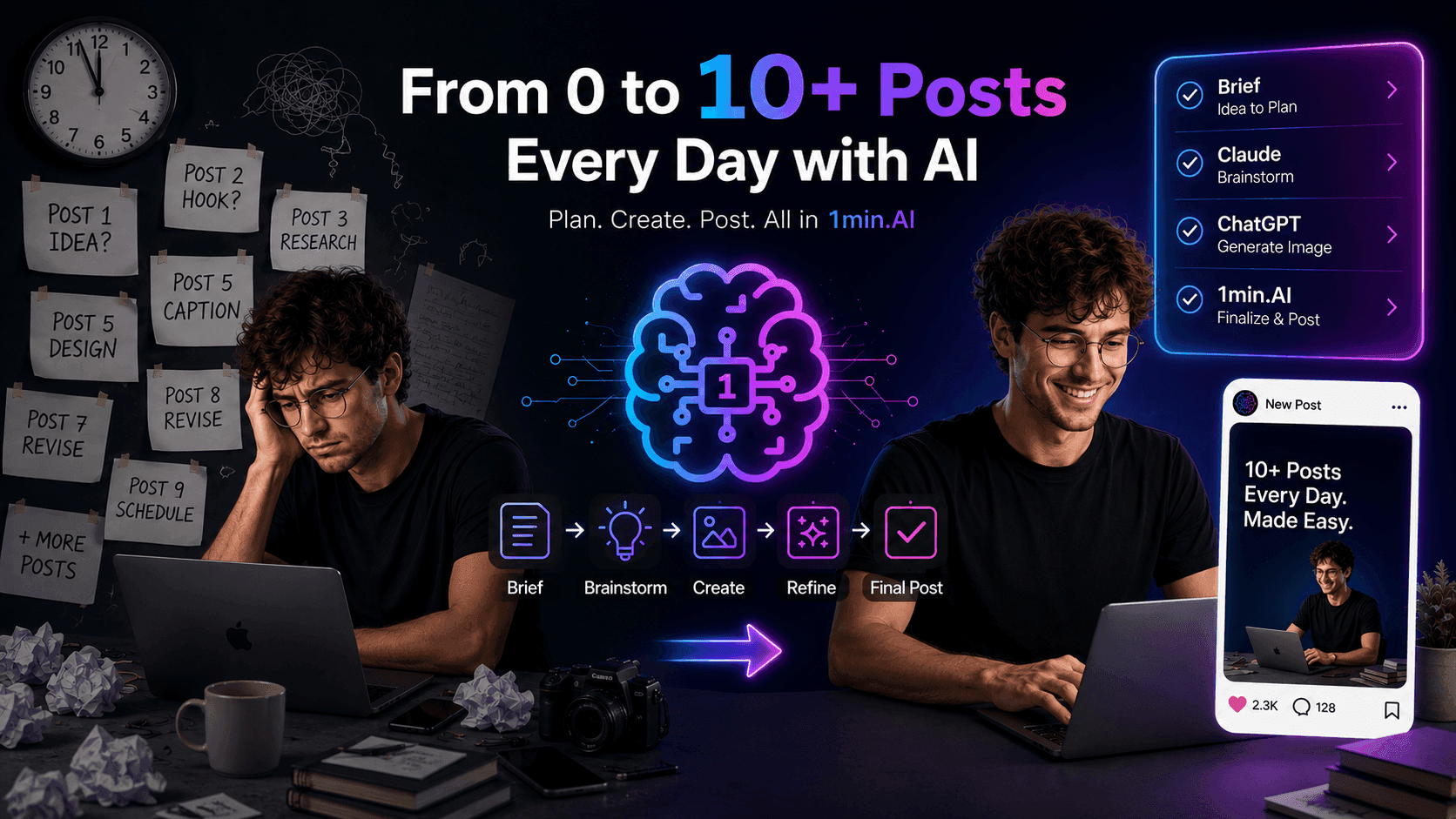
POV: You Have 10+ Posts to Make Every Day
Learn how to build an AI content workflow that helps content creators produce 10+ social media posts a day faster with AI brainstorming, image generation, and content creation.
Lien Anh Vu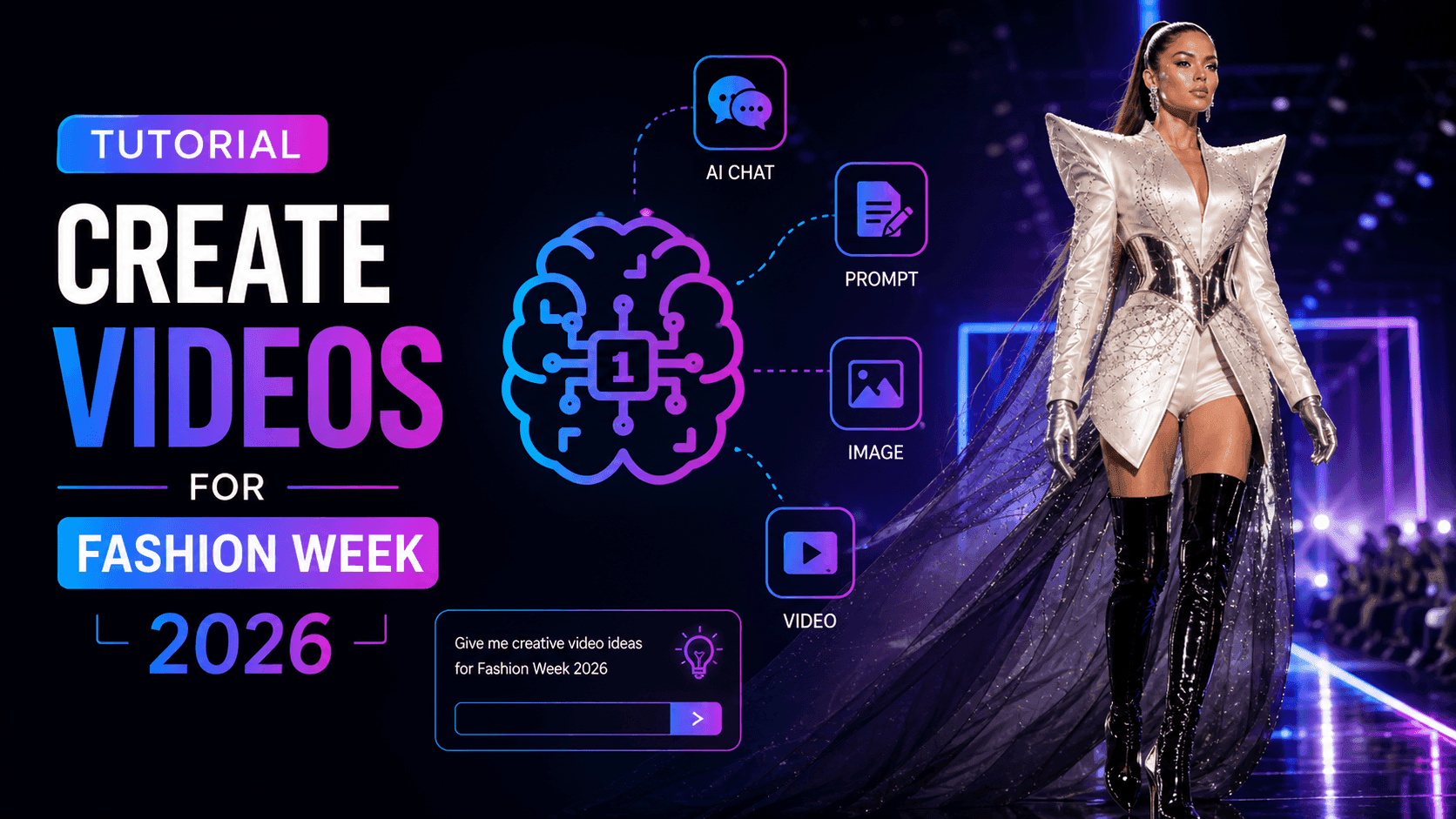
How to Use an AI Fashion Video Generator for Fashion Week 2026
Turn Fashion Week 2026 ideas into stunning fashion videos with AI. Learn how to brainstorm, create visuals, and transform images into videos with one simple workflow.
Lien Anh Vu
Stop Switching Between AI Apps: How AI Integration Transforms Employer Branding
Discover how AI integration helps HR teams streamline employer branding by combining AI writing, documents, images, video, and multiple AI models into one workspace.
Tram TaAI for Industries
Find the best AI tools and workflows for healthcare, finance, education, legal, manufacturing, retail, real estate, and more
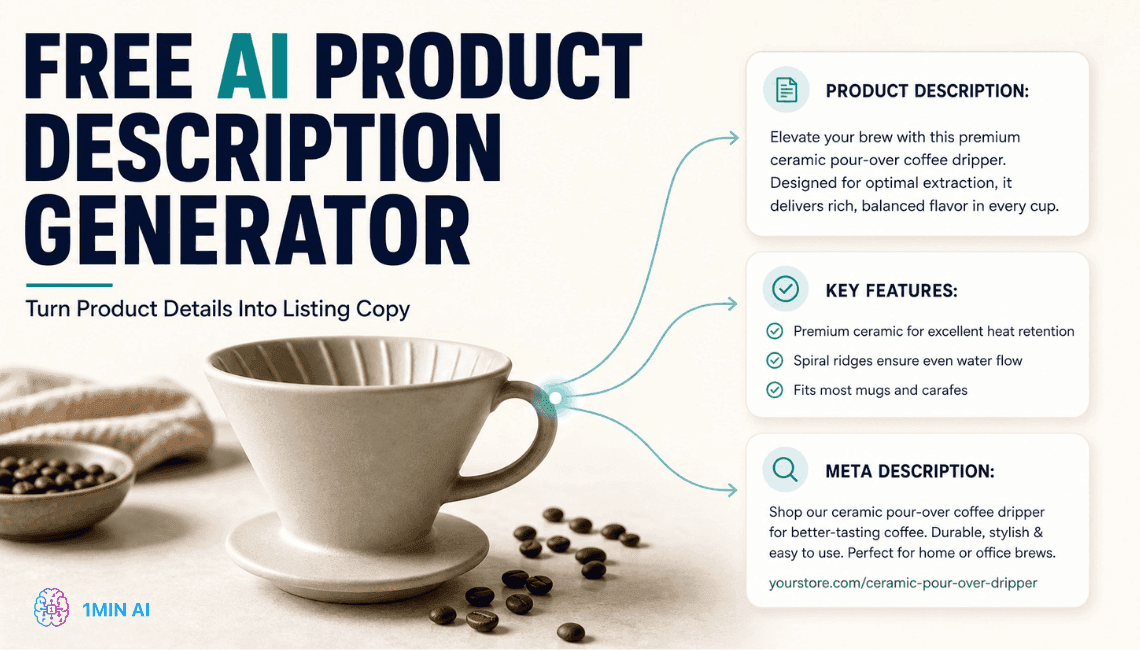
Free AI Product Description Generator
Write product descriptions that sell in minutes. Use this free AI product description generator to turn details or a photo into on-brand copy. Try 1min.AI.
Trang Tran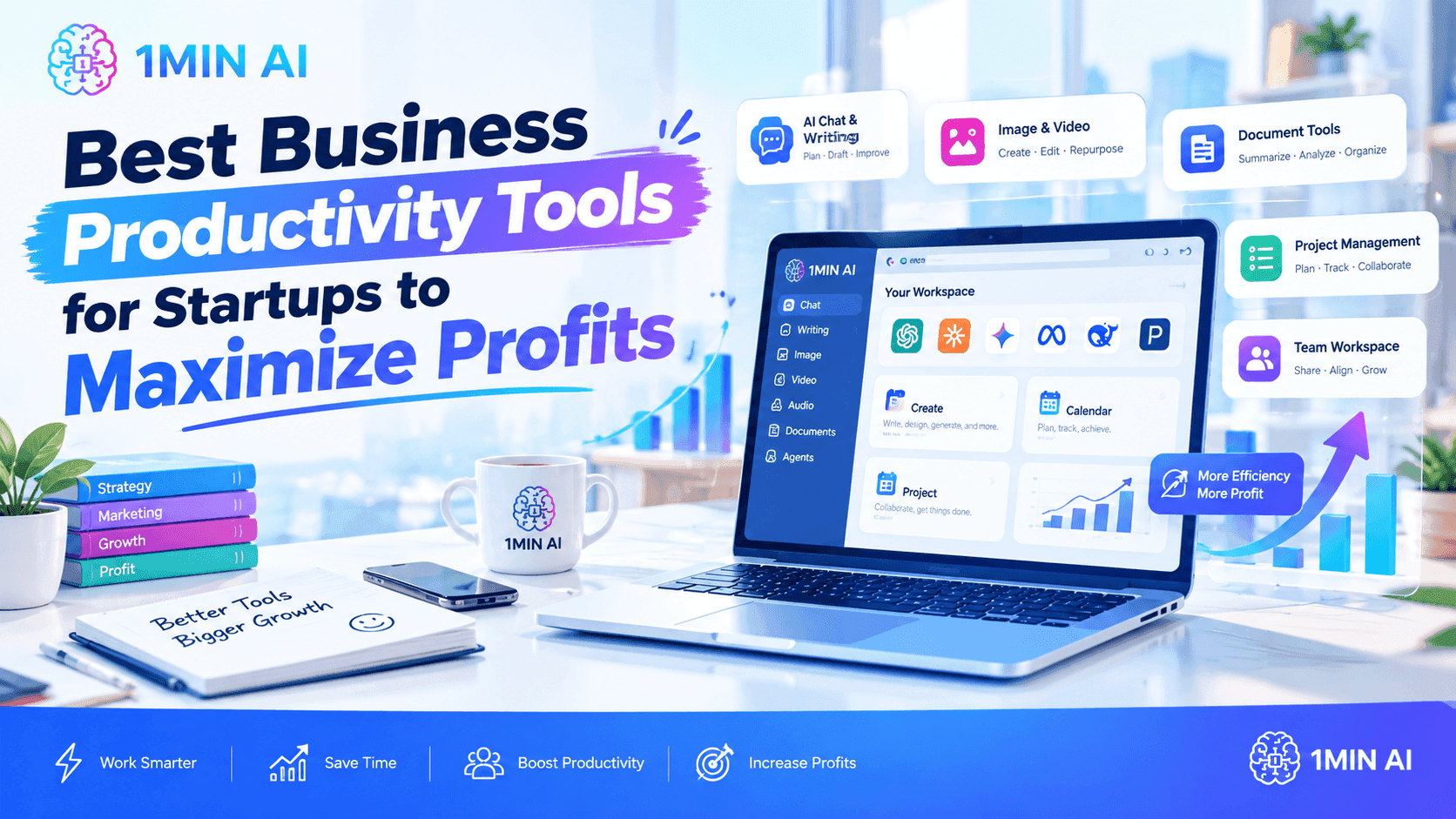
Best Business Productivity Tools for Startups to Maximize Profits | 1minAI
Discover the best business productivity tools for startups to save time, streamline workflows, reduce repetitive tasks, and support profitable growth with AI.
Tram Ta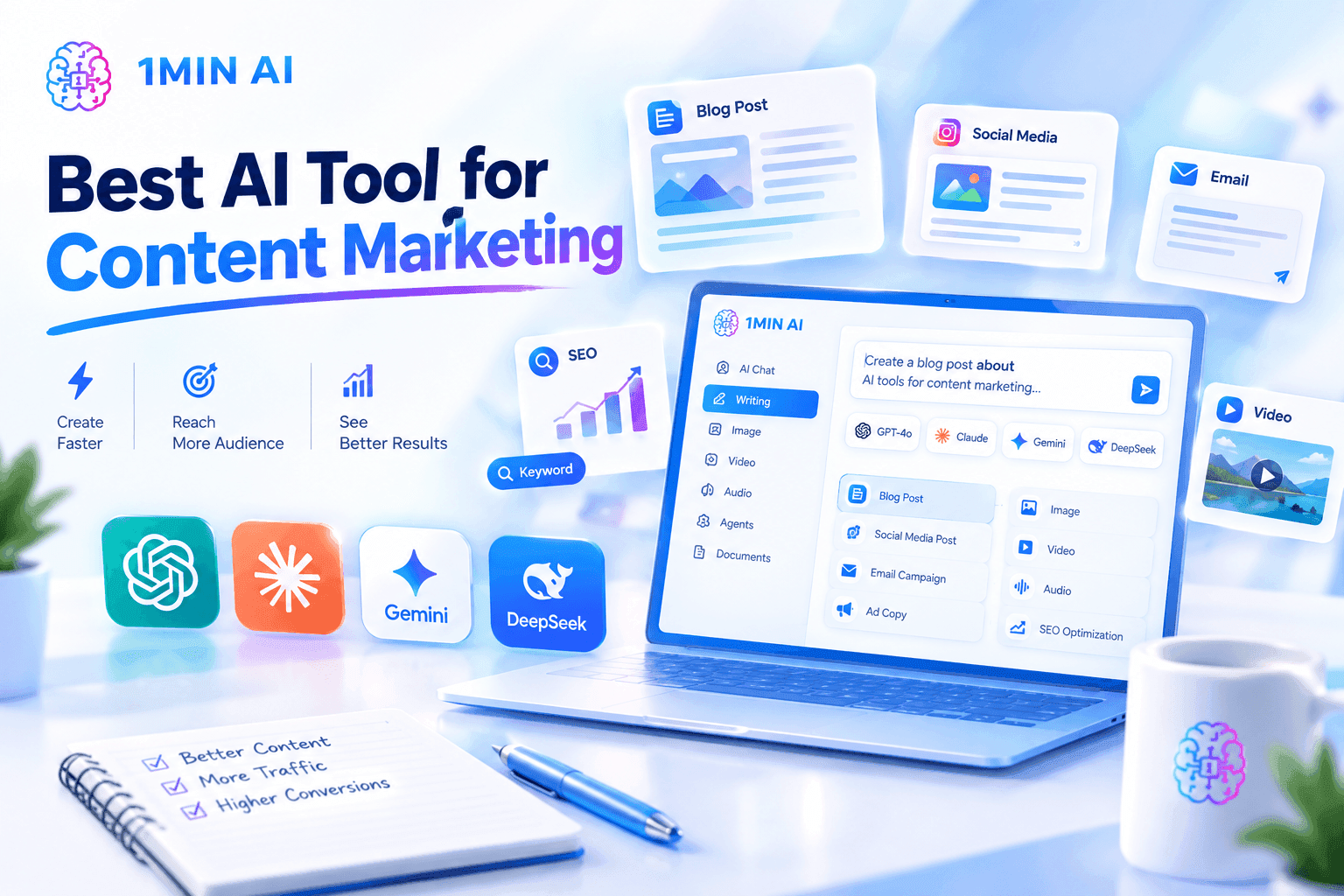
Best AI Tool for Content Marketing |1minAI
Looking for the best AI tool for content marketing? See how 1minAI helps marketers research, write, repurpose, create visuals, and scale content from one AI workspace.
Tram TaAI Agents
Discover and run AI agents to automate tasks across your work and daily life.
1minAI: Free AI Grammar Checker
Check grammar for free with 1minAI’s AI grammar checker. Find grammar, spelling, and writing mistakes, improve clarity, and polish your content in seconds.
Tram Ta
AI Agents for Facebook
Use an AI Agent for Facebook to create content, generate images, schedule posts, and publish from your documents and conversations.
Ngoc Hong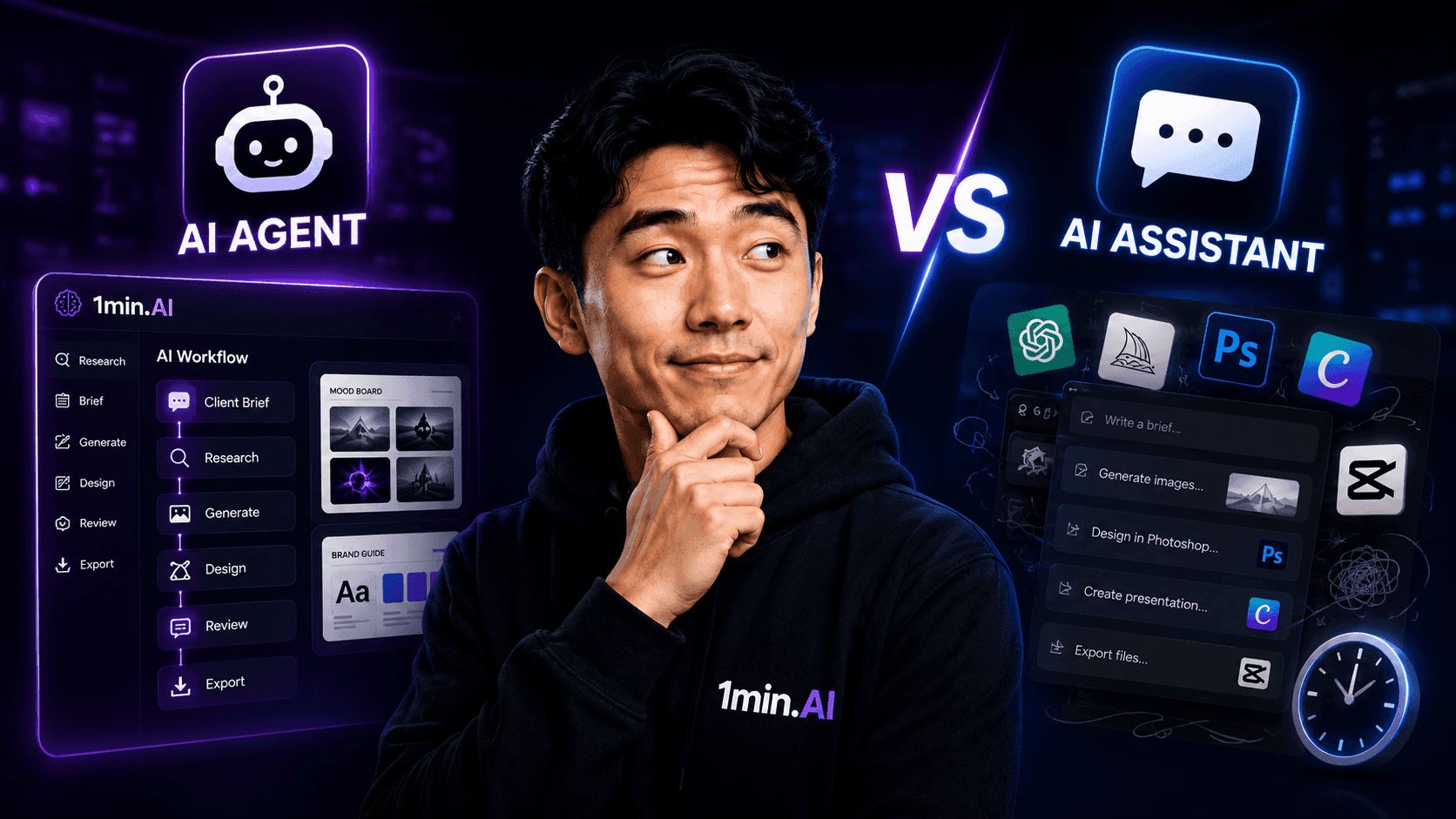
AI Agent vs AI Assistant: Which One Actually Saves Designers More Time?
Learn the difference between AI Agent vs AI Assistant and discover which solution helps designers automate repetitive work, reduce revisions, and save more time.
Lien Anh VuAI Workflows
Explore ready-to-use AI workflows for productivity, marketing, sales, support, and more.
Create Consistent Cartoon Content in Just a Few Steps
Create engaging cartoon videos for TikTok and Reels with 1min.AI. Research ideas, create characters, and turn images into animated videos in 3 simple steps.
Lien Anh VuOne Product, 10 UGC Creatives: How AI Makes Content Testing Easier
Create more authentic UGC with an AI UGC video generator, test more creative angles and scale affiliate content without filming every version.
Lien Anh VuPOV: You Have 10+ Posts to Make Every Day
Learn how to build an AI content workflow that helps content creators produce 10+ social media posts a day faster with AI brainstorming, image generation, and content creation.
Lien Anh VuNewsletter
Weekly AI Innovations with 1minAI
🔮 Weekly AI Innovations #141: Seedance 2.5 & Stable Audio 3: Next-Gen AI
Explore Seedance 2.0, 2.5, and StabilityAI's Stable Audio 3 on 1min.ai. Generate studio-grade audio and synchronized motion with next-gen generative AI.
Hang Nguyen
🔮 Weekly AI Innovations #140: Deepseek 4.1 Flash & Gemini Upgrades
Explore Deepseek 4.1 Flash and new Gemini models on 1min.ai. Plus, check our update on your Billing - Usage page for better clarity.
Hang Nguyen
🔮 Weekly AI Innovations #139: Dawn of the next-gen AI
Discover the immense power of GPT-6 Astra and Claude Fable 5.1. Unlock next-generation AI models on 1min.ai to solve complex tasks effortlessly.
Hang Nguyen