
How to Start a One-Person AI Business: 7 Models You Can Run Solo

Tram Ta
October 6, 2026
Learn how to start a one-person AI business with 7 practical models, from AI consulting and content services to automation and software reselling.
Running a business alone used to mean doing everything yourself: sales, marketing, customer support, administration, content, research, and delivery.
AI is changing that equation. Today, a solo founder can use AI to handle parts of many functions that would traditionally require employees, freelancers, or agencies. Recent research from FreshBooks found that 86% of surveyed solopreneurs and microbusiness owners try AI before hiring someone when they encounter a task they cannot complete themselves.
At the same time, AI adoption among small businesses is expanding across practical areas such as marketing, written communication, visual content, customer service, analytics, and productivity.
That doesn't mean AI makes entrepreneurship effortless. You still need customers, a valuable offer, good judgment, and a way to deliver consistently. But you don't necessarily need a large team to get started.
If you're considering becoming a solopreneur, here are 7 one-person AI business models you can potentially start and operate solo.
Why Start a One-Person AI Business?
The biggest advantage of an AI-powered one-person business isn't simply saving money on employees.
It's operating leverage.
A solo founder can use AI to reduce the amount of time spent on repetitive work while keeping the human founder responsible for the decisions that matter.
For example, AI can help with:
- Market and customer research
- Content creation
- Sales emails and proposals
- Social media production
- Customer support drafts
- Document analysis
- Data analysis
- Product development
- Marketing campaigns
- Administrative tasks
Recent reporting also shows startups experimenting with significantly smaller teams as AI takes over parts of engineering, marketing, operations, and other functions.
The goal, however, shouldn't be to replace every human activity with AI.
A better approach is:
Founder expertise + AI leverage + a specific customer problem = lean business
That combination allows you to start small and add people only when the business genuinely needs additional capacity.
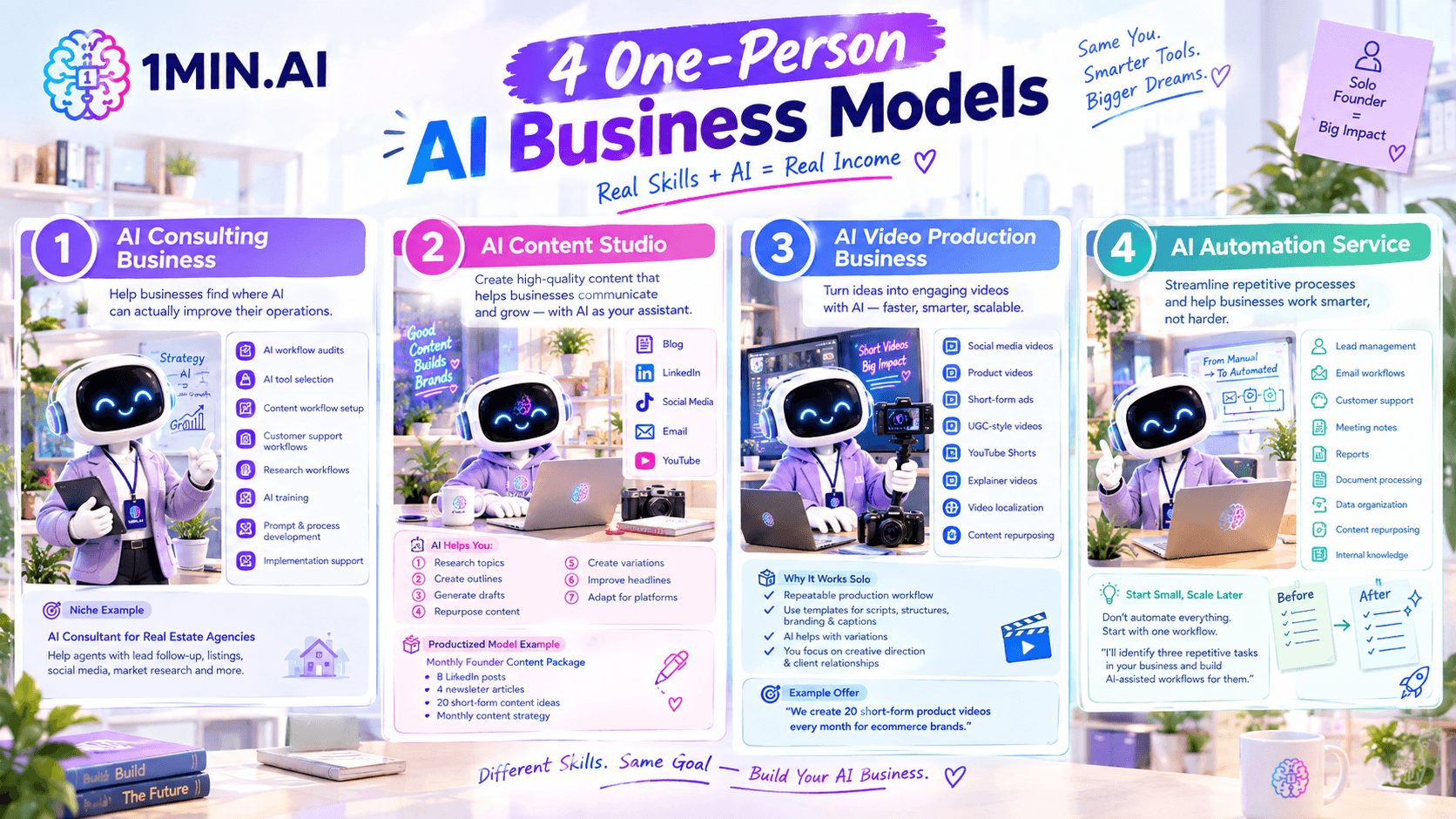
1. Start an AI Consulting Business
One of the most flexible one-person AI businesses is consulting.
Instead of selling an AI tool, you help businesses figure out where AI can actually improve their operations.
For example, a small company may know it wants to use AI but have no idea where to begin. Research from Goldman Sachs found that while many small businesses report positive results from AI, only a minority said AI was fully integrated into their core operations, and many wanted additional training and resources.
That creates room for consultants who can bridge the gap between AI tools and practical business workflows.
You could offer:
- AI workflow audits
- AI tool selection
- Content workflow setup
- Customer support workflows
- Research workflows
- AI training
- Prompt and process development
- AI implementation support
How to run it solo
Start with one industry rather than trying to become an AI consultant for everyone.
For example:
AI Consultant for Real Estate Agencies
You could help agents use AI for lead follow-up, listing descriptions, social media, market research, and client communication.
Your expertise in the industry becomes part of the value, while AI helps you deliver the work efficiently.
2. Build an AI Content Studio
Content is another business that can be operated by one person when AI handles parts of the research and production process.
Instead of creating content for everyone, choose a specific customer type.
You could specialize in:
- SaaS blog content
- Ecommerce product descriptions
- LinkedIn content for founders
- Real estate content
- Email newsletters
- Social media content
- YouTube scripts
The important distinction is that you're not selling "AI-generated writing."
You're selling finished content that helps a business communicate or market itself.
AI can help you:
- Research topics
- Create outlines
- Generate drafts
- Repurpose content
- Create variations
- Improve headlines
- Adapt content for different platforms
You remain responsible for fact-checking, strategy, editing, brand voice, and final quality.
A simple solo business model
Instead of charging per article, consider productizing the service.
For example:
Monthly Founder Content Package
- 8 LinkedIn posts
- 4 newsletter articles
- 20 short-form content ideas
- Monthly content strategy
One clear package is easier to sell and systemize than dozens of custom services.
3. Run an AI Video Production Business
Video demand creates another opportunity for solo entrepreneurs.
You don't necessarily need to operate a traditional video production studio. AI can help reduce parts of the scripting, visual production, editing, voice, and localization process.
A solo AI video business could specialize in:
- Social media videos
- Product videos
- Short-form ads
- UGC-style videos
- YouTube Shorts
- Explainer videos
- Video localization
- Content repurposing
The key is to sell a specific output.
For example: "We create 20 short-form product videos every month for ecommerce brands."
That is more compelling than: "We offer AI video services."
Why this works for a solo founder
A repeatable production workflow means you don't have to reinvent the process for every customer.
You can create templates for:
- Scripts
- Video structures
- Branding
- Captions
- Calls to action
- Visual styles
AI then helps you produce variations while you focus on creative direction and client relationships.
4. Create an AI Automation Service
Another one-person business model is helping small companies automate repetitive processes.
Many businesses don't need custom software. They need someone to look at their daily operations and identify tasks that can be streamlined.
For example:
Before:
Lead arrives → employee reads email → copies information → writes response → updates spreadsheet → sends follow-up.
After:
Lead arrives → AI extracts relevant information → prepares a response → organizes the information → creates a follow-up task.
You could offer automation services around:
- Lead management
- Email workflows
- Customer support
- Meeting notes
- Reports
- Document processing
- Data organization
- Content repurposing
- Internal knowledge
How to start
Don't begin by promising to automate an entire company.
Start with one workflow.
Offer something like:
"I'll identify three repetitive tasks in your business and build AI-assisted workflows for them."
Once you understand the customer's operations, you can expand the engagement.
5. Build an AI Research and Analysis Business
Research is another area where one person can potentially create a valuable service.
Businesses often have information but don't have enough time to process it.
You could provide:
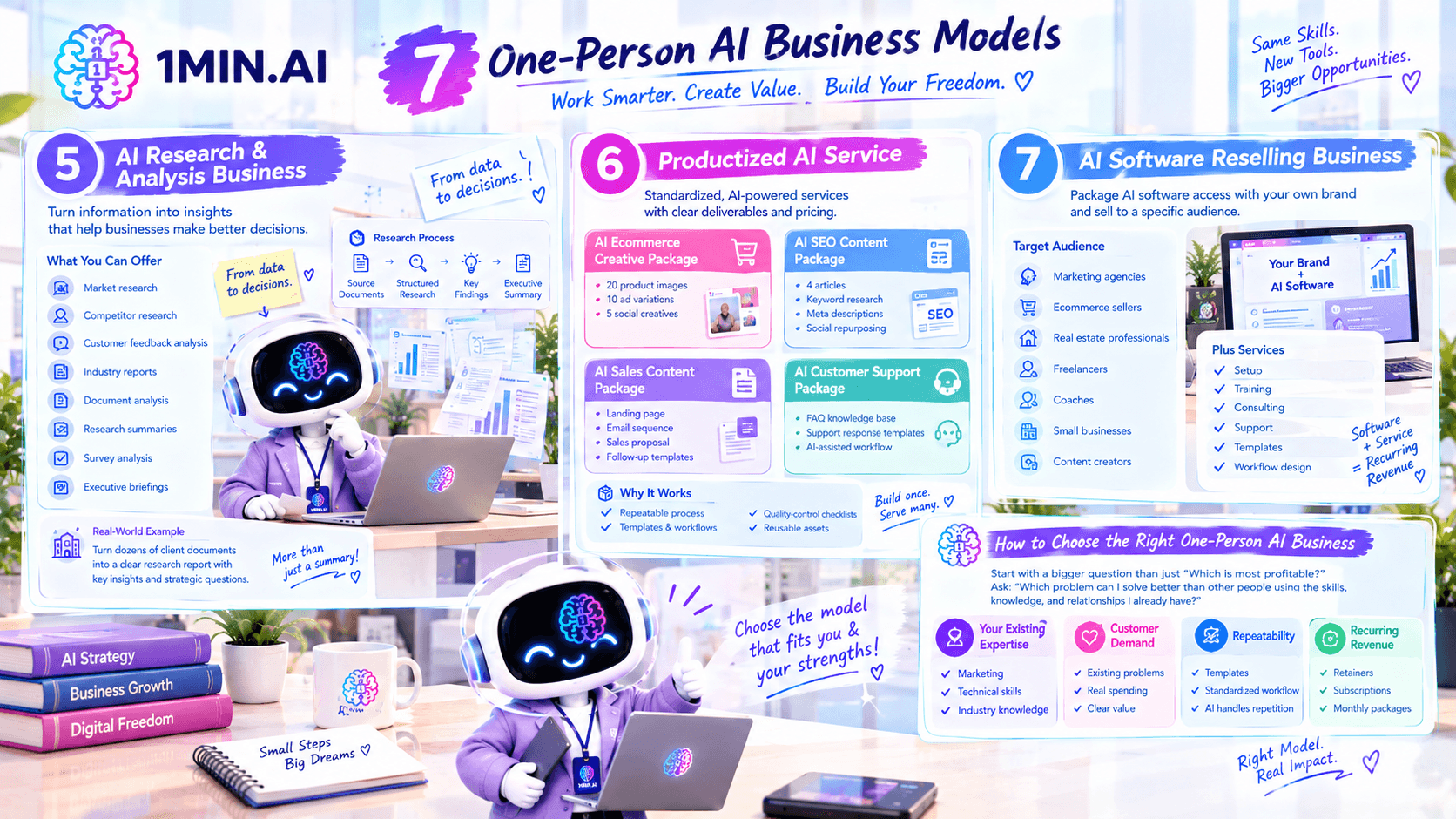
- Market research
- Competitor research
- Customer feedback analysis
- Industry reports
- Document analysis
- Research summaries
- Survey analysis
- Executive briefings
For example, a consulting firm might send you dozens of documents before an important client meeting.
Your service could turn those materials into:
Source documents → structured research → key findings → questions → executive summary
AI can help process and organize information, while you provide the research methodology, quality control, and business interpretation.
This distinction is important because customers aren't really paying for a summary.
They're paying for information that helps them make a decision.
6. Build a Productized AI Service
A productized service sits between traditional freelancing and software.
Instead of charging clients for your time, you create a standardized AI-powered service with a clear deliverable and price.
Examples include:
AI Ecommerce Creative Package
- 20 product images
- 10 ad variations
- 5 social creatives
AI SEO Content Package
- 4 articles
- Keyword research
- Meta descriptions
- Social repurposing
AI Sales Content Package
- Landing page
- Email sequence
- Sales proposal
- Follow-up templates
AI Customer Support Package
- FAQ knowledge base
- Support response templates
- AI-assisted support workflow
The advantage is that the process becomes repeatable.
You can create templates, prompts, workflows, quality-control checklists, and reusable assets.
That makes it easier for one person to handle multiple customers without simply working more hours.
7. Start an AI Software Reselling Business
The seventh model is different from a service business.
Instead of selling your time, you can build a business around AI software access.
With the right reseller or white-label model, you can package AI capabilities under your own business and sell them to a specific audience.
For example, you could build an AI offering for:
- Marketing agencies
- Ecommerce sellers
- Real estate professionals
- Freelancers
- Coaches
- Small businesses
- Content creators
You can combine software access with services such as:
- Setup
- Training
- Consulting
- Support
- Templates
- Workflow design
This creates a model where software can become part of a recurring revenue offering instead of relying entirely on one-off client projects.
If you're interested in this model, see How to Resell AI Software for a deeper look at the reseller opportunity.
How to Choose the Right One-Person AI Business
Not every model will be right for every founder.
Instead of asking, "Which AI business is most profitable?" start with a more useful question:
Which problem can I solve better than other people using the skills, knowledge, and relationships I already have?
Consider these four factors.
Your existing expertise
If you already understand marketing, an AI content or social media business may be easier to launch.
If you're technical, automation or AI implementation could make more sense.
If you understand a specific industry, build around that industry.
Customer demand
Look for problems customers already spend money solving.
AI doesn't create demand automatically.
Your job is to find an existing business problem and use AI to deliver the solution more efficiently.
Repeatability
A business is easier to run solo when the delivery process can be repeated.
Ask:
- Can I create templates?
- Can I standardize the workflow?
- Can AI handle repetitive steps?
- Can I deliver the same type of result repeatedly?
Recurring revenue
One-off projects can help you get started.
But recurring revenue can make a one-person business easier to plan.
Depending on your model, consider:
- Monthly retainers
- Subscriptions
- Recurring content packages
- Software access
- Maintenance plans
- Monthly consulting
- Ongoing optimization
How to Start a One-Person AI Business With a Small Budget
You don't need to build a complete company before testing the idea.
Start with a minimum viable business.
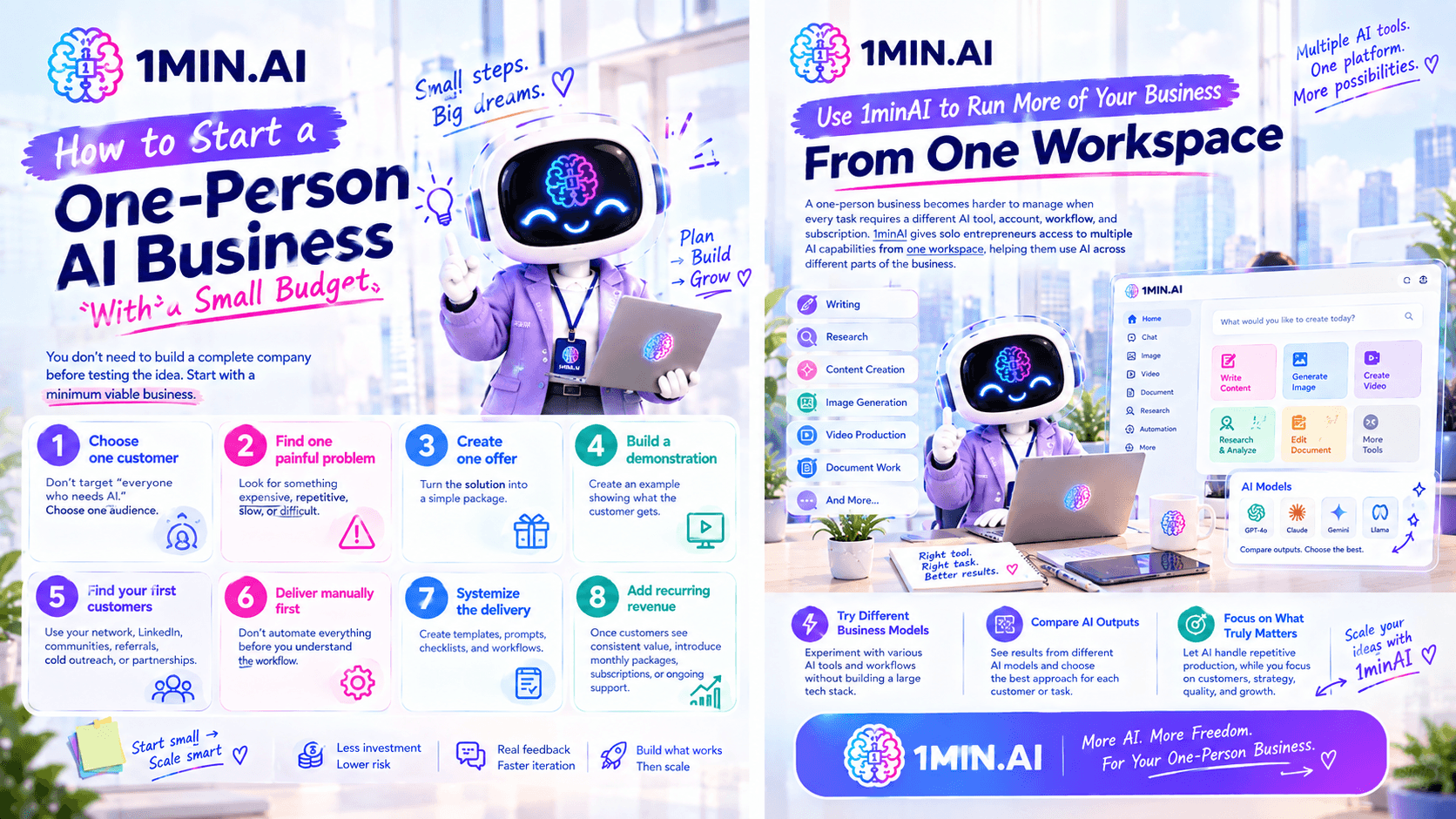
Step 1: Choose one customer
Don't target "everyone who needs AI."
Choose one audience.
Step 2: Find one painful problem
Look for something expensive, repetitive, slow, or difficult.
Step 3: Create one offer
Turn the solution into a simple package.
Step 4: Build a demonstration
Create an example showing what the customer gets.
Step 5: Find your first customers
Use your network, LinkedIn, communities, referrals, cold outreach, or partnerships.
Step 6: Deliver manually first
Don't automate everything before you understand the workflow.
Do the first few projects yourself and identify which parts are repetitive.
Step 7: Systemize the delivery
Create templates, prompts, checklists, and workflows.
Step 8: Add recurring revenue
Once customers see consistent value, introduce monthly packages, subscriptions, or ongoing support.
This approach keeps your initial investment and operational complexity relatively low while giving you real feedback before you scale.
Use 1minAI to Run More of Your Business From One Workspace
A one-person business becomes harder to manage when every task requires a different AI tool, account, workflow, and subscription.
1minAI gives solo entrepreneurs access to multiple AI capabilities from one workspace, helping them use AI across different parts of the business.
Depending on your business model, you can use AI for writing, research, content creation, image generation, video production, document work, and other workflows.
That makes it easier to experiment with different business models without building a large technology stack from day one.
You can also compare outputs from different AI models and choose the approach that works best for a particular customer or task.
For a solopreneur, the goal isn't to automate the entire company.
It's to create a system where AI handles repetitive production while you focus on customers, strategy, quality, and growth.
As your business grows, you can then decide which activities should remain with you, which should be handled by AI, and where bringing in another person actually creates enough value to justify the cost.
Conclusion
A one-person business doesn't have to mean doing everything manually.
AI can give a solo founder more capacity to research, create, communicate, deliver services, and manage daily operations without immediately building a large team.
The seven models above offer different paths: consulting, content, video, automation, research, productized services, and software reselling.
The best starting point depends on your skills, target customers, and the problem you can solve.
Start narrow. Find a real customer problem. Build one offer. Use AI to make delivery more efficient. Then turn what works into a repeatable system.
That is a much more sustainable way to build a one-person AI business than simply collecting AI tools and hoping they turn into a business.
For further information, explore How to Resell AI Software
Discover more AI features: https://1min.ai/features
Try 1minAI agent now: https://app.1min.ai/ai-agent-demo
Alternatives
Discover the best alternatives to 1minAI and compare features, pricing, and use cases.

1min.AI vs OpenRouter
1min.AI vs. OpenRouter: Compare the ready-to-use AI creation product against the technical API tool. Find out if you need a zero-code creative studio or a coding infrastructure hub.
 Ngoc Hong
1min.AI vs Lovart
Compare 1min.AI vs Lovart across features, pricing, credits, brand tools, and use cases to find the right AI platform for your workflow.
Ngoc Hong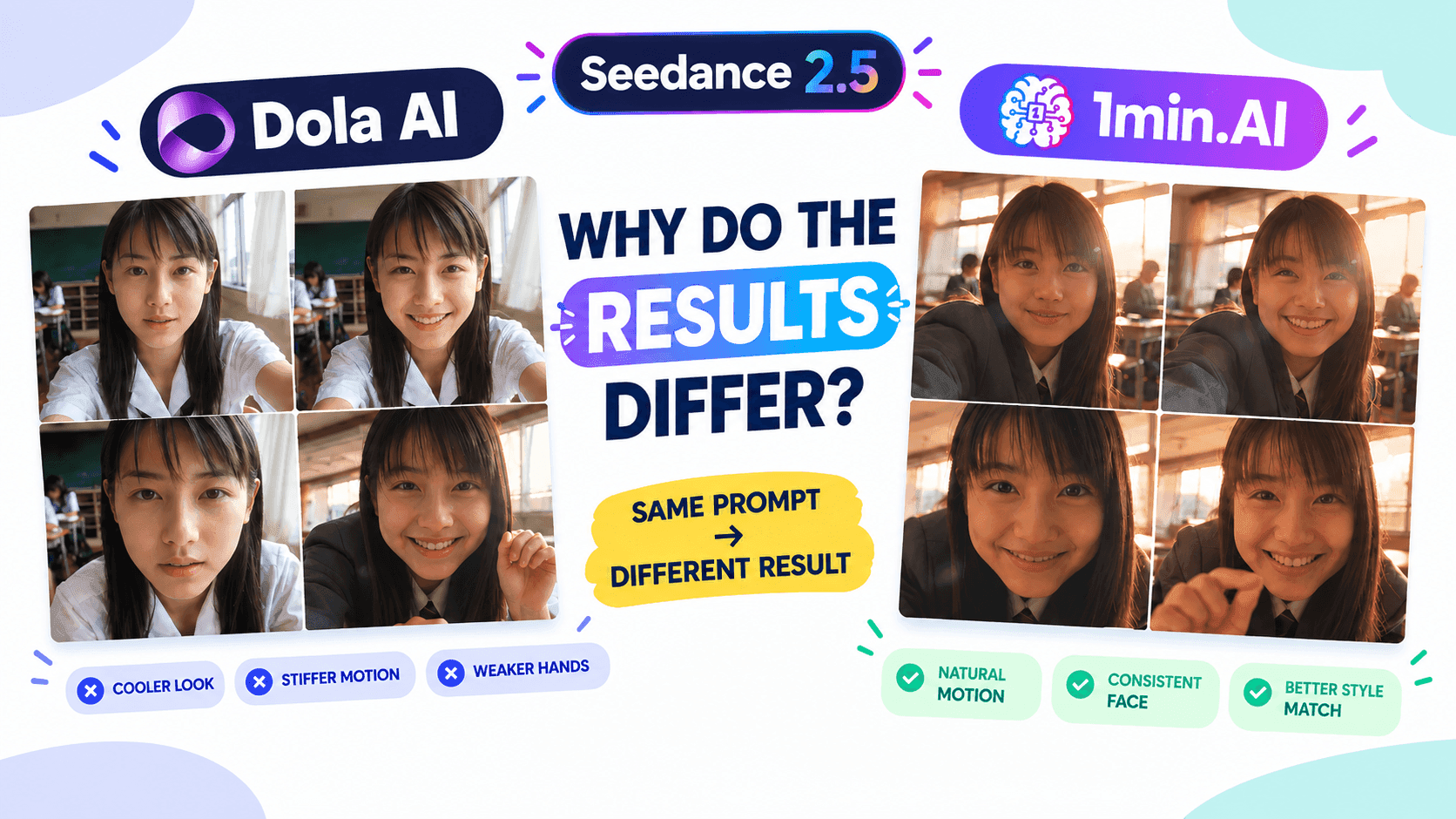
1min. AI vs Dola AI
Looking for a Dola AI alternative? Compare 1min.AI vs Dola AI on video generation, free plans, pricing and privacy to pick the right AI app.
Ngoc HongAI Tools
Discover the best AI tools to boost productivity, creativity, and everyday work.
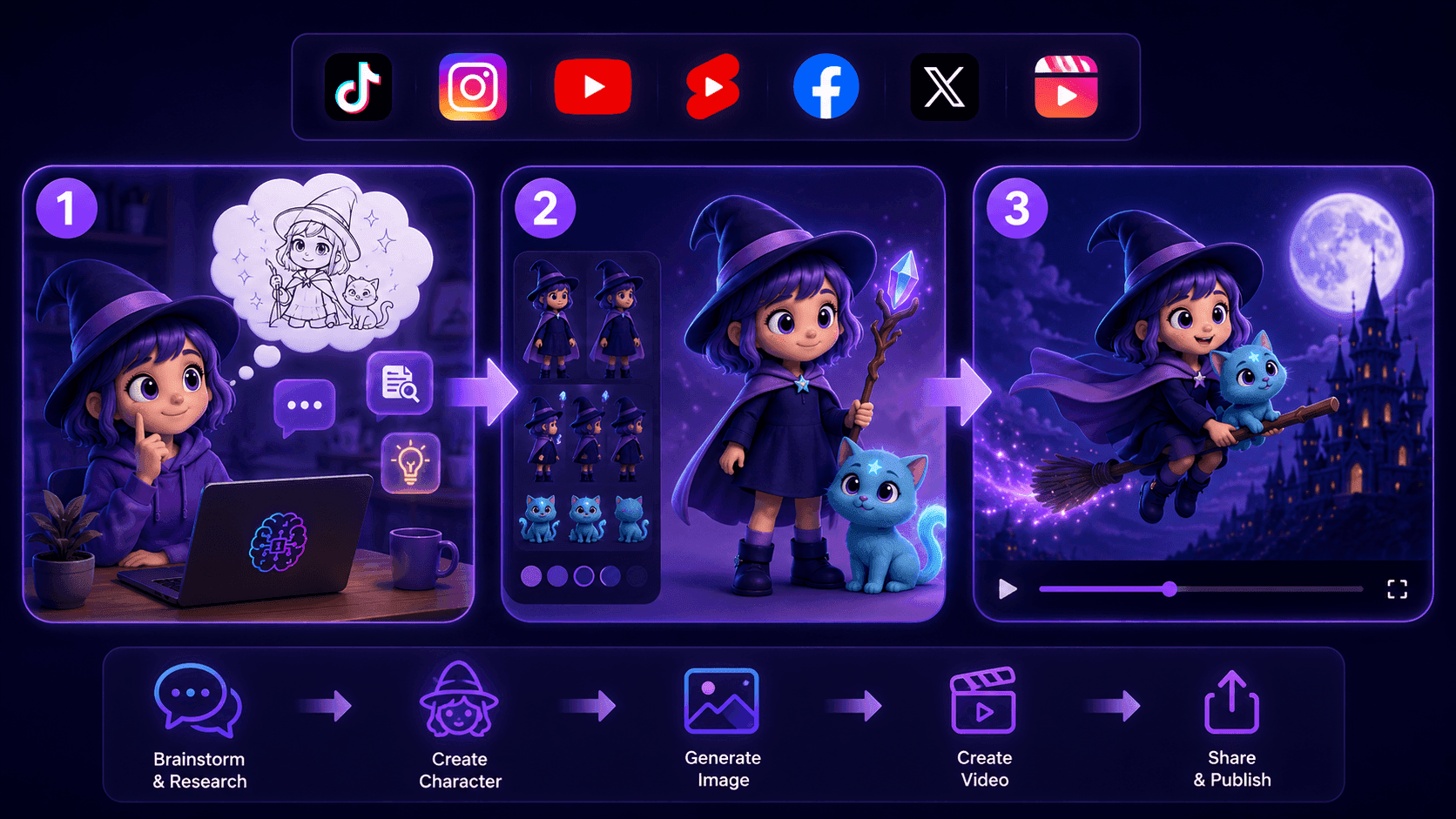
Create Consistent Cartoon Content in Just a Few Steps
Create engaging cartoon videos for TikTok and Reels with 1min.AI. Research ideas, create characters, and turn images into animated videos in 3 simple steps.
 Lien Anh Vu
One Product, 10 UGC Creatives: How AI Makes Content Testing Easier
Create more authentic UGC with an AI UGC video generator, test more creative angles and scale affiliate content without filming every version.
Lien Anh Vu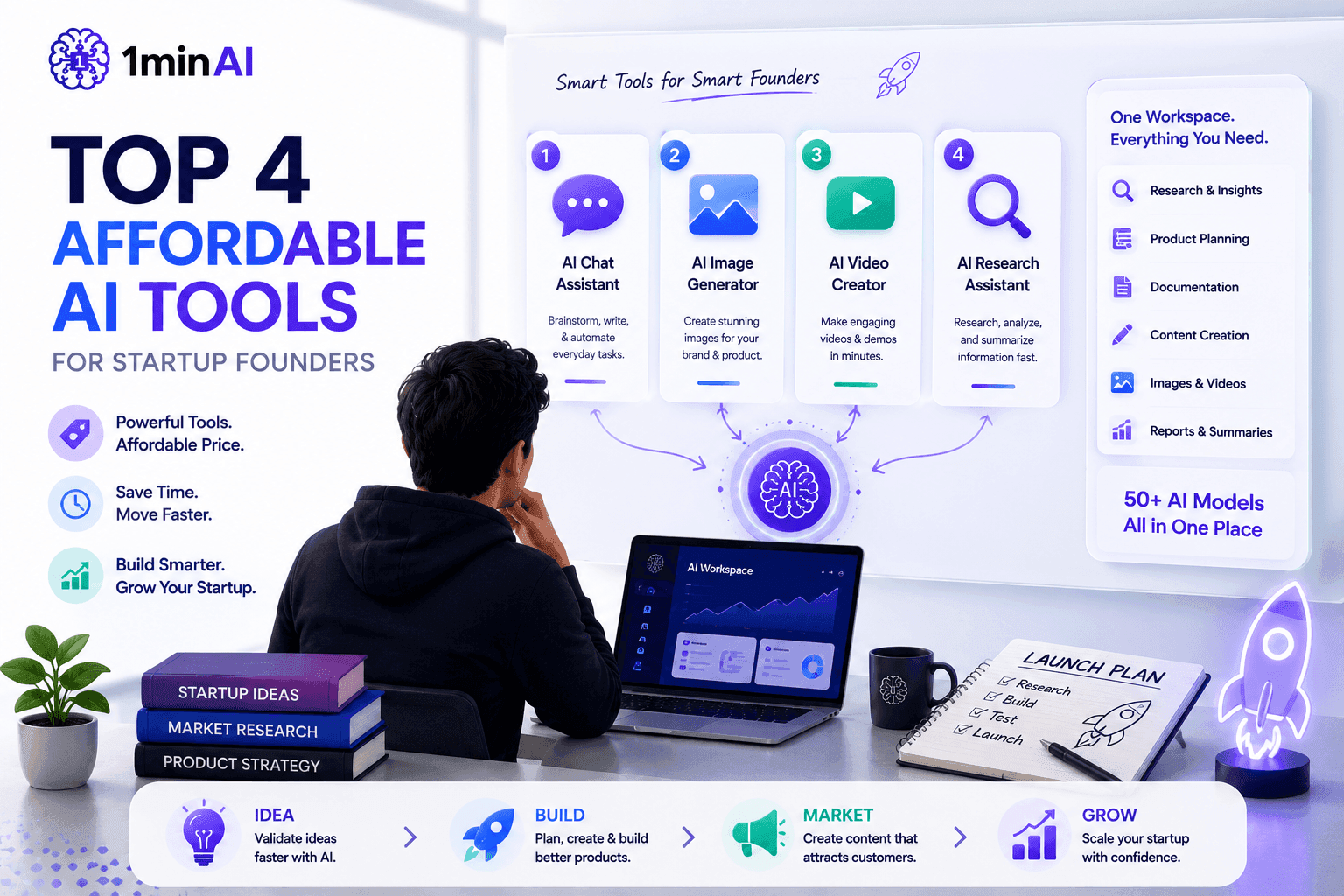
Top 4 Affordable AI Tools for Startup Founders
Discover the top 4 affordable AI tools for startup founders to validate ideas, build products, create content, and launch faster without overspending.
 Tram Ta
AI Features
Comprehensive AI features that streamline workflows, improve efficiency, and empower teams to achieve more.
Create Consistent Cartoon Content in Just a Few Steps
Create engaging cartoon videos for TikTok and Reels with 1min.AI. Research ideas, create characters, and turn images into animated videos in 3 simple steps.
Lien Anh VuOne Product, 10 UGC Creatives: How AI Makes Content Testing Easier
Create more authentic UGC with an AI UGC video generator, test more creative angles and scale affiliate content without filming every version.
Lien Anh Vu
1minAI: Free AI Grammar Checker
Check grammar for free with 1minAI’s AI grammar checker. Find grammar, spelling, and writing mistakes, improve clarity, and polish your content in seconds.
Tram TaAI Use Cases
A curated collection of AI use cases for business, productivity, and industry-specific applications.
Create Consistent Cartoon Content in Just a Few Steps
Create engaging cartoon videos for TikTok and Reels with 1min.AI. Research ideas, create characters, and turn images into animated videos in 3 simple steps.
Lien Anh VuOne Product, 10 UGC Creatives: How AI Makes Content Testing Easier
Create more authentic UGC with an AI UGC video generator, test more creative angles and scale affiliate content without filming every version.
Lien Anh Vu
Best Time to Post on Instagram: A Practical Guide for Better Engagement
Discover the best time to post on Instagram, including the best days and times for different audiences, plus tips to find the ideal posting schedule for your account.
Tram TaAI Tutorials
Learn how to use AI with practical, step-by-step tutorials.
Create Consistent Cartoon Content in Just a Few Steps
Create engaging cartoon videos for TikTok and Reels with 1min.AI. Research ideas, create characters, and turn images into animated videos in 3 simple steps.
Lien Anh Vu
Black Friday AI Tool Deals in 2026
Discover what Black Friday AI tool deals 2026 has to offer. Find out how to secure the 1min.AI lifetime deal via AppSumo, Dealify, Stack Social, and verify on Trustpilot, Slashdot, and Software Advice.
 Hang Nguyen
[Seedance 2.5 New] Better AI Product Videos, Less Rework in 1min.AI
Use Seedance 2.5 image to video on 1min.AI to create more consistent AI product videos, reduce failed generations, save credits, and improve UGC workflows.
Lien Anh VuAI Guides
Learn AI faster with practical guides, real-world examples, and actionable best practices.
Create Consistent Cartoon Content in Just a Few Steps
Create engaging cartoon videos for TikTok and Reels with 1min.AI. Research ideas, create characters, and turn images into animated videos in 3 simple steps.
Lien Anh Vu
Safely Buy AI Tools Online: 2026 Black Friday Guide
Discover how to find and secure the best Black Friday AI deals online. Learn expert strategies to avoid scams, combat subscription fatigue, and verify software.
Hang Nguyen[Seedance 2.5 New] Better AI Product Videos, Less Rework in 1min.AI
Use Seedance 2.5 image to video on 1min.AI to create more consistent AI product videos, reduce failed generations, save credits, and improve UGC workflows.
Lien Anh VuAI Solutions
Browse the best AI solutions for automation, coding, research, productivity, customer support, marketing, and business workflows.
Create Consistent Cartoon Content in Just a Few Steps
Create engaging cartoon videos for TikTok and Reels with 1min.AI. Research ideas, create characters, and turn images into animated videos in 3 simple steps.
Lien Anh VuOne Product, 10 UGC Creatives: How AI Makes Content Testing Easier
Create more authentic UGC with an AI UGC video generator, test more creative angles and scale affiliate content without filming every version.
Lien Anh Vu
Free AI Tattoo Generator: Custom Designs
Turn any idea into a custom tattoo design with 1min.AI's free AI tattoo generator. Describe your idea, pick a style, and download in seconds.
 Trang Tran
AI Models
Explore the world's leading AI models in one place.
Create Consistent Cartoon Content in Just a Few Steps
Create engaging cartoon videos for TikTok and Reels with 1min.AI. Research ideas, create characters, and turn images into animated videos in 3 simple steps.
Lien Anh VuOne Product, 10 UGC Creatives: How AI Makes Content Testing Easier
Create more authentic UGC with an AI UGC video generator, test more creative angles and scale affiliate content without filming every version.
Lien Anh Vu[Seedance 2.5 New] Better AI Product Videos, Less Rework in 1min.AI
Use Seedance 2.5 image to video on 1min.AI to create more consistent AI product videos, reduce failed generations, save credits, and improve UGC workflows.
Lien Anh VuAI Comparisons
Compare AI tools, models, and platforms to find the best fit for your needs.
Kling AI Vs Veo 3: Which Model Wins?
Kling AI vs Veo 3: compare motion, native audio, pricing & free tiers to see which AI video generator wins for your project - try both on 1min.AI.
Trang Tran[Seedance 2.5 New] Better AI Product Videos, Less Rework in 1min.AI
Use Seedance 2.5 image to video on 1min.AI to create more consistent AI product videos, reduce failed generations, save credits, and improve UGC workflows.
Lien Anh Vu
DeepSeek V4 Pro vs Flash Comparison
Compare DeepSeek V4 Pro vs DeepSeek V4 Flash metrics. Optimize your agentic apps and improve AI fact checking on 1min.ai today.
Ngoc HongAI Integrations
Seamlessly integrate AI with the tools you already use to automate work and boost productivity.
POV: You Have 10+ Posts to Make Every Day
Learn how to build an AI content workflow that helps content creators produce 10+ social media posts a day faster with AI brainstorming, image generation, and content creation.
Lien Anh Vu
How to Use an AI Fashion Video Generator for Fashion Week 2026
Turn Fashion Week 2026 ideas into stunning fashion videos with AI. Learn how to brainstorm, create visuals, and transform images into videos with one simple workflow.
Lien Anh Vu
Stop Switching Between AI Apps: How AI Integration Transforms Employer Branding
Discover how AI integration helps HR teams streamline employer branding by combining AI writing, documents, images, video, and multiple AI models into one workspace.
Tram TaAI for Industries
Find the best AI tools and workflows for healthcare, finance, education, legal, manufacturing, retail, real estate, and more
How to Start a One-Person AI Business: 7 Models You Can Run Solo
Learn how to start a one-person AI business with 7 practical models, from AI consulting and content services to automation and software reselling.
Tram Ta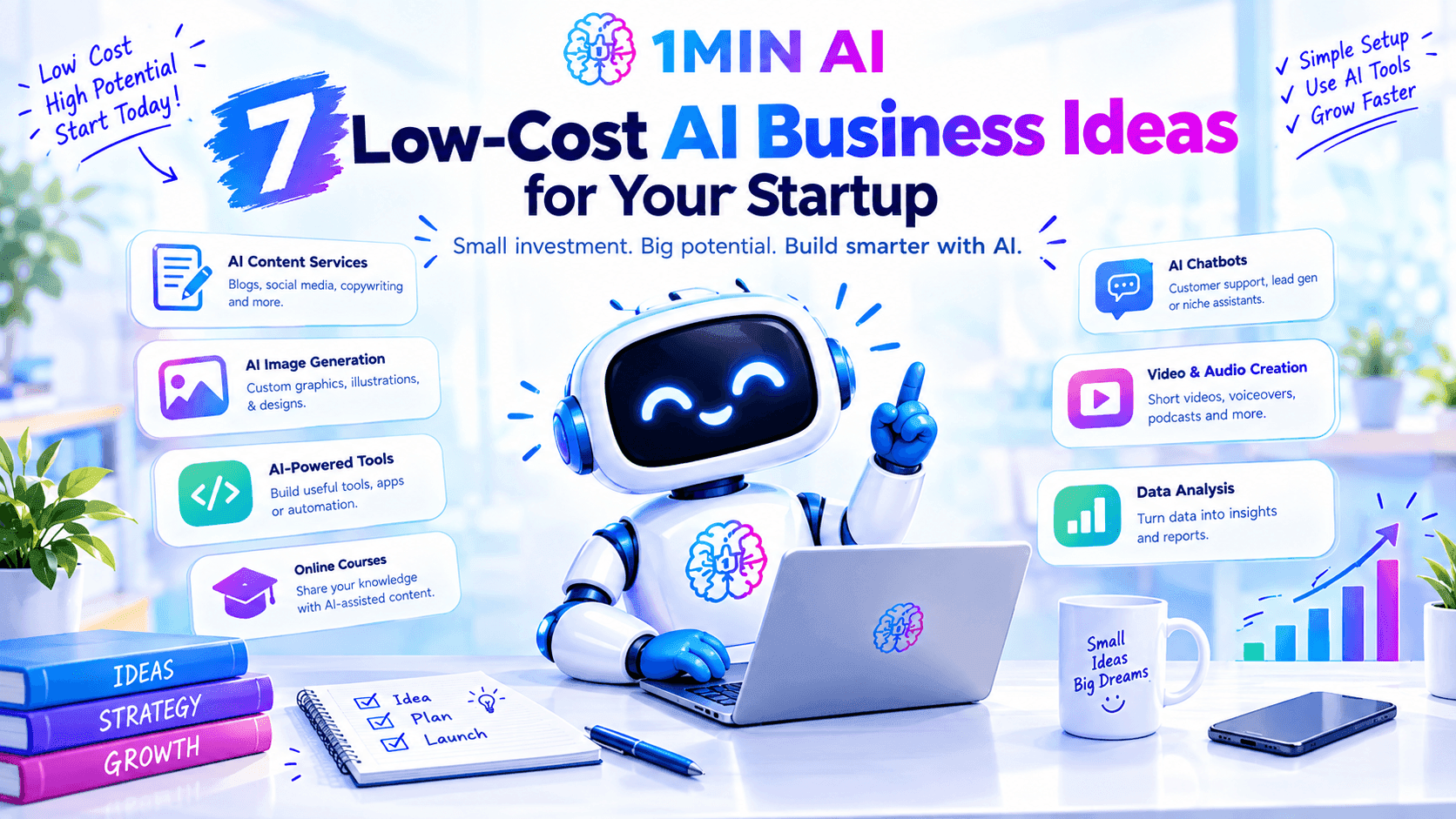
7 Low-Cost AI Business Ideas for Your Startup
Explore 7 low-cost AI business ideas you can start with a small budget, from content and video services to AI consulting, reselling, and automation.
Tram Ta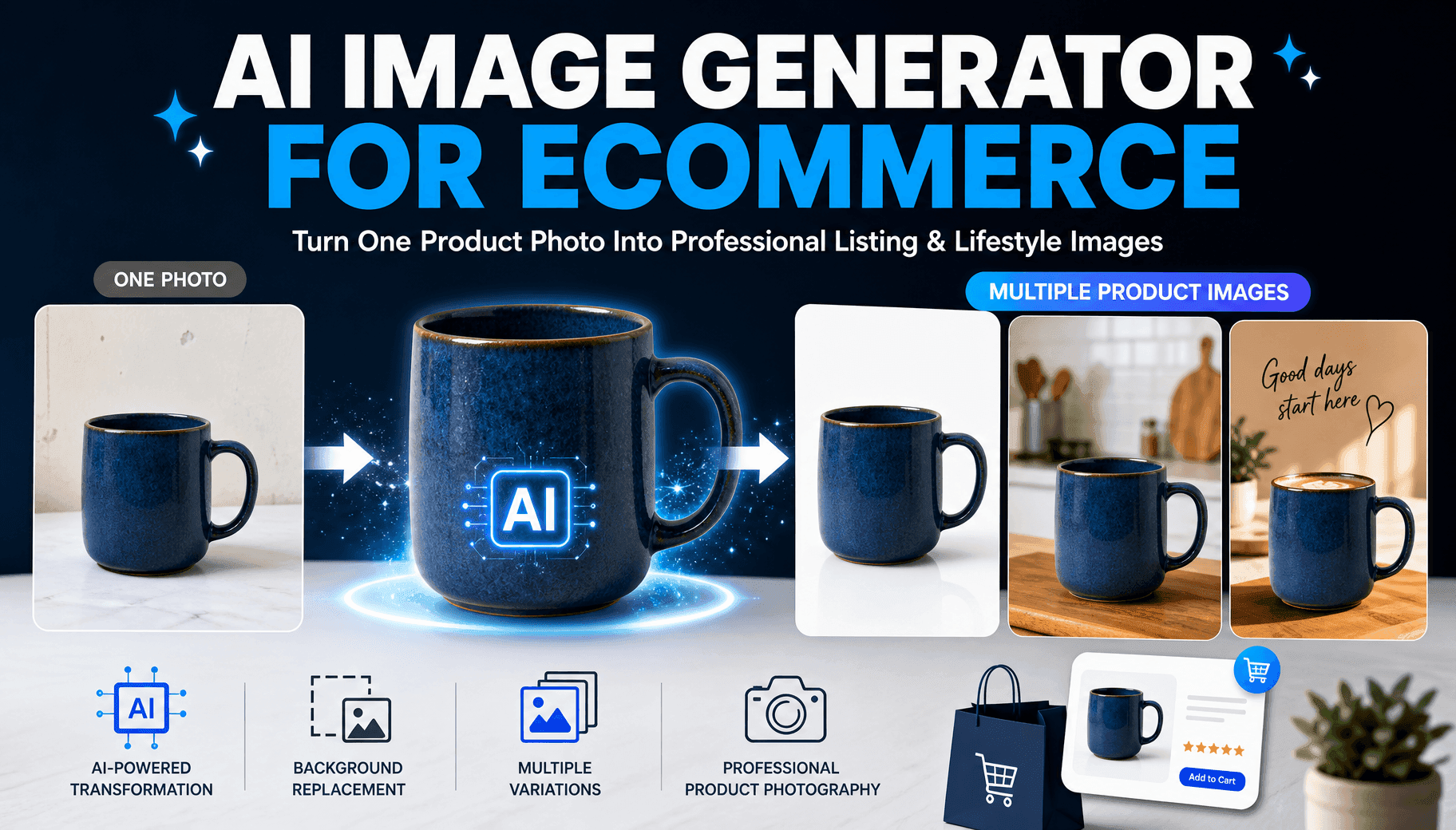
Free AI Image Generator For Ecommerce
Turn phone photos into studio, white-background, and lifestyle product images. Try the best AI image generator for ecommerce online free with 1min.AI.
Trang TranAI Agents
Discover and run AI agents to automate tasks across your work and daily life.
1minAI: Free AI Grammar Checker
Check grammar for free with 1minAI’s AI grammar checker. Find grammar, spelling, and writing mistakes, improve clarity, and polish your content in seconds.
Tram Ta
AI Agents for Facebook
Use an AI Agent for Facebook to create content, generate images, schedule posts, and publish from your documents and conversations.
Ngoc Hong
AI Agent vs AI Assistant: Which One Actually Saves Designers More Time?
Learn the difference between AI Agent vs AI Assistant and discover which solution helps designers automate repetitive work, reduce revisions, and save more time.
Lien Anh VuAI Workflows
Explore ready-to-use AI workflows for productivity, marketing, sales, support, and more.
Create Consistent Cartoon Content in Just a Few Steps
Create engaging cartoon videos for TikTok and Reels with 1min.AI. Research ideas, create characters, and turn images into animated videos in 3 simple steps.
Lien Anh VuOne Product, 10 UGC Creatives: How AI Makes Content Testing Easier
Create more authentic UGC with an AI UGC video generator, test more creative angles and scale affiliate content without filming every version.
Lien Anh VuPOV: You Have 10+ Posts to Make Every Day
Learn how to build an AI content workflow that helps content creators produce 10+ social media posts a day faster with AI brainstorming, image generation, and content creation.
Lien Anh VuNewsletter
Weekly AI Innovations with 1minAI

🔮 Weekly AI Innovations #140: Deepseek 4.1 Flash & Gemini Upgrades
Explore Deepseek 4.1 Flash and new Gemini models on 1min.ai. Plus, check our update on your Billing - Usage page for better clarity.
Hang Nguyen
🔮 Weekly AI Innovations #136: Grok 4.6 and Smart Data Retention
Discover the latest 1min.ai updates! Upgrade to Grok 4.6 for blazing-fast AI, and check our new Data Retention policies to secure your files today.
Hang Nguyen
🔮 Weekly AI Innovations #139: Dawn of the next-gen AI
Discover the immense power of GPT-6 Astra and Claude Fable 5.1. Unlock next-generation AI models on 1min.ai to solve complex tasks effortlessly.
Hang Nguyen