
Try the Minimalist Lifestyle Trend: 5 Prompts to Transform Your Room in 1 Minute

Tram Ta
October 20, 2026
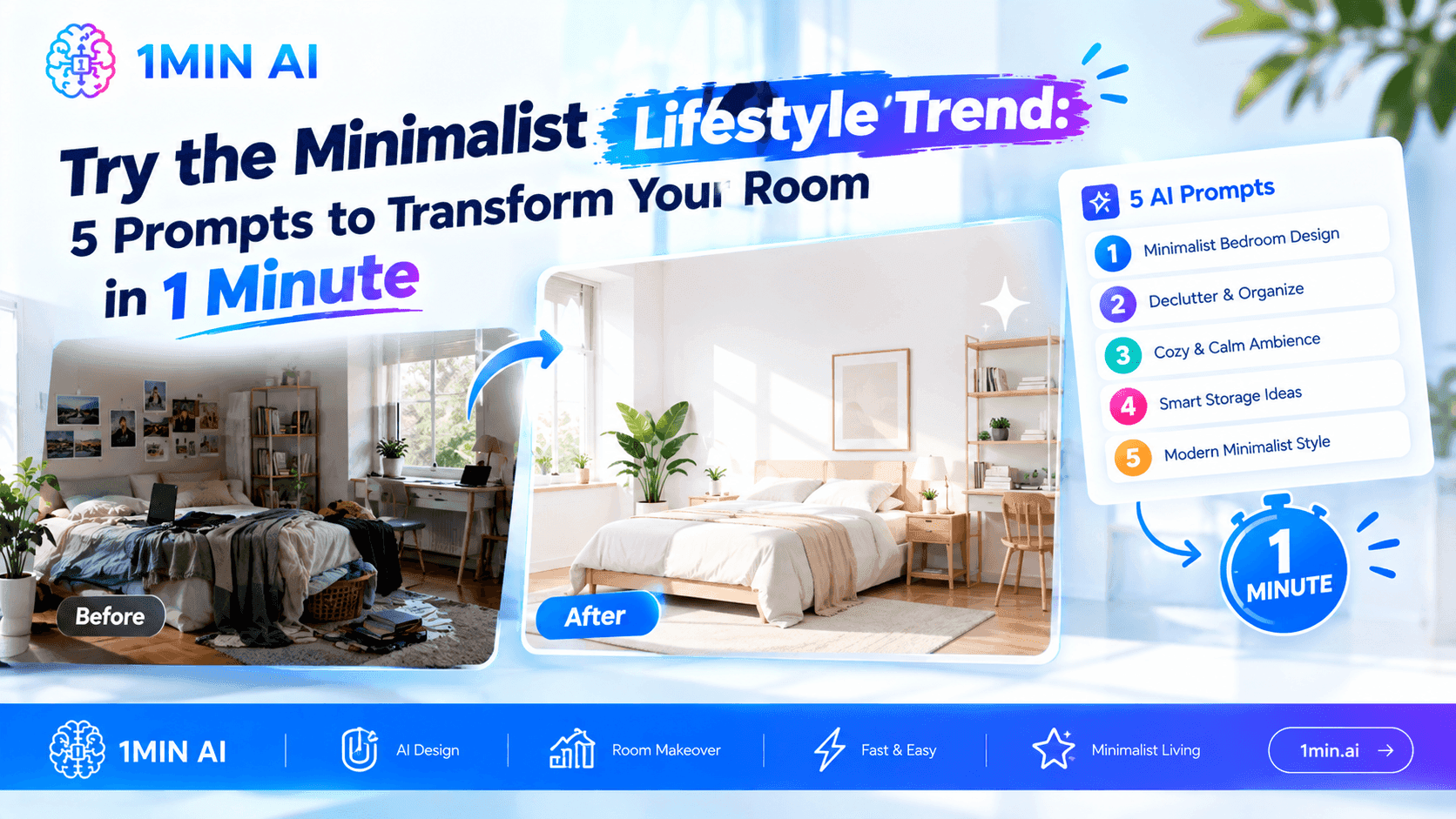
Try the minimalist lifestyle trend with 5 AI room makeover prompts. Create clean, cozy interiors and explore minimalist room designs with 1minAI.
The minimalist lifestyle trend is about creating a calmer, more functional space by focusing on what you genuinely need and love. From warm neutral bedrooms to uncluttered living rooms, minimalist interiors offer plenty of inspiration for anyone who wants a simpler-looking home. With AI image tools, you can explore new room styles before moving furniture, buying decor, or making changes. Here are five ready-to-use prompts and a simple workflow for visualizing your minimalist room makeover with 1minAI.
What Is the Minimalist Lifestyle Trend?
The minimalist lifestyle trend encourages people to focus on essentials, reduce unnecessary clutter, and make more intentional choices about their surroundings. In interior design, this often means clean lines, functional furniture, simple color palettes, and enough open space for a room to feel comfortable rather than crowded.
Minimalism does not mean every room must be completely white or contain almost no furniture. A minimalist space can still feel warm, personal, and inviting through natural materials, soft lighting, plants, artwork, and meaningful objects.
Common features of minimalist interiors include:
- Neutral colors: White, beige, cream, gray, and earthy tones create a cohesive look.
- Functional furniture: Each piece serves a purpose and fits the room's layout.
- Less visual clutter: Surfaces remain relatively clear, with selected decorative objects.
- Natural materials: Wood, linen, cotton, stone, and other tactile materials add warmth.
- Thoughtful lighting: Natural light and layered lamps help create a relaxed atmosphere.
- Intentional decoration: A few meaningful pieces take priority over excessive accessories.
The goal is not to make a home look empty. It is to make the space feel more intentional, comfortable, and easier to use.
Why Is the Minimalist Lifestyle Trend So Popular?
Minimalist interiors are popular because they combine a recognizable aesthetic with practical ideas for everyday living.
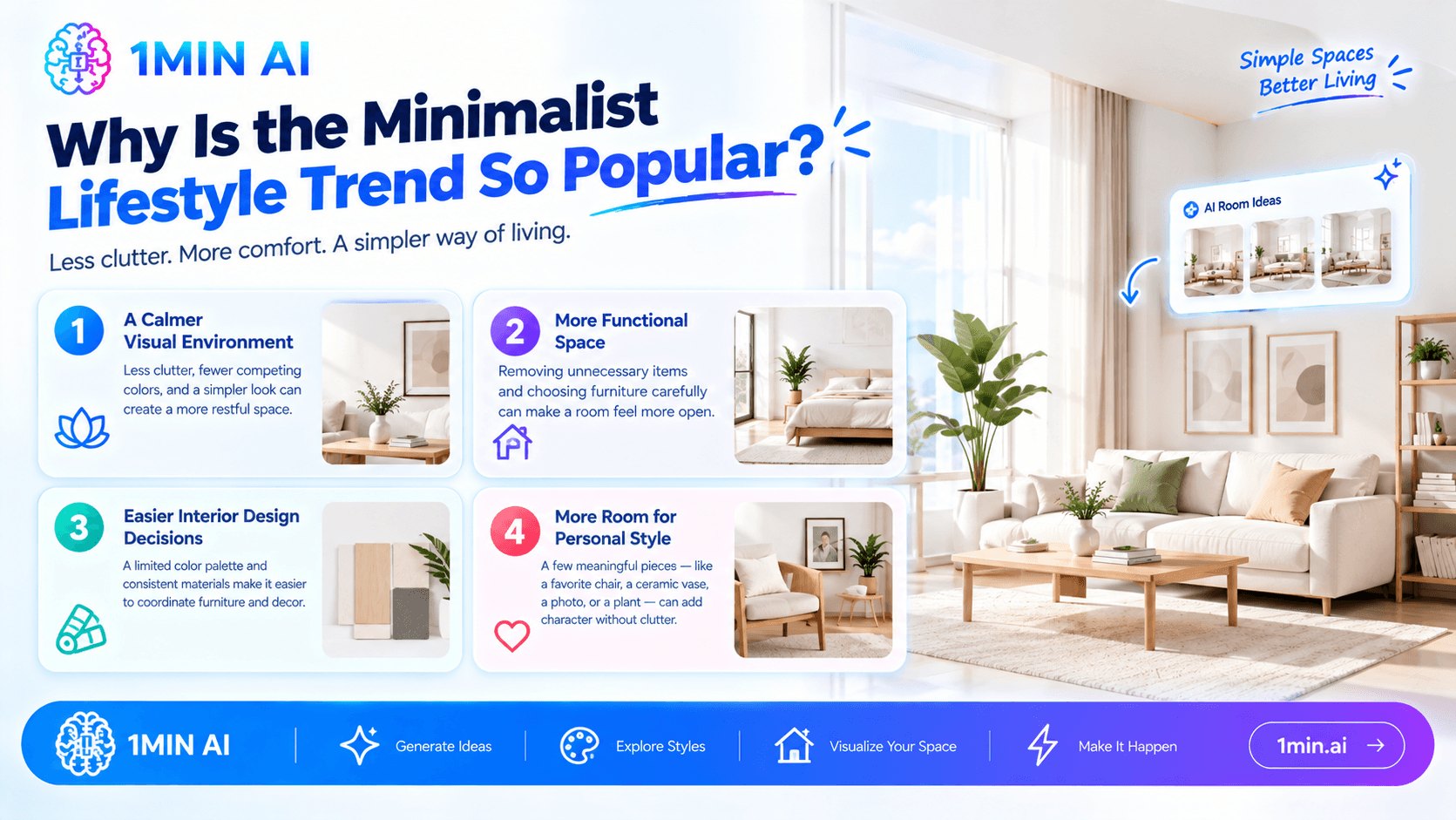
1. A Calmer Visual Environment
Busy patterns, crowded shelves, and too many competing colors can make a room feel visually overwhelming. A simpler palette and more deliberate arrangement can create a more restful appearance.
2. More Functional Space
Removing unnecessary items and choosing furniture carefully can make a small room feel more open. This is especially useful for students, renters, and people working from home.
3. Easier Interior Design Decisions
A limited color palette and consistent materials make it easier to coordinate furniture and decor. Instead of buying many accessories, you can focus on a few pieces that work well together.
4. More Room for Personal Style
Minimalism does not require copying a showroom. A favorite chair, a handmade ceramic vase, a framed photograph, or a plant can give a simple room character without overwhelming it.
AI-generated room concepts can help you explore these choices visually before deciding which ideas are realistic for your home.
5 AI Prompts to Transform Your Room Into a Minimalist Space
These prompts are designed to generate visual concepts for different rooms. You can use them to create a fresh design from text or adapt them to an existing room photo with a suitable image editing tool.
For the best results, replace details such as room size, furniture, colors, and lighting with details that match your actual space.
1. Minimalist Bedroom: Create a Calm, Cozy Retreat
Best for: Anyone who wants a more peaceful, uncluttered bedroom.</text>
A minimalist bedroom works best when the essentials are comfortable and the design feels cohesive. Soft textures, warm lighting, and simple furniture can make the room feel inviting without adding unnecessary decoration.
Copy-ready AI prompt:
Transform this bedroom into a warm minimalist retreat. Use a low-profile bed with crisp white linen bedding, a light oak bedside table, a soft beige rug, warm off-white walls, and subtle natural textures. Add one small bedside lamp and a single understated piece of wall art. Keep the floor and surfaces uncluttered, preserve a realistic room layout, and use soft morning sunlight with natural shadows. Modern minimalist interior photography, balanced composition, realistic materials, calm and cozy atmosphere.
Tips for better results:
- Use beige, cream, or warm white instead of relying only on stark white.
- Keep the number of decorative objects low.
- Include the bed size and existing furniture if you want the design to feel realistic.
- If you are editing an actual photo, specify which items should remain unchanged.
2. Minimalist Living Room: Make a Small Space Feel Open
Best for: Small apartments, rental homes, and shared living spaces.</text>
A minimalist living room relies on thoughtful furniture placement and visual balance. The aim is to make the space feel open while retaining enough seating, storage, and personality for everyday life.
Copy-ready AI prompt:
Redesign this living room in a modern minimalist style while keeping the original room dimensions and window positions. Use a compact cream-colored sofa, a simple light oak coffee table, a neutral textured rug, and one tall indoor plant. Choose a palette of warm white, sand, and natural wood. Reduce visible clutter, keep walkways open, and use soft natural daylight. Avoid oversized furniture, excessive decorations, busy patterns, and unnecessary objects. Photorealistic interior design, realistic proportions, clean composition, warm and inviting atmosphere.
Tips for better results:
-
Specify that walkways and windows must remain clear.
-
Choose furniture proportions appropriate for the room.
-
Use one or two accent pieces instead of decorating every surface.
-
For a rental, request a design that does not require permanent structural changes.
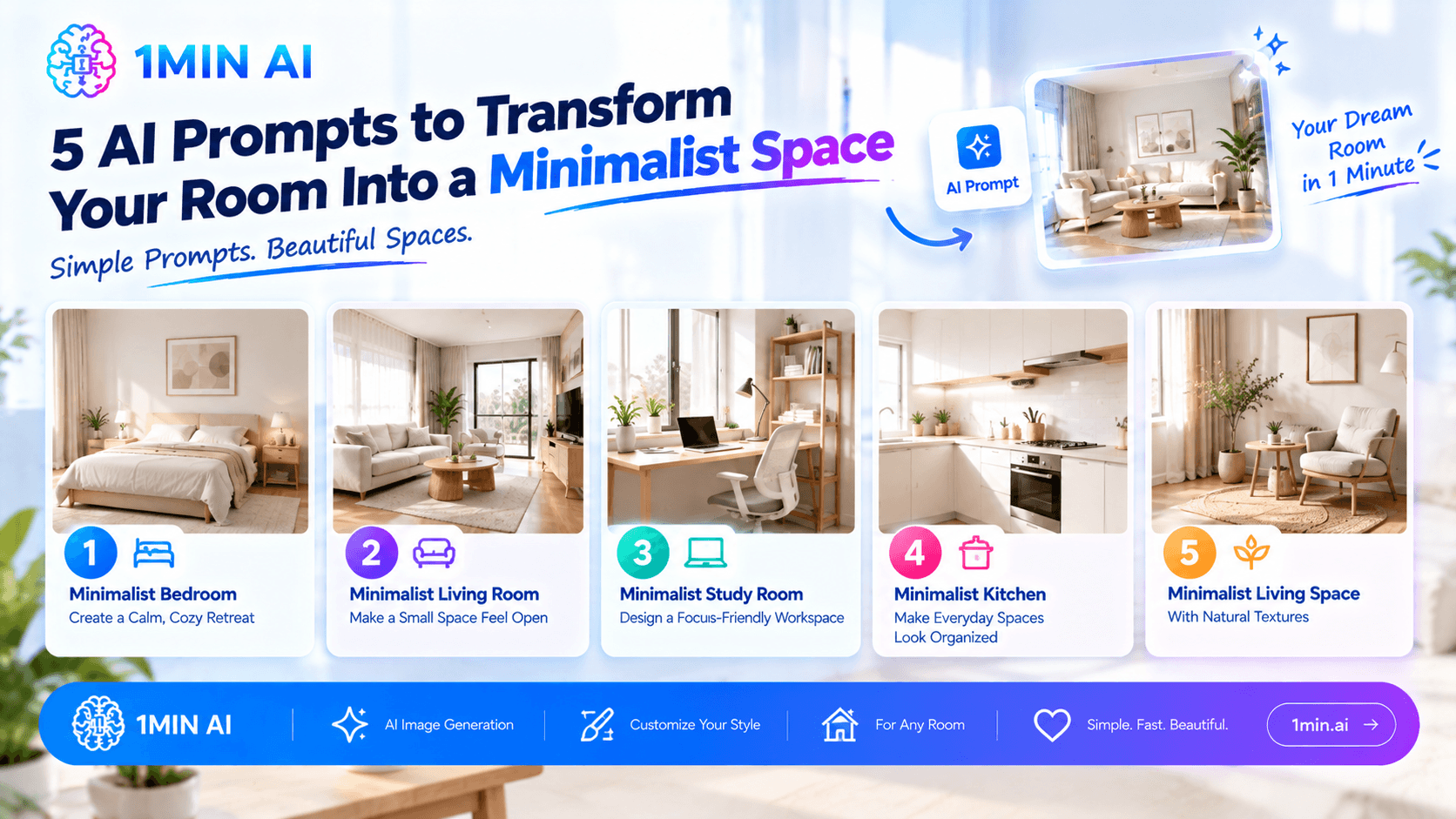
3. Minimalist Study Room: Design a Focus-Friendly Workspace
Best for: Students, remote workers, and people who study at home.</text>
A minimalist workspace should support concentration without feeling sterile. A functional desk, comfortable chair, adequate lighting, and organized storage can create a clean visual environment while keeping everyday essentials accessible.
Copy-ready AI prompt:
Transform this study room into a functional minimalist workspace. Add a simple light wood desk, an ergonomic neutral-colored chair, a slim desk lamp, discreet cable management, and a small shelf with neatly arranged books. Use warm white walls, natural wood accents, and soft daylight from the window. Keep the desk mostly clear, with only a laptop, notebook, and one small plant. Preserve the room's original architecture and realistic proportions. Contemporary Scandinavian-inspired minimalist interior, photorealistic materials, clean lines, practical storage, peaceful and focused atmosphere.
Tips for better results:
- Include the actual equipment you need, such as a monitor or laptop.
- Request practical storage rather than removing every useful item.
- Specify the window position and lighting needs.
- Avoid unrealistic desk sizes or decorative objects that interfere with work.
4. Minimalist Kitchen: Make Everyday Spaces Look Organized
Best for: Small kitchens and people who prefer clean, functional surfaces.</text>
A minimalist kitchen uses consistent finishes, simple cabinet designs, and deliberate storage to reduce visual noise. Natural wood and subtle stone textures can add warmth to an otherwise restrained palette.
Copy-ready AI prompt:
Reimagine this kitchen as a warm minimalist interior. Use flat-front cabinets in soft white or light beige, natural oak accents, a simple neutral countertop, and understated hardware. Keep the existing kitchen layout, sink, stove, windows, and major appliances in their original positions. Clear unnecessary items from the countertops while retaining a few practical essentials, such as a wooden cutting board and a small ceramic bowl. Use balanced natural lighting, realistic material textures, clean lines, and a functional, uncluttered design. Photorealistic interior photography, warm neutral palette, simple and timeless atmosphere.
Tips for better results:
- Preserve appliance and cabinet locations if you are visualizing a real renovation.
- Ask for practical storage instead of eliminating necessary kitchen equipment.
- Use a small number of materials to keep the design consistent.
- Treat the image as inspiration, not a construction plan.
5. Minimalist Living Space With Natural Textures: Make It Warm, Not Empty
Best for: Anyone who likes minimalism but wants a cozy, personal room.</text>
Minimalist spaces can look cold when they rely on empty surfaces and plain colors alone. Natural materials, gentle lighting, and a few carefully selected objects help balance simplicity with comfort.
Copy-ready AI prompt:
Redesign this room in a warm organic minimalist style. Use a palette of cream, taupe, muted beige, and natural wood. Add linen curtains, a textured wool rug, a simple wooden side table, one sculptural ceramic vase, and a small green plant. Use soft indirect lighting and natural daylight to highlight the textures of the materials. Keep the furniture functional and the layout uncluttered, but make the space feel lived-in and welcoming. Avoid excessive decoration, glossy artificial finishes, strong contrasting colors, and oversized furniture. Photorealistic interior design, subtle natural textures, elegant simplicity, comfortable modern home.
Tips for better results:
- Add texture through fabric, wood, stone, and ceramics rather than extra objects.
- Use warm lighting to soften neutral colors.
- Include one or two personal details that make the room feel individual.
- Try a variation with slightly darker wood or a muted accent color if the first result looks too plain.
How to Transform Your Room With AI Using 1minAI
You can use 1minAI to generate a new minimalist interior concept or explore alternative versions of a room image you already have. The right workflow depends on whether you are starting with an idea or an existing photo.
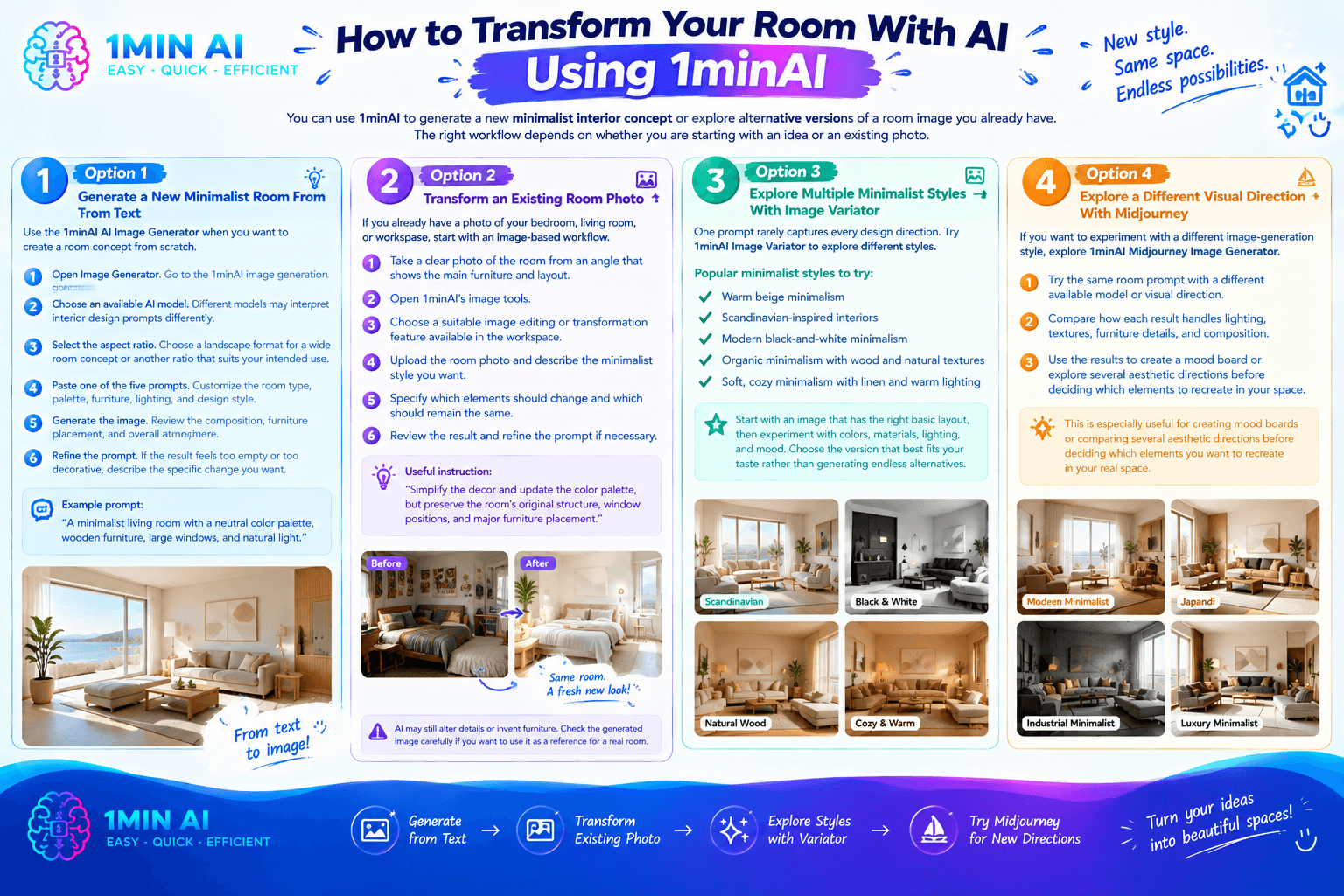
Option 1: Generate a New Minimalist Room From Text
Use the 1minAI AI Image Generator when you want to create a room concept from scratch.
- Open Image Generator. Go to the 1minAI image generation tool.
- Choose an available AI model. Different models may interpret interior design prompts differently.
- Select the aspect ratio. Choose a landscape format for a wide room concept or another ratio that suits your intended use.
- Paste one of the five prompts. Customize the room type, palette, furniture, lighting, and design style.
- Generate the image. Review the composition, furniture placement, and overall atmosphere.
- Refine the prompt. If the result feels too empty or too decorative, describe the specific change you want.
For example, you can add “warmer wood tones,” “more natural light,” or “keep the original window placement” to clarify your direction.
Option 2: Transform an Existing Room Photo
If you already have a photo of your bedroom, living room, or workspace, start with an image-based workflow.
- Take a clear photo of the room from an angle that shows the main furniture and layout.
- Open 1minAI's image tools.
- Choose a suitable image editing or transformation feature available in the workspace.
- Upload the room photo and describe the minimalist style you want.
- Specify which elements should change and which should remain the same.
- Review the result and refine the prompt if necessary.
A useful instruction is: “Simplify the decor and update the color palette, but preserve the room's original structure, window positions, and major furniture placement.”
AI may still alter details or invent furniture. Check the generated image carefully if you want to use it as a reference for a real room.
Option 3: Explore Multiple Minimalist Styles With Image Variator
One prompt rarely captures every possible design direction. If you have an image you like but want to explore alternatives, try 1minAI Image Variator.
You can use the workflow to compare variations such as:
- Warm beige minimalism.
- Scandinavian-inspired interiors.
- Modern black-and-white minimalism.
- Organic minimalism with wood and natural textures.
- Soft, cozy minimalism with linen and warm lighting.
Start with an image that has the right basic layout, then experiment with colors, materials, lighting, and mood. Choose the version that best fits your taste rather than generating endless alternatives.
Option 4: Explore a Different Visual Direction With Midjourney
If you want to experiment with a different image-generation style, explore the 1minAI Midjourney Image Generator.
Try the same room prompt with a different available model or visual direction. Compare how each result handles lighting, textures, furniture details, and composition.
This is especially useful for creating mood boards or comparing several aesthetic directions before deciding which elements you want to recreate in your real space.
Common Mistakes to Avoid When Creating Minimalist Room Designs
Making the Room Too Empty
Minimalism is not the same as removing everything. A room still needs comfortable furniture, lighting, storage, and personal details. If the result looks cold, add natural textures or a few meaningful objects.
Using Too Many Colors and Materials
A restrained palette helps create a cohesive look. Too many contrasting finishes, patterns, or accent colors can weaken the minimalist effect.
Ignoring the Real Room Layout
AI images can change window positions, distort furniture sizes, or generate impractical arrangements. If you are redesigning an actual room, compare the generated concept with the original photo and verify dimensions before buying furniture.
Treating an AI Image as a Renovation Plan
An AI-generated image is a visual concept, not a guarantee that the design is physically possible. Check measurements, access, ventilation, electrical needs, and other practical constraints before making changes.
Buying New Decor Before Trying What You Already Own
The minimalist lifestyle trend often emphasizes intentional choices rather than buying more things. Experiment with rearranging furniture, removing unused items, and reusing existing decor before purchasing anything new.
Conclusion
The minimalist lifestyle trend is about making your space feel more intentional, functional, and comfortable—not simply removing every decorative object. With the right prompt, AI image tools can help you explore different room designs before committing to a new layout or decor style.
Start with one room and one of the five prompts. Generate a concept, refine the details, and compare alternative styles with 1minAI. Then use the ideas that fit your actual space, budget, and lifestyle.
For further information, explore 1minAI AI Image Generator
Discover more AI features: https://1min.ai/features
Try 1minAI agent now: https://app.1min.ai/ai-agent-demo
- #Commerce
Alternatives
Discover the best alternatives to 1minAI and compare features, pricing, and use cases.

1min.AI vs OpenRouter
1min.AI vs. OpenRouter: Compare the ready-to-use AI creation product against the technical API tool. Find out if you need a zero-code creative studio or a coding infrastructure hub.
 Ngoc Hong

1min.AI vs Jarvis AI
Compare 1min.AI vs Jarvis AI to discover which AI platform is better for writing, research, automation, and content creation. Find the best AI assistant for your workflow.
Ngoc Hong
1min.AI vs Taskade
Compare 1min.AI vs Taskade for AI content creation, automation, agents, and creative workflows to find the right workspace.
Ngoc HongAI Tools
Discover the best AI tools to boost productivity, creativity, and everyday work.
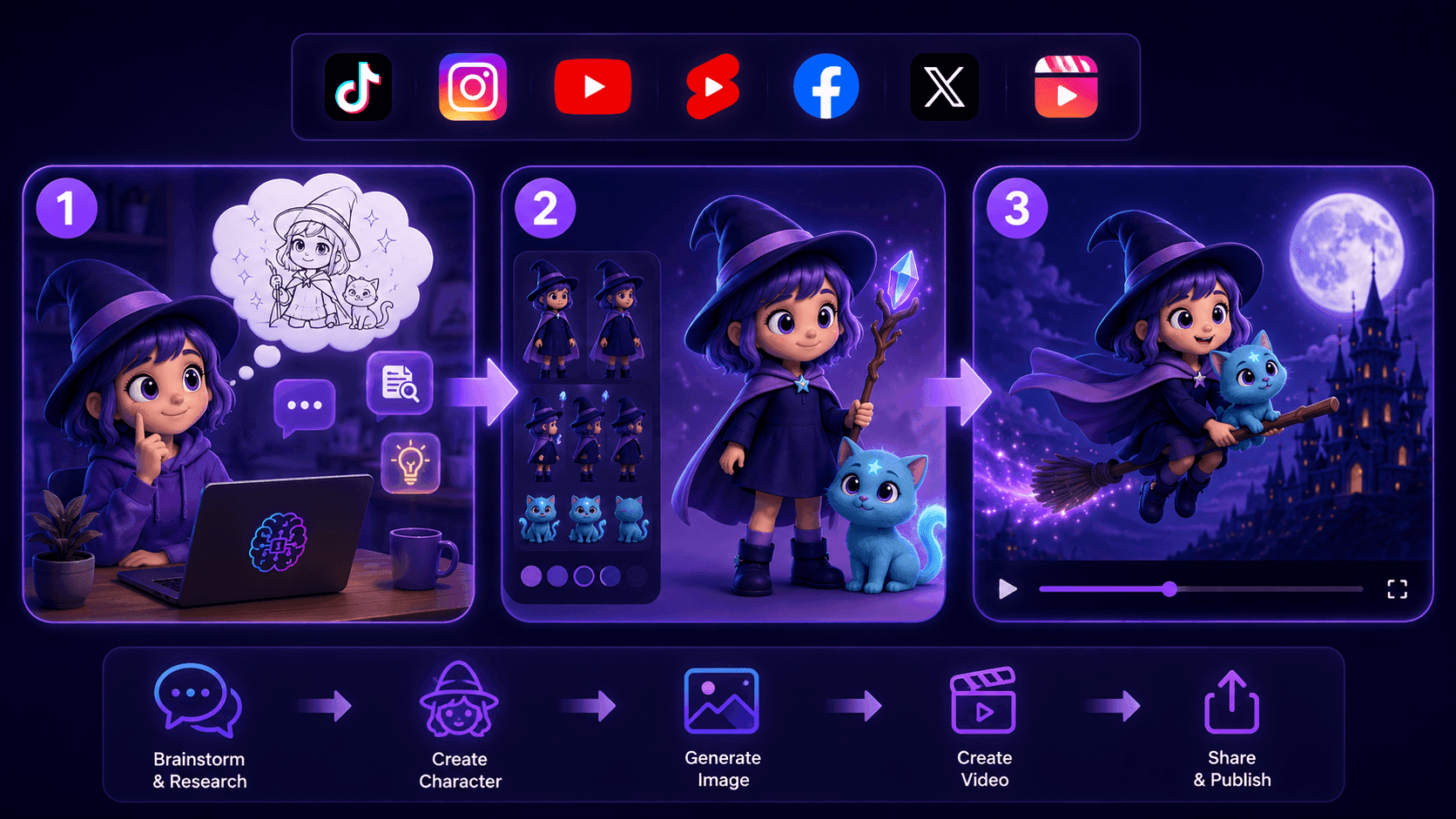
Create Consistent Cartoon Content in Just a Few Steps
Create engaging cartoon videos for TikTok and Reels with 1min.AI. Research ideas, create characters, and turn images into animated videos in 3 simple steps.
 Lien Anh Vu

One Product, 10 UGC Creatives: How AI Makes Content Testing Easier
Create more authentic UGC with an AI UGC video generator, test more creative angles and scale affiliate content without filming every version.
Lien Anh Vu
Top 4 Affordable AI Tools for Startup Founders
Discover the top 4 affordable AI tools for startup founders to validate ideas, build products, create content, and launch faster without overspending.
 Tram Ta
AI Features
Comprehensive AI features that streamline workflows, improve efficiency, and empower teams to achieve more.
Create Consistent Cartoon Content in Just a Few Steps
Create engaging cartoon videos for TikTok and Reels with 1min.AI. Research ideas, create characters, and turn images into animated videos in 3 simple steps.
Lien Anh VuOne Product, 10 UGC Creatives: How AI Makes Content Testing Easier
Create more authentic UGC with an AI UGC video generator, test more creative angles and scale affiliate content without filming every version.
Lien Anh Vu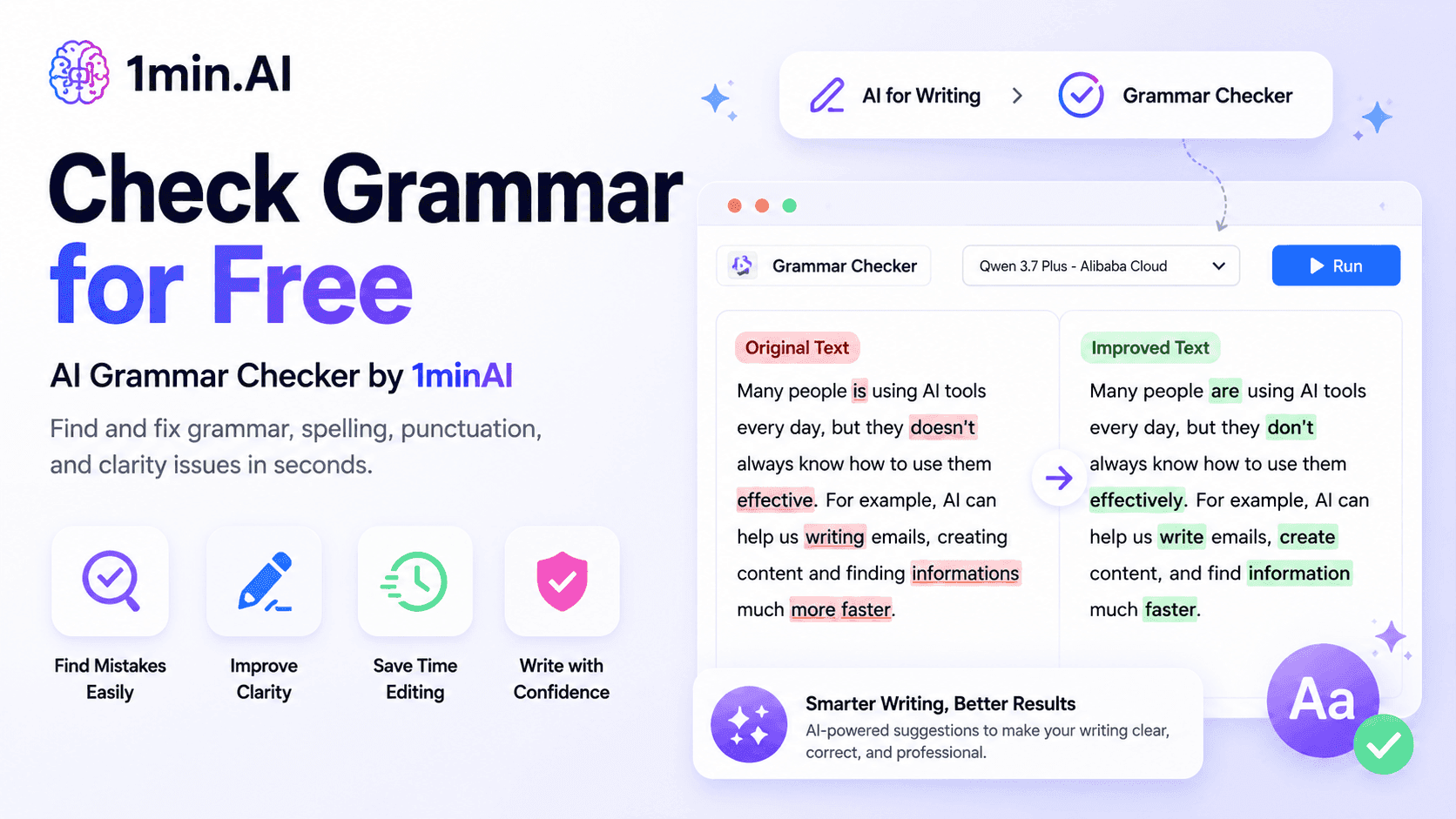
1minAI: Free AI Grammar Checker
Check grammar for free with 1minAI’s AI grammar checker. Find grammar, spelling, and writing mistakes, improve clarity, and polish your content in seconds.
Tram TaAI Use Cases
A curated collection of AI use cases for business, productivity, and industry-specific applications.
Create Consistent Cartoon Content in Just a Few Steps
Create engaging cartoon videos for TikTok and Reels with 1min.AI. Research ideas, create characters, and turn images into animated videos in 3 simple steps.
Lien Anh VuOne Product, 10 UGC Creatives: How AI Makes Content Testing Easier
Create more authentic UGC with an AI UGC video generator, test more creative angles and scale affiliate content without filming every version.
Lien Anh Vu
Best Time to Post on Instagram: A Practical Guide for Better Engagement
Discover the best time to post on Instagram, including the best days and times for different audiences, plus tips to find the ideal posting schedule for your account.
Tram TaAI Tutorials
Learn how to use AI with practical, step-by-step tutorials.

Black Friday AI Tool Deals in 2026
Discover what Black Friday AI tool deals 2026 has to offer. Find out how to secure the 1min.AI lifetime deal via AppSumo, Dealify, Stack Social, and verify on Trustpilot, Slashdot, and Software Advice.
 Hang Nguyen
Create Consistent Cartoon Content in Just a Few Steps
Create engaging cartoon videos for TikTok and Reels with 1min.AI. Research ideas, create characters, and turn images into animated videos in 3 simple steps.
Lien Anh Vu
[Seedance 2.5 New] Better AI Product Videos, Less Rework in 1min.AI
Use Seedance 2.5 image to video on 1min.AI to create more consistent AI product videos, reduce failed generations, save credits, and improve UGC workflows.
Lien Anh VuAI Guides
Learn AI faster with practical guides, real-world examples, and actionable best practices.

Safely Buy AI Tools Online: 2026 Black Friday Guide
Discover how to find and secure the best Black Friday AI deals online. Learn expert strategies to avoid scams, combat subscription fatigue, and verify software.
Hang NguyenCreate Consistent Cartoon Content in Just a Few Steps
Create engaging cartoon videos for TikTok and Reels with 1min.AI. Research ideas, create characters, and turn images into animated videos in 3 simple steps.
Lien Anh Vu[Seedance 2.5 New] Better AI Product Videos, Less Rework in 1min.AI
Use Seedance 2.5 image to video on 1min.AI to create more consistent AI product videos, reduce failed generations, save credits, and improve UGC workflows.
Lien Anh VuAI Solutions
Browse the best AI solutions for automation, coding, research, productivity, customer support, marketing, and business workflows.
Safely Buy AI Tools Online: 2026 Black Friday Guide
Discover how to find and secure the best Black Friday AI deals online. Learn expert strategies to avoid scams, combat subscription fatigue, and verify software.
Hang NguyenCreate Consistent Cartoon Content in Just a Few Steps
Create engaging cartoon videos for TikTok and Reels with 1min.AI. Research ideas, create characters, and turn images into animated videos in 3 simple steps.
Lien Anh VuOne Product, 10 UGC Creatives: How AI Makes Content Testing Easier
Create more authentic UGC with an AI UGC video generator, test more creative angles and scale affiliate content without filming every version.
Lien Anh VuAI Models
Explore the world's leading AI models in one place.
Create Consistent Cartoon Content in Just a Few Steps
Create engaging cartoon videos for TikTok and Reels with 1min.AI. Research ideas, create characters, and turn images into animated videos in 3 simple steps.
Lien Anh VuOne Product, 10 UGC Creatives: How AI Makes Content Testing Easier
Create more authentic UGC with an AI UGC video generator, test more creative angles and scale affiliate content without filming every version.
Lien Anh Vu[Seedance 2.5 New] Better AI Product Videos, Less Rework in 1min.AI
Use Seedance 2.5 image to video on 1min.AI to create more consistent AI product videos, reduce failed generations, save credits, and improve UGC workflows.
Lien Anh VuAI Comparisons
Compare AI tools, models, and platforms to find the best fit for your needs.

Kling AI Vs Veo 3: Which Model Wins?
Kling AI vs Veo 3: compare motion, native audio, pricing & free tiers to see which AI video generator wins for your project - try both on 1min.AI.
 Trang Tran
[Seedance 2.5 New] Better AI Product Videos, Less Rework in 1min.AI
Use Seedance 2.5 image to video on 1min.AI to create more consistent AI product videos, reduce failed generations, save credits, and improve UGC workflows.
Lien Anh Vu
DeepSeek V4 Pro vs Flash Comparison
Compare DeepSeek V4 Pro vs DeepSeek V4 Flash metrics. Optimize your agentic apps and improve AI fact checking on 1min.ai today.
Ngoc HongAI Integrations
Seamlessly integrate AI with the tools you already use to automate work and boost productivity.

POV: You Have 10+ Posts to Make Every Day
Learn how to build an AI content workflow that helps content creators produce 10+ social media posts a day faster with AI brainstorming, image generation, and content creation.
Lien Anh Vu
How to Use an AI Fashion Video Generator for Fashion Week 2026
Turn Fashion Week 2026 ideas into stunning fashion videos with AI. Learn how to brainstorm, create visuals, and transform images into videos with one simple workflow.
Lien Anh Vu
Stop Switching Between AI Apps: How AI Integration Transforms Employer Branding
Discover how AI integration helps HR teams streamline employer branding by combining AI writing, documents, images, video, and multiple AI models into one workspace.
Tram TaAI for Industries
Find the best AI tools and workflows for healthcare, finance, education, legal, manufacturing, retail, real estate, and more

Free AI Product Description Generator
Write product descriptions that sell in minutes. Use this free AI product description generator to turn details or a photo into on-brand copy. Try 1min.AI.
Trang Tran
Best Business Productivity Tools for Startups to Maximize Profits | 1minAI
Discover the best business productivity tools for startups to save time, streamline workflows, reduce repetitive tasks, and support profitable growth with AI.
Tram Ta
Best AI Tool for Content Marketing |1minAI
Looking for the best AI tool for content marketing? See how 1minAI helps marketers research, write, repurpose, create visuals, and scale content from one AI workspace.
Tram TaAI Agents
Discover and run AI agents to automate tasks across your work and daily life.
1minAI: Free AI Grammar Checker
Check grammar for free with 1minAI’s AI grammar checker. Find grammar, spelling, and writing mistakes, improve clarity, and polish your content in seconds.
Tram Ta
AI Agents for Facebook
Use an AI Agent for Facebook to create content, generate images, schedule posts, and publish from your documents and conversations.
Ngoc Hong
AI Agent vs AI Assistant: Which One Actually Saves Designers More Time?
Learn the difference between AI Agent vs AI Assistant and discover which solution helps designers automate repetitive work, reduce revisions, and save more time.
Lien Anh VuAI Workflows
Explore ready-to-use AI workflows for productivity, marketing, sales, support, and more.
Create Consistent Cartoon Content in Just a Few Steps
Create engaging cartoon videos for TikTok and Reels with 1min.AI. Research ideas, create characters, and turn images into animated videos in 3 simple steps.
Lien Anh VuOne Product, 10 UGC Creatives: How AI Makes Content Testing Easier
Create more authentic UGC with an AI UGC video generator, test more creative angles and scale affiliate content without filming every version.
Lien Anh VuPOV: You Have 10+ Posts to Make Every Day
Learn how to build an AI content workflow that helps content creators produce 10+ social media posts a day faster with AI brainstorming, image generation, and content creation.
Lien Anh VuNewsletter
Weekly AI Innovations with 1minAI

🔮 Weekly AI Innovations #142: Grok 4.7, Opus 5.5 & Sonnet 5.5 on 1min.ai
Access Grok 4.7, Claude Opus 5.5, and Sonnet 5.5 on 1min.ai. Cut subscription costs by up to 70% and process millions tokens in a single unified workspace.
Hang Nguyen
🔮 Weekly AI Innovations #141: Seedance 2.5 & Stable Audio 3: Next-Gen AI
Explore Seedance 2.0, 2.5, and StabilityAI's Stable Audio 3 on 1min.ai. Generate studio-grade audio and synchronized motion with next-gen generative AI.
Hang Nguyen
🔮 Weekly AI Innovations #140: Deepseek 4.1 Flash & Gemini Upgrades
Explore Deepseek 4.1 Flash and new Gemini models on 1min.ai. Plus, check our update on your Billing - Usage page for better clarity.
Hang Nguyen