
Fable 5.1 vs Opus 5.5: Which Is Worth Your Credits?

Ngoc Hong
November 2, 2026

Fable 5.1 vs Opus 5.5: compare price, benchmarks and context, learn when each is worth your credits, and test both side by side on 1min.AI.
Fable 5.1 vs Opus 5.5: Which Is Worth Your Credits?
Fable 5.1 vs Opus 5.5 is a practical question: does the more expensive model produce work that needs less correction? In two sample comparisons covering Python code review and an SEO content brief, Opus 5.5 matched Fable’s main findings and produced more reliable test expectations.
These examples support starting with Opus 5.5, but they do not establish a universal winner. Here is what each model delivered, where errors appeared, and how to compare the results against your actual credit usage.
Fable 5.1 vs Opus 5.5 at a glance
Both models offer the same context window and maximum output capacity. Their standard API prices and default effort settings differ, which matters when interpreting performance and cost.
| Specification | Opus 5.5 | Fable 5.1 |
|---|---|---|
| Context window | 1M tokens | 1M tokens |
| Maximum output | 128K tokens | 128K tokens |
| API input price per 1M tokens | $4 | $10 |
| API output price per 1M tokens | $20 | $50 |
| Default effort | Medium | High |
| Anthropic latency label | Moderate | Slower |
These are Anthropic’s published specifications. Standard input and output token rates for Opus are 60% lower, but that does not establish the same percentage saving for a completed task or a 1min.AI request. Token usage, settings, and platform billing also matter.
Anthropic recommends Opus 5.5 for most workloads, with Fable 5.1 reserved for demanding reasoning or tasks where Opus at higher effort still falls short.
What happened in our two sample comparisons?
The comparison used matching task instructions and supplied materials for each model. We examined the returned answers, checked arithmetic, and reviewed whether the outputs followed the requirements.
Each task had one supplied response per model. Credit consumption, response time, and effort settings were not recorded. The complete generated test suites were not executed, so the findings below distinguish output inspection from observed runtime results.
Test 1: Reviewing Python code with three seeded bugs
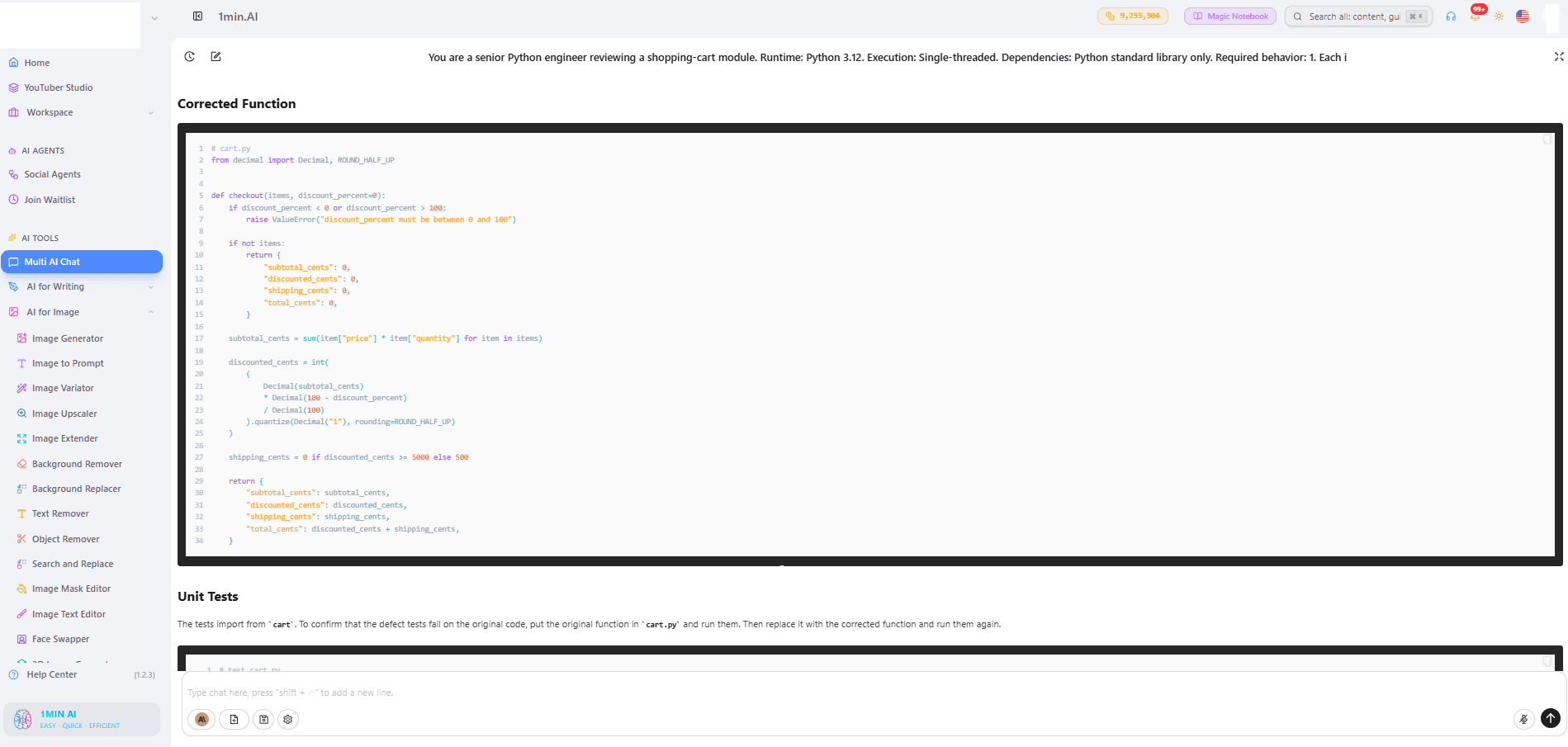
The first task asked both models to review a shopping-cart function. The requirements covered item quantities, percentage discounts, rounding, and shipping charges. Three bugs were deliberately included:
- The function rejected a valid 100% discount.
- The subtotal ignored item quantities.
- Free shipping depended on the amount before discounts.
Both models identified all three bugs and supplied the same correct fixes. They preserved the function signature, dictionary keys, and required rounding behavior.
The difference appeared in the generated tests.
| Review result | Opus 5.5 | Fable 5.1 |
|---|---|---|
| Identified all three seeded bugs | Yes | Yes |
| Corrected all three affected lines | Yes | Yes |
| Included requested edge cases | Yes | Yes |
Fable expected a price of 1,001 cents with a 33% discount to produce a discounted amount of 330 cents. However, the customer pays the remaining 67%
We independently checked this calculation using Python’s Decimal. Fable’s assertion would reject the corrected function because its expected value was wrong.
Fable also incorrectly stated that all its regression tests would pass on the original code. Some exercised the quantity bug and would fail.
Result: Both models performed equally on bug discovery and repair. Opus produced more reliable test expectations in this sample.
Test 2: Building an SEO brief from five sources
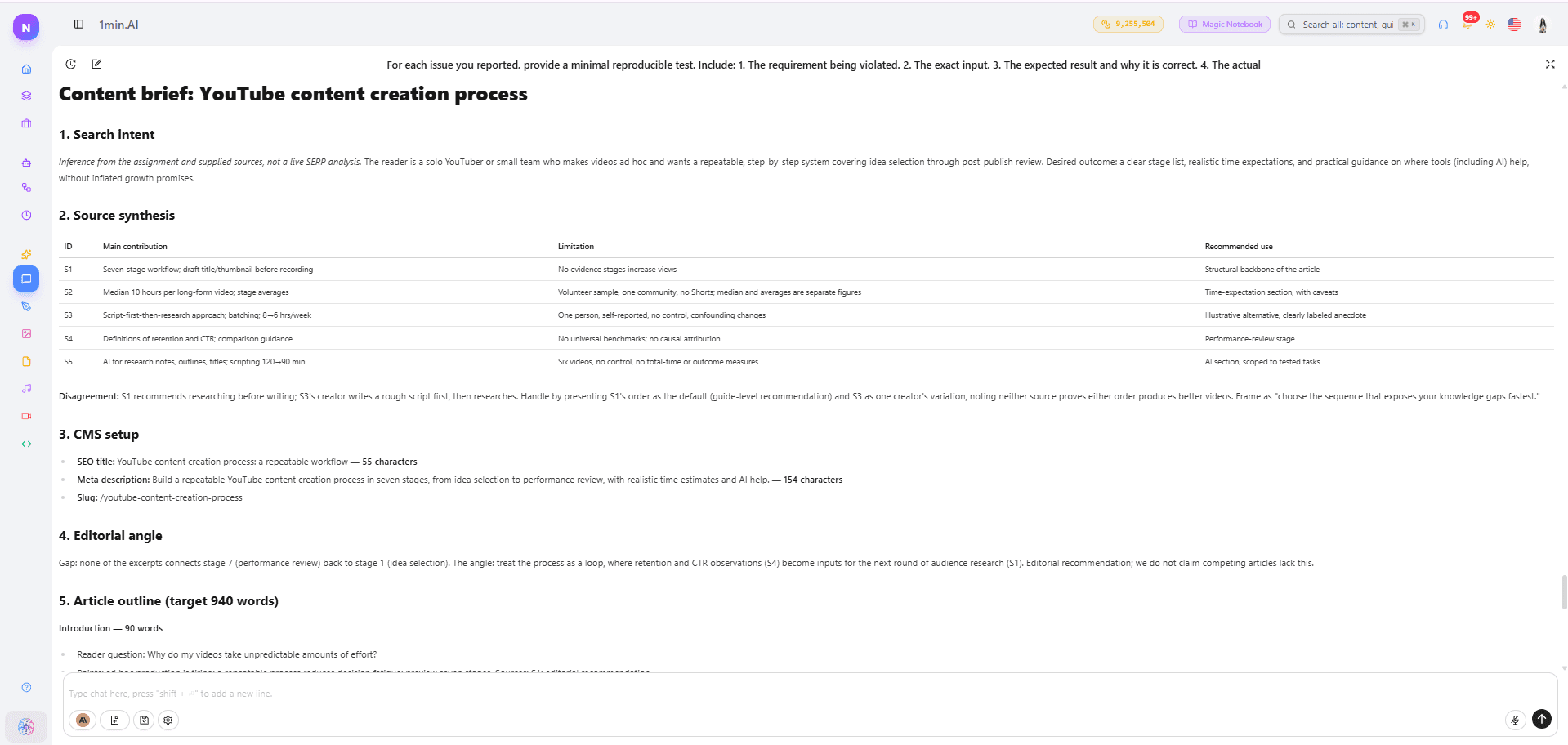
The second task supplied five fictional source excerpts about the YouTube content creation process. These were controlled test materials, rather than external research.
The prompt required source synthesis, CMS metadata, a 900–1,000-word outline, numerical checks, and product mentions limited to supplied capabilities.
| Check | Opus 5.5 | Fable 5.1 |
|---|---|---|
| Summarized all five sources and limitations | Yes | Yes |
| Calculated both 25% reductions correctly | Yes | Yes |
| Avoided extending those savings to total production time | Yes | Yes |
| Reported accurate title and meta character counts | Yes | Yes |
| Allocated outline length | 990 words | 940 words |
| Explicit lead-in allocations under every H2 | Yes | Partial |
Opus showed additional care when comparing research-first and script-first workflows. It recognized that audience research before writing can coexist with detailed research after a rough draft.
Fable’s brief was also usable, but some wording needed tightening. Its description of editing as “typically” the largest stage risked extending a limited survey finding beyond its sample.
Result: Both handled the core synthesis well. Opus had a small advantage in source interpretation and outline organization.
Which model is worth your credits?
These samples show no clear reason to pay more for Fable on the two tasks tested. Opus matched the main findings and avoided the incorrect assertion found in Fable’s coding response.
However, actual value remains unmeasured without credit and editing-time records. A model that consumes more credits can still be worthwhile if it consistently reduces verification and revision work.
| Your task | Practical starting point | Reason to try Fable |
|---|---|---|
| Code review | Opus 5.5 | Important defects remain unresolved after verification |
| Source-based content briefs | Opus 5.5 | Complex sources repeatedly produce missing distinctions |
| Demanding multistep analysis | Test both | Fable produces a demonstrably more usable result |
How to use Fable 5.1 and Opus 5.5 on 1min.AI
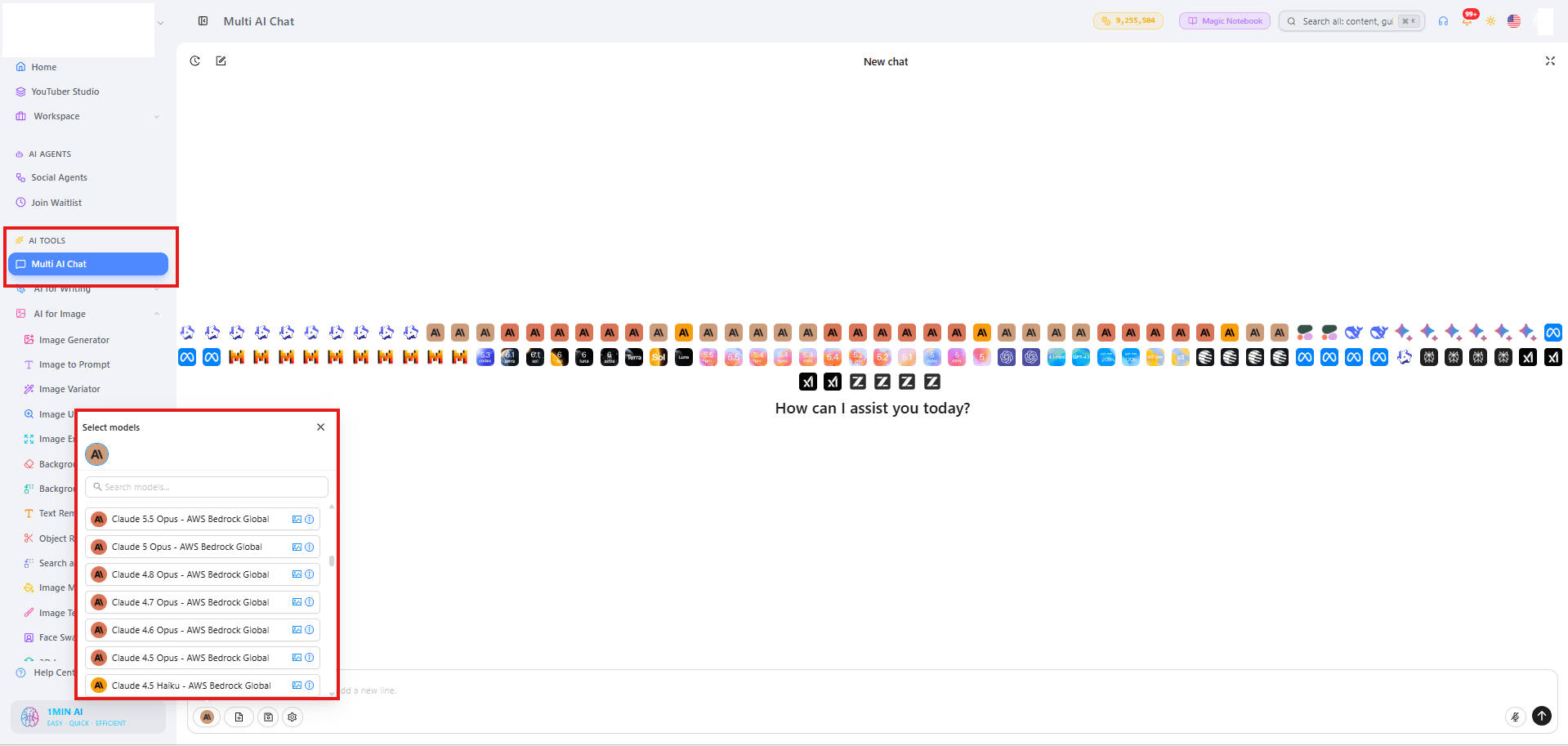
- Open Multi AI Chat on 1min.AI.
- Select Claude Opus 5.5 or Claude Fable 5.1.
- Enter your prompt, including source material, requirements, and expected output.
Compare both models on 1min.AI
Use the same task and source material in separate conversations in Multi AI Chat. Include complete inputs and define what an acceptable answer must contain.
Record these four measurements for each response:
- Credit consumption.
- Response time.
- Verified errors or missed requirements.
- Minutes needed to produce a usable final result.
Keep available settings consistent and note any differences in effort. For code, run the tests and independently check their expected values. For briefs, verify source attribution, calculations, metadata limits, and product claims.
In this Fable 5.1 vs Opus 5.5 comparison, Opus is the stronger starting choice for the tasks examined. Use your own verified results to decide when another model earns the additional credits.
- #Commerce
Alternatives
Discover the best alternatives to 1minAI and compare features, pricing, and use cases.

1min.AI vs OpenRouter
1min.AI vs. OpenRouter: Compare the ready-to-use AI creation product against the technical API tool. Find out if you need a zero-code creative studio or a coding infrastructure hub.
 Ngoc Hong
1min.AI vs PostEverywhere
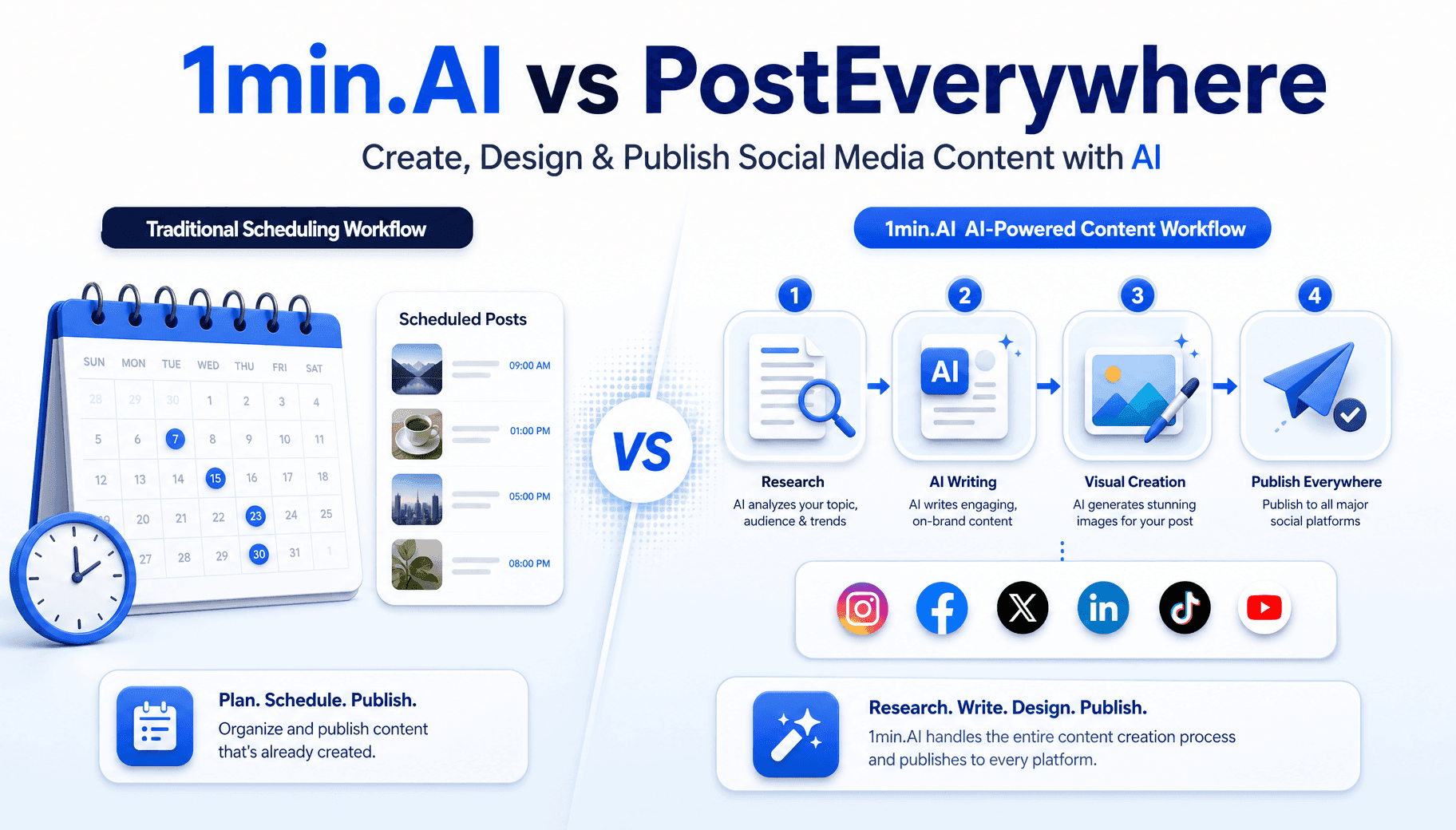
Looking for a PostEverywhere alternative that also writes and designs your posts? See how 1min.AI covers research, copy, images and publishing.
 Trang Tran
1min.AI vs Postiv
Compare 1min.AI and Postiv for LinkedIn writing, visuals, planning, pricing, and team workflows. Find the right fit for your creative workload.
Ngoc HongAI Tools
Discover the best AI tools to boost productivity, creativity, and everyday work.
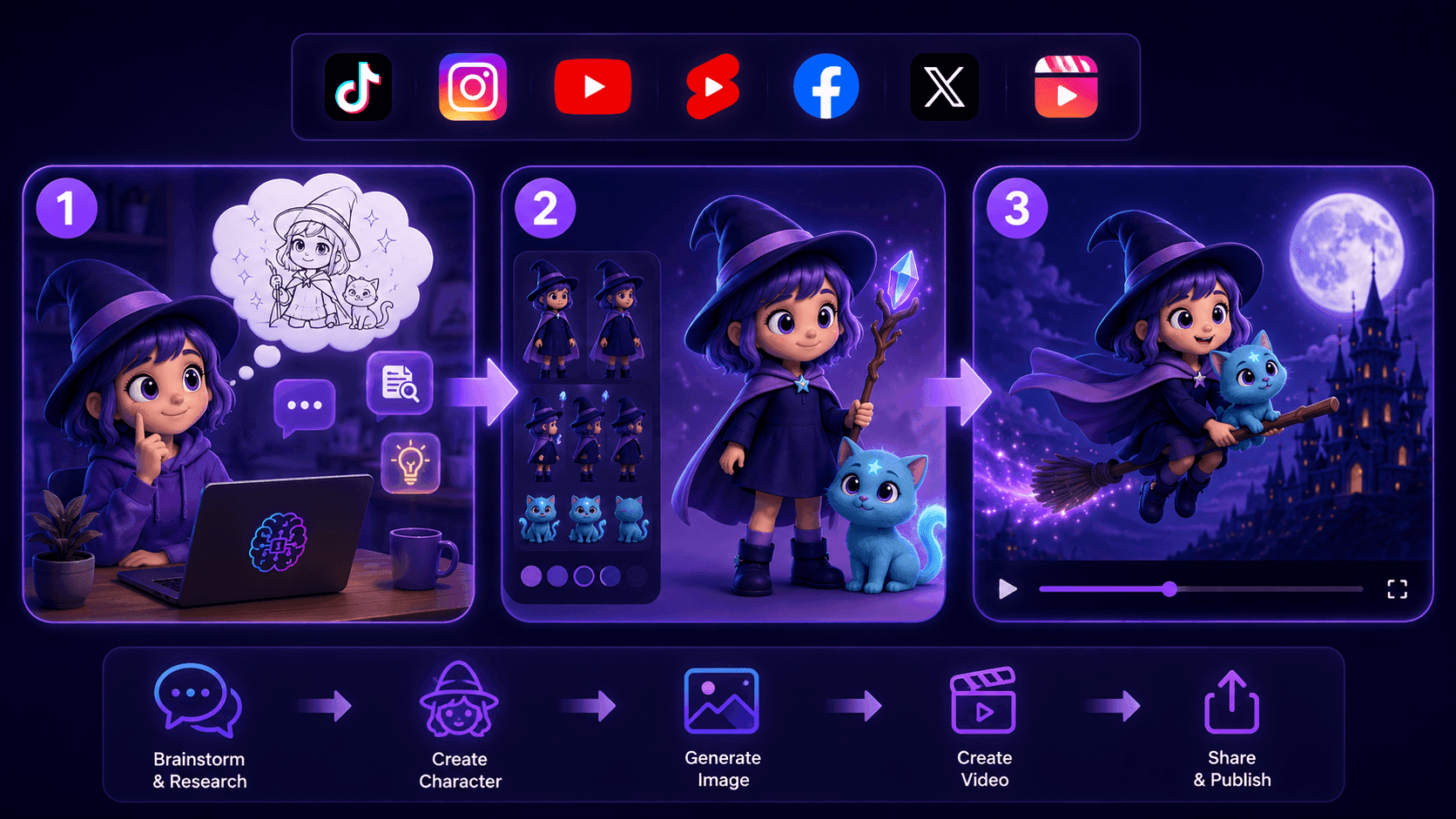
Create Consistent Cartoon Content in Just a Few Steps
Create engaging cartoon videos for TikTok and Reels with 1min.AI. Research ideas, create characters, and turn images into animated videos in 3 simple steps.
 Lien Anh Vu
One Product, 10 UGC Creatives: How AI Makes Content Testing Easier
Create more authentic UGC with an AI UGC video generator, test more creative angles and scale affiliate content without filming every version.
Lien Anh Vu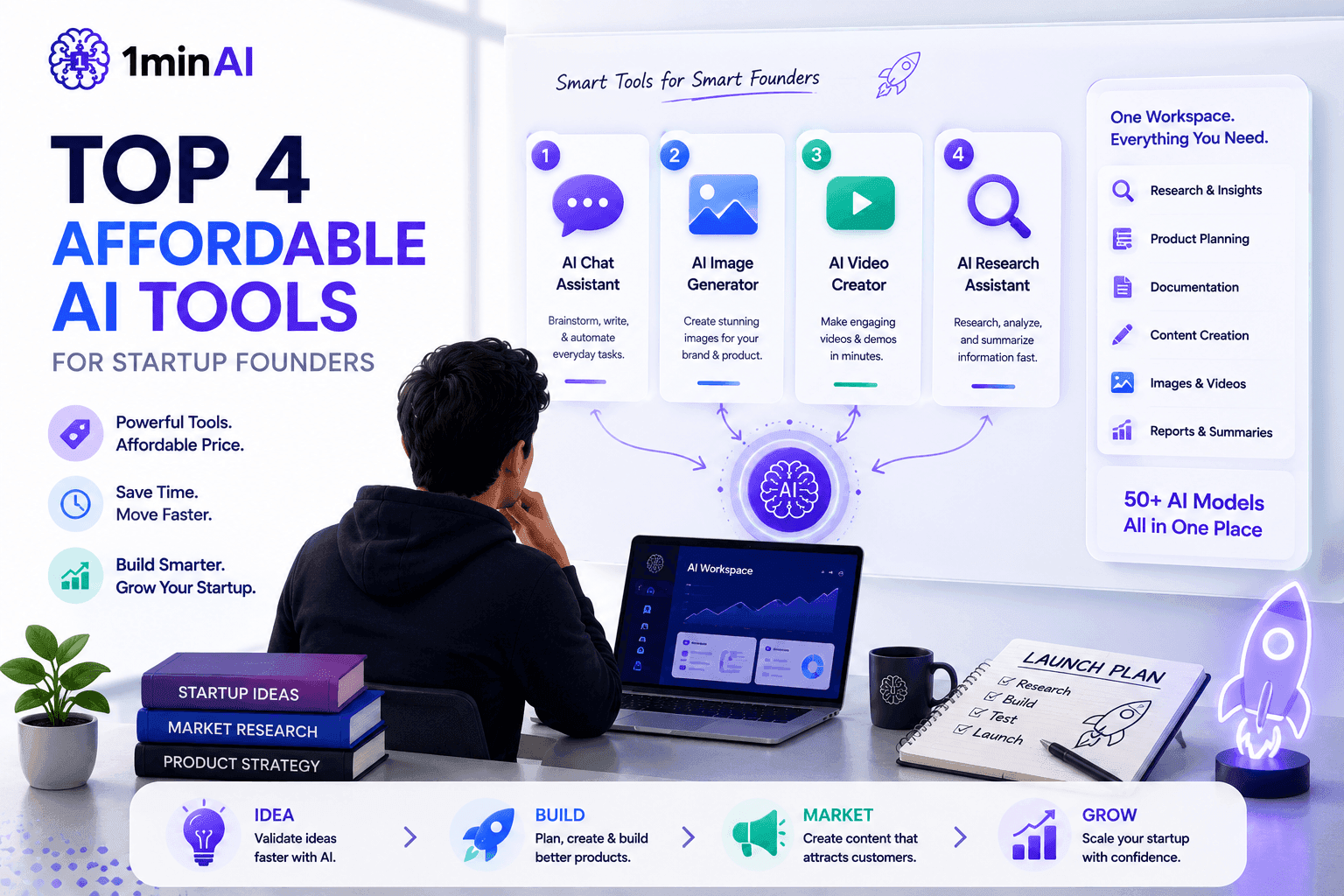
Top 4 Affordable AI Tools for Startup Founders
Discover the top 4 affordable AI tools for startup founders to validate ideas, build products, create content, and launch faster without overspending.
 Tram Ta
AI Features
Comprehensive AI features that streamline workflows, improve efficiency, and empower teams to achieve more.
Create Consistent Cartoon Content in Just a Few Steps
Create engaging cartoon videos for TikTok and Reels with 1min.AI. Research ideas, create characters, and turn images into animated videos in 3 simple steps.
Lien Anh VuOne Product, 10 UGC Creatives: How AI Makes Content Testing Easier
Create more authentic UGC with an AI UGC video generator, test more creative angles and scale affiliate content without filming every version.
Lien Anh Vu
1minAI: Free AI Grammar Checker
Check grammar for free with 1minAI’s AI grammar checker. Find grammar, spelling, and writing mistakes, improve clarity, and polish your content in seconds.
Tram TaAI Use Cases
A curated collection of AI use cases for business, productivity, and industry-specific applications.
Create Consistent Cartoon Content in Just a Few Steps
Create engaging cartoon videos for TikTok and Reels with 1min.AI. Research ideas, create characters, and turn images into animated videos in 3 simple steps.
Lien Anh VuOne Product, 10 UGC Creatives: How AI Makes Content Testing Easier
Create more authentic UGC with an AI UGC video generator, test more creative angles and scale affiliate content without filming every version.
Lien Anh Vu
Best Time to Post on Instagram: A Practical Guide for Better Engagement
Discover the best time to post on Instagram, including the best days and times for different audiences, plus tips to find the ideal posting schedule for your account.
Tram TaAI Tutorials
Learn how to use AI with practical, step-by-step tutorials.

Black Friday AI Tool Deals in 2026
Discover what Black Friday AI tool deals 2026 has to offer. Find out how to secure the 1min.AI lifetime deal via AppSumo, Dealify, Stack Social, and verify on Trustpilot, Slashdot, and Software Advice.
 Hang Nguyen
Create Consistent Cartoon Content in Just a Few Steps
Create engaging cartoon videos for TikTok and Reels with 1min.AI. Research ideas, create characters, and turn images into animated videos in 3 simple steps.
Lien Anh Vu
[Seedance 2.5 New] Better AI Product Videos, Less Rework in 1min.AI
Use Seedance 2.5 image to video on 1min.AI to create more consistent AI product videos, reduce failed generations, save credits, and improve UGC workflows.
Lien Anh VuAI Guides
Learn AI faster with practical guides, real-world examples, and actionable best practices.

Safely Buy AI Tools Online: 2026 Black Friday Guide
Discover how to find and secure the best Black Friday AI deals online. Learn expert strategies to avoid scams, combat subscription fatigue, and verify software.
Hang NguyenCreate Consistent Cartoon Content in Just a Few Steps
Create engaging cartoon videos for TikTok and Reels with 1min.AI. Research ideas, create characters, and turn images into animated videos in 3 simple steps.
Lien Anh Vu[Seedance 2.5 New] Better AI Product Videos, Less Rework in 1min.AI
Use Seedance 2.5 image to video on 1min.AI to create more consistent AI product videos, reduce failed generations, save credits, and improve UGC workflows.
Lien Anh VuAI Solutions
Browse the best AI solutions for automation, coding, research, productivity, customer support, marketing, and business workflows.
Safely Buy AI Tools Online: 2026 Black Friday Guide
Discover how to find and secure the best Black Friday AI deals online. Learn expert strategies to avoid scams, combat subscription fatigue, and verify software.
Hang NguyenCreate Consistent Cartoon Content in Just a Few Steps
Create engaging cartoon videos for TikTok and Reels with 1min.AI. Research ideas, create characters, and turn images into animated videos in 3 simple steps.
Lien Anh VuOne Product, 10 UGC Creatives: How AI Makes Content Testing Easier
Create more authentic UGC with an AI UGC video generator, test more creative angles and scale affiliate content without filming every version.
Lien Anh VuAI Models
Explore the world's leading AI models in one place.
Create Consistent Cartoon Content in Just a Few Steps
Create engaging cartoon videos for TikTok and Reels with 1min.AI. Research ideas, create characters, and turn images into animated videos in 3 simple steps.
Lien Anh VuOne Product, 10 UGC Creatives: How AI Makes Content Testing Easier
Create more authentic UGC with an AI UGC video generator, test more creative angles and scale affiliate content without filming every version.
Lien Anh Vu[Seedance 2.5 New] Better AI Product Videos, Less Rework in 1min.AI
Use Seedance 2.5 image to video on 1min.AI to create more consistent AI product videos, reduce failed generations, save credits, and improve UGC workflows.
Lien Anh VuAI Comparisons
Compare AI tools, models, and platforms to find the best fit for your needs.

Kling AI Vs Veo 3: Which Model Wins?
Kling AI vs Veo 3: compare motion, native audio, pricing & free tiers to see which AI video generator wins for your project - try both on 1min.AI.
Trang Tran[Seedance 2.5 New] Better AI Product Videos, Less Rework in 1min.AI
Use Seedance 2.5 image to video on 1min.AI to create more consistent AI product videos, reduce failed generations, save credits, and improve UGC workflows.
Lien Anh Vu
DeepSeek V4 Pro vs Flash Comparison
Compare DeepSeek V4 Pro vs DeepSeek V4 Flash metrics. Optimize your agentic apps and improve AI fact checking on 1min.ai today.
Ngoc HongAI Integrations
Seamlessly integrate AI with the tools you already use to automate work and boost productivity.

POV: You Have 10+ Posts to Make Every Day
Learn how to build an AI content workflow that helps content creators produce 10+ social media posts a day faster with AI brainstorming, image generation, and content creation.
Lien Anh Vu
How to Use an AI Fashion Video Generator for Fashion Week 2026
Turn Fashion Week 2026 ideas into stunning fashion videos with AI. Learn how to brainstorm, create visuals, and transform images into videos with one simple workflow.
Lien Anh Vu
Stop Switching Between AI Apps: How AI Integration Transforms Employer Branding
Discover how AI integration helps HR teams streamline employer branding by combining AI writing, documents, images, video, and multiple AI models into one workspace.
Tram TaAI for Industries
Find the best AI tools and workflows for healthcare, finance, education, legal, manufacturing, retail, real estate, and more
Free AI Product Description Generator
Write product descriptions that sell in minutes. Use this free AI product description generator to turn details or a photo into on-brand copy. Try 1min.AI.
Trang Tran
Best Business Productivity Tools for Startups to Maximize Profits | 1minAI
Discover the best business productivity tools for startups to save time, streamline workflows, reduce repetitive tasks, and support profitable growth with AI.
Tram Ta
Best AI Tool for Content Marketing |1minAI
Looking for the best AI tool for content marketing? See how 1minAI helps marketers research, write, repurpose, create visuals, and scale content from one AI workspace.
Tram TaAI Agents
Discover and run AI agents to automate tasks across your work and daily life.
1minAI: Free AI Grammar Checker
Check grammar for free with 1minAI’s AI grammar checker. Find grammar, spelling, and writing mistakes, improve clarity, and polish your content in seconds.
Tram Ta
AI Agents for Facebook
Use an AI Agent for Facebook to create content, generate images, schedule posts, and publish from your documents and conversations.
Ngoc Hong
AI Agent vs AI Assistant: Which One Actually Saves Designers More Time?
Learn the difference between AI Agent vs AI Assistant and discover which solution helps designers automate repetitive work, reduce revisions, and save more time.
Lien Anh VuAI Workflows
Explore ready-to-use AI workflows for productivity, marketing, sales, support, and more.
Create Consistent Cartoon Content in Just a Few Steps
Create engaging cartoon videos for TikTok and Reels with 1min.AI. Research ideas, create characters, and turn images into animated videos in 3 simple steps.
Lien Anh VuOne Product, 10 UGC Creatives: How AI Makes Content Testing Easier
Create more authentic UGC with an AI UGC video generator, test more creative angles and scale affiliate content without filming every version.
Lien Anh VuPOV: You Have 10+ Posts to Make Every Day
Learn how to build an AI content workflow that helps content creators produce 10+ social media posts a day faster with AI brainstorming, image generation, and content creation.
Lien Anh VuNewsletter
Weekly AI Innovations with 1minAI

🔮 Weekly AI Innovations #143: Update GPT-6, GPT-6.1 & Ideogram 4.0
Access GPT-6 Sol, Luna, GPT-6.1 Sol, and Ideogram 4.0 on 1min.ai. Boost typography accuracy to 98.4% and cut reasoning latency by 45% in one platform.
Hang Nguyen
🔮 Weekly AI Innovations #142: Grok 4.7, Opus 5.5 & Sonnet 5.5 on 1min.ai
Access Grok 4.7, Claude Opus 5.5, and Sonnet 5.5 on 1min.ai. Cut subscription costs by up to 70% and process millions tokens in a single unified workspace.
Hang Nguyen
🔮 Weekly AI Innovations #141: Seedance 2.5 & Stable Audio 3: Next-Gen AI
Explore Seedance 2.0, 2.5, and StabilityAI's Stable Audio 3 on 1min.ai. Generate studio-grade audio and synchronized motion with next-gen generative AI.
Hang Nguyen