Natural Language Processing for Social Media Content

Lien Anh Vu
October 6, 2026
Learn how natural language processing helps AI understand intent, tone, and context to create better social media content with 1min.AI.
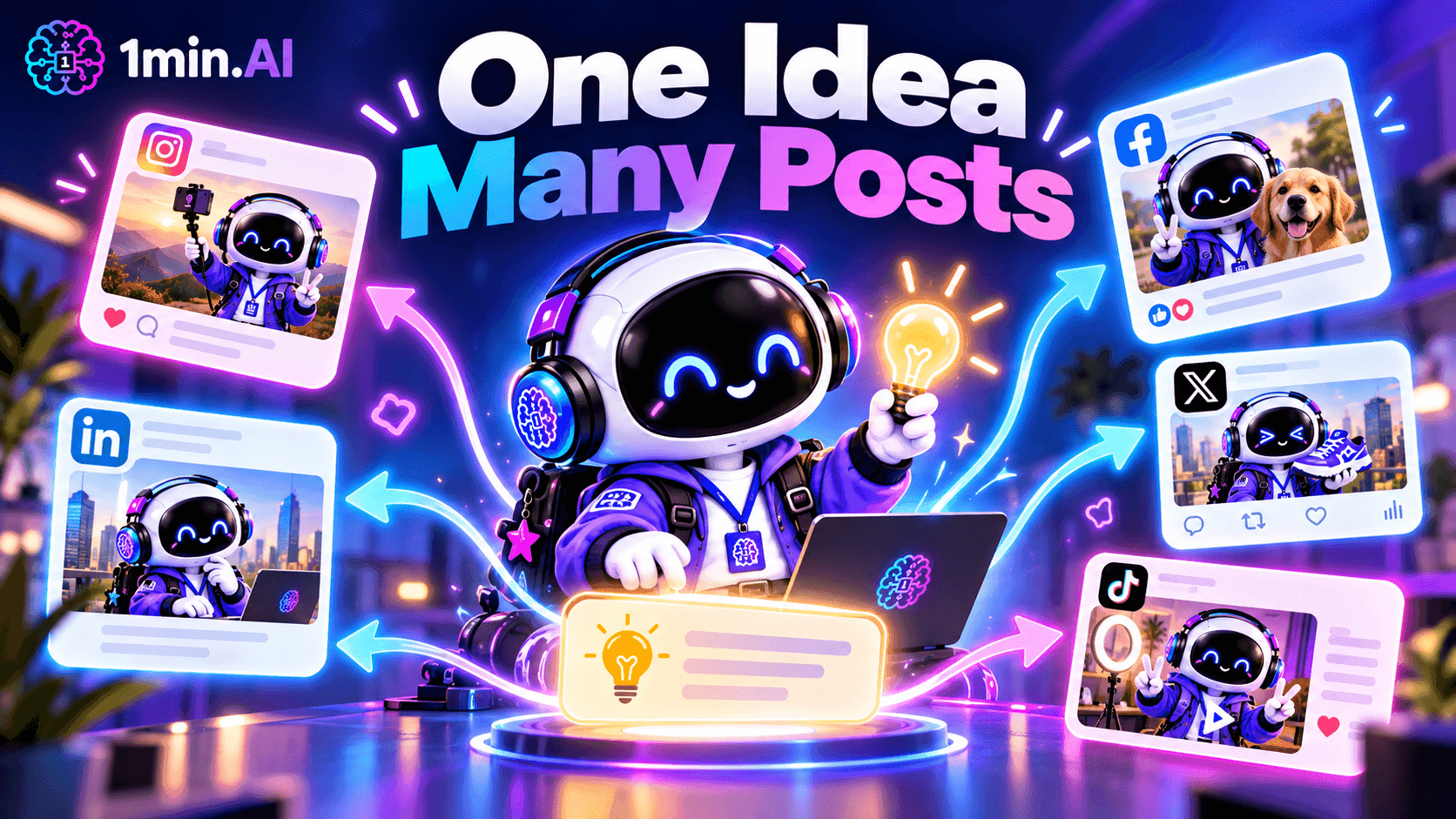
One campaign idea rarely becomes just one post. A marketer may need to turn the same message into an Instagram caption, a professional LinkedIn post, a short X update, a Facebook post, and a TikTok description, each with a different tone, length, and hook.
This is where natural language processing becomes useful. NLP helps AI work with human language, including meaning, context, intent, and tone, so an idea can be expressed differently depending on where and why it will be published.
For marketers, that turns NLP from a technical AI concept into something much more practical: a way to spend less time repeatedly rewriting the same message for every social platform.
What Is Natural Language Processing
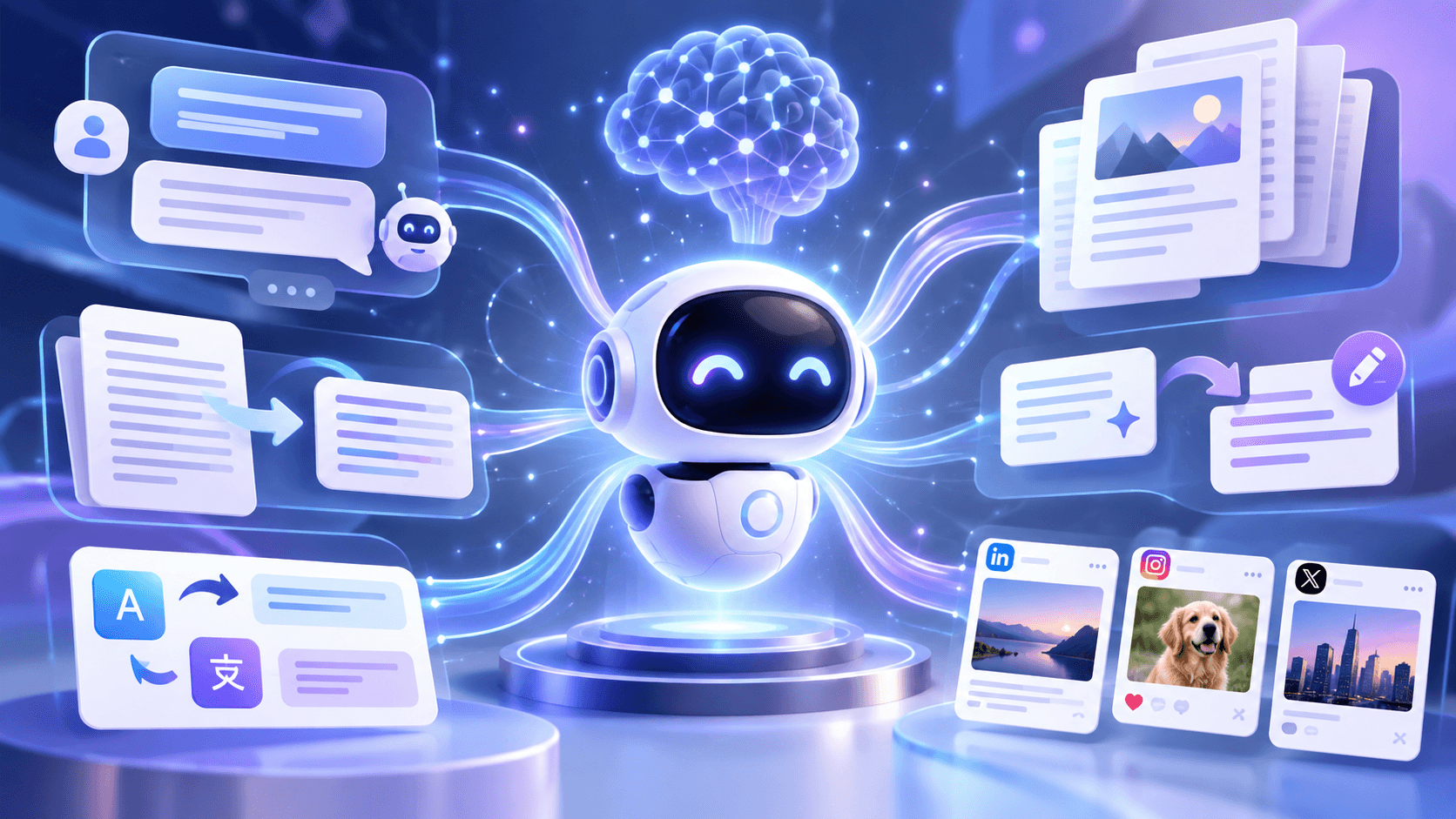
Natural language processing, commonly called NLP, is a field of artificial intelligence focused on helping computers process, understand, and generate human language.
When you ask an AI tool to summarize an article, translate a paragraph, rewrite a caption, answer a question, or generate a social media post, language processing is a central part of that interaction. Modern AI systems can work with more than individual words. They can use surrounding context to interpret what the user is trying to communicate and generate a response that better fits that request.
For content creation, this distinction matters. The goal is not simply to generate more words. The useful part is generating language that fits the purpose, audience, tone, and format of the content.
How NLP Helps Create Social Media Content
Consider a simple instruction such as:
Launch a new AI productivity feature for marketers.
The core information stays the same, but the ideal output changes depending on the platform. A LinkedIn post may emphasize professional value and productivity. Instagram may need a more engaging caption, while X may require a much shorter and more direct message.
NLP helps AI interpret several parts of the request before producing that content.
Understanding Intent
The system needs to understand what the content is supposed to achieve. A post designed to educate should not sound the same as one designed to promote a product, start a conversation, or drive a conversion.
Understanding Tone
Language also changes with tone. Informative, professional, persuasive, casual, playful, and conversational content can communicate the same underlying message in very different ways.
Understanding Context
Good content depends on more than a topic. The product, audience, keywords, campaign goal, and source information all affect how the final message should be written.
Adapting the Format
A 100 word Instagram caption and a concise X post cannot be generated with exactly the same structure. This is one reason platform specific content generation can be more useful than repeatedly asking a general chatbot to “rewrite this for social media.”
Why One Social Post Does Not Work Everywhere
Copying the same caption across every platform may save a few minutes, but it ignores how differently people consume content on each channel.
A LinkedIn audience may expect a clearer professional argument. Instagram usually benefits from visual context and a more engaging caption. X rewards brevity and immediacy, while TikTok descriptions often need to support a fast hook and discovery focused content.
Facebook may allow a more conversational explanation, especially when the goal is engagement or conversion.
The principle is simple:
Same idea. Different platform. Different language.
This is where an AI content generator becomes useful. Instead of rebuilding the campaign message from zero, marketers can keep the core idea while adapting how it is communicated.
How to Create Social Media Content With 1min.AI
1min.AI turns this workflow into a more structured process through AI for Writing and Content Generator. Instead of beginning with a completely blank prompt every time, users can first choose the type of content they want to create.
Step 1 Open Content Generator
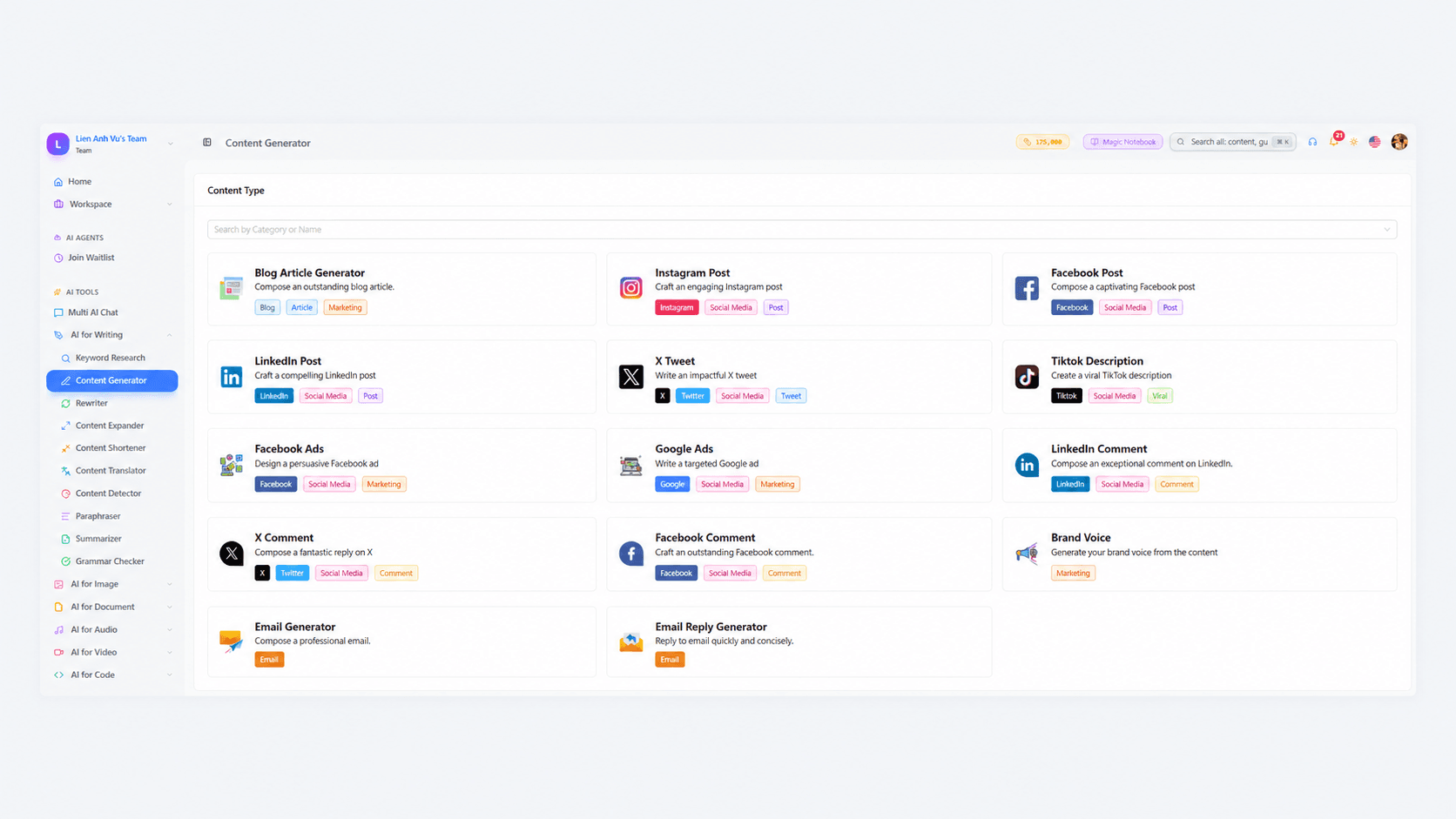
Go to 1min.AI → AI for Writing → Content Generator.
From there, choose the format you want to create. Current options include content types such as Instagram Post, Facebook Post, LinkedIn Post, X Tweet, TikTok Description, Facebook Ads, Google Ads, social comments, Brand Voice, Email Generator, and Email Reply Generator.
This gives the AI an immediate signal about the purpose and expected format of the output.
Step 2 Choose an AI Model
Select the AI model you want to use from the model selector.
Different models may suit different workflows, so this gives users flexibility to choose how they want the content to be generated instead of being locked into one option.
Step 3 Set Brand Voice and Language
If you already have a Brand Voice, select it to help keep generated content closer to the way your brand communicates.
Then choose the output language. This can be useful for marketers producing content for different markets or adapting the same campaign for multilingual audiences.
Step 4 Choose Tone and Length
Set the Tone based on what the post needs to accomplish, then choose the Number of words.
A professional LinkedIn post may need more room to explain the value of an idea, while an X post or TikTok description may need to communicate the core message much faster.
These controls help shape the output before generation begins.
Step 5 Add Keywords and Your Main Idea
Enter the Keywords you want the content to focus on. Then add your core message in the Content field or upload a document if you already have source material.
For example:
Launch a new AI productivity tool for marketers that helps teams create content faster.
That single campaign idea can then become the source for several different content formats.
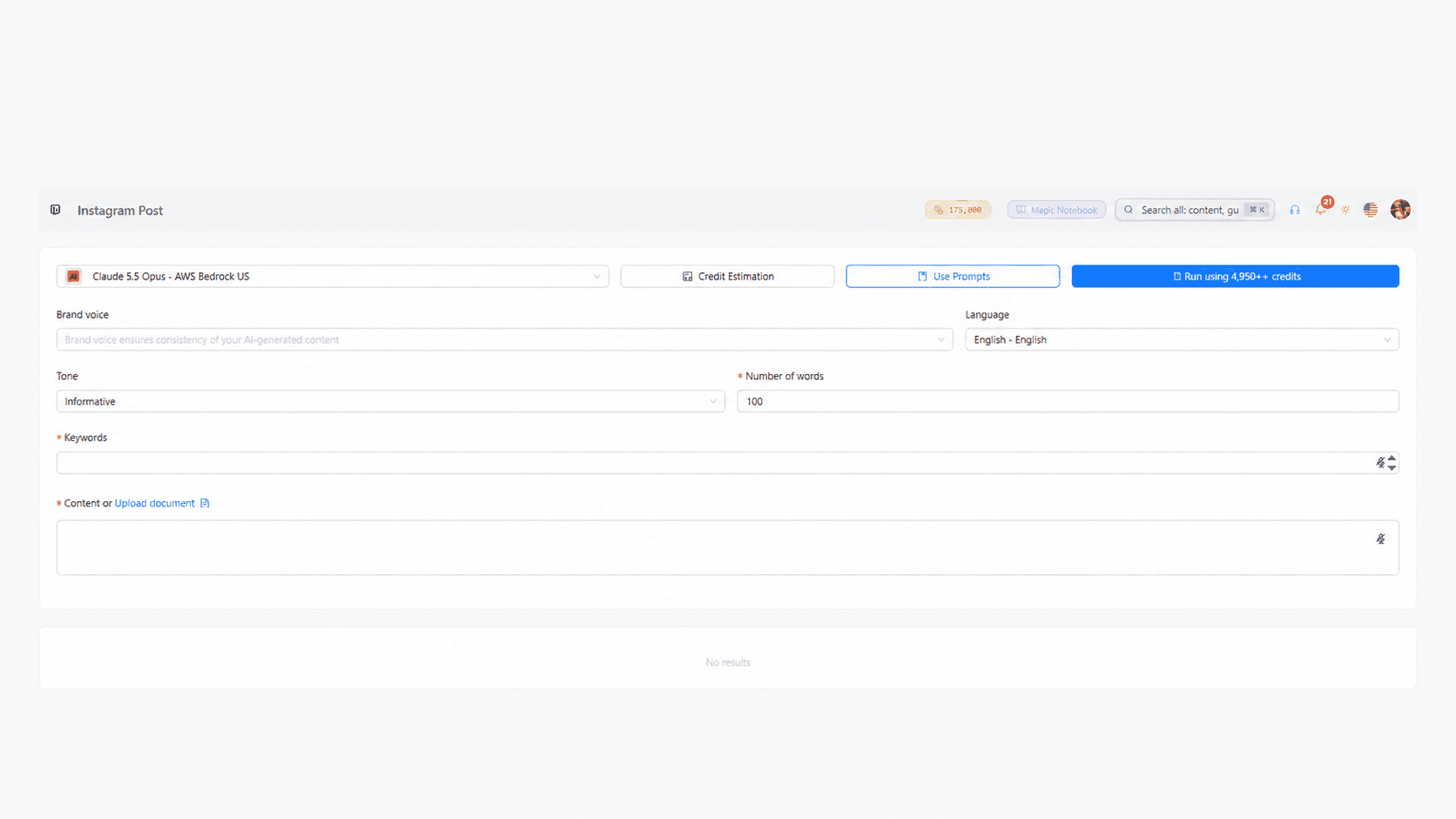
Step 6 Generate the Content
Once the inputs are ready, select Run.
The final output is generated around the combination of information you provided, including the selected content type, model, brand voice, language, tone, length, keywords, and source content.
Instead of simply asking AI to “write a post,” the workflow gives the system more context about what kind of post you actually need.
Step 7 Adapt the Same Idea for Another Platform
This is where the workflow becomes especially useful for social media teams.
Keep the same core campaign idea, then change the content type from Instagram Post to LinkedIn Post, Facebook Post, X Tweet, or TikTok Description.
You are no longer starting over for every channel.
One idea → multiple platform ready versions
Turn One Idea Into Multiple Social Posts
Imagine a marketer is launching a new AI productivity feature.
For LinkedIn, the message could focus on workflow efficiency and business value. For Instagram, the same launch could become a more visual, engaging announcement. On X, the message could be condensed into one sharp benefit and a CTA.
TikTok may require a stronger opening hook, while Facebook can give the message more conversational context.
The information has not fundamentally changed. What changes is the way that information is expressed.
That is one of the most practical applications of natural language processing in marketing. AI can help transform a single source idea into different linguistic versions instead of forcing the marketer to manually rewrite every sentence.
NLP Can Reduce Repetitive Content Work
For social media teams, the biggest benefit is not simply producing more content.
It is reducing repetitive work.
A marketer may already know the campaign message, product value, and audience. The time consuming part is often adapting those elements again and again for different channels, formats, tones, and word limits.
With a structured AI content workflow, teams can spend less time reformatting the same information and more time deciding what the campaign should actually say.
This can be especially useful for agencies and social media managers handling several platforms or several clients at once.
Natural Language Processing Beyond Social Posts
The same language processing concepts extend far beyond social media captions.
NLP is also used in workflows involving translation, summarization, rewriting, document processing, transcription, email creation, and conversational AI. The common thread is that the AI needs to interpret language and transform it into another useful form.
That is why tools such as a Content Translator, Summarizer, Content Expander, Rewriter, or AI Chat can feel related even though they perform different tasks. They all depend on the ability to work with human language and context.
For marketers, this means one campaign can move through several stages:
Research → Draft → Rewrite → Expand → Translate → Publish
Rather than viewing NLP as a technical concept separate from marketing, it is more useful to think of it as one of the technologies enabling these everyday AI content workflows.
Frequently Asked Questions
What Is Natural Language Processing
Natural language processing is a field of AI focused on helping computers process, understand, and generate human language. It is used in applications such as chatbots, translation, summarization, content generation, and text analysis.
How Is NLP Used in Social Media
NLP can help AI analyze or generate social media language based on factors such as topic, intent, tone, context, and format. For content creation, this can help adapt the same underlying idea for different platforms.
Can NLP Generate Social Media Posts
Modern AI content tools can generate social media posts using language models that process the instructions and context provided by the user. The quality of the result still depends heavily on the information, purpose, tone, and source material supplied.
Can AI Adapt One Idea for Different Platforms
Yes. A core campaign idea can be reused while changing the expected format, tone, length, and style for platforms such as Facebook, Instagram, LinkedIn, X, and TikTok.
What Is an AI Content Generator
An AI content generator is a tool that uses AI to produce written content from user inputs. Depending on the tool, those inputs may include content type, keywords, tone, language, brand voice, desired length, and source material.
Can 1min.AI Create Content for Different Social Platforms
The 1min.AI Content Generator includes dedicated formats for platforms and use cases such as Instagram posts, Facebook posts, LinkedIn posts, X posts, TikTok descriptions, ads, comments, emails, and other marketing content.
🚀 Turn one idea into platform ready social content with 1min.AI Content Generator.
Alternatives
Discover the best alternatives to 1minAI and compare features, pricing, and use cases.

1min.AI vs OpenRouter
1min.AI vs. OpenRouter: Compare the ready-to-use AI creation product against the technical API tool. Find out if you need a zero-code creative studio or a coding infrastructure hub.
 Ngoc Hong
1min.AI vs Lovart
Compare 1min.AI vs Lovart across features, pricing, credits, brand tools, and use cases to find the right AI platform for your workflow.
Ngoc Hong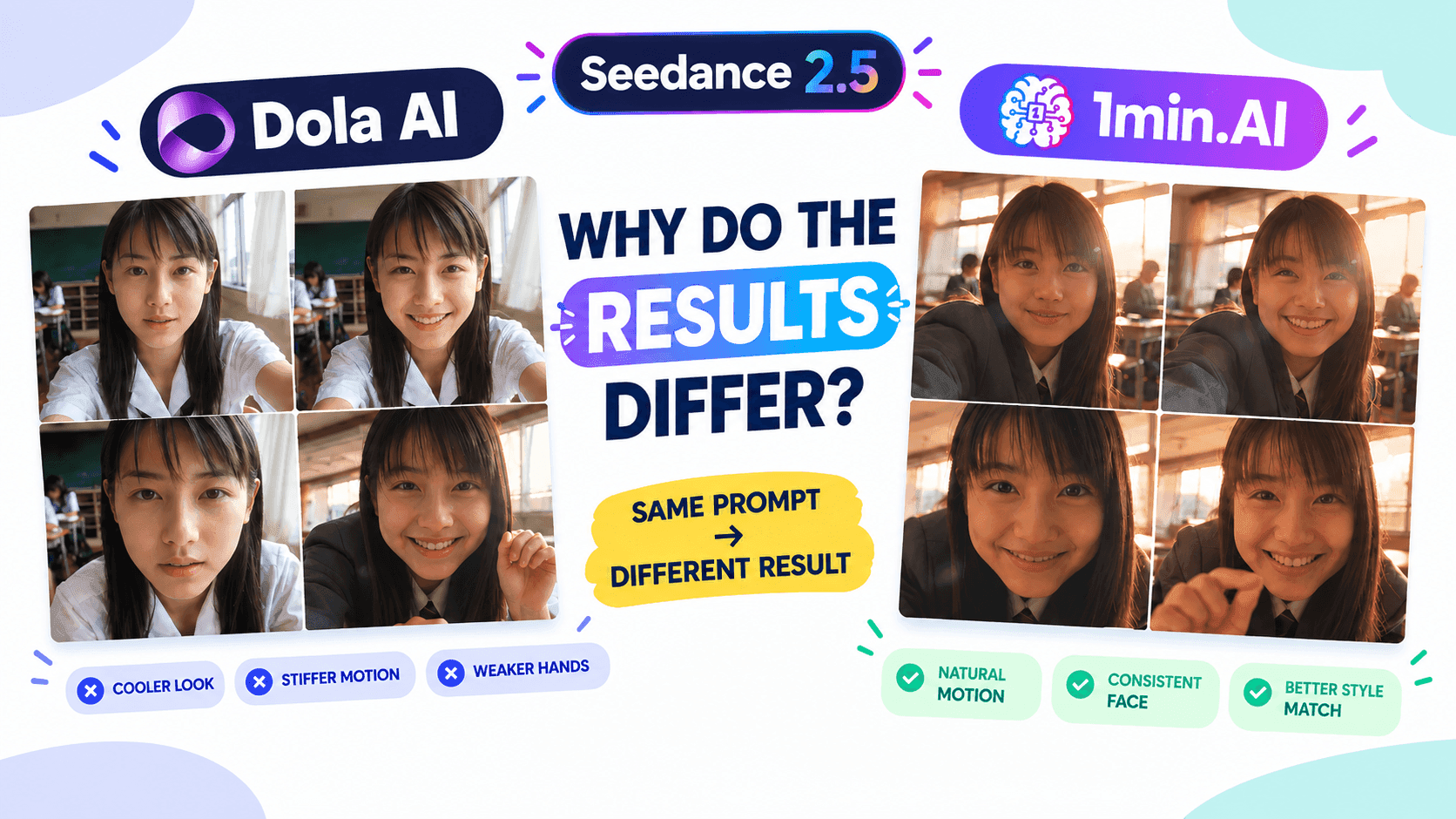
1min. AI vs Dola AI
Looking for a Dola AI alternative? Compare 1min.AI vs Dola AI on video generation, free plans, pricing and privacy to pick the right AI app.
Ngoc HongAI Tools
Discover the best AI tools to boost productivity, creativity, and everyday work.
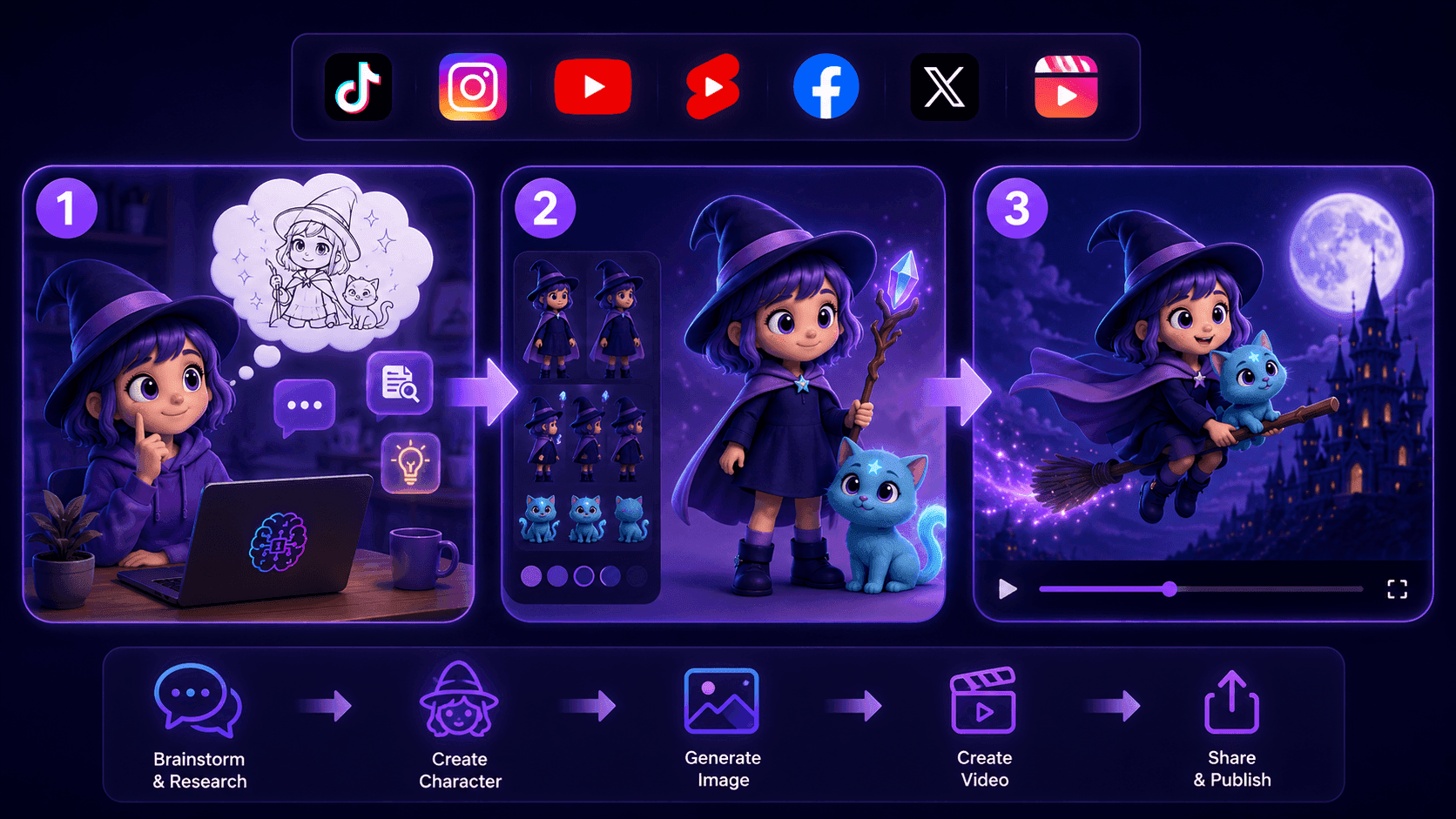
Create Consistent Cartoon Content in Just a Few Steps
Create engaging cartoon videos for TikTok and Reels with 1min.AI. Research ideas, create characters, and turn images into animated videos in 3 simple steps.
 Lien Anh Vu
One Product, 10 UGC Creatives: How AI Makes Content Testing Easier
Create more authentic UGC with an AI UGC video generator, test more creative angles and scale affiliate content without filming every version.
Lien Anh Vu
Top 4 Affordable AI Tools for Startup Founders
Discover the top 4 affordable AI tools for startup founders to validate ideas, build products, create content, and launch faster without overspending.
 Tram Ta
AI Features
Comprehensive AI features that streamline workflows, improve efficiency, and empower teams to achieve more.
Create Consistent Cartoon Content in Just a Few Steps
Create engaging cartoon videos for TikTok and Reels with 1min.AI. Research ideas, create characters, and turn images into animated videos in 3 simple steps.
Lien Anh VuOne Product, 10 UGC Creatives: How AI Makes Content Testing Easier
Create more authentic UGC with an AI UGC video generator, test more creative angles and scale affiliate content without filming every version.
Lien Anh Vu
1minAI: Free AI Grammar Checker
Check grammar for free with 1minAI’s AI grammar checker. Find grammar, spelling, and writing mistakes, improve clarity, and polish your content in seconds.
Tram TaAI Use Cases
A curated collection of AI use cases for business, productivity, and industry-specific applications.
Create Consistent Cartoon Content in Just a Few Steps
Create engaging cartoon videos for TikTok and Reels with 1min.AI. Research ideas, create characters, and turn images into animated videos in 3 simple steps.
Lien Anh VuOne Product, 10 UGC Creatives: How AI Makes Content Testing Easier
Create more authentic UGC with an AI UGC video generator, test more creative angles and scale affiliate content without filming every version.
Lien Anh Vu
Best Time to Post on Instagram: A Practical Guide for Better Engagement
Discover the best time to post on Instagram, including the best days and times for different audiences, plus tips to find the ideal posting schedule for your account.
Tram TaAI Tutorials
Learn how to use AI with practical, step-by-step tutorials.
Create Consistent Cartoon Content in Just a Few Steps
Create engaging cartoon videos for TikTok and Reels with 1min.AI. Research ideas, create characters, and turn images into animated videos in 3 simple steps.
Lien Anh Vu
Black Friday AI Tool Deals in 2026
Discover what Black Friday AI tool deals 2026 has to offer. Find out how to secure the 1min.AI lifetime deal via AppSumo, Dealify, Stack Social, and verify on Trustpilot, Slashdot, and Software Advice.
 Hang Nguyen
[Seedance 2.5 New] Better AI Product Videos, Less Rework in 1min.AI
Use Seedance 2.5 image to video on 1min.AI to create more consistent AI product videos, reduce failed generations, save credits, and improve UGC workflows.
Lien Anh VuAI Guides
Learn AI faster with practical guides, real-world examples, and actionable best practices.
Create Consistent Cartoon Content in Just a Few Steps
Create engaging cartoon videos for TikTok and Reels with 1min.AI. Research ideas, create characters, and turn images into animated videos in 3 simple steps.
Lien Anh Vu
Safely Buy AI Tools Online: 2026 Black Friday Guide
Discover how to find and secure the best Black Friday AI deals online. Learn expert strategies to avoid scams, combat subscription fatigue, and verify software.
Hang Nguyen[Seedance 2.5 New] Better AI Product Videos, Less Rework in 1min.AI
Use Seedance 2.5 image to video on 1min.AI to create more consistent AI product videos, reduce failed generations, save credits, and improve UGC workflows.
Lien Anh VuAI Solutions
Browse the best AI solutions for automation, coding, research, productivity, customer support, marketing, and business workflows.
Create Consistent Cartoon Content in Just a Few Steps
Create engaging cartoon videos for TikTok and Reels with 1min.AI. Research ideas, create characters, and turn images into animated videos in 3 simple steps.
Lien Anh VuOne Product, 10 UGC Creatives: How AI Makes Content Testing Easier
Create more authentic UGC with an AI UGC video generator, test more creative angles and scale affiliate content without filming every version.
Lien Anh Vu
Free AI Tattoo Generator: Custom Designs
Turn any idea into a custom tattoo design with 1min.AI's free AI tattoo generator. Describe your idea, pick a style, and download in seconds.
 Trang Tran
AI Models
Explore the world's leading AI models in one place.
Create Consistent Cartoon Content in Just a Few Steps
Create engaging cartoon videos for TikTok and Reels with 1min.AI. Research ideas, create characters, and turn images into animated videos in 3 simple steps.
Lien Anh VuOne Product, 10 UGC Creatives: How AI Makes Content Testing Easier
Create more authentic UGC with an AI UGC video generator, test more creative angles and scale affiliate content without filming every version.
Lien Anh Vu[Seedance 2.5 New] Better AI Product Videos, Less Rework in 1min.AI
Use Seedance 2.5 image to video on 1min.AI to create more consistent AI product videos, reduce failed generations, save credits, and improve UGC workflows.
Lien Anh VuAI Comparisons
Compare AI tools, models, and platforms to find the best fit for your needs.
Kling AI Vs Veo 3: Which Model Wins?
Kling AI vs Veo 3: compare motion, native audio, pricing & free tiers to see which AI video generator wins for your project - try both on 1min.AI.
Trang Tran[Seedance 2.5 New] Better AI Product Videos, Less Rework in 1min.AI
Use Seedance 2.5 image to video on 1min.AI to create more consistent AI product videos, reduce failed generations, save credits, and improve UGC workflows.
Lien Anh Vu
DeepSeek V4 Pro vs Flash Comparison
Compare DeepSeek V4 Pro vs DeepSeek V4 Flash metrics. Optimize your agentic apps and improve AI fact checking on 1min.ai today.
Ngoc HongAI Integrations
Seamlessly integrate AI with the tools you already use to automate work and boost productivity.
POV: You Have 10+ Posts to Make Every Day
Learn how to build an AI content workflow that helps content creators produce 10+ social media posts a day faster with AI brainstorming, image generation, and content creation.
Lien Anh Vu
How to Use an AI Fashion Video Generator for Fashion Week 2026
Turn Fashion Week 2026 ideas into stunning fashion videos with AI. Learn how to brainstorm, create visuals, and transform images into videos with one simple workflow.
Lien Anh Vu
Stop Switching Between AI Apps: How AI Integration Transforms Employer Branding
Discover how AI integration helps HR teams streamline employer branding by combining AI writing, documents, images, video, and multiple AI models into one workspace.
Tram TaAI for Industries
Find the best AI tools and workflows for healthcare, finance, education, legal, manufacturing, retail, real estate, and more
How to Start a One-Person AI Business: 7 Models You Can Run Solo
Learn how to start a one-person AI business with 7 practical models, from AI consulting and content services to automation and software reselling.
Tram Ta
7 Low-Cost AI Business Ideas for Your Startup
Explore 7 low-cost AI business ideas you can start with a small budget, from content and video services to AI consulting, reselling, and automation.
Tram Ta
Free AI Image Generator For Ecommerce
Turn phone photos into studio, white-background, and lifestyle product images. Try the best AI image generator for ecommerce online free with 1min.AI.
Trang TranAI Agents
Discover and run AI agents to automate tasks across your work and daily life.
1minAI: Free AI Grammar Checker
Check grammar for free with 1minAI’s AI grammar checker. Find grammar, spelling, and writing mistakes, improve clarity, and polish your content in seconds.
Tram Ta
AI Agents for Facebook
Use an AI Agent for Facebook to create content, generate images, schedule posts, and publish from your documents and conversations.
Ngoc Hong
AI Agent vs AI Assistant: Which One Actually Saves Designers More Time?
Learn the difference between AI Agent vs AI Assistant and discover which solution helps designers automate repetitive work, reduce revisions, and save more time.
Lien Anh VuAI Workflows
Explore ready-to-use AI workflows for productivity, marketing, sales, support, and more.
Create Consistent Cartoon Content in Just a Few Steps
Create engaging cartoon videos for TikTok and Reels with 1min.AI. Research ideas, create characters, and turn images into animated videos in 3 simple steps.
Lien Anh VuOne Product, 10 UGC Creatives: How AI Makes Content Testing Easier
Create more authentic UGC with an AI UGC video generator, test more creative angles and scale affiliate content without filming every version.
Lien Anh VuPOV: You Have 10+ Posts to Make Every Day
Learn how to build an AI content workflow that helps content creators produce 10+ social media posts a day faster with AI brainstorming, image generation, and content creation.
Lien Anh VuNewsletter
Weekly AI Innovations with 1minAI
🔮 Weekly AI Innovations #140: Deepseek 4.1 Flash & Gemini Upgrades
Explore Deepseek 4.1 Flash and new Gemini models on 1min.ai. Plus, check our update on your Billing - Usage page for better clarity.
Hang Nguyen
🔮 Weekly AI Innovations #136: Grok 4.6 and Smart Data Retention
Discover the latest 1min.ai updates! Upgrade to Grok 4.6 for blazing-fast AI, and check our new Data Retention policies to secure your files today.
Hang Nguyen
🔮 Weekly AI Innovations #139: Dawn of the next-gen AI
Discover the immense power of GPT-6 Astra and Claude Fable 5.1. Unlock next-generation AI models on 1min.ai to solve complex tasks effortlessly.
Hang Nguyen