AI Agent for Content Marketing: From Research to Publishing Without Switching Tools
Uyen Hoang
November 24, 2026
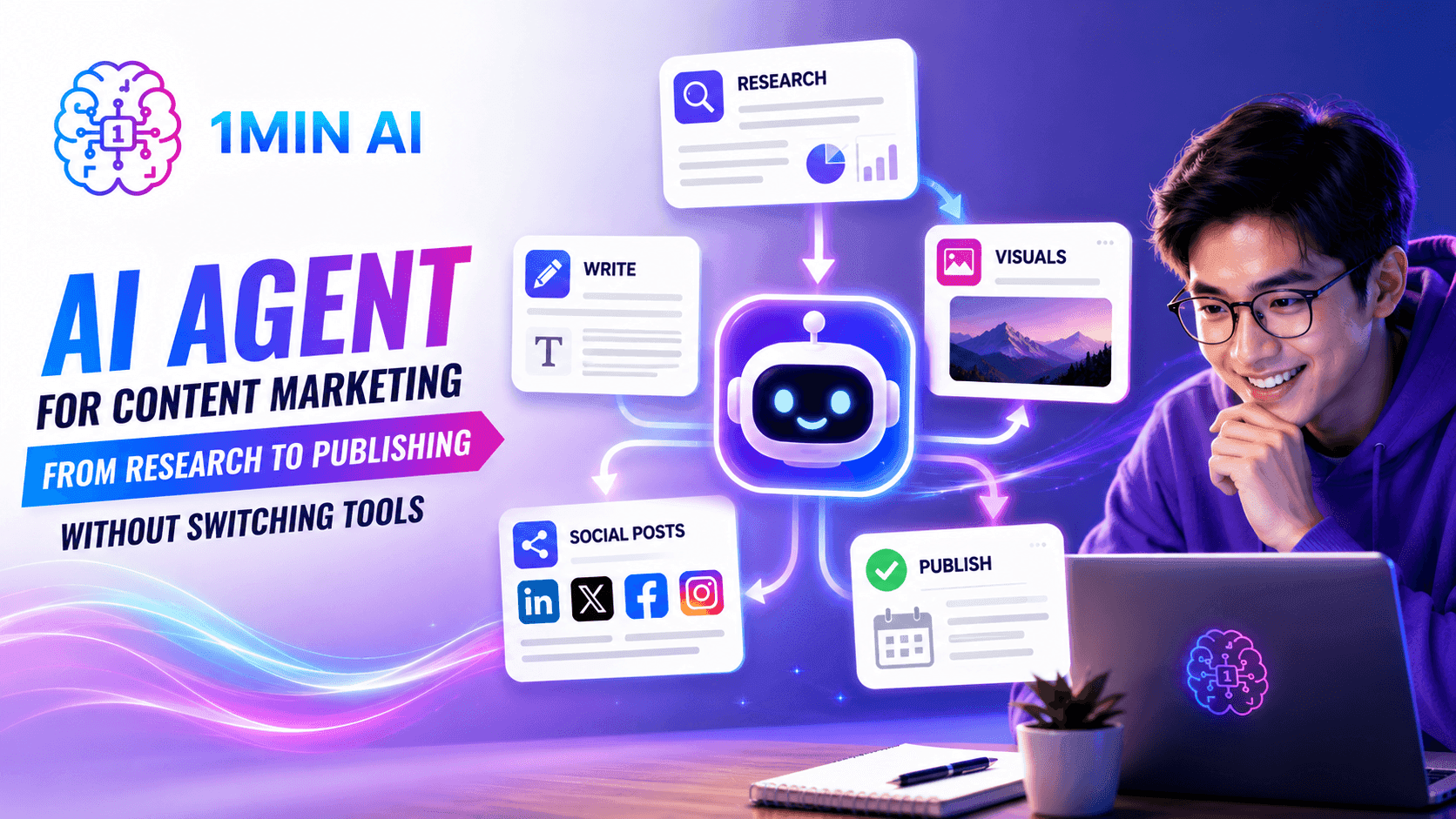
Discover how an AI Agent streamlines the entire content marketing workflow from researching topics and writing content to creating visuals and preparing posts for publishing, all without switching between multiple AI tools.
Content marketing has never had more AI tools available. Marketers can use one platform to research topics, another to write articles, a separate application to generate visuals, and yet another tool to schedule social media posts. While each tool promises to save time, managing multiple platforms can quickly become another time-consuming part of the job.
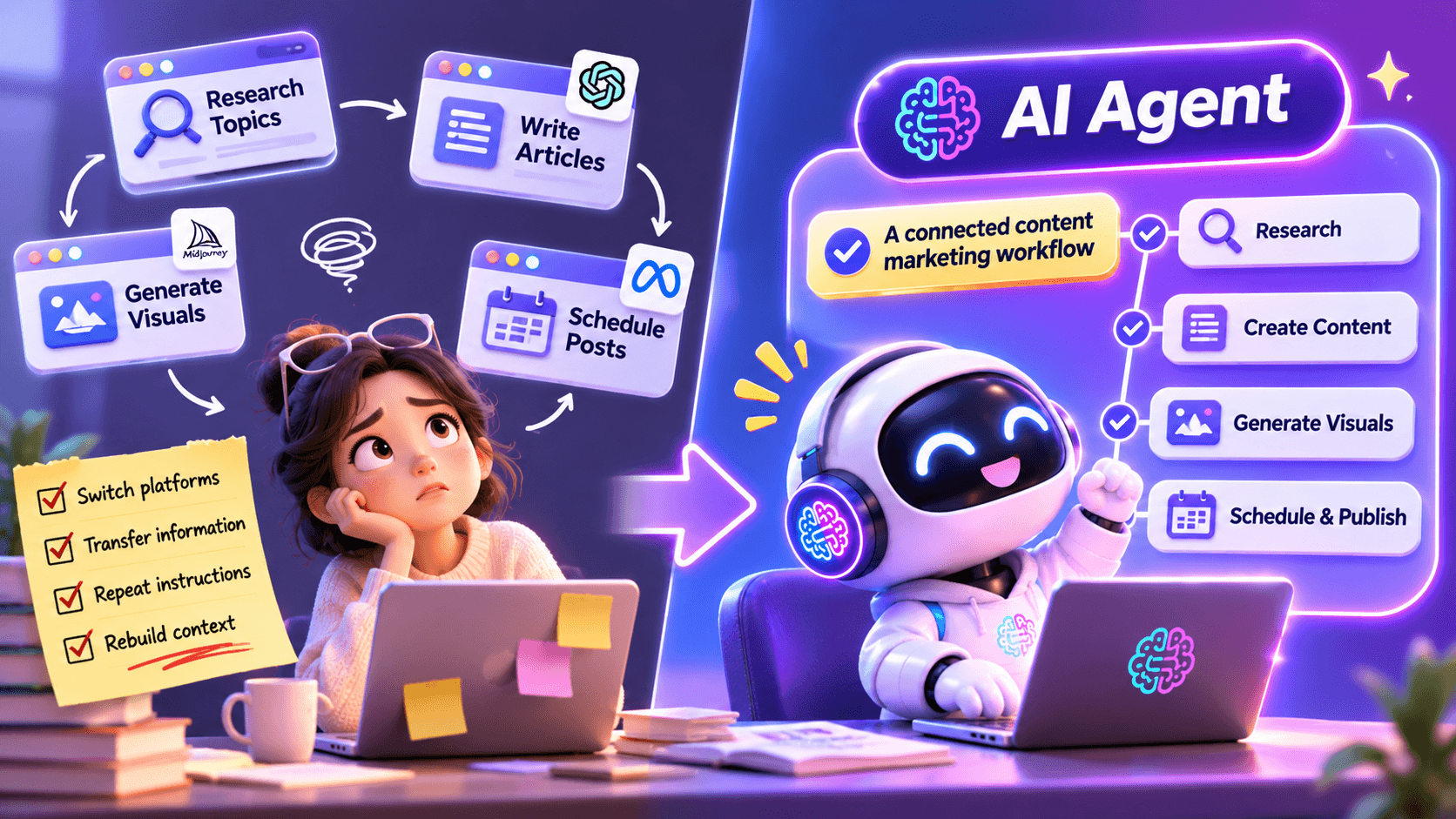
The challenge is not that AI lacks the ability to support content creation. Rather, most AI tools are designed to handle individual tasks instead of connecting the entire process. Every time marketers switch between research platforms, AI chatbots, design software, and publishing tools, they have to transfer information, repeat instructions, and rebuild context. These small interruptions accumulate, leaving teams with less time to focus on the actual content.
This is where AI Agents offer a different approach. Instead of using separate tools for every task, marketers can define an objective and let an AI Agent coordinate the steps needed to achieve it, creating a more connected content marketing workflow.
Why Content Marketing Becomes Inefficient When Every Task Requires a Different Tool
Publishing a single blog post involves much more than writing the first draft. Before an article is ready, marketers need to research trending topics, analyze competitors, identify relevant keywords, and gather reliable sources. Once the writing is complete, they still need to create supporting visuals, adapt the article for social media, and prepare the content for publication.
Although each activity may seem straightforward on its own, completing them across multiple applications introduces unnecessary friction. Marketers repeatedly copy and paste information, rewrite prompts for different AI tools, and transfer content between platforms. In the process, important context can get lost, and the team has to spend additional time checking whether every output is consistent.
As a result, the content creation process becomes fragmented. Instead of spending more time improving content quality and developing campaigns, marketers end up coordinating tools and managing repetitive tasks.
AI Assistants Generate Individual Outputs, While AI Agents Coordinate Entire Workflows
Traditional AI assistants are primarily prompt-driven. You provide an instruction, receive an output, and decide what to do next. If you need to research a topic, write an article, or create an image, you typically have to submit separate requests and guide each step yourself. This works well for individual tasks, but the responsibility for planning and connecting the workflow remains with you.
AI Agents take a more objective-driven approach. Rather than responding to one instruction at a time, they can work toward a defined outcome by coordinating a sequence of tasks. You describe what you want to achieve, and the Agent determines how to approach the work based on the capabilities and tools available to it.
For example, imagine launching a content campaign around a new product feature. Instead of asking an AI assistant to write a blog post and then manually moving to other platforms, you can assign an AI Agent the broader goal of creating the campaign. It can research the topic, gather relevant information, draft an SEO-friendly article, generate supporting visuals, and prepare social media content for different platforms.
The key difference is that an AI Assistant helps you complete individual requests, while an AI Agent can coordinate multiple steps toward a larger objective. You still review and guide the work, but you spend less time managing every transition yourself.
How 1minAI AI Agent Manages Your Content Workflow from Research to Publishing
With 1minAI AI Agent, you can start by describing the content you want to create instead of deciding which platform to open for each task.
For example, you could enter:
"Create a blog about AI Agents for content marketing."
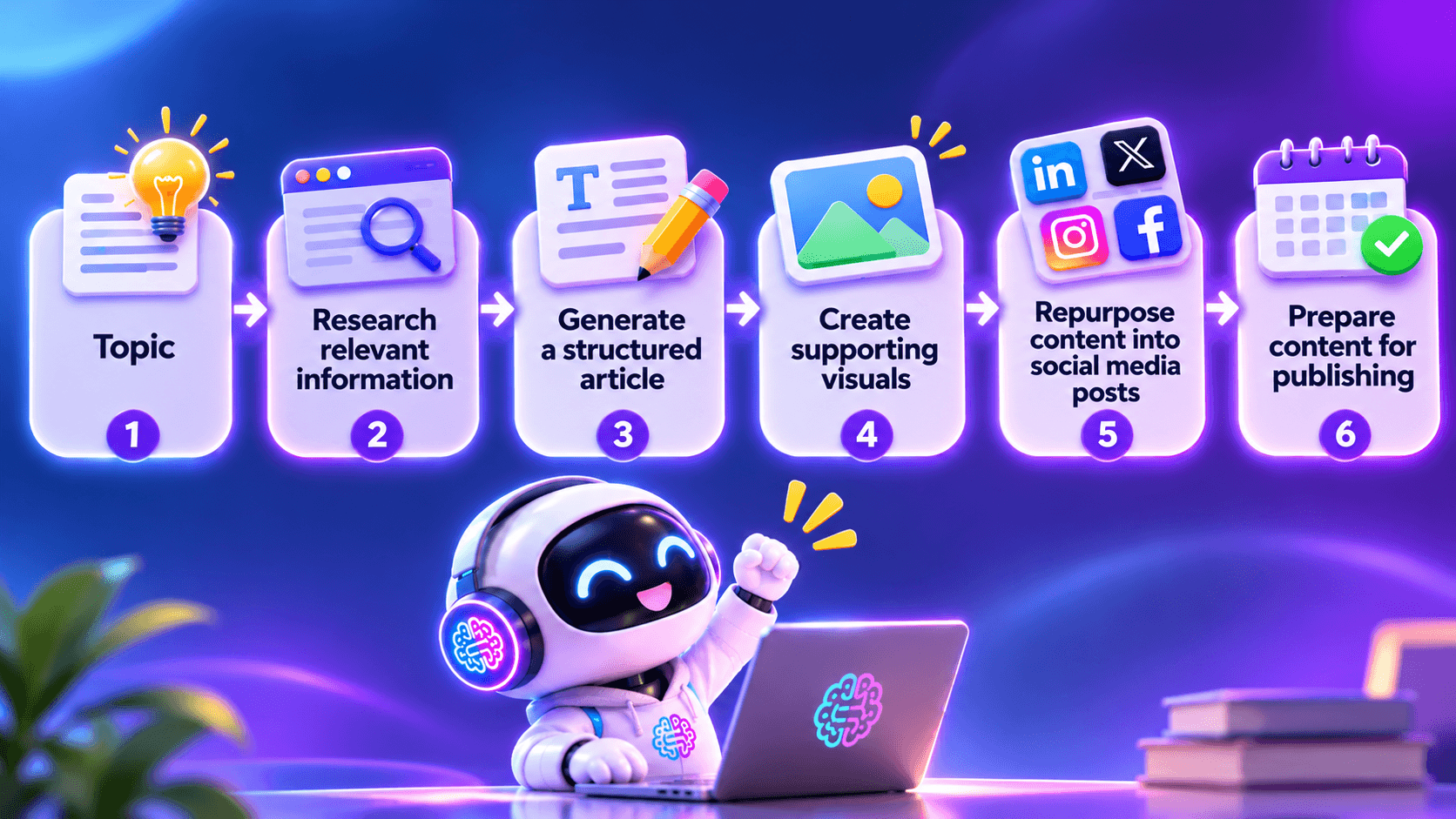
Based on your instructions and the available capabilities, the Agent can work through the content creation process step by step. It can research relevant information from online sources, extract useful insights, develop a structured outline, draft the article, create supporting images, and prepare content for social media.
The workflow can be organized as follows:
Topic
↓
Research relevant information
↓
Generate a structured article
↓
Create supporting visuals
↓
Repurpose content into social media posts
↓
Prepare content for publishing
Instead of manually coordinating several tools, you can manage these connected tasks through one AI Agent workflow. You can then review the generated materials and make adjustments before publishing.
Keep Your Content Consistent Across Different Platforms
Creating a blog post is often only the first step in a content marketing campaign. Once an article is ready, marketers can extend its reach by turning it into LinkedIn posts, Facebook updates, X threads, newsletters, and promotional visuals. However, adapting the same information for different channels usually requires additional prompts, editing, and coordination.
An AI Agent can help streamline this process by using the original article as the foundation for other content formats. Rather than starting from scratch each time, it can adapt the main ideas to suit different platforms while keeping the central message aligned. You can also provide brand voice guidelines and review the outputs to maintain consistency across channels.
This makes it easier to build a connected campaign from one original piece of content, rather than producing multiple disconnected posts that require separate planning and execution.
Give Marketers More Time to Focus on Strategy Instead of Production
The value of AI in content marketing goes beyond generating articles faster. According to HubSpot's State of Marketing Report, marketers using AI save an average of three hours for every piece of content they create while improving production efficiency.
However, the bigger opportunity is reducing the repetitive work surrounding content production. Researching topics, drafting articles, creating visuals, repurposing content, and preparing posts for publication all require time and coordination. When these activities are connected through an AI Agent workflow, marketers can spend less time switching between tools and more time on work that requires human judgment.
For example, teams can dedicate more attention to analyzing campaign performance, testing new content ideas, refining their messaging, and understanding audience needs. AI Agents can support the execution process, while marketers remain responsible for strategic decisions and final quality checks.
The Future of Content Marketing Is About Better Workflows, Not More AI Tools
New AI tools continue to emerge, offering specialized capabilities for writing, research, image generation, and social media management. Yet adding more tools does not automatically make a marketing team more productive. If every new platform introduces another step that needs to be managed, the overall workflow can become even more fragmented.
The real opportunity lies in connecting these capabilities so that each task contributes to a larger content marketing objective. Rather than treating research, writing, visual creation, and content distribution as separate activities, marketers can approach them as parts of one coordinated process.
With 1minAI AI Agent, you can define your content goal and let the Agent coordinate the workflow using its available capabilities. Instead of constantly deciding which tool to open or which prompt to write next, you can focus on guiding the outcome, reviewing the content, and making strategic improvements.
The next step in content marketing is not necessarily adopting more AI tools. It is making the tools you use work together more effectively.
Alternatives
Discover the best alternatives to 1minAI and compare features, pricing, and use cases.

1min.AI vs OpenRouter
1min.AI vs. OpenRouter: Compare the ready-to-use AI creation product against the technical API tool. Find out if you need a zero-code creative studio or a coding infrastructure hub.
 Ngoc Hong
1min.AI vs Planable
Looking for a Planable alternative? See how 1min.AI Social Content Agents research, write, design and publish posts across your social channels from one credit pool.
 Trang Tran
1min.AI vs. Metricool: Which Platform Does More for Your Marketing Workflow?
Compare 1min.AI vs. Metricool across content creation, visual production, scheduling, analytics, MCP, and pricing to find the right platform for your marketing workflow.
AI Tools
Discover the best AI tools to boost productivity, creativity, and everyday work.
Top 4 Affordable AI Tools for Startup Founders
Discover the top 4 affordable AI tools for startup founders to validate ideas, build products, create content, and launch faster without overspending.
 Tram Ta
Turn “Make It Better” Into Better Content With AI
Use AI to turn vague client feedback into clear revisions, reduce unnecessary edits, and deliver better content faster.
 Lien Anh Vu
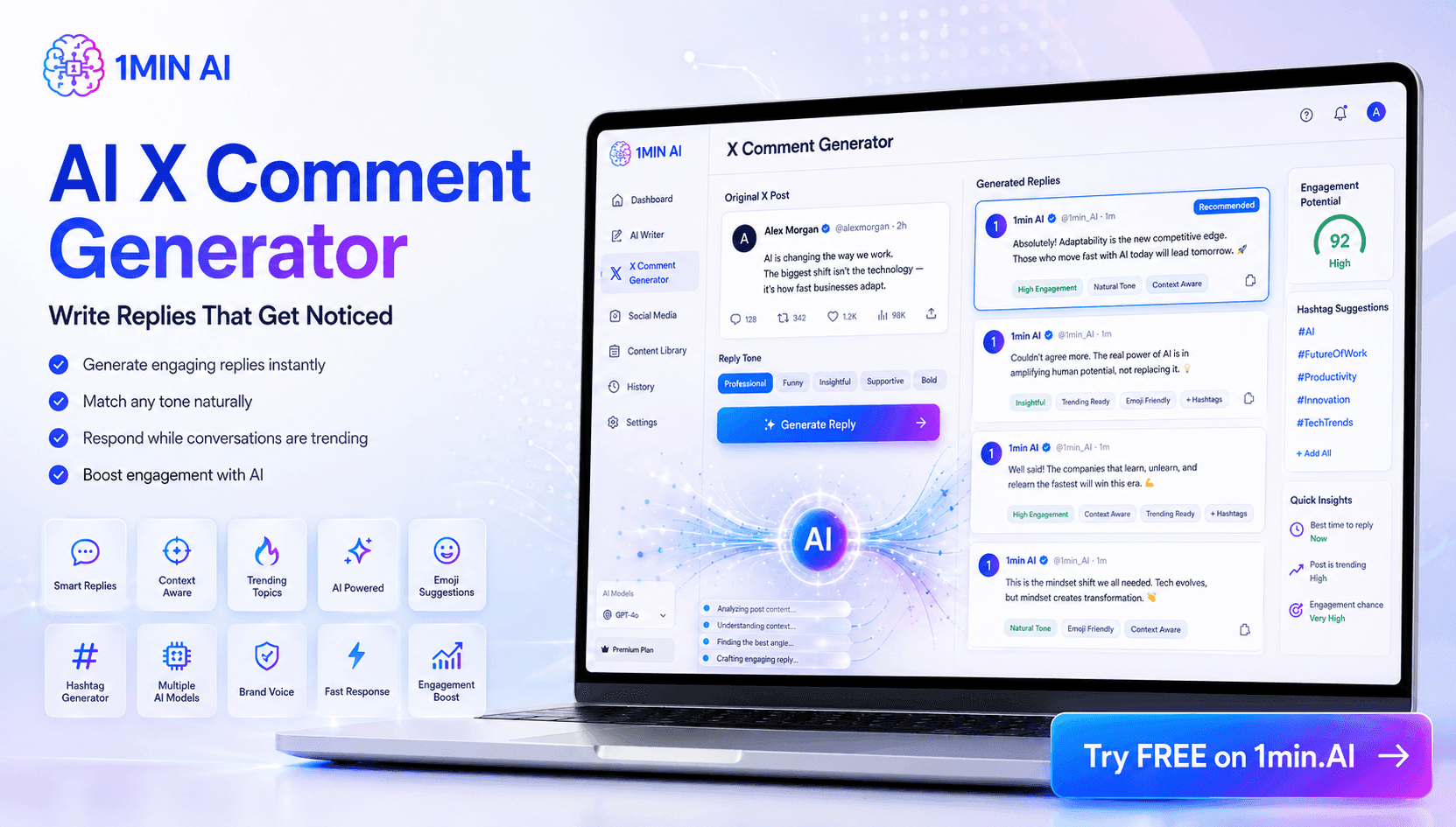
Free AI X Comment
Create funny, witty, or insightful comments for Twitter with our AI-powered Twitter Comment Generator. Boost your engagement and stand out in the crowd!
Trang TranAI Features
Comprehensive AI features that streamline workflows, improve efficiency, and empower teams to achieve more.
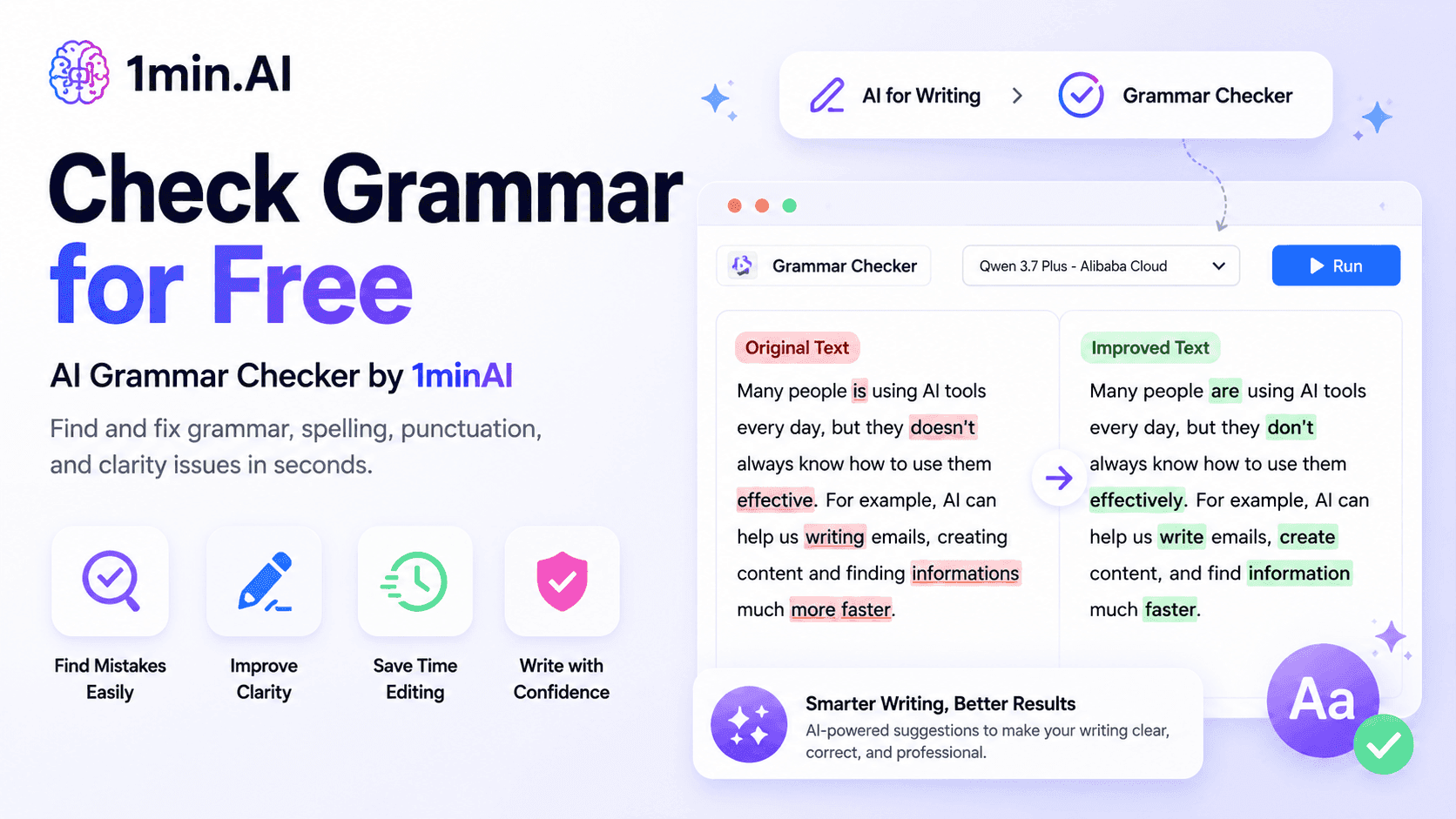
1minAI: Free AI Grammar Checker
Check grammar for free with 1minAI’s AI grammar checker. Find grammar, spelling, and writing mistakes, improve clarity, and polish your content in seconds.
Tram Ta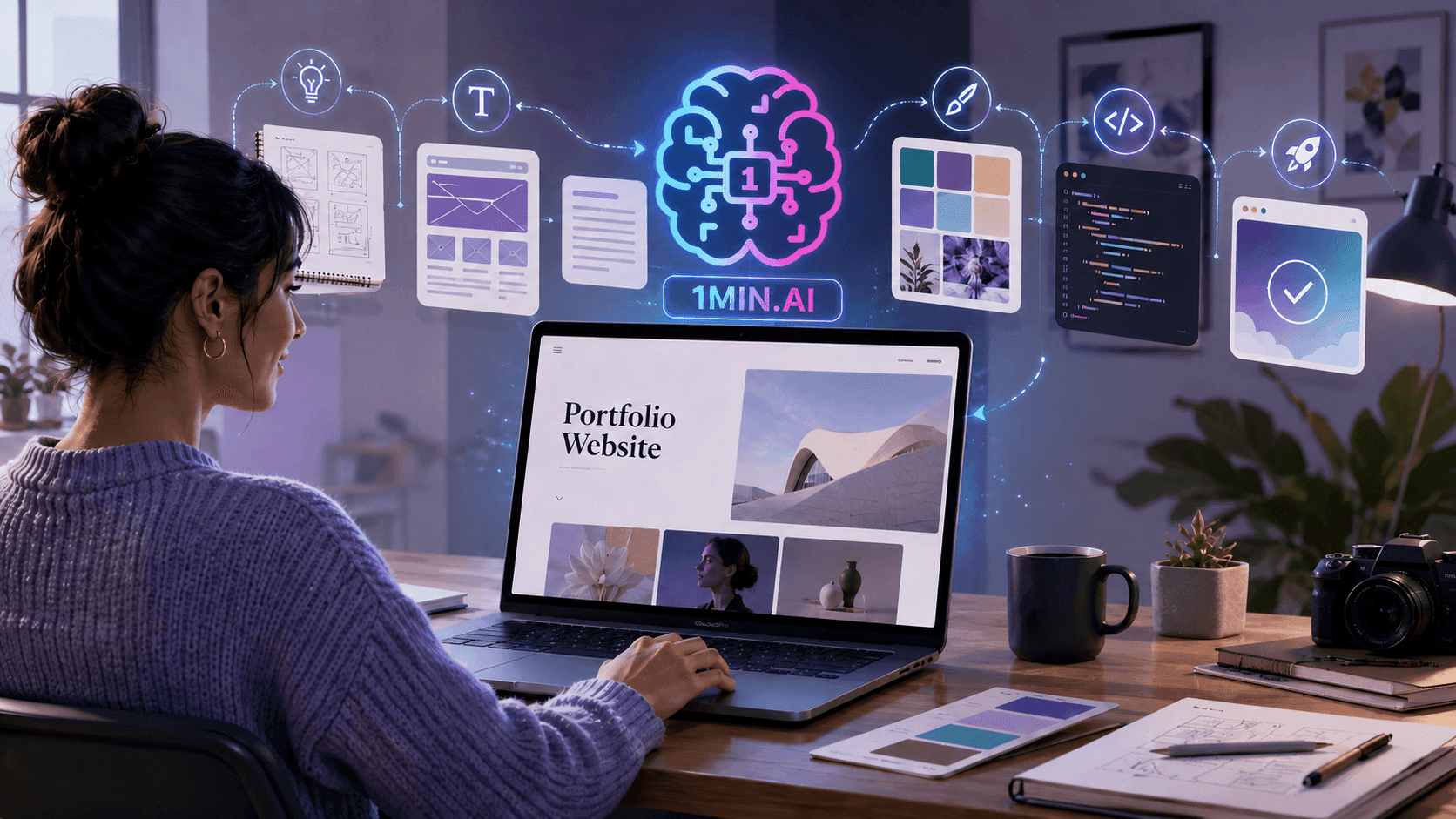
Build a Portfolio Website Faster with 1min.AI
Learn how freelance creatives can use 1min.AI to plan, write, design, and generate a professional portfolio website faster, even without strong coding skills.
Lien Anh VuFree AI X Comment
Create funny, witty, or insightful comments for Twitter with our AI-powered Twitter Comment Generator. Boost your engagement and stand out in the crowd!
Trang TranAI Use Cases
A curated collection of AI use cases for business, productivity, and industry-specific applications.
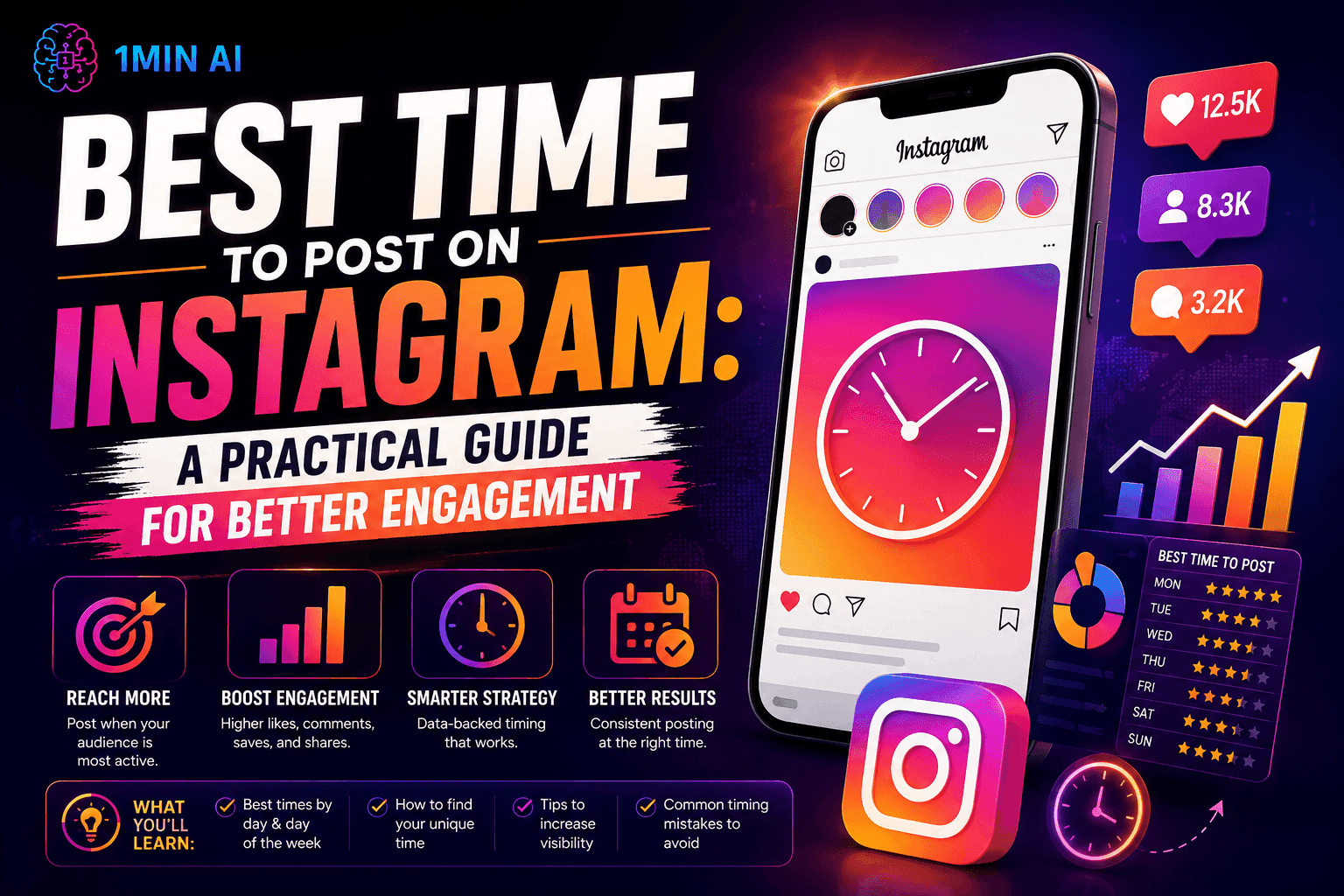
Best Time to Post on Instagram: A Practical Guide for Better Engagement
Discover the best time to post on Instagram, including the best days and times for different audiences, plus tips to find the ideal posting schedule for your account.
Tram TaTurn “Make It Better” Into Better Content With AI
Use AI to turn vague client feedback into clear revisions, reduce unnecessary edits, and deliver better content faster.
Lien Anh VuBuild a Portfolio Website Faster with 1min.AI
Learn how freelance creatives can use 1min.AI to plan, write, design, and generate a professional portfolio website faster, even without strong coding skills.
Lien Anh VuAI Tutorials
Learn how to use AI with practical, step-by-step tutorials.
Black Friday AI Tool Deals in 2026
Discover what Black Friday AI tool deals 2026 has to offer. Find out how to secure the 1min.AI lifetime deal via AppSumo, Dealify, Stack Social, and verify on Trustpilot, Slashdot, and Software Advice.
 Hang Nguyen
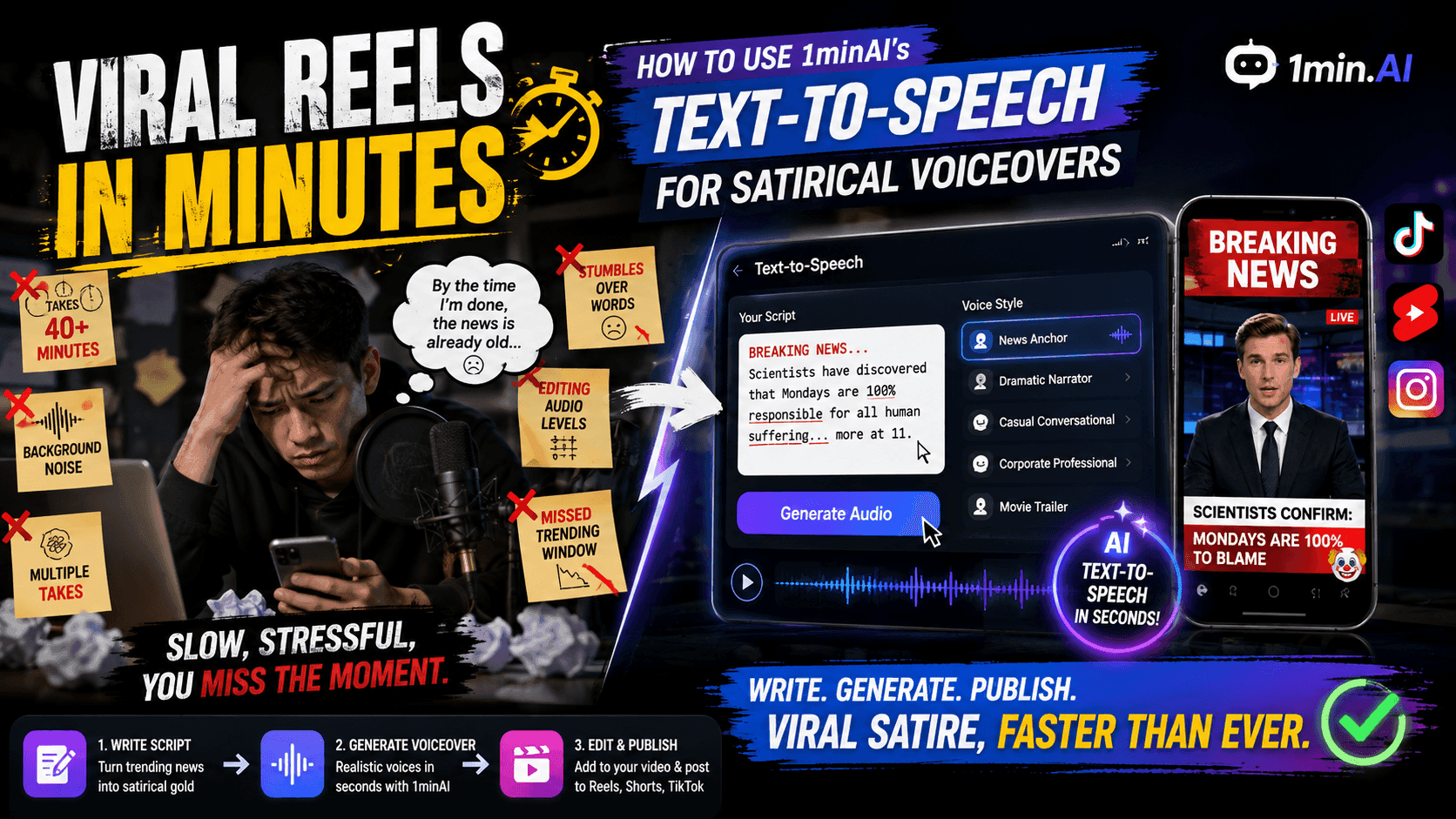
Viral Reels in Minutes: How to Use 1minAI’s Text-to-Speech for Satirical Voiceovers
Learn how satirical page admins use 1minAI’s Text-to-Speech feature to generate instant news anchor and dramatic voiceovers for TikToks, Shorts, and Instagram Reels.
Turn “Make It Better” Into Better Content With AI
Use AI to turn vague client feedback into clear revisions, reduce unnecessary edits, and deliver better content faster.
Lien Anh VuAI Guides
Learn AI faster with practical guides, real-world examples, and actionable best practices.

Safely Buy AI Tools Online: 2026 Black Friday Guide
Discover how to find and secure the best Black Friday AI deals online. Learn expert strategies to avoid scams, combat subscription fatigue, and verify software.
Hang Nguyen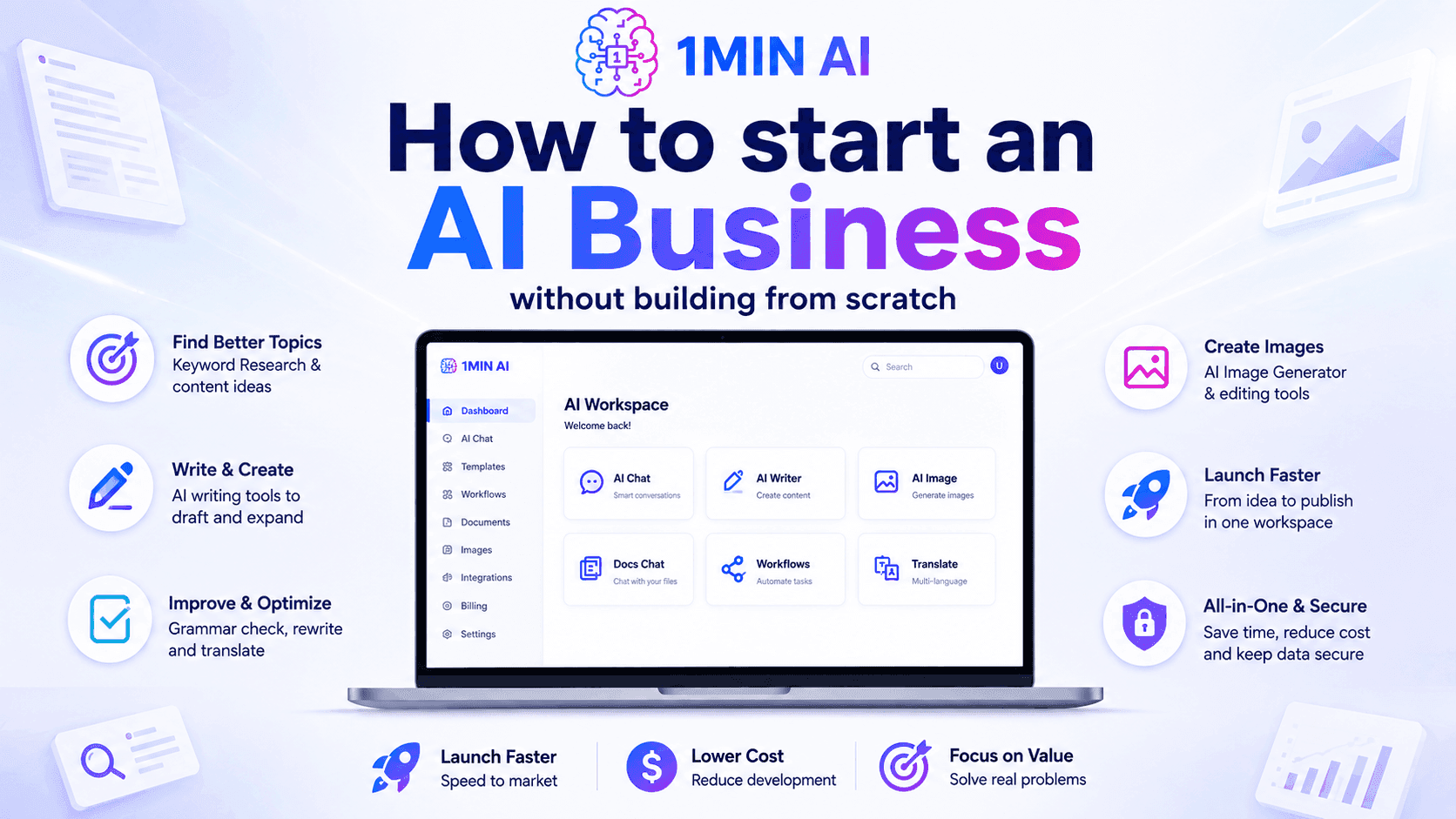
How to start an AI business without building from scratch
Learn how to start an AI business, validate your idea, and launch faster without building costly AI infrastructure from scratch.
Ngoc Hong
Is 1min.AI Safe for Business Data? A Guide for Teams
Assess 1min.AI for company use. Review security controls, privacy policies, and the questions to resolve before uploading confidential business data.
Ngoc HongAI Solutions
Browse the best AI solutions for automation, coding, research, productivity, customer support, marketing, and business workflows.
Safely Buy AI Tools Online: 2026 Black Friday Guide
Discover how to find and secure the best Black Friday AI deals online. Learn expert strategies to avoid scams, combat subscription fatigue, and verify software.
Hang Nguyen
Free AI Tattoo Generator: Custom Designs
Turn any idea into a custom tattoo design with 1min.AI's free AI tattoo generator. Describe your idea, pick a style, and download in seconds.
Trang TranTurn “Make It Better” Into Better Content With AI
Use AI to turn vague client feedback into clear revisions, reduce unnecessary edits, and deliver better content faster.
Lien Anh VuAI Models
Explore the world's leading AI models in one place.
Free AI Chat With Claude Fable 5.2 On 1min.AI
Free AI chat with Claude Fable 5.2 on 1min.AI. Compare Fable 5.2 vs Opus 5.5, see Fable 5.2 benchmarks, and start chatting in minutes.
Trang Tran
GPT-6.2 Sol: Specs, Pricing & Free Access
Explore GPT-6.2 Sol specs, pricing, and how it compares with GPT-6.1 Sol and Claude Opus 5.5, then try it free in 1min.AI Multi AI Chat.
Trang Tran
GPT 6.2 Astra: Pricing, Benchmarks & Free Access
GPT 6.2 Astra release date, pricing, Reddit feedback and Opus 5.5 comparison. See what it does best and chat with it on 1min.AI for free.
Trang TranAI Comparisons
Compare AI tools, models, and platforms to find the best fit for your needs.
Gemini 4 Neon vs Hydrogen: Specs, Price & Picks
Gemini 4 Neon vs Hydrogen, Carbon and Argon: compare price, benchmarks and use cases to pick the right model, then test them side by side on 1min.AI.
Trang Tran
Kling AI Vs Veo 3: Which Model Wins?
Kling AI vs Veo 3: compare motion, native audio, pricing & free tiers to see which AI video generator wins for your project - try both on 1min.AI.
Trang Tran
DeepSeek V4 Pro vs Flash Comparison
Compare DeepSeek V4 Pro vs DeepSeek V4 Flash metrics. Optimize your agentic apps and improve AI fact checking on 1min.ai today.
Ngoc HongAI Integrations
Seamlessly integrate AI with the tools you already use to automate work and boost productivity.
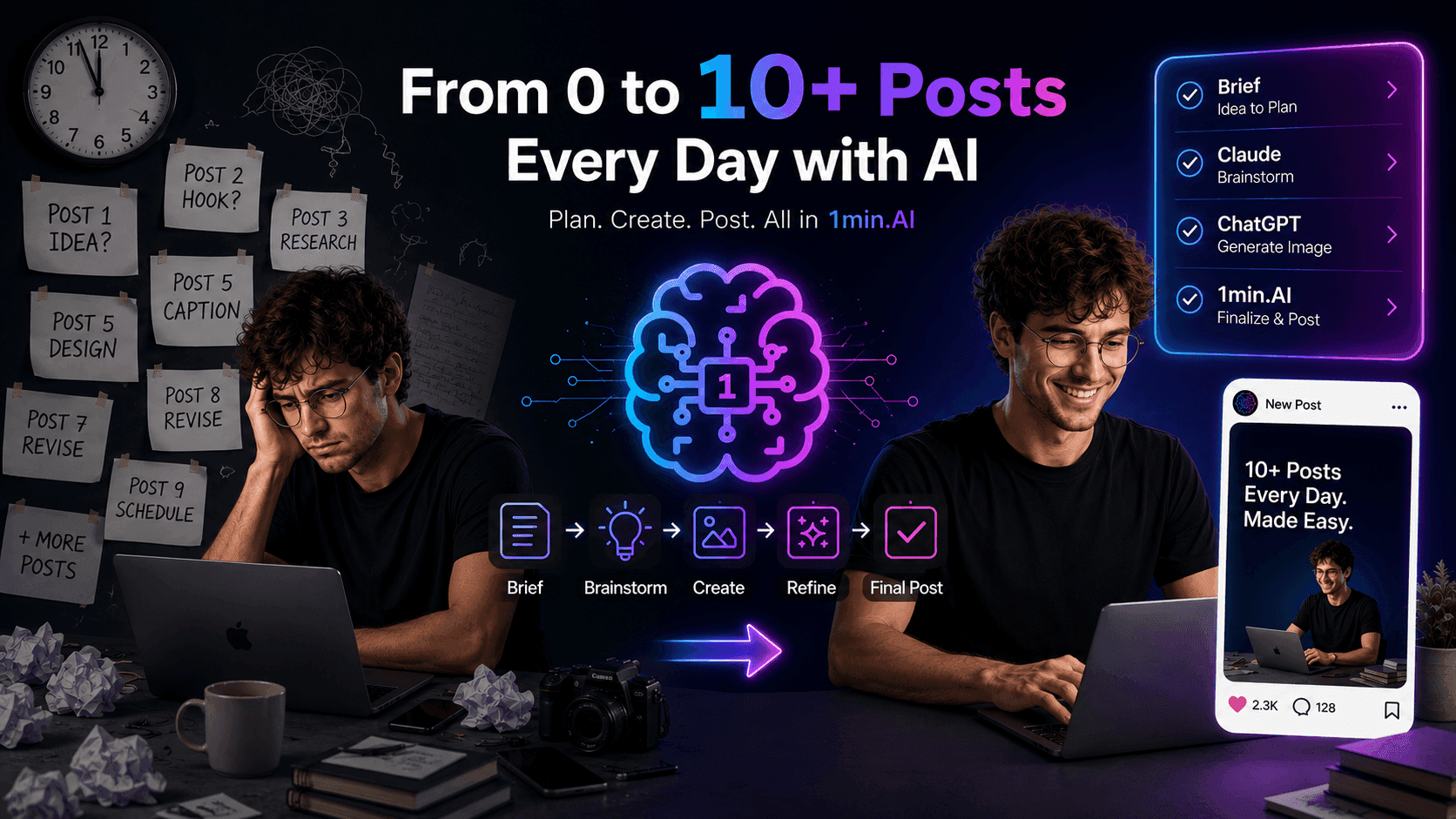
POV: You Have 10+ Posts to Make Every Day
Learn how to build an AI content workflow that helps content creators produce 10+ social media posts a day faster with AI brainstorming, image generation, and content creation.
Lien Anh Vu
Stop Switching Between AI Apps: How AI Integration Transforms Employer Branding
Discover how AI integration helps HR teams streamline employer branding by combining AI writing, documents, images, video, and multiple AI models into one workspace.
Tram Ta
AI API Aggregator Explained For Developers
An AI API aggregator gives developers one unified API to call multiple AI models, cutting integration time and vendor lock in.
Trang TranAI for Industries
Find the best AI tools and workflows for healthcare, finance, education, legal, manufacturing, retail, real estate, and more

ChatGPT Trending Photo Prompts to Copy and Paste
Explore chatgpt trending photo prompt ideas you can copy and paste. Create viral AI portraits, collages, and aesthetic photos with ease.
Trang TranTry Image To Video AI With Prompt Online Free
Try image to video AI with prompt online free, no login and no watermark. Upload a photo, type the motion you want, and get a short video in minutes.
Trang Tran
No Photoshoot? Create AI Fashion Videos With Seedance 2.5
No photoshoot needed! Create stunning AI fashion videos with Seedance 2.5 on 1min.AI using outfit references, cinematic prompts, and surreal scenes.
Lien Anh VuAI Agents
Discover and run AI agents to automate tasks across your work and daily life.
1minAI: Free AI Grammar Checker
Check grammar for free with 1minAI’s AI grammar checker. Find grammar, spelling, and writing mistakes, improve clarity, and polish your content in seconds.
Tram Ta
AI Agents for Facebook
Use an AI Agent for Facebook to create content, generate images, schedule posts, and publish from your documents and conversations.
Ngoc Hong
AI Agent vs AI Assistant: Which One Actually Saves Designers More Time?
Learn the difference between AI Agent vs AI Assistant and discover which solution helps designers automate repetitive work, reduce revisions, and save more time.
Lien Anh VuAI Workflows
Explore ready-to-use AI workflows for productivity, marketing, sales, support, and more.
POV: You Have 10+ Posts to Make Every Day
Learn how to build an AI content workflow that helps content creators produce 10+ social media posts a day faster with AI brainstorming, image generation, and content creation.
Lien Anh Vu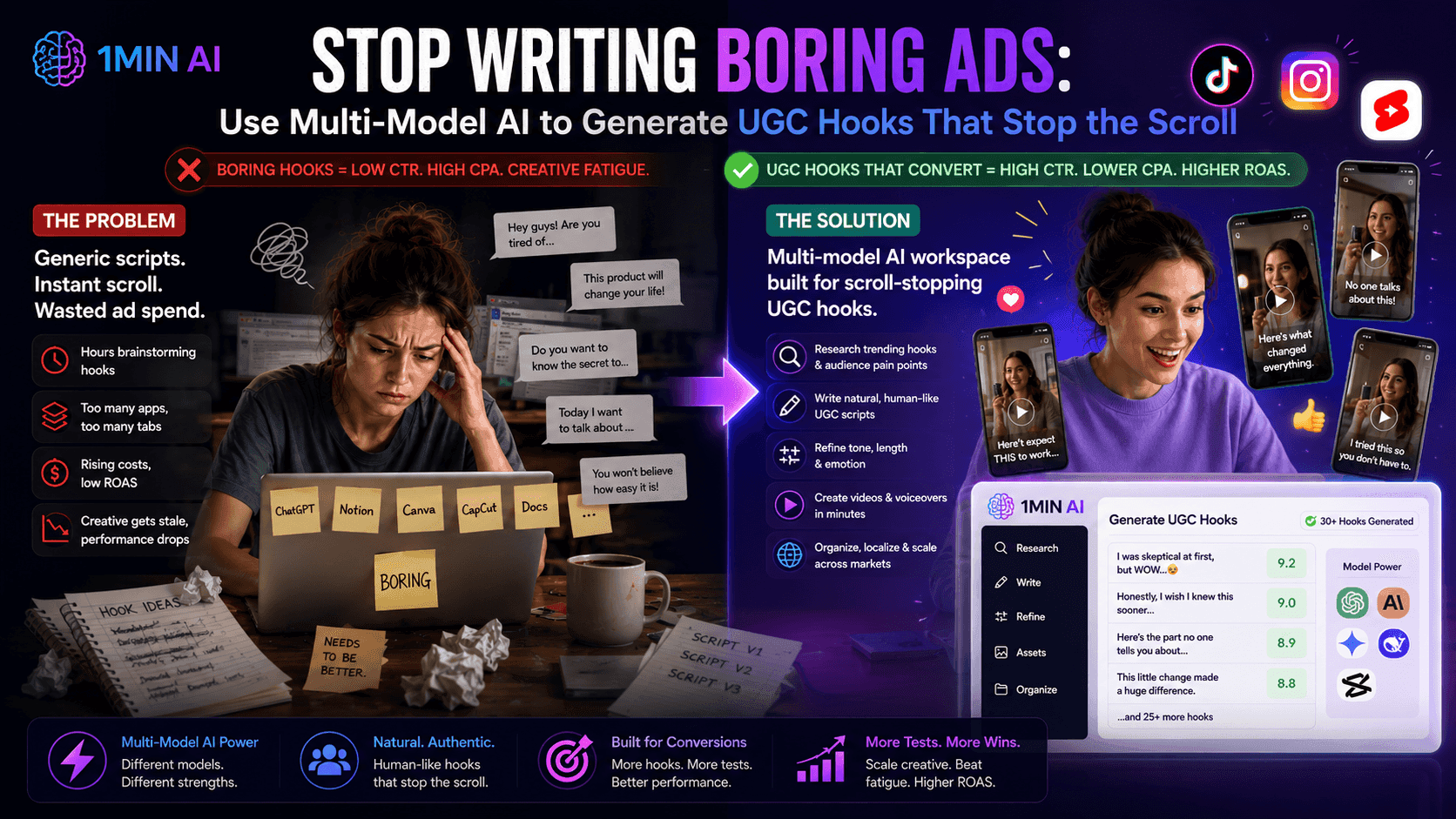
Use Multi-Model AI to Generate UGC Hooks
Is creative fatigue tanking your ROAS? Discover how to use a multi-model AI workspace to generate high-converting, natural-sounding UGC ad hooks that stop the scroll.
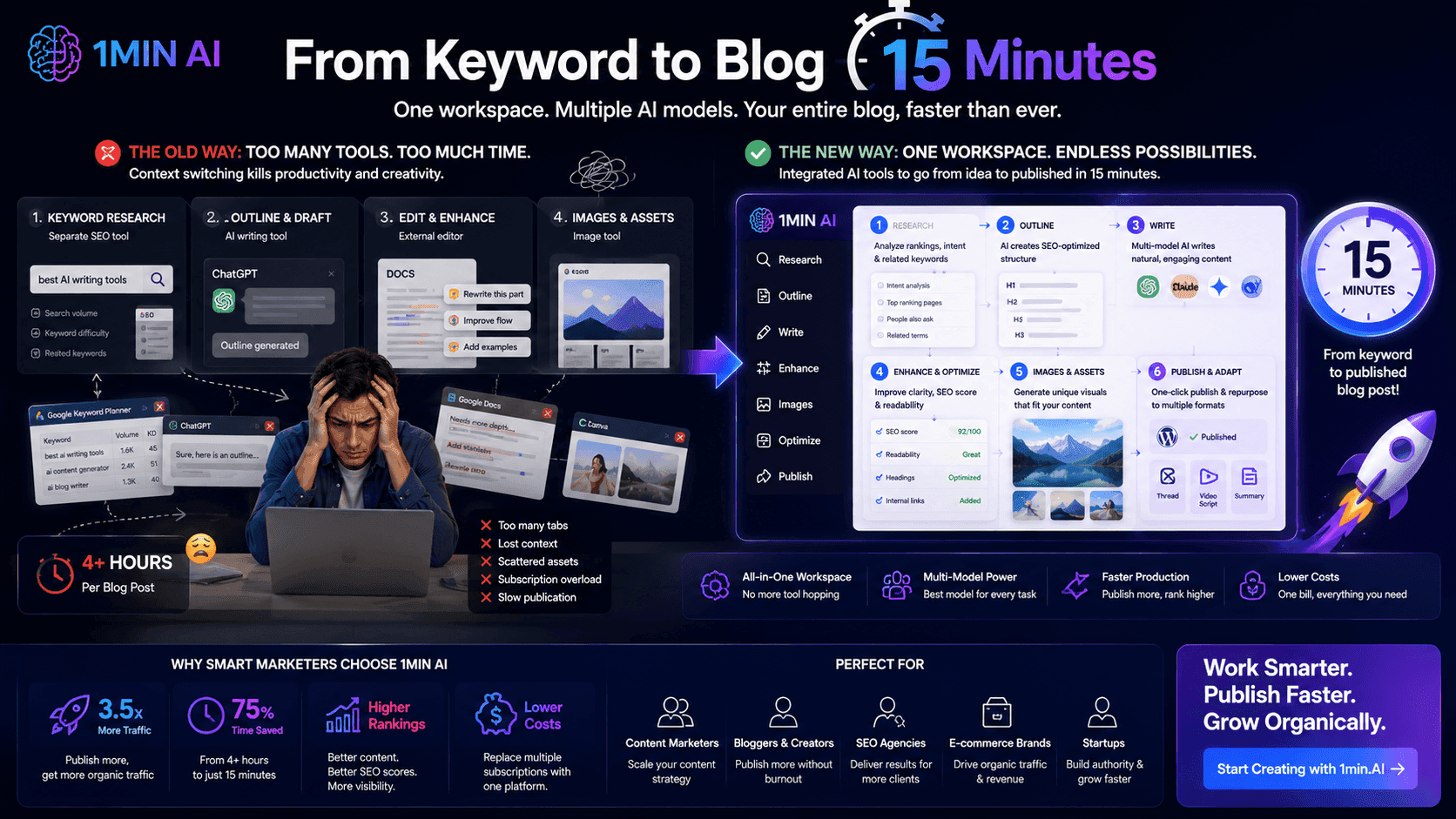
From Keyword to Blog in 15 Minutes
Stop wasting hours jumping between keyword research tools, text generators, and image apps. Learn how an integrated multi-model workspace slashes blog production time down to 15 minutes.
Newsletter
Weekly AI Innovations with 1minAI

🔮 Weekly AI Innovations #147: 1min.ai Drops Major Shift: AI Circle, Kimi & Wan 3.0
Explore AI Circle (formerly AI Social), Kimi K3.1 Pro’s 2M context, and Alibaba Wan 3.0 & 3.0 Prime cinematic video on 1min.ai.
Hang Nguyen
🔮 Weekly AI Innovations #146: Mistral 3.5, Qwen Image & Cohere A+ are ready on 1min.ai
Deploy Mistral Large 3, Qwen Image 3.0, and Cohere Command A+ on 1min.ai. Boost RAG accuracy and cut visual generation latency in one unified AI workspace.
Hang Nguyen
🔮 Weekly AI Innovations #145: X Content Agent & GPT 6.1 Terra on 1min.ai
Scale viral reach with the X Content Agent on 1min.ai. Discover an end-to-end 4-stage pipeline with zero token burn, plus the launch of GPT 6.1 Terra.
Hang Nguyen