
Qwen 4 Max: Benchmarks, Capabilities, and What This AI Model Can Do

Tram Ta
November 17, 2026
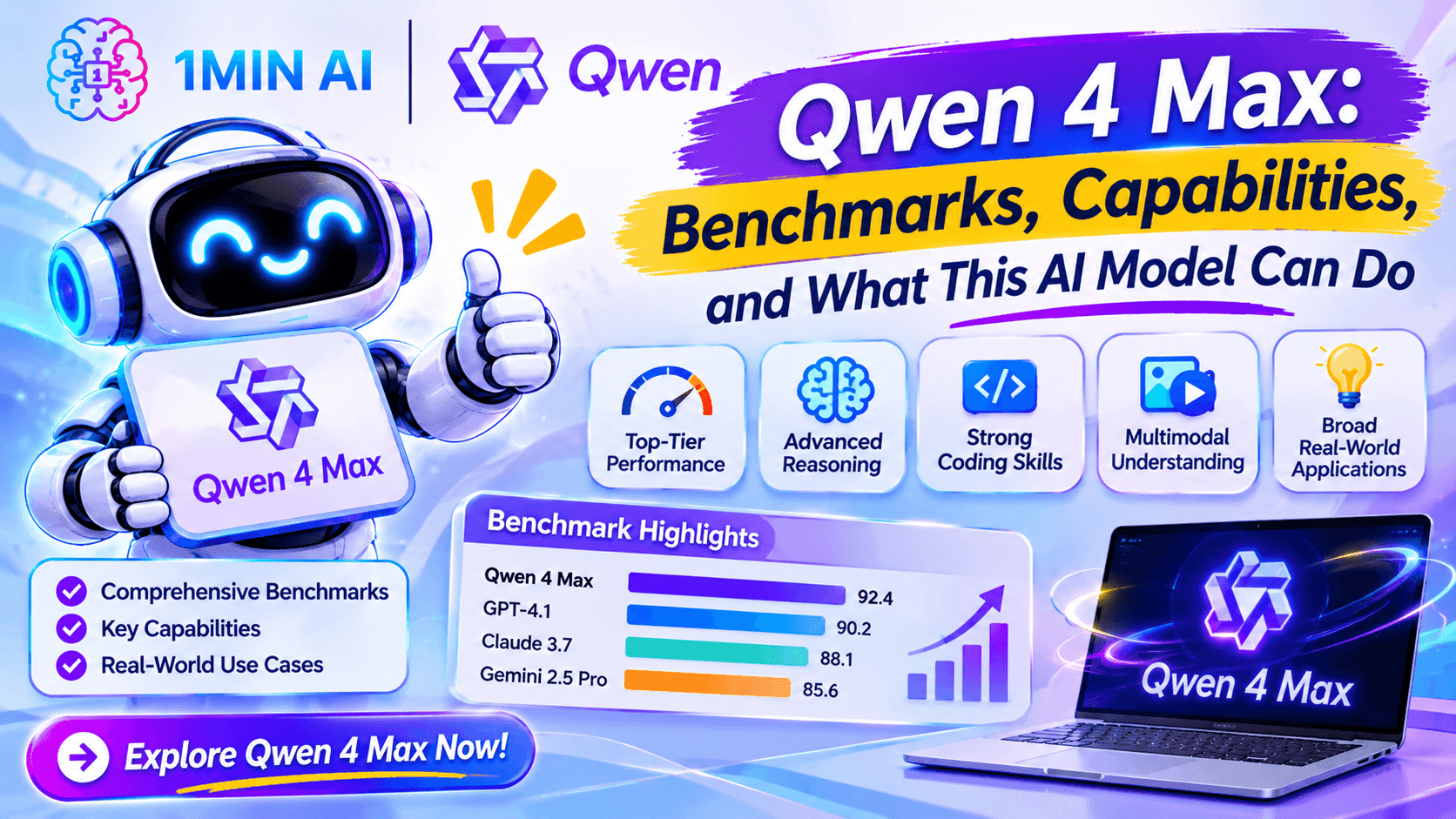
Explore Qwen4-Max benchmarks, coding performance, 1M context window, multimodal reasoning, and what Alibaba's flagship AI model can do.
Alibaba's Qwen family has become an important name in the AI model landscape, and its latest flagship release, Qwen4-Max, brings a major upgrade in reasoning, multimodal understanding, coding, and AI-agent capabilities.
Released on November 16, 2026, Qwen4-Max is designed to handle more than ordinary chatbot conversations. It can work with long documents, understand visual information, support software development, and help coordinate complex workflows involving multiple tools.
But how capable is it really? Does it compete with leading models in coding and reasoning? And what can businesses, developers, and everyday users actually do with it?
This guide explores Qwen4-Max's architecture, reported benchmarks, practical capabilities, limitations, and potential applications.
What Is Qwen4-Max?
Qwen4-Max is Alibaba's flagship multimodal AI model and the most capable model in the Qwen family at its release. It combines advanced reasoning, text generation, visual understanding, coding, and agent-oriented capabilities in one model.
Unlike a conventional chatbot that primarily responds to individual prompts, Qwen4-Max is designed to support longer and more complicated tasks. It can process extensive context, interpret visual inputs, use tools, and help execute multi-step workflows.
Some of its key characteristics include:
- 2.4 trillion total parameters: A large-scale Mixture-of-Experts architecture.
- 71 billion active parameters per token: Only a portion of the model is activated for each token.
- 1 million-token context window: Supports processing large amounts of contextual information.
- Native vision capabilities: Understands visual information, including images and video.
- Advanced reasoning: Designed for complex problem-solving and long-running tasks.
- Agentic workflows: Supports tool calling, web search, and structured outputs through compatible platforms.
- Developer compatibility: Alibaba Model Studio documents OpenAI-compatible and Anthropic-compatible API support.
The model is available through Alibaba's QwenCloud and Model Studio ecosystem, as well as Alibaba applications such as QwenWork and QwenStudio.
For readers following the Qwen model family, see Qwen 4 Release Date and Models on 1minAI.
Qwen4-Max Architecture: What Makes It Different?
One of the most interesting parts of Qwen4-Max is its Mixture-of-Experts (MoE) architecture.
Instead of activating every parameter for every token, an MoE model uses specialized groups of parameters and activates only selected experts depending on the input.
1. A 2.4-Trillion-Parameter Model With 71 Billion Active Parameters
Qwen4-Max has 2.4 trillion total parameters, but Alibaba reports that it activates approximately 71 billion parameters per token.
This distinction matters because total parameter count does not directly tell you how much computation is required for every generated token.
A sparse architecture can provide access to a large collection of learned capabilities without activating the entire model for each operation.
Alibaba says the new model activates approximately 25% fewer parameters per token than Qwen3.8-Max at the same 2.4-trillion-parameter scale.
2. A One-Million-Token Context Window
Qwen4-Max supports a context window of up to one million tokens.
A large context window is particularly useful when working with:
- Long research reports.
- Large collections of business documents.
- Extensive software repositories.
- Technical specifications.
- Multiple files that need to be analyzed together.
- Long conversations and multi-step projects.
For example, a research team could provide several reports and ask the model to identify recurring findings, compare different methodologies, and prepare a consolidated summary.
However, a large context window does not automatically guarantee perfect recall or accuracy. The quality of the result still depends on the input, task complexity, and model performance.
3. Native Multimodal Understanding
Qwen4-Max is not limited to text.
Its multimodal capabilities allow it to understand visual information, including images and video, alongside written instructions.
This opens up practical use cases such as:
- Analyzing charts and diagrams.
- Extracting information from visual documents.
- Understanding screenshots and interface layouts.
- Reviewing video content.
- Combining visual evidence with written explanations.
4. Tool Calling and Agentic Capabilities
Another important capability is support for tool calling and agentic workflows.
Rather than only generating an answer, a compatible application can allow the model to use external tools as part of a task.
For example, a developer could build a workflow where Qwen4-Max:
- Receives a project requirement.
- Breaks it into smaller tasks.
- Searches relevant documentation.
- Uses coding or analysis tools.
- Reviews intermediate results.
- Produces a final deliverable.
The model's actual ability to perform these actions depends on the tools, permissions, and execution environment connected to it.
Qwen4-Max Benchmark Results: How Strong Is It?
Benchmarks help evaluate whether a model can solve different types of problems, from software development to professional knowledge work and complex reasoning.
Alibaba's November 16 launch announcement highlights improvements across coding, agentic tasks, productivity, and visual reasoning.
The most useful approach is to look at several benchmark categories rather than treating one score as proof that a model is universally better.
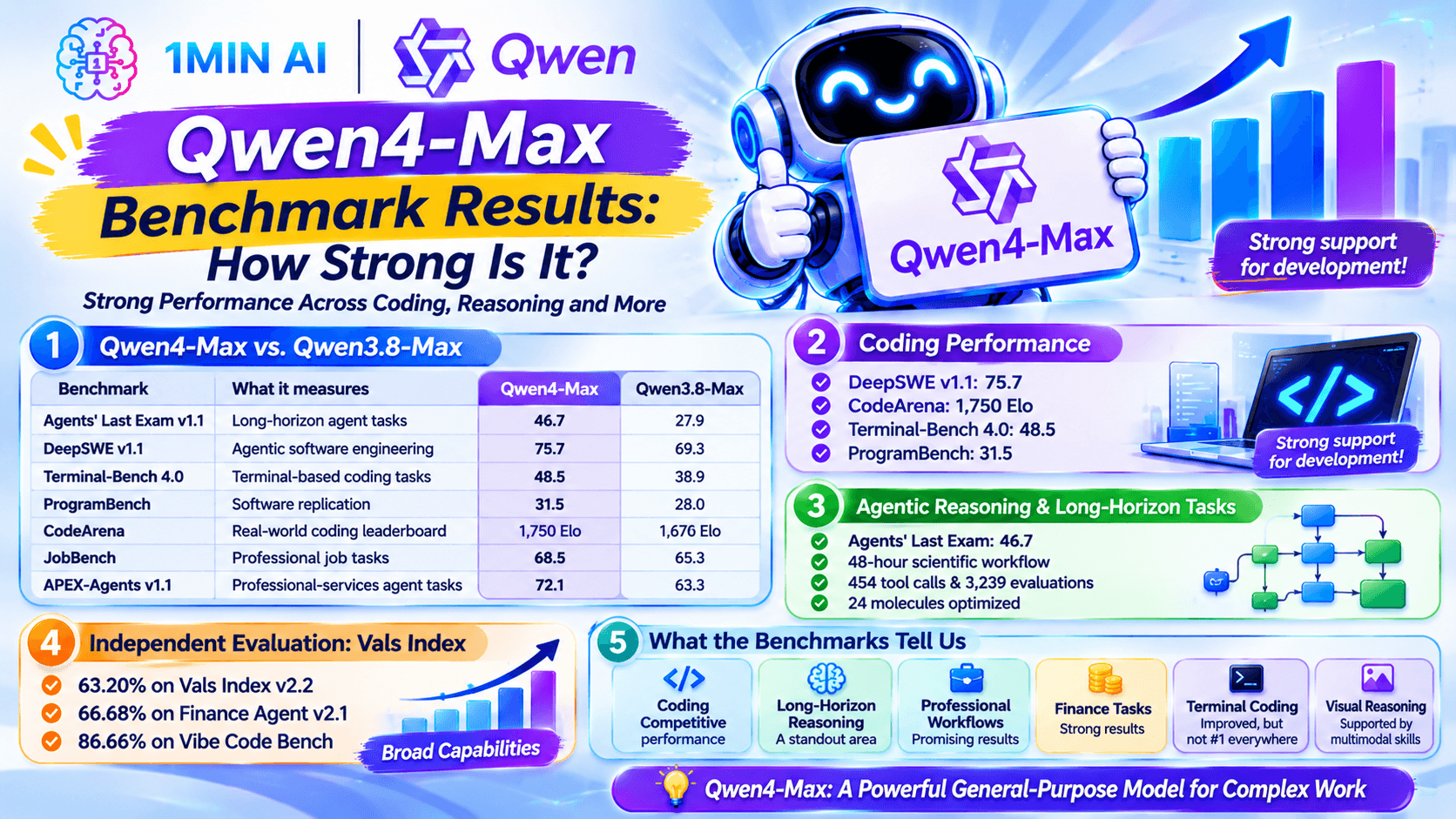
1. Qwen4-Max vs. Qwen3.8-Max
Alibaba reports improvements over Qwen3.8-Max across the shared benchmarks in its launch comparison.
Here are selected results from the published comparison.
| Benchmark | What it measures | Qwen4-Max | Qwen3.8-Max |
|---|---|---|---|
| Agents' Last Exam v1.1 | Long-horizon agent tasks | 46.7 | 27.9 |
| DeepSWE v1.1 | Agentic software engineering | 75.7 | 69.3 |
| Terminal-Bench 4.0 | Terminal-based coding tasks | 48.5 | 38.9 |
| ProgramBench | Software replication | 31.5 | 28.0 |
| CodeArena | Real-world coding leaderboard | 1,750 Elo | 1,676 Elo |
| JobBench | Professional job tasks | 68.5 | 65.3 |
| APEX-Agents v1.1 | Professional-services agent tasks | 72.1 | 63.3 |
These are results reported in Alibaba's launch comparison. Benchmark versions, evaluation settings, and scoring methods differ, so scores should not be compared directly across different benchmarks.
The most noticeable improvement in this selection is Agents' Last Exam, where Qwen4-Max scored 46.7 compared with 27.9 for its predecessor.
This suggests a meaningful improvement in the model's ability to handle longer and more complicated agent-oriented tasks under the reported evaluation setup.
2. Coding Performance
Coding is one of the major areas Alibaba highlights for Qwen4-Max.
Its reported results include:
- DeepSWE v1.1: 75.7, indicating strong performance on agentic software engineering tasks.
- CodeArena: 1,750 Elo, placing it sixth on the leaderboard cited in Alibaba's launch announcement.
- Terminal-Bench 4.0: 48.5, showing improvement over Qwen3.8-Max's reported 38.9.
- ProgramBench: 31.5, an improvement over the predecessor's 28.0.
These results show that Qwen4-Max can be useful for software development tasks involving code generation, debugging, and multi-step engineering workflows.
However, its performance is not uniformly dominant across coding benchmarks. In Alibaba's comparison, other models achieved higher results on Terminal-Bench and ProgramBench.
For developers, this means Qwen4-Max is worth testing, but it should not automatically replace every specialized coding model.
3. Agentic Reasoning and Long-Horizon Tasks
Agentic AI involves more than answering a question. An agent must plan, execute actions, evaluate results, and adjust its approach when something does not work.
Qwen4-Max's reported Agents' Last Exam score of 46.7 is one of its standout launch results.
Alibaba also describes examples of long-running agent workflows:
- A continuous 48-hour scientific workflow involving molecular design, synthesis, testing, and active learning.
- An Alzheimer’s research experiment involving 454 tool calls and 3,239 metric evaluations.
- The design and optimization of 24 candidate molecules in that research workflow.
These examples illustrate the type of complex, iterative work Alibaba intends Qwen4-Max to support.
They are company-reported demonstrations, not guarantees that the model will independently reproduce the same outcomes in every environment.
4. Independent Evaluation: Vals Index
Alibaba's own benchmark comparisons are useful, but independent evaluations provide another perspective.
Vals AI reported a Qwen4-Max score of 63.20% on Vals Index v2.2, based on its November 2026 evaluation.
Its published results also show:
- 66.68% on Finance Agent v2.1.
- 61.99% on the Vals Finance Index.
- 86.66% on Vibe Code Bench.
- 48.49% on Terminal-Bench 4.0.
- 41.35% on Legal Research Bench.
These results suggest that Qwen4-Max has broad capabilities, including finance-related agent tasks and coding, but performance varies by domain.
Benchmark rankings can also change as providers update models and evaluation settings. Treat independent scores as snapshots of performance rather than permanent rankings.
5. What Do the Benchmarks Actually Tell Us?
The overall picture is more useful than any single score.
| Capability | What the results suggest |
|---|---|
| Coding | Competitive on several coding and agentic software benchmarks |
| Long-horizon reasoning | A standout area in Alibaba's launch comparison |
| Professional workflows | Promising performance on work-oriented evaluations |
| Finance tasks | Strong results in Vals AI's finance-related evaluations |
| Terminal-based coding | Improved, but not the strongest in every comparison |
| Visual reasoning | Supported by native multimodal capabilities and specialized evaluations |
The key takeaway is that Qwen4-Max is designed as a general-purpose model for complex work, rather than a tool optimized for only one benchmark category.
What Can Qwen4-Max Actually Do?
Benchmarks show how a model performs under specific tests. Practical examples help explain what those capabilities mean for real users.
Here are seven areas where Qwen4-Max could be useful.
1. Build and Improve Software Projects
Qwen4-Max can assist developers with coding tasks ranging from writing individual functions to reasoning about larger software projects.
For example, you can ask it to:
- Generate code from a technical specification.
- Explain unfamiliar code.
- Identify potential bugs.
- Suggest improvements to an existing implementation.
- Create test cases.
- Review code for common security issues.
- Help plan a software architecture.
Example prompt:
"Act as a senior software engineer. Review this codebase structure and identify the main architectural problems. Explain the three highest-priority improvements, suggest a practical implementation plan, and provide example code for the first improvement."
For more complex projects, a compatible coding environment can connect the model to repository tools, terminal commands, and testing systems.
The model can then contribute to a longer development workflow instead of simply generating isolated code snippets.
2. Analyze Large Documents and Research Materials
The one-million-token context window makes Qwen4-Max interesting for document-heavy work.
Imagine a business analyst who needs to review multiple market reports, competitor documents, and internal research files.
Instead of reading each document separately, the analyst could use the model to:
- Summarize key findings.
- Identify recurring themes.
- Compare different sources.
- Extract important figures.
- Highlight conflicting information.
- Prepare an executive summary.
Example prompt:
"Analyze the documents provided. Create a structured comparison of the main market trends, customer needs, competitor strategies, and business risks. Identify which conclusions are supported by multiple sources and which require further verification."
This can make research workflows faster, although important facts and references should still be checked against the original documents.
3. Understand Images, Charts, and Visual Information
Because Qwen4-Max supports visual understanding, it can help users interpret information that is not presented as ordinary text.
For example, you could provide:
- A business dashboard screenshot.
- A financial chart.
- A product photograph.
- A technical diagram.
- A presentation slide.
- A screenshot of a software interface.
The model can help describe visible information, explain relationships, and answer questions about the image.
Example prompt:
"Analyze this business dashboard. Identify the three most important trends, explain which metrics may indicate a problem, and recommend what additional data should be reviewed before making a decision."
This is useful for analysts and teams that regularly work with visual reports.
4. Automate Multi-Step Business Workflows
Qwen4-Max is designed to support agentic tasks, making it relevant to business workflows that involve multiple steps.
For example, a sales research workflow could involve:
- Organizing a list of potential customers.
- Researching publicly available company information.
- Extracting relevant business details.
- Categorizing potential opportunities.
- Preparing a structured research report.
With appropriate tools and permissions, the model can help coordinate these stages.
Example prompt:
"Act as a sales research assistant. Organize the company information provided into a structured table. Categorize each company by industry, potential business need, and relevance to our product. Explain the reasoning behind each classification and flag missing information."
The important distinction is that Qwen4-Max provides the reasoning and coordination capability. External research, CRM updates, and other actions require connected tools and an appropriate execution environment.
5. Support Data Analysis and Reporting
Business teams often have more data than time to interpret it.
Qwen4-Max can assist with data analysis by helping users:
- Explain spreadsheet structures.
- Identify patterns in supplied data.
- Generate SQL or Python code.
- Interpret charts.
- Summarize business metrics.
- Draft reports from analytical findings.
Example prompt:
"Review this sales dataset. Identify monthly revenue trends, compare product performance, and highlight unusual changes. Present the findings in a concise management report with recommendations for further analysis."
For decisions involving important financial or operational data, validate calculations and conclusions using the original dataset and appropriate analytical tools.
6. Create Frontend Designs and Prototypes
Alibaba identifies frontend design as one of Qwen4-Max's intended use cases.
This can be useful for developers and product teams who want to move from a written idea to an initial interface.
For example, you could describe a dashboard, landing page, or customer portal and ask the model to generate a frontend implementation.
Example prompt:
"Create a responsive dashboard for a small business analytics platform. Include a sidebar, revenue overview, monthly performance chart, recent transactions, and customer activity panel. Use a clean professional layout and organize the code into reusable components."
A developer can then review the generated interface, test its responsiveness, and refine the implementation.
7. Assist With Scientific and Technical Research
Qwen4-Max's long-context reasoning and agent-oriented design could also be useful in research-heavy environments.
Potential tasks include:
- Organizing scientific literature.
- Comparing research methodologies.
- Summarizing technical papers.
- Generating analysis scripts.
- Reviewing experimental data.
- Planning computational experiments.
Alibaba's launch announcement describes scientific workflows involving molecular design, testing, and iterative evaluation.
These demonstrations show the model's potential in complex research processes, but they should not be interpreted as replacing expert review, laboratory validation, or domain-specific scientific tools.
Qwen4-Max vs. Qwen3.8-Max: Should You Upgrade?
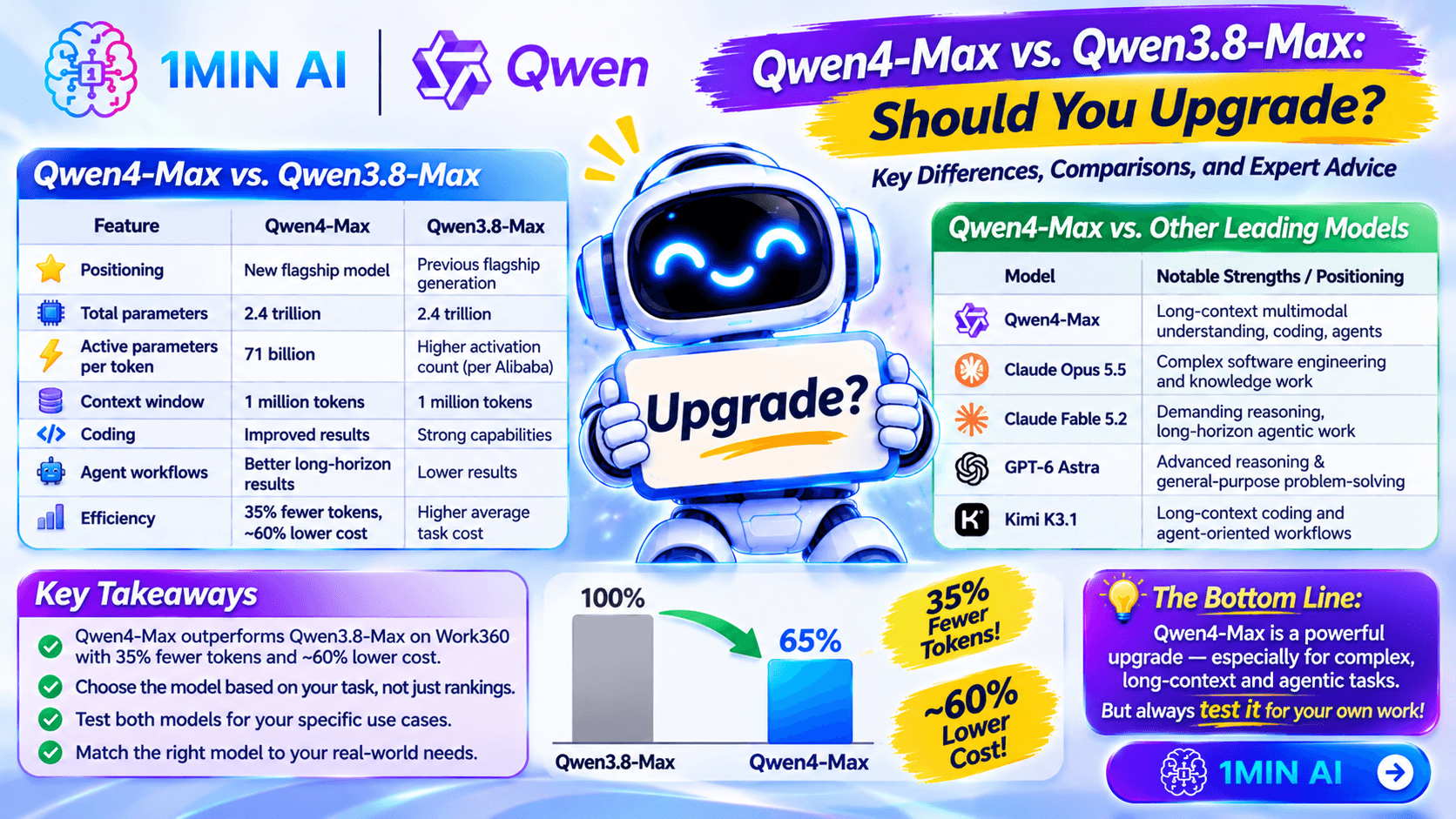
Qwen4-Max represents a new flagship generation, but whether it is the right choice depends on the work you need to complete.
| Comparison | Qwen4-Max | Qwen3.8-Max |
|---|---|---|
| Positioning | New flagship model | Previous flagship generation |
| Total parameters | 2.4 trillion | 2.4 trillion |
| Active parameters per token | 71 billion | Higher activation count, according to Alibaba |
| Context window | 1 million tokens | 1 million tokens |
| Coding | Improved reported benchmark results | Strong previous-generation coding capabilities |
| Agent workflows | Improved long-horizon results in launch comparisons | Lower results on selected shared benchmarks |
| Efficiency | Lower average task cost in Alibaba's Work360 evaluation | Higher average task cost in that comparison |
The most important differences are not simply model size or context length.
Alibaba reports that Qwen4-Max outperforms Qwen3.8-Max on its Work360 benchmark while using 35% fewer tokens at High effort reasoning mode and reducing average task costs by around 60%.
That makes Qwen4-Max particularly interesting for workloads that involve repeated reasoning, large inputs, and complex professional tasks.
However, teams should test both models on their own tasks before deciding whether an upgrade is worthwhile.
Qwen4-Max vs. Other Leading AI Models
Qwen4-Max enters a competitive market where leading models are optimized for different types of work.
A useful comparison should consider the task rather than simply asking which model has the highest overall score.
| Model | Notable strengths or positioning |
|---|---|
| Qwen4-Max | Long-context multimodal understanding, coding, and agentic workflows |
| Claude Opus 5.5 | Complex software engineering and knowledge work |
| Claude Fable 5.2 | Demanding reasoning and long-horizon agentic work |
| GPT-6 Astra | Advanced reasoning and general-purpose problem-solving |
| Kimi K3.1 | Long-context coding and agent-oriented workflows |
These are broad positioning descriptions, not a claim that one model consistently wins across every evaluation.
Alibaba's published comparison shows Qwen4-Max performing strongly on Agents' Last Exam and DeepSWE, while other models score higher on certain coding and professional-work benchmarks.
For example, Qwen4-Max's reported Terminal-Bench 4.0 score is below the scores of several models in Alibaba's comparison.
The practical lesson is simple: choose the model based on the task, not only its headline benchmark ranking.
Final Thoughts: Is Qwen4-Max Worth Trying?
Qwen4-Max is an important development in Alibaba's Qwen model family. Its combination of a one-million-token context window, multimodal understanding, a large MoE architecture, and agentic capabilities makes it an interesting model for developers, researchers, and businesses.
Its benchmark results show meaningful improvements over Qwen3.8-Max, particularly in long-horizon agent tasks and selected coding evaluations. Independent evaluations also suggest competitive performance in finance-related and coding tasks.
However, Qwen4-Max is not automatically the best model for every workload. Some competing models still perform better on specific coding and professional benchmarks, so real-world testing remains important.
If you are following the latest developments in the Qwen ecosystem, explore Qwen 4 Release Date and Models on 1minAI to learn more about the model family and its releases.
For more AI capabilities, visit 1minAI Features and try the 1minAI Agent.
- #Information
- #Commerce
Alternatives
Discover the best alternatives to 1minAI and compare features, pricing, and use cases.

1min.AI vs OpenRouter
1min.AI vs. OpenRouter: Compare the ready-to-use AI creation product against the technical API tool. Find out if you need a zero-code creative studio or a coding infrastructure hub.
 Ngoc Hong
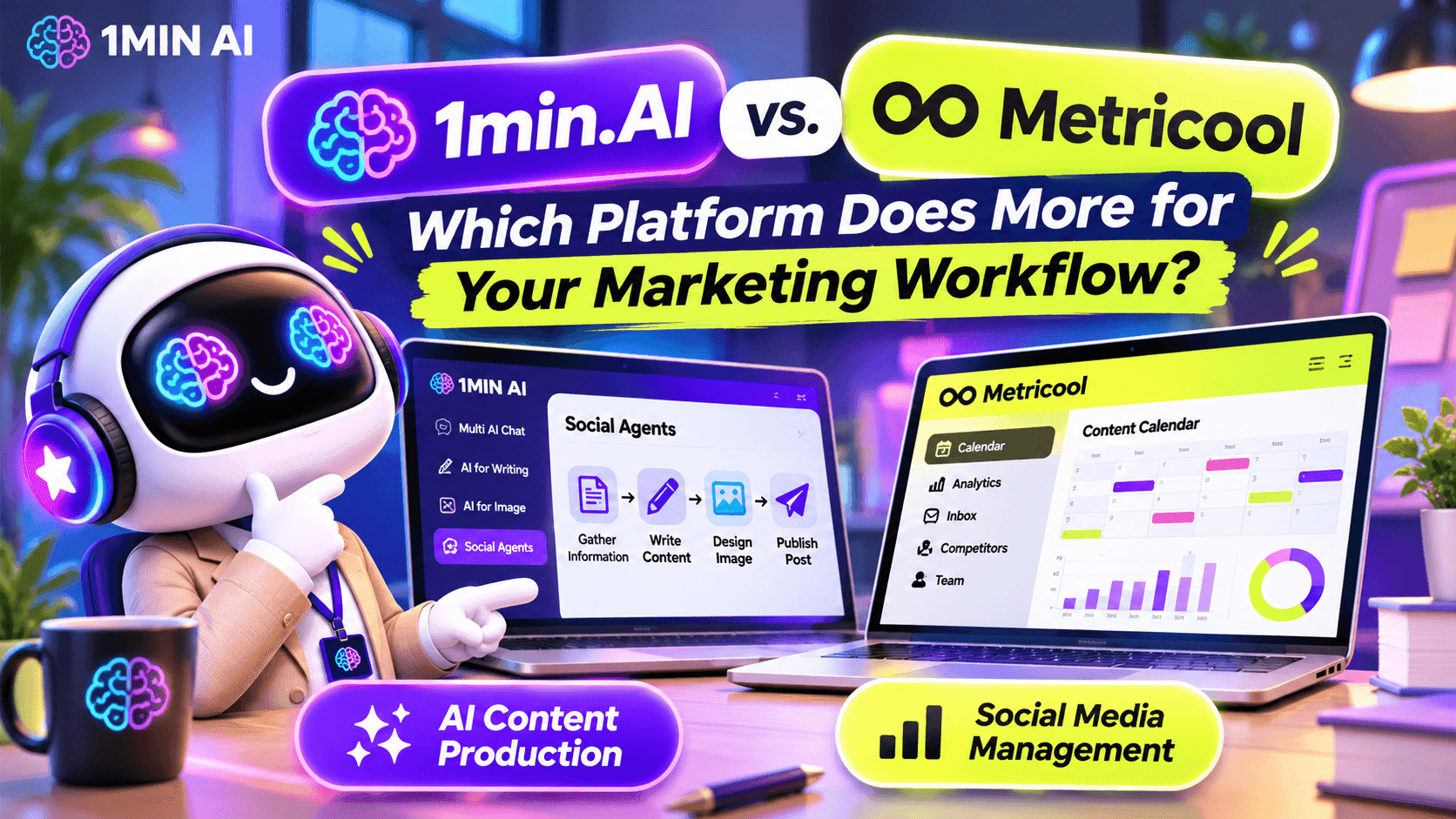
1min.AI vs. Metricool: Which Platform Does More for Your Marketing Workflow?
Compare 1min.AI vs. Metricool across content creation, visual production, scheduling, analytics, MCP, and pricing to find the right platform for your marketing workflow.
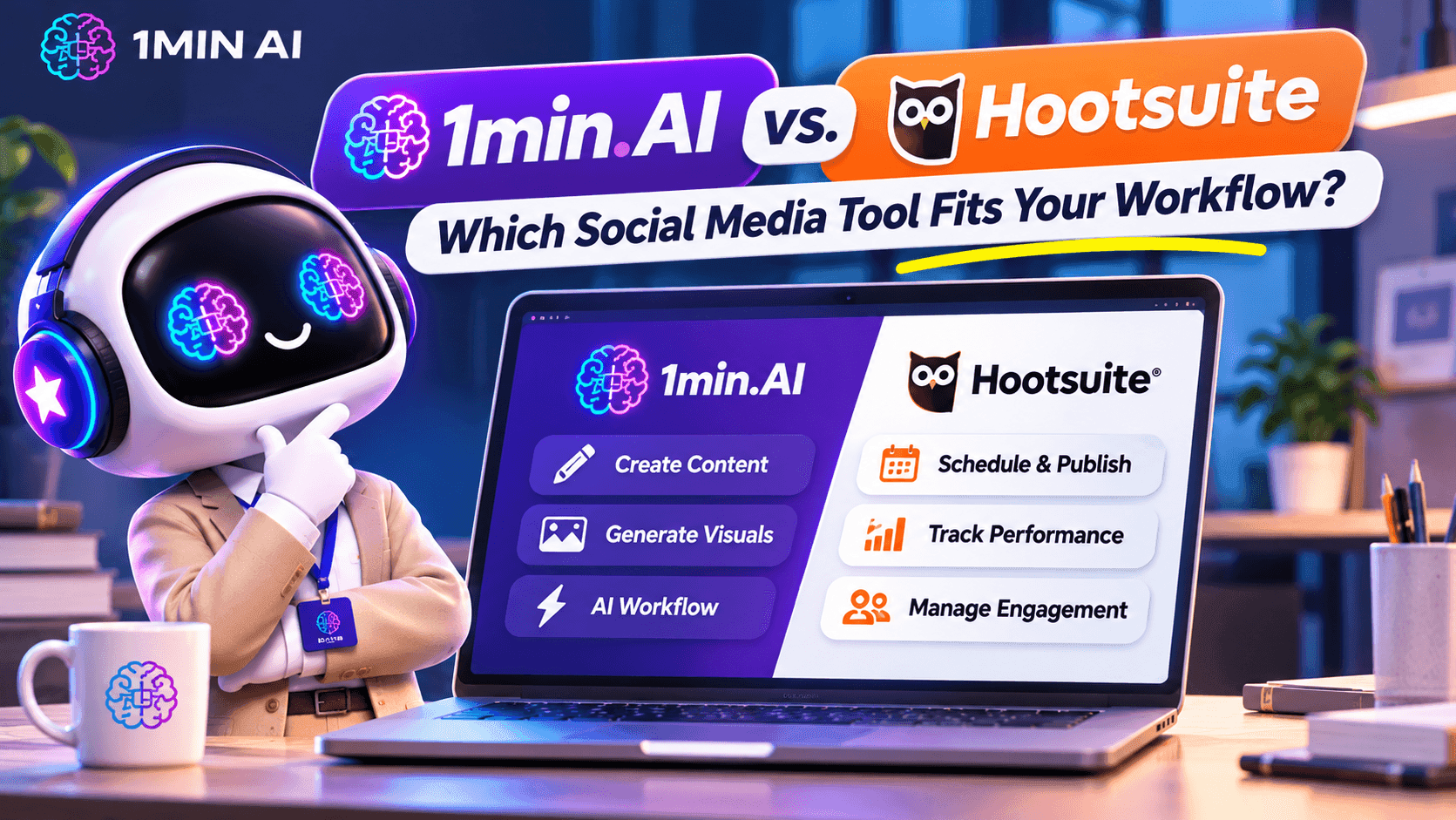
1min.AI vs. Hootsuite: Which Social Media Tool Fits Your Workflow?
Compare 1min.AI vs. Hootsuite to explore their AI content creation, social media publishing, analytics, pricing, and collaboration features. Find the right tool for your workflow.
AI Tools
Discover the best AI tools to boost productivity, creativity, and everyday work.
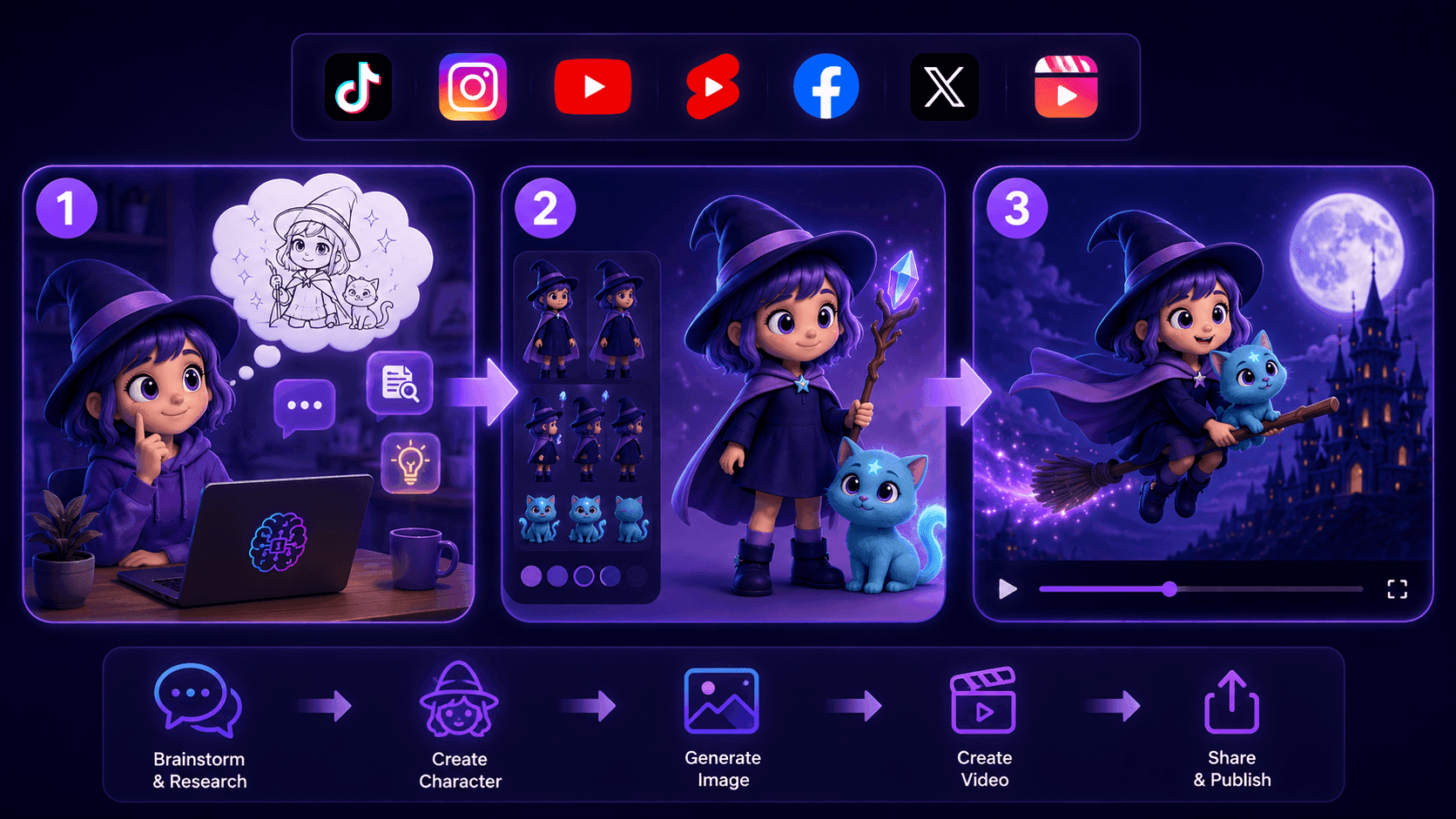
Create Consistent Cartoon Content in Just a Few Steps
Create engaging cartoon videos for TikTok and Reels with 1min.AI. Research ideas, create characters, and turn images into animated videos in 3 simple steps.
 Lien Anh Vu
One Product, 10 UGC Creatives: How AI Makes Content Testing Easier
Create more authentic UGC with an AI UGC video generator, test more creative angles and scale affiliate content without filming every version.
Lien Anh Vu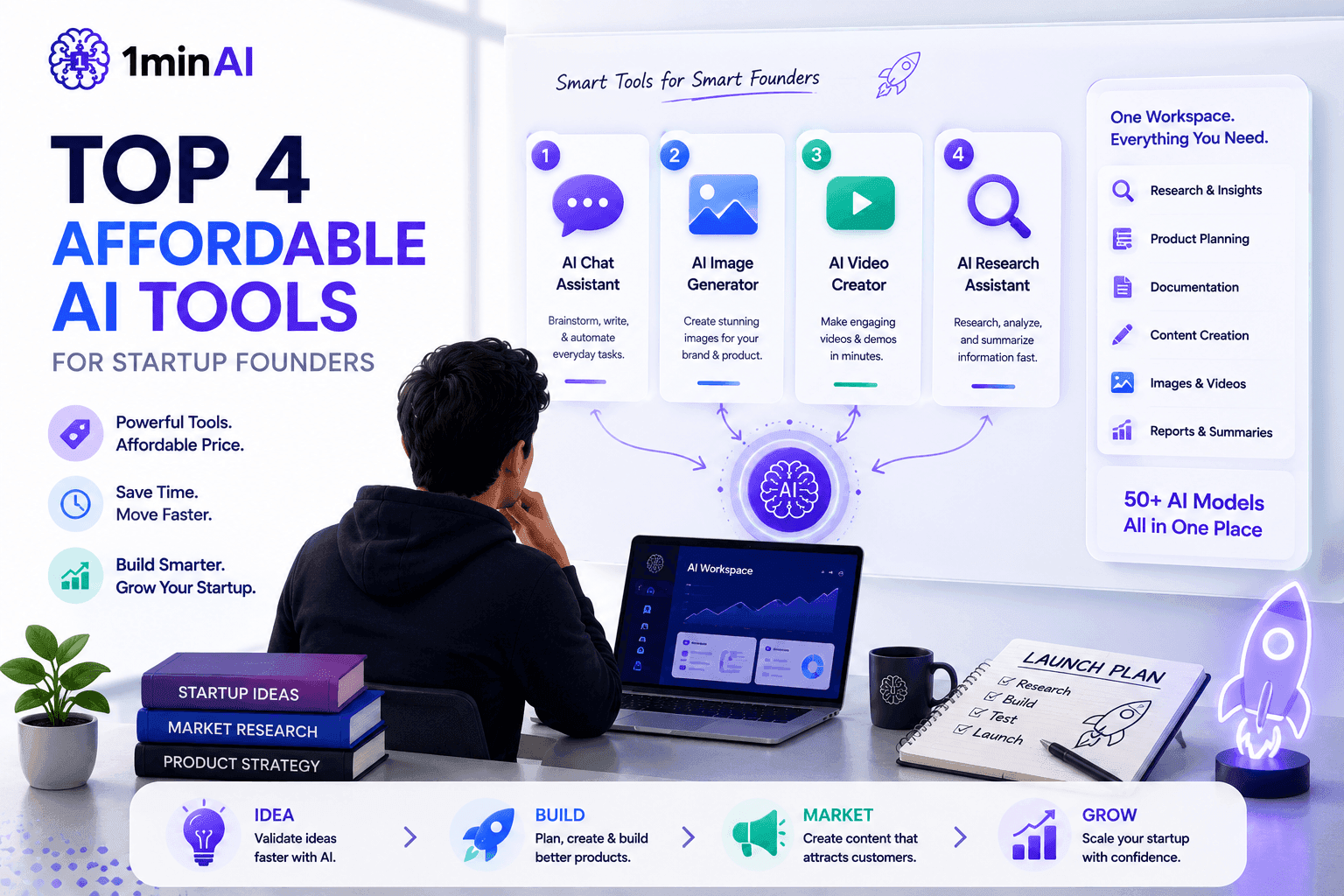
Top 4 Affordable AI Tools for Startup Founders
Discover the top 4 affordable AI tools for startup founders to validate ideas, build products, create content, and launch faster without overspending.
 Tram Ta
AI Features
Comprehensive AI features that streamline workflows, improve efficiency, and empower teams to achieve more.
Create Consistent Cartoon Content in Just a Few Steps
Create engaging cartoon videos for TikTok and Reels with 1min.AI. Research ideas, create characters, and turn images into animated videos in 3 simple steps.
Lien Anh VuOne Product, 10 UGC Creatives: How AI Makes Content Testing Easier
Create more authentic UGC with an AI UGC video generator, test more creative angles and scale affiliate content without filming every version.
Lien Anh Vu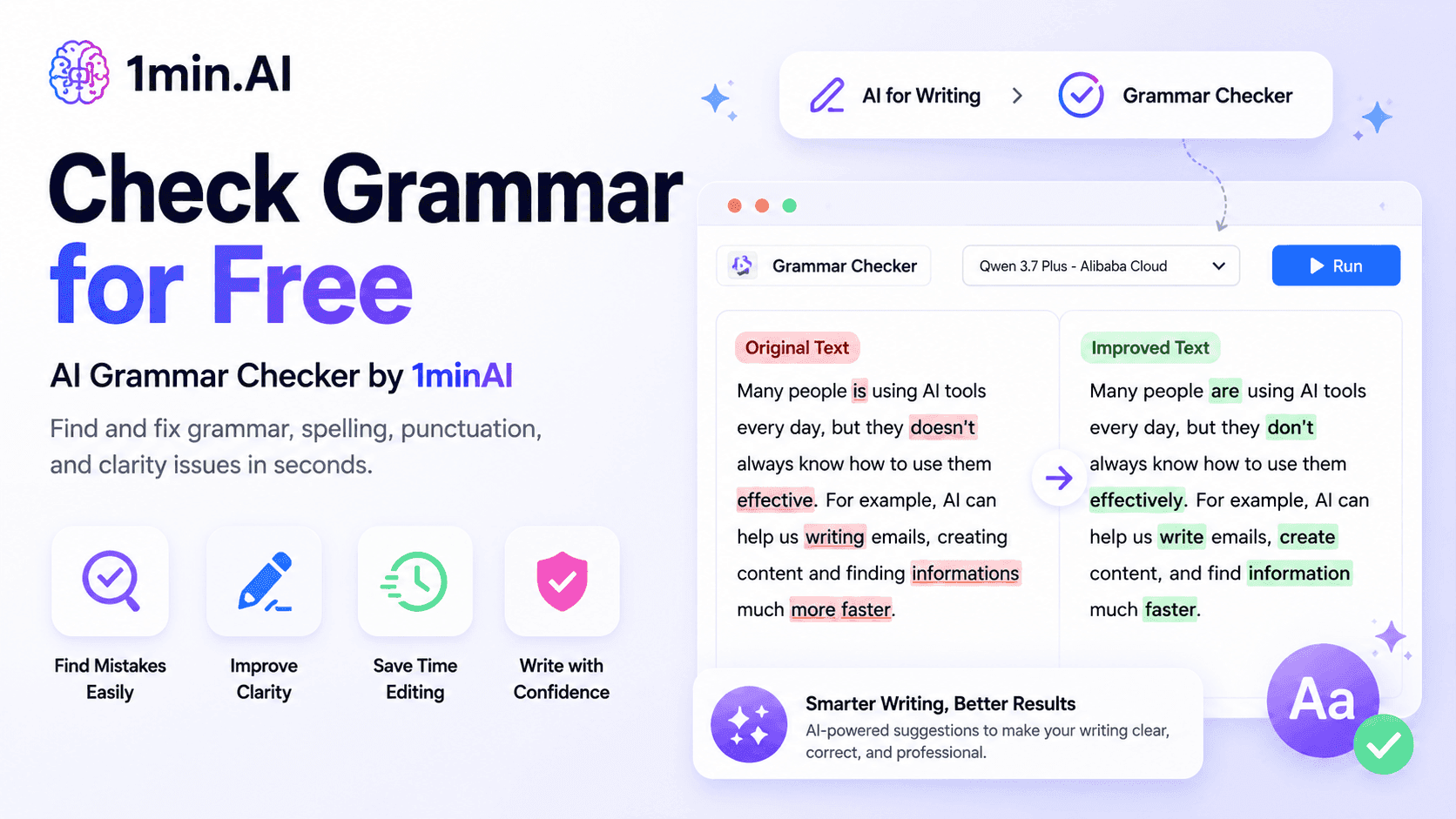
1minAI: Free AI Grammar Checker
Check grammar for free with 1minAI’s AI grammar checker. Find grammar, spelling, and writing mistakes, improve clarity, and polish your content in seconds.
Tram TaAI Use Cases
A curated collection of AI use cases for business, productivity, and industry-specific applications.
Create Consistent Cartoon Content in Just a Few Steps
Create engaging cartoon videos for TikTok and Reels with 1min.AI. Research ideas, create characters, and turn images into animated videos in 3 simple steps.
Lien Anh VuOne Product, 10 UGC Creatives: How AI Makes Content Testing Easier
Create more authentic UGC with an AI UGC video generator, test more creative angles and scale affiliate content without filming every version.
Lien Anh Vu
Best Time to Post on Instagram: A Practical Guide for Better Engagement
Discover the best time to post on Instagram, including the best days and times for different audiences, plus tips to find the ideal posting schedule for your account.
Tram TaAI Tutorials
Learn how to use AI with practical, step-by-step tutorials.

Black Friday AI Tool Deals in 2026
Discover what Black Friday AI tool deals 2026 has to offer. Find out how to secure the 1min.AI lifetime deal via AppSumo, Dealify, Stack Social, and verify on Trustpilot, Slashdot, and Software Advice.
 Hang Nguyen
Create Consistent Cartoon Content in Just a Few Steps
Create engaging cartoon videos for TikTok and Reels with 1min.AI. Research ideas, create characters, and turn images into animated videos in 3 simple steps.
Lien Anh Vu
[Seedance 2.5 New] Better AI Product Videos, Less Rework in 1min.AI
Use Seedance 2.5 image to video on 1min.AI to create more consistent AI product videos, reduce failed generations, save credits, and improve UGC workflows.
Lien Anh VuAI Guides
Learn AI faster with practical guides, real-world examples, and actionable best practices.

Safely Buy AI Tools Online: 2026 Black Friday Guide
Discover how to find and secure the best Black Friday AI deals online. Learn expert strategies to avoid scams, combat subscription fatigue, and verify software.
Hang NguyenCreate Consistent Cartoon Content in Just a Few Steps
Create engaging cartoon videos for TikTok and Reels with 1min.AI. Research ideas, create characters, and turn images into animated videos in 3 simple steps.
Lien Anh Vu[Seedance 2.5 New] Better AI Product Videos, Less Rework in 1min.AI
Use Seedance 2.5 image to video on 1min.AI to create more consistent AI product videos, reduce failed generations, save credits, and improve UGC workflows.
Lien Anh VuAI Solutions
Browse the best AI solutions for automation, coding, research, productivity, customer support, marketing, and business workflows.
Safely Buy AI Tools Online: 2026 Black Friday Guide
Discover how to find and secure the best Black Friday AI deals online. Learn expert strategies to avoid scams, combat subscription fatigue, and verify software.
Hang NguyenCreate Consistent Cartoon Content in Just a Few Steps
Create engaging cartoon videos for TikTok and Reels with 1min.AI. Research ideas, create characters, and turn images into animated videos in 3 simple steps.
Lien Anh VuOne Product, 10 UGC Creatives: How AI Makes Content Testing Easier
Create more authentic UGC with an AI UGC video generator, test more creative angles and scale affiliate content without filming every version.
Lien Anh VuAI Models
Explore the world's leading AI models in one place.
Create Consistent Cartoon Content in Just a Few Steps
Create engaging cartoon videos for TikTok and Reels with 1min.AI. Research ideas, create characters, and turn images into animated videos in 3 simple steps.
Lien Anh VuOne Product, 10 UGC Creatives: How AI Makes Content Testing Easier
Create more authentic UGC with an AI UGC video generator, test more creative angles and scale affiliate content without filming every version.
Lien Anh Vu[Seedance 2.5 New] Better AI Product Videos, Less Rework in 1min.AI
Use Seedance 2.5 image to video on 1min.AI to create more consistent AI product videos, reduce failed generations, save credits, and improve UGC workflows.
Lien Anh VuAI Comparisons
Compare AI tools, models, and platforms to find the best fit for your needs.
Kling AI Vs Veo 3: Which Model Wins?
Kling AI vs Veo 3: compare motion, native audio, pricing & free tiers to see which AI video generator wins for your project - try both on 1min.AI.
 Trang Tran
[Seedance 2.5 New] Better AI Product Videos, Less Rework in 1min.AI
Use Seedance 2.5 image to video on 1min.AI to create more consistent AI product videos, reduce failed generations, save credits, and improve UGC workflows.
Lien Anh Vu
DeepSeek V4 Pro vs Flash Comparison
Compare DeepSeek V4 Pro vs DeepSeek V4 Flash metrics. Optimize your agentic apps and improve AI fact checking on 1min.ai today.
Ngoc HongAI Integrations
Seamlessly integrate AI with the tools you already use to automate work and boost productivity.
POV: You Have 10+ Posts to Make Every Day
Learn how to build an AI content workflow that helps content creators produce 10+ social media posts a day faster with AI brainstorming, image generation, and content creation.
Lien Anh Vu
How to Use an AI Fashion Video Generator for Fashion Week 2026
Turn Fashion Week 2026 ideas into stunning fashion videos with AI. Learn how to brainstorm, create visuals, and transform images into videos with one simple workflow.
Lien Anh Vu
Stop Switching Between AI Apps: How AI Integration Transforms Employer Branding
Discover how AI integration helps HR teams streamline employer branding by combining AI writing, documents, images, video, and multiple AI models into one workspace.
Tram TaAI for Industries
Find the best AI tools and workflows for healthcare, finance, education, legal, manufacturing, retail, real estate, and more

No Photoshoot? Create AI Fashion Videos With Seedance 2.5
No photoshoot needed! Create stunning AI fashion videos with Seedance 2.5 on 1min.AI using outfit references, cinematic prompts, and surreal scenes.
Lien Anh Vu
Voice Cloning AI Free: How to Clone Any Voice Online in Minutes
Try voice cloning AI free with 1min.AI. Upload a 5-second clip, pick an ElevenLabs model, choose from 32 languages, and turn text to speech in your own voice.
Trang Tran
Text To Video AI Free Without Watermark Online
Create text to video AI free without watermark online with 1min.AI. Pick top models, turn prompts into HD clips, and download clean videos fast. Try it free.
Trang TranAI Agents
Discover and run AI agents to automate tasks across your work and daily life.
1minAI: Free AI Grammar Checker
Check grammar for free with 1minAI’s AI grammar checker. Find grammar, spelling, and writing mistakes, improve clarity, and polish your content in seconds.
Tram Ta
AI Agents for Facebook
Use an AI Agent for Facebook to create content, generate images, schedule posts, and publish from your documents and conversations.
Ngoc Hong
AI Agent vs AI Assistant: Which One Actually Saves Designers More Time?
Learn the difference between AI Agent vs AI Assistant and discover which solution helps designers automate repetitive work, reduce revisions, and save more time.
Lien Anh VuAI Workflows
Explore ready-to-use AI workflows for productivity, marketing, sales, support, and more.
Create Consistent Cartoon Content in Just a Few Steps
Create engaging cartoon videos for TikTok and Reels with 1min.AI. Research ideas, create characters, and turn images into animated videos in 3 simple steps.
Lien Anh VuOne Product, 10 UGC Creatives: How AI Makes Content Testing Easier
Create more authentic UGC with an AI UGC video generator, test more creative angles and scale affiliate content without filming every version.
Lien Anh VuPOV: You Have 10+ Posts to Make Every Day
Learn how to build an AI content workflow that helps content creators produce 10+ social media posts a day faster with AI brainstorming, image generation, and content creation.
Lien Anh VuNewsletter
Weekly AI Innovations with 1minAI
🔮 Weekly AI Innovations #146: Mistral 3.5, Qwen Image & Cohere A+ are ready on 1min.ai
Deploy Mistral Large 3, Qwen Image 3.0, and Cohere Command A+ on 1min.ai. Boost RAG accuracy and cut visual generation latency in one unified AI workspace.
Hang Nguyen
🔮 Weekly AI Innovations #145: X Content Agent & GPT 6.1 Terra on 1min.ai
Scale viral reach with the X Content Agent on 1min.ai. Discover an end-to-end 4-stage pipeline with zero token burn, plus the launch of GPT 6.1 Terra.
Hang Nguyen
🔮 Weekly AI Innovations #144: LinkedIn Content Agent: Complete B2B Publishing Pipeline
Scale B2B influence with the LinkedIn Content Agent on 1min.ai. Discover an end-to-end 4-stage pipeline with zero redundant token burn and 1-click publishing.
Hang Nguyen