AI Agents vs AI Workspaces: What Business Leaders Really Need

Tram Ta
August 14, 2026
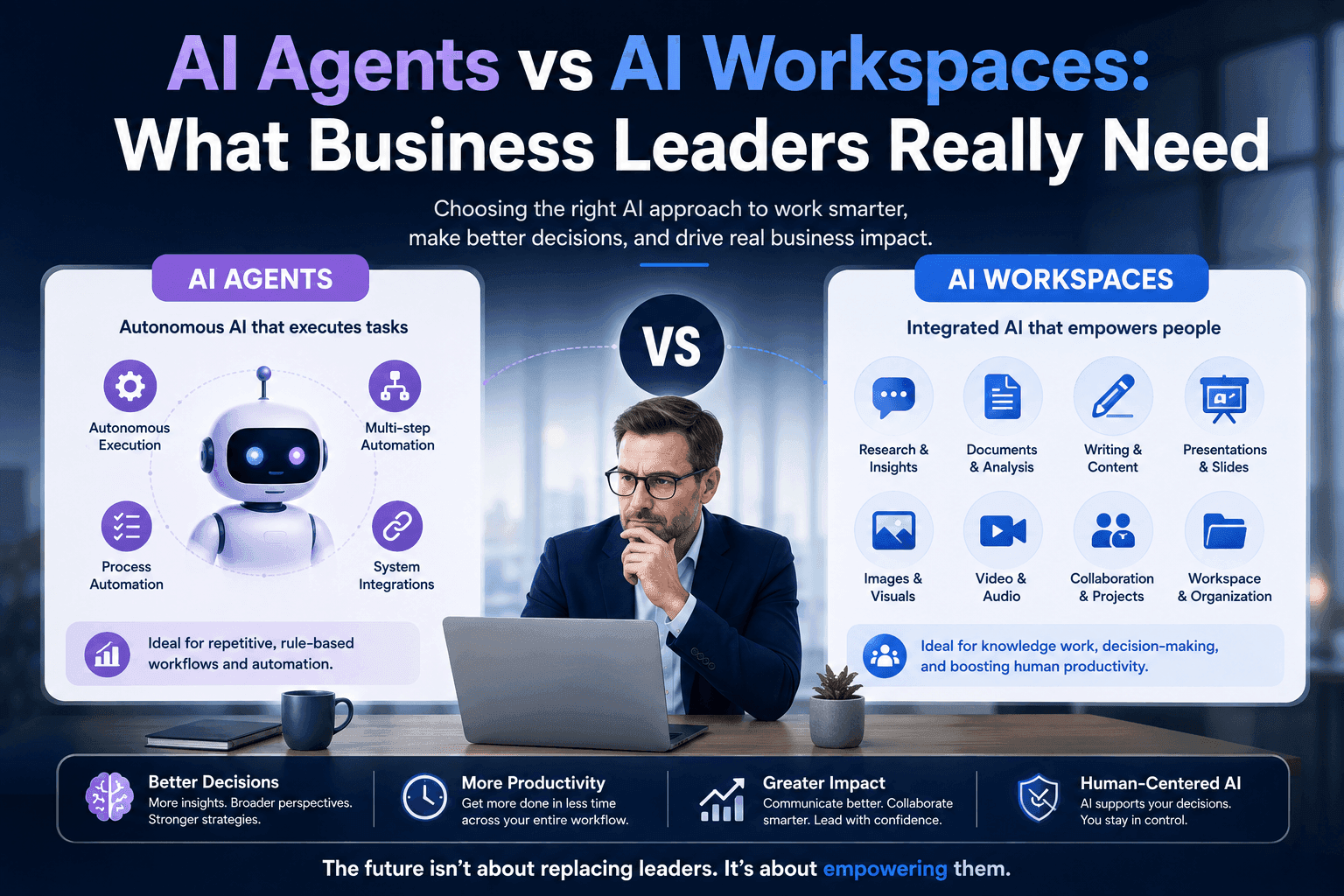
AI agents promise automation, but are they what your business needs today? Learn the difference between AI agents and AI workspaces—and why many executives choose integrated AI tools over AI hype.
AI agents are everywhere in today's technology headlines, promising to automate complex workflows and transform how businesses operate. But for many executives, the biggest challenge isn't finding autonomous AI—it's making everyday work faster, smarter, and more connected.
Before investing in AI agents, business leaders should understand an important distinction: AI agents are designed to execute tasks independently, while AI workspaces are built to enhance human decision-making by bringing research, communication, content creation, and collaboration into one workflow. In this guide, we'll explore the differences between the two approaches and explain why many organizations are choosing integrated AI workspaces like 1minAI to improve productivity today.
What Business Leaders Actually Need From AI
For business leaders, the value of AI isn't measured by how many tasks it can complete without human involvement.
It's measured by how much better and faster people can work with it.
Executives spend their days moving between research, meetings, reports, presentations, strategic planning, communication, and decision-making. A typical workflow might look simple from the outside:
Find information → Understand it → Make a decision → Communicate it → Turn it into action.
In practice, every step can involve multiple documents, tools, conversations, and sources.
That is where AI for business leaders becomes particularly valuable—not simply as an automation tool, but as a way to reduce the friction between information and action.
The Executive Workflow Is Built Around Decisions
Consider a business leader preparing for a new market opportunity.
They may need to:
- Research the market
- Compare competitors
- Analyze reports
- Review internal documents
- Identify opportunities
- Develop a strategy
- Prepare a presentation
- Explain the decision to their team
The work isn't one repetitive task that can simply be handed to an autonomous system.
It is a chain of interconnected activities that requires context, judgment, and iteration.
AI can accelerate much of the work surrounding the decision while leaving the decision itself with the person responsible for it.
The Goal Is Not More Automation—It's Better Leverage
This creates an important distinction.
The question isn't always:
“What can AI do without me?”
For business leaders, a more useful question may be:
“Where can AI help me accomplish more without adding more complexity?”
That difference matters when deciding between AI agents and AI workspaces.
Suggested infographic:
AI for Business Leaders: From Information to Action
Research → Understand → Analyze → Create → Communicate → Decide → Act
AI Agents vs. AI Workspaces: What's the Difference?
AI agents and AI workspaces can both increase productivity, but they are designed around different types of work.
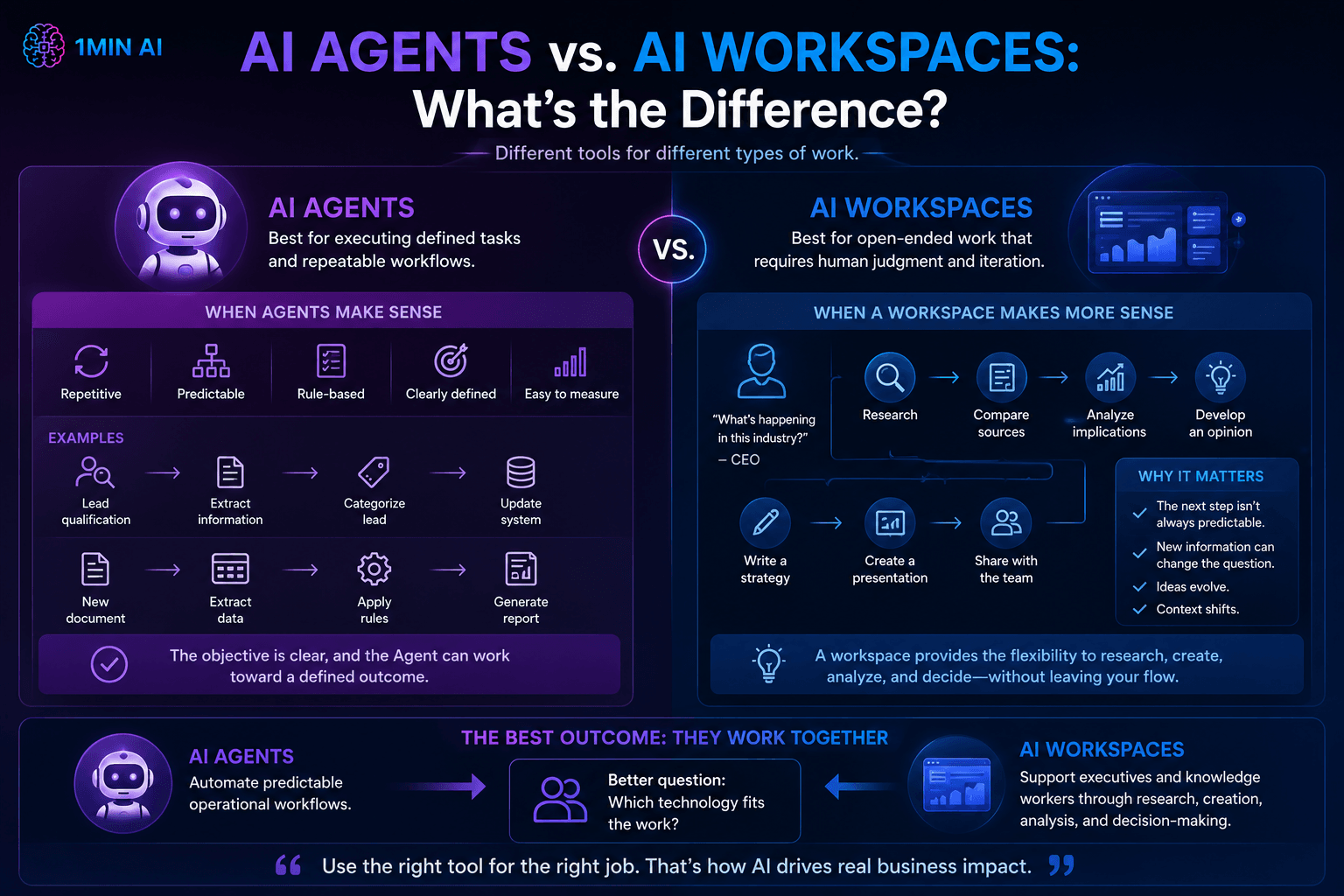
An AI agent is most useful when you can define a task or workflow that the system can execute with relatively little intervention.
An AI workspace is more useful when a person needs to work with AI throughout a broader knowledge workflow—researching, analyzing, creating, reviewing, and deciding.
When AI Agents Make Sense
Agents are particularly useful for workflows that are:
- Repetitive
- Predictable
- Rule-based
- Clearly defined
- Easy to measure
For example:
Lead qualification → Extract information → Categorize lead → Update system
Or:
New document → Extract data → Apply rules → Generate report
The objective is clear, and the Agent can work toward a defined outcome.
When an AI Workspace Makes More Sense
Business leaders often work differently.
A CEO might begin by asking:
“What's happening in this industry?”
That question could lead to:
Research → Compare sources → Analyze implications → Develop an opinion → Write a strategy → Create a presentation → Share with the team
The next step isn't always predictable.
New information can change the question.
A report may lead to a new idea. A new idea may require more research. A research finding may change the presentation.
This is where an AI workspace can provide a more flexible environment.
AI Agents and AI Workspaces Don't Have to Compete
The choice doesn't have to be one or the other.
A business can use:
AI Agents
→ Automate predictable operational workflows
AI Workspaces
→ Support executives and knowledge workers through research, creation, analysis, and decision-making
The better question is not which technology is more advanced, but which technology fits the work.
Why an Integrated AI Workspace Can Deliver Faster Business Value
One of the biggest problems with adopting AI isn't a lack of tools.
It's having too many of them.
One application for research.
Another for writing.
Another for images.
Another for video.
Another for document analysis.
Another for presentations.
The result can be an AI workflow that creates more context switching instead of less.
Less Context Switching
An integrated workspace can bring multiple capabilities into the same environment.
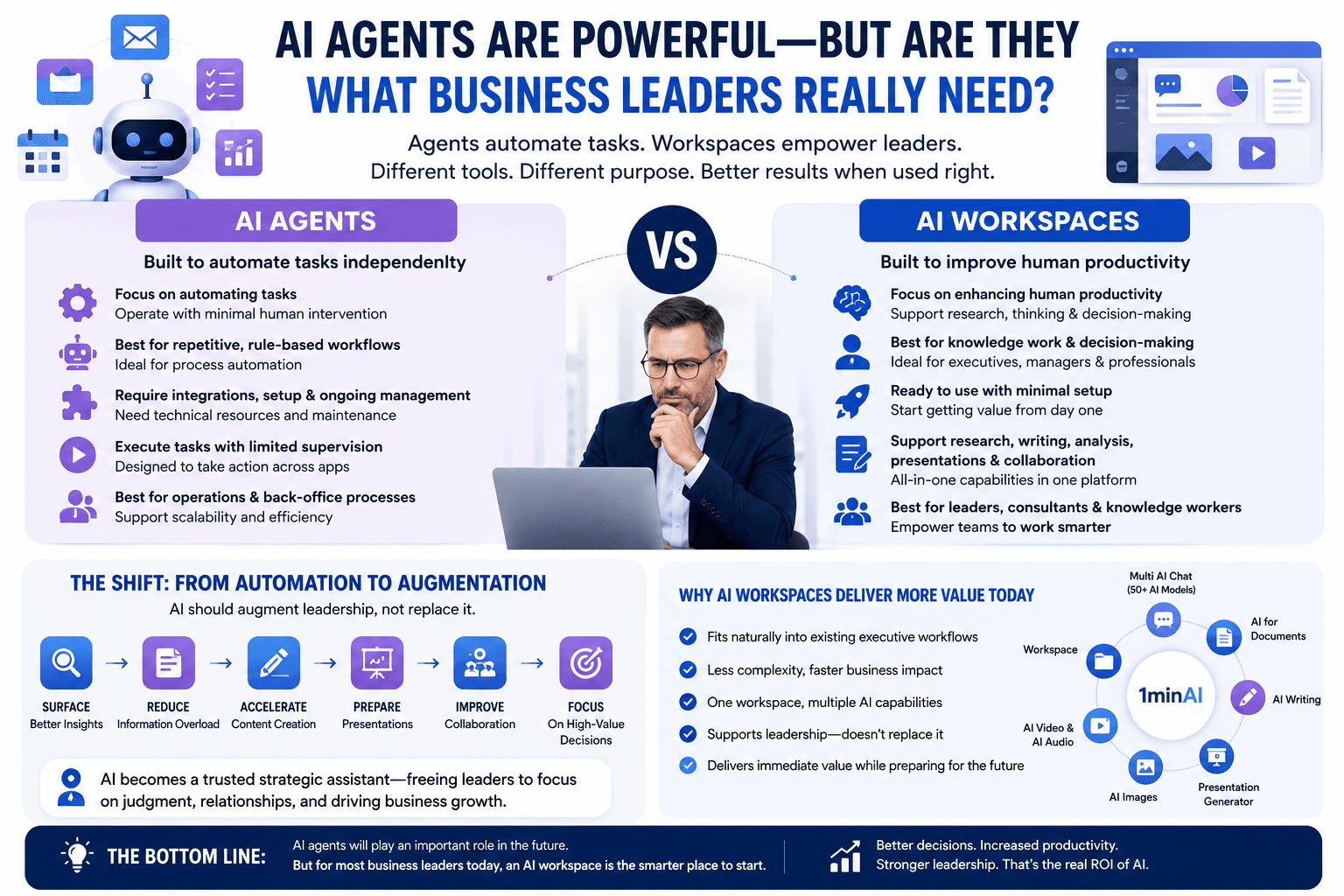
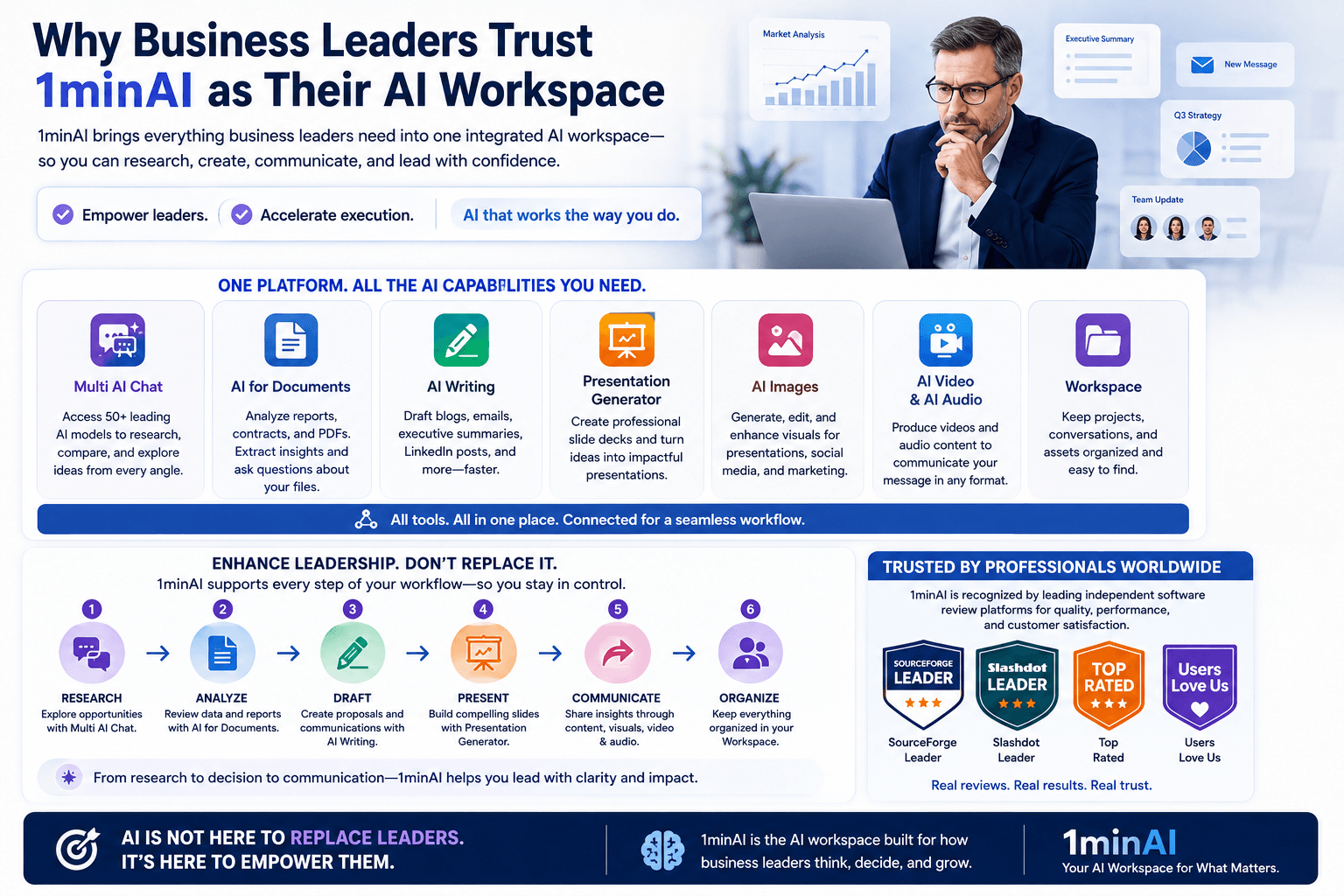
1minAI currently groups AI capabilities across areas including Chat, Writing, Images, Documents, Audio, and Video.
For a business leader, this means a workflow can move more naturally from:
Research → Analyze → Write → Present → Communicate
rather than requiring a new application for every stage.
More Capabilities Without More Complexity
Different business tasks require different types of AI.
A leader may need to:
Research a report
→ AI Chat / document analysis
Write an executive summary
→ AI Writing
Create a presentation
→ Presentation workflow
Develop supporting visuals
→ AI Image
Create a video explanation
→ AI Video
1minAI's current product offering includes these broader text, image, document, audio, and video capabilities.
The value comes from having these capabilities available as part of a broader AI workflow rather than treating every task as an isolated experiment.
Keep the Executive in Control
This is perhaps the most important principle.
AI handles more of the work around the decision.The business leader makes the decision.
That keeps AI useful without forcing executives to hand over judgment that depends on business context.
Why 1minAI Is Built for AI for Business Leaders
For leaders exploring AI for business, the challenge is often not finding another AI model.
It's finding a practical way to use multiple AI capabilities without constantly switching between tools.
1minAI positions itself as an all-in-one AI application, with capabilities spanning Chat, Writing, Documents, Images, Audio, and Video. Its current product pages also highlight use cases for small businesses, marketers, content creators, and other professional roles.
Research With Multiple AI Capabilities
Business leaders can use AI Chat and document-related capabilities to work through information before turning it into an output.
For example:
Upload a business document → Ask questions → Extract key insights → Compare information → Develop conclusions
The goal isn't simply to generate a summary.
It's to make the information easier to work with.
Turn Research Into Business Content
Once an insight has been developed, it can move into other formats.
For example:
Industry research
→ Executive summary
→ Presentation
→ LinkedIn post
→ Visual
→ Video explanation
This is where an integrated AI environment becomes particularly useful: one business insight can support multiple communication needs.
1minAI's current feature set includes AI writing, keyword research, image generation/editing, text-to-speech, transcription, and text/image-to-video capabilities.
One Workspace for the Broader Workflow
The bigger idea is not that business leaders need to automate every part of their work.
They need to reduce the friction between thinking and execution.
Research shouldn't have to live in one tool, the draft in another, the presentation in a third, and the visual assets somewhere else.
An integrated AI workflow can make it easier to move from:
Idea → Information → Insight → Output → Communication
AI Agent or AI Workspace? A Simple Decision Framework
If you're evaluating AI for your organization, start with the nature of the work.
Choose an AI Agent If:
- The task happens repeatedly
- The process is predictable
- Rules are clearly defined
- Human judgment is limited
- Success can be measured objectively
Example:
Automatically classify incoming leads based on predefined criteria.
Choose an AI Workspace If:
- The work requires judgment
- Research and creation happen together
- Context changes frequently
- Multiple outputs are needed
- A human needs to review and decide
Example:
Research a new market, analyze competitors, develop a strategy, and prepare an executive presentation.
Use Both Where They Make Sense
The most practical AI strategy may combine both.
AI Agents handle predictable operational work.
AI Workspaces support executives and knowledge workers.
That creates a more balanced model:
Automate what is repetitive.Augment what requires judgment.
Conclusion: The Best AI for Business Leaders Fits the Work
The future of AI for business leaders isn't necessarily about finding the most autonomous system.
It's about finding the right level of AI involvement for each type of work.
AI agents can automate clearly defined workflows.
AI workspaces can help leaders research, analyze, create, communicate, and make better-informed decisions.
For business leaders, the most useful question may therefore not be:
“What can we automate?”
but:
“Where can AI help our people think, create, and execute better?”
That's the role an integrated platform like 1minAI can play.
By bringing together AI capabilities for research, writing, documents, images, audio, and video, 1minAI gives professionals a broader environment for turning information into useful business outputs
Stop juggling disconnected AI tools. Start building a smarter leadership workflow with 1minAI
👉 Official Website: https://1min.ai/
👉 Try 1minAI agent now: https://app.1min.ai/ai-agent-demo
Alternatives
Discover the best alternatives to 1minAI and compare features, pricing, and use cases.

1min.AI vs OpenRouter
1min.AI vs. OpenRouter: Compare the ready-to-use AI creation product against the technical API tool. Find out if you need a zero-code creative studio or a coding infrastructure hub.
 Ngoc Hong
1min.AI vs Lovart
Looking for a Lovart alternative? Compare creative workflows, pricing considerations, and practical prompts to see whether 1min.AI fits your team.
Ngoc Hong
1min.AI vs Jarvis AI
Compare 1min.AI vs Jarvis AI to discover which AI platform is better for writing, research, automation, and content creation. Find the best AI assistant for your workflow.
Ngoc HongAI Tools
Discover the best AI tools to boost productivity, creativity, and everyday work.
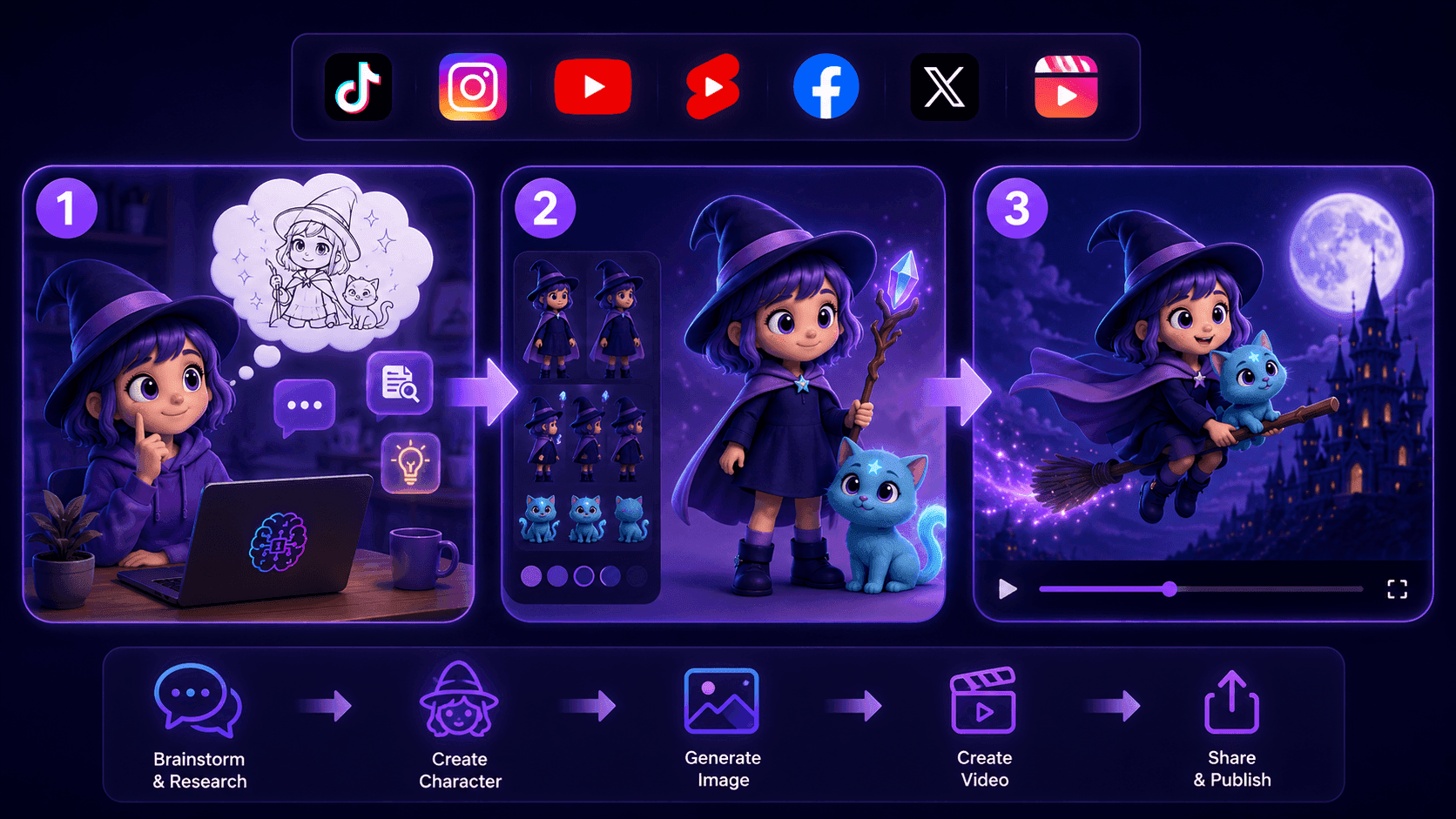
Create Consistent Cartoon Content in Just a Few Steps
Create engaging cartoon videos for TikTok and Reels with 1min.AI. Research ideas, create characters, and turn images into animated videos in 3 simple steps.
 Lien Anh Vu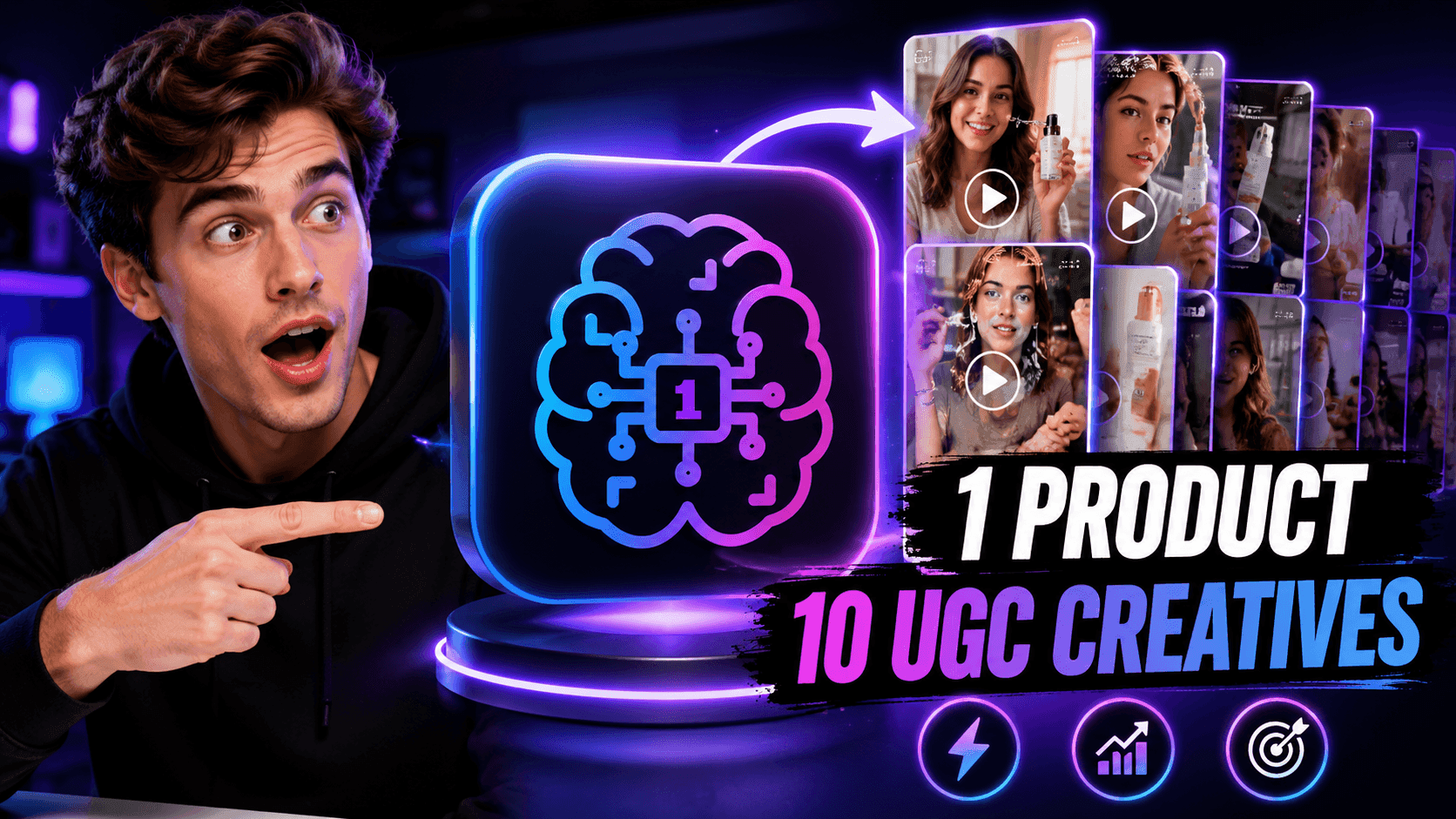
One Product, 10 UGC Creatives: How AI Makes Content Testing Easier
Create more authentic UGC with an AI UGC video generator, test more creative angles and scale affiliate content without filming every version.
Lien Anh Vu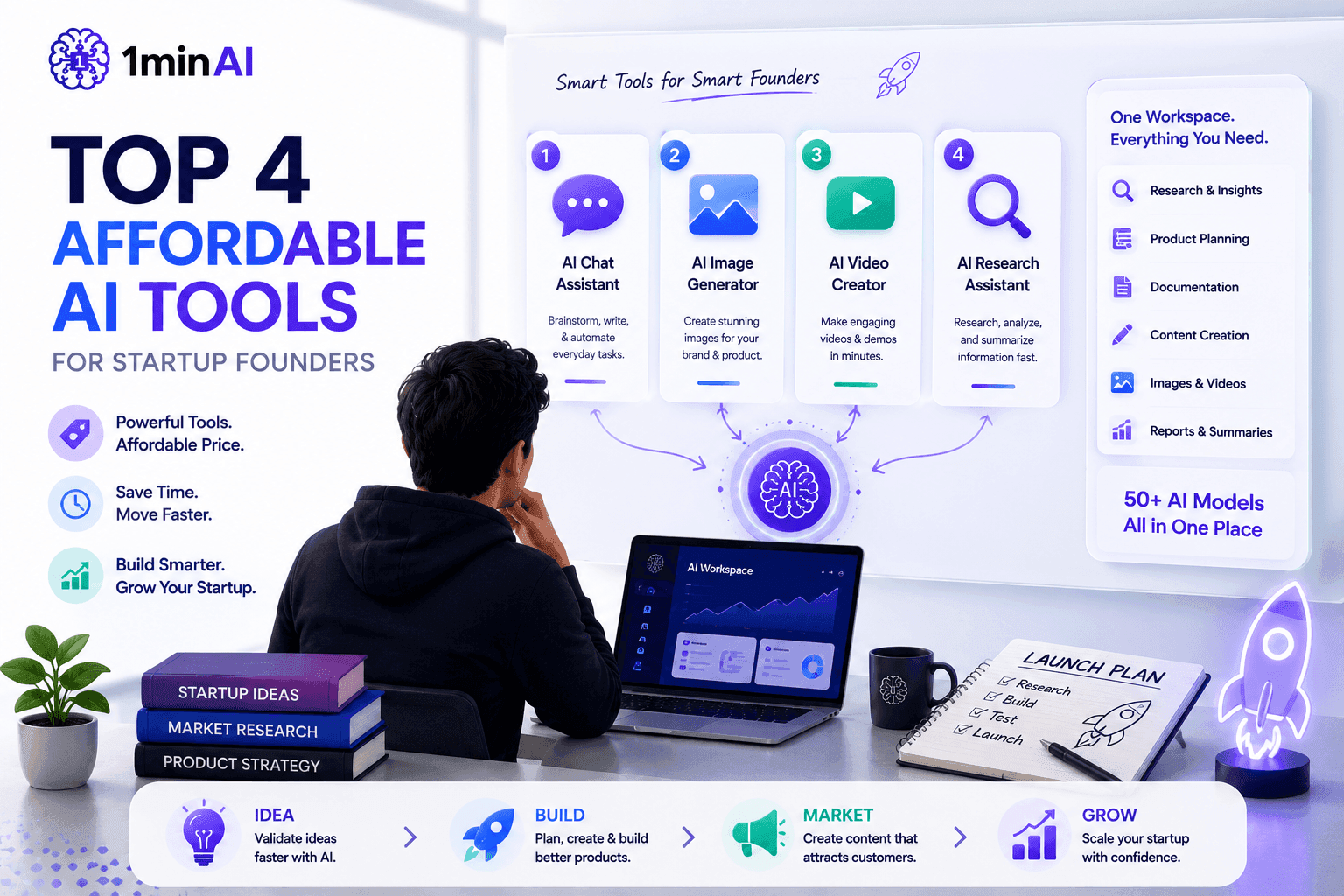
Top 4 Affordable AI Tools for Startup Founders
Discover the top 4 affordable AI tools for startup founders to validate ideas, build products, create content, and launch faster without overspending.
 Tram Ta
AI Features
Comprehensive AI features that streamline workflows, improve efficiency, and empower teams to achieve more.
Create Consistent Cartoon Content in Just a Few Steps
Create engaging cartoon videos for TikTok and Reels with 1min.AI. Research ideas, create characters, and turn images into animated videos in 3 simple steps.
Lien Anh VuOne Product, 10 UGC Creatives: How AI Makes Content Testing Easier
Create more authentic UGC with an AI UGC video generator, test more creative angles and scale affiliate content without filming every version.
Lien Anh Vu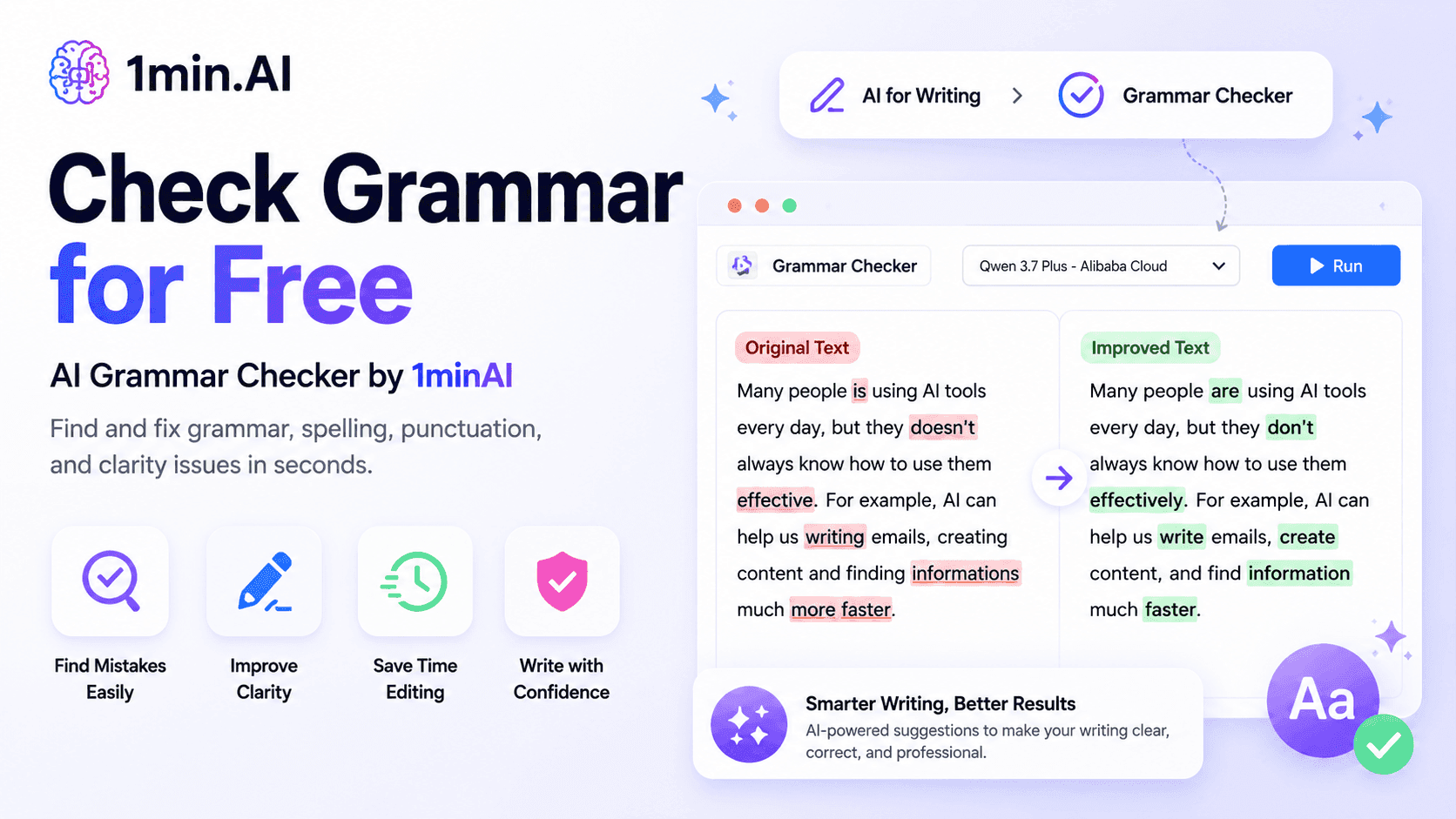
1minAI: Free AI Grammar Checker
Check grammar for free with 1minAI’s AI grammar checker. Find grammar, spelling, and writing mistakes, improve clarity, and polish your content in seconds.
Tram TaAI Use Cases
A curated collection of AI use cases for business, productivity, and industry-specific applications.
Create Consistent Cartoon Content in Just a Few Steps
Create engaging cartoon videos for TikTok and Reels with 1min.AI. Research ideas, create characters, and turn images into animated videos in 3 simple steps.
Lien Anh VuOne Product, 10 UGC Creatives: How AI Makes Content Testing Easier
Create more authentic UGC with an AI UGC video generator, test more creative angles and scale affiliate content without filming every version.
Lien Anh Vu
Best Time to Post on Instagram: A Practical Guide for Better Engagement
Discover the best time to post on Instagram, including the best days and times for different audiences, plus tips to find the ideal posting schedule for your account.
Tram TaAI Tutorials
Learn how to use AI with practical, step-by-step tutorials.
Black Friday AI Tool Deals in 2026
Discover what Black Friday AI tool deals 2026 has to offer. Find out how to secure the 1min.AI lifetime deal via AppSumo, Dealify, Stack Social, and verify on Trustpilot, Slashdot, and Software Advice.
 Hang Nguyen
Create Consistent Cartoon Content in Just a Few Steps
Create engaging cartoon videos for TikTok and Reels with 1min.AI. Research ideas, create characters, and turn images into animated videos in 3 simple steps.
Lien Anh Vu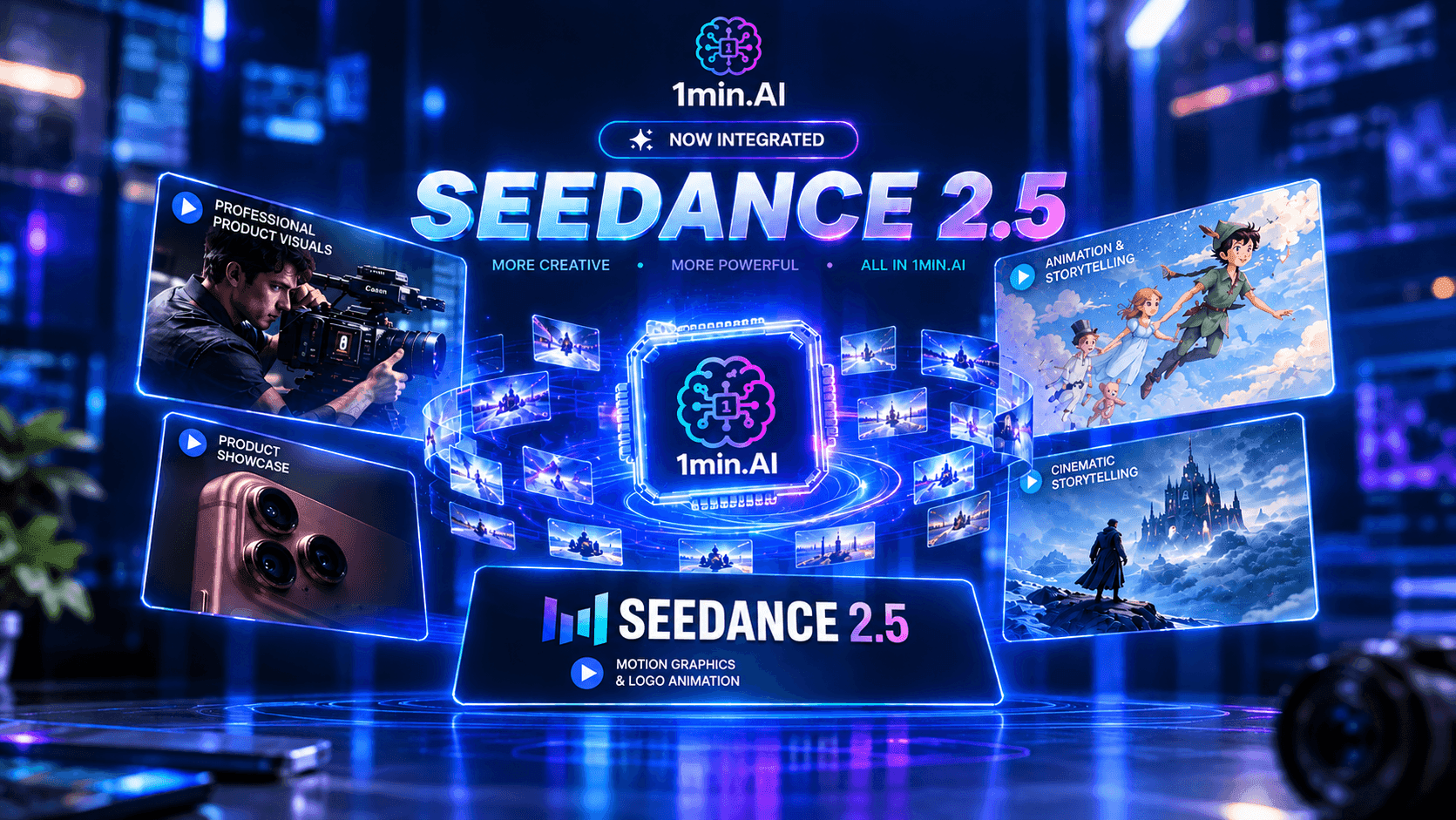
[Seedance 2.5 New] Better AI Product Videos, Less Rework in 1min.AI
Use Seedance 2.5 image to video on 1min.AI to create more consistent AI product videos, reduce failed generations, save credits, and improve UGC workflows.
Lien Anh VuAI Guides
Learn AI faster with practical guides, real-world examples, and actionable best practices.

Safely Buy AI Tools Online: 2026 Black Friday Guide
Discover how to find and secure the best Black Friday AI deals online. Learn expert strategies to avoid scams, combat subscription fatigue, and verify software.
Hang NguyenCreate Consistent Cartoon Content in Just a Few Steps
Create engaging cartoon videos for TikTok and Reels with 1min.AI. Research ideas, create characters, and turn images into animated videos in 3 simple steps.
Lien Anh Vu[Seedance 2.5 New] Better AI Product Videos, Less Rework in 1min.AI
Use Seedance 2.5 image to video on 1min.AI to create more consistent AI product videos, reduce failed generations, save credits, and improve UGC workflows.
Lien Anh VuAI Solutions
Browse the best AI solutions for automation, coding, research, productivity, customer support, marketing, and business workflows.
Safely Buy AI Tools Online: 2026 Black Friday Guide
Discover how to find and secure the best Black Friday AI deals online. Learn expert strategies to avoid scams, combat subscription fatigue, and verify software.
Hang NguyenCreate Consistent Cartoon Content in Just a Few Steps
Create engaging cartoon videos for TikTok and Reels with 1min.AI. Research ideas, create characters, and turn images into animated videos in 3 simple steps.
Lien Anh VuOne Product, 10 UGC Creatives: How AI Makes Content Testing Easier
Create more authentic UGC with an AI UGC video generator, test more creative angles and scale affiliate content without filming every version.
Lien Anh VuAI Models
Explore the world's leading AI models in one place.
Create Consistent Cartoon Content in Just a Few Steps
Create engaging cartoon videos for TikTok and Reels with 1min.AI. Research ideas, create characters, and turn images into animated videos in 3 simple steps.
Lien Anh VuOne Product, 10 UGC Creatives: How AI Makes Content Testing Easier
Create more authentic UGC with an AI UGC video generator, test more creative angles and scale affiliate content without filming every version.
Lien Anh Vu[Seedance 2.5 New] Better AI Product Videos, Less Rework in 1min.AI
Use Seedance 2.5 image to video on 1min.AI to create more consistent AI product videos, reduce failed generations, save credits, and improve UGC workflows.
Lien Anh VuAI Comparisons
Compare AI tools, models, and platforms to find the best fit for your needs.
Kling AI Vs Veo 3: Which Model Wins?
Kling AI vs Veo 3: compare motion, native audio, pricing & free tiers to see which AI video generator wins for your project - try both on 1min.AI.
 Trang Tran
[Seedance 2.5 New] Better AI Product Videos, Less Rework in 1min.AI
Use Seedance 2.5 image to video on 1min.AI to create more consistent AI product videos, reduce failed generations, save credits, and improve UGC workflows.
Lien Anh Vu
DeepSeek V4 Pro vs Flash Comparison
Compare DeepSeek V4 Pro vs DeepSeek V4 Flash metrics. Optimize your agentic apps and improve AI fact checking on 1min.ai today.
Ngoc HongAI Integrations
Seamlessly integrate AI with the tools you already use to automate work and boost productivity.
POV: You Have 10+ Posts to Make Every Day
Learn how to build an AI content workflow that helps content creators produce 10+ social media posts a day faster with AI brainstorming, image generation, and content creation.
Lien Anh Vu
How to Use an AI Fashion Video Generator for Fashion Week 2026
Turn Fashion Week 2026 ideas into stunning fashion videos with AI. Learn how to brainstorm, create visuals, and transform images into videos with one simple workflow.
Lien Anh Vu
Stop Switching Between AI Apps: How AI Integration Transforms Employer Branding
Discover how AI integration helps HR teams streamline employer branding by combining AI writing, documents, images, video, and multiple AI models into one workspace.
Tram TaAI for Industries
Find the best AI tools and workflows for healthcare, finance, education, legal, manufacturing, retail, real estate, and more
Free AI Product Description Generator
Write product descriptions that sell in minutes. Use this free AI product description generator to turn details or a photo into on-brand copy. Try 1min.AI.
Trang Tran
Best Business Productivity Tools for Startups to Maximize Profits | 1minAI
Discover the best business productivity tools for startups to save time, streamline workflows, reduce repetitive tasks, and support profitable growth with AI.
Tram Ta
Best AI Tool for Content Marketing |1minAI
Looking for the best AI tool for content marketing? See how 1minAI helps marketers research, write, repurpose, create visuals, and scale content from one AI workspace.
Tram TaAI Agents
Discover and run AI agents to automate tasks across your work and daily life.
1minAI: Free AI Grammar Checker
Check grammar for free with 1minAI’s AI grammar checker. Find grammar, spelling, and writing mistakes, improve clarity, and polish your content in seconds.
Tram Ta
AI Agents for Facebook
Use an AI Agent for Facebook to create content, generate images, schedule posts, and publish from your documents and conversations.
Ngoc Hong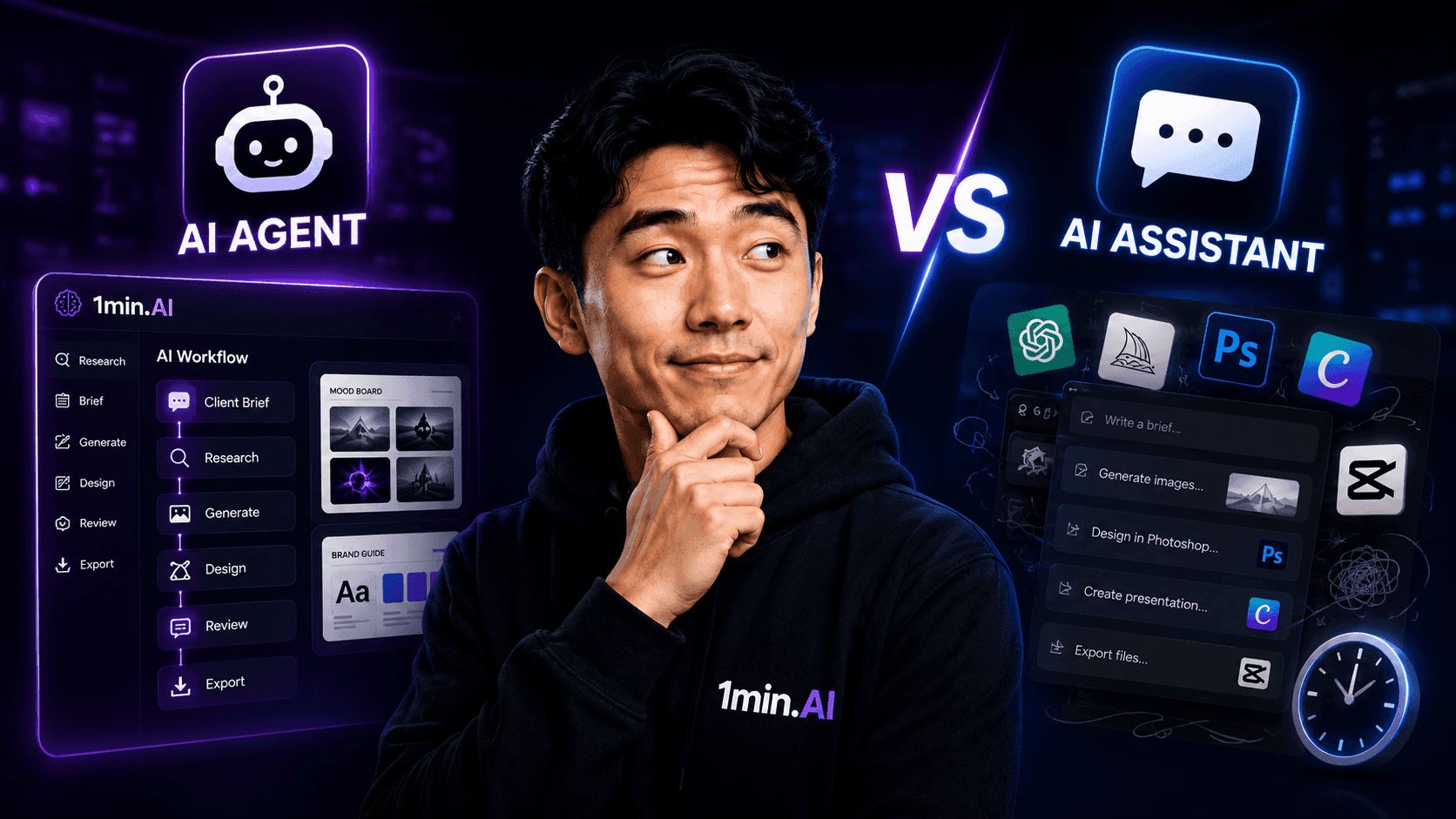
AI Agent vs AI Assistant: Which One Actually Saves Designers More Time?
Learn the difference between AI Agent vs AI Assistant and discover which solution helps designers automate repetitive work, reduce revisions, and save more time.
Lien Anh VuAI Workflows
Explore ready-to-use AI workflows for productivity, marketing, sales, support, and more.
Create Consistent Cartoon Content in Just a Few Steps
Create engaging cartoon videos for TikTok and Reels with 1min.AI. Research ideas, create characters, and turn images into animated videos in 3 simple steps.
Lien Anh VuOne Product, 10 UGC Creatives: How AI Makes Content Testing Easier
Create more authentic UGC with an AI UGC video generator, test more creative angles and scale affiliate content without filming every version.
Lien Anh VuPOV: You Have 10+ Posts to Make Every Day
Learn how to build an AI content workflow that helps content creators produce 10+ social media posts a day faster with AI brainstorming, image generation, and content creation.
Lien Anh VuNewsletter
Weekly AI Innovations with 1minAI
🔮 Weekly AI Innovations #142: Grok 4.7, Opus 5.5 & Sonnet 5.5 on 1min.ai
Access Grok 4.7, Claude Opus 5.5, and Sonnet 5.5 on 1min.ai. Cut subscription costs by up to 70% and process millions tokens in a single unified workspace.
Hang Nguyen
🔮 Weekly AI Innovations #141: Seedance 2.5 & Stable Audio 3: Next-Gen AI
Explore Seedance 2.0, 2.5, and StabilityAI's Stable Audio 3 on 1min.ai. Generate studio-grade audio and synchronized motion with next-gen generative AI.
Hang Nguyen
🔮 Weekly AI Innovations #140: Deepseek 4.1 Flash & Gemini Upgrades
Explore Deepseek 4.1 Flash and new Gemini models on 1min.ai. Plus, check our update on your Billing - Usage page for better clarity.
Hang Nguyen