
B2B Account Research: 7 Steps Before a Sales Call

Ngoc Hong
September 16, 2026
Learn 7 B2B account research steps to understand prospects faster, ask better questions, and prepare for more effective sales calls.
B2B account research helps sales reps understand a prospect before entering a sales conversation. The goal is not to collect every available fact, but to identify the information that can change your questions, priorities, and next steps.
A strong research process covers the company, recent business signals, stakeholders, challenges, buying context, and relevant questions. This guide breaks the process into seven practical steps, with an AI-assisted workflow for reducing repetitive research without replacing sales judgment.
What is B2B account research?
B2B account research is the process of collecting and analyzing information about a target company before a sales interaction. For Account Executives, useful research should answer one practical question: What do I need to understand before this conversation?
Instead of researching everything, focus on information that helps you understand:
- What the company does and how it makes money
- What has changed recently
- Who you are speaking with and what they influence
- What business challenges may be relevant
- Where the company is in its buying process
- What questions could move the conversation forward
The output should be a short account brief, not a collection of copied information.
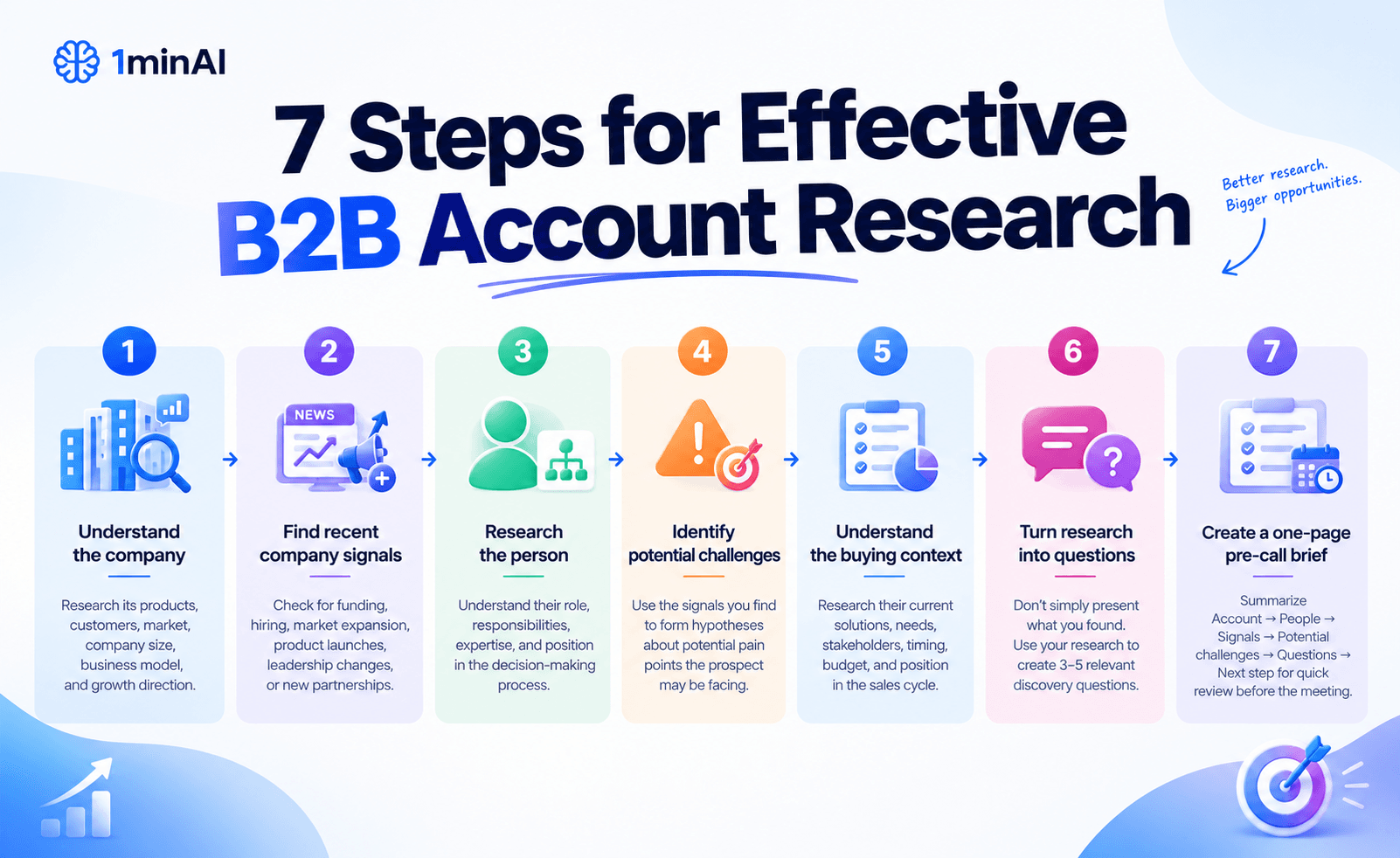
7 B2B account research steps before a sales call
A useful B2B account research process should move from broad company context toward specific conversation preparation. These seven steps help AEs research with a clear purpose.
1. Understand the company
Start with the company's business model, customers, products, market, and growth priorities. This gives you the basic context needed to interpret everything else you discover.
Look for:
- Core products or services
- Target customers
- Main markets and regions
- Business model
- Company size and growth stage
- Key competitors
- Recent strategic priorities
Goal: Build enough context to understand why your solution might matter before researching deeper.
2. Look for recent company signals
Recent changes often provide more useful sales context than static company information. Research events that could create new priorities, challenges, or opportunities.
Check for signals such as:
- Funding or acquisitions
- New product launches
- Executive changes
- Expansion into new markets
- Hiring growth
- Partnerships
- Major customer announcements
- Regulatory or market changes
The key is not simply finding news. Connect each signal to a possible business implication.
For example, rapid hiring may indicate expansion, while a new market launch could create new operational or technology requirements.
3. Research the person you are meeting
Company research tells you about the account. Prospect research tells you about the person sitting across the table.
Before the call, understand:
- Current role and responsibilities
- Previous roles or relevant experience
- Team or function they represent
- Likely priorities
- Publicly discussed initiatives
- Relationship to the buying process
Avoid turning this into personal trivia. The objective is to understand their professional context and likely perspective.
4. Identify potential business challenges
Good account research should help you form hypotheses about problems the prospect may be facing. These are not conclusions; they are starting points for better discovery questions.
Connect company signals to potential challenges:
| Account signal | Possible implication | Question to validate |
|---|---|---|
| Rapid hiring | Scaling processes may become difficult | “How are you handling the increased operational complexity?” |
| New market expansion | Existing workflows may not scale | “What has been hardest to adapt for the new market?” |
| New product launch | Teams may need new processes or tools | “What changed internally to support the launch?” |
Treat these as hypotheses, not facts. Your sales call should validate them.
5. Research the buying context
The same company can have very different priorities depending on where it is in its buying process. Understanding the buying context helps you prepare for the right conversation.
Research:
- Existing solutions or tools
- Potential business initiatives
- Known pain points
- Decision-makers and influencers
- Possible budget or timing signals
- Previous interactions with your company
- Competitive alternatives
This information helps answer a critical question: Is this a discovery conversation, an evaluation, or a decision-stage conversation?
6. Turn research into questions
Research becomes valuable when it changes what you ask during the call. Instead of reading your findings back to the prospect, use them to create specific questions.
For example:
Research finding: The company recently expanded into three new markets.
Weak question: “Are you expanding?”
Better question: “How has the expansion changed the way your team manages its current workflow?”
Aim for questions that test your research hypotheses rather than questions that simply confirm publicly available facts.
7. Create a one-page pre-call brief
The final step is to compress your research into something you can review in minutes. A useful brief should prioritize information instead of repeating your entire research process.
A practical structure is:
Account
- Company overview
- Key business priorities
- Recent signals
People
- Contact role
- Decision-making influence
- Relevant context
Opportunity
- Potential challenges
- Buying signals
- Existing solutions
Conversation
- 3–5 research-backed questions
- Key assumptions to validate
- Desired next step
The best pre-call brief is short enough to use during the meeting.
How AI can speed up B2B account research
Manual B2B account research becomes inefficient when AEs repeat the same searches, summaries, and note-taking for every account. AI can reduce this workload by turning multiple research tasks into one structured workflow.
A practical AI-assisted process looks like this:
Account → Research → Analyze → Summarize → Prepare
AI can help collect information, identify relevant signals, summarize findings, and turn research into questions. However, sales reps should still verify important claims before using them in a customer conversation.
This is especially important when information is outdated, ambiguous, or based on inference.
What should an AI Agent handle?
An AI Agent can take this workflow further by executing multiple research steps instead of requiring an AE to run each task separately.
For B2B account research, an Agent could:
- Research the company
- Find recent business signals
- Research relevant stakeholders
- Organize account intelligence
- Identify potential buying signals
- Create a pre-call brief
- Generate research-backed questions
The value is not simply generating text. It is connecting multiple steps into one repeatable workflow.
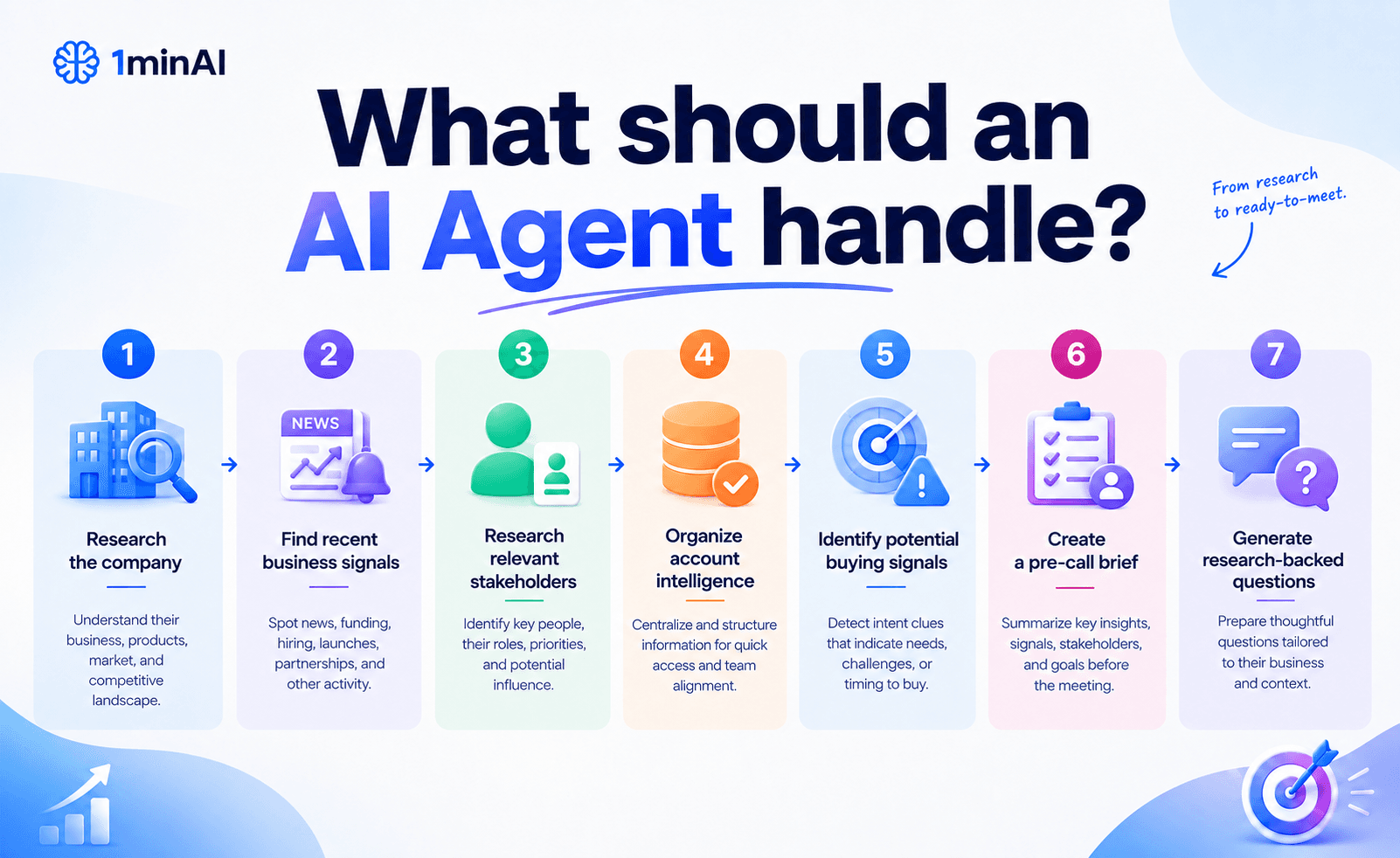
From account research to an AI Sales Agent
The biggest opportunity is moving from AI-assisted research to automated sales research workflows. Instead of opening multiple tabs and manually building a brief for every prospect, an AI Agent could handle the repetitive research process and give the AE a structured starting point. The AE remains responsible for judgment, validation, and the actual customer conversation. The Agent handles the research workload around it.
Research faster. Walk into the call with context. Spend more time selling.
Get early access to the 1minAI Agent
Want an AI Agent that can handle more of your sales research workflow?
Tell us what you want an AI Agent to do in your sales workflow and get early access to the 1minAI Agent. After admin approval, eligible teams can receive credits, while approved submitters receive exclusive discount codes by email: Get early access to the 1minAI Agent
Alternatives
Discover the best alternatives to 1minAI and compare features, pricing, and use cases.

1min.AI vs OpenRouter
1min.AI vs. OpenRouter: Compare the ready-to-use AI creation product against the technical API tool. Find out if you need a zero-code creative studio or a coding infrastructure hub.
 Ngoc Hong
1min.AI vs Lovart
Compare 1min.AI vs Lovart across features, pricing, credits, brand tools, and use cases to find the right AI platform for your workflow.
Ngoc Hong
1min.AI vs Chatplayground AI
Compare 1min.AI (Voice Cloning, Object Removal, Team Plans) vs. ChatPlayground AI (14+ Models, Teams/O365 Integration). Discover the superior platform for predictable pricing and long-term content production growth.
Ngoc HongAI Tools
Discover the best AI tools to boost productivity, creativity, and everyday work.
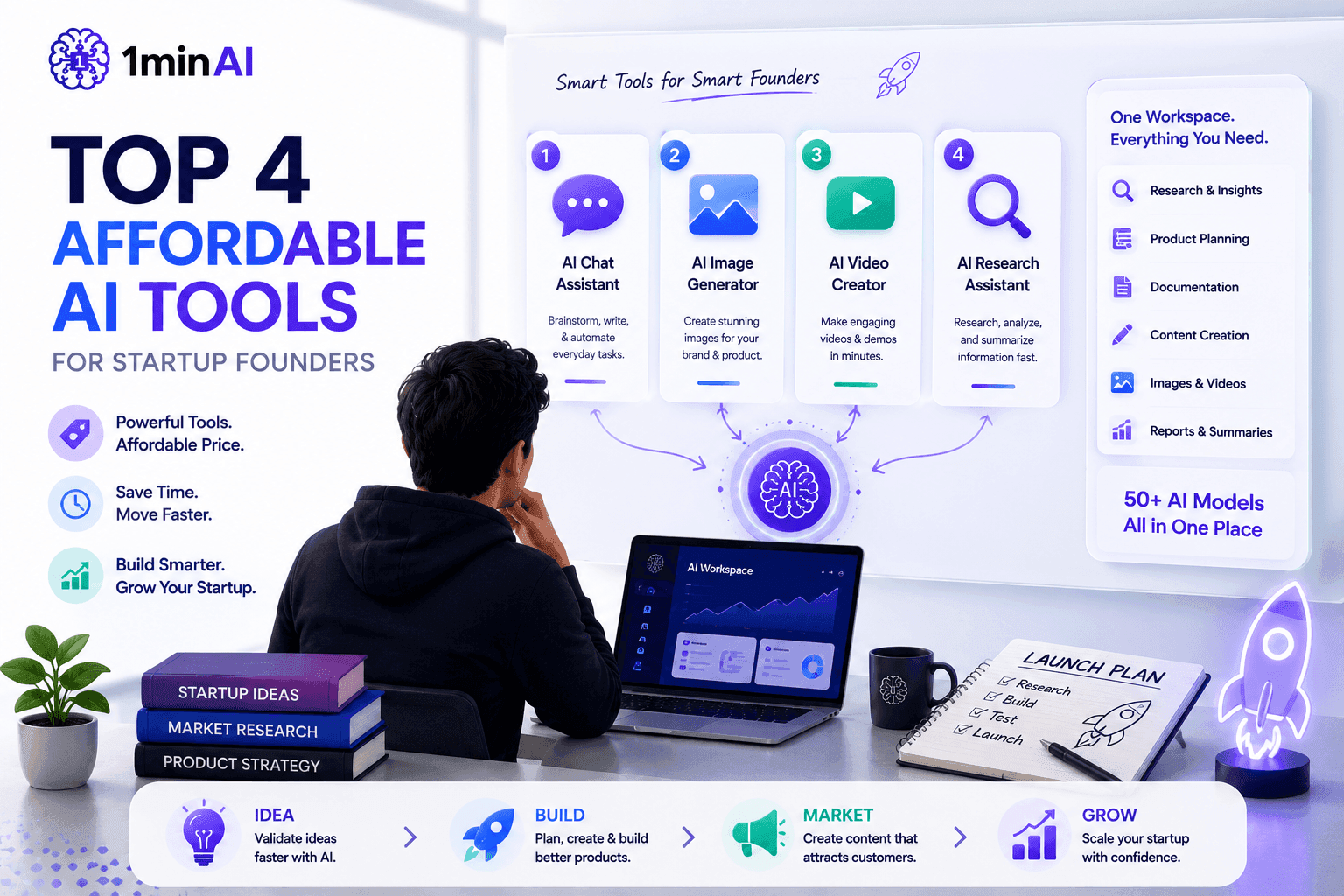
Top 4 Affordable AI Tools for Startup Founders
Discover the top 4 affordable AI tools for startup founders to validate ideas, build products, create content, and launch faster without overspending.
 Tram Ta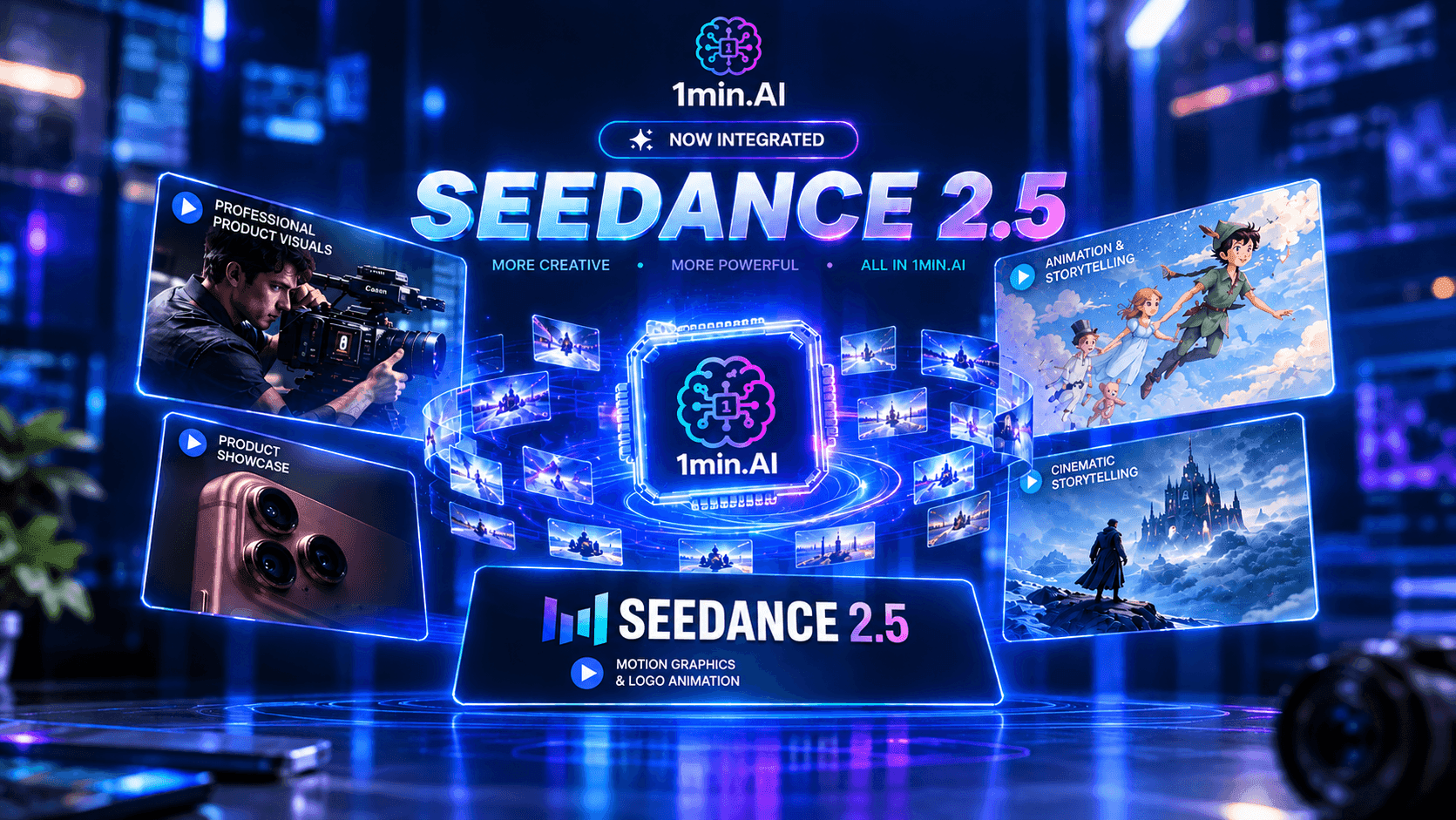
[Seedance 2.5 New] Better AI Product Videos, Less Rework in 1min.AI
Discover how AI image-to-video product consistency helps creators reduce failed generations, save AI credits, and produce more usable commercial and UGC content.
 Lien Anh Vu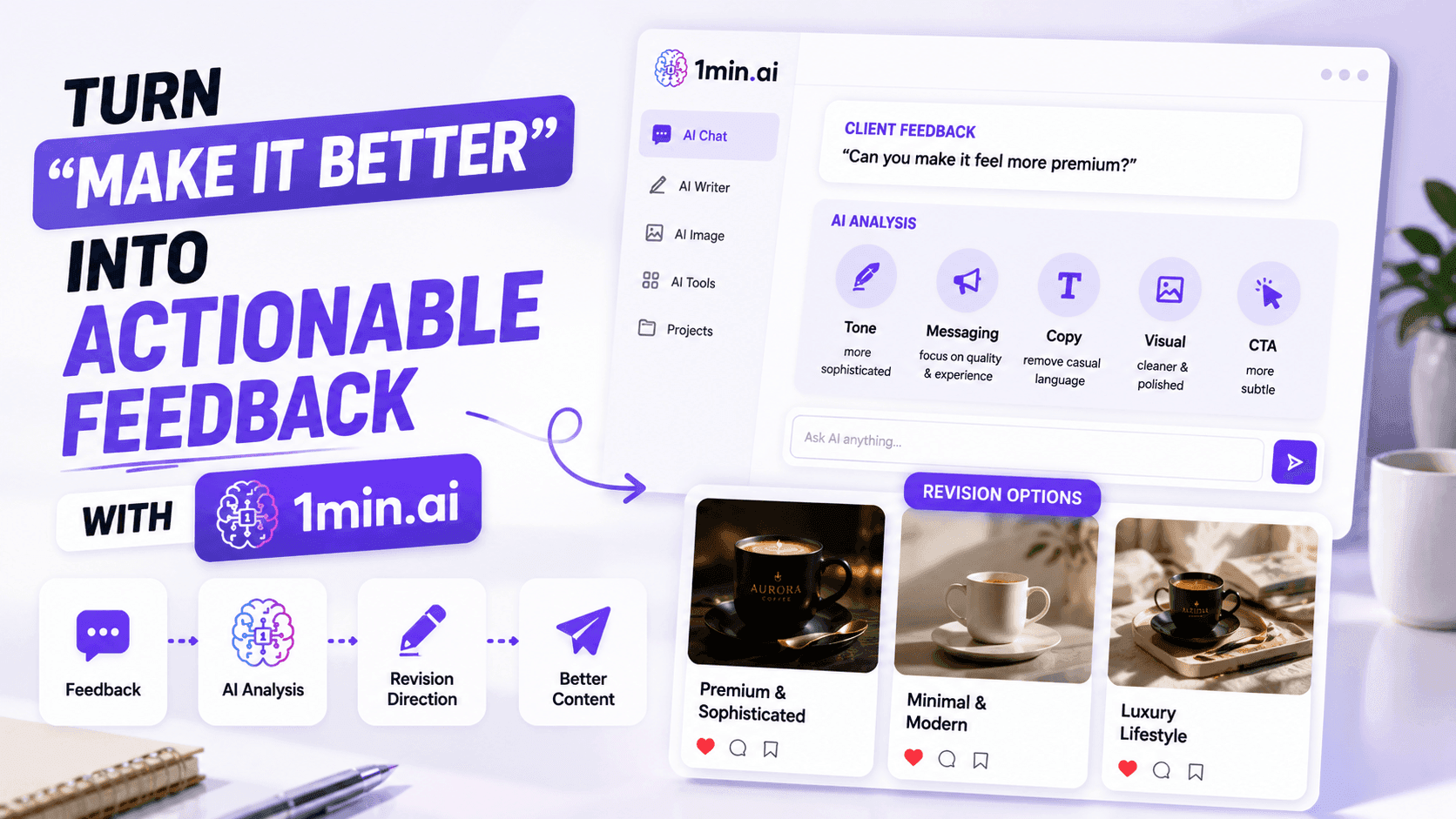
Turn “Make It Better” Into Better Content With AI
Use AI to turn vague client feedback into clear revisions, reduce unnecessary edits, and deliver better content faster.
Lien Anh VuAI Features
Comprehensive AI features that streamline workflows, improve efficiency, and empower teams to achieve more.
One Product, 10 UGC Creatives: How AI Makes Content Testing Easier
Create more authentic UGC with an AI UGC video generator, test more creative angles and scale affiliate content without filming every version.
Lien Anh Vu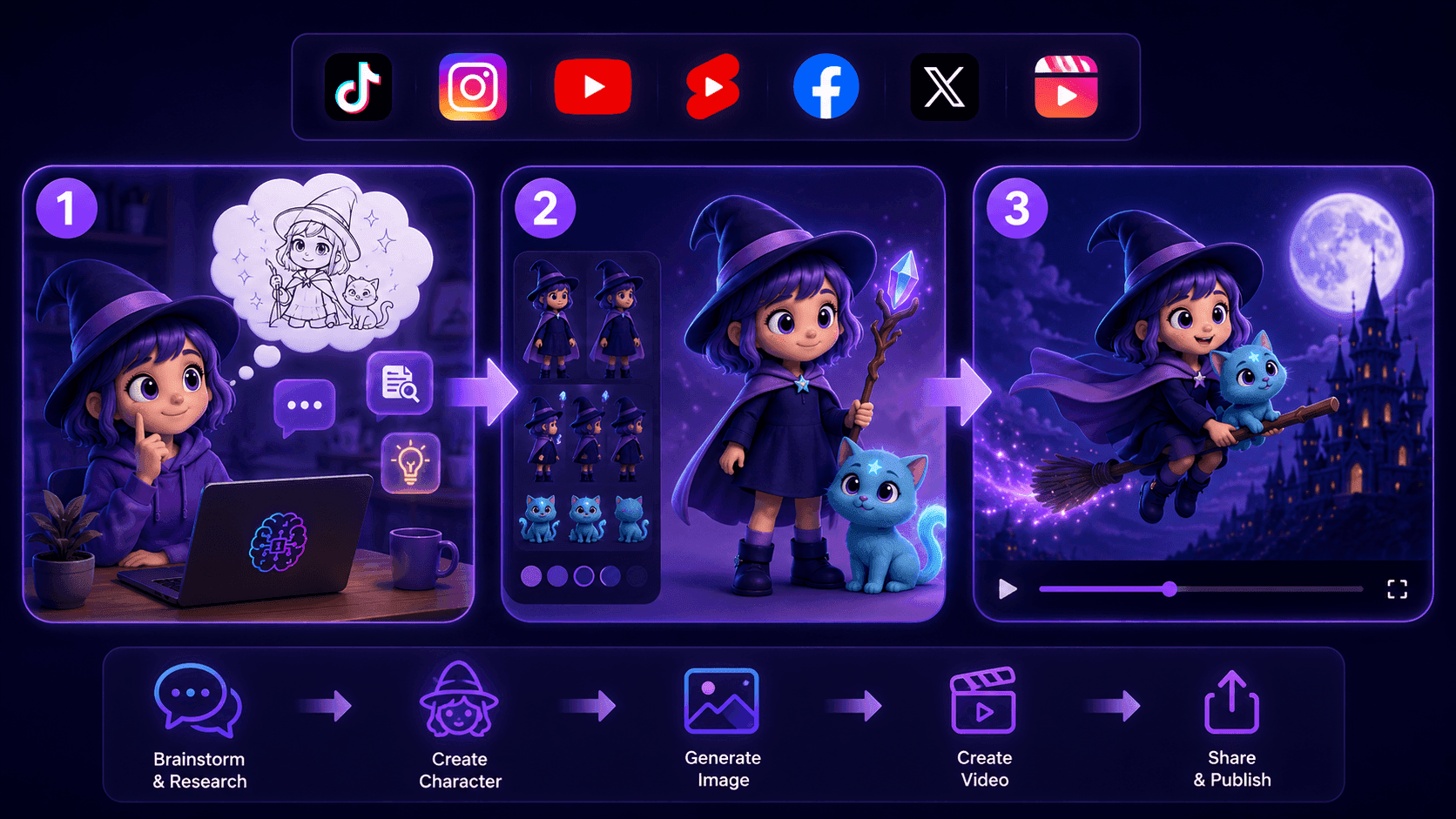
Create Consistent Cartoon Content in Just a Few Steps
Create cartoon videos for TikTok and Reels in 3 simple steps with 1min.AI, from researching ideas to characters and animated videos.
Lien Anh Vu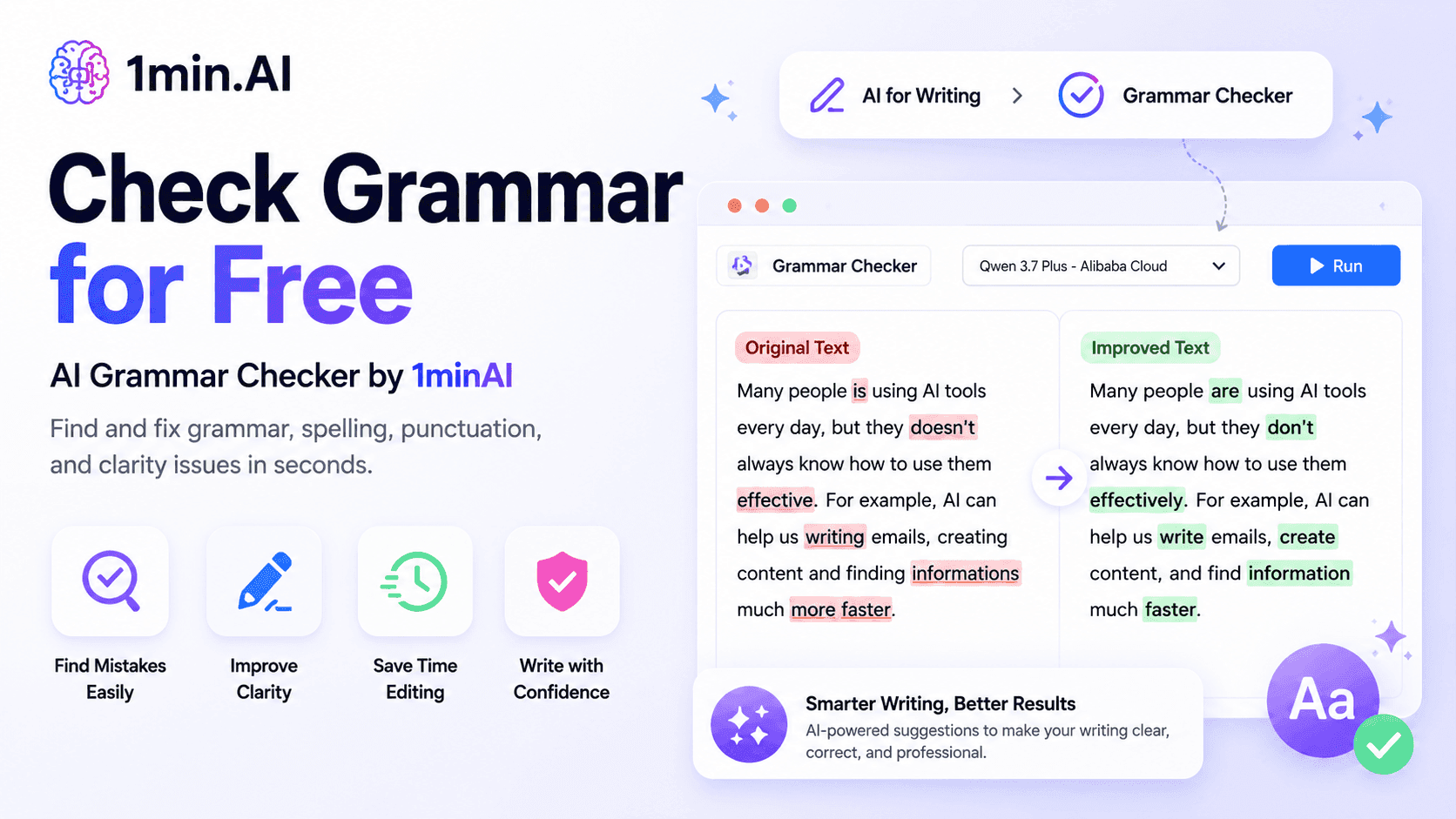
1minAI: Free AI Grammar Checker
Check grammar for free with 1minAI’s AI grammar checker. Find grammar, spelling, and writing mistakes, improve clarity, and polish your content in seconds.
Tram TaAI Use Cases
A curated collection of AI use cases for business, productivity, and industry-specific applications.
One Product, 10 UGC Creatives: How AI Makes Content Testing Easier
Create more authentic UGC with an AI UGC video generator, test more creative angles and scale affiliate content without filming every version.
Lien Anh Vu
Best Time to Post on Instagram: A Practical Guide for Better Engagement
Discover the best time to post on Instagram, including the best days and times for different audiences, plus tips to find the ideal posting schedule for your account.
Tram Ta
Build a Portfolio Website Faster with 1min.AI
Learn how freelance creatives can use 1min.AI to plan, write, design, and generate a professional portfolio website faster, even without strong coding skills.
Lien Anh VuAI Tutorials
Learn how to use AI with practical, step-by-step tutorials.

Black Friday AI Tool Deals in 2026
Discover what Black Friday AI tool deals 2026 has to offer. Find out how to secure the 1min.AI lifetime deal via AppSumo, Dealify, Stack Social, and verify on Trustpilot, Slashdot, and Software Advice.
 Hang Nguyen
Create Consistent Cartoon Content in Just a Few Steps
Create cartoon videos for TikTok and Reels in 3 simple steps with 1min.AI, from researching ideas to characters and animated videos.
Lien Anh Vu[Seedance 2.5 New] Better AI Product Videos, Less Rework in 1min.AI
Discover how AI image-to-video product consistency helps creators reduce failed generations, save AI credits, and produce more usable commercial and UGC content.
Lien Anh VuAI Guides
Learn AI faster with practical guides, real-world examples, and actionable best practices.

Safely Buy AI Tools Online: 2026 Black Friday Guide
Discover how to find and secure the best Black Friday AI deals online. Learn expert strategies to avoid scams, combat subscription fatigue, and verify software.
Hang NguyenCreate Consistent Cartoon Content in Just a Few Steps
Create cartoon videos for TikTok and Reels in 3 simple steps with 1min.AI, from researching ideas to characters and animated videos.
Lien Anh Vu[Seedance 2.5 New] Better AI Product Videos, Less Rework in 1min.AI
Discover how AI image-to-video product consistency helps creators reduce failed generations, save AI credits, and produce more usable commercial and UGC content.
Lien Anh VuAI Solutions
Browse the best AI solutions for automation, coding, research, productivity, customer support, marketing, and business workflows.

Free AI Tattoo Generator: Custom Designs
Turn any idea into a custom tattoo design with 1min.AI's free AI tattoo generator. Describe your idea, pick a style, and download in seconds.
 Trang Tran
Safely Buy AI Tools Online: 2026 Black Friday Guide
Discover how to find and secure the best Black Friday AI deals online. Learn expert strategies to avoid scams, combat subscription fatigue, and verify software.
Hang Nguyen[Seedance 2.5 New] Better AI Product Videos, Less Rework in 1min.AI
Discover how AI image-to-video product consistency helps creators reduce failed generations, save AI credits, and produce more usable commercial and UGC content.
Lien Anh VuAI Models
Explore the world's leading AI models in one place.
One Product, 10 UGC Creatives: How AI Makes Content Testing Easier
Create more authentic UGC with an AI UGC video generator, test more creative angles and scale affiliate content without filming every version.
Lien Anh VuCreate Consistent Cartoon Content in Just a Few Steps
Create cartoon videos for TikTok and Reels in 3 simple steps with 1min.AI, from researching ideas to characters and animated videos.
Lien Anh Vu[Seedance 2.5 New] Better AI Product Videos, Less Rework in 1min.AI
Discover how AI image-to-video product consistency helps creators reduce failed generations, save AI credits, and produce more usable commercial and UGC content.
Lien Anh VuAI Comparisons
Compare AI tools, models, and platforms to find the best fit for your needs.

Kling AI Vs Veo 3: Which Model Wins?
Kling AI vs Veo 3: compare motion, native audio, pricing & free tiers to see which AI video generator wins for your project - try both on 1min.AI.
Trang Tran[Seedance 2.5 New] Better AI Product Videos, Less Rework in 1min.AI
Discover how AI image-to-video product consistency helps creators reduce failed generations, save AI credits, and produce more usable commercial and UGC content.
Lien Anh Vu
DeepSeek V4 Pro vs Flash Comparison
Compare DeepSeek V4 Pro vs DeepSeek V4 Flash metrics. Optimize your agentic apps and improve AI fact checking on 1min.ai today.
Ngoc HongAI Integrations
Seamlessly integrate AI with the tools you already use to automate work and boost productivity.
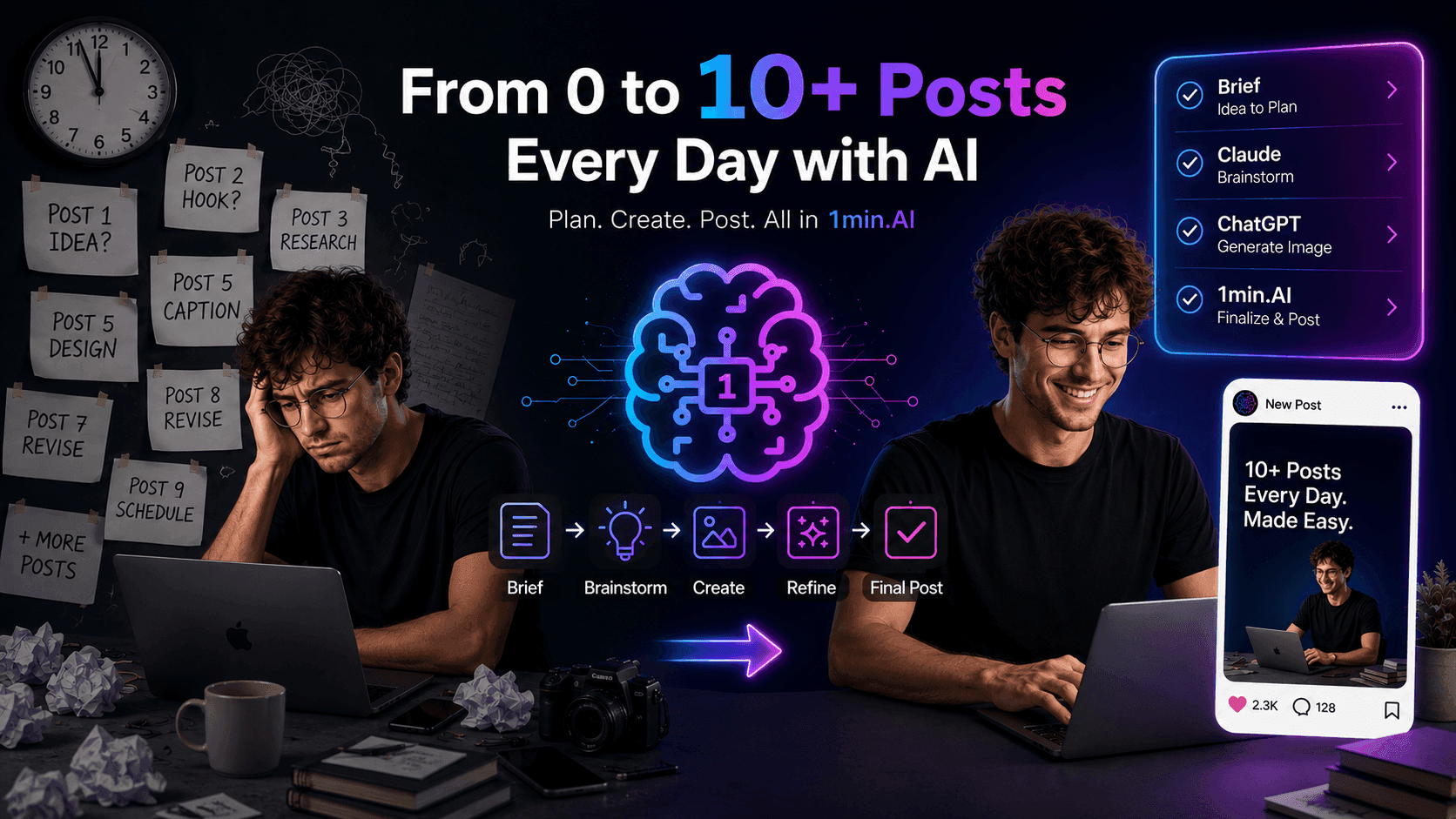
POV: You Have 10+ Posts to Make Every Day
Learn how to build an AI content workflow that helps content creators produce 10+ social media posts a day faster with AI brainstorming, image generation, and content creation.
Lien Anh Vu
How to Use an AI Fashion Video Generator for Fashion Week 2026
Turn Fashion Week 2026 ideas into stunning fashion videos with AI. Learn how to brainstorm, create visuals, and transform images into videos with one simple workflow.
Lien Anh Vu
Stop Switching Between AI Apps: How AI Integration Transforms Employer Branding
Discover how AI integration helps HR teams streamline employer branding by combining AI writing, documents, images, video, and multiple AI models into one workspace.
Tram TaAI for Industries
Find the best AI tools and workflows for healthcare, finance, education, legal, manufacturing, retail, real estate, and more

Free AI Real Estate Video Generator
Turn listing photos into narrated property videos with AI real estate video tools. See how 1min.AI creates walkthroughs, voiceovers & captions in minutes.
Trang Tran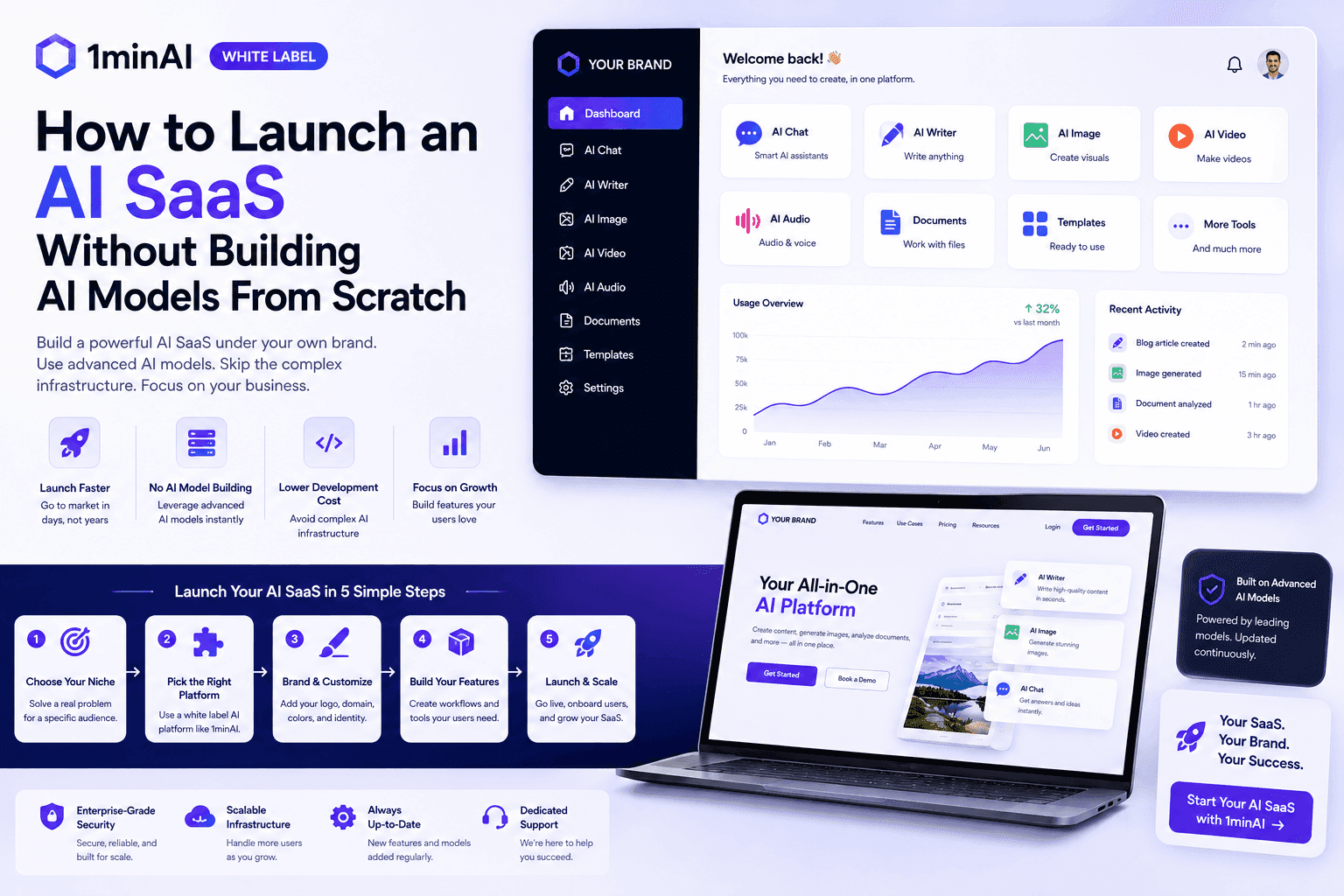
How to Launch an AI SaaS Without Building AI Models From Scratch
Learn how to launch an AI SaaS without building AI models from scratch. Explore white-label AI, product strategy, branding, pricing, and how 1minAI can help.
Tram Ta
Free AI Tools for Photographers to Elevate Creative Work
Discover free AI tools for photographers to edit images, create visuals and videos, develop content, and streamline client workflows with 1min.AI.
Lien Anh VuAI Agents
Discover and run AI agents to automate tasks across your work and daily life.
1minAI: Free AI Grammar Checker
Check grammar for free with 1minAI’s AI grammar checker. Find grammar, spelling, and writing mistakes, improve clarity, and polish your content in seconds.
Tram Ta
AI Agents for Facebook
Use an AI Agent for Facebook to create content, generate images, schedule posts, and publish from your documents and conversations.
Ngoc Hong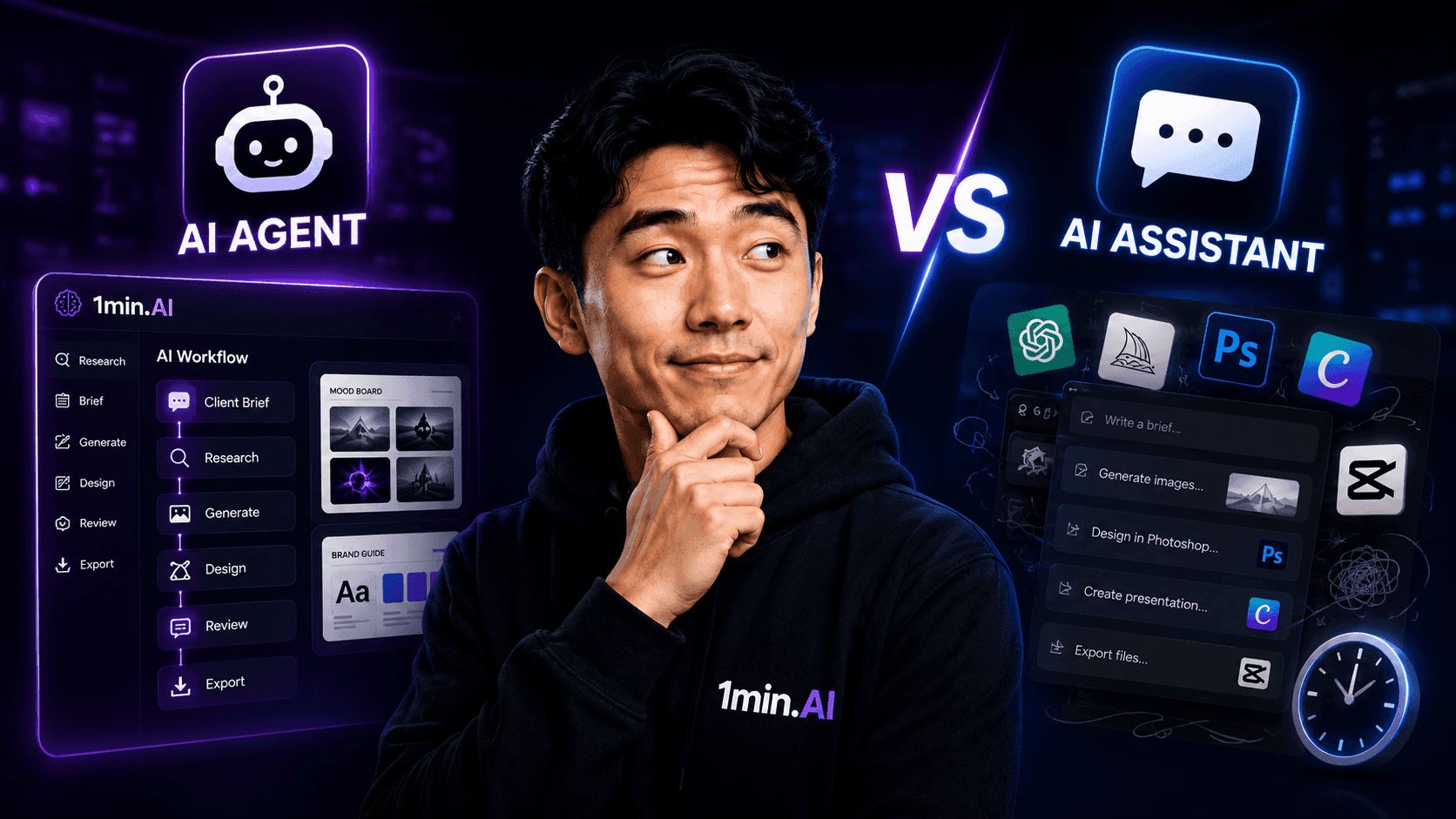
AI Agent vs AI Assistant: Which One Actually Saves Designers More Time?
Learn the difference between AI Agent vs AI Assistant and discover which solution helps designers automate repetitive work, reduce revisions, and save more time.
Lien Anh VuAI Workflows
Explore ready-to-use AI workflows for productivity, marketing, sales, support, and more.
Create Consistent Cartoon Content in Just a Few Steps
Create cartoon videos for TikTok and Reels in 3 simple steps with 1min.AI, from researching ideas to characters and animated videos.
Lien Anh VuPOV: You Have 10+ Posts to Make Every Day
Learn how to build an AI content workflow that helps content creators produce 10+ social media posts a day faster with AI brainstorming, image generation, and content creation.
Lien Anh VuHow to Use an AI Fashion Video Generator for Fashion Week 2026
Turn Fashion Week 2026 ideas into stunning fashion videos with AI. Learn how to brainstorm, create visuals, and transform images into videos with one simple workflow.
Lien Anh VuNewsletter
Weekly AI Innovations with 1minAI

🔮 Weekly AI Innovations #137: ElevenLabs Music & AI social Profile Control
The newest 1min.ai updates deliver professional music generation and highly requested privacy tools. Dive into a seamless workflow today!
Hang Nguyen
🔮 Weekly AI Innovations #136: Grok 4.6 and Smart Data Retention
Discover the latest 1min.ai updates! Upgrade to Grok 4.6 for blazing-fast AI, and check our new Data Retention policies to secure your files today.
Hang Nguyen
🔮 Weekly AI Innovations #135: Claude Opus 5 and new AI Social Features
Experience the powerful Claude Opus 5 model, and explore new AI Social features like User Pages and Following creators.
Hang Nguyen