White Label AI for SaaS Companies: How to Add AI Features Faster

Tram Ta
August 26, 2026
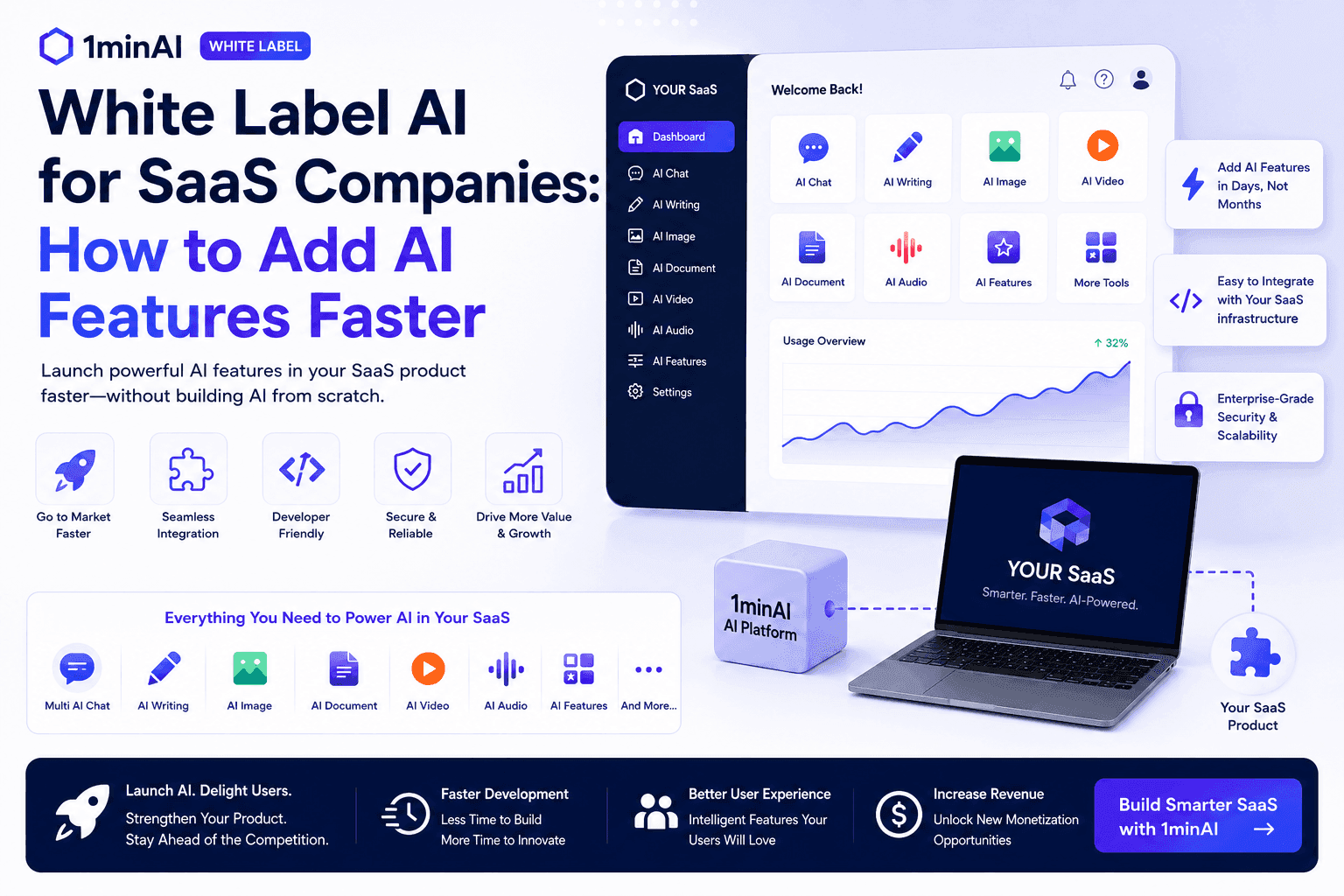
Discover how white label AI for SaaS companies can help you add AI features faster without building AI infrastructure from scratch. Learn what to consider and how 1minAI can help.
AI is quickly becoming an expected part of modern software products, but adding AI capabilities doesn't necessarily mean building models, infrastructure, and AI tools from the ground up. For SaaS companies, a white label AI platform can provide an alternative path: integrate established AI capabilities into a branded product experience while focusing internal resources on the core SaaS product. This guide explains how white label AI for SaaS companies works, which AI features can be added, what to consider before choosing a platform, and how 1minAI can support a faster path to an AI-powered SaaS offering.
Why SaaS Companies Are Adding AI Features
For years, SaaS companies competed primarily through software features, integrations, usability, and customer experience.
Now, AI is becoming another important layer of that competition.
Customers increasingly expect software to help them do more than simply store information or automate predefined processes. They want software that can generate, analyze, summarize, recommend, create, and assist.
For a SaaS company, this creates a significant opportunity.
A project management platform could add AI-powered task summaries.
A CRM could generate sales emails.
A marketing platform could create campaign copy.
A document management product could summarize uploaded files.
A productivity application could provide an AI assistant.
The possibilities are broad.
But there is also a challenge.
Building AI Features Internally Can Be Complex
Adding a simple AI button to an existing SaaS product may appear straightforward.
Building a reliable AI-powered product experience is a different matter.
A company may need to consider:
- AI model integrations
- API management
- Infrastructure
- Usage limits
- Model selection
- Prompt engineering
- AI output quality
- User interfaces
- Monitoring
- Maintenance
- Product updates
- Cost management
And AI technology continues to evolve rapidly.
A model that is useful today may be replaced by a newer model tomorrow. New image, video, audio, and multimodal capabilities continue to appear.
For a SaaS company whose core business is not AI infrastructure, maintaining all of this internally can divert engineering resources away from the product that already generates revenue.
AI Doesn't Have to Replace Your Existing SaaS
An important distinction is that adding AI doesn't necessarily mean transforming your entire product into an AI application.
In many cases, AI works best as an additional capability inside an existing workflow.
For example:
CRM → AI-generated sales email
Project management → AI-generated project summary
HR software → AI-generated job description
Marketing SaaS → AI-generated campaign content
Document software → AI-powered document analysis
The SaaS company already owns the customer relationship and understands the workflow.
AI simply makes that workflow more powerful.
This is where white label AI for SaaS companies can become an attractive option.
Instead of building every AI capability independently, a SaaS company can use an existing AI platform as part of its technology strategy while maintaining its own product positioning and customer experience.
How White Label AI Helps SaaS Companies Add Features Faster
White-label AI provides SaaS companies with access to existing AI capabilities that can be incorporated into their own branded offering.
The concept is relatively simple:
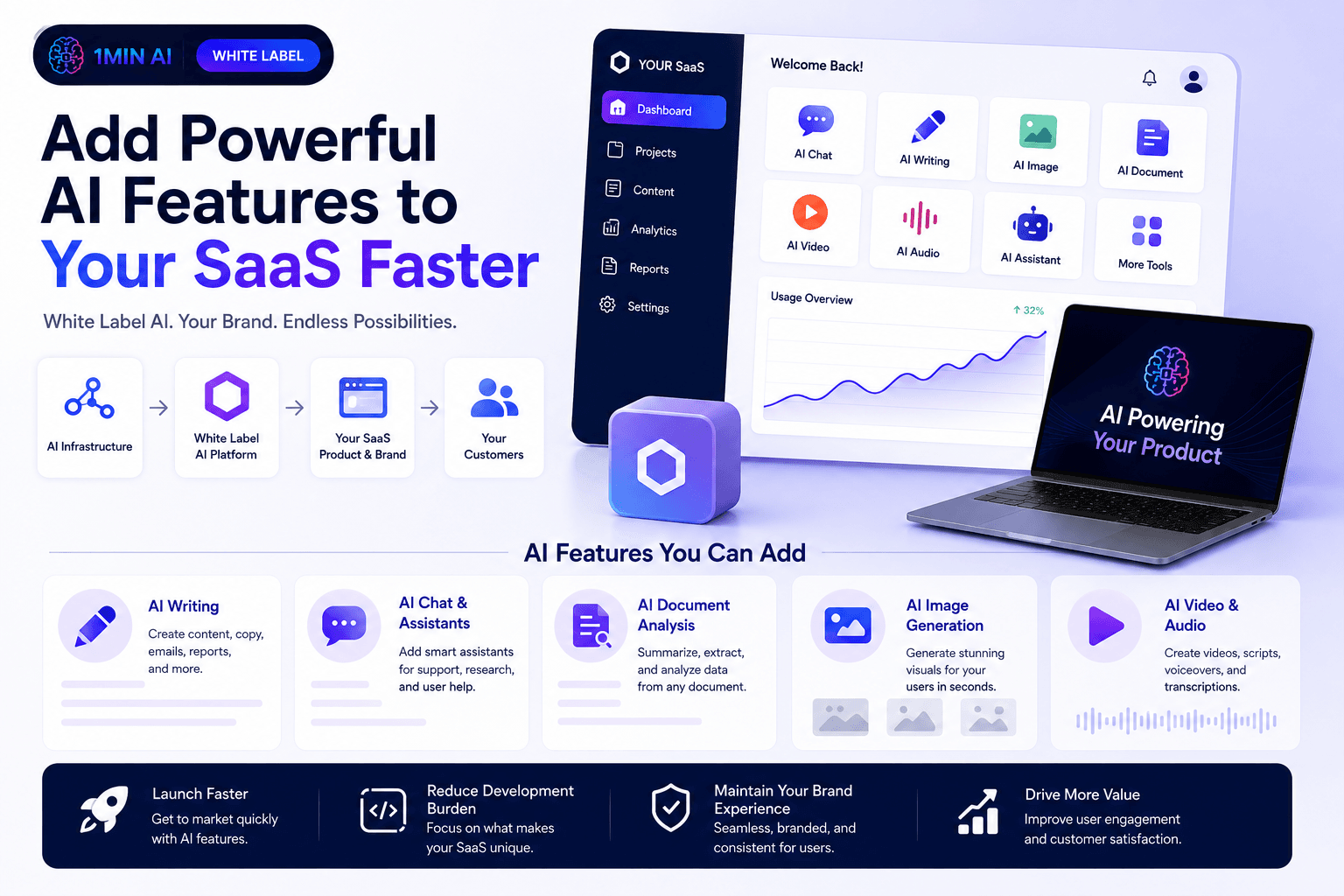
Existing AI infrastructure
↓
White label AI platform
↓
Your SaaS product and brand
↓
Your customers
Rather than investing first in building the underlying AI technology, the company can focus on how AI creates value inside its existing product.
1. Identify Where AI Can Improve Your Existing Product
The first step isn't choosing a platform.
It's identifying where customers already experience friction.
Look at the workflows that involve:
- Repetitive writing
- Information overload
- Manual analysis
- Content creation
- Data interpretation
- Customer communication
- Research
- Summarization
- Creative production
Then ask: Could AI make this workflow faster, easier, or more valuable?
For example, imagine a SaaS platform used by marketing agencies.
Users may already create campaigns inside the product.
Instead of building an entirely new AI application, the SaaS company could add:
Campaign → AI generates copy → User reviews → Campaign launches
The AI becomes part of the existing workflow rather than a disconnected feature.
2. Choose the AI Capabilities Your Customers Actually Need
SaaS companies don't necessarily need every AI feature available.
The right capabilities depend on the product.
A SaaS platform serving content teams may benefit from:
- AI writing
- AI chat
- AI image generation
- Document analysis
A sales platform may prioritize:
- AI assistants
- Email generation
- Research
- Summarization
A creative platform may need:
- AI images
- AI video
- AI audio
- Content generation
A business productivity platform may benefit from a broader combination.
This is why a multi-capability white label AI platform can be useful.
Instead of finding a separate provider for every AI feature, the SaaS company can evaluate whether one platform can cover several use cases.
3. Maintain Your Own Brand Experience
One of the major advantages of white-label technology is branding.
Customers should continue to understand that they are using your SaaS product.
The AI capabilities become part of the overall product experience rather than sending users to an unrelated third-party application.
This can help maintain:
- Brand consistency
- Customer familiarity
- Product positioning
- User retention
- A unified experience
For SaaS companies, this is particularly important because the customer relationship already exists.
AI should strengthen that relationship rather than introduce unnecessary fragmentation.
4. Reduce the Development Burden
Building AI functionality internally can require engineering resources that could otherwise be spent improving the core product.
A white-label approach can reduce some of that burden by providing existing AI capabilities and infrastructure.
This doesn't mean a SaaS company has no development work.
Product teams still need to determine how AI fits into their application, user experience, workflows, and business model.
But there is an important difference between:
Building an AI platform
and
Building an AI-powered feature into an existing SaaS product.
The second can allow a company to focus its engineering resources on the areas where it has the strongest competitive advantage.
5. Launch and Test AI Features Faster
Speed matters in the SaaS market.
If customers are already asking for AI capabilities, spending a long development cycle building AI infrastructure internally can create an opportunity cost.
A white-label approach can provide a faster way to test potential AI use cases.
For example:
Month 1: Identify the highest-value customer workflow
Month 2: Introduce an AI capability
Month 3: Collect user feedback
Month 4: Expand the feature based on usage
The exact timeline will vary, but the principle is important:
Validate the AI use case before over-investing in infrastructure.
If customers don't use a feature, the company can learn from that without having built an entire AI technology stack around it.
AI Features SaaS Companies Can Add With a White Label AI Platform
The biggest opportunity isn't limited to AI chat.
Modern AI platforms can support a wide range of workflows that can complement existing SaaS products.
AI Writing
AI writing can support:
- Marketing copy
- Product descriptions
- Emails
- Social media content
- Reports
- Blog posts
- Business communications
For example, a marketing SaaS could allow customers to generate campaign copy directly inside their existing workflow.
AI Chat and Assistants
A white label AI chatbot or AI assistant can become an interface for interacting with information or completing tasks.
Possible use cases include:
- Customer support
- Internal assistants
- Research
- Product guidance
- Knowledge access
- Workflow assistance
For SaaS companies, an AI assistant can become an additional interface layered on top of existing product functionality.
AI Document Analysis
Many SaaS products work with documents.
Adding AI can allow users to:
- Summarize files
- Extract information
- Ask questions about documents
- Compare information
- Generate reports
This can turn a passive document-storage workflow into a more interactive experience.
AI Image Generation
For SaaS products serving marketing, ecommerce, advertising, or creative teams, image generation can become a valuable extension.
Users could generate:
- Campaign visuals
- Product concepts
- Social graphics
- Marketing assets
- Presentation visuals
Instead of exporting their work to another AI image generator, users can potentially complete more of the workflow inside the SaaS ecosystem.
AI Video and Audio
Video and audio can further expand an AI-powered SaaS product.
Potential applications include:
- Video scripts
- Promotional videos
- Voiceovers
- Transcription
- Audio content
- Social video
This can be particularly valuable for SaaS companies serving marketing and content teams.
How 1minAI Supports SaaS Companies Building AI-Powered Products![]()
For SaaS companies that want to expand into AI without building every capability internally, 1minAI White Label provides a broader AI foundation that can support different product and business models.
Rather than offering a single AI feature, 1minAI brings multiple AI capabilities together within one platform.
One AI Foundation for Multiple Use Cases
1minAI includes capabilities such as:
- Multi AI Chat for AI conversations, research, and brainstorming
- AI Writing for content and business communication
- AI Images for visual generation and editing
- AI Video for multimedia creation
- AI Audio for audio-related workflows
- AI for Documents for document analysis
- Presentation Generator for presentations and business communication
- AI productivity tools for broader workflows
For a SaaS company, this creates the possibility of expanding beyond a single AI feature.
Instead of asking: "How do we build an AI chatbot?"
the product team can consider a broader question: "Which combination of AI capabilities could make our SaaS product more valuable to customers?"
Extend an Existing SaaS Product
The strongest use of white-label AI isn't necessarily creating a completely separate AI product.
It can be extending something you already have.
For example:
Existing SaaS
→ Add AI writing
→ Add AI research
→ Add AI document analysis
→ Add AI image generation
→ Add AI assistant capabilities
The AI becomes another layer of value around the existing product.
This can create opportunities to:
- Increase product differentiation
- Improve customer experience
- Create premium plans
- Introduce new use cases
- Increase customer retention
- Expand average revenue per account
Access Multiple AI Models
AI requirements can vary significantly between tasks.
One model may be better suited to a particular reasoning workflow, while another may be preferable for creative content.
1minAI's Multi AI Chat provides access to multiple AI models in one workspace, giving businesses more flexibility than building their product around a single AI model.
For SaaS companies, this flexibility can be useful as the AI ecosystem continues to change.
The company can focus on the customer experience while the underlying AI landscape continues to evolve.
Build Your Own Branded AI Offering
A SaaS company may also decide that AI should become a larger part of its product strategy.
Rather than simply adding one AI feature, it could create a branded AI environment around a particular industry or customer segment.
For example:
Your brand
↓
Your SaaS workflow
↓
Branded AI capabilities
↓
Your customers
This creates a more unified experience than sending customers to multiple third-party AI tools.
Focus Engineering Resources on Your Competitive Advantage
The biggest strategic benefit may be resource allocation.
Your engineering team already has important responsibilities:
- Core product development
- Customer-requested features
- Integrations
- Security
- Performance
- Infrastructure
- Product improvements
Building AI infrastructure from scratch adds another major responsibility.
Using a white-label AI platform can allow your team to focus more heavily on how AI creates value within your specific product rather than recreating every underlying AI capability.
Conclusion: Add AI Faster Without Rebuilding Your SaaS
SaaS companies don't necessarily need to become AI infrastructure companies to benefit from AI.
The smarter approach may be to identify the workflows where AI can create the most value, then use existing AI technology to enhance those experiences.
A white label AI platform can help SaaS companies add capabilities such as AI chat, writing, documents, images, video, and productivity without building every AI component from scratch.
With 1minAI, SaaS companies can explore a broader AI foundation while keeping their own product strategy, brand, and customer relationships at the center.
Want to add AI to your SaaS faster? Contact 1minAI at collaborate@1min.ai.
Alternatives
Discover the best alternatives to 1minAI and compare features, pricing, and use cases.

1min.AI vs OpenRouter
1min.AI vs. OpenRouter: Compare the ready-to-use AI creation product against the technical API tool. Find out if you need a zero-code creative studio or a coding infrastructure hub.
 Ngoc Hong
1min.AI vs Chatplayground AI
Compare 1min.AI (Voice Cloning, Object Removal, Team Plans) vs. ChatPlayground AI (14+ Models, Teams/O365 Integration). Discover the superior platform for predictable pricing and long-term content production growth.
Ngoc Hong
1min.AI vs Krater AI
Compare 1min.AI vs Krater AI features, pricing, AI models, and workflows to find the best all-in-one AI tool for content, design, and productivity.
Ngoc HongAI Tools
Discover the best AI tools to boost productivity, creativity, and everyday work.
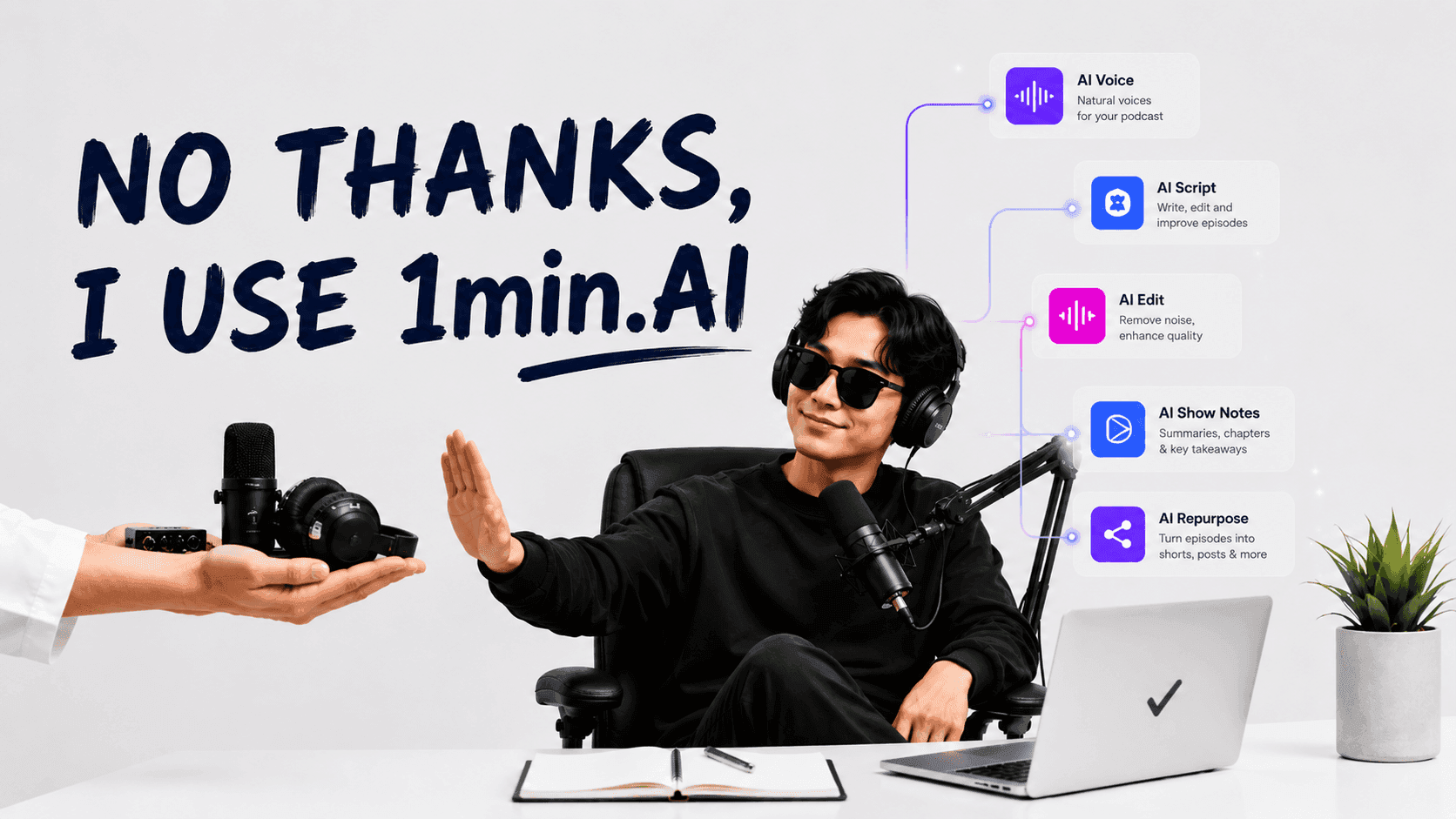
How to Create a Podcast Without Expensive Equipment
Learn how to create a podcast without expensive equipment using AI for scripting, voice, video, editing, and content repurposing with 1min.AI.
 Lien Anh Vu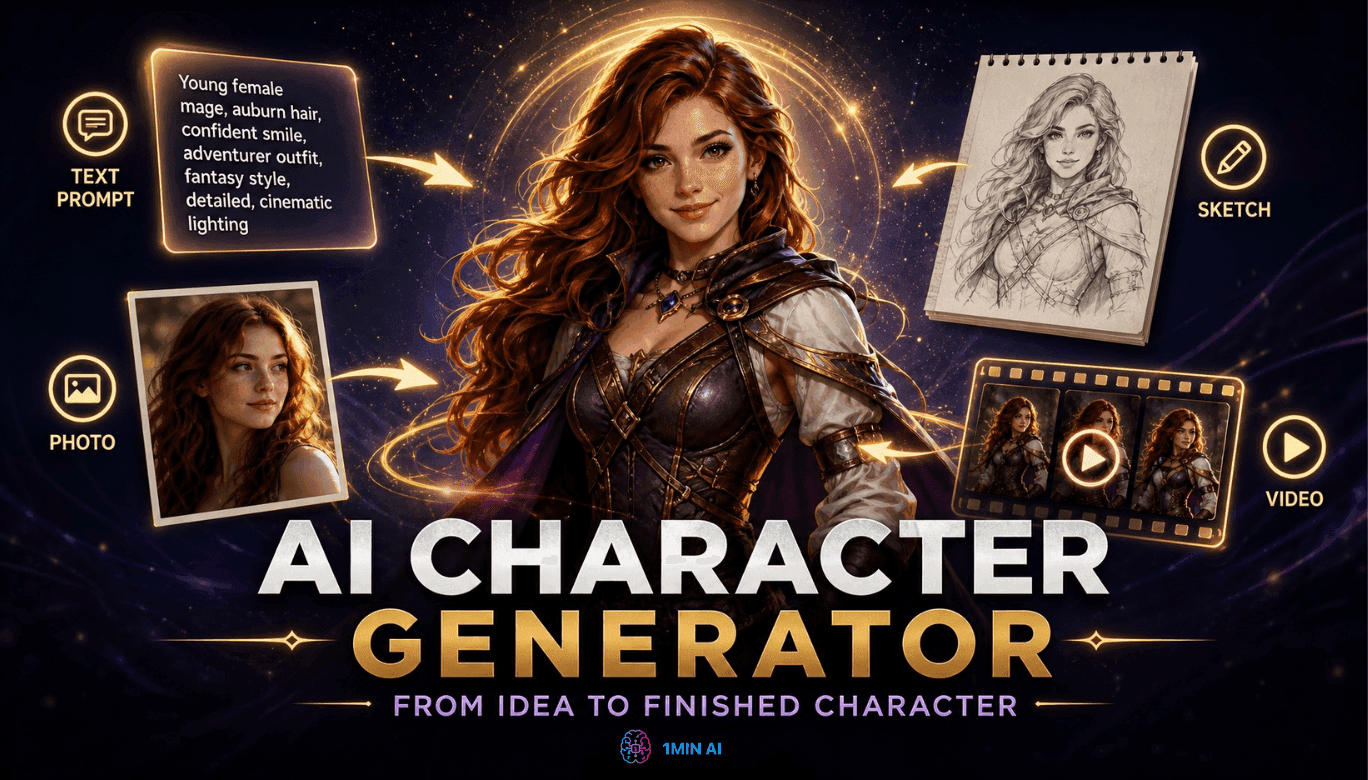
Free AI Character Generator - No Signup
Generate an AI character free from text or photo prompts. Try 1min.AI's AI character generator with multiple models, no design skills needed.
 Trang Tran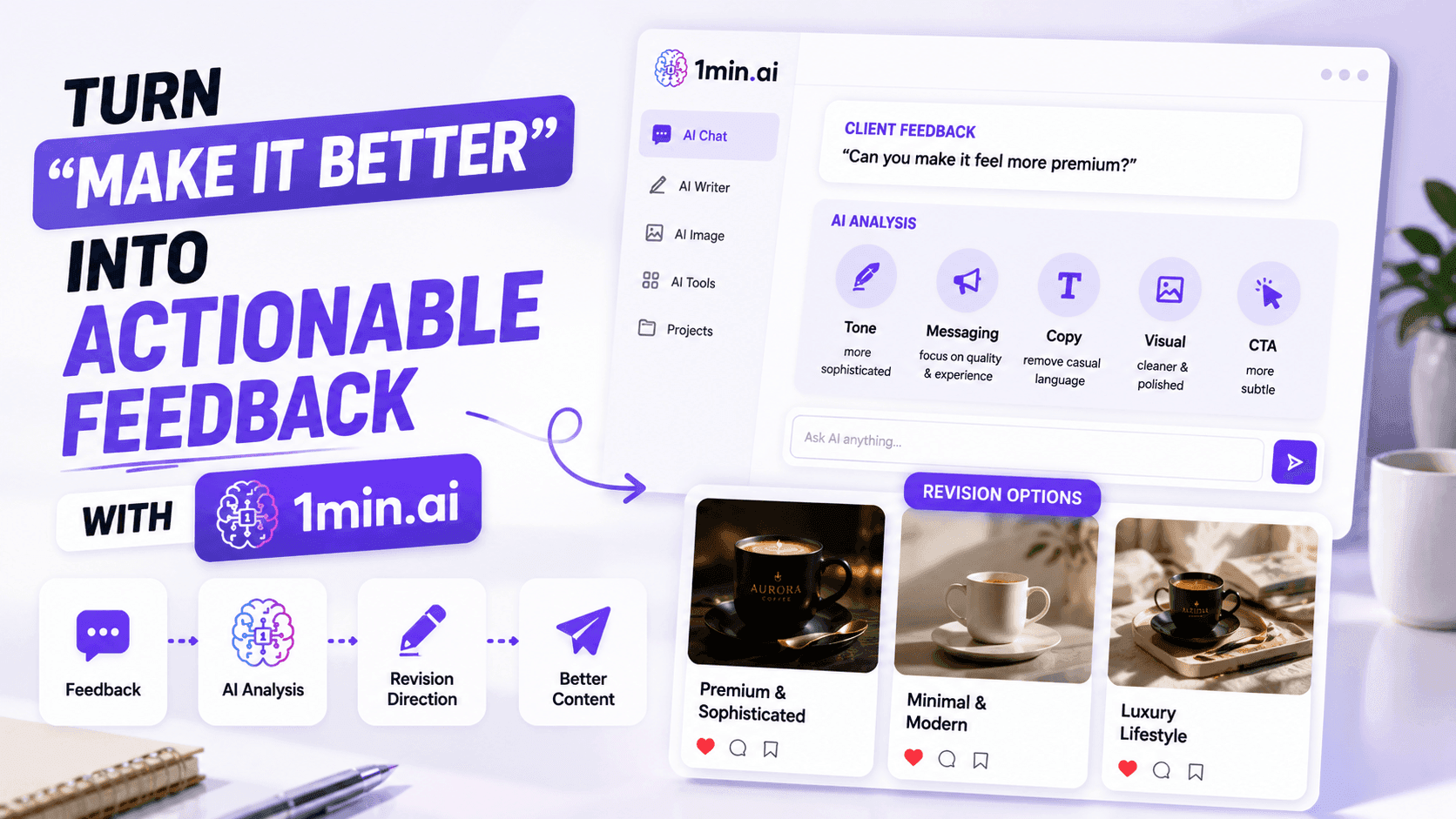
Turn “Make It Better” Into Better Content With AI
Use AI to turn vague client feedback into clear revisions, reduce unnecessary edits, and deliver better content faster.
Lien Anh VuAI Features
Comprehensive AI features that streamline workflows, improve efficiency, and empower teams to achieve more.
Free AI Tools for Artist
Artist Studio brings image generation, editing, audio creation, and creative tools into one AI workspace, so artists can explore ideas, refine their work, and create finished pieces without switching between different tools.
 Uyen Hoang
Free AI Tools for Small Business
Small Business Studio brings AI writing, email replies, pricing, content, and visual tools into one workspace to help small businesses handle everyday work faster.
Uyen Hoang
Free AI Tools for Marketer
Marketer Studio brings AI tools for content planning, writing, social posts, images, and repurposing into one workspace to help marketers create campaigns faster.
Uyen HoangAI Use Cases
A curated collection of AI use cases for business, productivity, and industry-specific applications.
White Label AI for SaaS Companies: How to Add AI Features Faster
Discover how white label AI for SaaS companies can help you add AI features faster without building AI infrastructure from scratch. Learn what to consider and how 1minAI can help.
 Tram Ta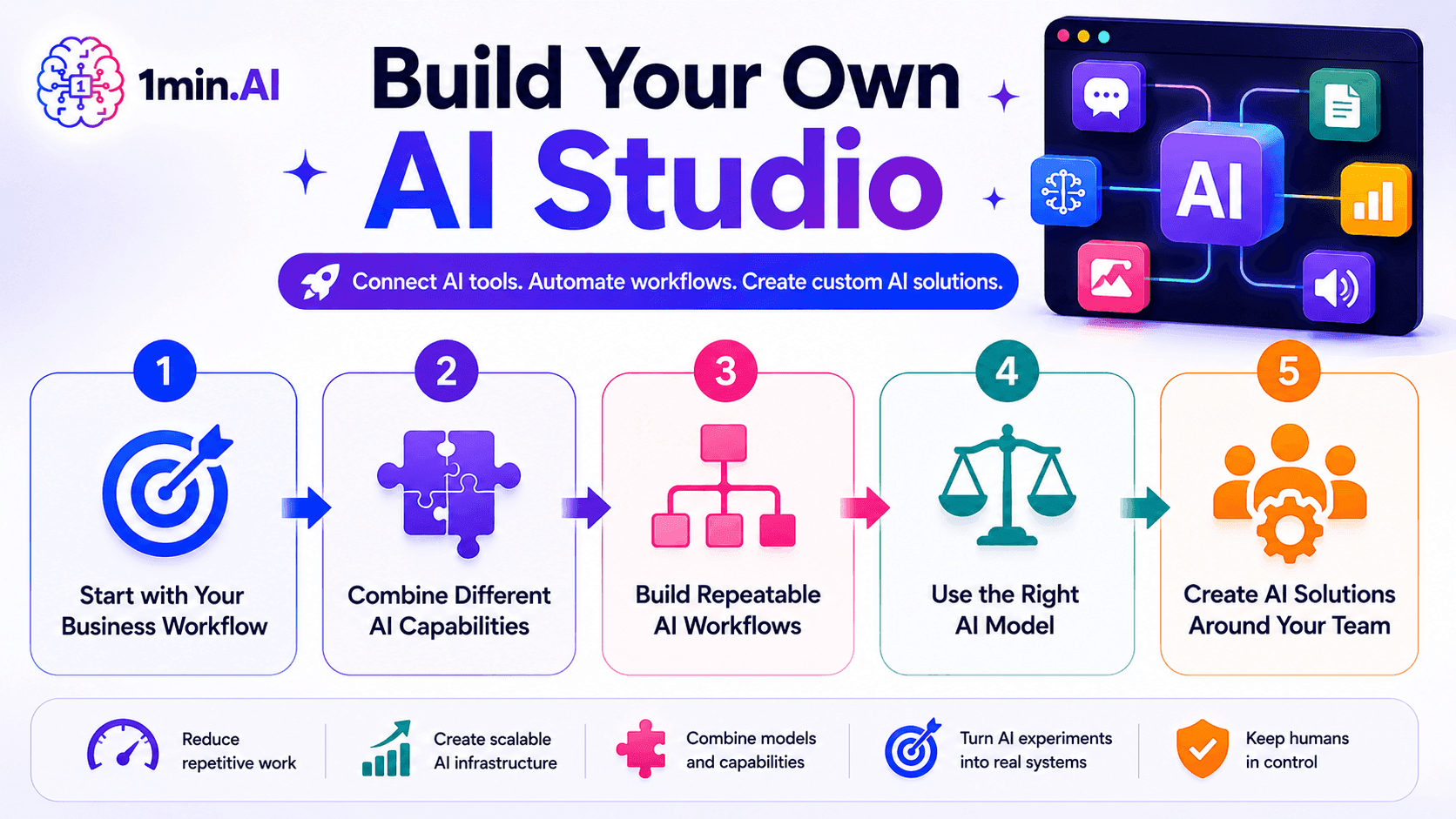
Build Your Own AI Studio
Build your own AI Studio with 1min.AI to connect AI tools, streamline workflows, and create custom AI solutions for your team and business.
Ngoc Hong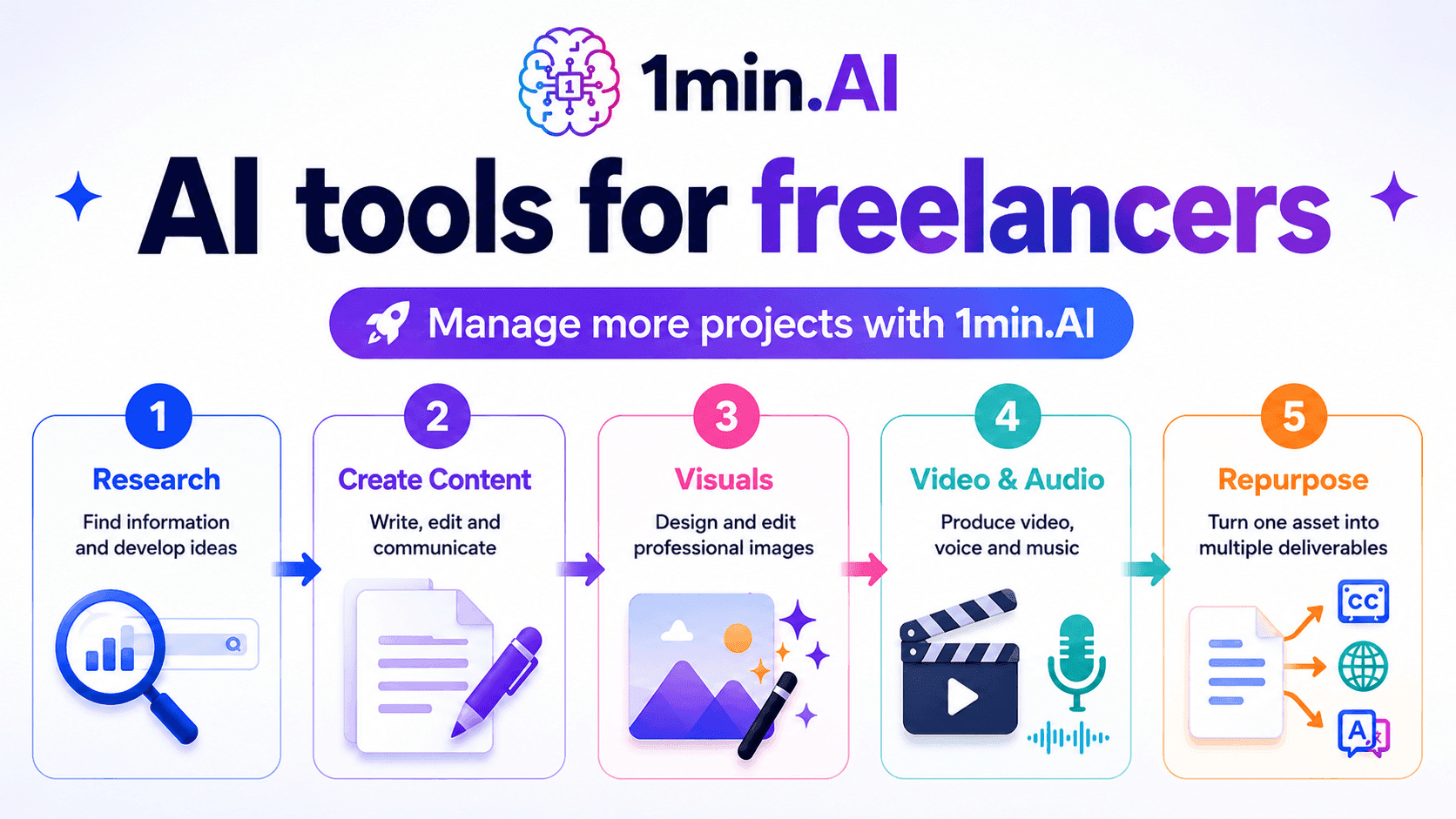
AI tools for Freelancers
Discover AI tools for Freelancers to manage writing, research, design, video, audio, and client work from one AI workspace with 1min.AI.
Ngoc HongAI Tutorials
Learn how to use AI with practical, step-by-step tutorials.
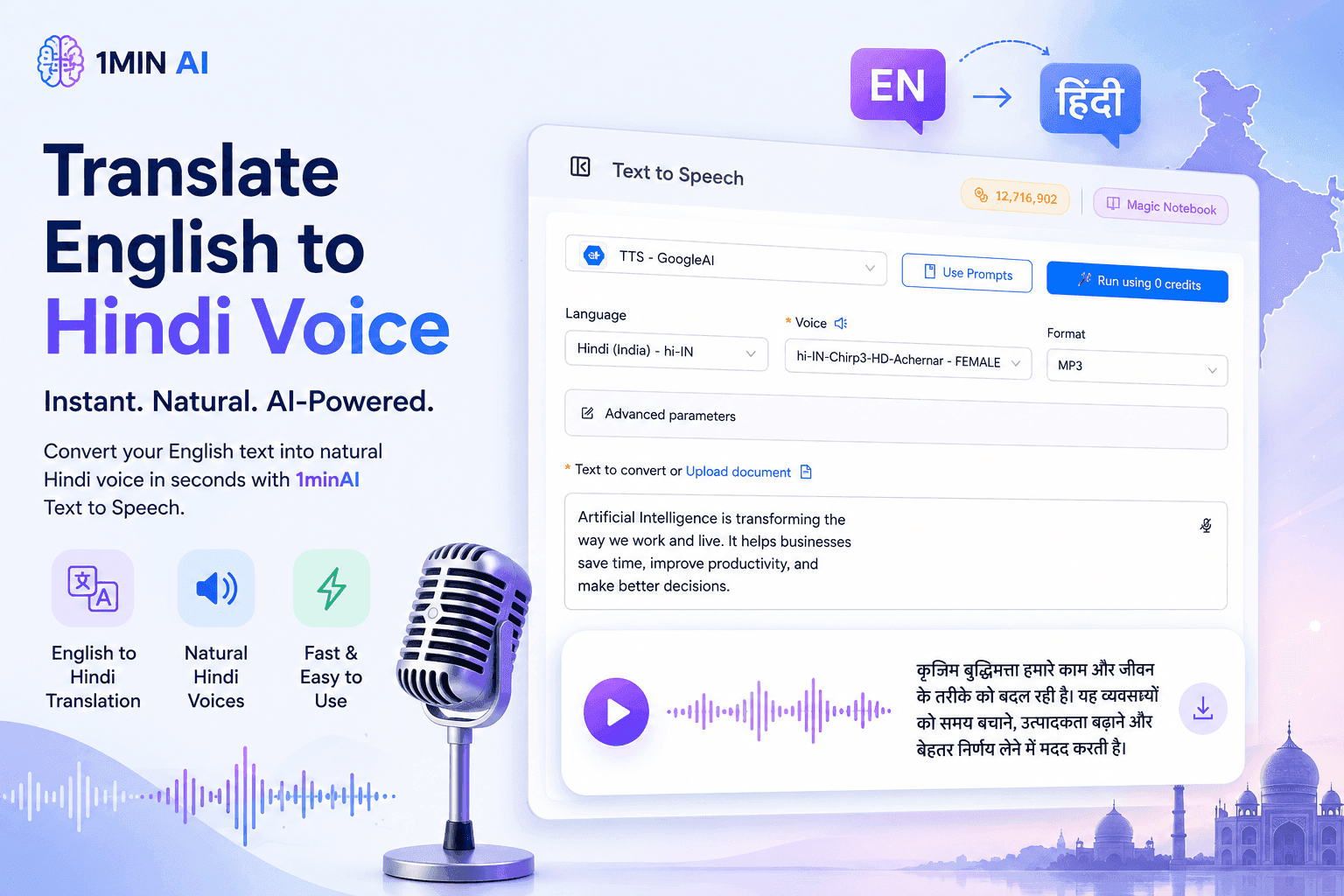
Translate English to Hindi Voice With 1minAI
Translate English to Hindi and convert your text into natural-sounding Hindi voice with 1minAI. Choose a Hindi voice, paste your text, and generate audio in seconds.
Tram Ta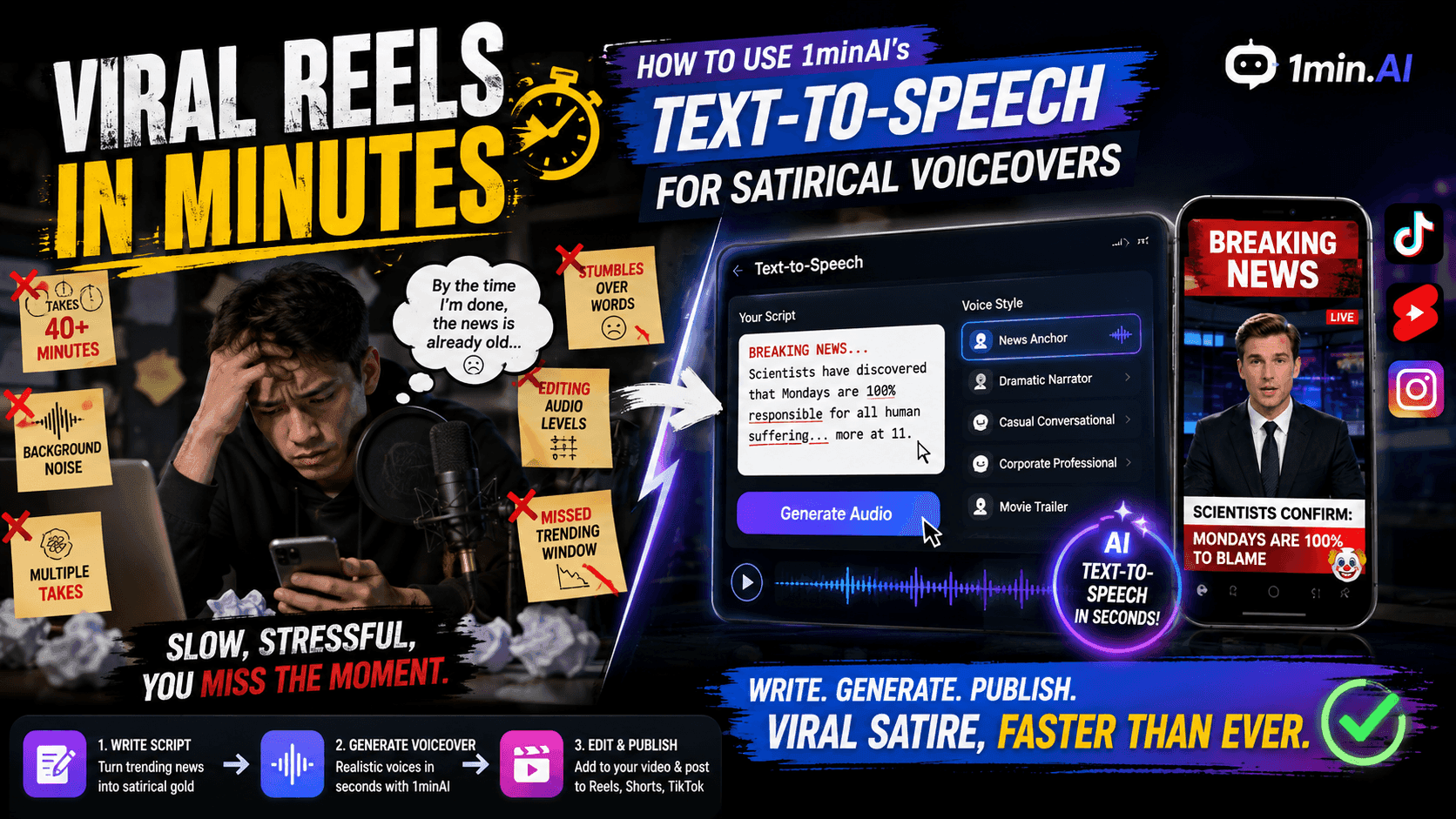
Viral Reels in Minutes: How to Use 1minAI’s Text-to-Speech for Satirical Voiceovers
Learn how satirical page admins use 1minAI’s Text-to-Speech feature to generate instant news anchor and dramatic voiceovers for TikToks, Shorts, and Instagram Reels.
Uyen Hoang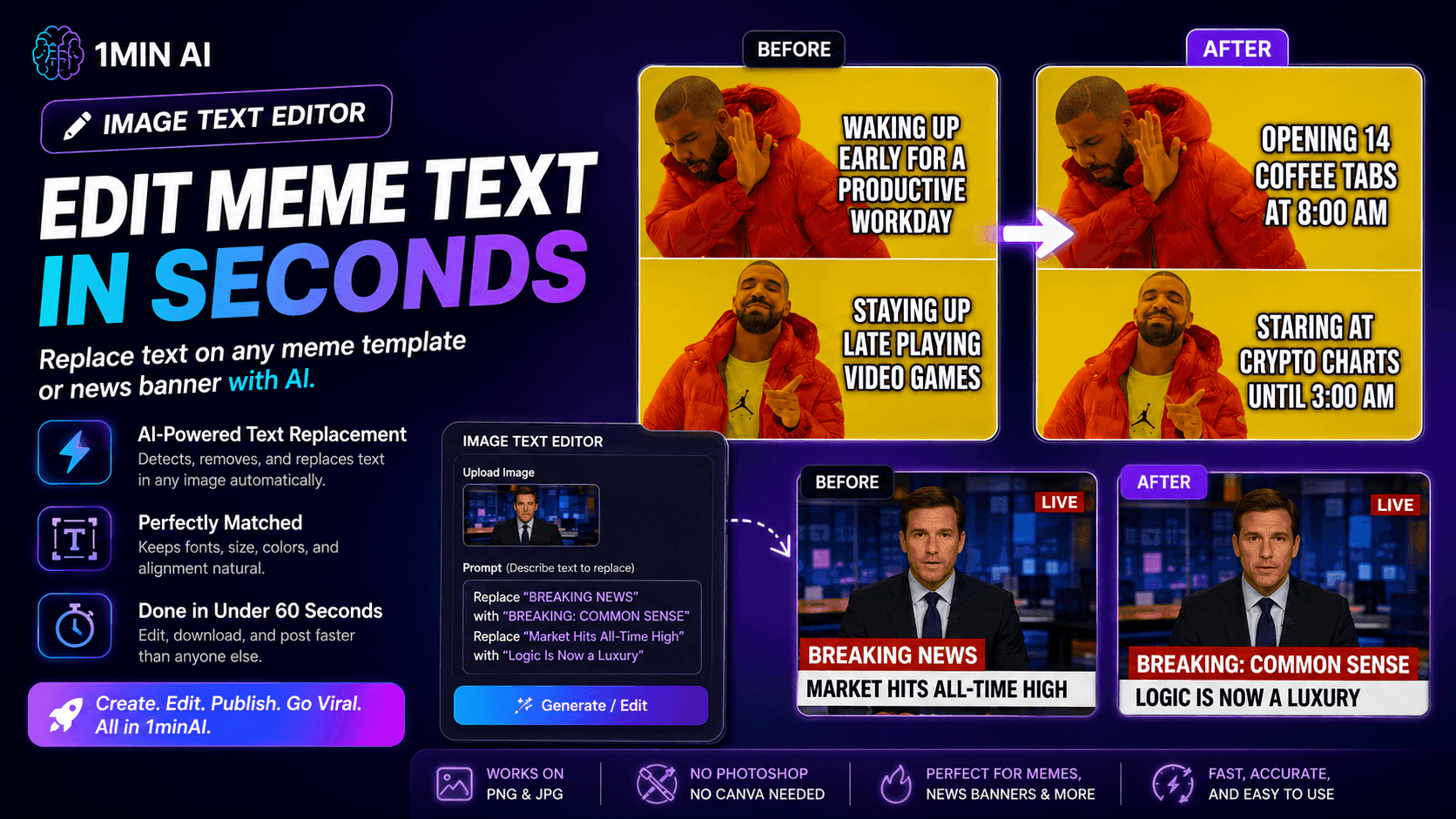
No Photoshop Needed: How to Use 1minAI’s Image Text Editor for Instant Meme Customization
Stop wasting time opening Photoshop or Canva to edit meme captions. Learn how 1minAI’s Image Text Editor replaces text on any meme template or news banner in seconds.
Uyen HoangAI Guides
Learn AI faster with practical guides, real-world examples, and actionable best practices.
How to Create a Podcast Without Expensive Equipment
Learn how to create a podcast without expensive equipment using AI for scripting, voice, video, editing, and content repurposing with 1min.AI.
Lien Anh Vu
How to Sell AI Tools Under Your Own Brand: A Practical Guide to White Label AI
Learn how to sell AI tools under your own brand with white label AI. Discover how branding, packaging, pricing, onboarding, and recurring revenue work.
Tram Ta
How to start an AI business without building from scratch
Learn how to start an AI business, validate your idea, and launch faster without building costly AI infrastructure from scratch.
Ngoc HongAI Solutions
Browse the best AI solutions for automation, coding, research, productivity, customer support, marketing, and business workflows.
White Label AI for SaaS Companies: How to Add AI Features Faster
Discover how white label AI for SaaS companies can help you add AI features faster without building AI infrastructure from scratch. Learn what to consider and how 1minAI can help.
Tram Ta
White Label AI vs Custom AI Development: Which Is Better for Your Business?
Compare white label AI vs custom AI development to understand the differences in cost, launch time, customization, maintenance, and scalability.
Tram Ta
White Label AI Chatbots: Build Branded AI Assistants for Your Business
Discover how white label AI chatbots help agencies and businesses offer branded AI assistants for support, lead generation, and productivity with 1minAI.
Tram TaAI Models
Explore the world's leading AI models in one place.
How to Create a Podcast Without Expensive Equipment
Learn how to create a podcast without expensive equipment using AI for scripting, voice, video, editing, and content repurposing with 1min.AI.
Lien Anh Vu
CLAUDE 4.7 OPUS - AWS BEDROCK US
Deploy Claude 4.7 Opus on AWS Bedrock US. Discover enterprise AI infrastructure, advanced coding, adaptive thinking, secure inference, and seamless AWS integration.
Ngoc Hong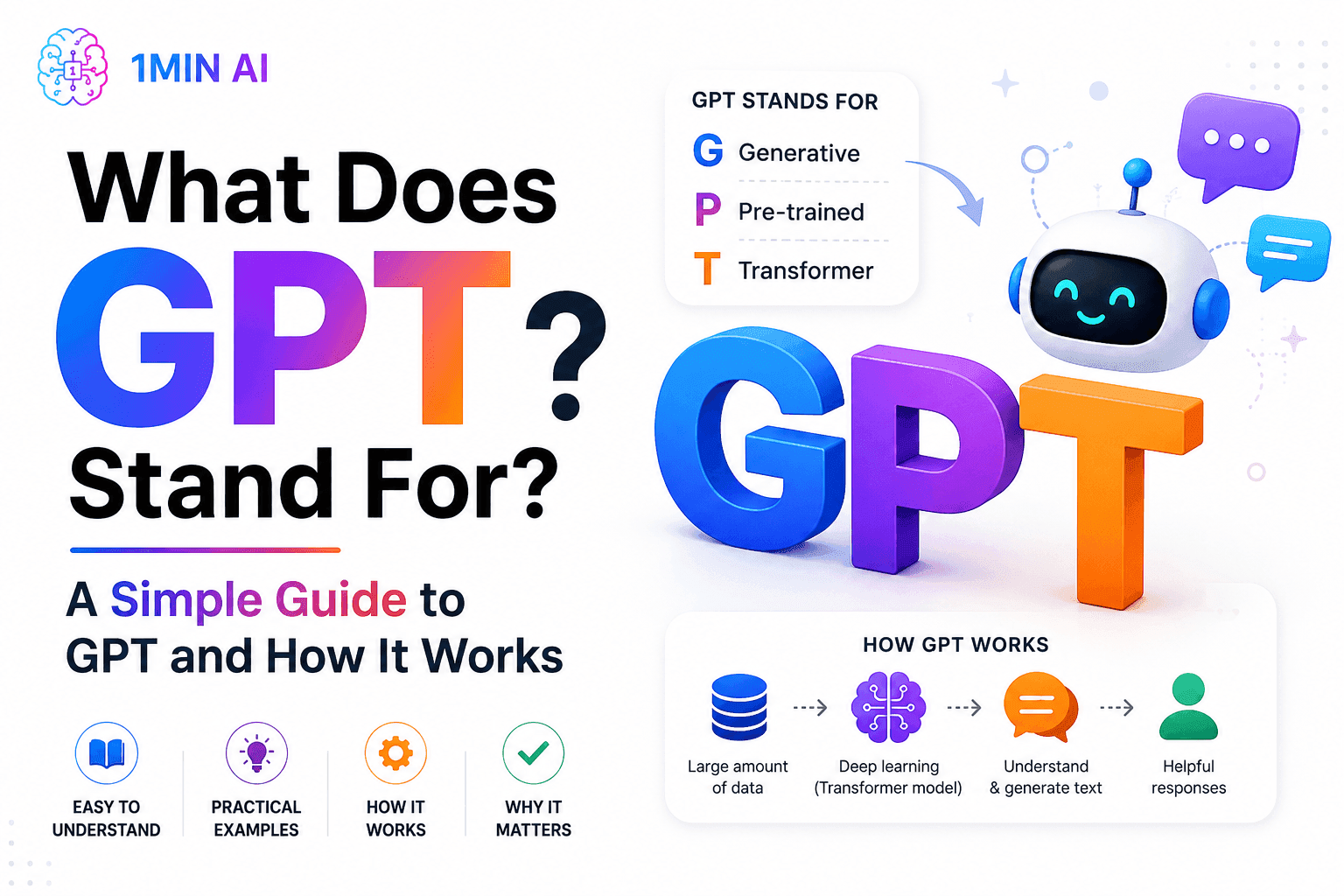
What Does GPT Stand For? A Simple Guide to GPT and How It Works
What does GPT stand for? Learn what GPT means, how Generative Pre-trained Transformer technology works, and why GPT models are important to modern AI.
Tram TaAI Comparisons
Compare AI tools, models, and platforms to find the best fit for your needs.
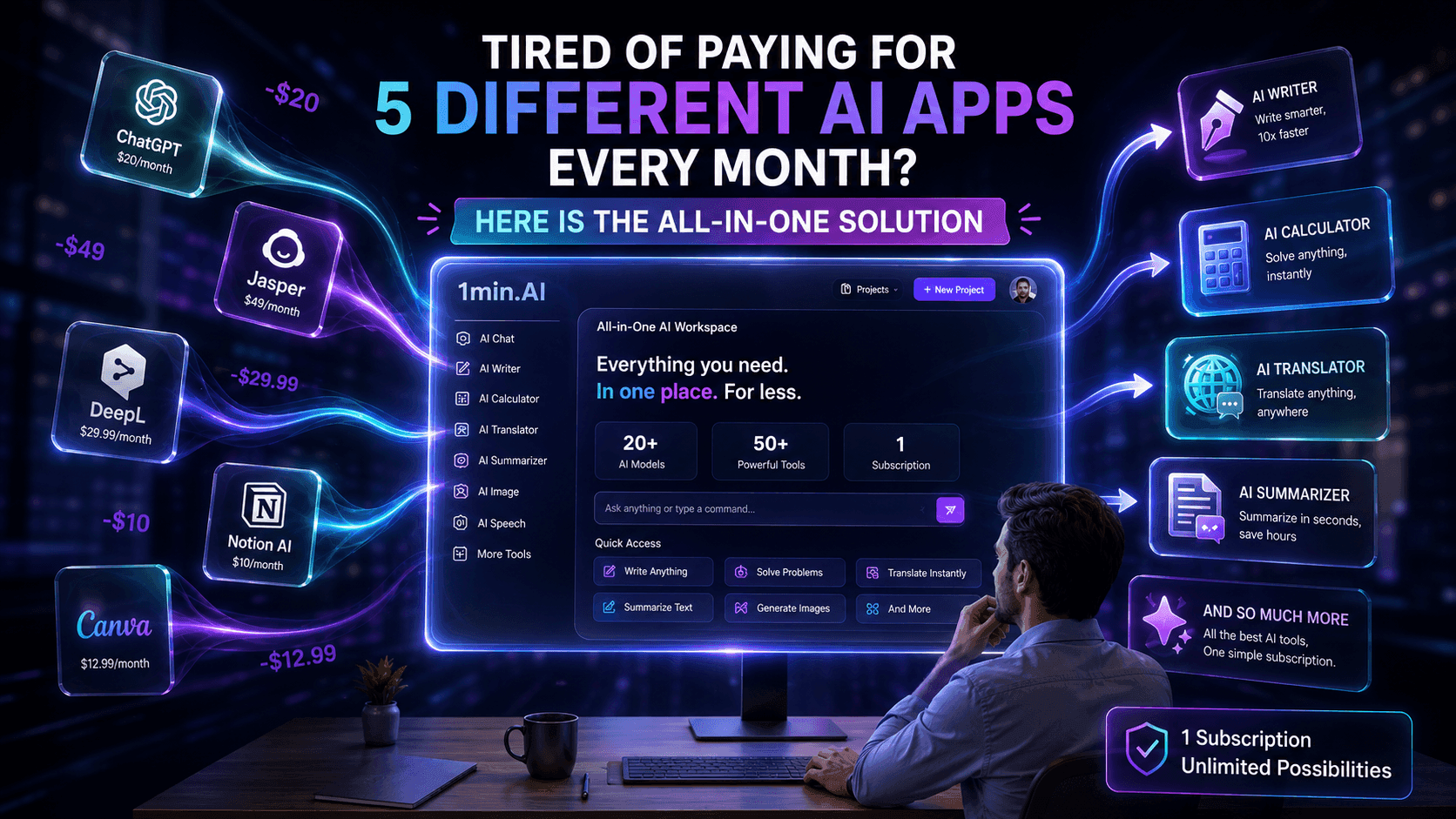
Your Sales Team Only Needs One App Instead of Five
Ditch the multi-app bills. Learn why high-performing sales teams are moving to an all-in-one AI platform to cut tool fatigue and leverage top models.
Uyen Hoang
Midjourney vs Ideogram: Which AI Should You Choose?
Compare Midjourney vs Ideogram to find the best AI image generator for your needs. Explore image quality, typography, features, and real-world use cases.
Trang Tran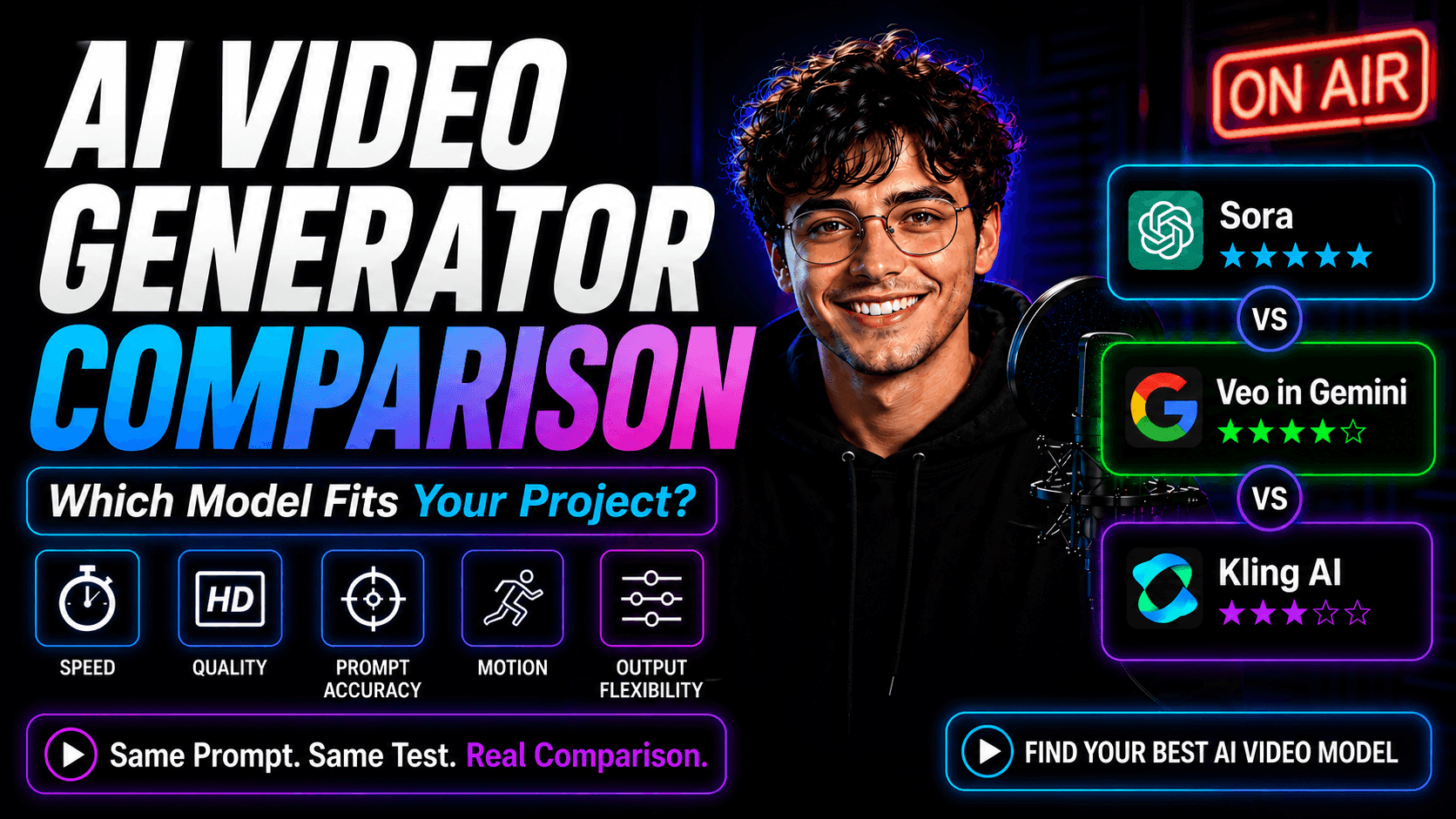
AI Video Generator Comparison on 1min.AI: Which Model Fits Your Project?
Compare Sora, Google Veo in Gemini, and Kling AI on 1min.AI using the same prompt. See speed, quality, prompt accuracy, motion, and output flexibility.
Lien Anh VuAI Integrations
Seamlessly integrate AI with the tools you already use to automate work and boost productivity.
How to Create a Podcast Without Expensive Equipment
Learn how to create a podcast without expensive equipment using AI for scripting, voice, video, editing, and content repurposing with 1min.AI.
Lien Anh Vu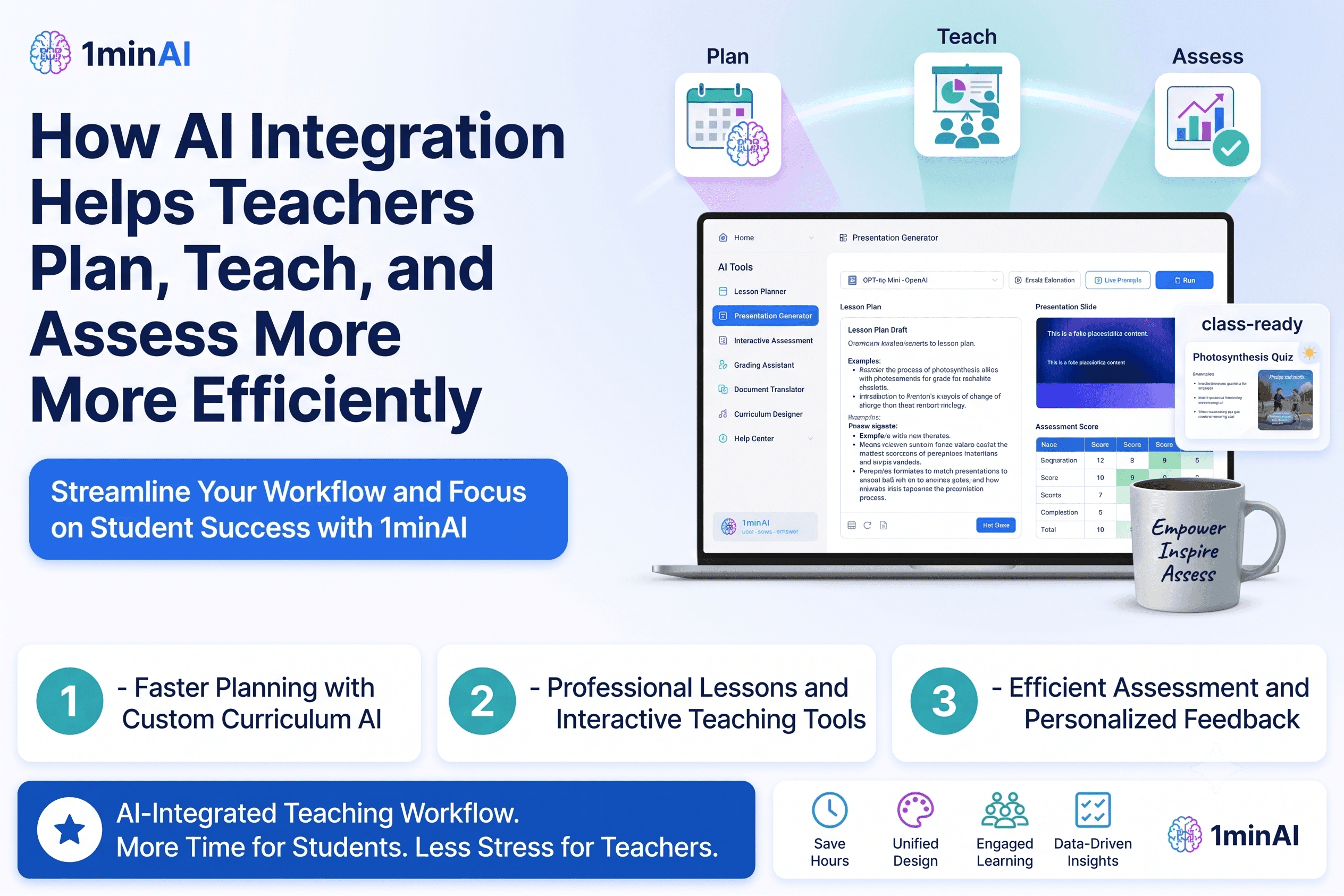
How AI Integrations Help Teachers Plan, Teach, and Assess More Efficiently
Discover how AI integration helps teachers streamline lesson planning, presentations, classroom materials, assessments, and student engagement in one AI workspace.
Tram Ta
AI Content Workflow for Freelancers: From Brief to Post
Discover an AI content workflow for freelancers. Use Claude for brainstorming and ChatGPT for images to turn client briefs into polished social posts faster.
Lien Anh VuAI for Industries
Find the best AI tools and workflows for healthcare, finance, education, legal, manufacturing, retail, real estate, and more
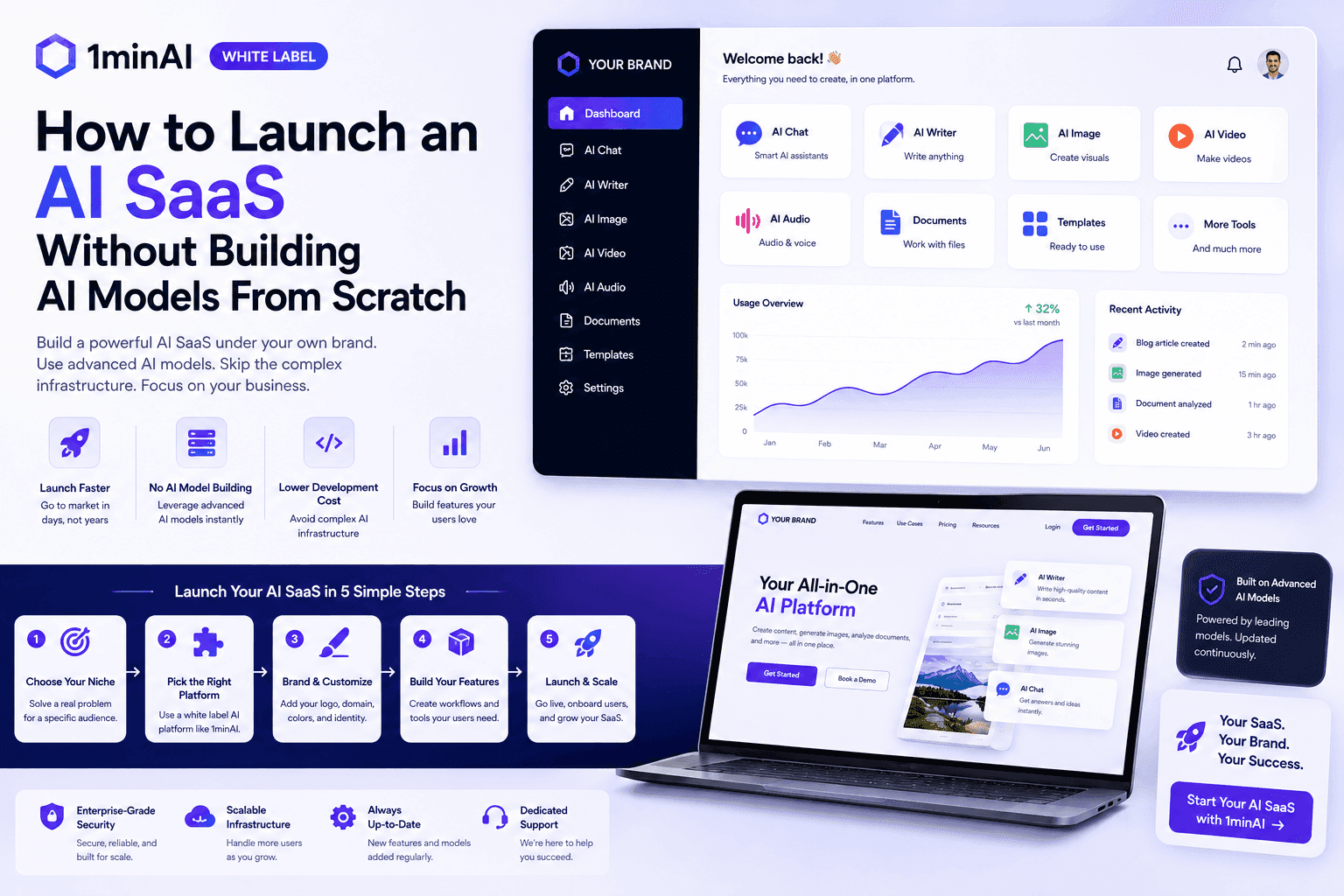
How to Launch an AI SaaS Without Building AI Models From Scratch
Learn how to launch an AI SaaS without building AI models from scratch. Explore white-label AI, product strategy, branding, pricing, and how 1minAI can help.
Tram Ta
Free AI Tools for Photographers to Elevate Creative Work
Discover free AI tools for photographers to edit images, create visuals and videos, develop content, and streamline client workflows with 1min.AI.
Lien Anh Vu
Free AI Tools for Social Media Managers to Create Faster
Discover free AI tools for social media managers to brainstorm content, create visuals and videos, write captions, and streamline social media workflows with 1min.AI.
Lien Anh VuAI Agents
Discover and run AI agents to automate tasks across your work and daily life.
White Label AI vs Custom AI Development: Which Is Better for Your Business?
Compare white label AI vs custom AI development to understand the differences in cost, launch time, customization, maintenance, and scalability.
Tram TaWhite Label AI Chatbots: Build Branded AI Assistants for Your Business
Discover how white label AI chatbots help agencies and businesses offer branded AI assistants for support, lead generation, and productivity with 1minAI.
Tram Ta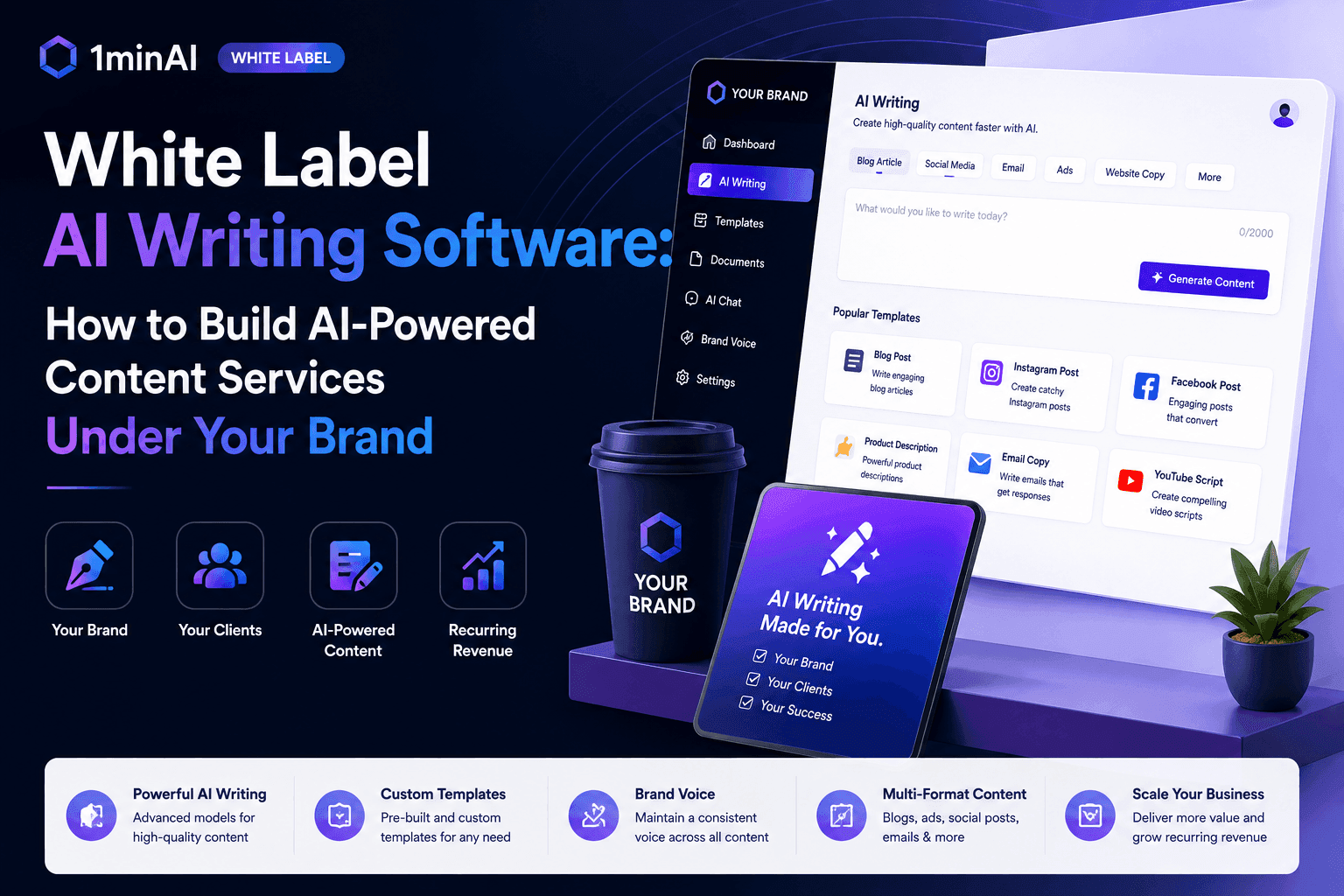
White Label AI Writing Software: How to Build AI-Powered Content Services Under Your Brand
Discover how white label AI writing software helps agencies, publishers, SEO companies, marketing teams, and consultants offer AI-powered content services under their own brand.
Tram TaAI Workflows
Explore ready-to-use AI workflows for productivity, marketing, sales, support, and more.
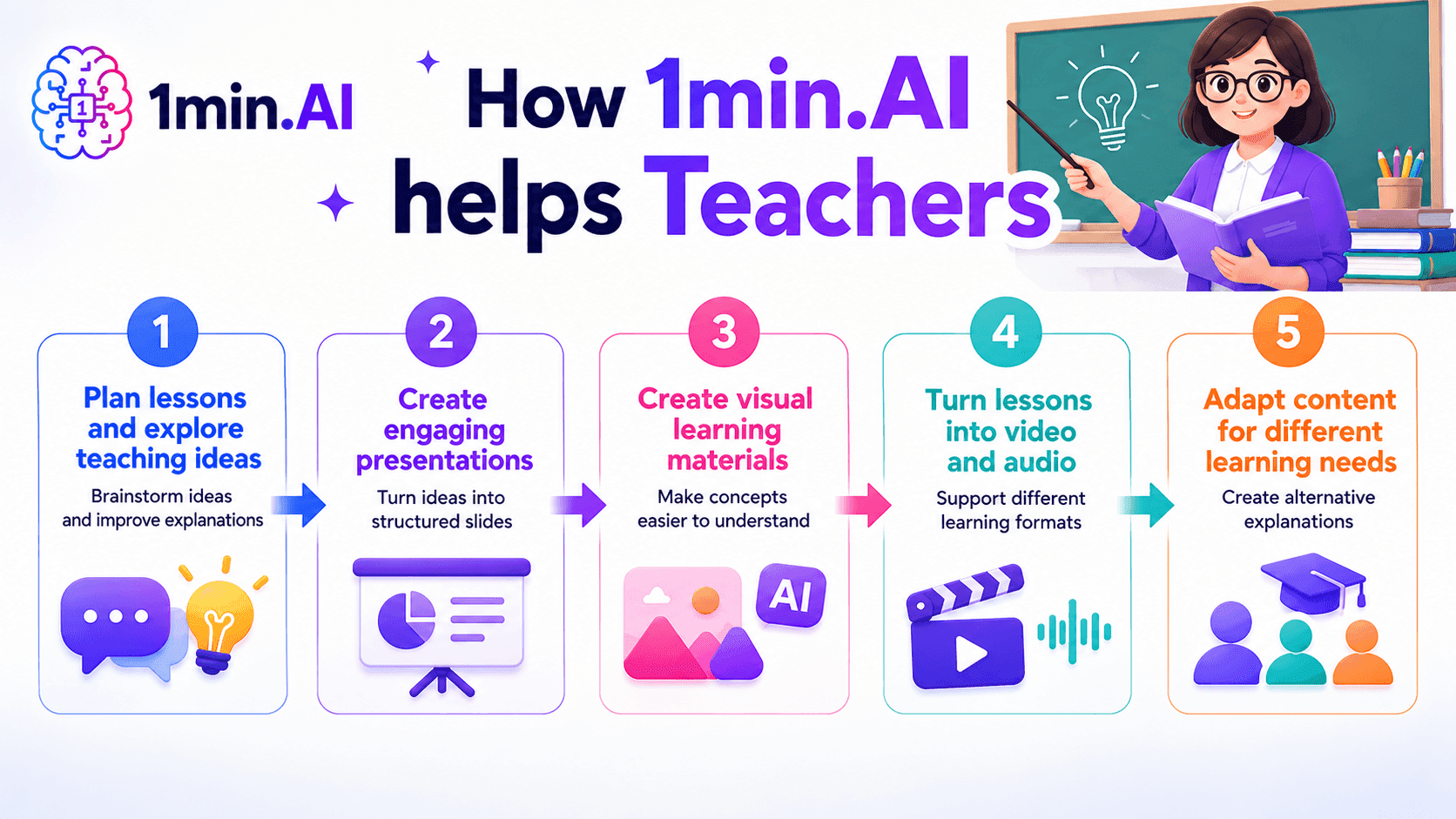
AI tools for Teachers
Discover AI tools for Teachers to create lessons, presentations, visuals, videos, and audio materials from one AI workspace with 1min.AI.
Ngoc Hong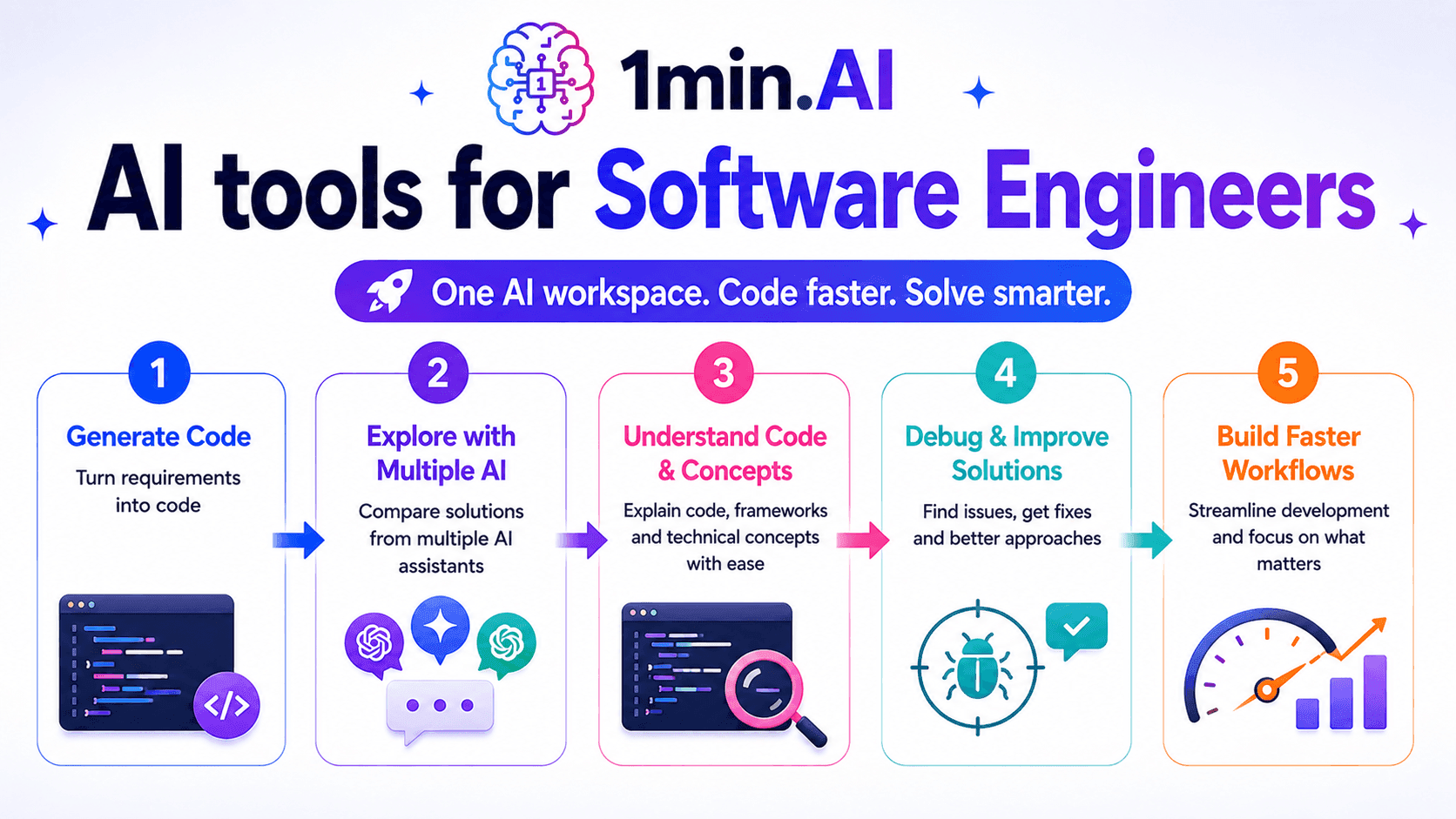
AI Tools for Software Engineers
Discover AI tools for Software Engineers to generate code, debug problems, understand technical concepts, and streamline development with 1min.AI.
Ngoc Hong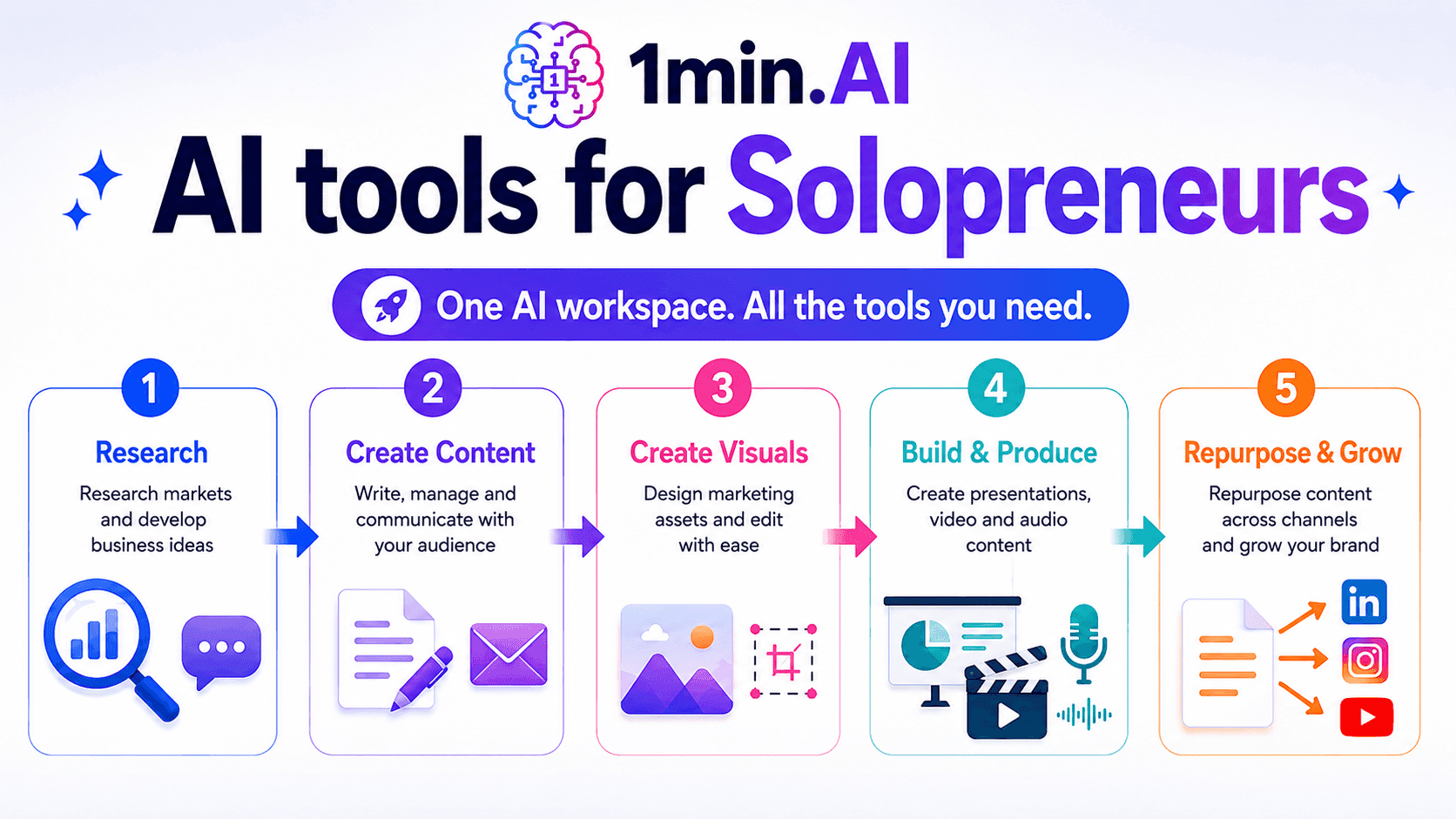
AI tools for Solopreneurs
Discover AI tools for Solopreneurs to research, create content, design, market, and manage business tasks from one AI workspace.
Ngoc HongNewsletter
Weekly AI Innovations with 1minAI
🔮 Weekly AI Innovations #134: Experience Free Qwen on AI Chat; The 3.7 and 3.6 Series Update
Looking for a powerful, free AI assistant? Explore the latest Qwen 3.7 and 3.6 series on 1min.ai. Enjoy high-speed, accurate AI chat at zero cost today!
 Hang Nguyen
🔮 Weekly AI Innovations #133: Earn Credits and more with AI Social
Explore DeepSeek V4's open-source efficiency and xAI's Grok 4.3 & 4.5 for advanced reasoning and ultra-fast coding in 2026.
Hang Nguyen
🔮 Weekly AI Innovations #132: DeepSeek V4 & xAI's Grok 4.3, 4.5
Explore DeepSeek V4's open-source efficiency and xAI's Grok 4.3 & 4.5 for advanced reasoning and ultra-fast coding in 2026.
Hang Nguyen