
White Label AI vs Custom AI Development: Which Is Better for Your Business?

Tram Ta
August 24, 2026
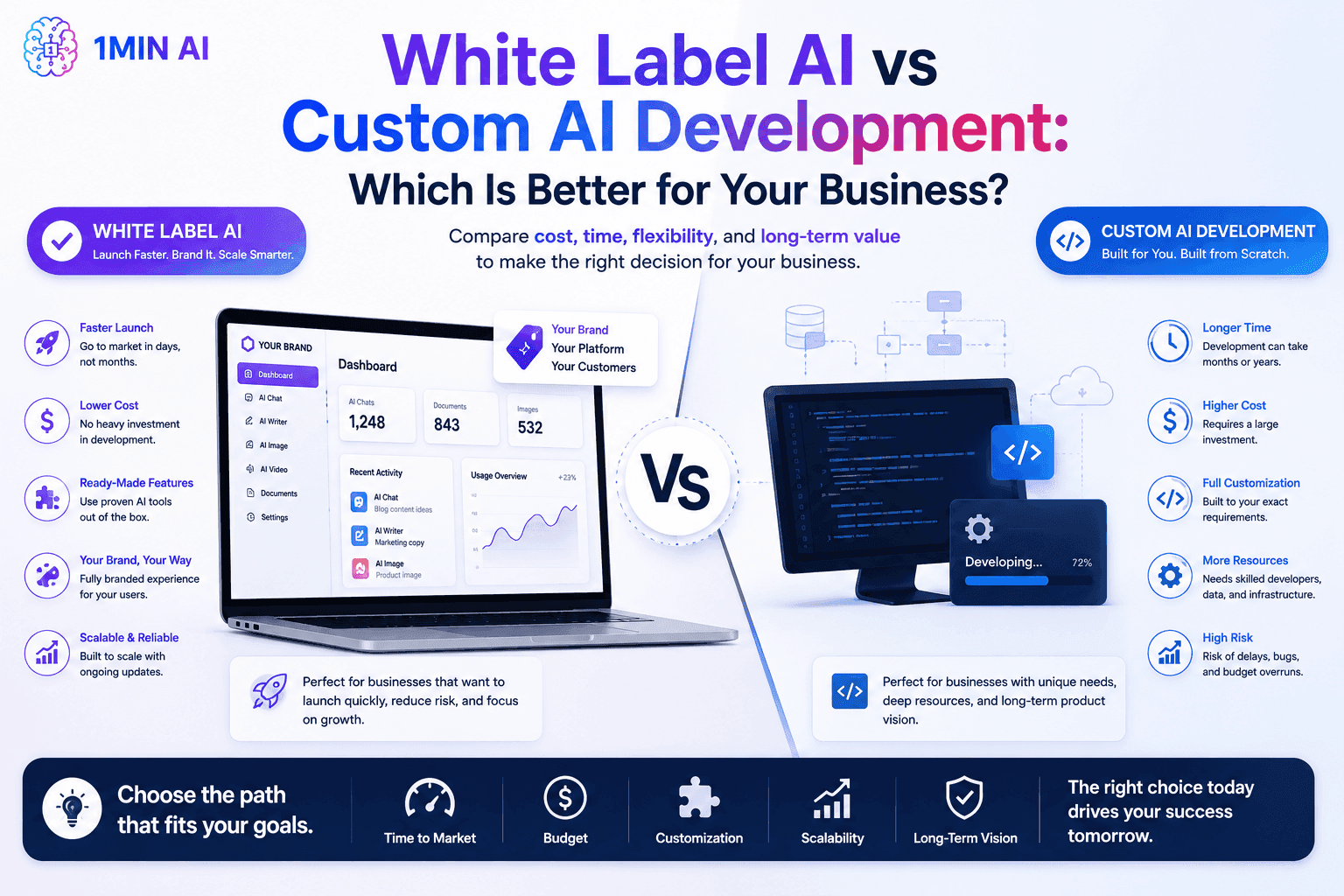
Compare white label AI vs custom AI development to understand the differences in cost, launch time, customization, maintenance, and scalability.
Businesses looking to launch an AI product have two common options: use a white label AI platform or build an AI solution from scratch. Both approaches have advantages, but they require very different levels of investment, technical expertise, and time. This guide compares white label AI vs custom AI development to help agencies, entrepreneurs, and SaaS companies choose the approach that best fits their goals.
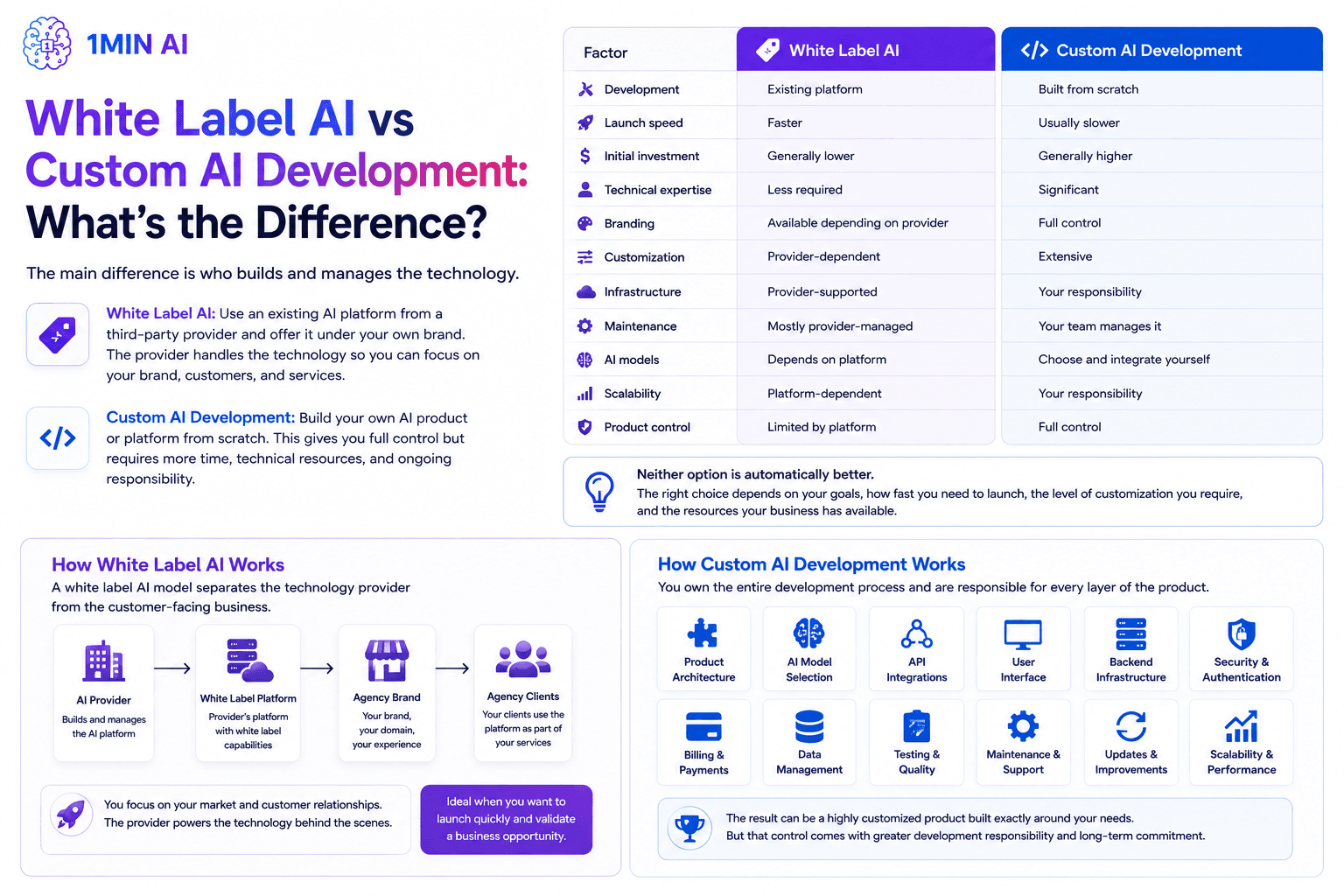
White Label AI vs Custom AI Development: What's the Difference?
The main difference comes down to who builds and manages the underlying technology.
With white label AI, a business uses an existing AI platform developed by a third-party provider and offers the solution under its own brand. The provider handles much of the underlying technology, while the business focuses on branding, customers, positioning, and its own services.
With custom AI development, the business builds its own AI product or platform. This provides significantly more control, but also requires more technical resources and long-term responsibility.
A simplified comparison looks like this:
| Factor | White Label AI | Custom AI Development |
|---|---|---|
| Development | Existing platform | Built from scratch |
| Launch speed | Faster | Usually slower |
| Initial investment | Generally lower | Generally higher |
| Technical expertise | Less required | Significant |
| Branding | Available depending on provider | Full control |
| Customization | Provider-dependent | Extensive |
| Infrastructure | Provider-supported | Your responsibility |
| Maintenance | Mostly provider-managed | Your team manages it |
| AI models | Depends on platform | Choose and integrate yourself |
| Scalability | Platform-dependent | Your responsibility |
| Product control | Limited by platform | Full control |
Neither option is automatically better.
The right choice depends on what you are trying to build, how quickly you need to launch, how much customization you require, and what resources your business has available.
How White Label AI Works
A white label AI model separates the technology provider from the customer-facing business.
For example, an agency may want to offer an AI platform to its clients. Instead of developing the platform itself, it can work with a white label provider.
The workflow becomes:
AI provider → White label platform → Agency brand → Agency clients
The agency can focus on its target market and customer relationships while the provider supports the underlying AI technology.
This can be particularly useful when the goal is to launch quickly and validate a business opportunity.
How Custom AI Development Works
Custom development takes a different approach.
The business owns the development process and typically needs to manage areas such as:
- Product architecture
- AI model selection
- API integrations
- User interface
- Backend infrastructure
- Security
- Authentication
- Billing
- Data management
- Testing
- Maintenance
- Updates
The result can be a highly customized product designed specifically around the company's requirements.
However, that control comes with greater development responsibility.
When Should You Choose White Label AI?
White label AI can be a strong option when speed, efficiency, and reduced technical complexity are priorities.
You Want to Launch Quickly
Building an AI platform from scratch can take considerable time.
Before customers can even use the product, you may need to design the interface, integrate AI models, build infrastructure, test the system, and establish a maintenance process.
With a white label AI platform, much of this foundation already exists.
That allows businesses to focus on preparing the commercial side of the product:
Positioning → Branding → Pricing → Marketing → Customer acquisition
This can be especially valuable for entrepreneurs testing a new AI business idea.
You Don't Have a Large Development Team
Not every company has an AI engineering team.
A marketing agency may have SEO specialists and content strategists.
A SaaS company may have developers focused on its existing product.
An entrepreneur may be operating with a very small team.
White label AI can allow these businesses to enter the AI market without immediately building an entire AI development organization.
You Want to Add AI to an Existing Business
White label AI isn't only for companies launching completely new products.
It can also be used to extend an existing business.
For example:
- A marketing agency adds AI content tools.
- An SEO agency adds AI writing capabilities.
- A social media agency adds AI image and video tools.
- A SaaS company adds AI productivity features.
- A consultant offers AI tools alongside consulting services.
In these situations, the business doesn't necessarily need to own every layer of the AI technology.
It needs a solution that supports the customer experience it wants to create.
You Want to Test a Business Model Before Investing Heavily
Custom AI development can require substantial investment before you know whether customers actually want the product.
White label AI can provide a way to test the market with less development overhead.
If the business model proves successful, the company can later decide whether deeper customization or custom development makes sense.
This makes white label AI particularly attractive for market validation and early-stage product launches.
When Should You Choose Custom AI Development?
Custom development makes more sense when the AI product itself is a major competitive advantage and the business requires a level of control that an existing platform cannot provide.
You Need Highly Specialized Functionality
A white label platform can provide many AI capabilities, but every provider has limitations.
If your product requires highly specialized workflows, proprietary systems, or unique functionality that isn't available through existing platforms, custom development may be more appropriate.
You Need Complete Control
With custom development, your business controls the product architecture and development roadmap.
You can decide:
- Which models to use
- How the product behaves
- How data flows through the system
- Which integrations to build
- How the interface works
- Which features to prioritize
This level of control can be important for businesses with highly specific technical requirements.
AI Technology Is Your Core Competitive Advantage
If the AI technology itself is what differentiates your company from competitors, investing in custom development may make sense.
For example, a company developing proprietary AI infrastructure or a highly specialized AI application may need ownership of the underlying technology to maintain its competitive position.
However, this approach requires the resources to continuously invest in development.
You Have the Resources to Maintain It
Building an AI platform isn't a one-time project.
AI models evolve, APIs change, security requirements develop, and customer expectations increase.
A custom AI platform therefore requires ongoing:
Development → Testing → Maintenance → Monitoring → Updates
If your company has the technical team and budget to support that process long term, custom development can provide significant flexibility.
How to Choose Between White Label AI and Custom Development
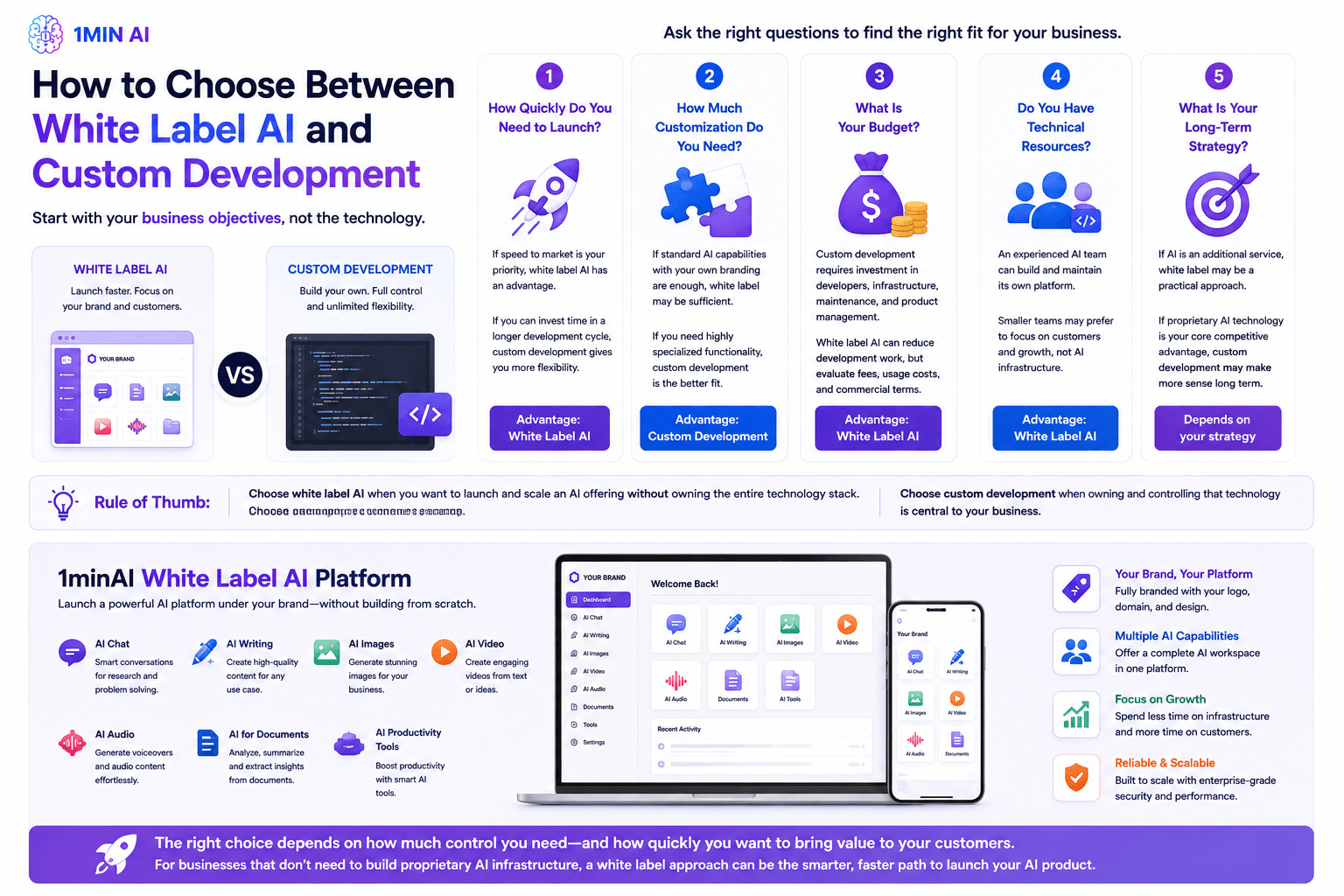
The decision becomes easier when you start with the business objective rather than the technology.
Ask these questions:
How Quickly Do You Need to Launch?
If your priority is getting an AI product to market quickly, white label AI may have an advantage.
If you're prepared for a longer development cycle, custom development provides more room for customization.
How Much Customization Do You Need?
If you need standard AI capabilities with your own branding and customer experience, white label may be sufficient.
If you need highly specialized functionality, custom development may be the better fit.
What Is Your Budget?
Custom development requires investment in developers, infrastructure, maintenance, and product management.
White label AI can reduce the amount of development work required, although businesses should still evaluate platform fees, usage costs, and commercial terms.
Do You Have Technical Resources?
A business with an experienced AI engineering team may be comfortable building and maintaining its own platform.
A small agency or entrepreneur may prefer to focus its resources on customers and growth rather than AI infrastructure.
What Is Your Long-Term Strategy?
Think about where the business will be in several years.
If AI is simply an additional service, white label may be a practical approach.
If the company plans to build proprietary AI technology as a central competitive advantage, custom development may eventually make more sense.
A useful rule of thumb is: Choose white label AI when you want to launch and scale an AI offering without owning the entire technology stack. Choose custom development when owning and controlling that technology is central to your business.
1minAI White Label AI Platform
For businesses that want to launch an AI offering without developing every AI capability from scratch, 1minAI White Label provides an alternative to building an entire AI platform internally.
1minAI brings multiple AI capabilities into one workspace, including:
- AI Chat
- AI Writing
- AI Images
- AI Video
- AI Audio
- AI for Documents
- AI productivity tools
This broader AI environment can be useful for agencies, entrepreneurs, and SaaS companies that want to build an AI offering around an existing platform.
Instead of spending resources developing every individual capability, businesses can focus on:
Brand → Product positioning → Customer experience → Sales → Growth
The right choice ultimately depends on how much control your business needs and how quickly you want to bring the product to market.
For businesses that don't need to build proprietary AI infrastructure, a white label approach can provide a more practical path to launching an AI product.
Conclusion
There is no universal winner in the white label AI vs custom AI development debate.
White label AI is often better for businesses prioritizing speed, lower development complexity, and faster market entry. Custom AI development is better when deep customization, technical ownership, and proprietary technology are central to the business.
If you're considering launching your own branded AI platform, contact 1minAI at collaborate@1min.ai to explore the white label opportunity.
Alternatives
Discover the best alternatives to 1minAI and compare features, pricing, and use cases.

1min.AI vs OpenRouter
1min.AI vs. OpenRouter: Compare the ready-to-use AI creation product against the technical API tool. Find out if you need a zero-code creative studio or a coding infrastructure hub.
 Ngoc Hong
1min.AI vs Chatplayground AI
Compare 1min.AI (Voice Cloning, Object Removal, Team Plans) vs. ChatPlayground AI (14+ Models, Teams/O365 Integration). Discover the superior platform for predictable pricing and long-term content production growth.
Ngoc Hong
1min.AI vs Krater AI
Compare 1min.AI vs Krater AI features, pricing, AI models, and workflows to find the best all-in-one AI tool for content, design, and productivity.
Ngoc HongAI Tools
Discover the best AI tools to boost productivity, creativity, and everyday work.
Free AI Character Generator - No Signup
Generate an AI character free from text or photo prompts. Try 1min.AI's AI character generator with multiple models, no design skills needed.
 Trang Tran
Turn “Make It Better” Into Better Content With AI
Use AI to turn vague client feedback into clear revisions, reduce unnecessary edits, and deliver better content faster.
 Lien Anh Vu
Free AI Brand Voice Generator
Create a unique and consistent brand voice with our powerful AI Brand Voice Generator. Get started today and craft messaging that resonates with your audience.
Trang TranAI Features
Comprehensive AI features that streamline workflows, improve efficiency, and empower teams to achieve more.
Free AI Tools for Content Creator
Content Creator Studio brings writing, research, image generation, video, and audio tools into one AI workspace, so you can turn ideas into publish-ready content without switching between different tools.
 Uyen Hoang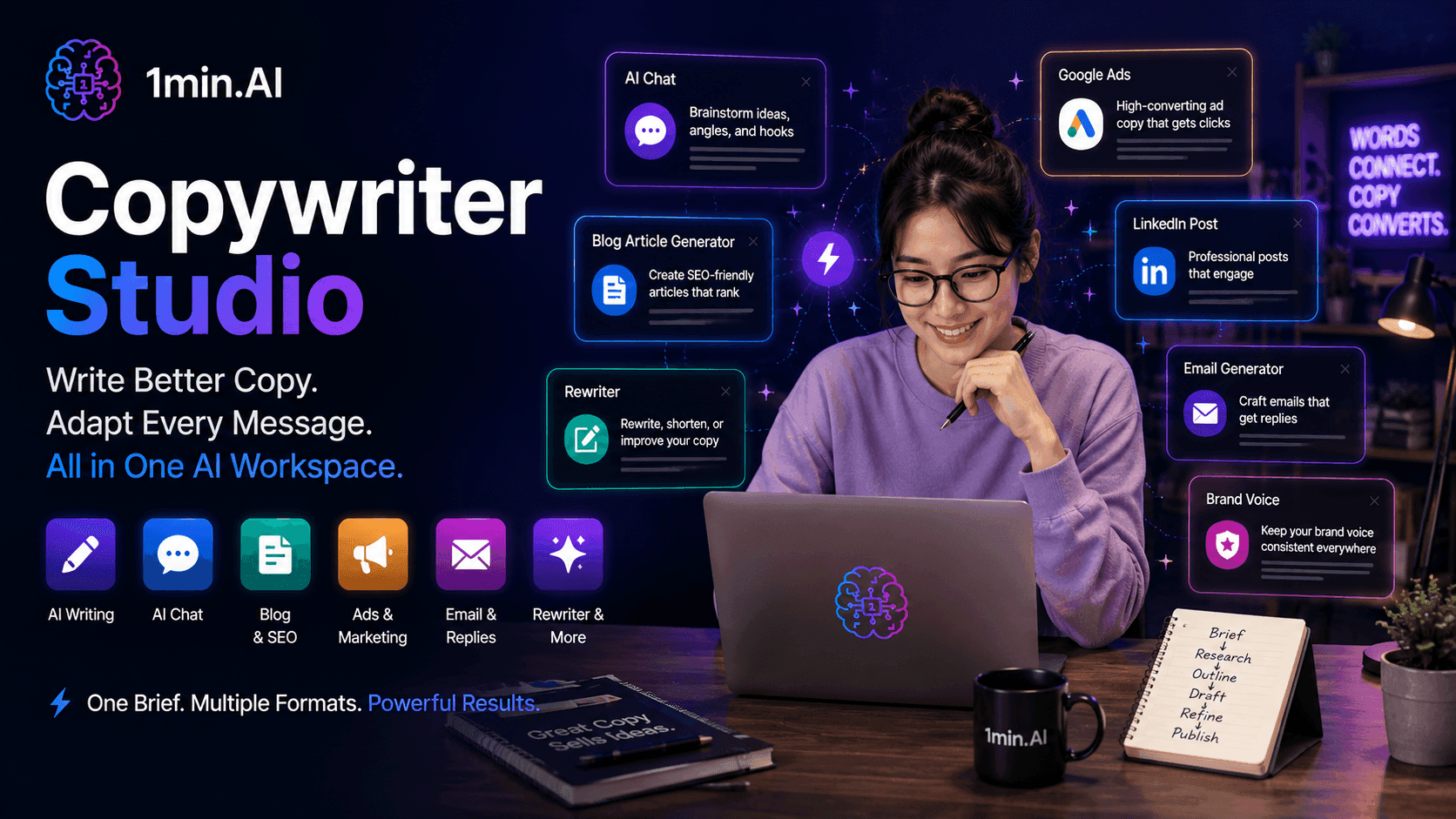
Free AI Tools for Copywriter
Copywriter Studio brings research, writing, rewriting, and multi-channel copy generation into one AI workspace, so you can move from a brief to polished copy without switching between different tools.
Uyen Hoang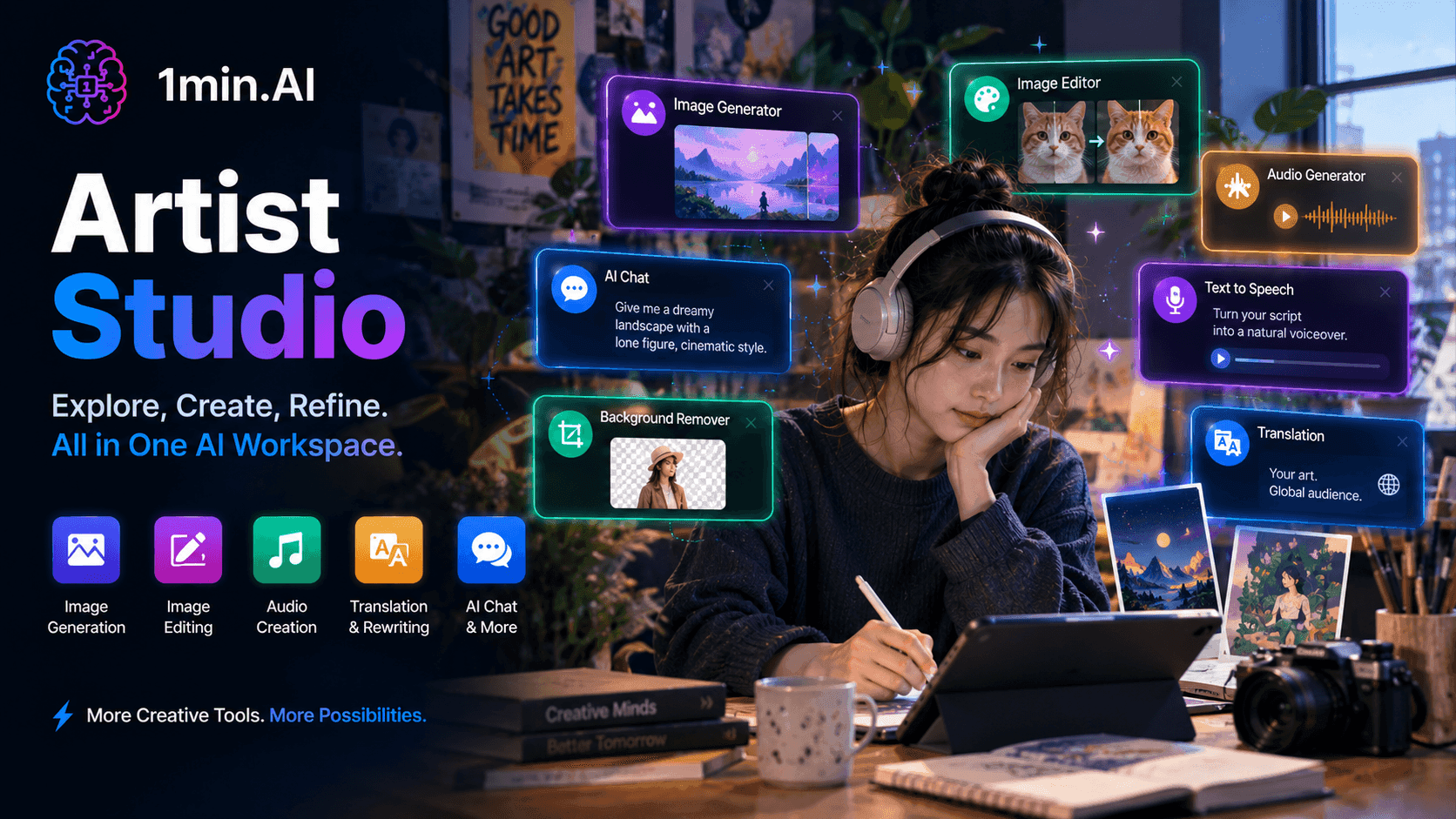
Free AI Tools for Artist
Artist Studio brings image generation, editing, audio creation, and creative tools into one AI workspace, so artists can explore ideas, refine their work, and create finished pieces without switching between different tools.
Uyen HoangAI Use Cases
A curated collection of AI use cases for business, productivity, and industry-specific applications.
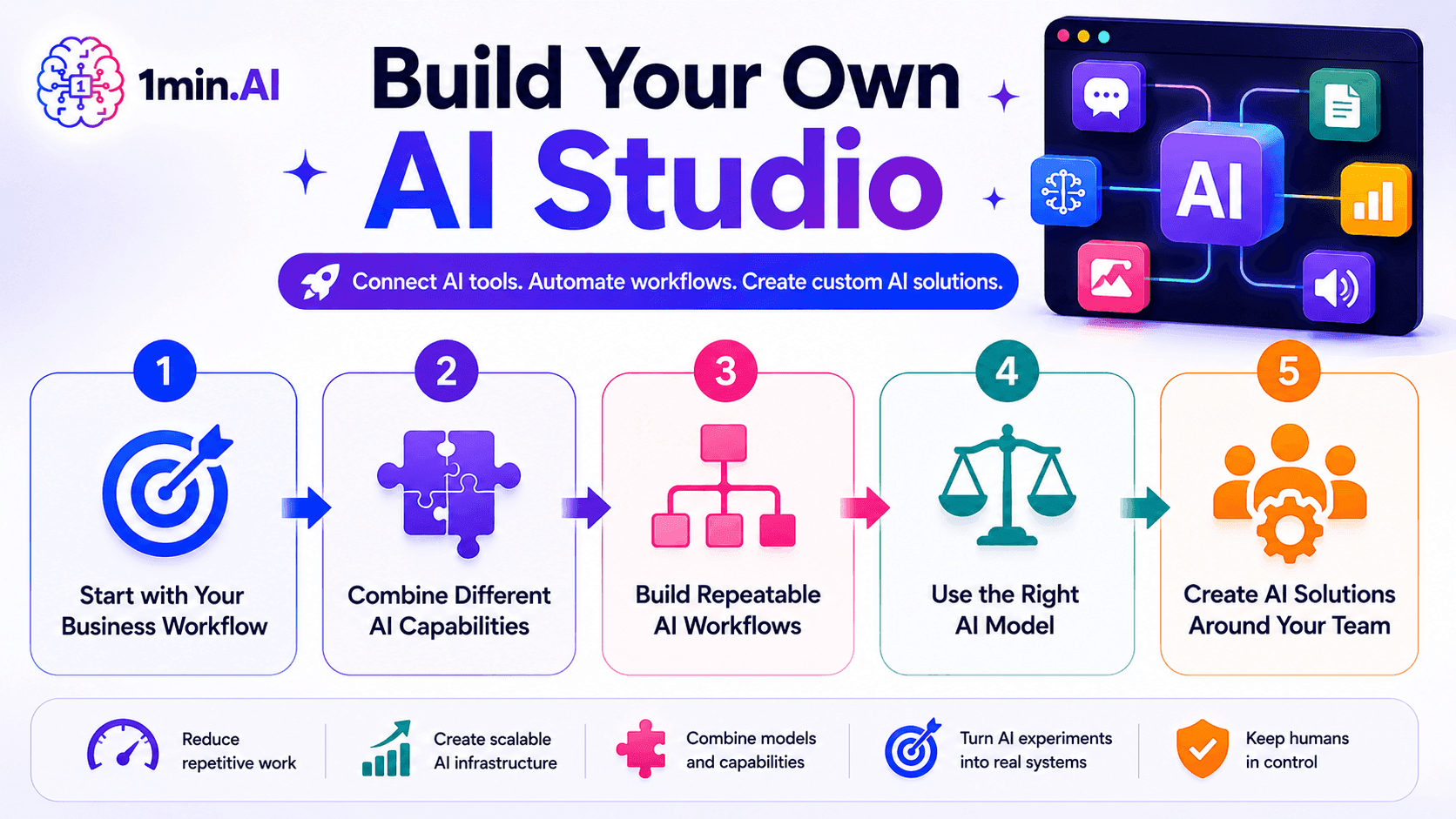
Build Your Own AI Studio
Build your own AI Studio with 1min.AI to connect AI tools, streamline workflows, and create custom AI solutions for your team and business.
Ngoc Hong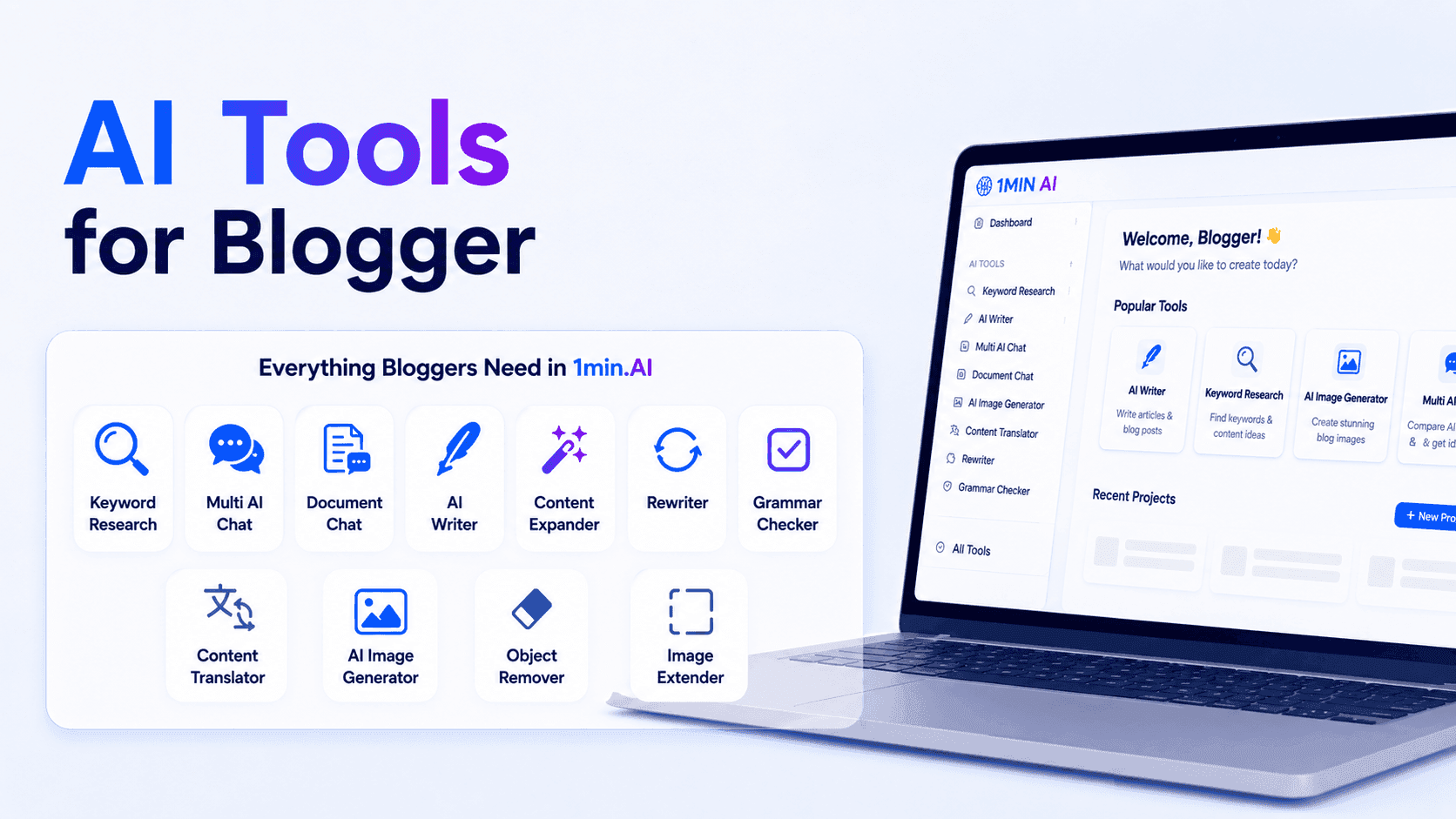
AI Tools for Bloggers
Discover AI tools for bloggers to research keywords, write SEO content, edit articles, and create visuals faster with 1min.AI.
Ngoc Hong
AI tools for YouTubers
Discover AI tools for YouTubers to research topics, write scripts, create visuals, translate videos, generate audio, and repurpose content.
Ngoc HongAI Tutorials
Learn how to use AI with practical, step-by-step tutorials.
Viral Reels in Minutes: How to Use 1minAI’s Text-to-Speech for Satirical Voiceovers
Learn how satirical page admins use 1minAI’s Text-to-Speech feature to generate instant news anchor and dramatic voiceovers for TikToks, Shorts, and Instagram Reels.
Uyen Hoang
No Photoshop Needed: How to Use 1minAI’s Image Text Editor for Instant Meme Customization
Stop wasting time opening Photoshop or Canva to edit meme captions. Learn how 1minAI’s Image Text Editor replaces text on any meme template or news banner in seconds.
Uyen HoangTurn “Make It Better” Into Better Content With AI
Use AI to turn vague client feedback into clear revisions, reduce unnecessary edits, and deliver better content faster.
Lien Anh VuAI Guides
Learn AI faster with practical guides, real-world examples, and actionable best practices.

When Should Creators Post on Instagram?
When should creators post on Instagram? Discover why there is no universal best time and how to use audience data, testing, and AI to build a smarter posting workflow.
Lien Anh Vu
How to start an AI business without building from scratch
Learn how to start an AI business, validate your idea, and launch faster without building costly AI infrastructure from scratch.
Ngoc Hong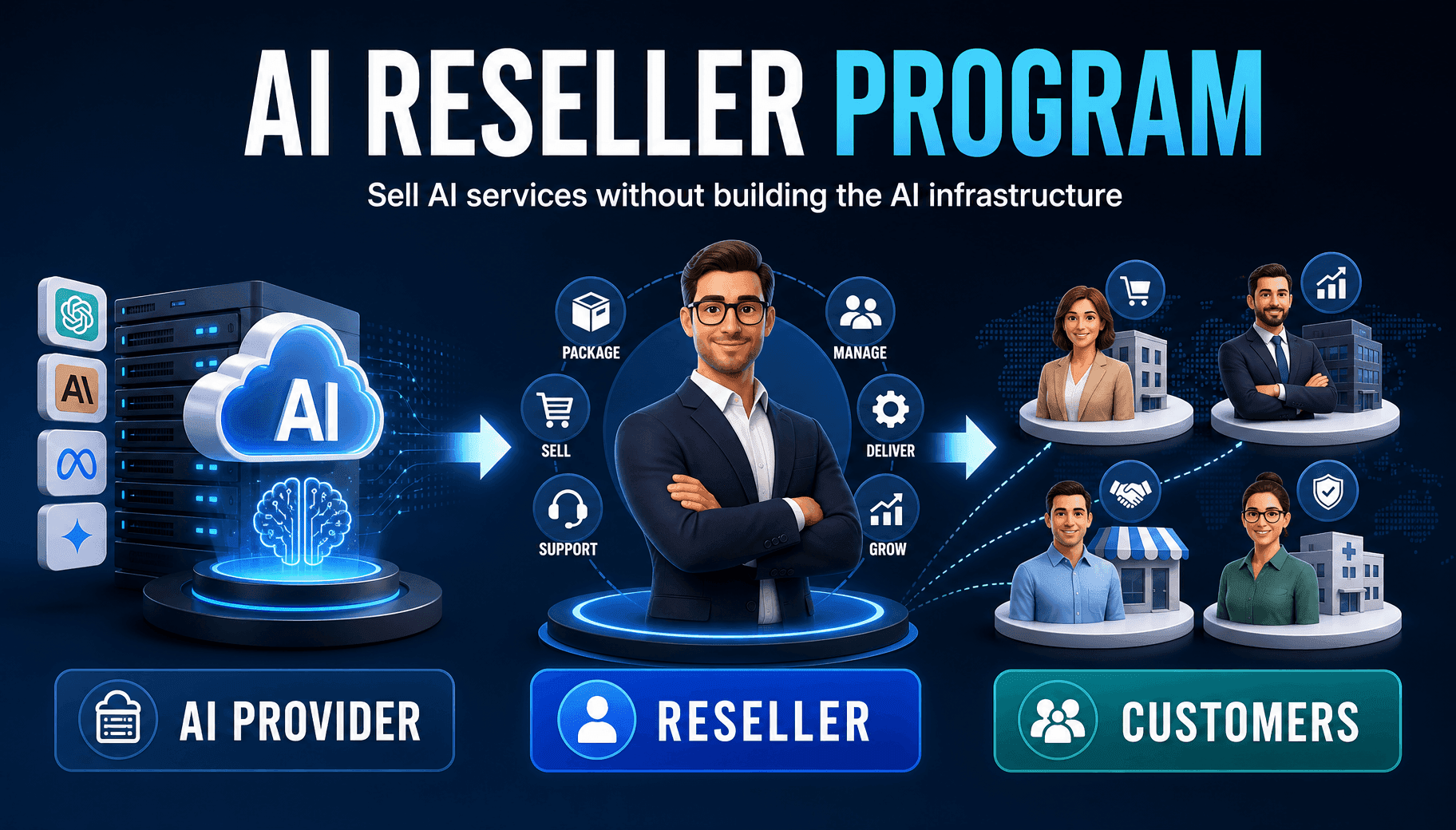
How Does an AI Reseller Program Work?
Learn how does an AI reseller program work? Explore white-labeling, pricing, revenue models, and what to look for before choosing an AI platform.
Trang TranAI Solutions
Browse the best AI solutions for automation, coding, research, productivity, customer support, marketing, and business workflows.
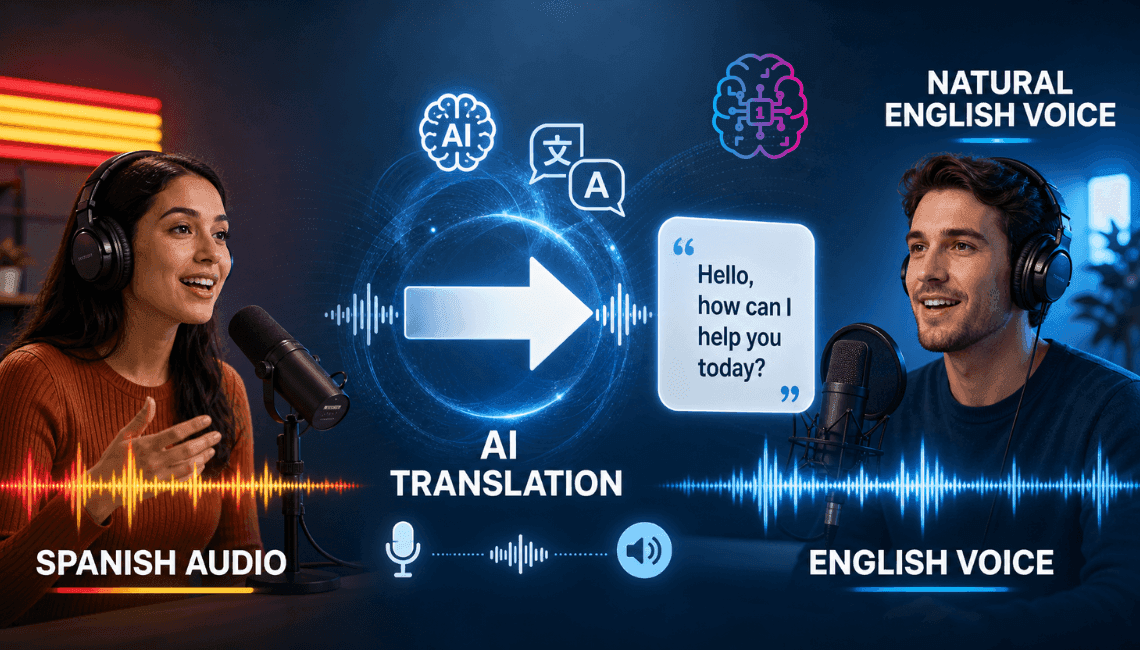
Free Spanish To English Translator Voice
Free Spanish to English translator voice: turn Spanish audio into accurate English text, then generate natural English voice with 1min.AI.
Trang Tran
Free AI Luma Video Generator
Revolutionize your content creation with Luma AI Video Generator. Easily generate stunning, high-quality videos with just a few clicks. No design or editing skills required.
Uyen HoangTurn “Make It Better” Into Better Content With AI
Use AI to turn vague client feedback into clear revisions, reduce unnecessary edits, and deliver better content faster.
Lien Anh VuAI Models
Explore the world's leading AI models in one place.
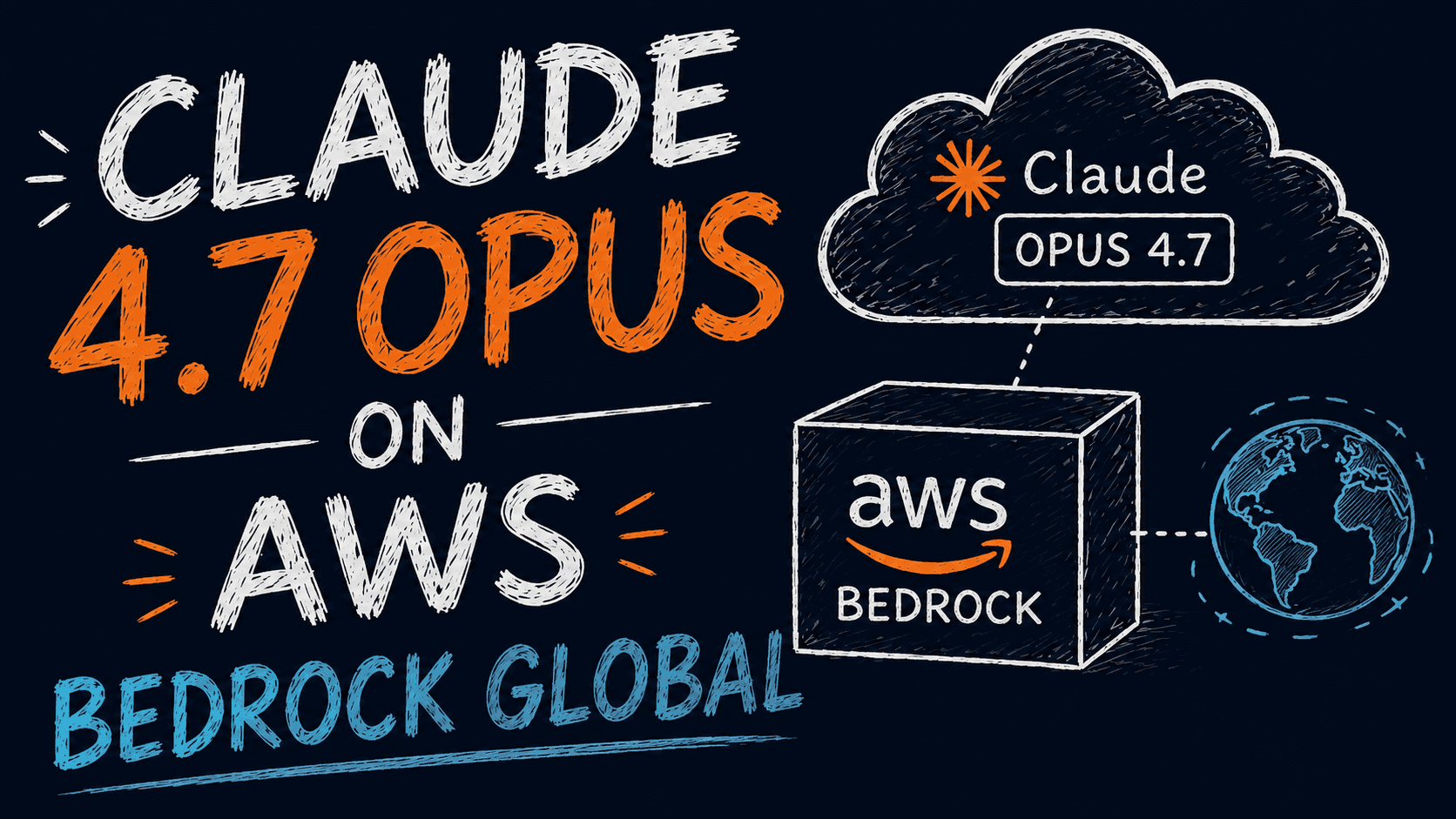
CLAUDE 4.7 OPUS - AWS BEDROCK US
Deploy Claude 4.7 Opus on AWS Bedrock US. Discover enterprise AI infrastructure, advanced coding, adaptive thinking, secure inference, and seamless AWS integration.
Ngoc Hong
What Does GPT Stand For? A Simple Guide to GPT and How It Works
What does GPT stand for? Learn what GPT means, how Generative Pre-trained Transformer technology works, and why GPT models are important to modern AI.
 Tram Ta
Free AI Chat with Qwen3 VL Plus
Chat with Qwen3 VL Plus for advanced image and video understanding, visual reasoning, OCR, spatial analysis, and multimodal AI assistance inside 1minAI.
Uyen HoangAI Comparisons
Compare AI tools, models, and platforms to find the best fit for your needs.
Your Sales Team Only Needs One App Instead of Five
Ditch the multi-app bills. Learn why high-performing sales teams are moving to an all-in-one AI platform to cut tool fatigue and leverage top models.
Uyen Hoang
Midjourney vs Ideogram: Which AI Should You Choose?
Compare Midjourney vs Ideogram to find the best AI image generator for your needs. Explore image quality, typography, features, and real-world use cases.
Trang Tran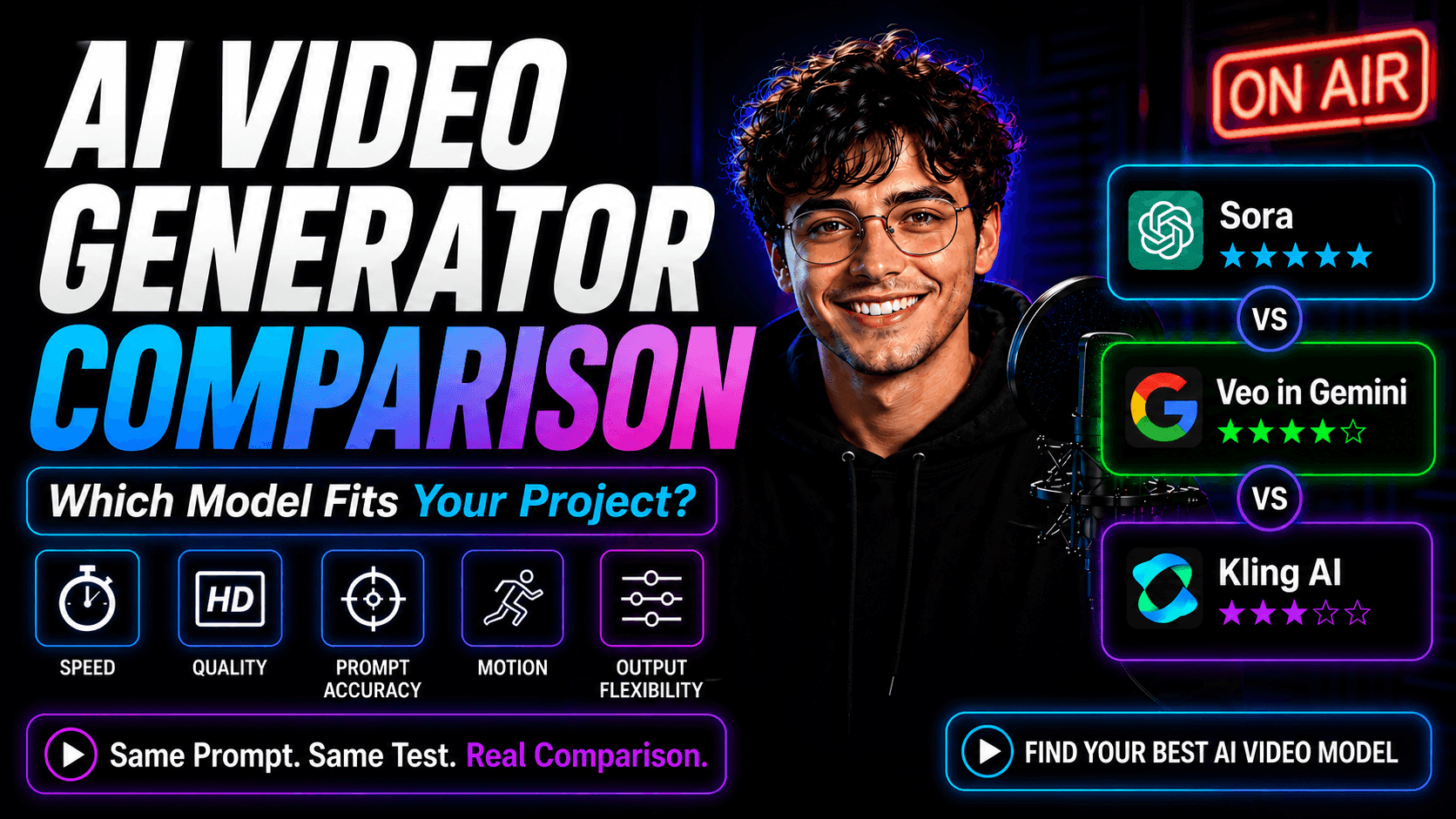
AI Video Generator Comparison on 1min.AI: Which Model Fits Your Project?
Compare Sora, Google Veo in Gemini, and Kling AI on 1min.AI using the same prompt. See speed, quality, prompt accuracy, motion, and output flexibility.
Lien Anh VuAI Integrations
Seamlessly integrate AI with the tools you already use to automate work and boost productivity.
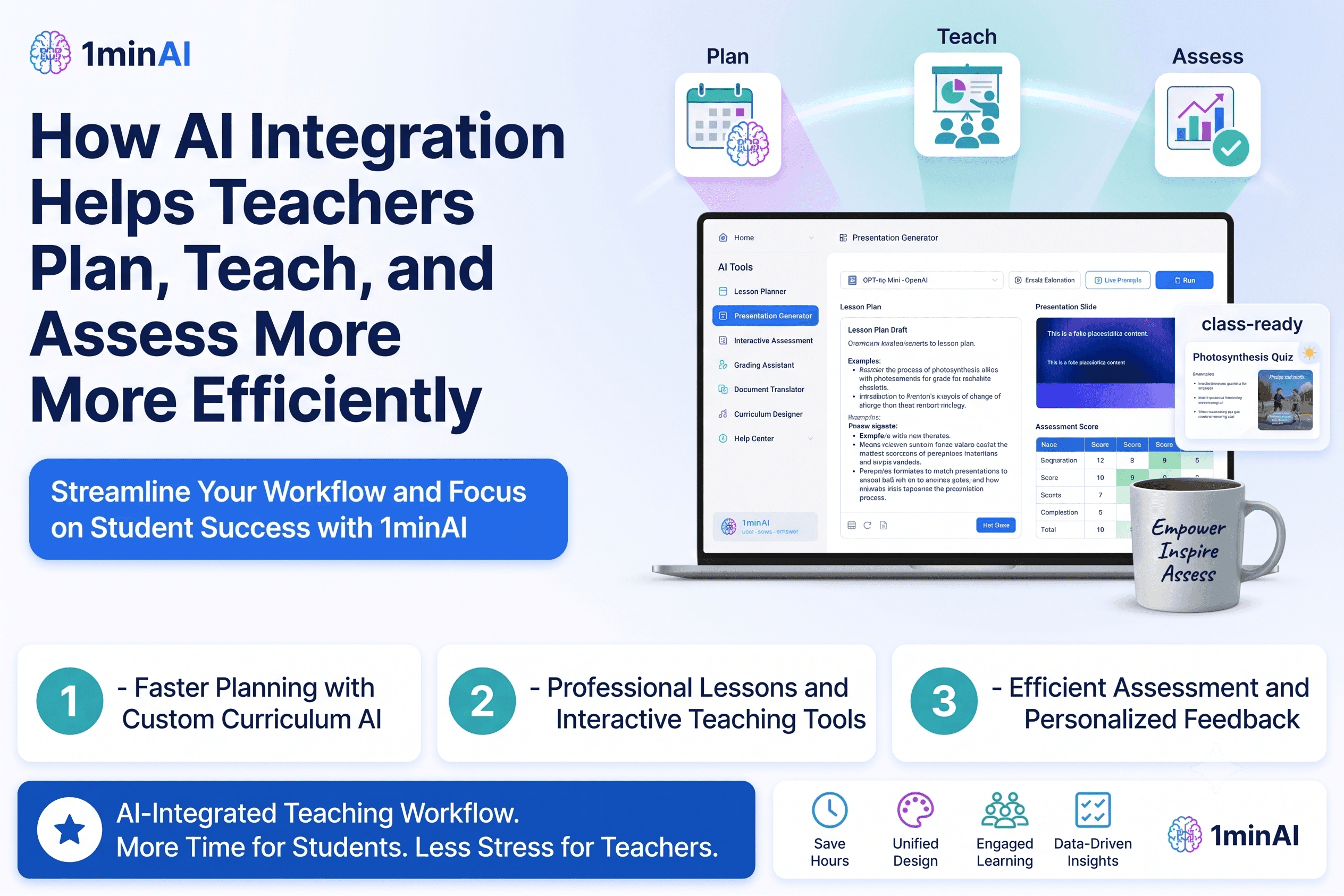
How AI Integrations Help Teachers Plan, Teach, and Assess More Efficiently
Discover how AI integration helps teachers streamline lesson planning, presentations, classroom materials, assessments, and student engagement in one AI workspace.
Tram Ta
AI Content Workflow for Freelancers: From Brief to Post
Discover an AI content workflow for freelancers. Use Claude for brainstorming and ChatGPT for images to turn client briefs into polished social posts faster.
Lien Anh Vu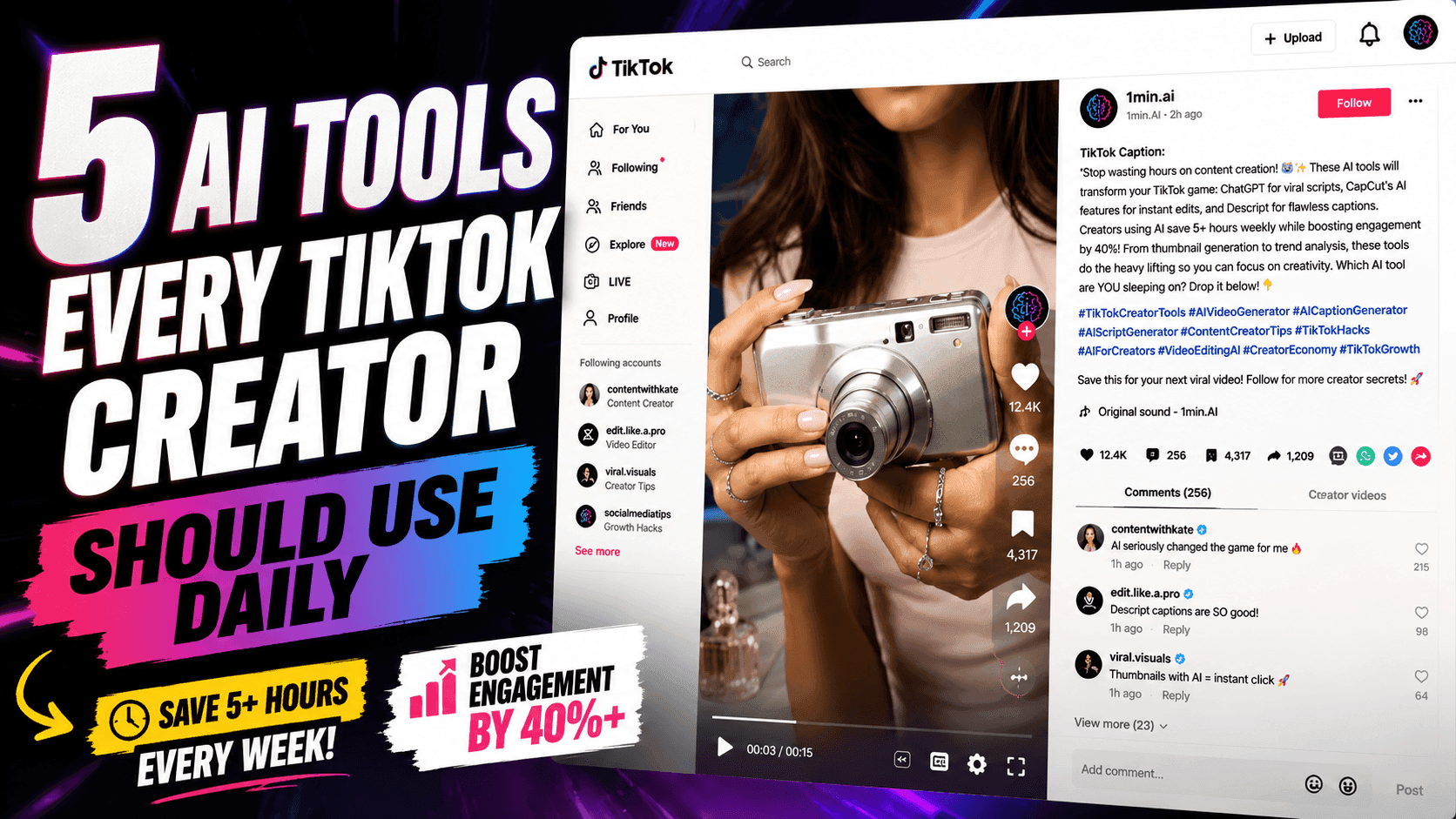
5 AI Tools Every TikTok Creator Should Use Daily
Discover five essential AI tools that help TikTok creators find ideas, write scripts, create visuals, generate videos, and publish content faster.
Lien Anh VuAI for Industries
Find the best AI tools and workflows for healthcare, finance, education, legal, manufacturing, retail, real estate, and more

Free AI For Financial Analysts & Investors
Read faster, decide faster. Free AI for Financial Analysts & Investors to summarize reports, transcribe earnings calls, and draft emails.
Trang Tran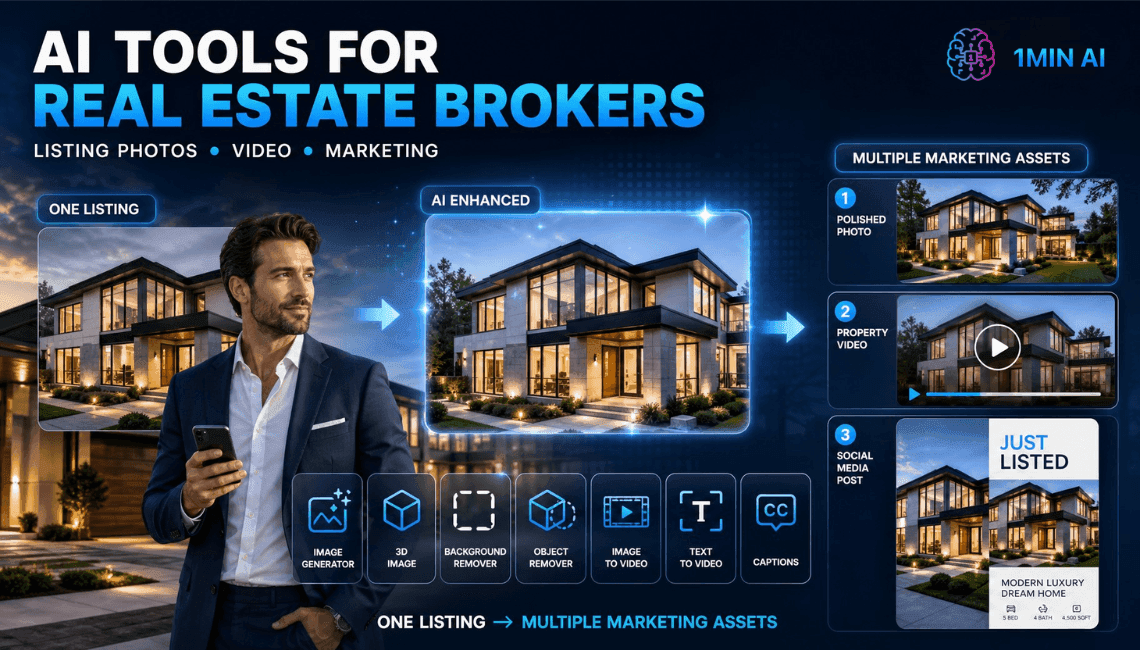
Free AI For Real Estate Brokers
List faster, sell faster. Free AI for Real Estate brokers to create stunning property visuals, videos, and captions in minutes.
Trang Tran
Free AI Tool for Researchers & Educators
Stop losing hours to research and writing. 1min.AI's free AI tool for researchers finds keywords, summarizes papers, and drafts content instantly.
Trang TranAI Agents
Discover and run AI agents to automate tasks across your work and daily life.
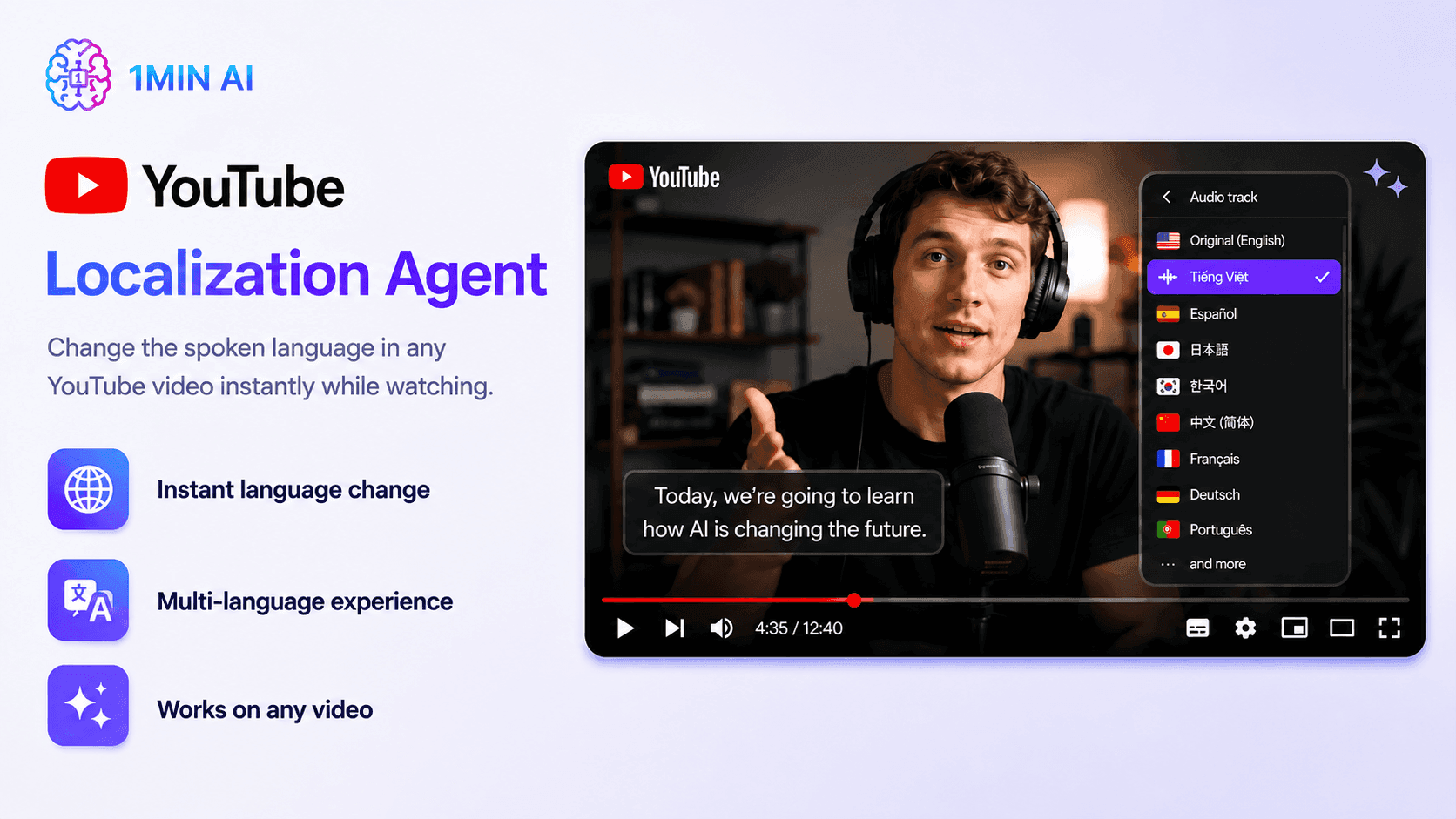
YouTube Localization Agent
Translate and dub YouTube videos with AI using YouTube Localization Agent. Localize subtitles, titles, descriptions, thumbnails, and audio in one workflow with 1minAI.
Ngoc Hong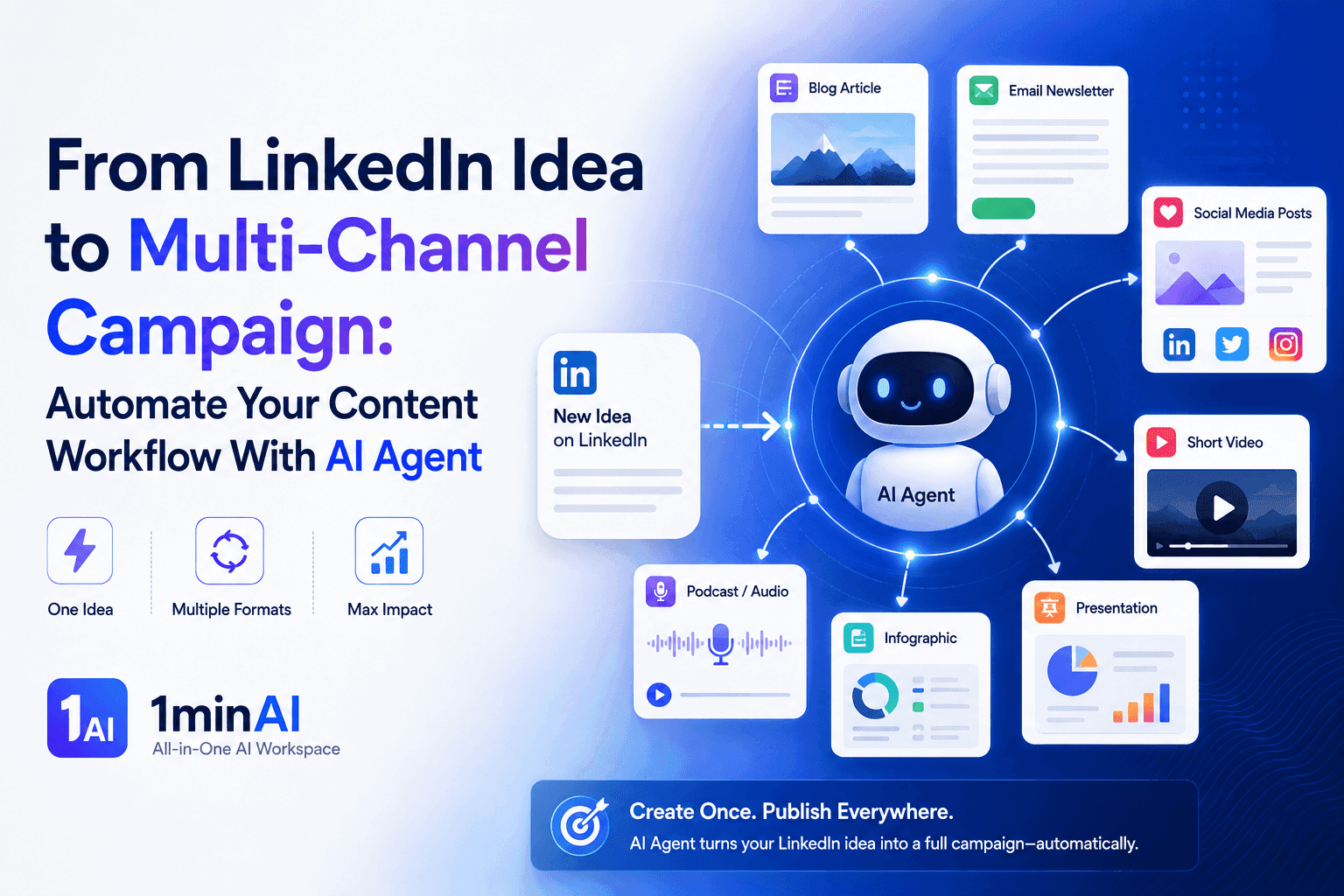
From LinkedIn Idea to Multi-Channel Campaign: Automate Your Content Workflow With AI Agent
Turn one LinkedIn idea into a multi-channel campaign with 1minAI Agent. Create posts, videos, visuals, and social content from one connected workflow.
Tram Ta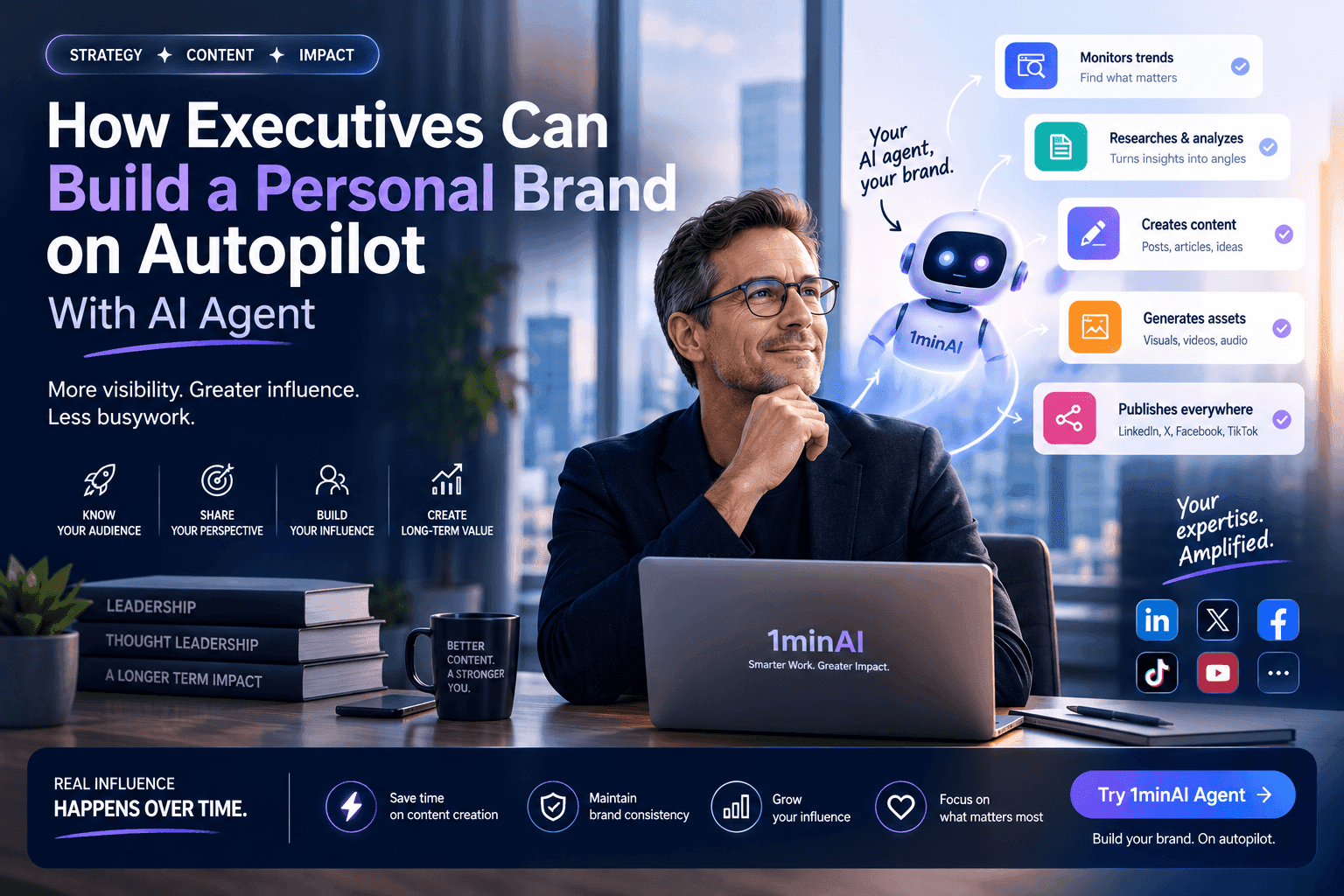
How Executives Can Build a Personal Brand on Autopilot With AI Agent
Learn how executives can use 1minAI Agent to research trends, build content strategies, manage editorial calendars, and scale personal branding.
Tram TaAI Workflows
Explore ready-to-use AI workflows for productivity, marketing, sales, support, and more.
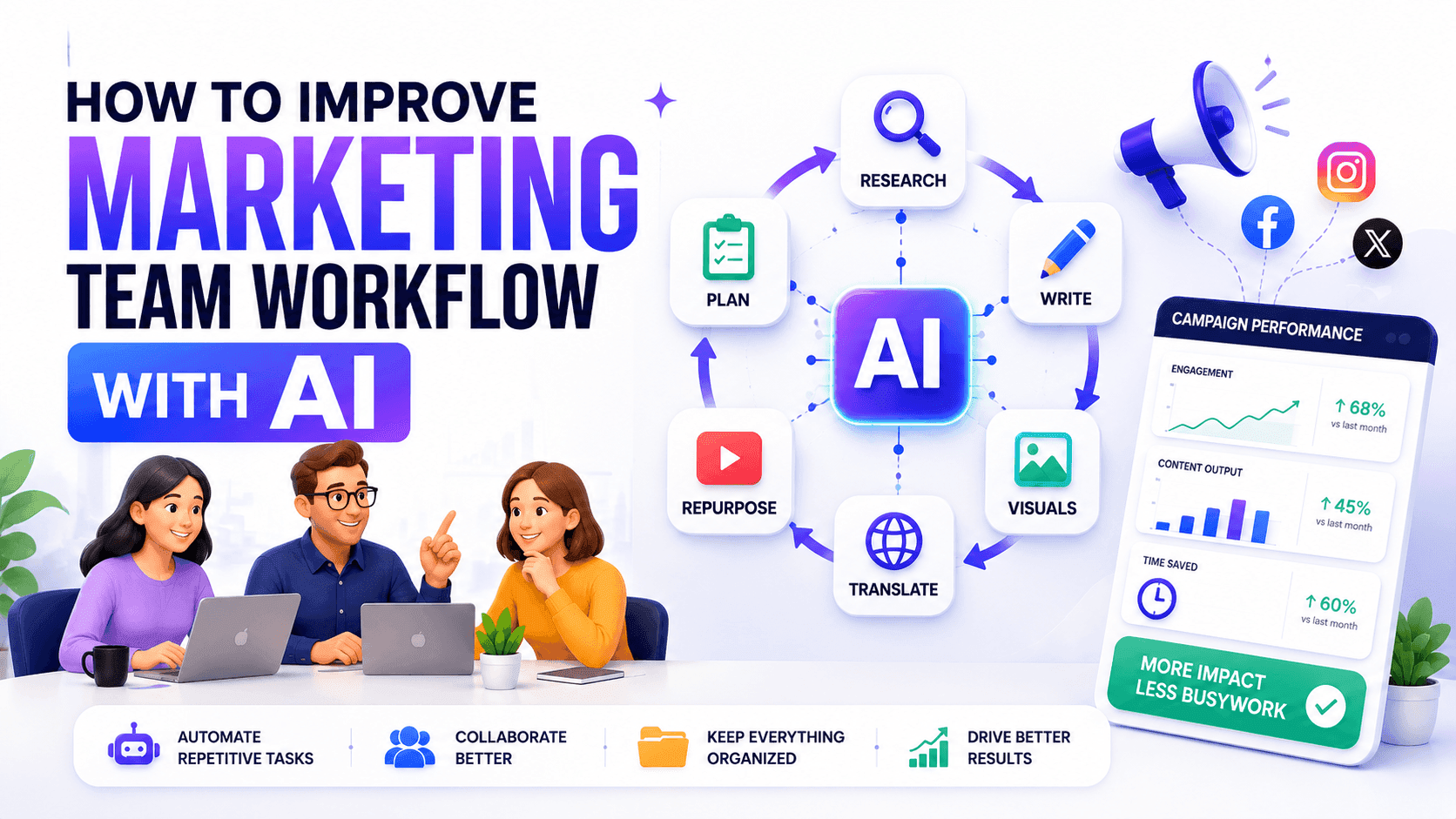
How to Improve Your Marketing Team Workflow With AI
Learn how to improve your marketing team workflow with AI, automate repetitive tasks, and build a scalable system for growing teams.
Ngoc Hong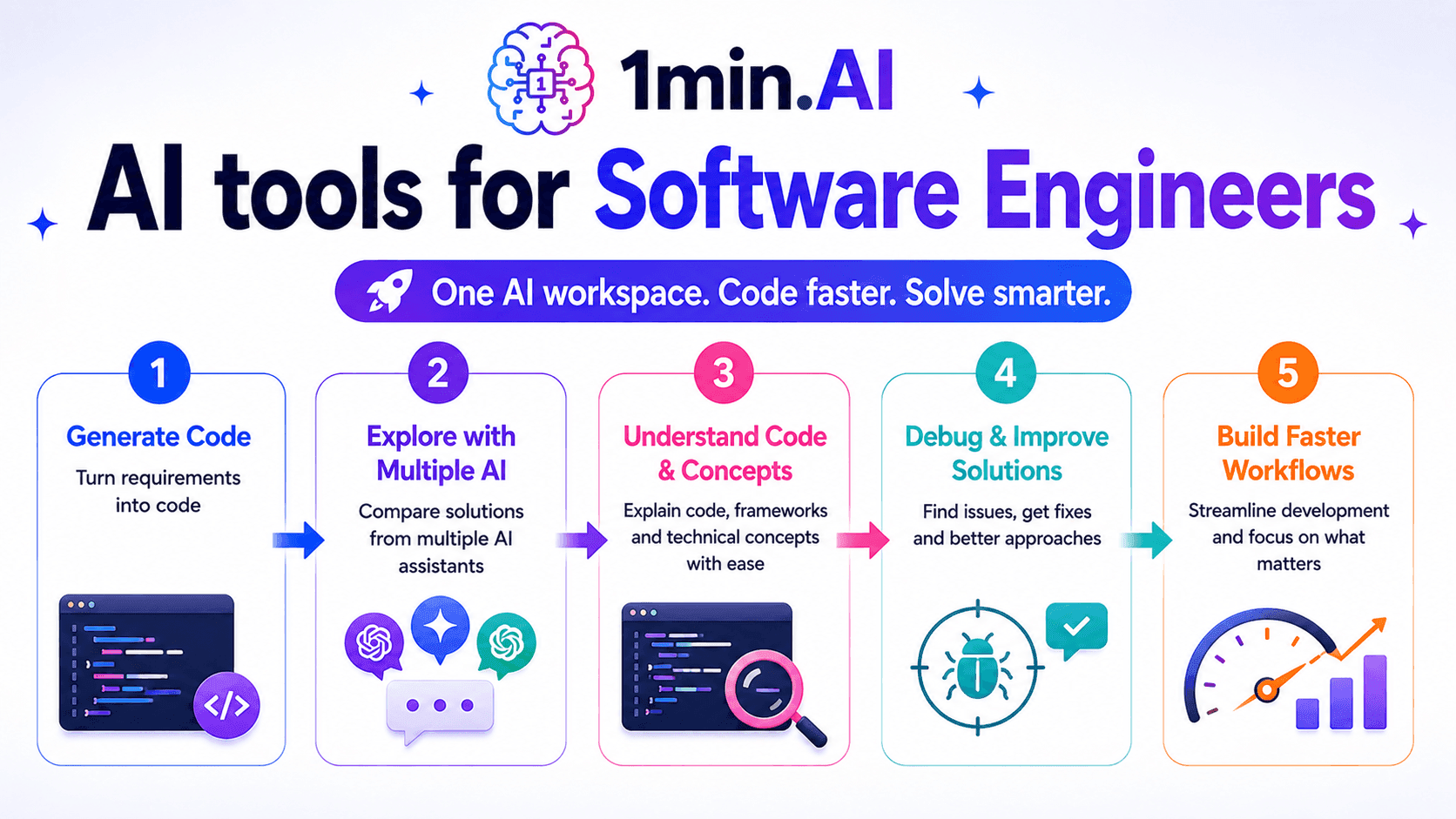
AI Tools for Software Engineers
Discover AI tools for Software Engineers to generate code, debug problems, understand technical concepts, and streamline development with 1min.AI.
Ngoc Hong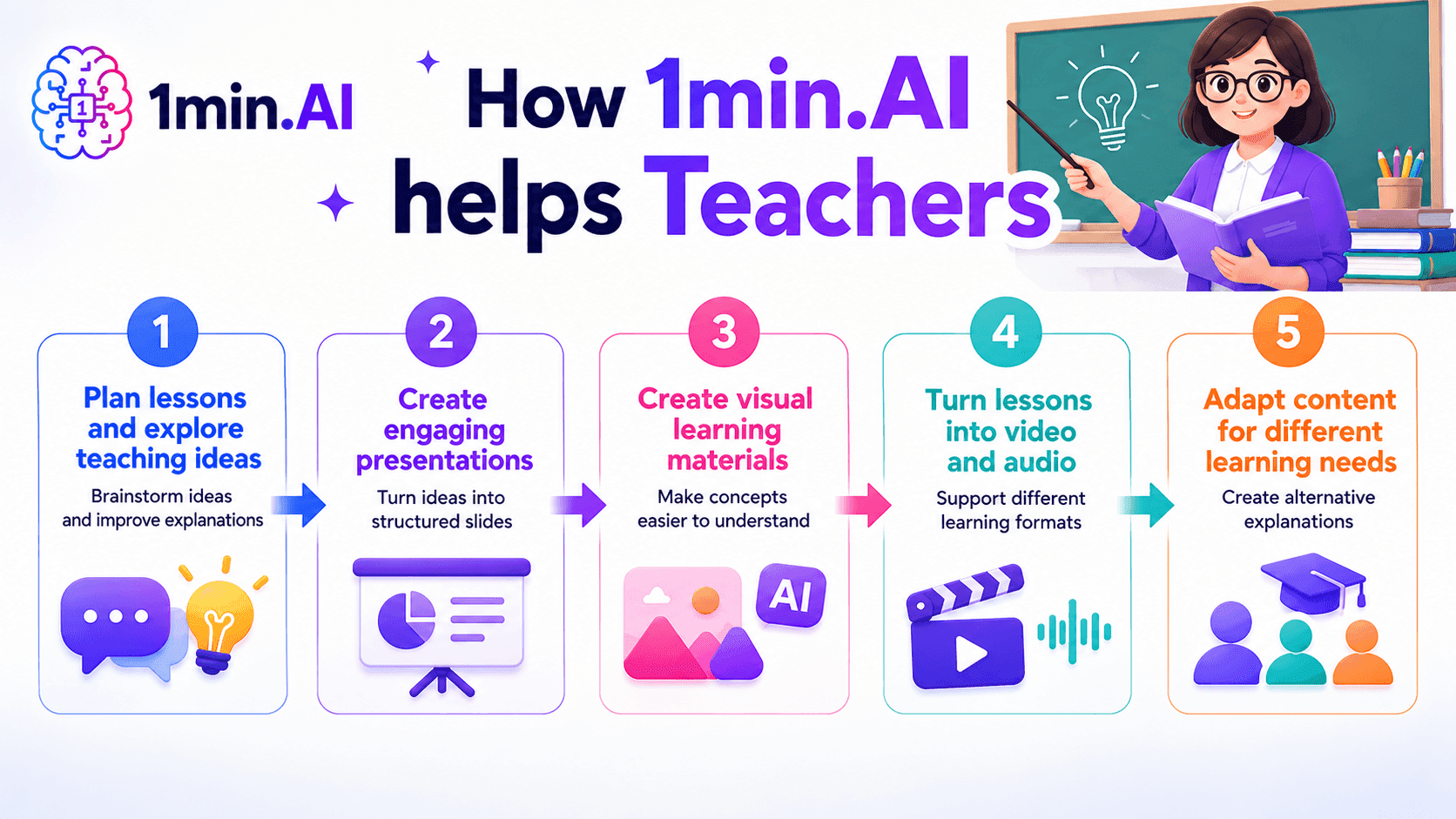
AI tools for Teachers
Discover AI tools for Teachers to create lessons, presentations, visuals, videos, and audio materials from one AI workspace with 1min.AI.
Ngoc HongNewsletter
Weekly AI Innovations with 1minAI

🔮 Weekly AI Innovations #133: Earn Credits and more with AI Social
Explore DeepSeek V4's open-source efficiency and xAI's Grok 4.3 & 4.5 for advanced reasoning and ultra-fast coding in 2026.
 Hang Nguyen
🔮 Weekly AI Innovations #132: DeepSeek V4 & xAI's Grok 4.3, 4.5
Explore DeepSeek V4's open-source efficiency and xAI's Grok 4.3 & 4.5 for advanced reasoning and ultra-fast coding in 2026.
Hang Nguyen
🔮 Weekly AI Innovations #131: Kling 3.0 & Automated Logo Injection
Upgrade your workflow with 1min.AI’s Kling 3.0 & 3.0 Omni video models and AI Social’s new Logo Injection feature.
Hang NguyenAI White Label
Launch your own AI assistant by rebranding.
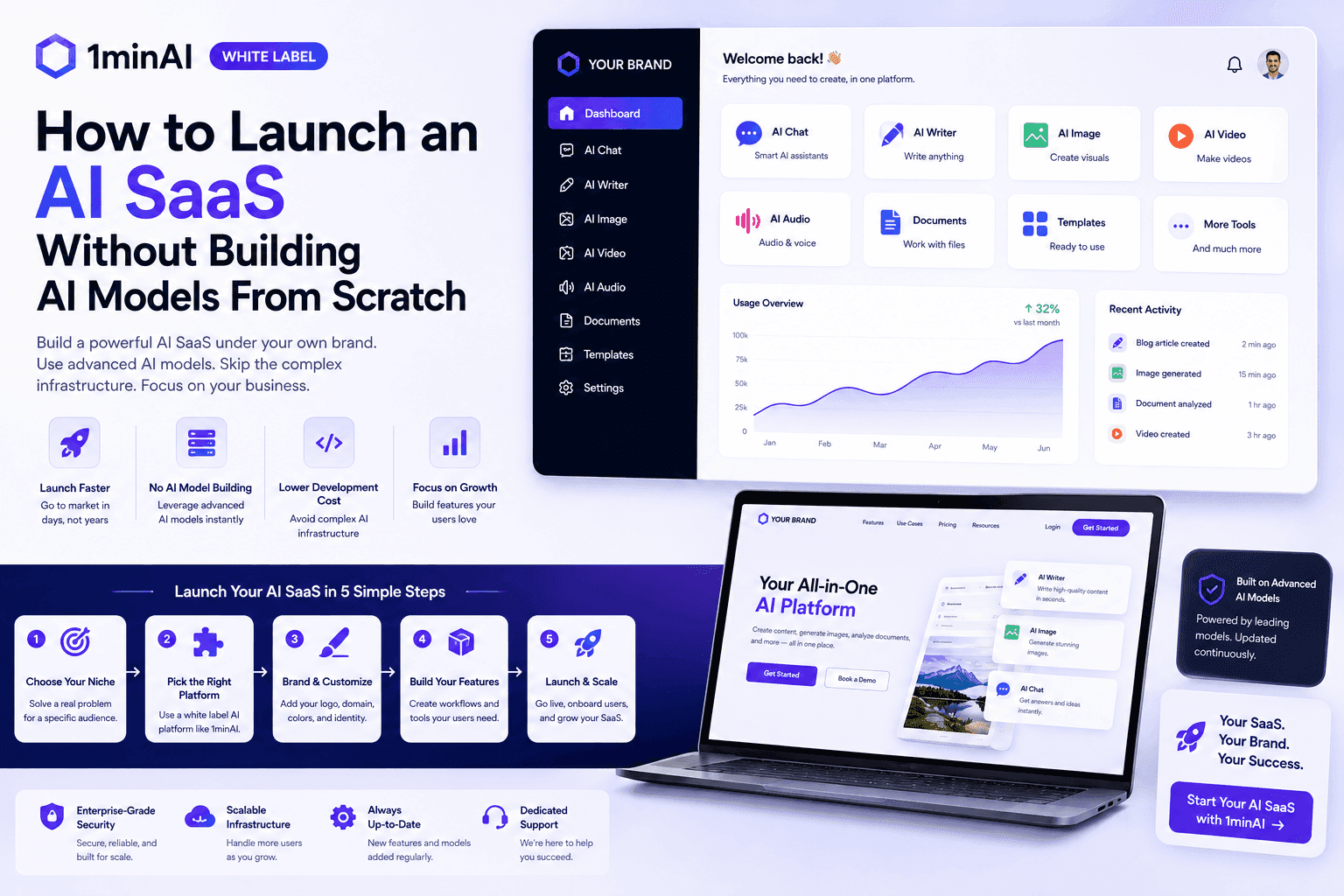
How to Launch an AI SaaS Without Building AI Models From Scratch
Learn how to launch an AI SaaS without building AI models from scratch. Explore white-label AI, product strategy, branding, pricing, and how 1minAI can help.
Tram Ta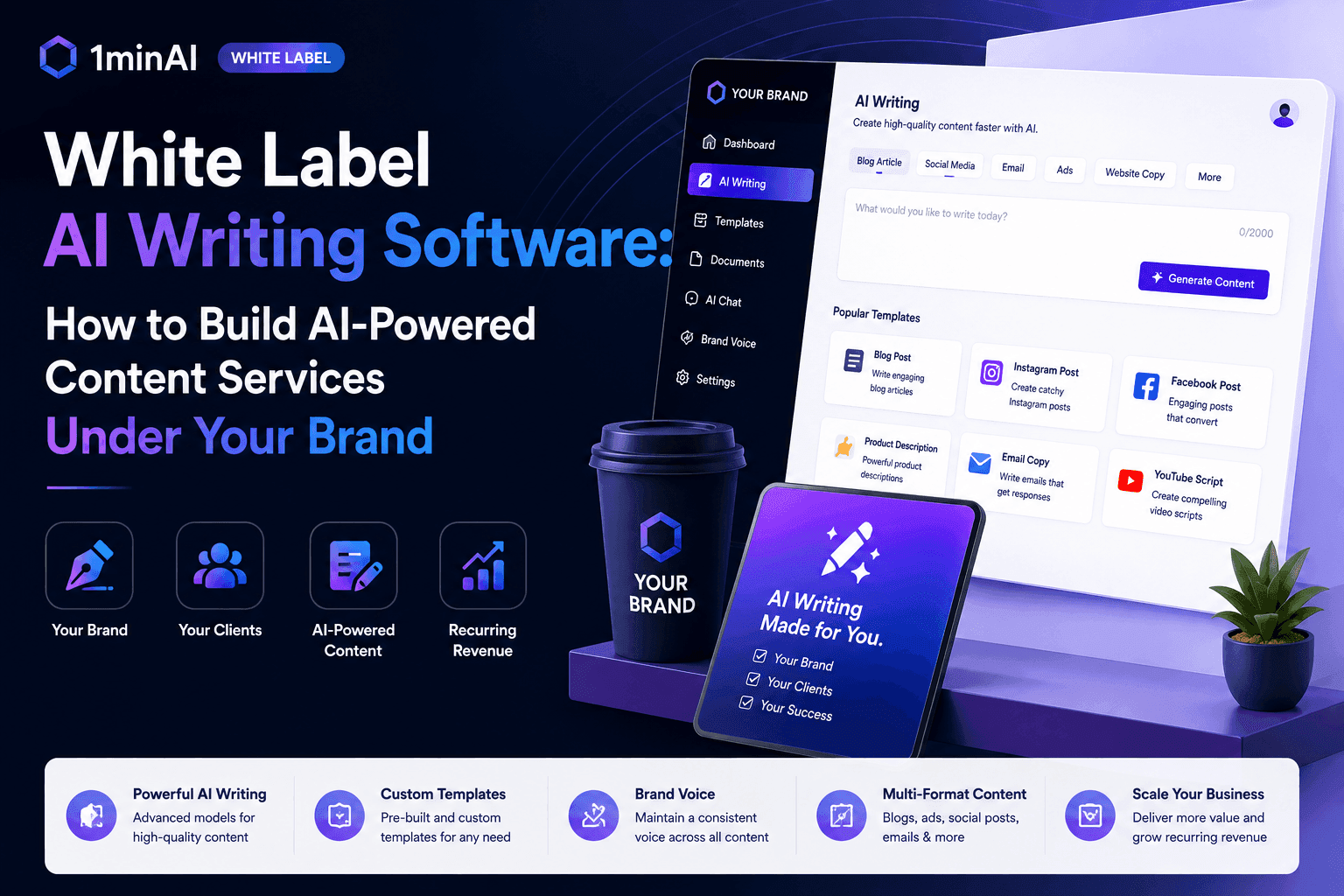
White Label AI Writing Software: How to Build AI-Powered Content Services Under Your Brand
Discover how white label AI writing software helps agencies, publishers, SEO companies, marketing teams, and consultants offer AI-powered content services under their own brand.
Tram Ta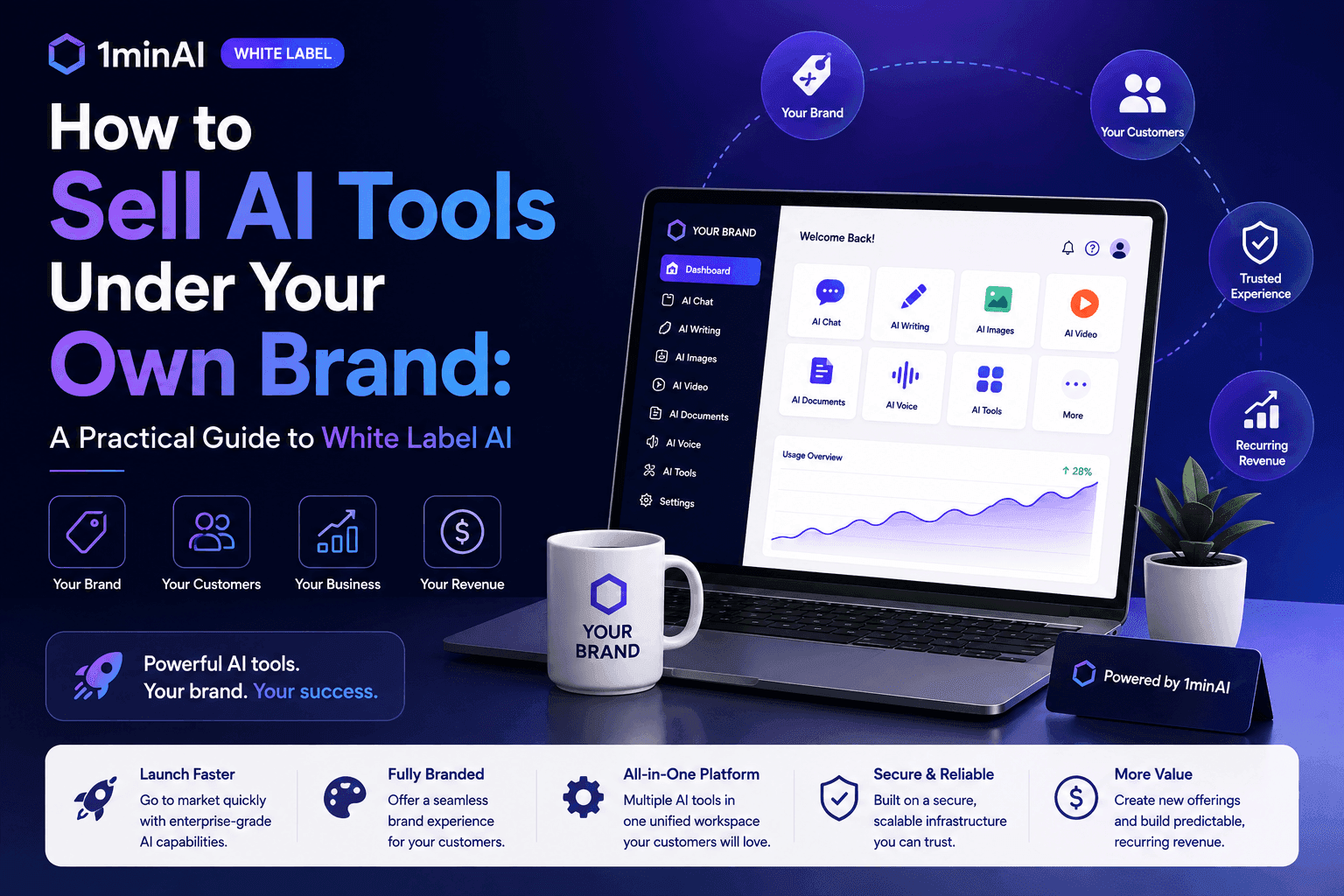
How to Sell AI Tools Under Your Own Brand: A Practical Guide to White Label AI
Learn how to sell AI tools under your own brand with white label AI. Discover how branding, packaging, pricing, onboarding, and recurring revenue work.
Tram Ta