
CLAUDE OPUS 4.6 - ANTHROPIC

Ngoc Hong
July 31, 2026
Discover Claude Opus 4.6 by Anthropic, a powerful AI model with advanced coding, reasoning, AI agents, 1M context window, and enterprise workflows.
CLAUDE OPUS 4.6 - ANTHROPIC
Modern AI applications require more than generating answers. Developers and businesses need AI models that can reason through complex problems, handle long-running tasks, analyze large amounts of information, and operate reliably across different workflows.
Claude Opus 4.6 is Anthropic’s latest and most advanced Opus-class AI model, designed for complex reasoning, software engineering, AI agents, research, and professional knowledge work.
Building on previous Claude generations, Opus 4.6 introduces significant improvements in coding performance, autonomous workflows, long-context understanding, and enterprise productivity. The model is designed to work on challenging tasks that require deeper reasoning, better planning, and more reliable execution.
Available on 1min.AI, Claude Opus 4.6 gives users access to Anthropic’s latest AI capabilities alongside other leading models such as GPT, Gemini, Grok, and Mistral in one unified workspace.
What Is Claude Opus 4.6 by Anthropic?
Claude Opus 4.6 is a frontier AI model developed by Anthropic, built to handle advanced reasoning and complex professional workflows.
Compared with previous Claude models, Opus 4.6 focuses on improving:
- Software engineering capabilities
- AI agent performance
- Long-context processing
- Research and analysis
- Document and spreadsheet workflows
- Autonomous task completion
The model is designed for situations where AI needs to understand large amounts of information, maintain context over extended interactions, and make better decisions with fewer instructions.
Advanced Coding and Software Engineering Performance
Software development is one of the key areas where Claude Opus 4.6 delivers major improvements.
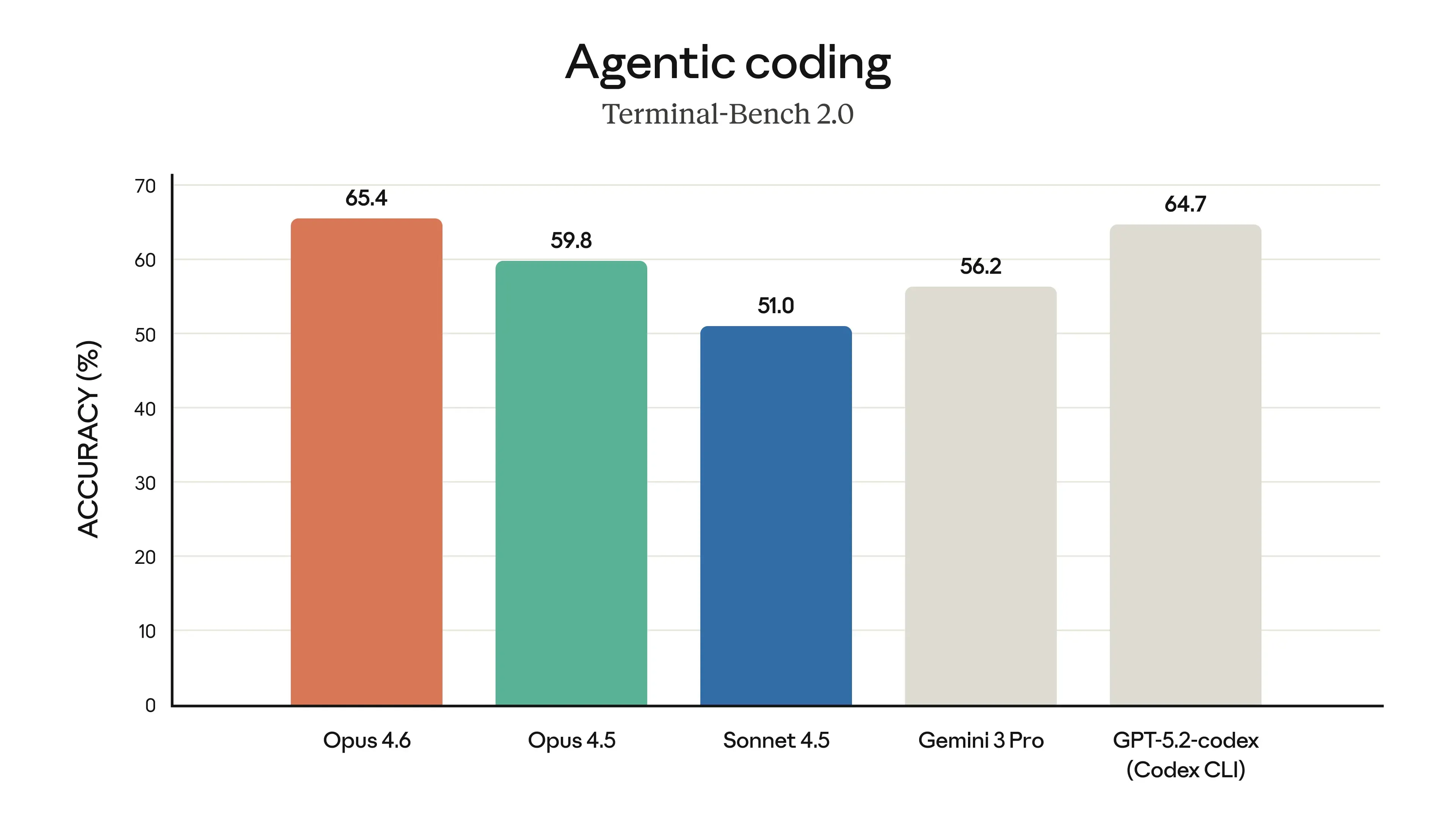
In benchmark testing for agentic coding (Terminal-Bench 2.0), Claude Opus 4.6 achieved an impressive 65.4% accuracy rate. This performance positions it ahead of competitors like GPT-5.2-codex (Codex CLI), which scored 64.7%, and shows a distinct upgrade from the previous Opus 4.5 model's 59.8%.
The model is designed to support developers throughout the entire engineering process, including:
- Writing production-ready code
- Debugging complex issues
- Reviewing code quality
- Understanding large codebases
- Performing root cause analysis
- Generating technical documentation
- Supporting software modernization
Claude Opus 4.6 improves its ability to identify problems, analyze system behavior, and suggest solutions with better accuracy. For developers using AI coding assistants, Opus 4.6 works as an intelligent programming partner that can help accelerate development while maintaining code quality.
1M Token Context Window for Long-Running Tasks
One of the biggest improvements in Claude Opus 4.6 is its expanded context capability.
The model introduces a 1 million token context window (beta), allowing it to process and understand significantly larger amounts of information within a single workflow.
This capability helps users work with:
- Large code repositories
- Extensive research documents
- Complex business reports
- Long conversations
- Multiple files and datasets
With improved long-context retrieval, Claude Opus 4.6 can locate important information across large documents while maintaining better consistency during extended tasks. This makes it especially useful for enterprise workflows where AI needs to analyze and connect information from multiple sources.
Built for AI Agents and Autonomous Workflows
Claude Opus 4.6 is designed for the next generation of AI agents that can plan, use tools, and complete tasks with less human intervention.
When evaluated on agentic search capabilities (BrowseComp), Opus 4.6 reached an 84.0% accuracy score, significantly outperforming GPT-5.2 Pro (77.9%) and Opus 4.5 (67.8%). Furthermore, in multidisciplinary reasoning tests (Humanity's Last Exam), Opus 4.6 utilizing tools achieved a 53.1% accuracy score (up from 40.0% without tools), surpassing the 50.0% scored by GPT-5.2 Pro with tools.
Key agent capabilities include:
- Multi-step task execution
- Autonomous planning
- Tool usage
- Context management
- Long-running workflows
- Multi-agent collaboration
Anthropic also introduced new features that improve agent performance, including:
Adaptive Thinking Claude can determine when deeper reasoning is needed based on task complexity, helping balance intelligence, speed, and efficiency.
Effort Controls Developers can adjust reasoning effort levels depending on whether they prioritize faster responses or deeper analysis.
Context Compaction The model can summarize previous context automatically, allowing longer conversations and extended agent workflows without reaching context limits.
Claude Opus 4.6 for Research and Business Productivity
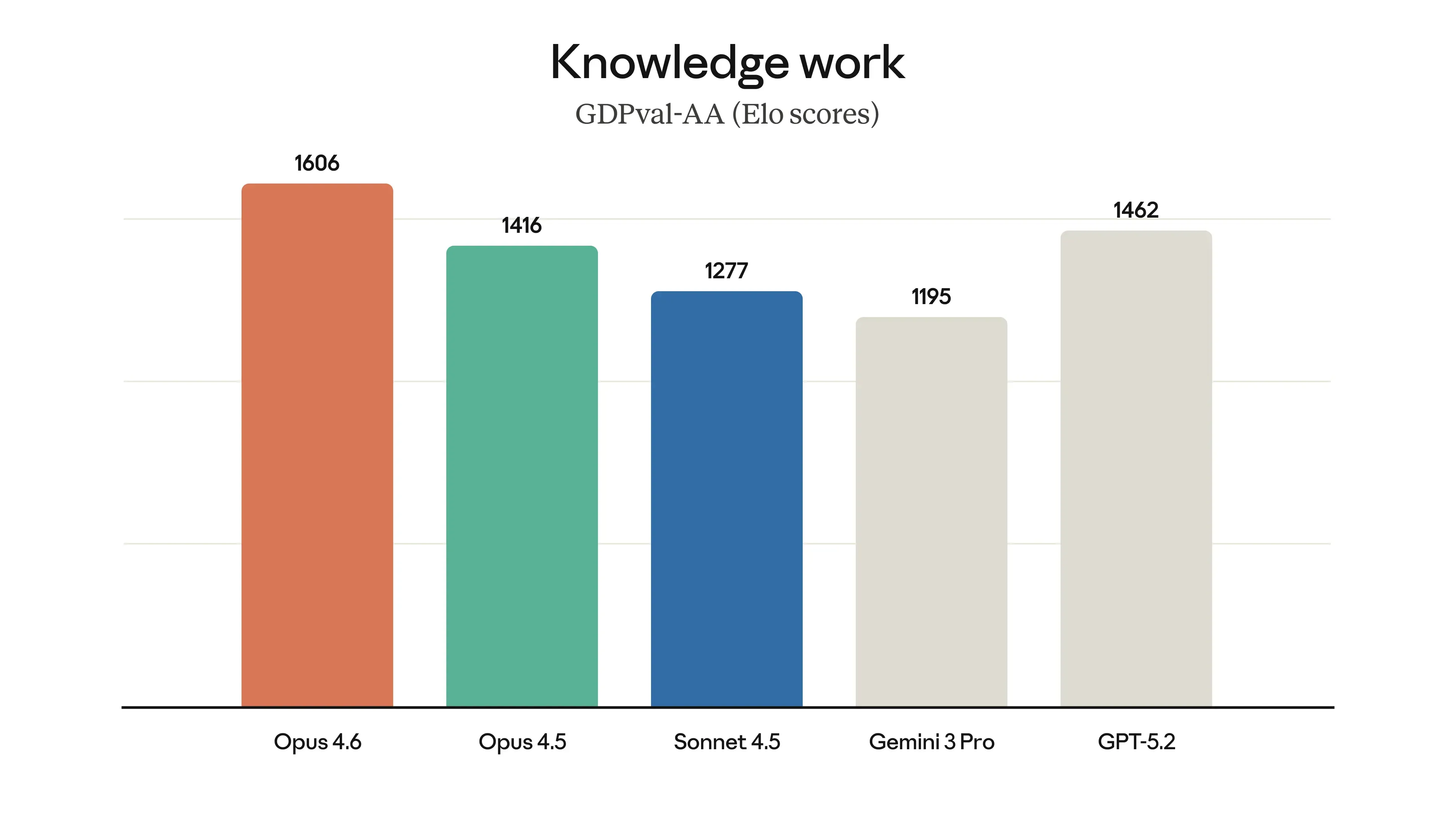
Beyond coding, Claude Opus 4.6 brings advanced reasoning capabilities to everyday professional tasks. Its superiority in knowledge work is backed by data; Claude Opus 4.6 reached a GDPval-AA Elo score of 1606, comfortably leading over GPT-5.2 (1462) and Opus 4.5 (1416).
The model can support:
- Financial analysis
- Market research
- Data interpretation
- Business reports
- Document creation
- Spreadsheet analysis
- Presentation preparation
- Knowledge management
With stronger reasoning and document understanding, Claude Opus 4.6 helps professionals transform complex information into actionable insights. Businesses can use the model to automate repetitive knowledge tasks and improve productivity across teams.
Improved Reliability and AI Safety
Anthropic focuses heavily on building AI systems that are both powerful and reliable.
Claude Opus 4.6 includes improvements in:
- Instruction following
- Reduced incorrect behaviors
- Better tool usage safety
- More reliable decision-making
- Enterprise AI alignment
The model has undergone extensive safety evaluations to improve reliability when deployed in professional and customer-facing environments. For organizations adopting AI at scale, these improvements help create safer and more predictable AI workflows.
Why Use Claude Opus 4.6 on 1min.AI?
Accessing advanced AI models often requires managing multiple subscriptions, APIs, and platforms. With 1min.AI, users can access Claude Opus 4.6 together with multiple leading AI models in one workspace.
Benefits include:
- Use Claude Opus 4.6 without complex API setup
- Compare Claude with GPT, Gemini, Grok, and other models
- Access multiple AI capabilities in one platform
- Use AI for writing, coding, translation, research, and automation
- Build flexible workflows with different AI models
Whether you are a developer, researcher, marketer, or business user, 1min.AI makes advanced AI technology easier to integrate into daily work.
Common Use Cases of Claude Opus 4.6
Claude Opus 4.6 is suitable for various professional applications:
Software Development
- AI coding assistant
- Code generation
- Debugging
- Code review
- Software documentation
AI Agent Development
- Autonomous assistants
- Workflow automation
- Customer support agents
- Enterprise AI applications
Research and Analysis
- Deep research
- Information extraction
- Data analysis
- Report generation
Business Productivity
- Financial modeling
- Spreadsheet analysis
- Presentation creation
- Document processing
Conclusion
Claude Opus 4.6 by Anthropic represents a major advancement in AI reasoning, coding, agent workflows, and professional productivity.
With leading benchmark performance across agentic coding, multidisciplinary reasoning, and knowledge work, alongside a 1M token context window and stronger autonomous capabilities, Claude Opus 4.6 enables users to handle more complex tasks with greater efficiency.
Through 1min.AI, users can access Claude Opus 4.6 alongside other powerful AI models, compare different AI outputs, and create smarter workflows without switching between multiple platforms.
Alternatives
Discover the best alternatives to 1minAI and compare features, pricing, and use cases.

1min.AI vs OpenRouter
1min.AI vs. OpenRouter: Compare the ready-to-use AI creation product against the technical API tool. Find out if you need a zero-code creative studio or a coding infrastructure hub.
 Ngoc Hong
1min.AI vs Chatplayground AI
Compare 1min.AI (Voice Cloning, Object Removal, Team Plans) vs. ChatPlayground AI (14+ Models, Teams/O365 Integration). Discover the superior platform for predictable pricing and long-term content production growth.
Ngoc Hong
1min.AI vs MerlinAI
Compare 1min.AI vs Merlin AI across AI models, pricing, image generation, video, audio, browser integration, and productivity tools. Discover which AI platform offers the best value for creators, professionals, and businesses.
Ngoc HongAI Tools
Discover the best AI tools to boost productivity, creativity, and everyday work.
AI Hallucination Checker for Accurate YMYL Content
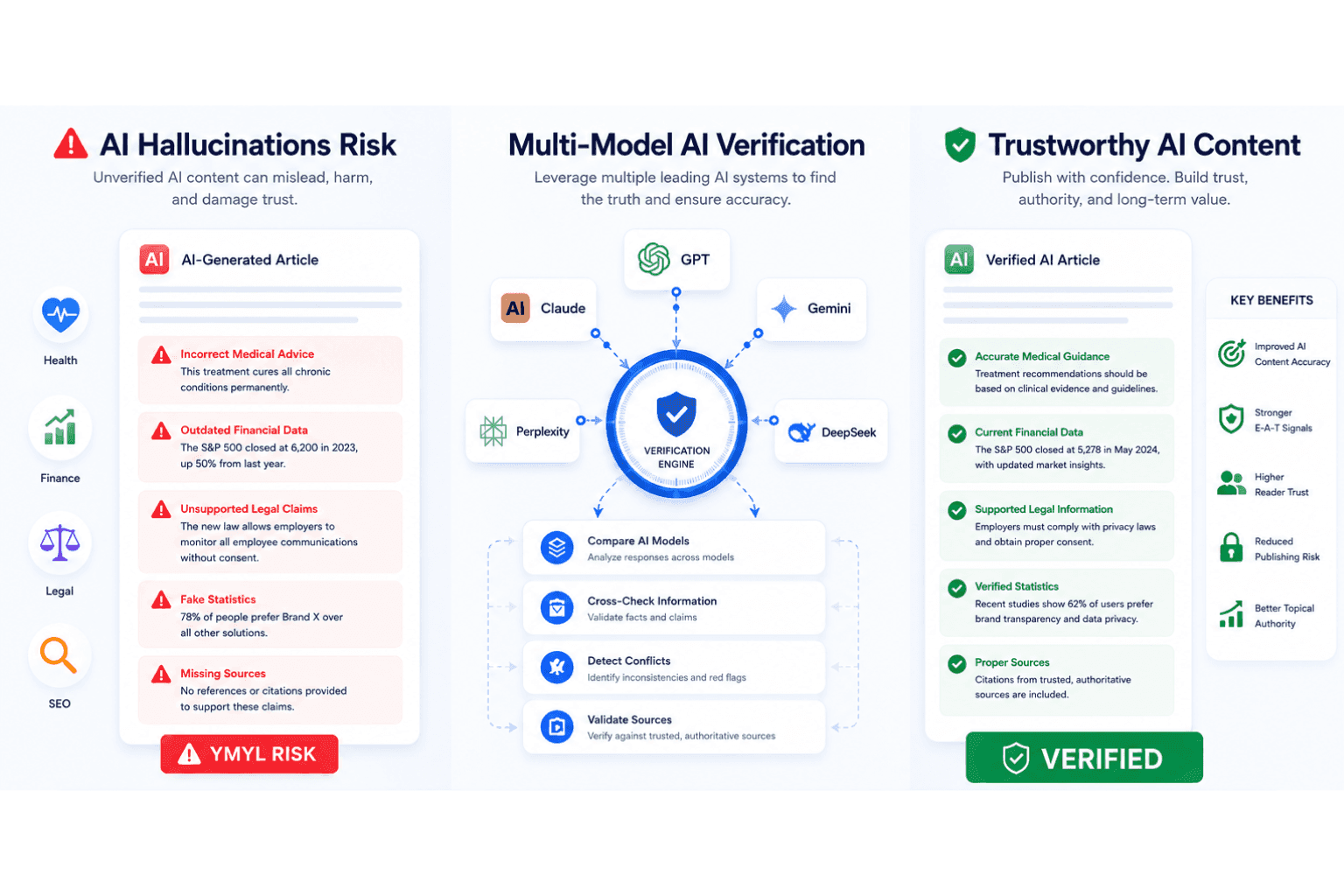
Use an AI hallucination checker to verify AI-generated content, improve AI content accuracy, strengthen EEAT signals, and reduce YMYL publishing risks.
Ngoc Hong
The Vision Before the Draft: How Freelance Designers Win Clients from Day One
Vague briefs, slow mockups, and endless revisions can make freelance design projects harder to close. Discover how 1min.AI helps designers turn client ideas into clear concepts, visual directions, and professional mockups faster.
 Lien Anh Vu
Free AI Paraphraser
Our AI Content Paraphraser rewrites and rephrases your text in seconds. Improve content variety, avoid plagiarism, and boost SEO.
 Trang Tran
AI Features
Comprehensive AI features that streamline workflows, improve efficiency, and empower teams to achieve more.
Free AI Chat with GLM-5.2 (Z.AI)
Built for solid 1M-token context handling, open-source SOTA coding, and long-horizon engineering capabilities. GLM-5.2 by Z.AI is the premier open-source flagship model engineered for massive codebase analysis and flexible effort control.
 Tram Ta
Free AI Chat with GLM-5.1 (Z.AI)
Built for 8-hour autonomous work loops and closed-loop engineering deliverables. GLM-5.1 by Z.AI delivers a major leap in long-horizon task execution, complex agentic workflows, and production-grade deliverables.
Tram Ta
Free AI Chat with GLM-5 (Z.AI)
Built for open-source frontier reasoning, heavy coding tasks, and multi-step agentic execution. GLM-5 by Z.AI delivers 744B-parameter Mixture-of-Experts (MoE) performance designed to handle enterprise-level software engineering and long-horizon workflows.
Tram TaAI Use Cases
A curated collection of AI use cases for business, productivity, and industry-specific applications.
AI for SMEs: Save Time, Cut Costs & Scale with 1minAI
Discover how AI for SMEs helps automate writing, images, videos, documents, and coding - all in one workspace to save time, reduce costs, and grow faster.
Ngoc Hong
Best AI Tools for Market Research for Solo Founders
Discover the best AI tools for market research to analyze competitors, validate startup ideas, and uncover customer insights faster with 1minAI.
Tram Ta
AI Image Generation
Discover how AI Image Generation helps businesses create marketing visuals, product images, and social content faster with 1minAI.
Ngoc HongAI Tutorials
Learn how to use AI with practical, step-by-step tutorials.
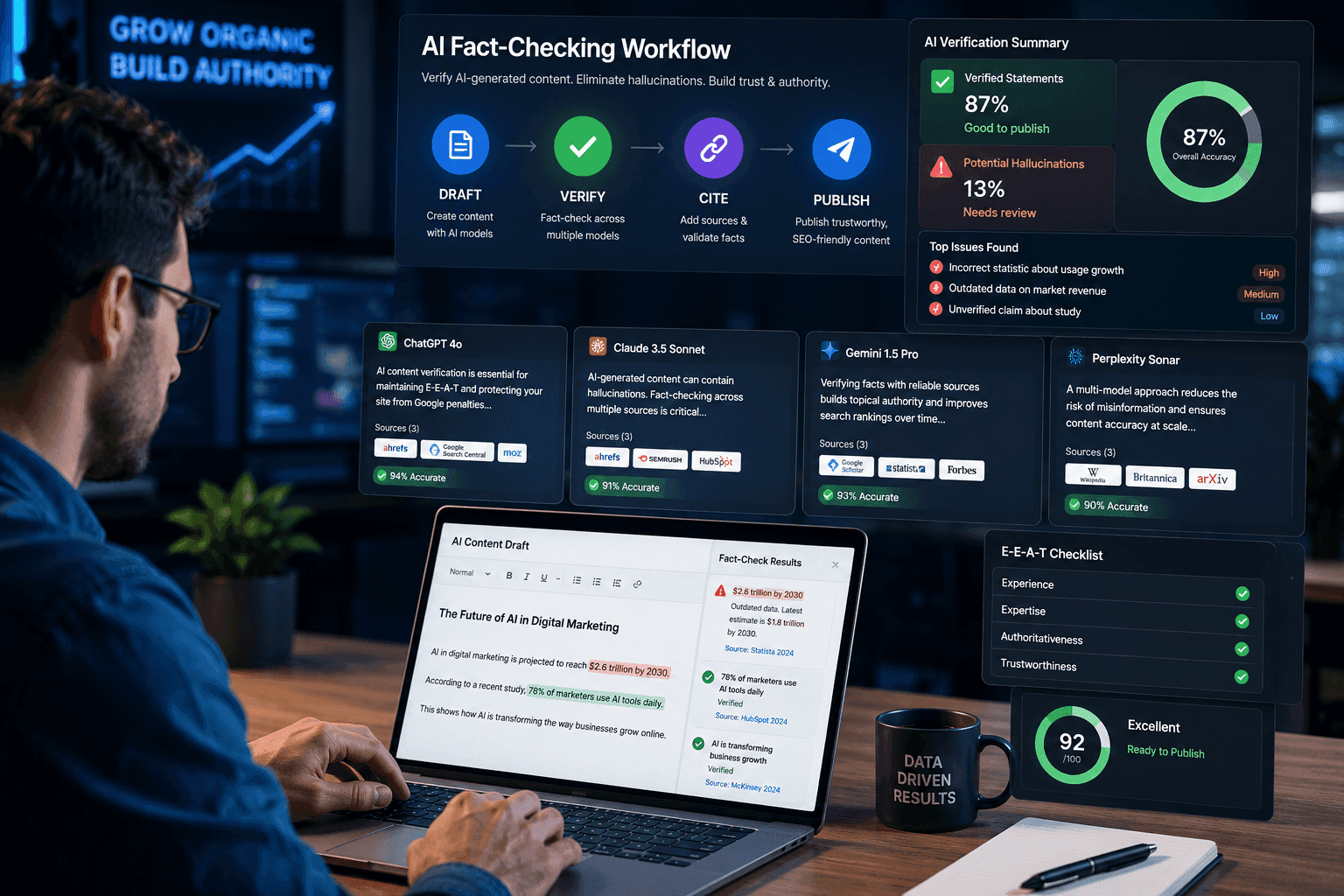
Verify AI-Generated Content with a 3-Step AI Fact-Checking Workflow
Fear AI hallucinations destroying your SEO? Learn how to verify AI-generated content using a multi-model AI fact checking tool to protect your rankings.Fear AI hallucinations destroying your SEO? Learn how to verify AI-generated content using a multi-model AI fact checking tool to protect your rankings.
Ngoc Hong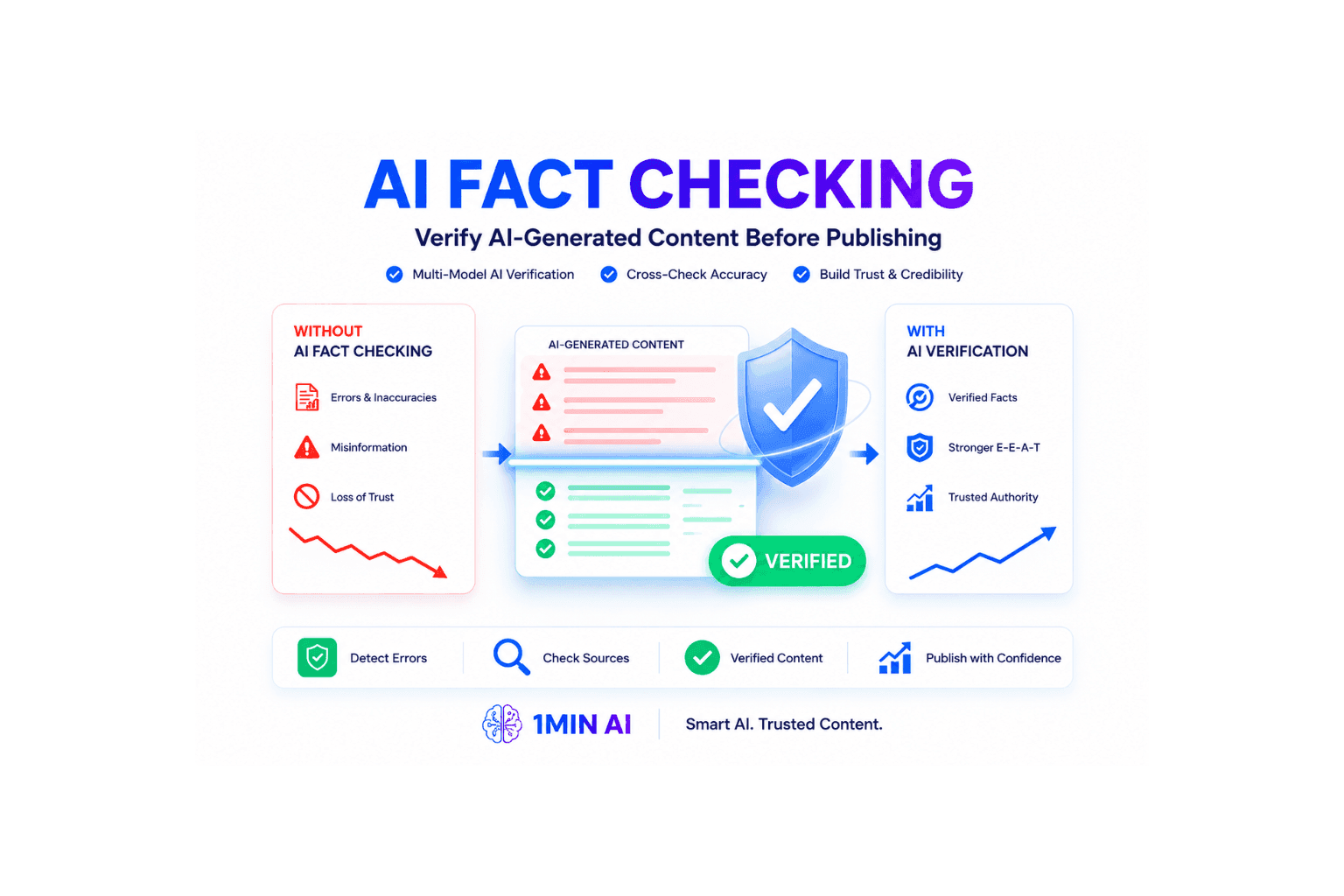
How to Verify AI-Generated Content: AI Fact Checking Guide
Learn how to verify AI-generated content and protect your site from Google penalties. Discover the best AI fact checking workflow to build topical authority SEO.
Ngoc HongThe Vision Before the Draft: How Freelance Designers Win Clients from Day One
Vague briefs, slow mockups, and endless revisions can make freelance design projects harder to close. Discover how 1min.AI helps designers turn client ideas into clear concepts, visual directions, and professional mockups faster.
Lien Anh VuAI Guides
Learn AI faster with practical guides, real-world examples, and actionable best practices.
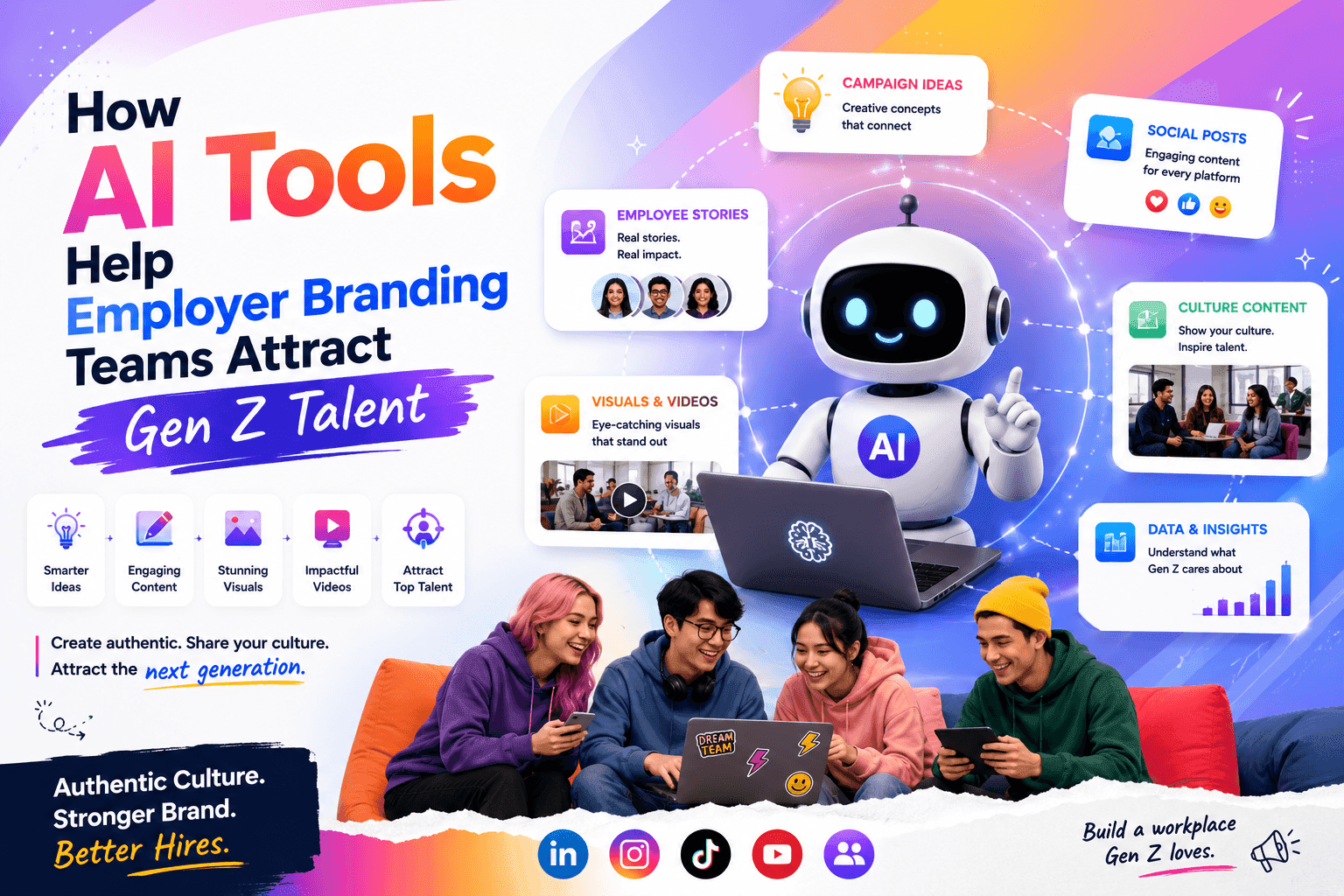
How AI Tools Help Employer Branding Teams Attract Gen Z Talent
Discover how AI tools help employer branding teams create engaging recruitment content, attract Gen Z talent, and streamline hiring campaigns with 1minAI.
Tram TaThe Vision Before the Draft: How Freelance Designers Win Clients from Day One
Vague briefs, slow mockups, and endless revisions can make freelance design projects harder to close. Discover how 1min.AI helps designers turn client ideas into clear concepts, visual directions, and professional mockups faster.
Lien Anh Vu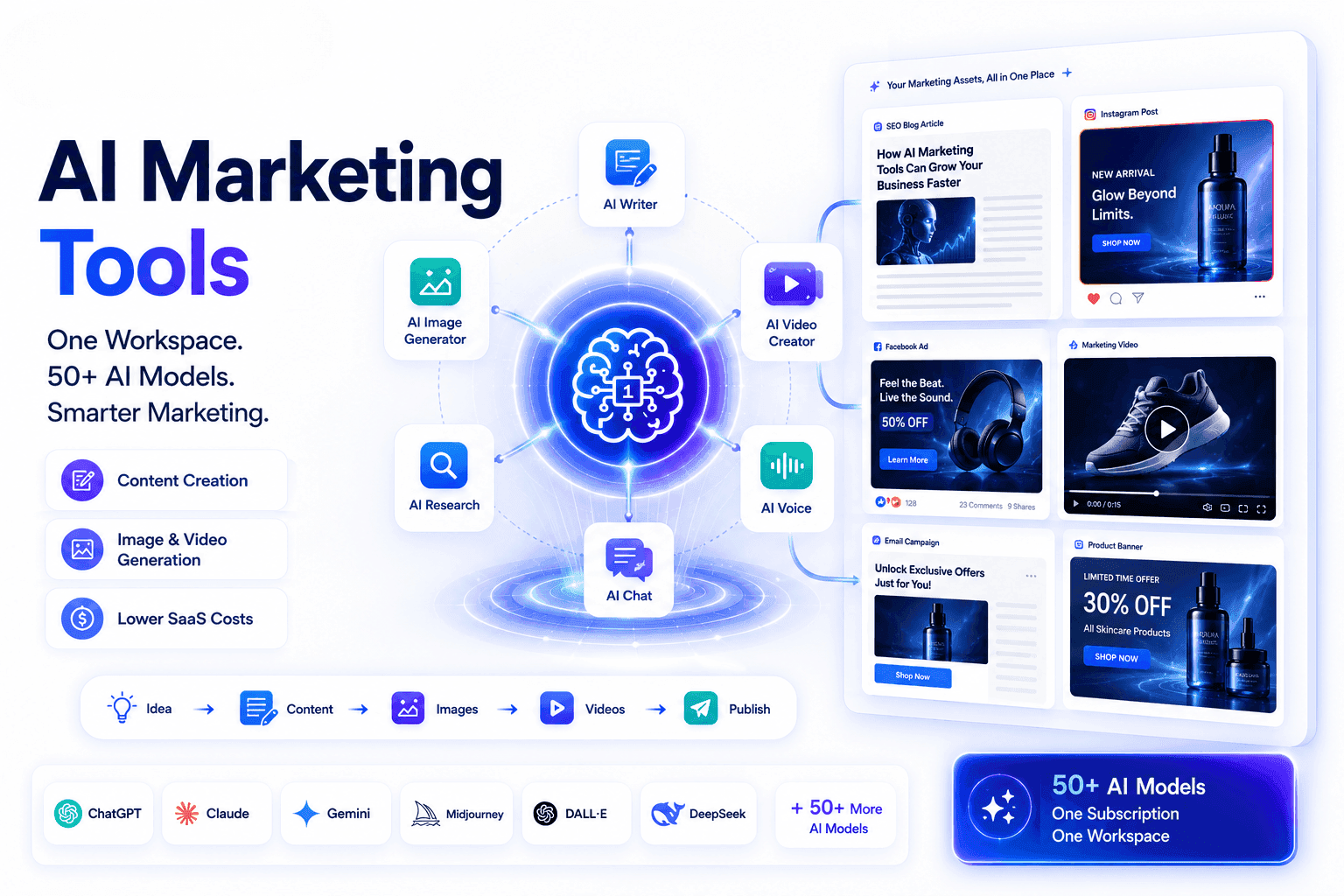
Best AI Marketing Tools: Why Businesses Choose 1minAI
Discover why 1minAI is one of the best AI marketing tools. Create content, images, and videos with 50+ AI models in one workspace.
Tram TaAI Solutions
Browse the best AI solutions for automation, coding, research, productivity, customer support, marketing, and business workflows.
How to Verify AI-Generated Content: AI Fact Checking Guide
Learn how to verify AI-generated content and protect your site from Google penalties. Discover the best AI fact checking workflow to build topical authority SEO.
Ngoc HongThe Vision Before the Draft: How Freelance Designers Win Clients from Day One
Vague briefs, slow mockups, and endless revisions can make freelance design projects harder to close. Discover how 1min.AI helps designers turn client ideas into clear concepts, visual directions, and professional mockups faster.
Lien Anh Vu
Free AI Video Generation with Veo 3.1
Create cinematic AI videos with Veo 3.1 on 1min.AI. Generate realistic videos with synchronized audio, dialogue, motion, and 4K-quality visuals for marketing, storytelling, and content creation.
Ngoc HongAI Models
Explore the world's leading AI models in one place.
CLAUDE 4.6 SONNET AWS BEDROCK US AI MODEL
Explore Claude 4.6 Sonnet AWS Bedrock US with regional deployment, 1M context, enterprise security, and seamless AI access through 1minAI.
Ngoc Hong
CLAUDE 4.6 SONNET - AWS BEDROCK GLOBAL
Explore Claude 4.6 Sonnet AWS Bedrock Global with 1M context, Computer Use, prompt caching, and global inference for enterprise AI.
Ngoc Hong
GPT-5.5 Performance at Half the API Cost
Discover GPT-5.6 Terra, offering GPT-5.5 performance at half the API cost. Optimize your budget and enhance AI fact checking on 1min.ai today.
Ngoc HongAI Comparisons
Compare AI tools, models, and platforms to find the best fit for your needs.
Midjourney vs Ideogram: Which AI Should You Choose?
Compare Midjourney vs Ideogram to find the best AI image generator for your needs. Explore image quality, typography, features, and real-world use cases.
Trang Tran
Top 5 Best AI Tools for Researchers and Students in 2026
Discover the best AI tools for researchers and students to summarize papers, improve academic writing, analyze PDFs, and streamline research workflows.
Tram Ta
Your Sales Team Only Needs One App Instead of Five
Ditch the multi-app bills. Learn why high-performing sales teams are moving to an all-in-one AI platform to cut tool fatigue and leverage top models.
 Uyen Hoang
AI Integrations
Seamlessly integrate AI with the tools you already use to automate work and boost productivity.
How AI Integration Helps Solo Founders Run an Entire Business Without Hiring a Large Team
Discover how AI integration helps solo founders streamline marketing, sales, customer support, and operations with one AI workspace instead of multiple AI tools.
Tram Ta
How AI Integration Helps Teachers Plan, Teach, and Assess More Efficiently
Discover how AI integration helps teachers streamline lesson planning, presentations, classroom materials, assessments, and student engagement in one AI workspace.
Tram Ta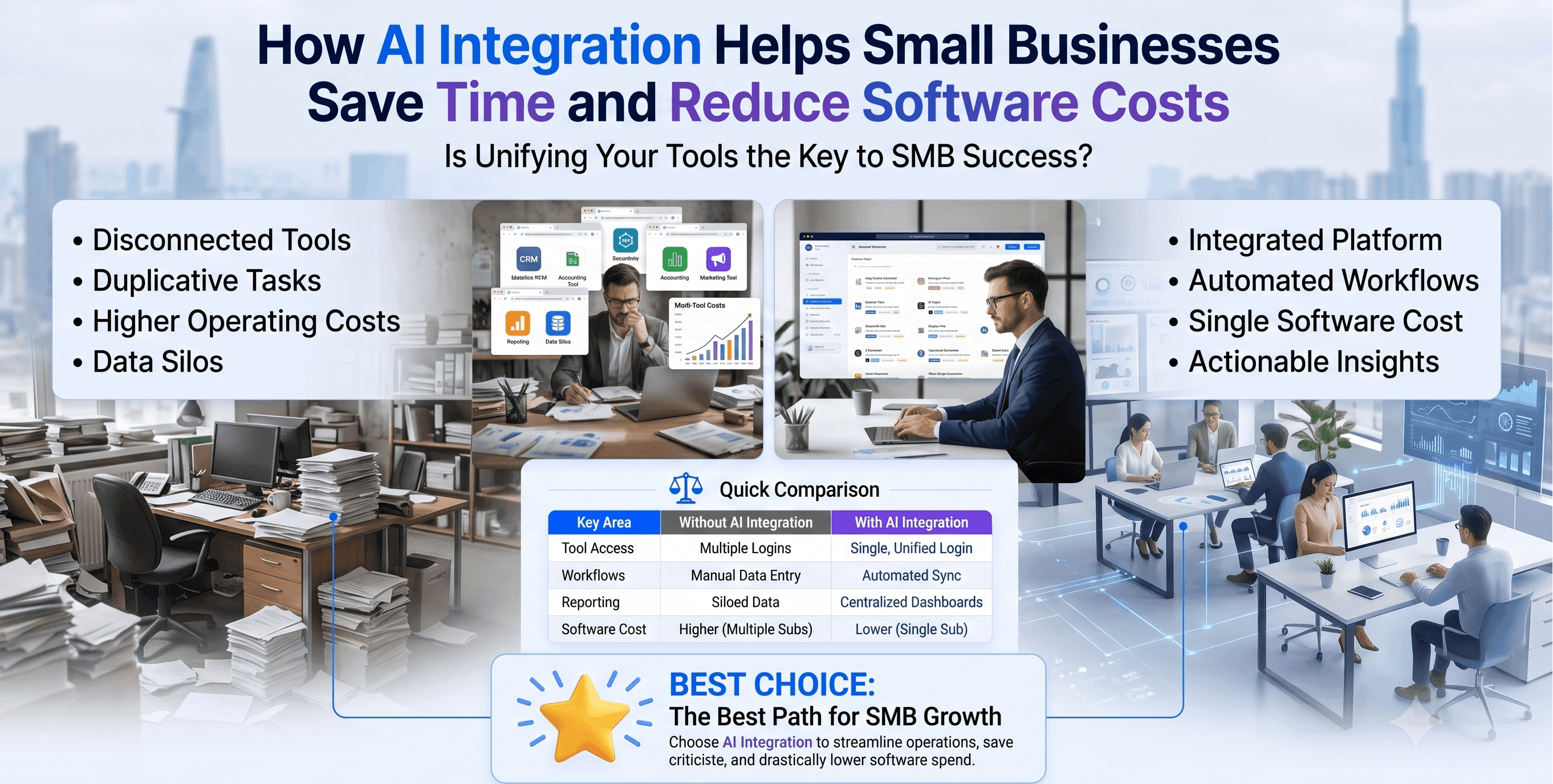
How AI Integration Helps Small Businesses Save Time and Reduce Software Costs
Discover how AI integration helps small businesses replace multiple AI apps with one workspace, improving productivity, reducing software costs, and streamlining daily workflows.
Tram TaAI for Industries
Find the best AI tools and workflows for healthcare, finance, education, legal, manufacturing, retail, real estate, and more.
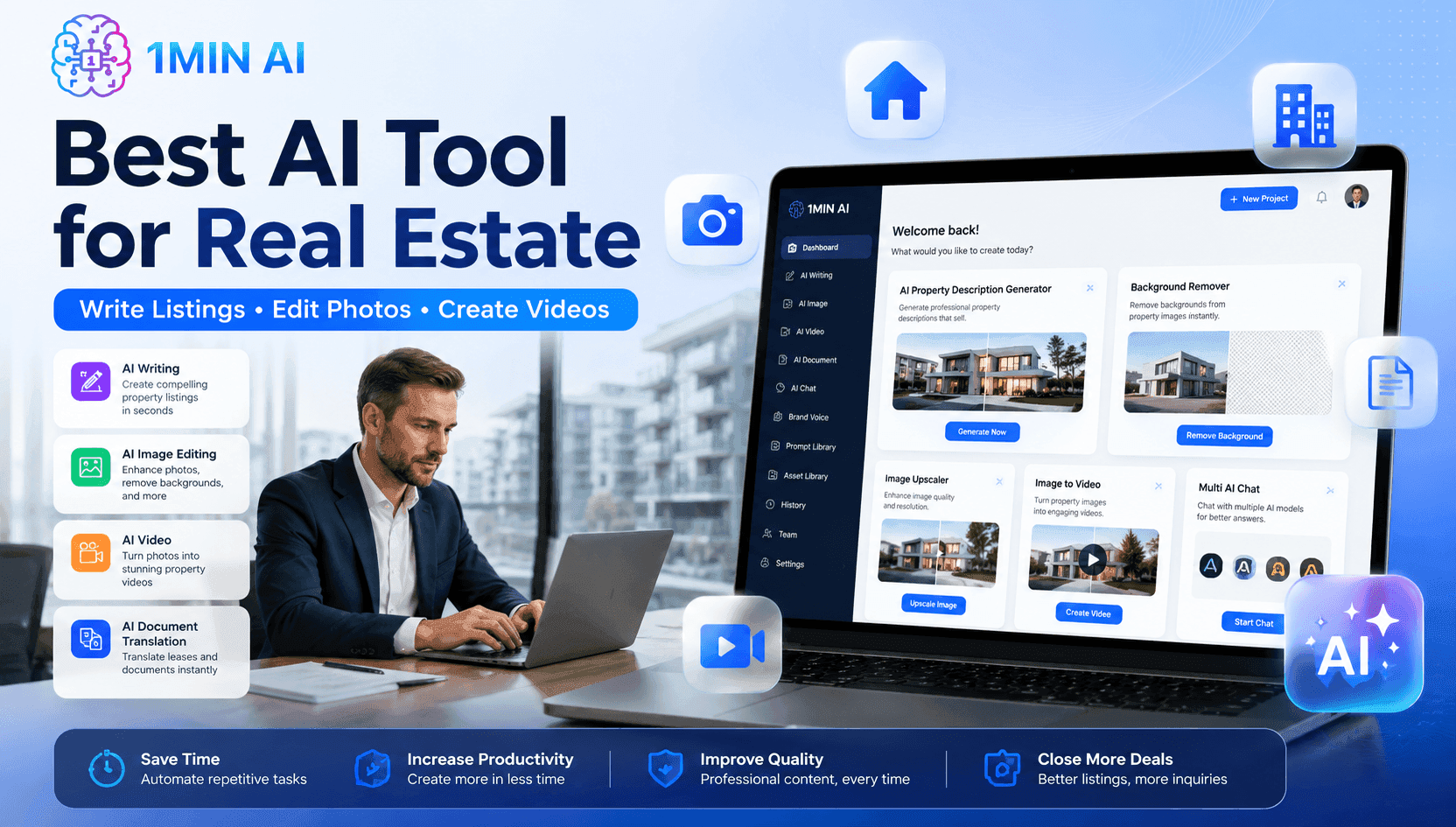
Best AI Tool for Real Estate Property Managers Use Today
Looking for the best AI tool for real estate? See how property managers use AI to write listings, edit photos, and create marketing videos in minutes.
Trang Tran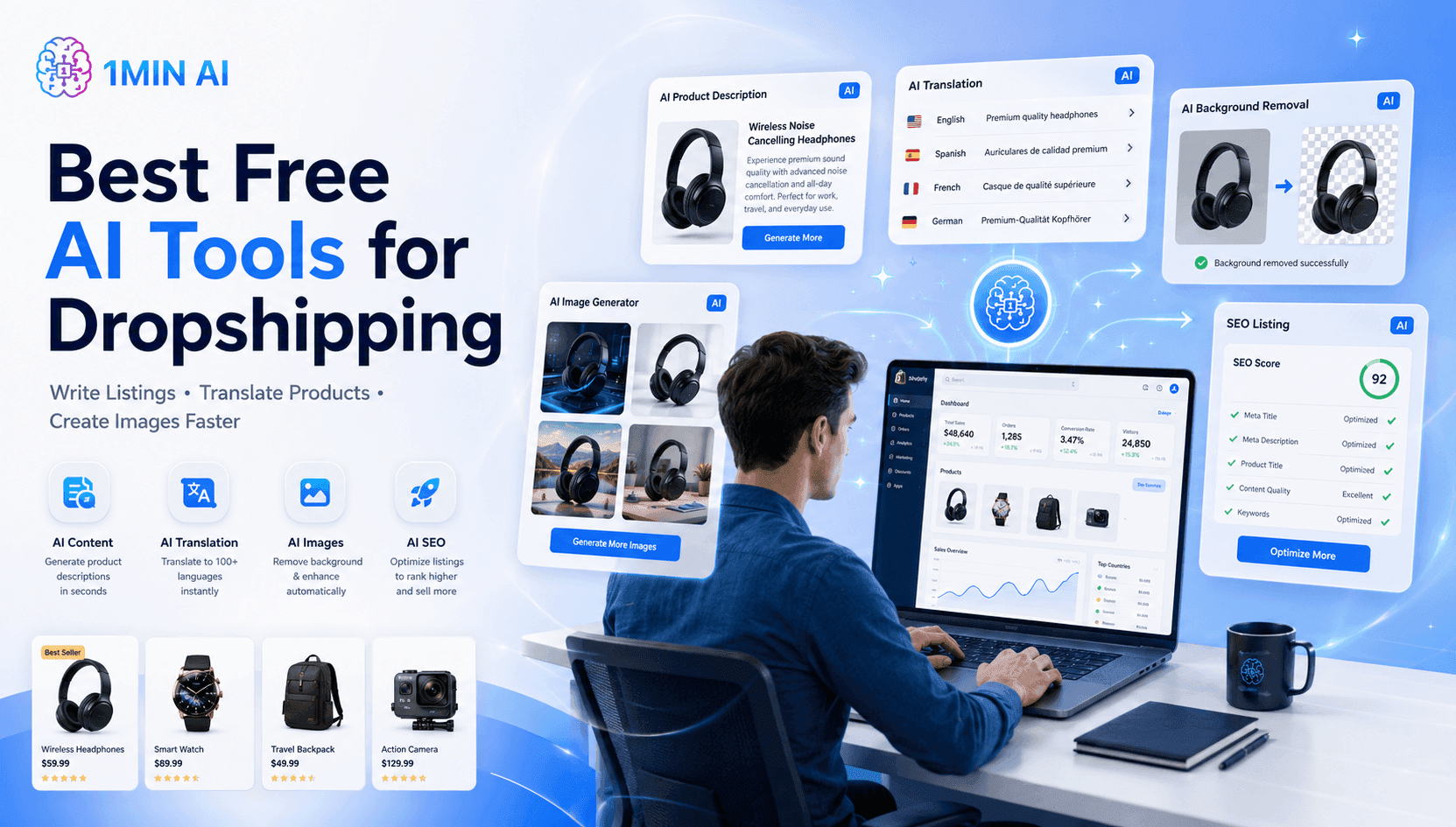
Best Free AI Tools for Dropshipping You Can Use Now
Free AI tools for Shopify dropshipping that write listings, generate images, and translate content in seconds, so you launch faster without extra spend.
Trang Tran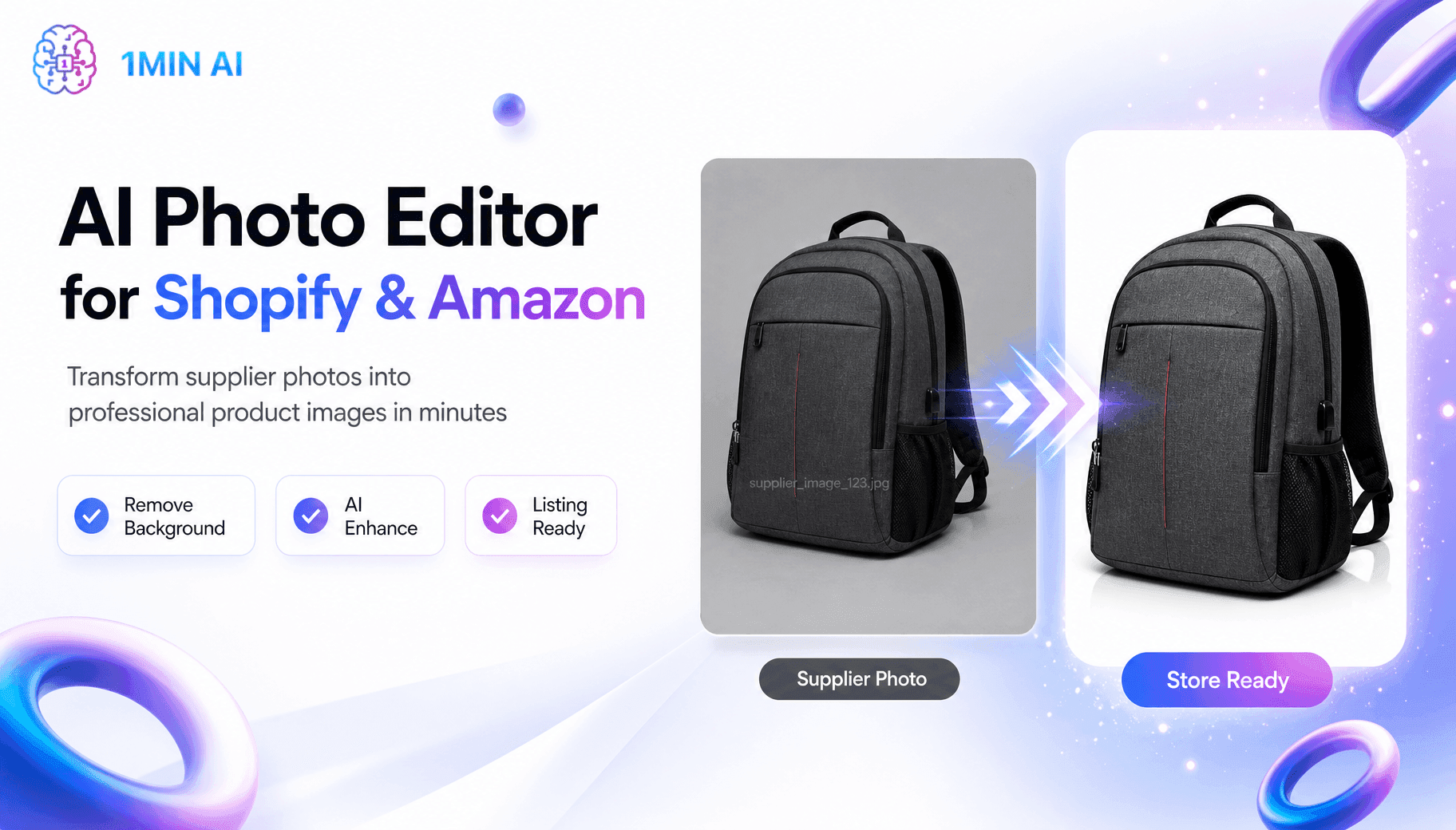
Free AI Shopify Photo Editor for Cross Border Sellers
Tired of low quality supplier photos? This free AI Shopify photo editor removes backgrounds and edits images before you list on Shopify or Amazon.
Trang TranAI Agents
Discover and run AI agents to automate tasks across your work and daily life.
All-in-One AI Tool for Content Creation: Meet 1minAI's AI Content Generator
Discover how 1minAI's AI Content Generator helps create blogs, social posts, ads, emails, and marketing copy faster from one powerful AI tool.
Tram Ta
5 AI Tools Every TikTok Creator Should Use Daily
Discover five essential AI tools that help TikTok creators find ideas, write scripts, create visuals, generate videos, and publish content faster.
Lien Anh Vu
1minAI: The Top Ranking AI Tool for Teachers
Discover why 1minAI is a trusted AI tool for teachers. Create lesson plans, presentations, worksheets, quizzes, and classroom materials faster with one platform.
Tram TaAI Workflows
Explore ready-to-use AI workflows for productivity, marketing, sales, support, and more.
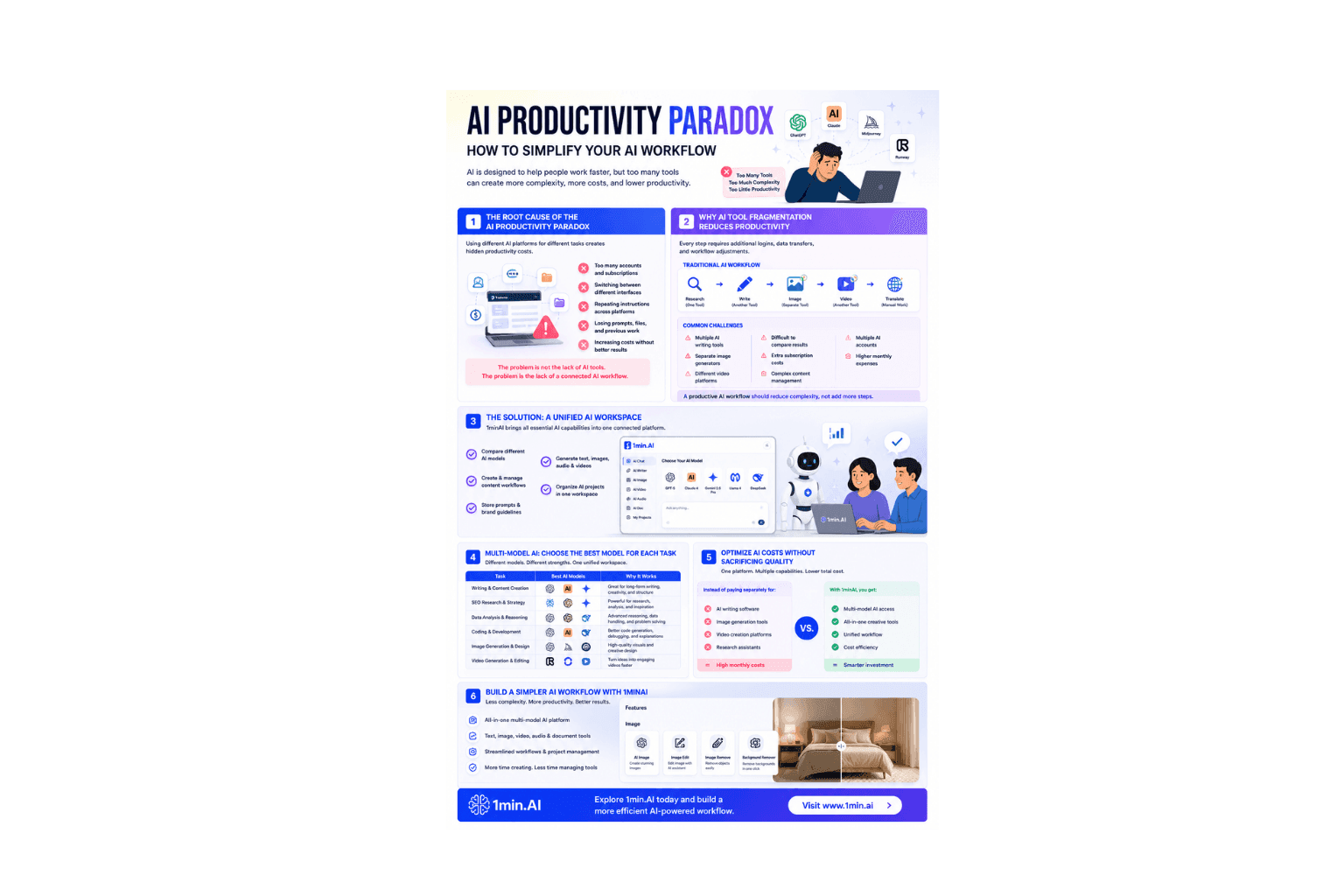
AI Productivity Paradox: How to Simplify Your AI Workflow
Learn how the AI productivity paradox slows your workflow and discover how a multi-model AI workspace helps you work faster with fewer tools.
Ngoc Hong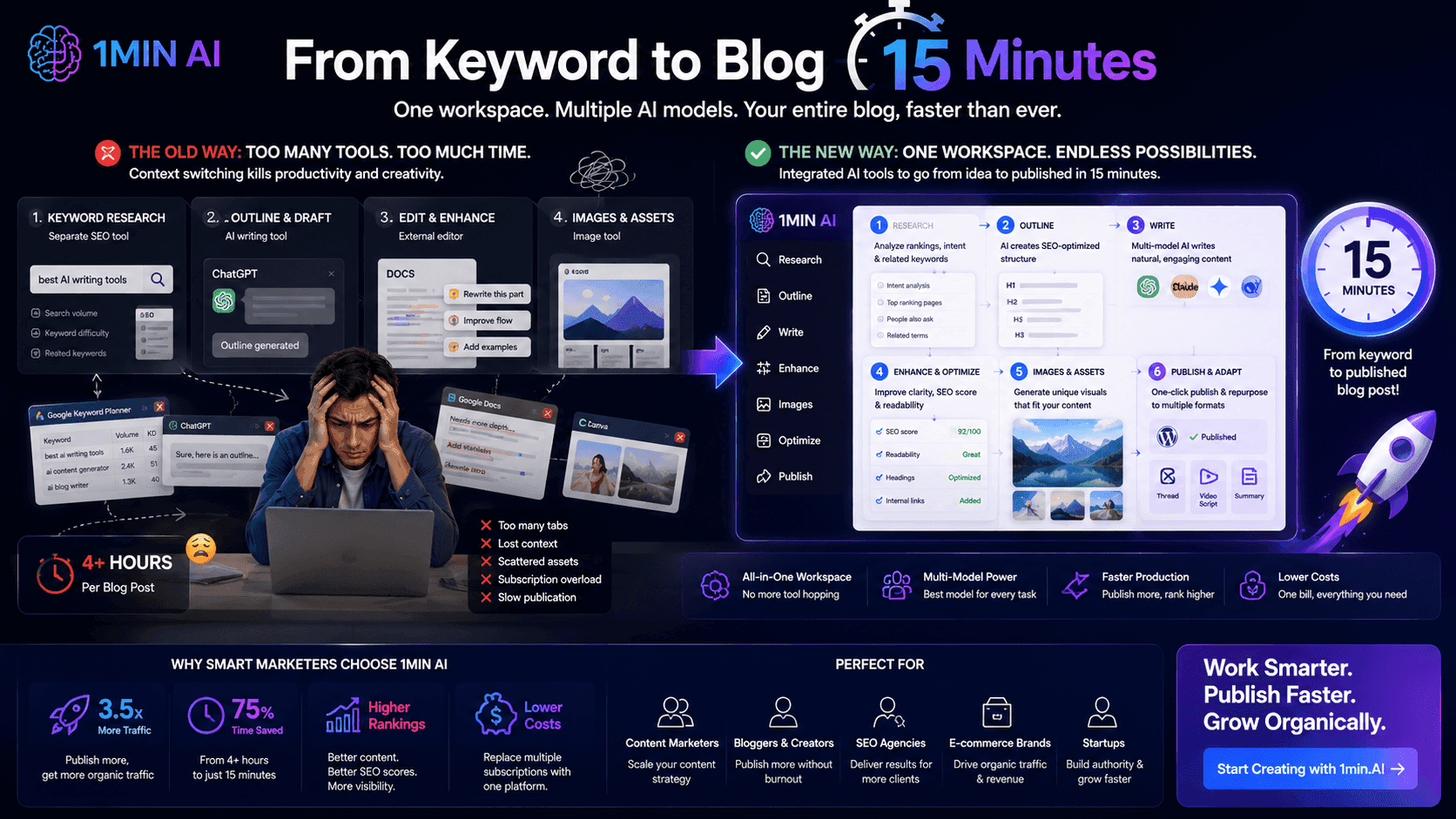
From Keyword to Blog in 15 Minutes
Stop wasting hours jumping between keyword research tools, text generators, and image apps. Learn how an integrated multi-model workspace slashes blog production time down to 15 minutes.
Uyen Hoang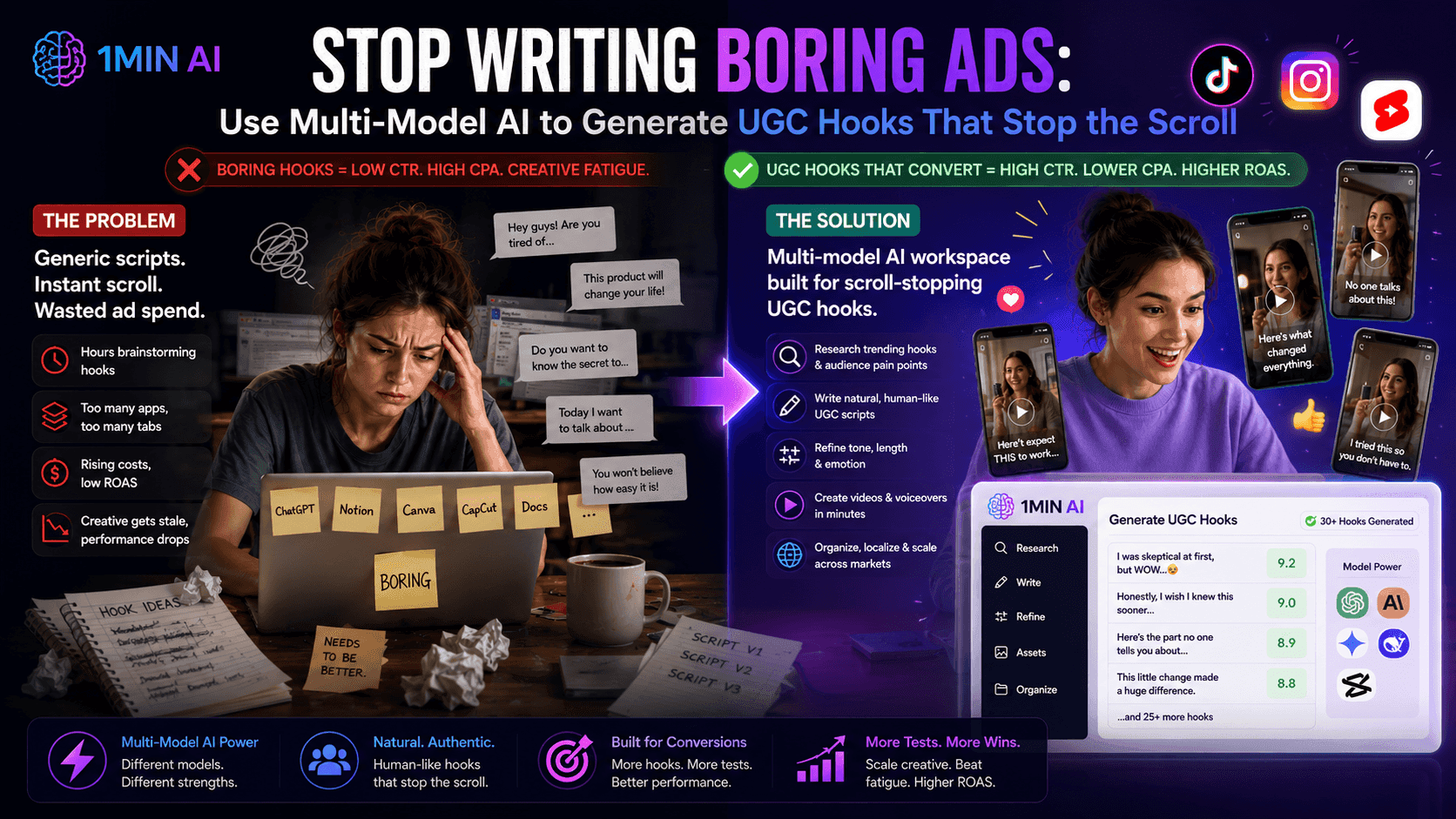
Use Multi-Model AI to Generate UGC Hooks
Is creative fatigue tanking your ROAS? Discover how to use a multi-model AI workspace to generate high-converting, natural-sounding UGC ad hooks that stop the scroll.
Uyen HoangNewsletter
Weekly AI Innovations with 1minAI
🔮 Weekly AI Innovations #130: 1minAI: Upgraded GPT 5.6 and AI Social
1minAI update the GPT-5.6 series and social media likes and comments.
 Hang Nguyen
🔮 Weekly AI Innovations #129: Stable Diffusion 3.5, Bria Eraser and Free Credits
Discover the latest 1minAI updates: Stable Diffusion 3.5, Bria Eraser, and Agent Survey rewards. Unlock free AI credits and create faster.
Hang Nguyen
🔮 Weekly AI Innovations #128: Master AI Social: Search Post and Recommended For You
Discover 1minAI's AI Social features. Use Search Post and Recommended For You to find curated content instantly and overcome subscription fatigue.
Uyen Hoang