10 Essential AI Skills to Boost Productivity

Ngoc Hong
July 27, 2026
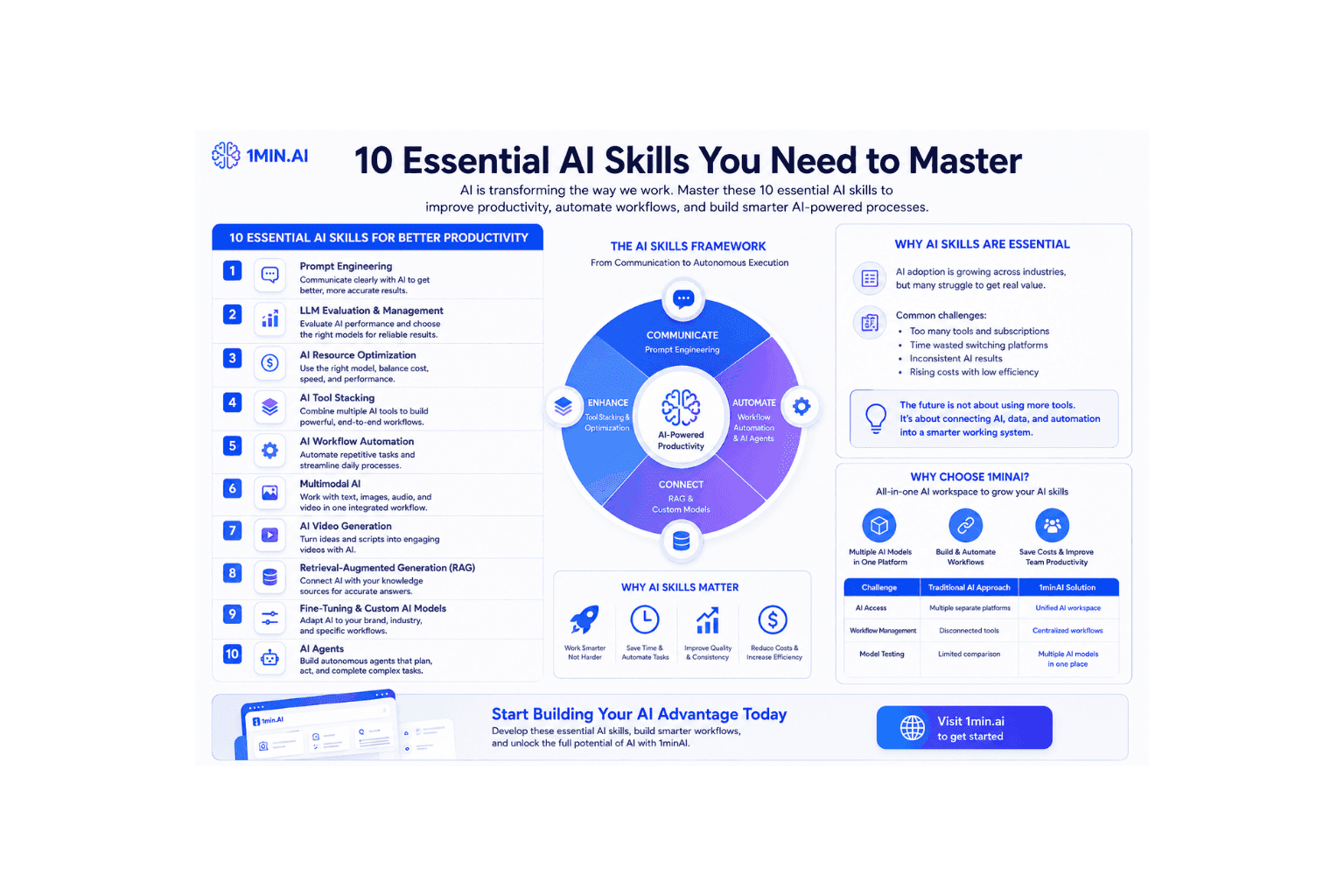
Discover essential AI skills to improve productivity, automate workflows, and build smarter AI-powered processes with 1minAI.
AI is transforming the way people work, but simply knowing how to use AI tools is no longer enough. The most successful AI users understand how to create effective workflows, automate repetitive tasks, and combine different AI technologies to solve real problems.
This guide covers the 10 essential AI skills that help professionals, creators, marketers, and businesses improve productivity, optimize workflows, and get more value from artificial intelligence.
10 Essential AI Skills for Better Productivity
These AI skills represent the capabilities needed to work effectively with modern AI systems. From improving communication with AI models to building autonomous workflows, each skill helps users create more efficient and scalable processes.
1. Prompt Engineering: Communicating Better with AI
Prompt Engineering is the foundation of effective AI usage. It focuses on creating clear instructions, providing useful context, and defining expected outputs to help AI models generate better results.
Professionals who master Prompt Engineering can improve response quality, reduce manual editing, and work more efficiently with AI assistants such as ChatGPT, Claude, and Gemini.
Example:
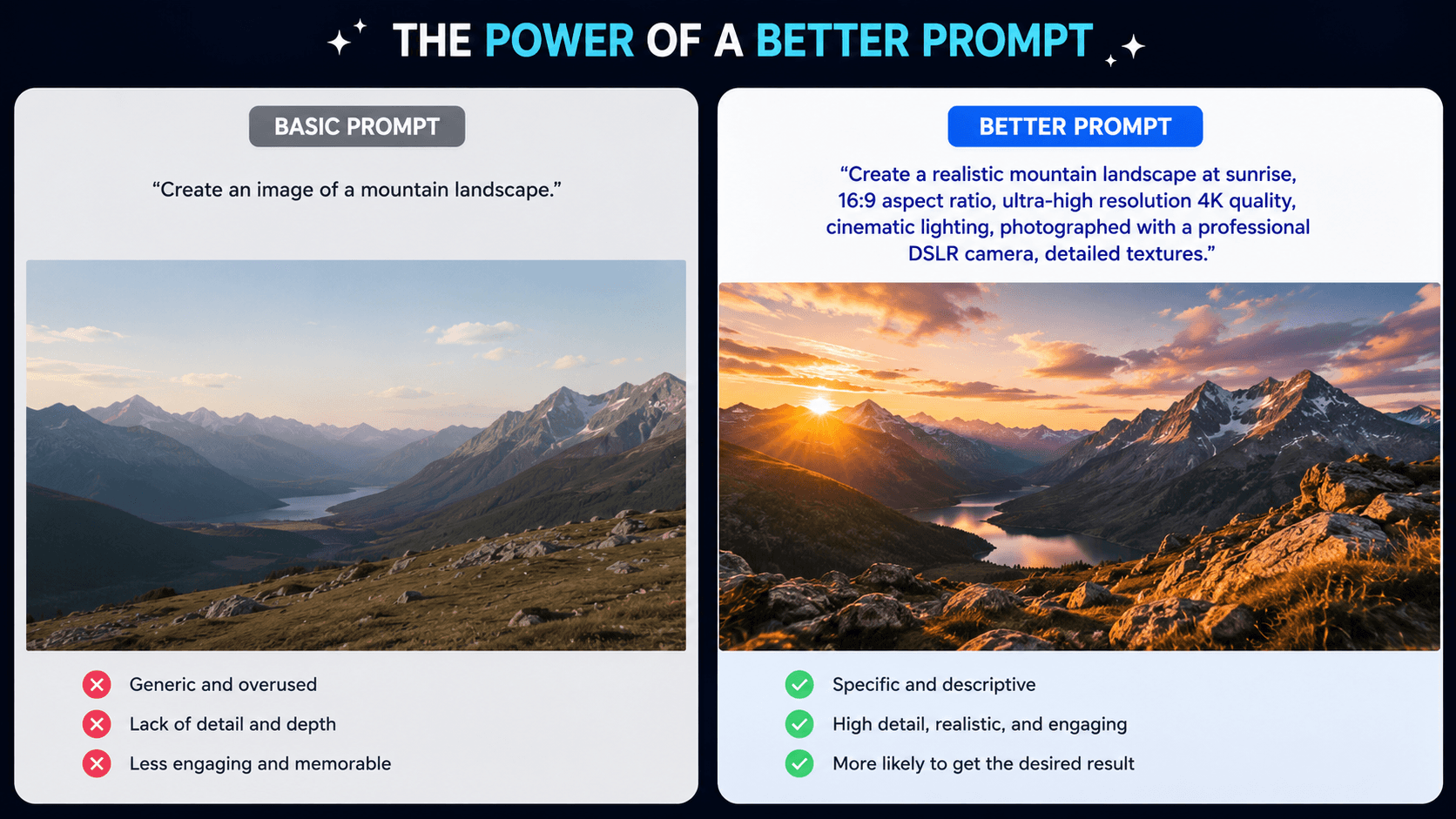
Instead of writing:
"Create an image of a mountain landscape."
A better prompt would be:
"Create a realistic mountain landscape at sunrise, 16:9 aspect ratio, ultra-high resolution 4K quality, cinematic lighting, photographed with a professional DSLR camera, detailed textures."
The more specific the context, style, and requirements, the better the AI output.
2. LLM Evaluation and Management: Improving AI Quality
As businesses adopt AI at scale, evaluating AI performance becomes increasingly important. LLM evaluation helps teams measure accuracy, consistency, reliability, and operational costs.
This skill allows users to select suitable models, identify limitations, and maintain reliable AI-powered workflows.
Example:
A marketing team may compare different AI models:
| Task | Suitable AI Model |
|---|---|
| Writing long-form articles | Advanced language model |
| Quick customer replies | Faster lightweight model |
| Data analysis | Reasoning-focused model |
This approach helps teams improve quality while controlling AI expenses.
3. AI Resource Optimization: Using AI Efficiently
AI Resource Optimization is the skill of selecting the right AI model based on task complexity, accuracy requirements, response speed, and budget. Using the most powerful model for every request is not always the best approach. A smarter strategy is to match each task with a model that delivers the right balance of intelligence, speed, and cost efficiency.
Different AI models are designed for different purposes. Advanced reasoning models are better for complex analysis, while lightweight models are more suitable for everyday tasks that require speed and lower costs.
| Task Type | Recommended AI Models | Best Use Cases |
|---|---|---|
| Complex reasoning and problem-solving | OpenAI o-series, GPT-5, Claude Opus, Gemini 2.5 Pro | Advanced coding, strategic planning, financial analysis, legal documents, complex decision-making |
| Daily productivity tasks | GPT-4.1 Mini, Claude Sonnet, Gemini Flash, GPT-5 Mini | Email writing, brainstorming, summaries, content drafts, simple coding tasks |
| Deep research and information gathering | OpenAI Deep Research, Perplexity Deep Research, Gemini Deep Research | Market research, competitor analysis, detailed reports, source-based analysis |
| Document analysis and private knowledge tasks | Claude Sonnet, Gemini 2.5 Pro, NotebookLM | PDF analysis, internal documents, knowledge management, file-based Q&A |
Example:
If you need to write a short email or summarize a meeting note, using GPT-5 Mini, GPT-4.1 Mini, or Gemini Flash can provide fast results with lower cost.
However, if you need to analyze a complex financial report, develop a business strategy, or review technical documents, models like GPT-5, Claude Opus, or Gemini 2.5 Pro are better choices because they provide stronger reasoning capabilities.
For research-heavy tasks, tools such as OpenAI Deep Research or Perplexity Deep Research can help gather information from multiple sources and provide more comprehensive insights.
By understanding the strengths of different AI models, professionals can avoid unnecessary costs and build more efficient AI workflows. Platforms like 1minAI make this process easier by allowing users to access and compare multiple leading AI models in one workspace.
4. AI Tool Stacking: Combining Multiple AI Tools
AI Tool Stacking involves connecting different AI applications to create complete workflows. Instead of relying on a single tool, users can combine AI for research, writing, design, analysis, and automation.
To apply AI skills effectively, you need the right environment to practice and optimize your workflows. 1minAI provides a multi-model AI workspace where users can access different AI models, compare outputs, and combine AI tools for writing, research, design, automation, and content creation — all in one platform.
5. AI Workflow Automation: Automating Daily Tasks
AI Workflow Automation enables users to reduce repetitive work by connecting tools and creating automated processes.
Common applications include:
- Content creation workflows.
- Customer support automation.
- Data processing.
- Business reporting.
Platforms such as Zapier, Make, and n8n allow teams to build flexible automation systems without complex development.
6. Multimodal AI: Working with Multiple Content Types
Multimodal AI allows users to work with different types of information, including text, images, audio, and video.
This capability is valuable for marketers, creators, and businesses that need to produce diverse content while maintaining speed and consistency across multiple channels.
7. AI Video Generation: Creating Visual Content with AI
AI Video Generation is changing how brands and creators produce content. AI tools can transform ideas, scripts, and concepts into engaging videos with less time and resources.
Instead of starting from a blank timeline:
"Create a 30-second product introduction video for a skincare brand. Use a clean luxury style, soft lighting, and professional voice-over."
AI can help generate scripts, visuals, and video concepts faster.
8. Retrieval-Augmented Generation (RAG): Connecting AI with Knowledge
RAG enables AI systems to access external sources such as company documents, databases, and internal knowledge bases.
By connecting AI with trusted information, organizations can create more accurate assistants that provide answers based on their own data.
9. Fine-Tuning and Custom AI Models: Creating Specialized Solutions
Fine-tuning allows businesses to adapt AI models for specific industries, workflows, and communication styles.
Custom AI assistants can better understand brand guidelines, internal processes, and specialized requirements, making AI more useful for professional applications.
10. AI Agents: Building Autonomous Workflows
AI Agents represent a major step forward in automation. Unlike traditional chatbots, AI Agents can analyze goals, plan actions, use tools, and complete multi-step tasks.
nstead of manually researching competitors:
An AI Agent can:
- Collect competitor information.
- Summarize key insights.
- Create a comparison report.
- Suggest improvement strategies.
This turns AI from a simple assistant into an active workflow partner.
Alternatives
Discover the best alternatives to 1minAI and compare features, pricing, and use cases.

1min.AI vs OpenRouter
1min.AI vs. OpenRouter: Compare the ready-to-use AI creation product against the technical API tool. Find out if you need a zero-code creative studio or a coding infrastructure hub.
 Ngoc Hong
1min.AI vs Jarvis AI
Compare 1min.AI vs Jarvis AI to discover which AI platform is better for writing, research, automation, and content creation. Find the best AI assistant for your workflow.
Ngoc Hong
1min.AI vs Lovart
1min.AI vs. Lovart: Compare the versatile Multi-Media Studio (Video, Code, Voice Cloning) against the specialized AI Design Agent (Visuals, Menu Creation). Find out why 1min.AI offers the best long-term value and depth for serious creators.
Ngoc HongAI Tools
Discover the best AI tools to boost productivity, creativity, and everyday work.
The Vision Before the Draft: How Freelance Designers Win Clients from Day One
Vague briefs, slow mockups, and endless revisions can make freelance design projects harder to close. Discover how 1min.AI helps designers turn client ideas into clear concepts, visual directions, and professional mockups faster.
 Lien Anh Vu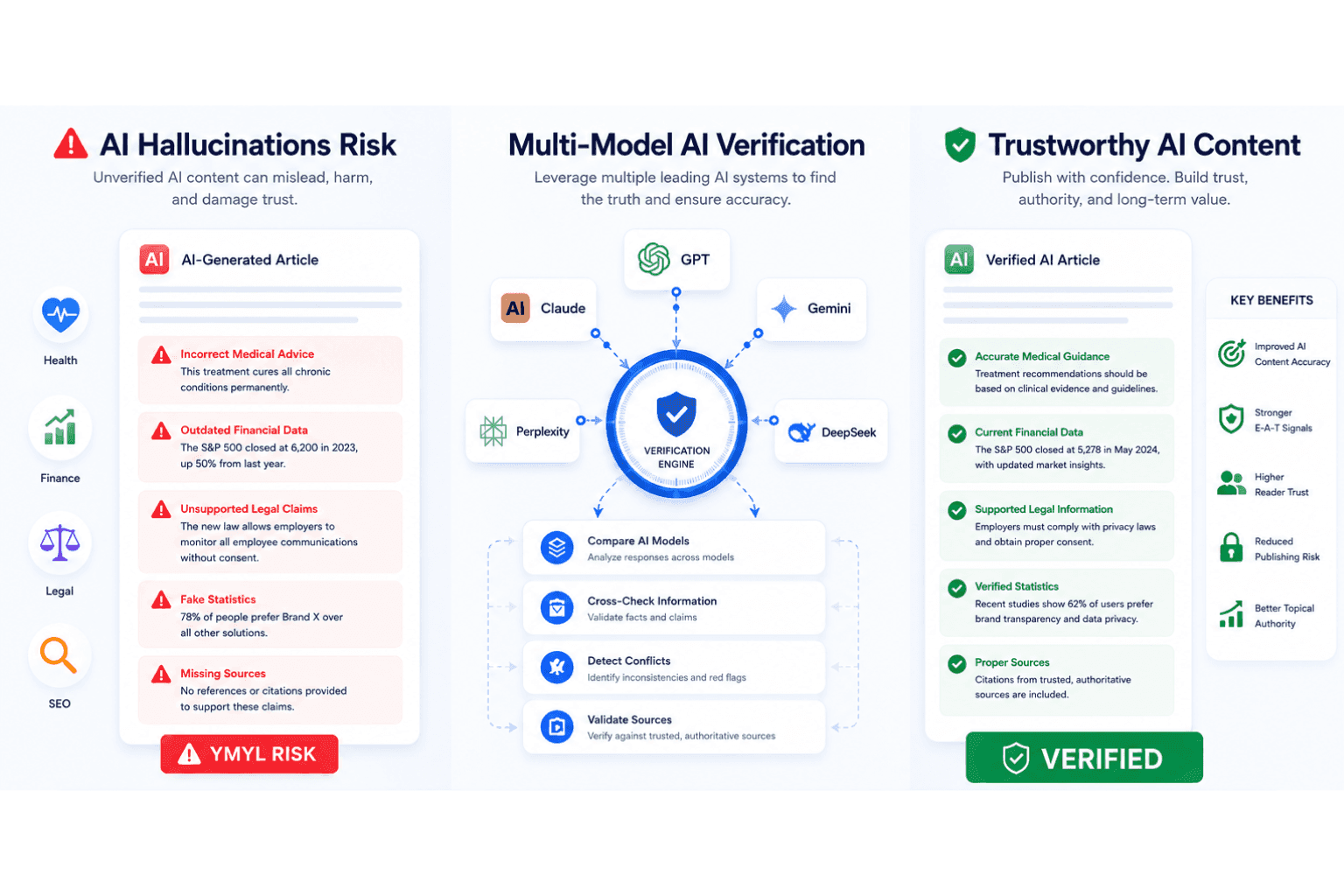
AI Hallucination Checker for Accurate YMYL Content
Use an AI hallucination checker to verify AI-generated content, improve AI content accuracy, strengthen EEAT signals, and reduce YMYL publishing risks.
Ngoc Hong
Best AI Image Upscaler for Freelance Designers
Enhance blurry or low-resolution images in seconds with AI Image Upscaler. Perfect for freelance designers and photographers who need sharper visuals for client presentations, social media, and print, without spending hours editing.
Lien Anh VuAI Features
Comprehensive AI features that streamline workflows, improve efficiency, and empower teams to achieve more.
Free Multi AI Chat
Use Free Multi AI Chat to compare multiple AI models in one workspace. Chat with ChatGPT, Claude, Gemini, and more without switching apps.
Ngoc HongThe Vision Before the Draft: How Freelance Designers Win Clients from Day One
Vague briefs, slow mockups, and endless revisions can make freelance design projects harder to close. Discover how 1min.AI helps designers turn client ideas into clear concepts, visual directions, and professional mockups faster.
Lien Anh Vu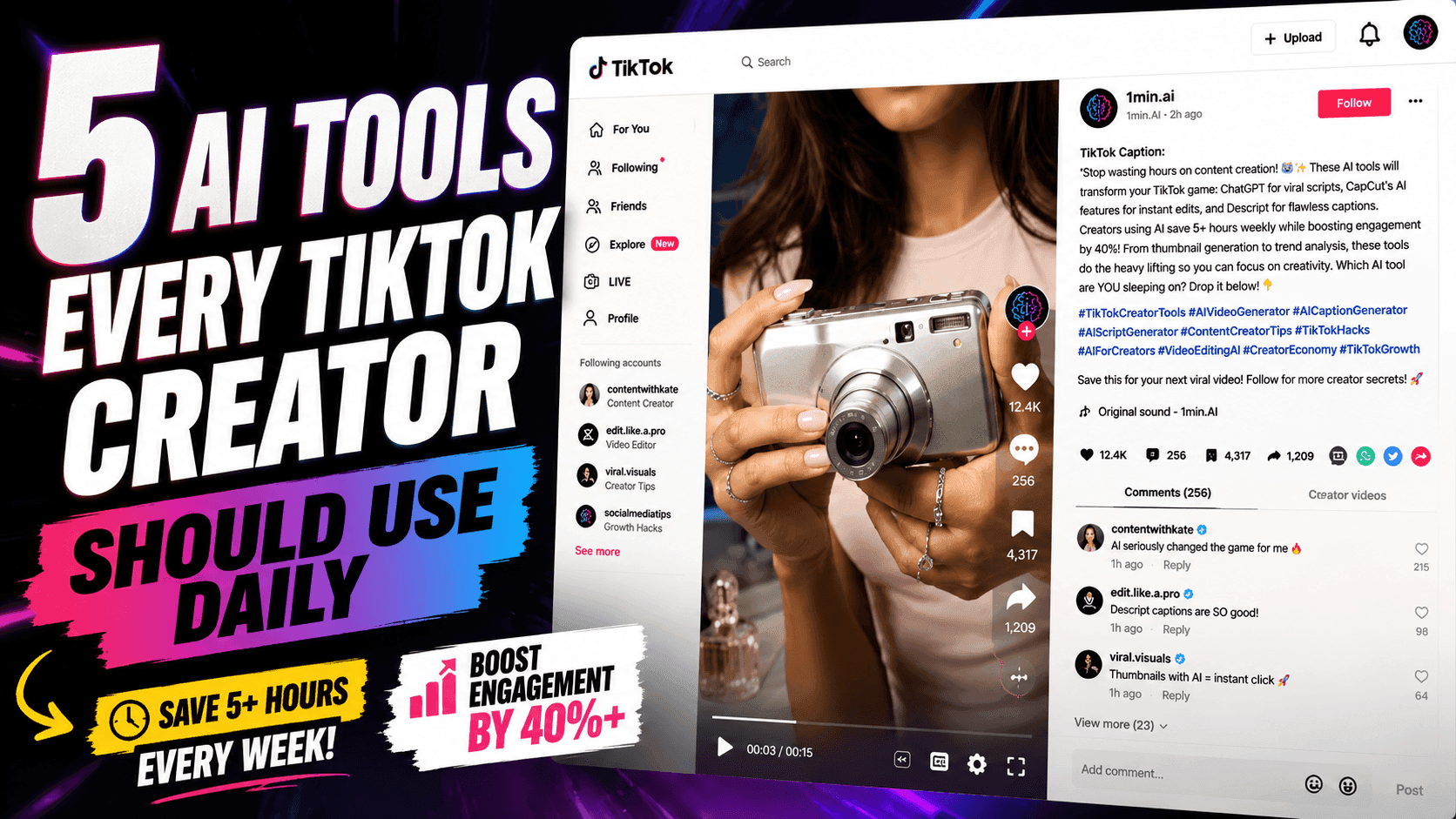
5 AI Tools Every TikTok Creator Should Use Daily
Discover five essential AI tools that help TikTok creators find ideas, write scripts, create visuals, generate videos, and publish content faster.
Lien Anh VuAI Use Cases
A curated collection of AI use cases for business, productivity, and industry-specific applications.
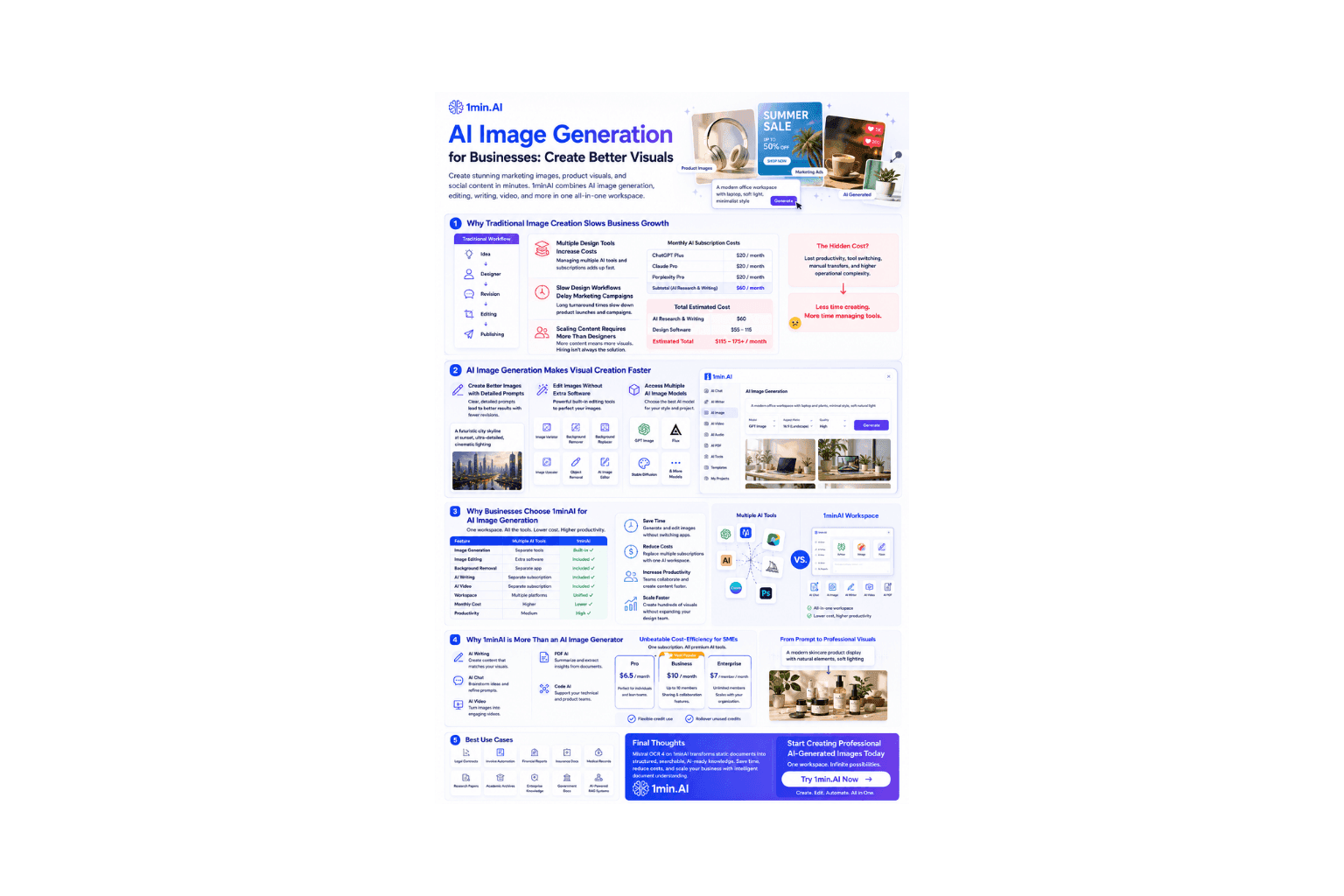
AI Image Generation
Discover how AI Image Generation helps businesses create marketing visuals, product images, and social content faster with 1minAI.
Ngoc Hong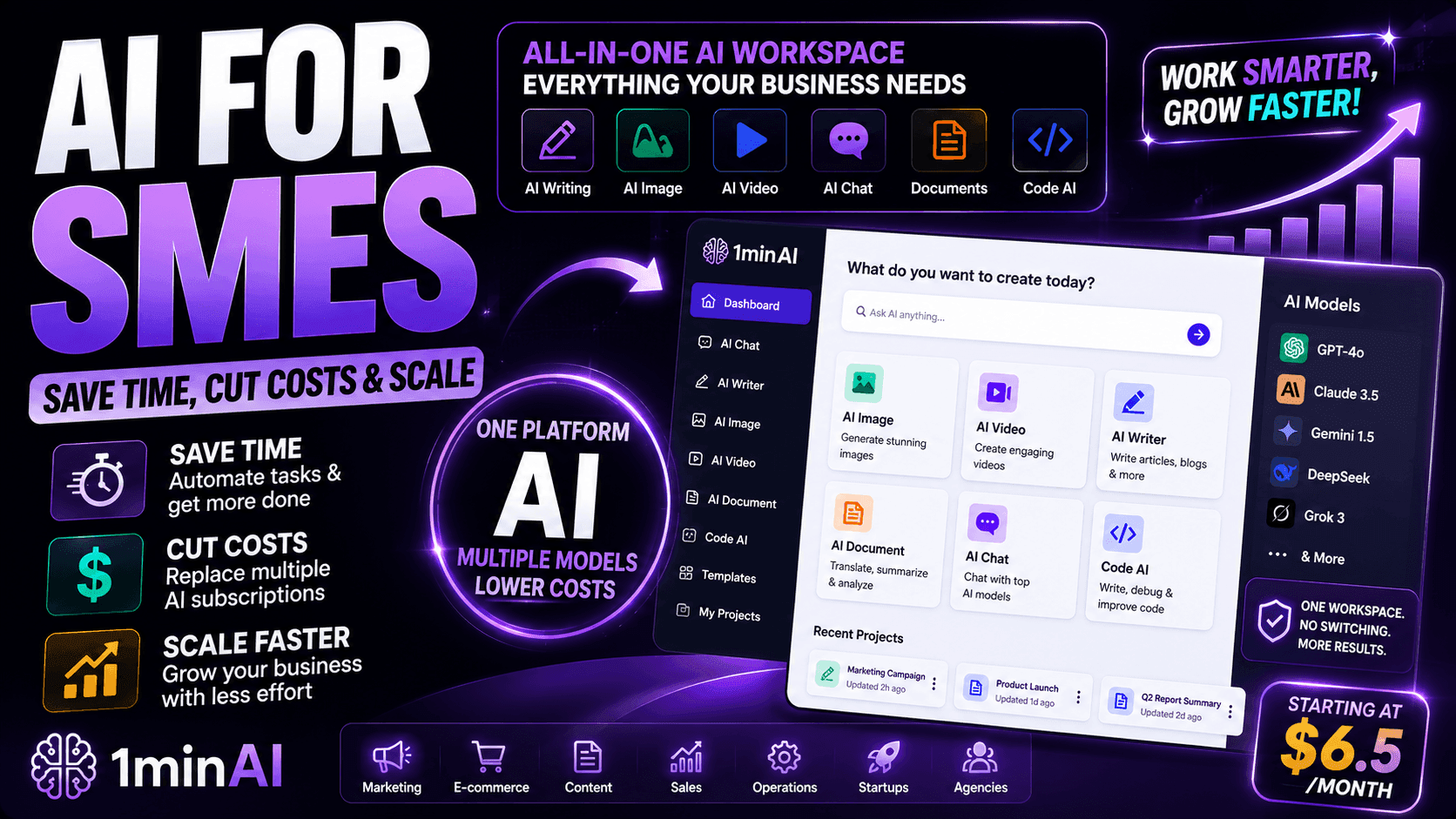
AI for SMEs: Save Time, Cut Costs & Scale with 1minAI
Discover how AI for SMEs helps automate writing, images, videos, documents, and coding - all in one workspace to save time, reduce costs, and grow faster.
Ngoc Hong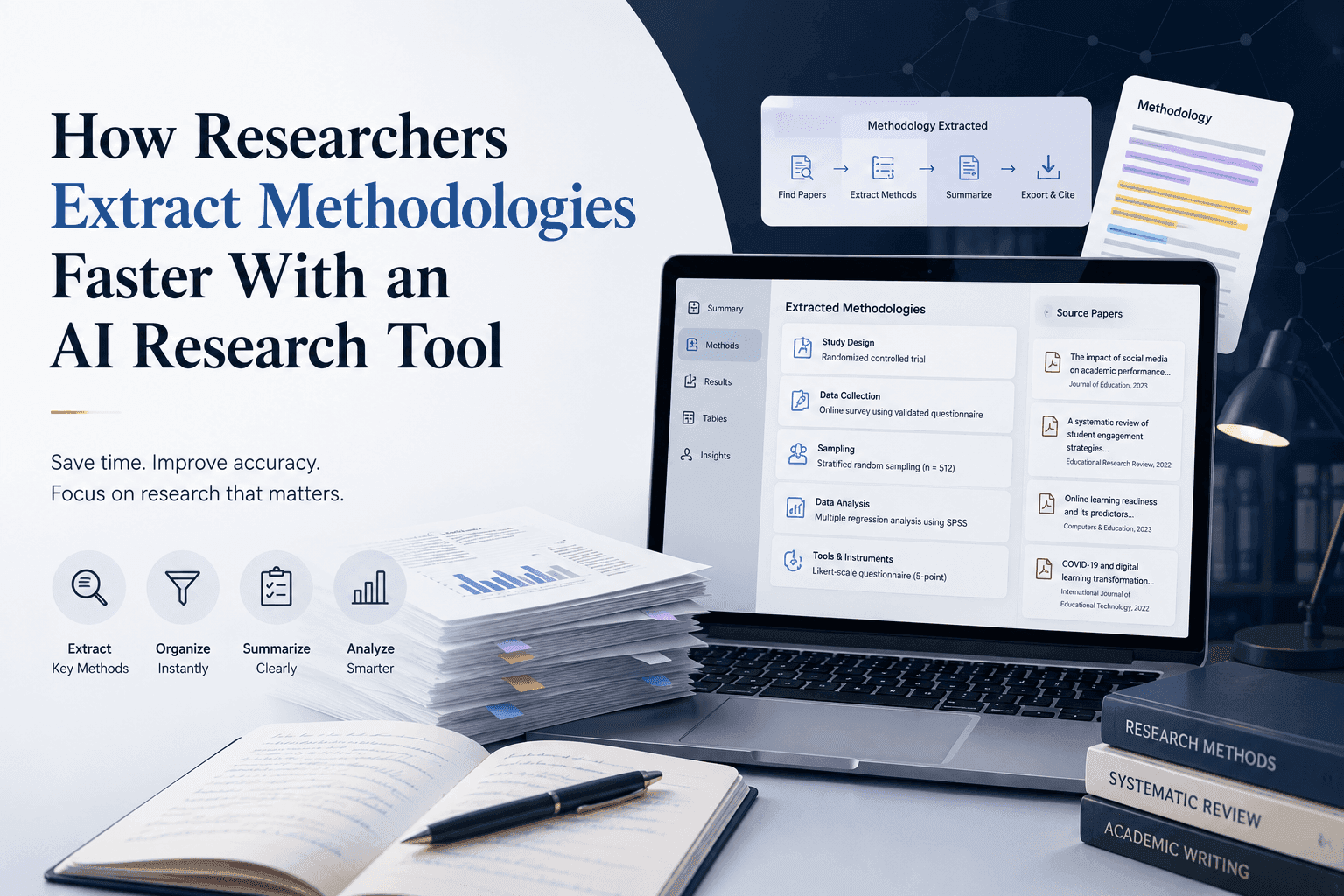
How Researchers Extract Methodologies Faster With an AI Research Tool
Learn how an AI research tool helps researchers extract methodologies from research papers, compare study designs, and accelerate literature reviews with AI-powered PDF analysis.
 Tram Ta
AI Tutorials
Learn how to use AI with practical, step-by-step tutorials.
The Vision Before the Draft: How Freelance Designers Win Clients from Day One
Vague briefs, slow mockups, and endless revisions can make freelance design projects harder to close. Discover how 1min.AI helps designers turn client ideas into clear concepts, visual directions, and professional mockups faster.
Lien Anh Vu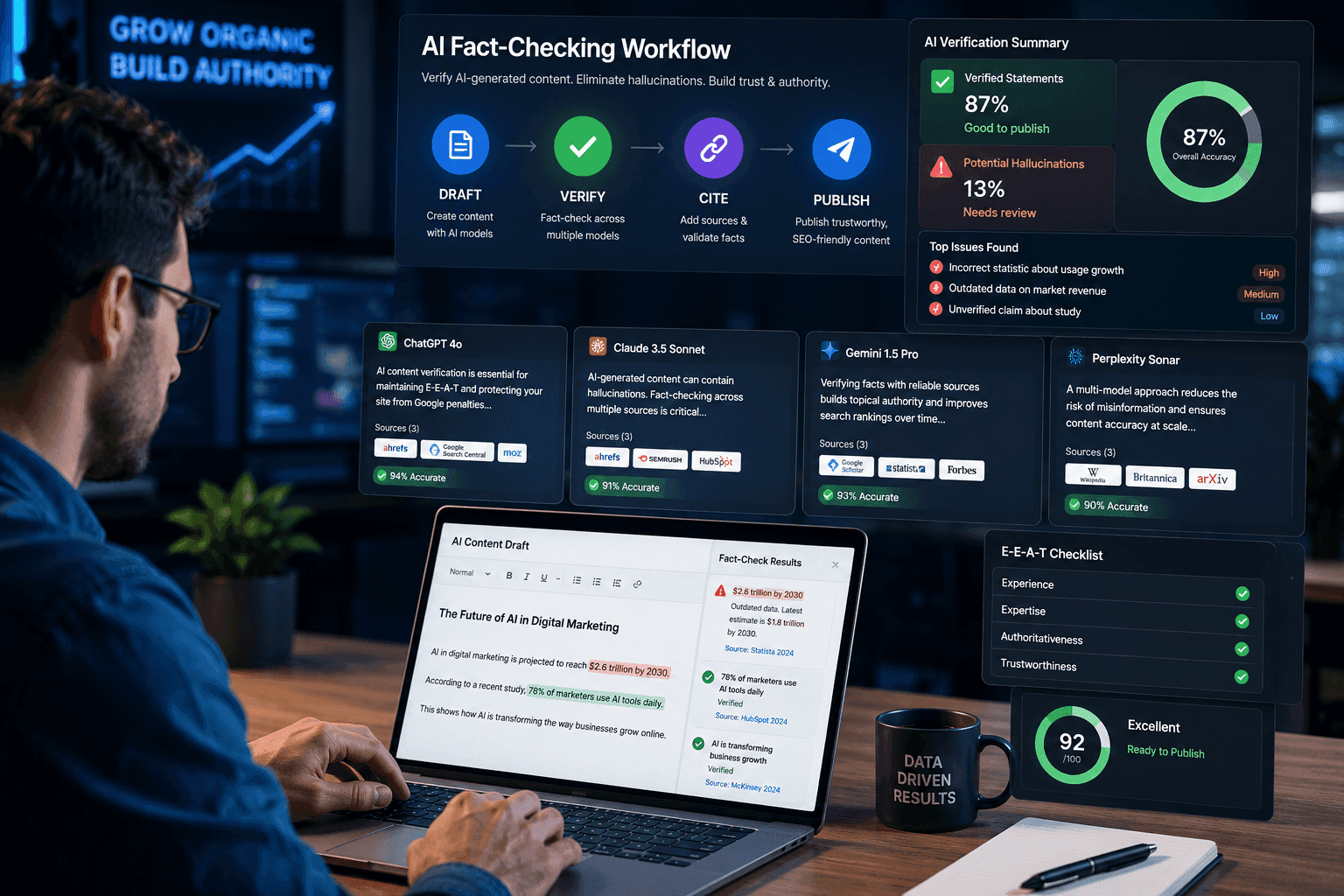
Verify AI-Generated Content with a 3-Step AI Fact-Checking Workflow
Fear AI hallucinations destroying your SEO? Learn how to verify AI-generated content using a multi-model AI fact checking tool to protect your rankings.Fear AI hallucinations destroying your SEO? Learn how to verify AI-generated content using a multi-model AI fact checking tool to protect your rankings.
Ngoc Hong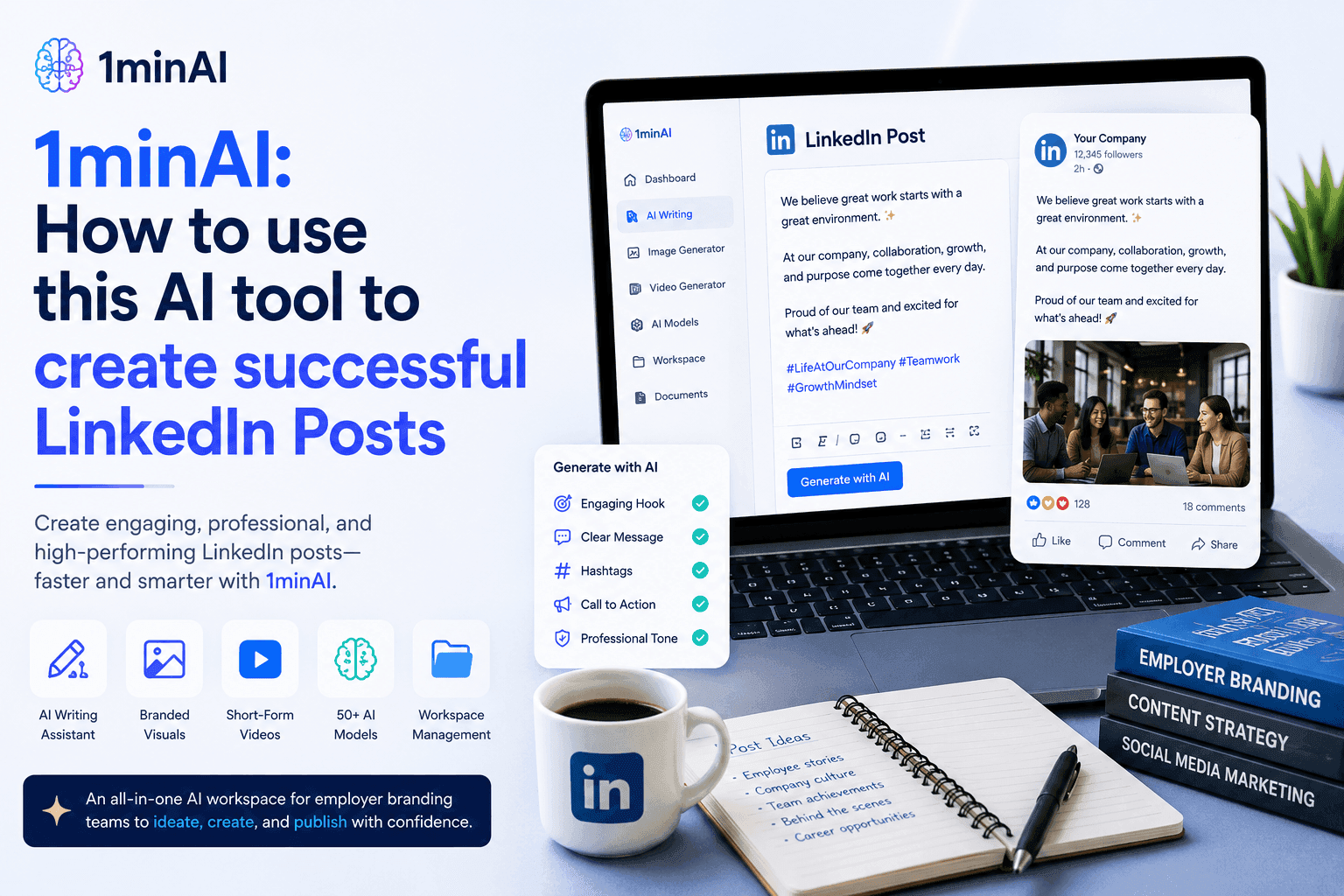
1minAI: How to use this AI tool to create successful LinkedIn Posts
Learn how AI tools help HR teams create engaging LinkedIn employer branding posts with 1minAI. Follow this step-by-step guide to generate professional content faster.
Tram TaAI Guides
Learn AI faster with practical guides, real-world examples, and actionable best practices.
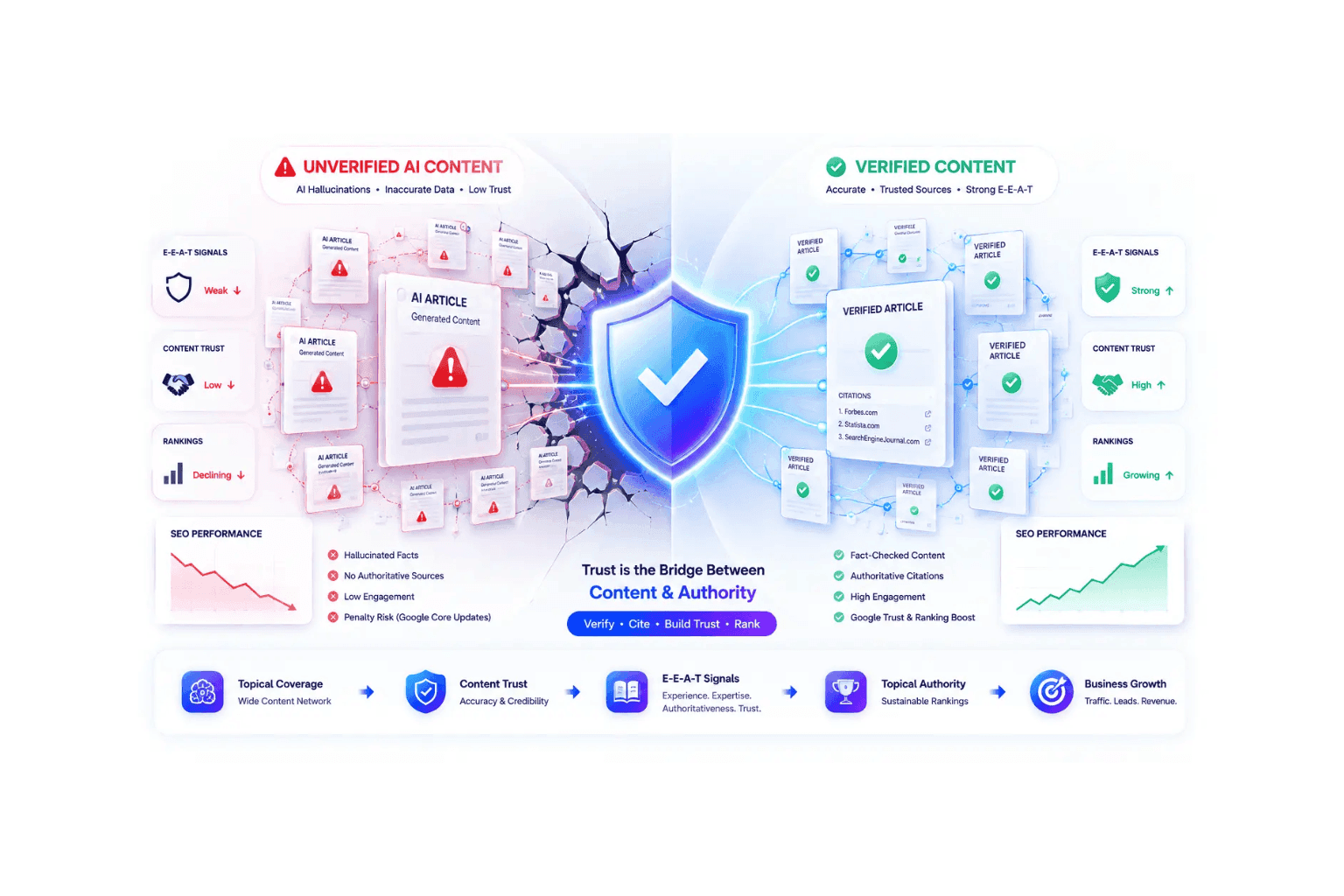
Topical Authority: How AI Hallucinations Hurt SEO Rankings
Building topical authority won't boost SEO rankings if AI hallucinations destroy credibility. Learn how to verify content and survive Google core updates.
Ngoc Hong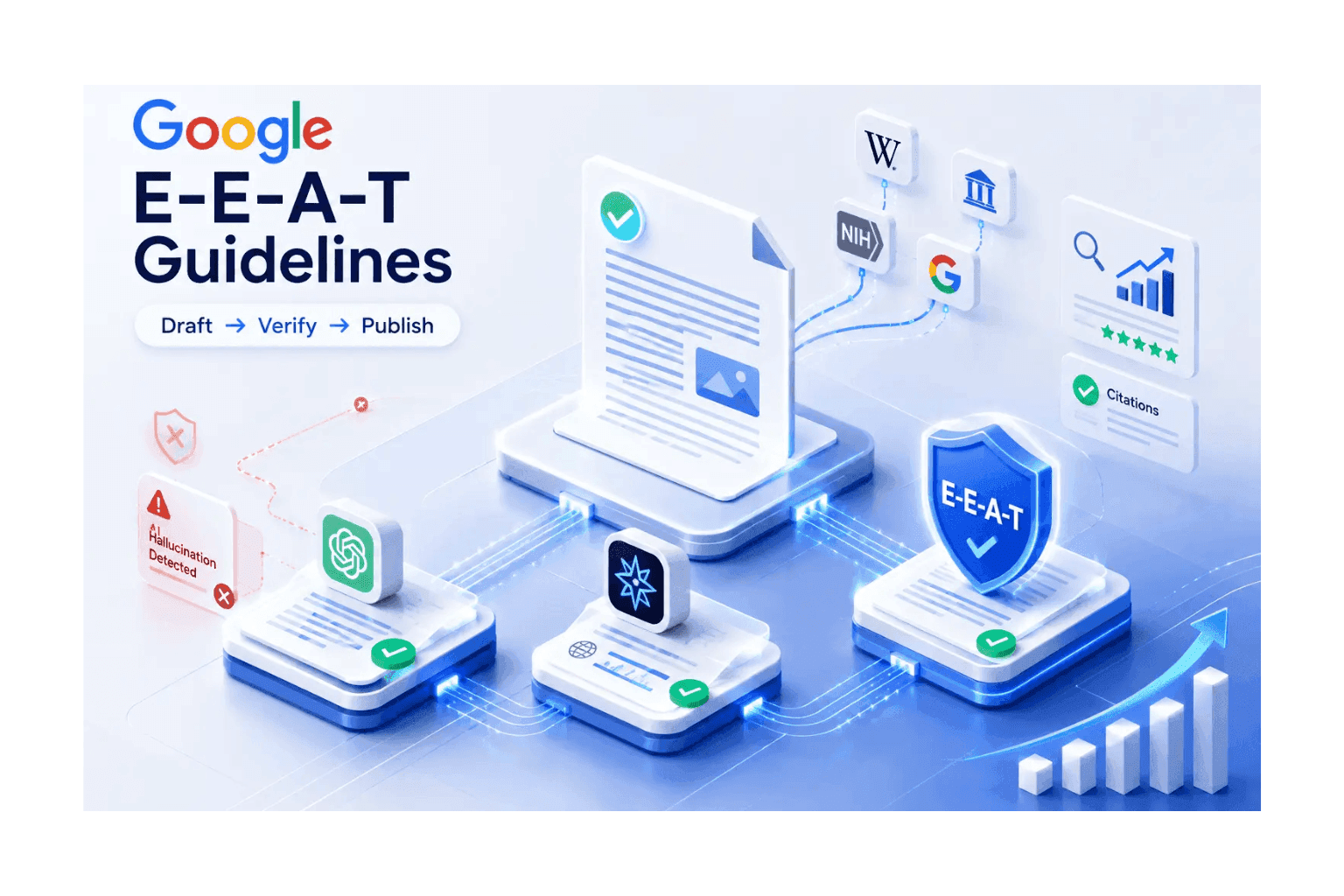
Google E-E-A-T Guide to Verify AI Content
Fear algorithmic penalties? Meet strict Google E-E-A-T guidelines by learning how to verify AI content. Use an AI hallucination checker to secure rankings.
Ngoc HongThe Vision Before the Draft: How Freelance Designers Win Clients from Day One
Vague briefs, slow mockups, and endless revisions can make freelance design projects harder to close. Discover how 1min.AI helps designers turn client ideas into clear concepts, visual directions, and professional mockups faster.
Lien Anh VuAI Solutions
Browse the best AI solutions for automation, coding, research, productivity, customer support, marketing, and business workflows.
The Vision Before the Draft: How Freelance Designers Win Clients from Day One
Vague briefs, slow mockups, and endless revisions can make freelance design projects harder to close. Discover how 1min.AI helps designers turn client ideas into clear concepts, visual directions, and professional mockups faster.
Lien Anh Vu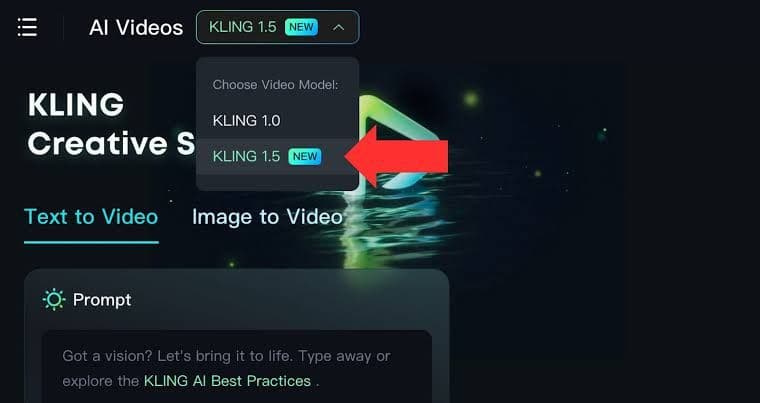
Free AI Video Creation with Kling 1.5
Engage in intelligent conversations with our AI Chatbot powered by the Claude 3 Opus Model. Experience the future of natural language processing and AI-powered chat.
 Uyen Hoang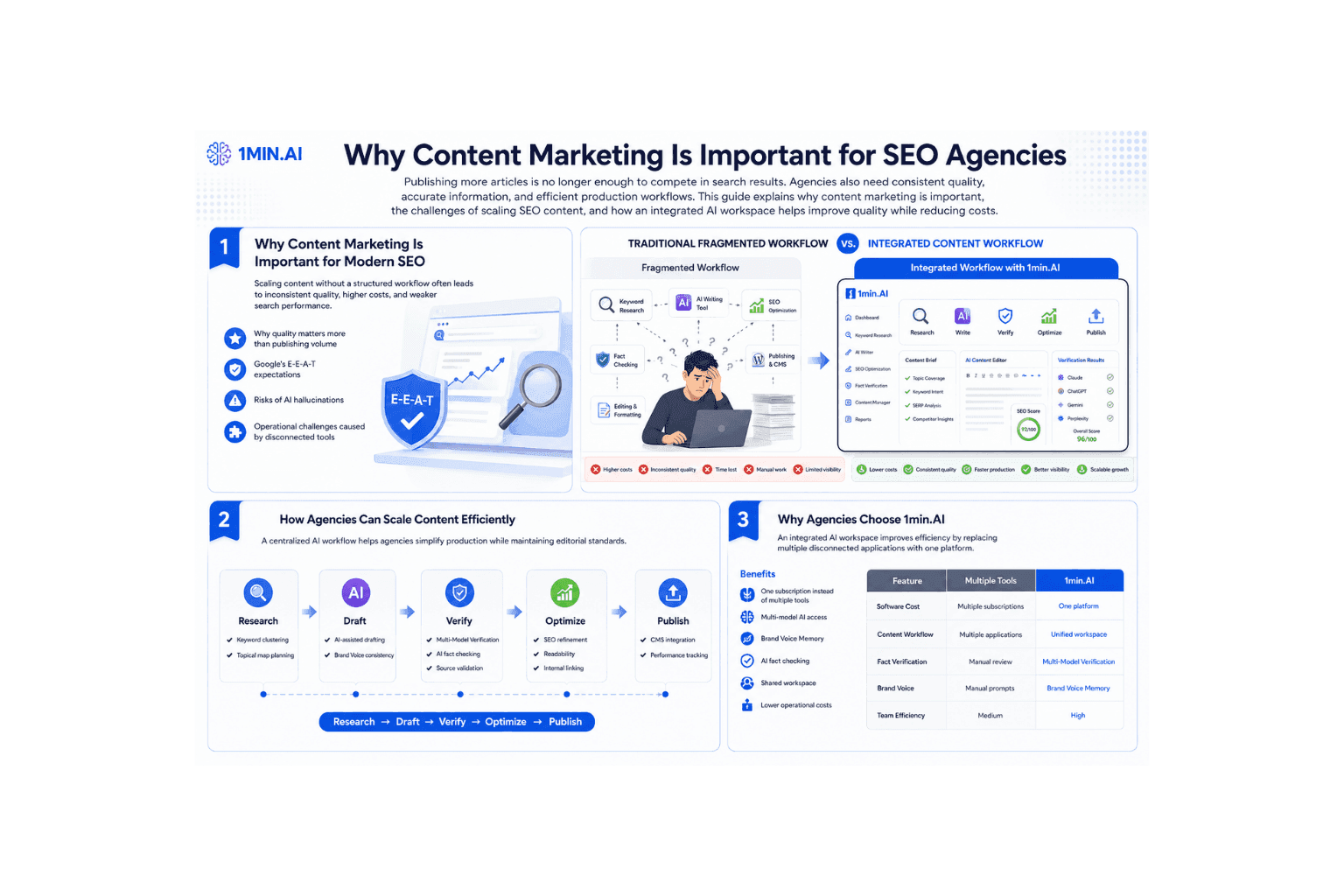
Why Content Marketing Is Important for SEO Agencies
Learn why content marketing is important for SEO agencies. Improve web content creation, maintain E-E-A-T, and scale content efficiently with 1min.AI.
Ngoc HongAI Models
Explore the world's leading AI models in one place.
The Vision Before the Draft: How Freelance Designers Win Clients from Day One
Vague briefs, slow mockups, and endless revisions can make freelance design projects harder to close. Discover how 1min.AI helps designers turn client ideas into clear concepts, visual directions, and professional mockups faster.
Lien Anh Vu
Free AI Chat with GPT OSS 120B
Setting a new benchmark for open-source AI. GPT-OSS-120B is a 120-billion-parameter language model optimized for high-precision reasoning, long-context understanding, and large-scale deployment.
Lien Anh Vu
Free AI Chat with Grok 3
Where next-generation AI begins. Grok 3 is xAI’s most powerful model, designed for speed, accuracy, and real-world insight.
Lien Anh VuAI Comparisons
Compare AI tools, models, and platforms to find the best fit for your needs.
Claude vs Gemini For Coding: Which Wins
Claude vs Gemini for coding compared on code quality, context window, and dev tools. See which fits your stack, or run both inside 1min.AI.
 Trang Tran
Midjourney vs Ideogram: Which AI Should You Choose?
Compare Midjourney vs Ideogram to find the best AI image generator for your needs. Explore image quality, typography, features, and real-world use cases.
Trang Tran
Top 5 Best AI Tools for Researchers and Students in 2026
Discover the best AI tools for researchers and students to summarize papers, improve academic writing, analyze PDFs, and streamline research workflows.
Tram TaAI Integrations
Seamlessly integrate AI with the tools you already use to automate work and boost productivity.
How AI Integration Helps Teachers Plan, Teach, and Assess More Efficiently
Discover how AI integration helps teachers streamline lesson planning, presentations, classroom materials, assessments, and student engagement in one AI workspace.
Tram Ta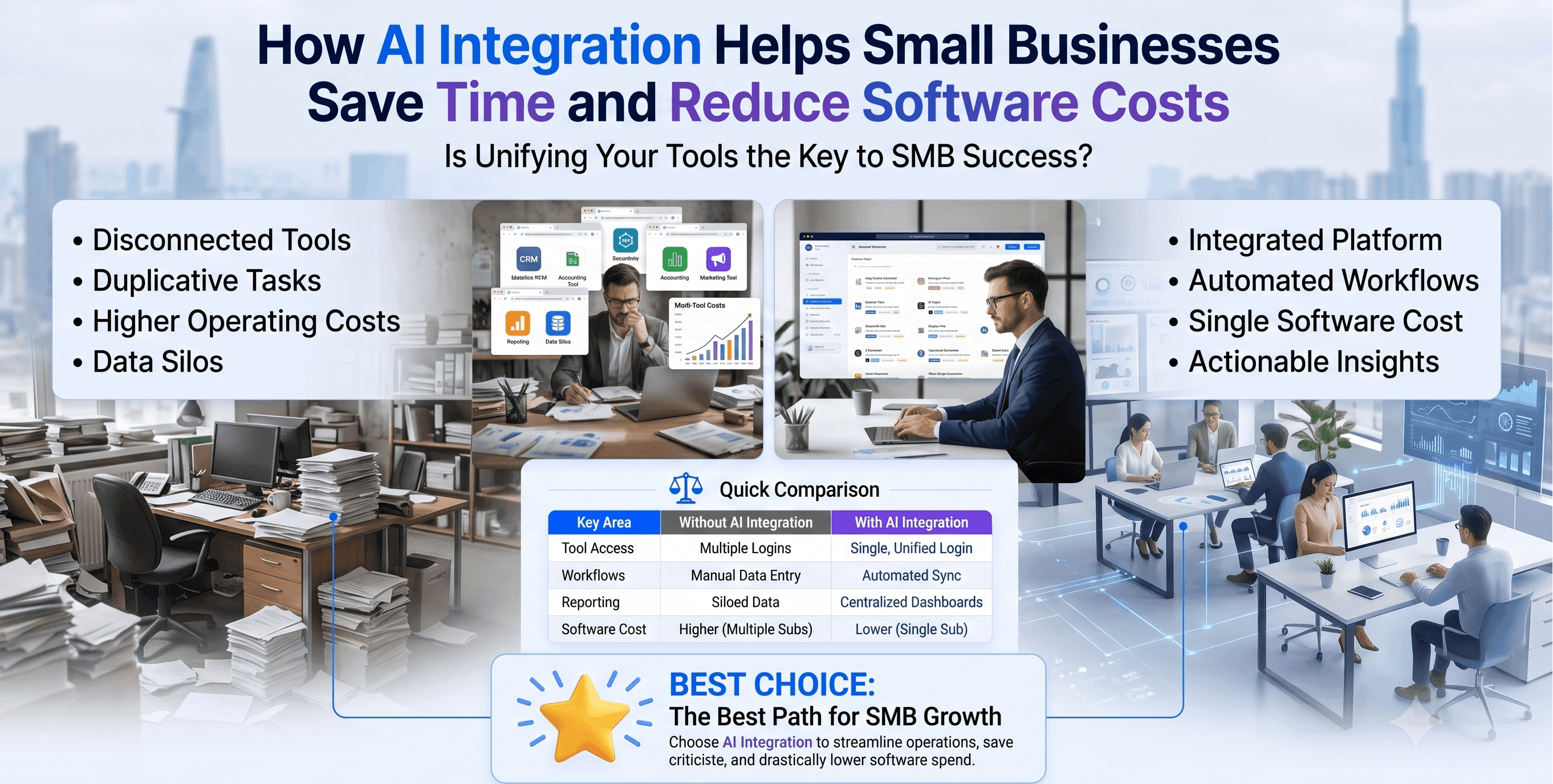
How AI Integration Helps Small Businesses Save Time and Reduce Software Costs
Discover how AI integration helps small businesses replace multiple AI apps with one workspace, improving productivity, reducing software costs, and streamlining daily workflows.
Tram Ta
Stop Switching Between AI Apps: How AI Integration Transforms Employer Branding
Discover how AI integration helps HR teams streamline employer branding by combining AI writing, documents, images, video, and multiple AI models into one workspace.
Tram TaAI for Industries
Find the best AI tools and workflows for healthcare, finance, education, legal, manufacturing, retail, real estate, and more.
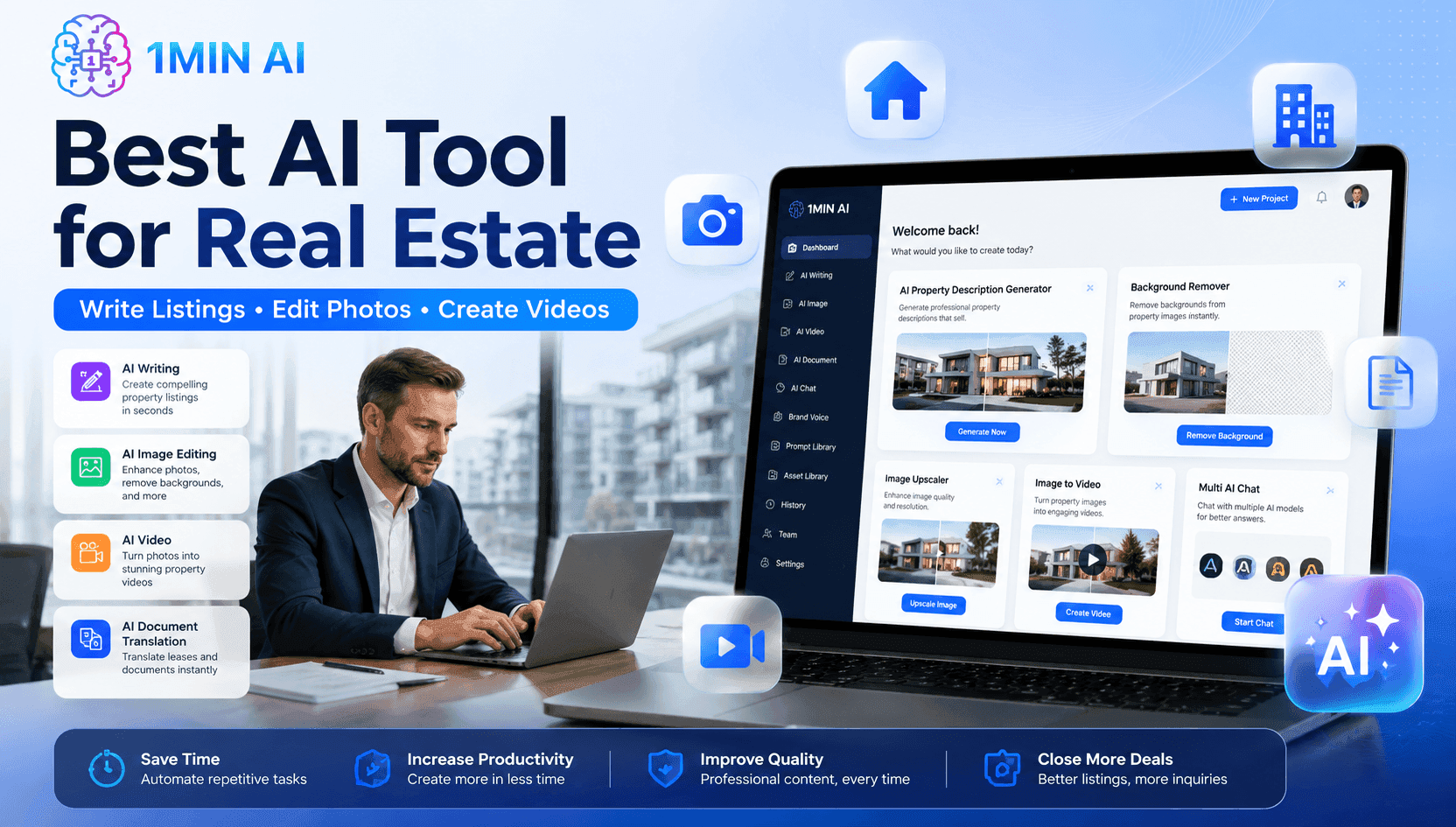
Best AI Tool for Real Estate Property Managers Use Today
Looking for the best AI tool for real estate? See how property managers use AI to write listings, edit photos, and create marketing videos in minutes.
Trang Tran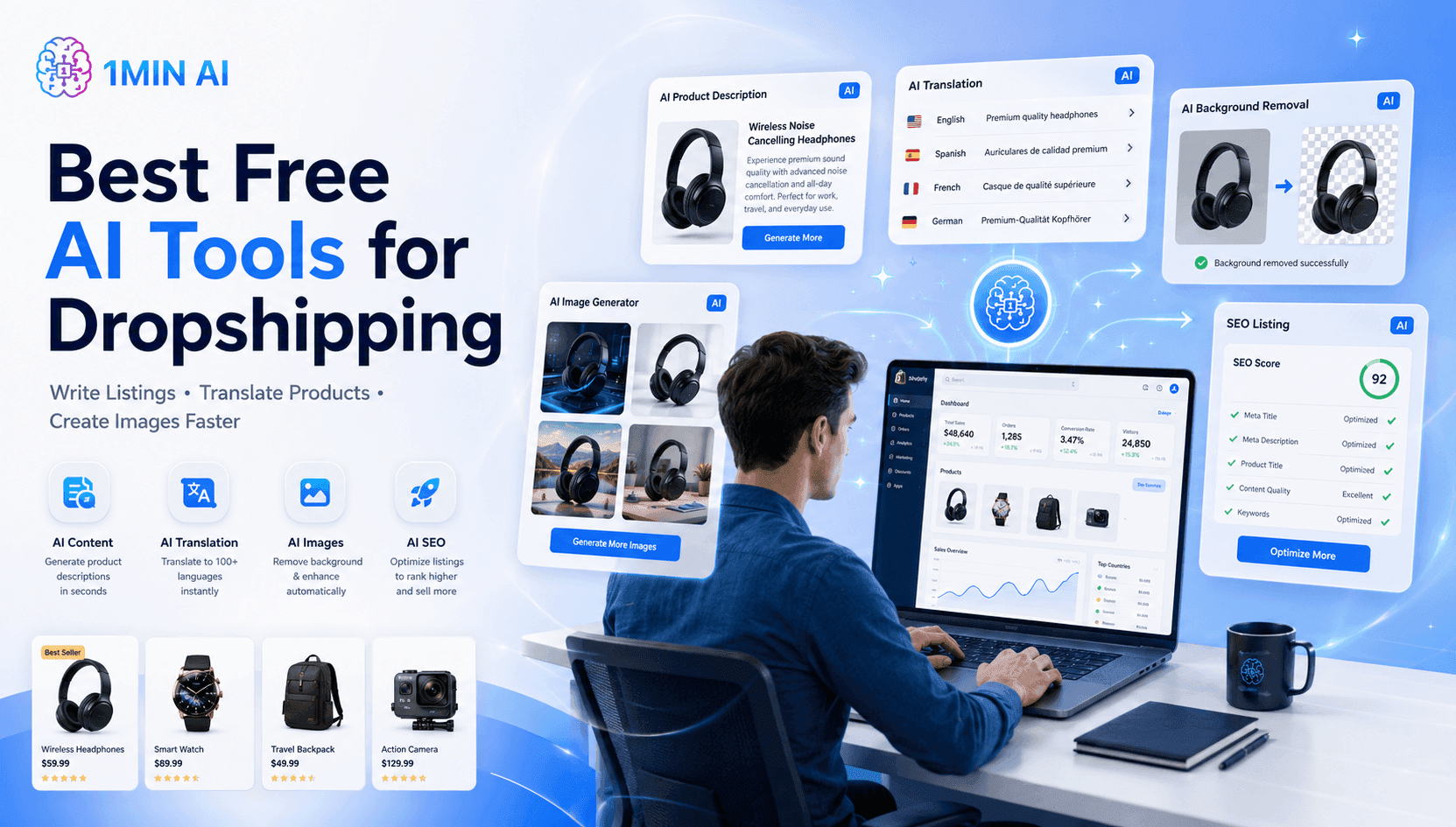
Best Free AI Tools for Dropshipping You Can Use Now
Free AI tools for Shopify dropshipping that write listings, generate images, and translate content in seconds, so you launch faster without extra spend.
Trang Tran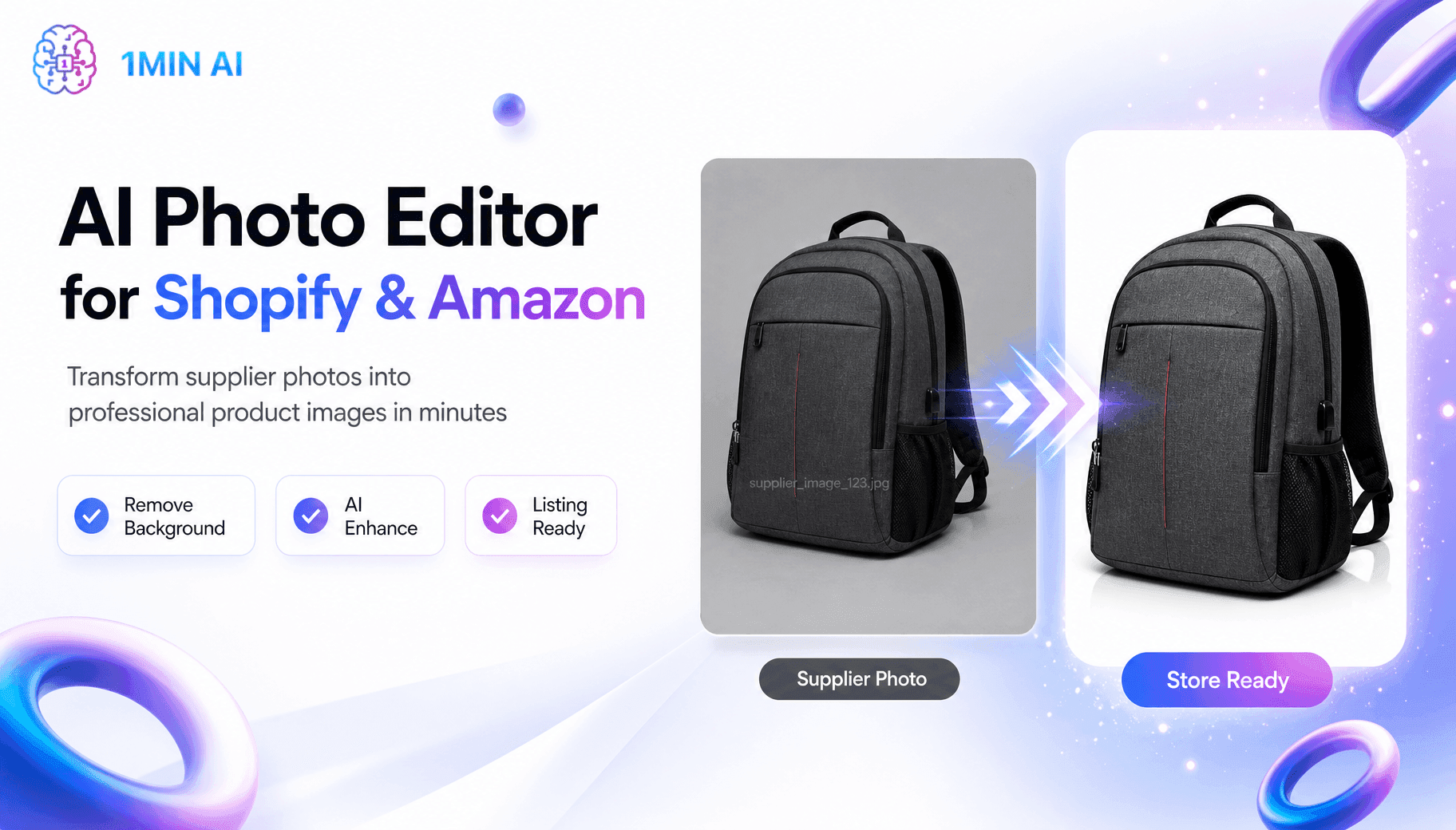
Free AI Shopify Photo Editor for Cross Border Sellers
Tired of low quality supplier photos? This free AI Shopify photo editor removes backgrounds and edits images before you list on Shopify or Amazon.
Trang TranAI Agents
Discover and run AI agents to automate tasks across your work and daily life.
5 AI Tools Every TikTok Creator Should Use Daily
Discover five essential AI tools that help TikTok creators find ideas, write scripts, create visuals, generate videos, and publish content faster.
Lien Anh Vu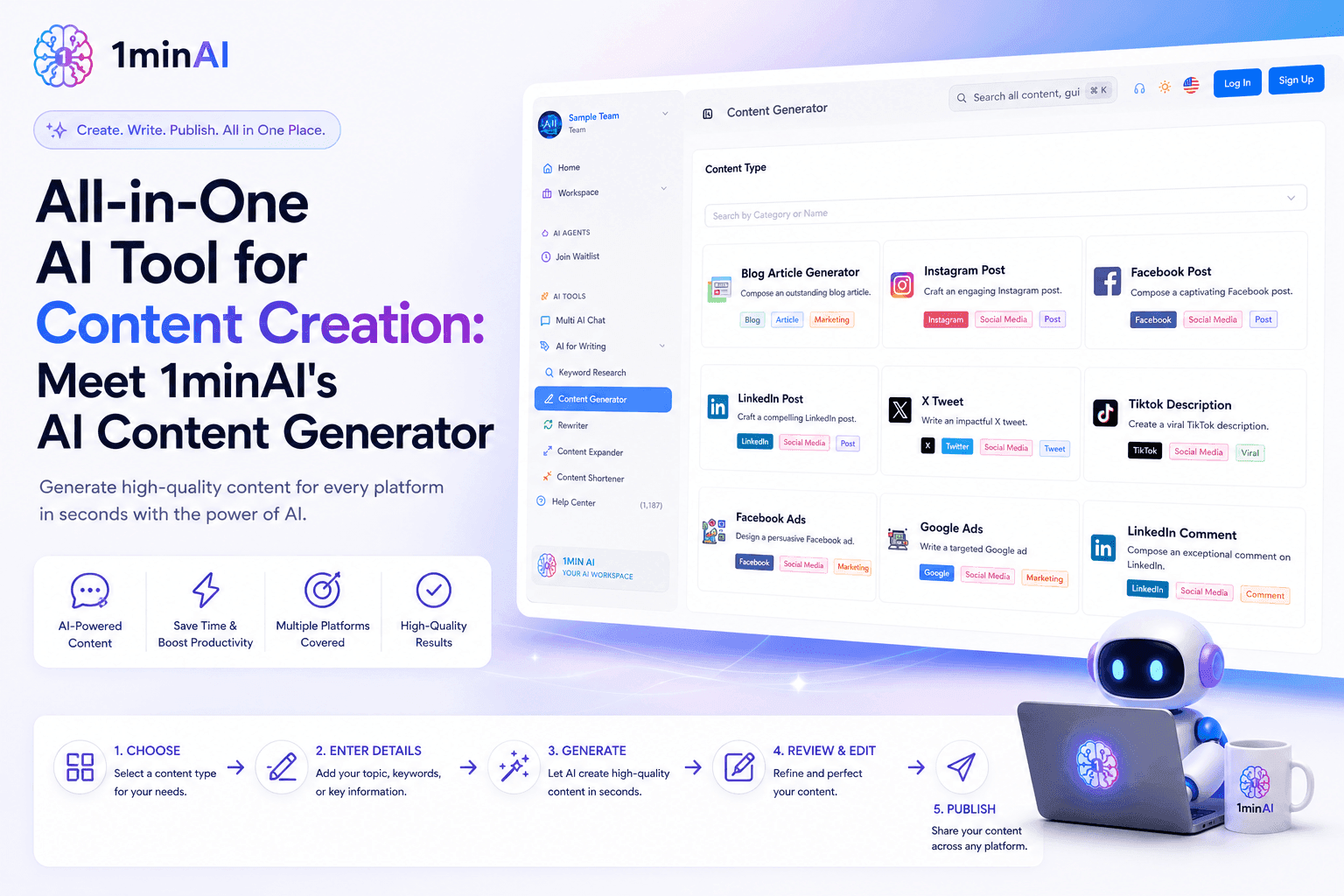
All-in-One AI Tool for Content Creation: Meet 1minAI's AI Content Generator
Discover how 1minAI's AI Content Generator helps create blogs, social posts, ads, emails, and marketing copy faster from one powerful AI tool.
Tram Ta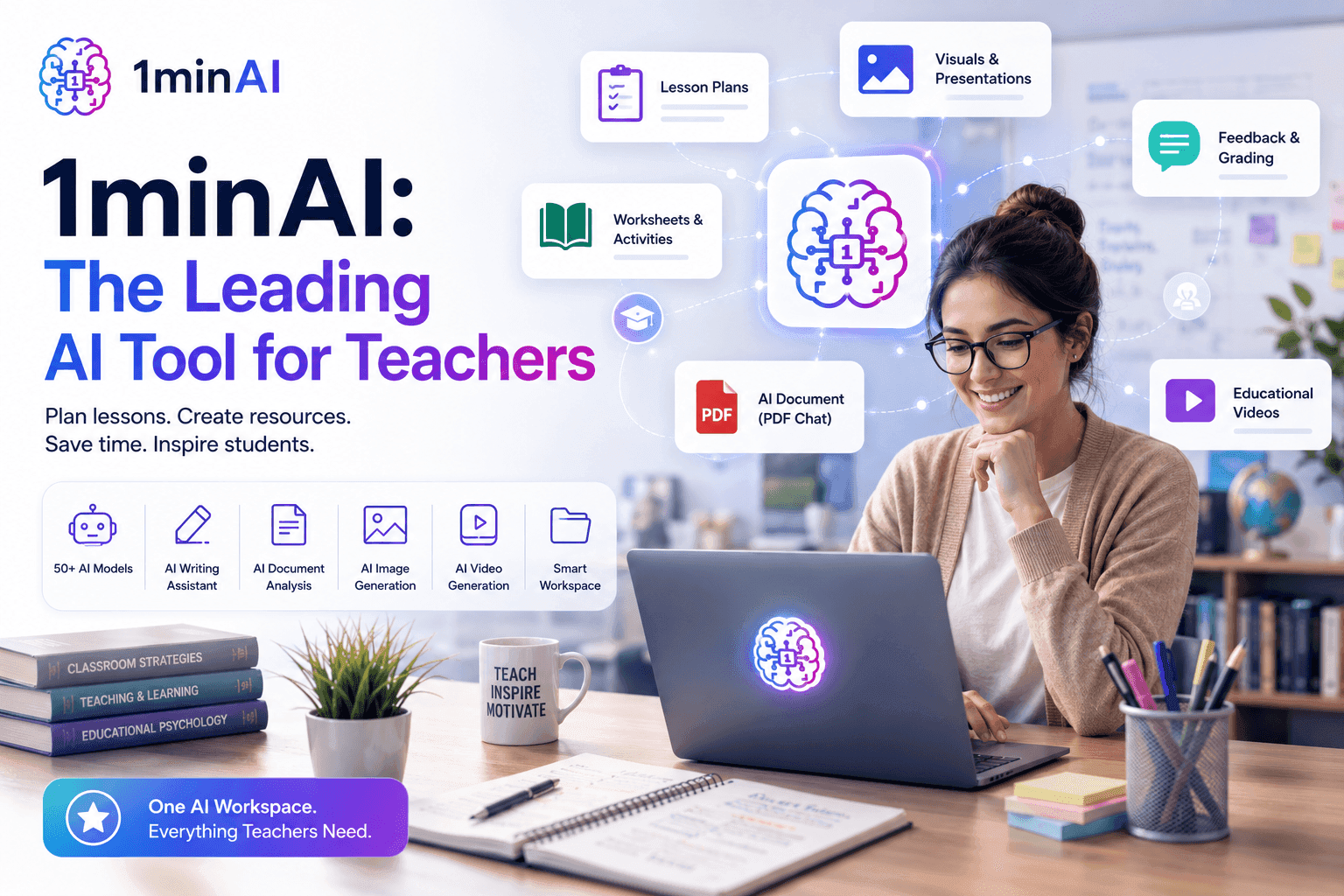
1minAI: The Top Ranking AI Tool for Teachers
Discover why 1minAI is a trusted AI tool for teachers. Create lesson plans, presentations, worksheets, quizzes, and classroom materials faster with one platform.
Tram TaAI Workflows
Explore ready-to-use AI workflows for productivity, marketing, sales, support, and more.
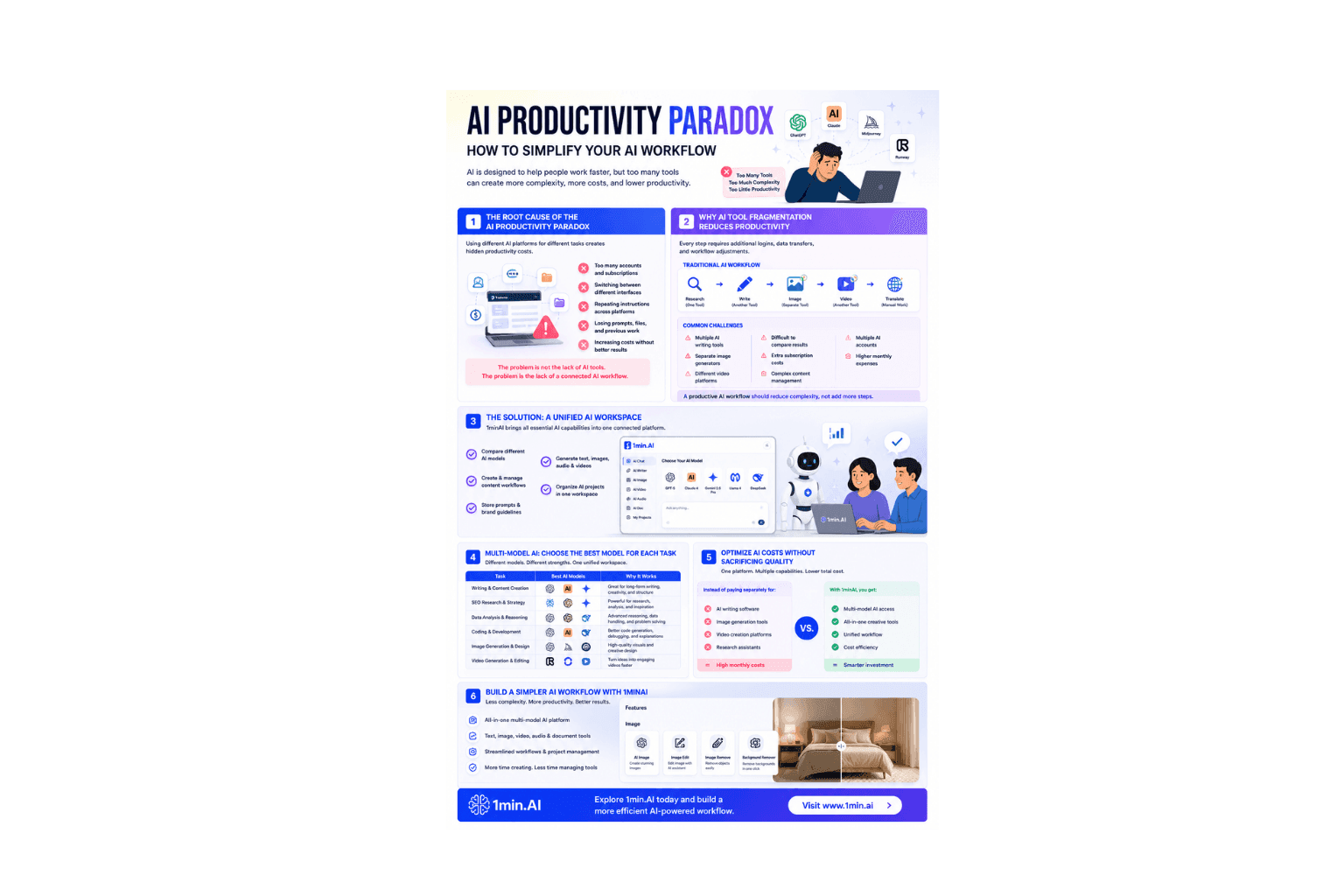
AI Productivity Paradox: How to Simplify Your AI Workflow
Learn how the AI productivity paradox slows your workflow and discover how a multi-model AI workspace helps you work faster with fewer tools.
Ngoc Hong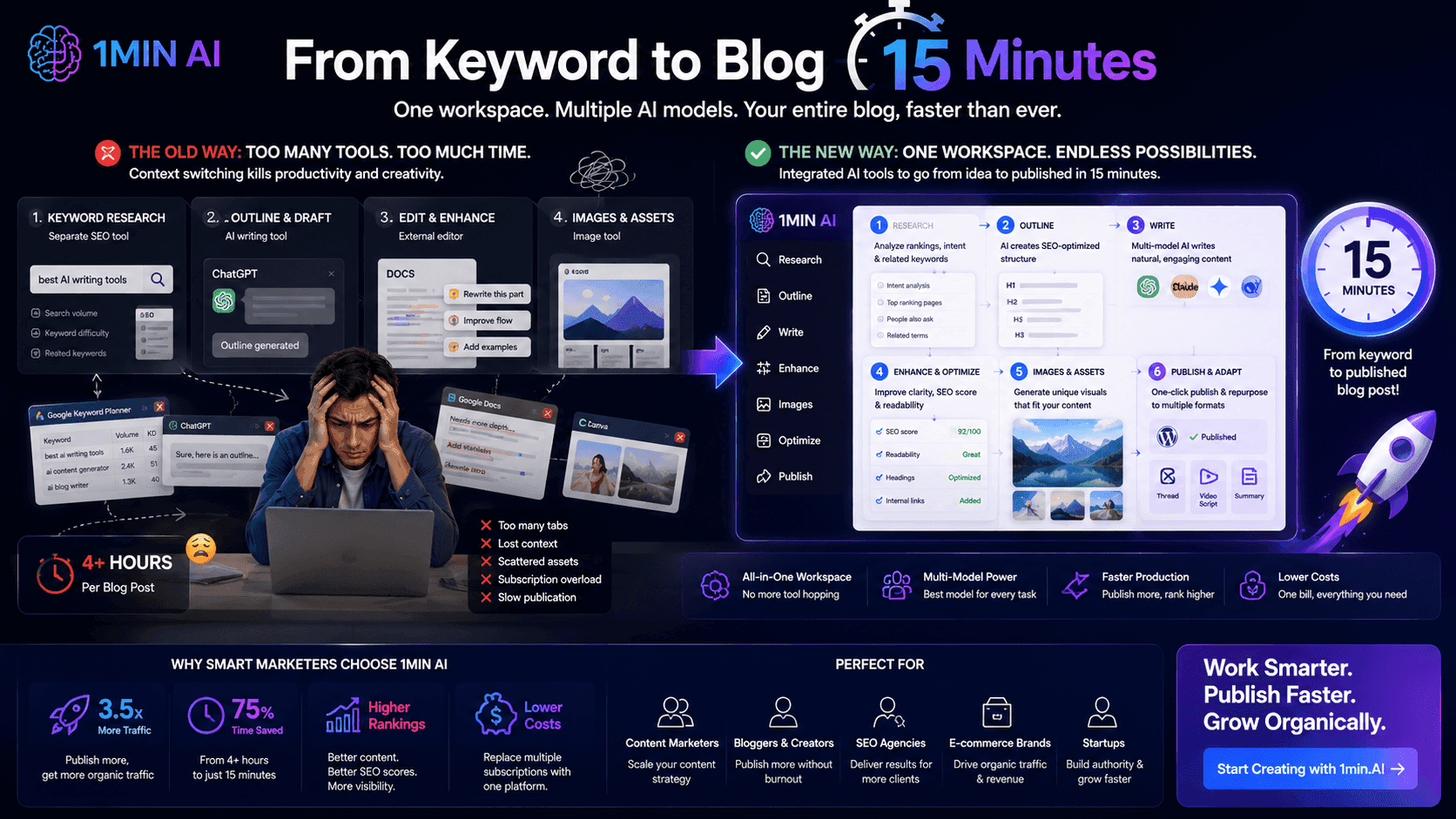
From Keyword to Blog in 15 Minutes
Stop wasting hours jumping between keyword research tools, text generators, and image apps. Learn how an integrated multi-model workspace slashes blog production time down to 15 minutes.
Uyen Hoang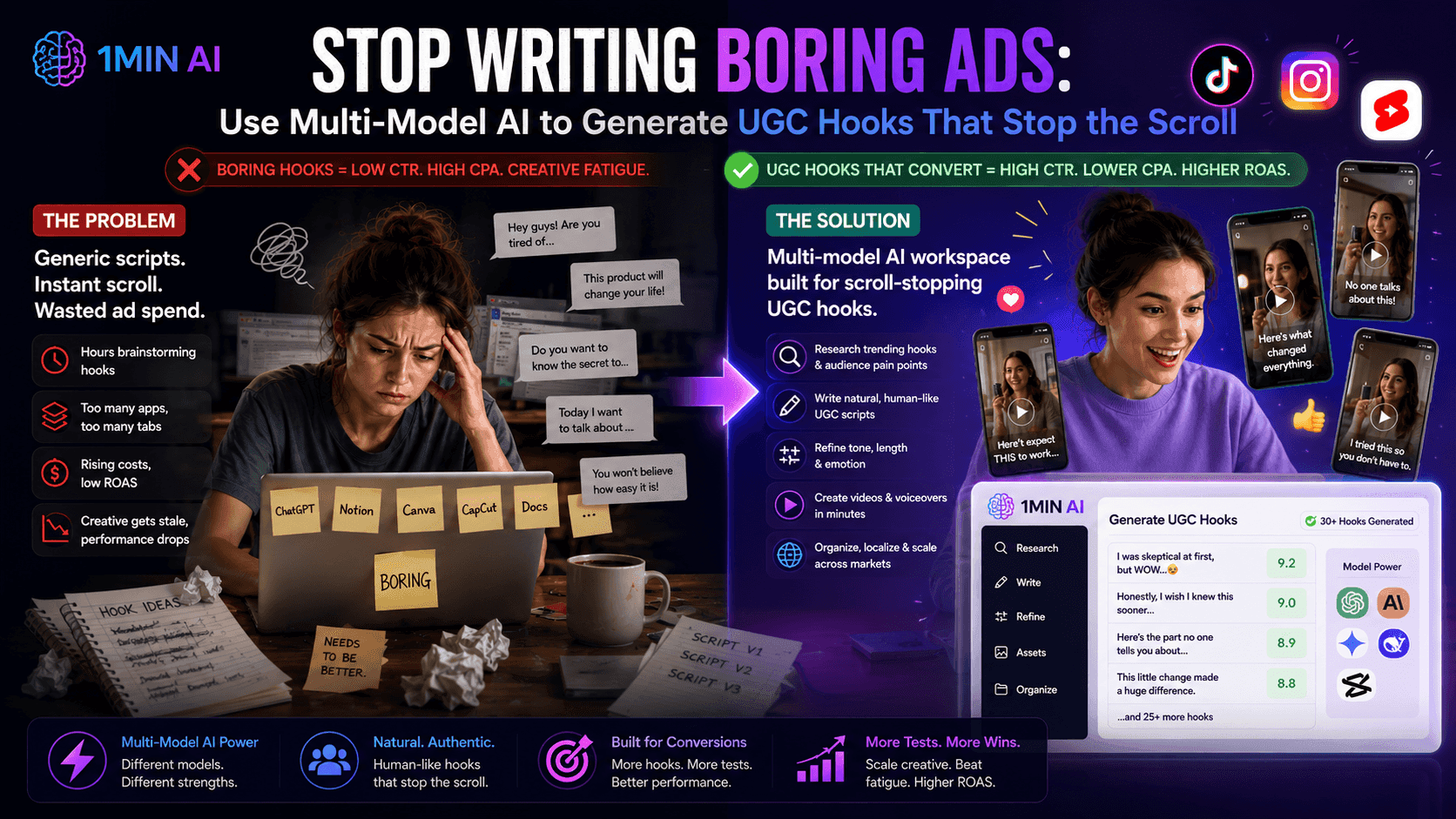
Use Multi-Model AI to Generate UGC Hooks
Is creative fatigue tanking your ROAS? Discover how to use a multi-model AI workspace to generate high-converting, natural-sounding UGC ad hooks that stop the scroll.
Uyen HoangNewsletter
Weekly AI Innovations with 1minAI
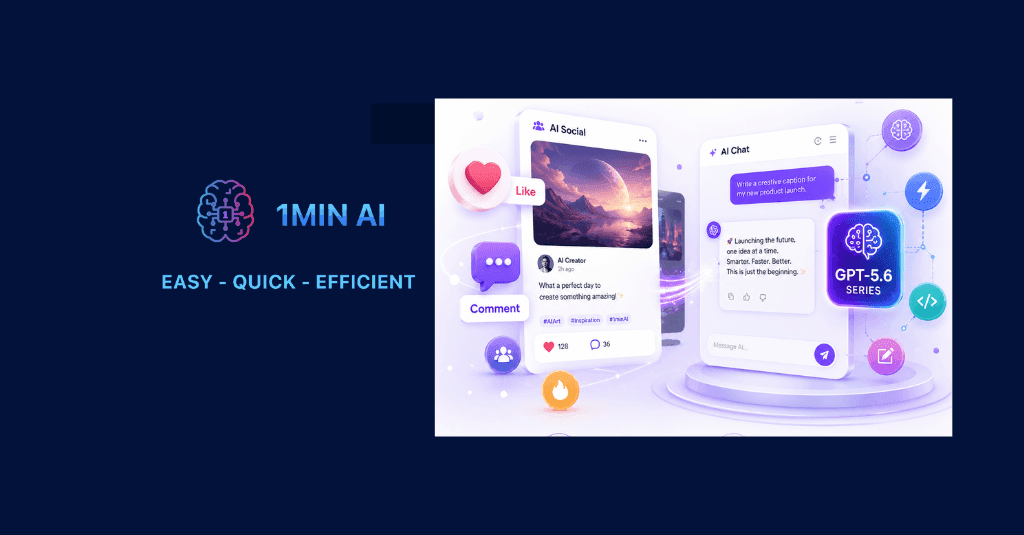
🔮 Weekly AI Innovations #130: 1minAI: Upgraded GPT 5.6 and AI Social
1minAI update the GPT-5.6 series and social media likes and comments.
 Hang Nguyen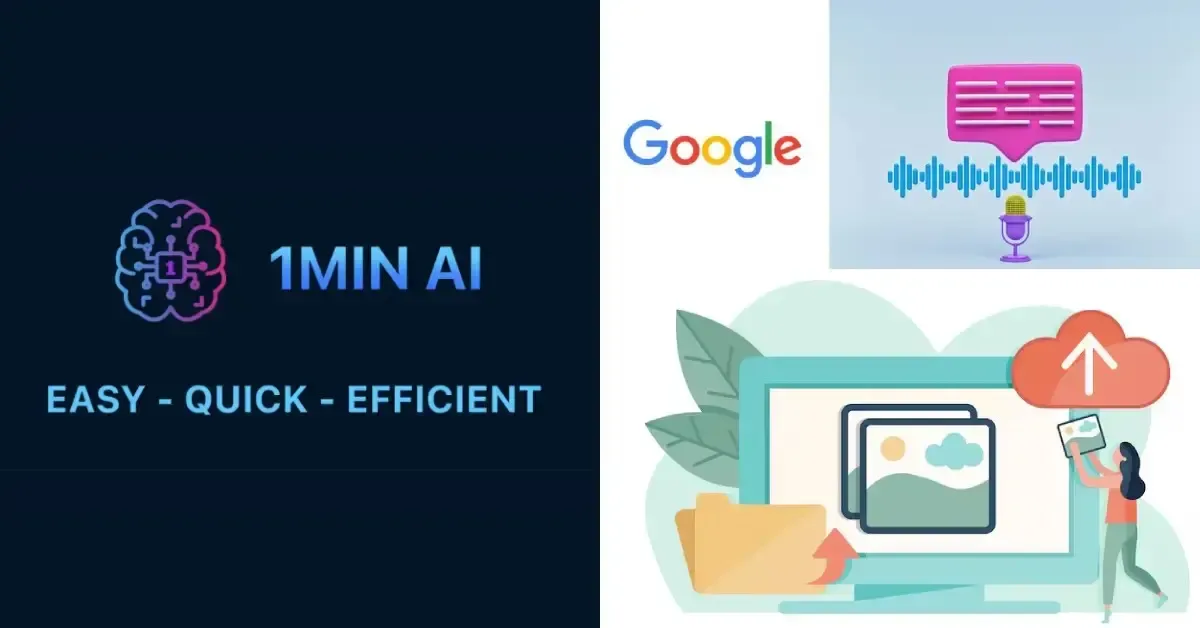
🔮 Weekly AI Innovations #95: More voices for Google AI, Support for image and document uploads in the textbox
Upload files for instant AI processing and use expressive Google voices to make your content faster, clearer, and truly human.
Hang Nguyen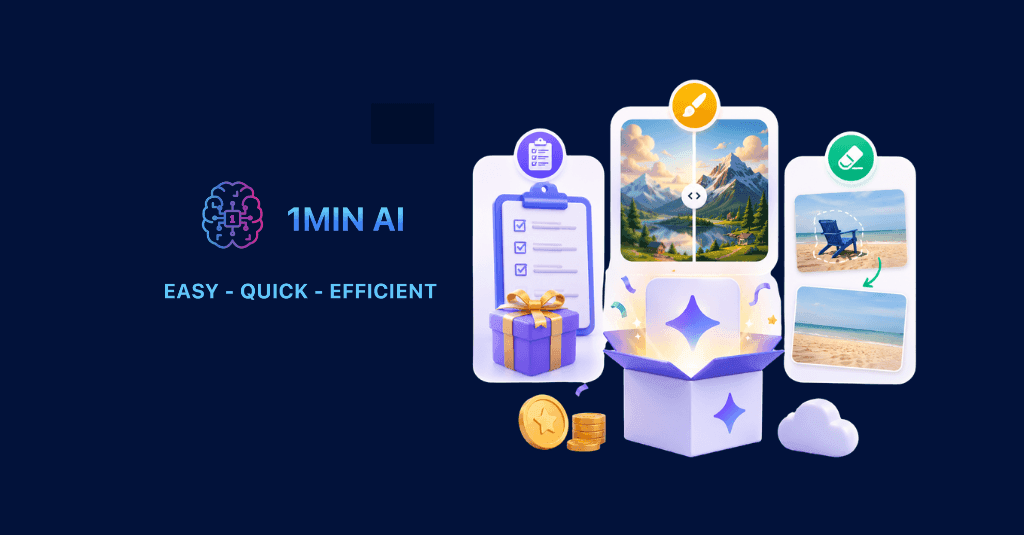
🔮 Weekly AI Innovations #129: Stable Diffusion 3.5, Bria Eraser and Free Credits
Discover the latest 1minAI updates: Stable Diffusion 3.5, Bria Eraser, and Agent Survey rewards. Unlock free AI credits and create faster.
Hang Nguyen