Topical Authority: How AI Hallucinations Hurt SEO Rankings

Ngoc Hong
July 6, 2026

Building topical authority won't boost SEO rankings if AI hallucinations destroy credibility. Learn how to verify content and survive Google core updates.
Building a massive map of topic clusters is the standard playbook for scaling a niche site. However, publishing hundreds of articles does not guarantee topical authority if your content lacks factual accuracy. Relying on unverified AI generation exposes your site to AI hallucinations, which actively undermine your credibility and trigger penalties. Understanding this relationship is the only way to build a sustainable, algorithm-proof digital asset.
The Hidden Threat: How AI Hallucinations Destroy Topical Authority
The Coverage vs. Credibility Trap: Covering every possible keyword within a niche creates topical coverage, not necessarily authority. Search engines evaluate the integrity of the information presented.
The Danger of Scaling Blindly: For lean teams of 2–5 people, AI is essential for scaling. However, utilizing a single AI model introduces the severe risk of AI hallucinations. Publishing a hallucinated statistic in YMYL niches directly destroys content credibility.
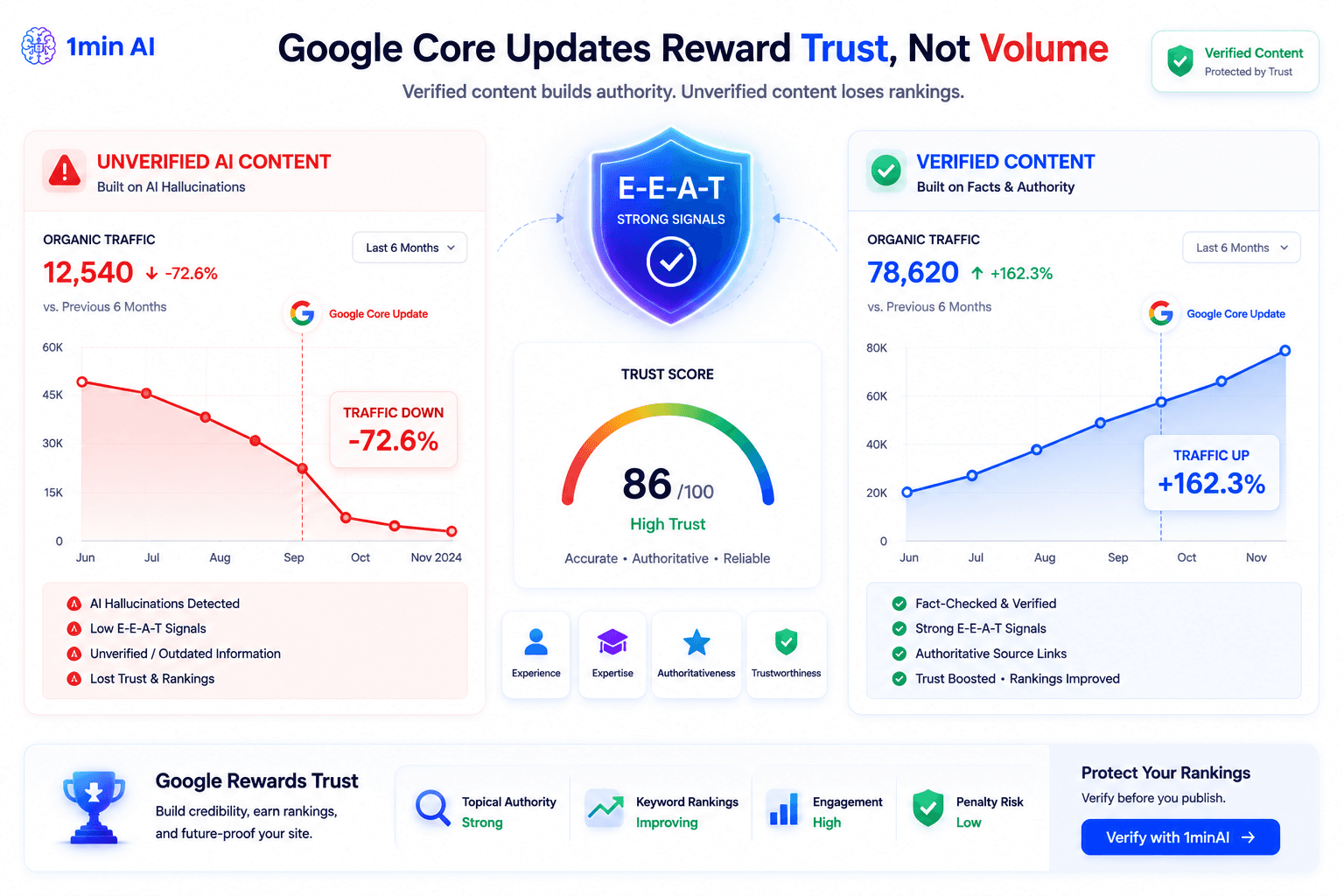
The Penalty Risk: Google core updates are specifically engineered to identify and suppress unverified, low-trust information networks. A single piece of highly inaccurate AI content can compromise the trust score of an entire topical cluster and ruin your SEO rankings.
The Solution: Build a Scalable Content Validation Process
Achieving high content volume without sacrificing quality requires a repeatable, automated validation workflow.
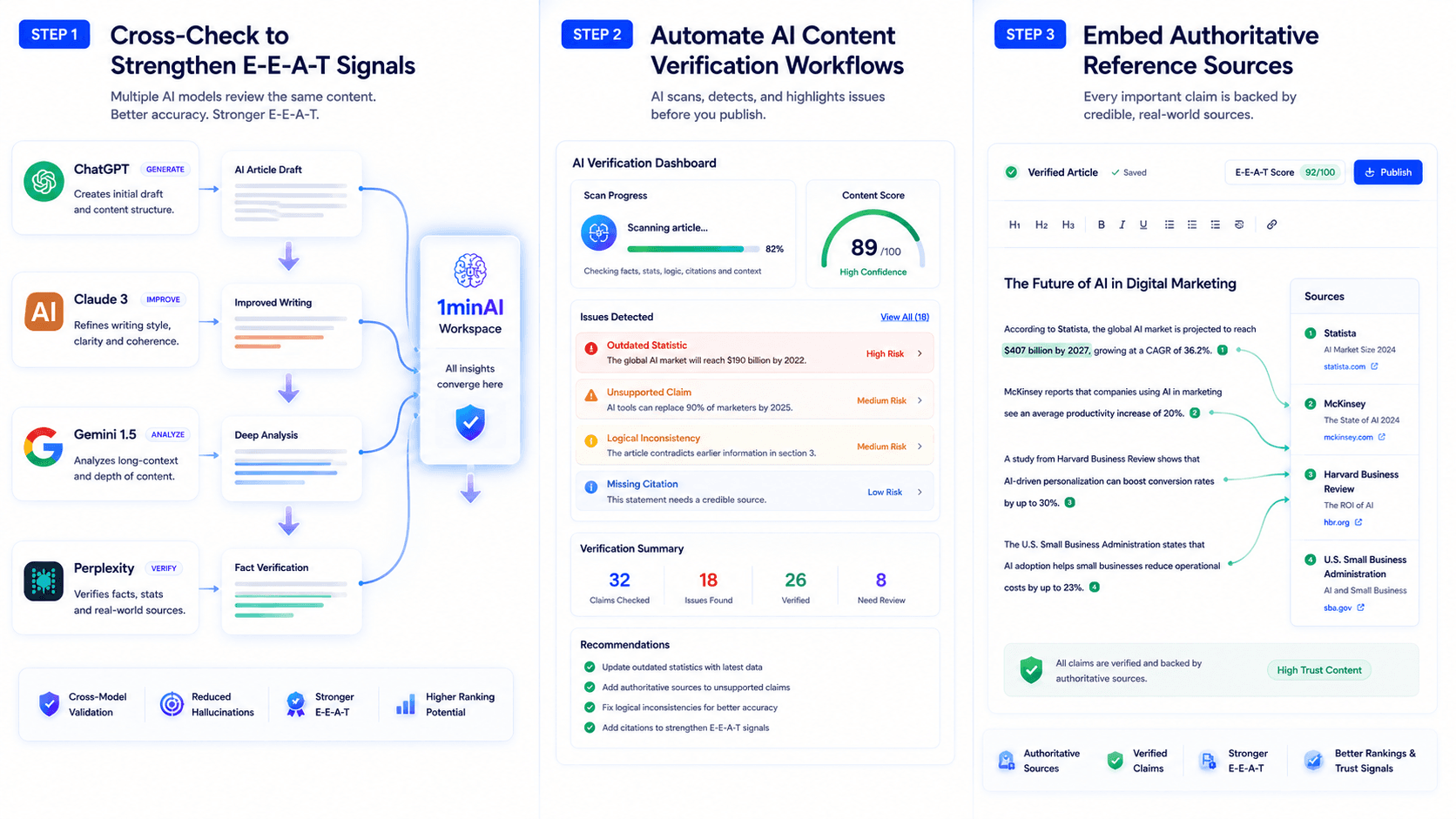
Step 1: Cross-Check to Strengthen E-E-A-T Signals
Never rely on a single source of truth. Force different AI models to audit each other. Use one model to draft the content structure and a separate, data-focused model to aggressively cross-check claims, instantly strengthening your E-E-A-T signals.
Step 2: Automate AI Content Verification Workflows
Automate the auditing phase to highlight unverified claims or outdated statistics. Proper AI content verification drastically reduces the manual workload, allowing content managers to focus only on flagged, high-risk data points.
Step 3: Embed Authoritative Reference Sources
Command the verification system to map factual statements to highly credible, real-world sources. Visually and algorithmically establishing trust through citations is non-negotiable.
Read Google's official E-E-A-T guide here.
Why Choose 1minAI to Scale SEO Content Safely
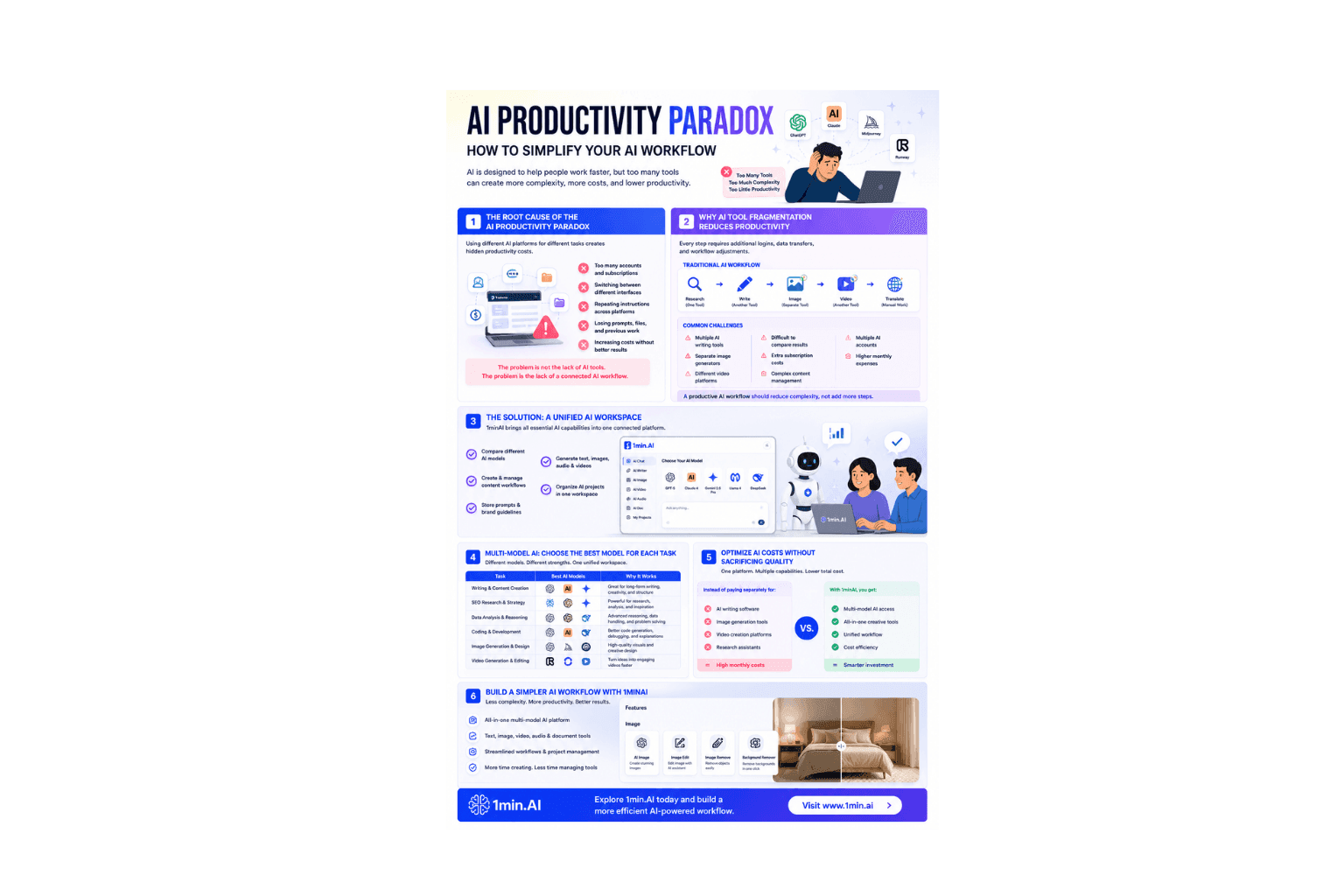
Eliminate Subscription Fatigue: Executing a high-trust strategy typically requires paying for multiple software subscriptions (writing, fact-checking, plagiarism). This fragmented approach is inefficient and expensive for lean teams.
The Logical Advantage: 1minAI provides a centralized workspace that consolidates the entire workflow. Operating from a single platform allows you to seamlessly compare multiple AI models, cross-check information, and validate claims before hitting publish.
The Benefit: This unified approach empowers digital publishers to generate trustworthy content, bypass manual verification bottlenecks, and build unshakeable authority without managing multiple disconnected tools.
Conclusion
Publishing unverified information is the fastest way to lose hard-earned traffic to algorithmic penalties. Ensure every article in your cluster is factually bulletproof to build true, sustainable topical authority. Leverage the 1minAI centralized workspace to eliminate factual errors and protect your site today.
More posts

AI Fact Checking Workflow: Build Topical Authority SEO
Fear Google penalizing inaccurate AI drafts? Discover the ultimate AI fact checking workflow using an AI hallucination checker to secure topical authority SEO.
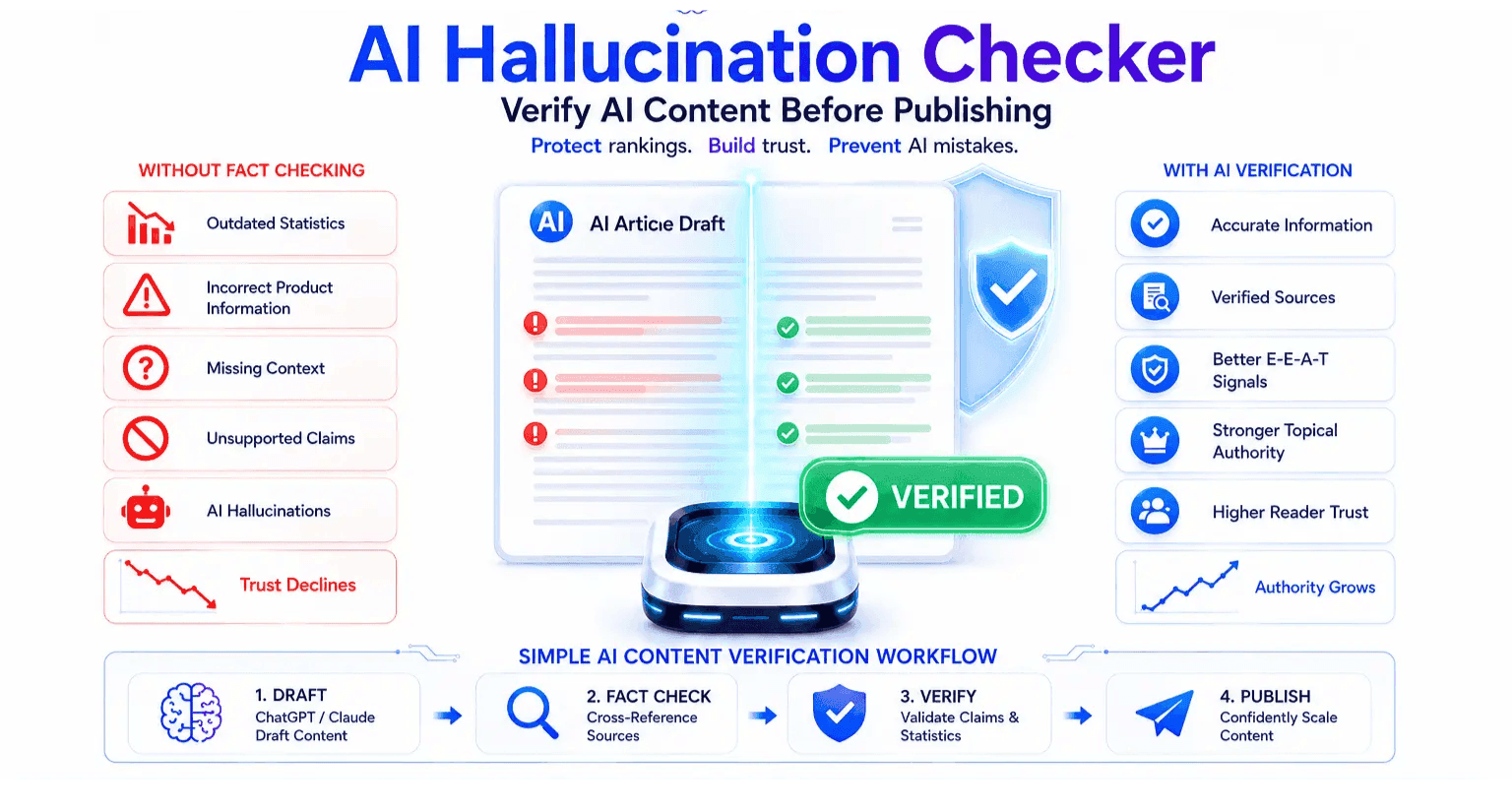
AI Hallucination Checker: Verify Content Before Publishing
Stop Google penalties! Learn how an AI hallucination checker verifies content accuracy, fact-checks ChatGPT, and builds topical authority for niche sites.
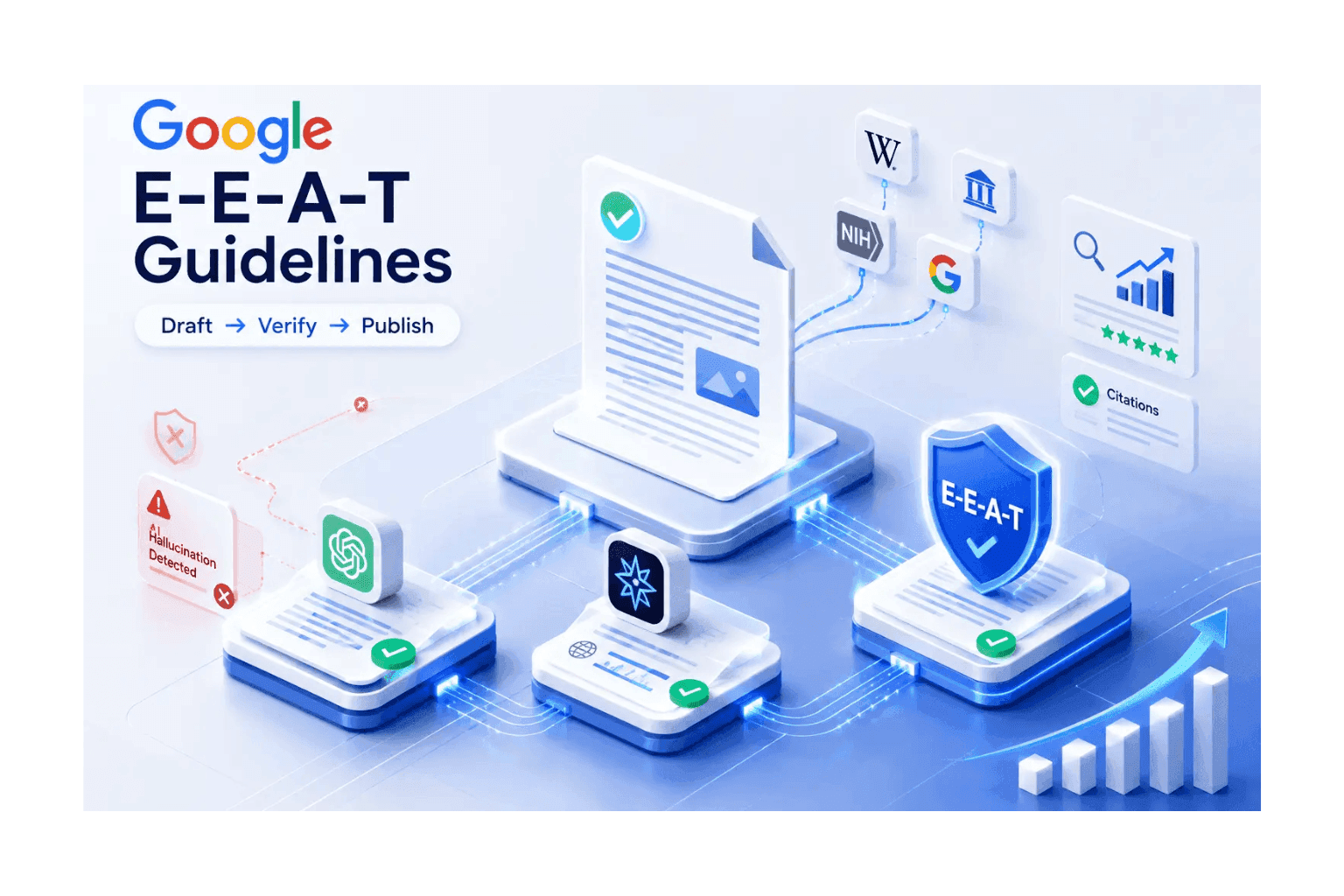
Google E-E-A-T Guide to Verify AI Content
Fear algorithmic penalties? Meet strict Google E-E-A-T guidelines by learning how to verify AI content. Use an AI hallucination checker to secure rankings.
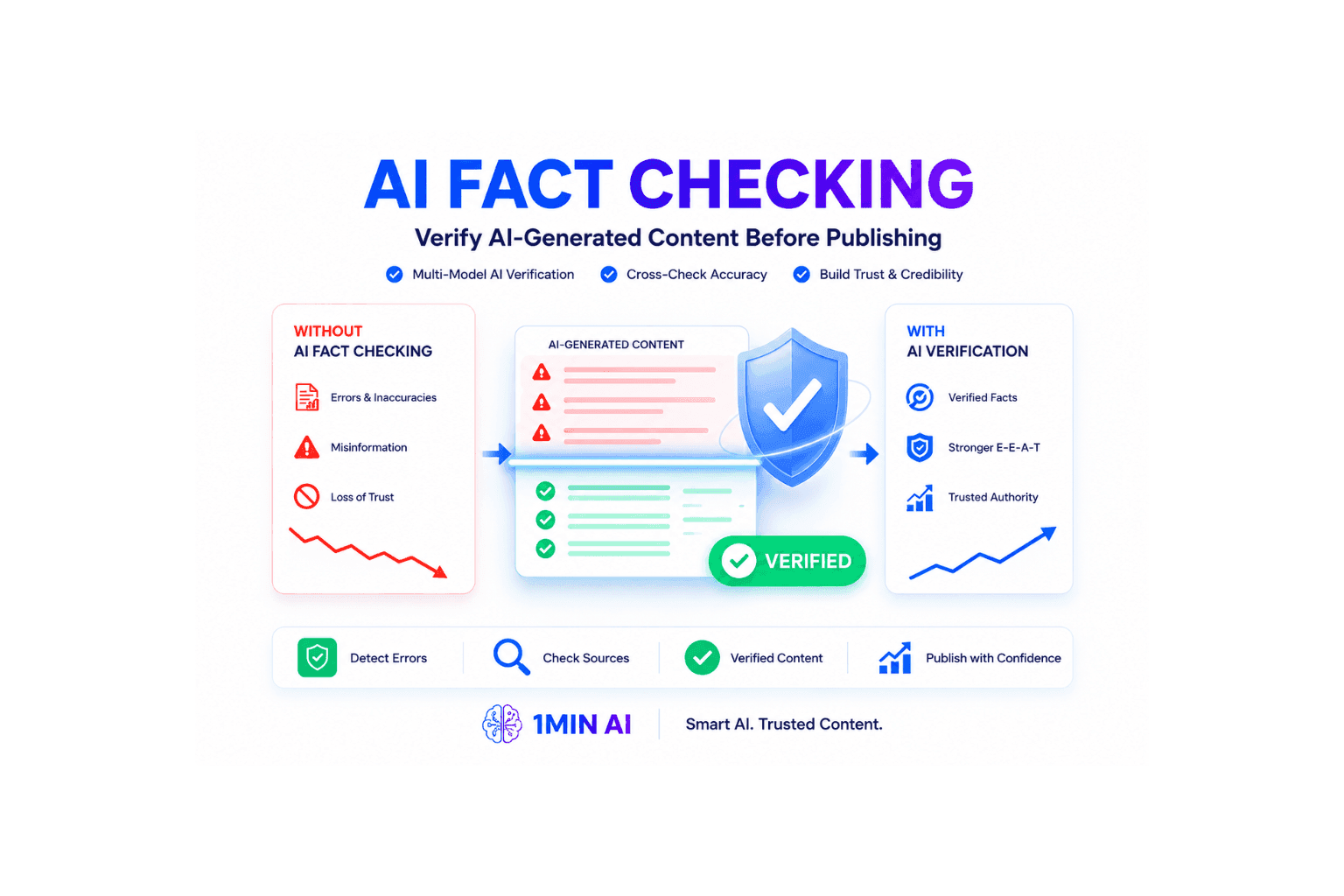
How to Verify AI-Generated Content: The Ultimate AI Fact Checking Guide
Learn how to verify AI-generated content and protect your site from Google penalties. Discover the best AI fact checking workflow to build topical authority SEO.