AI API Aggregator Explained For Developers

Trang Tran
July 22, 2026
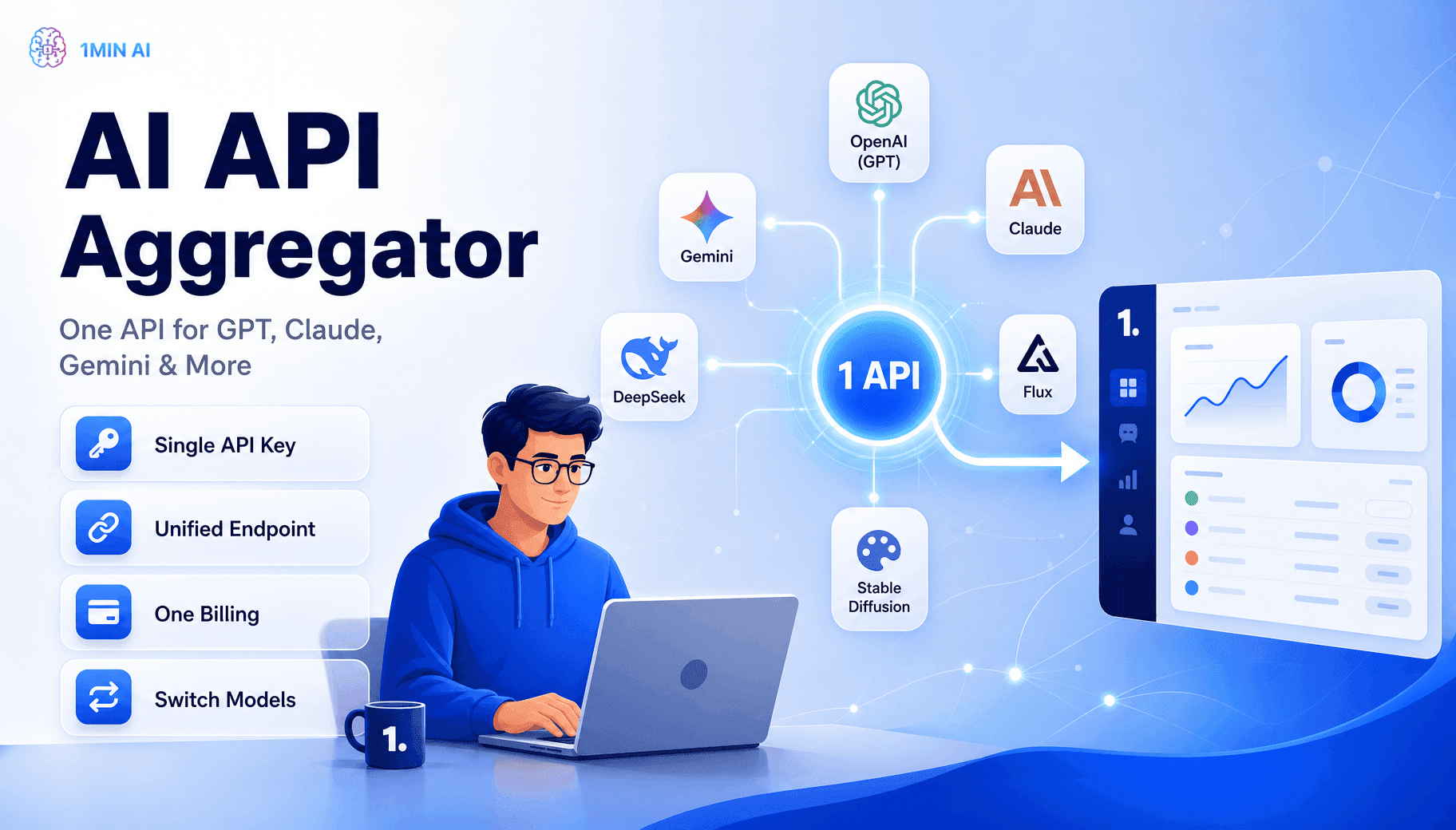
An AI API aggregator gives developers one unified API to call multiple AI models, cutting integration time and vendor lock in.
Building with multiple AI providers means juggling separate API keys, SDKs, and billing dashboards for every model you add. An AI API aggregator solves this by giving developers one unified endpoint to call GPT, Claude, Gemini, and other models without rewriting integration code. Here is what it is and how to start using one today.
What Is an AI API Aggregator and How Does It Work
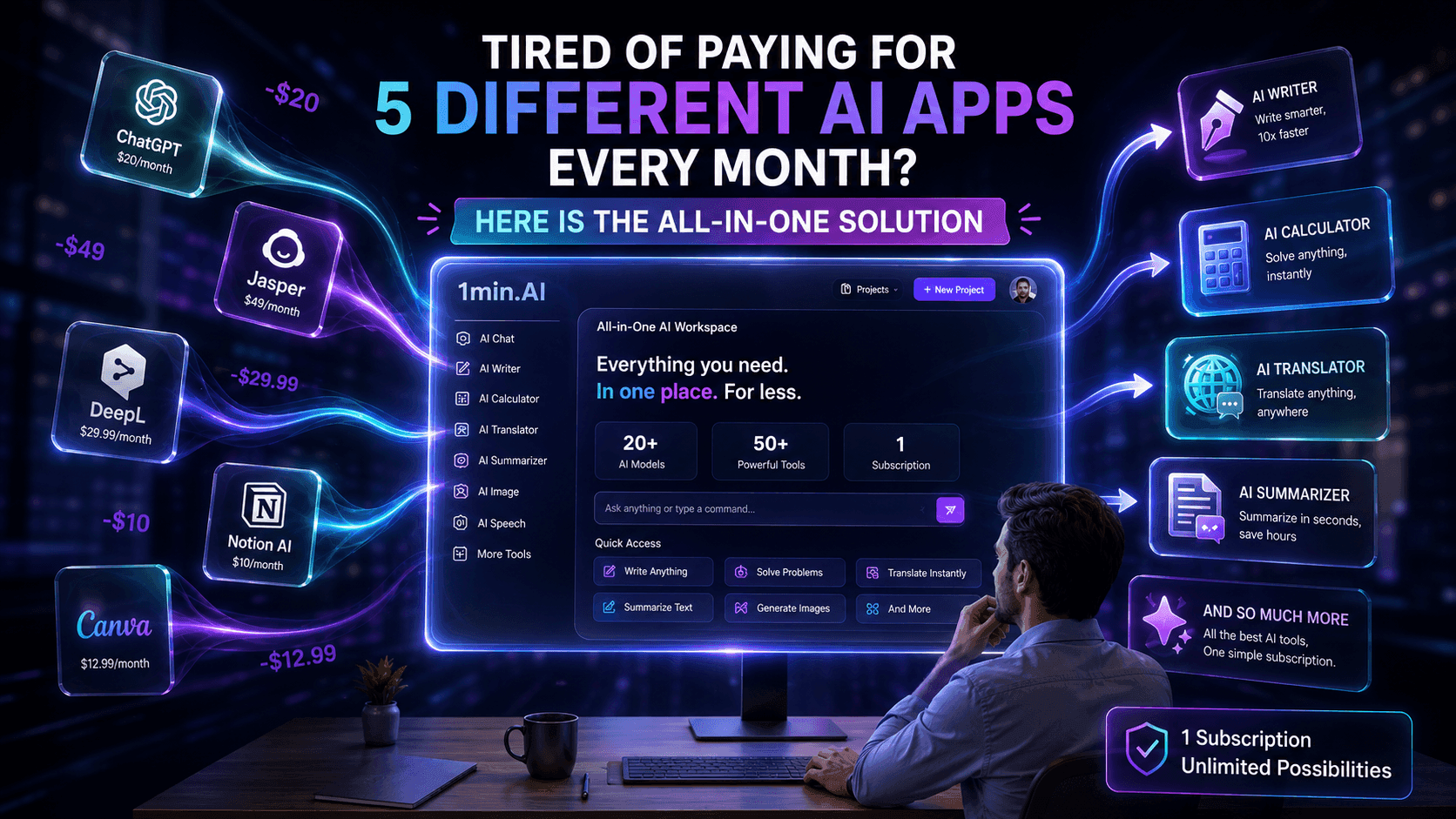
An AI API aggregator is a platform that connects multiple AI models under one system, giving developers a single API key and endpoint to call any of them. Instead of integrating OpenAI, Anthropic, and Google separately, you send requests through one interface and switch models by changing a parameter, not your codebase.
Why Developers Look for an AI API Aggregator
The Cost of Managing Multiple AI Vendors
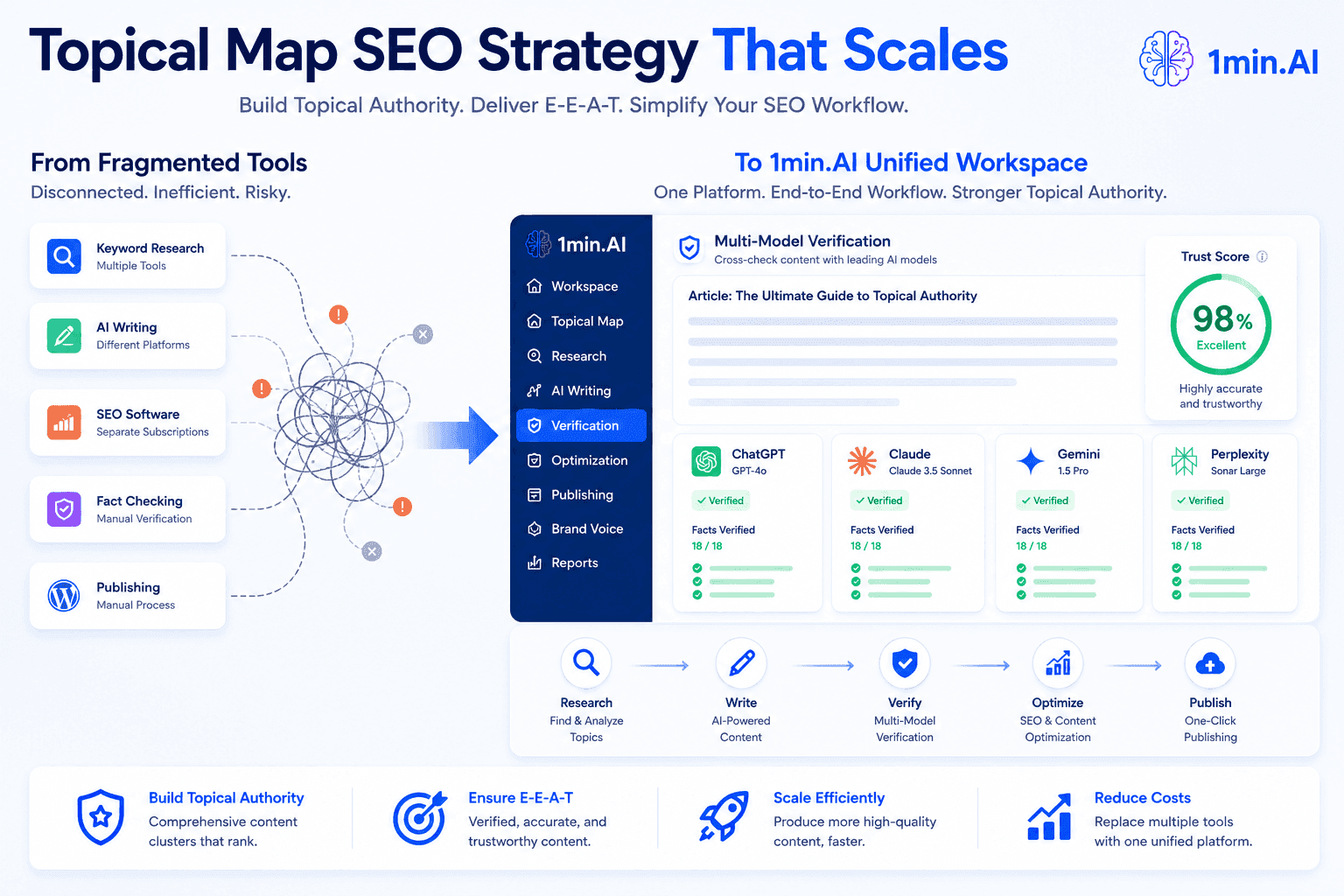
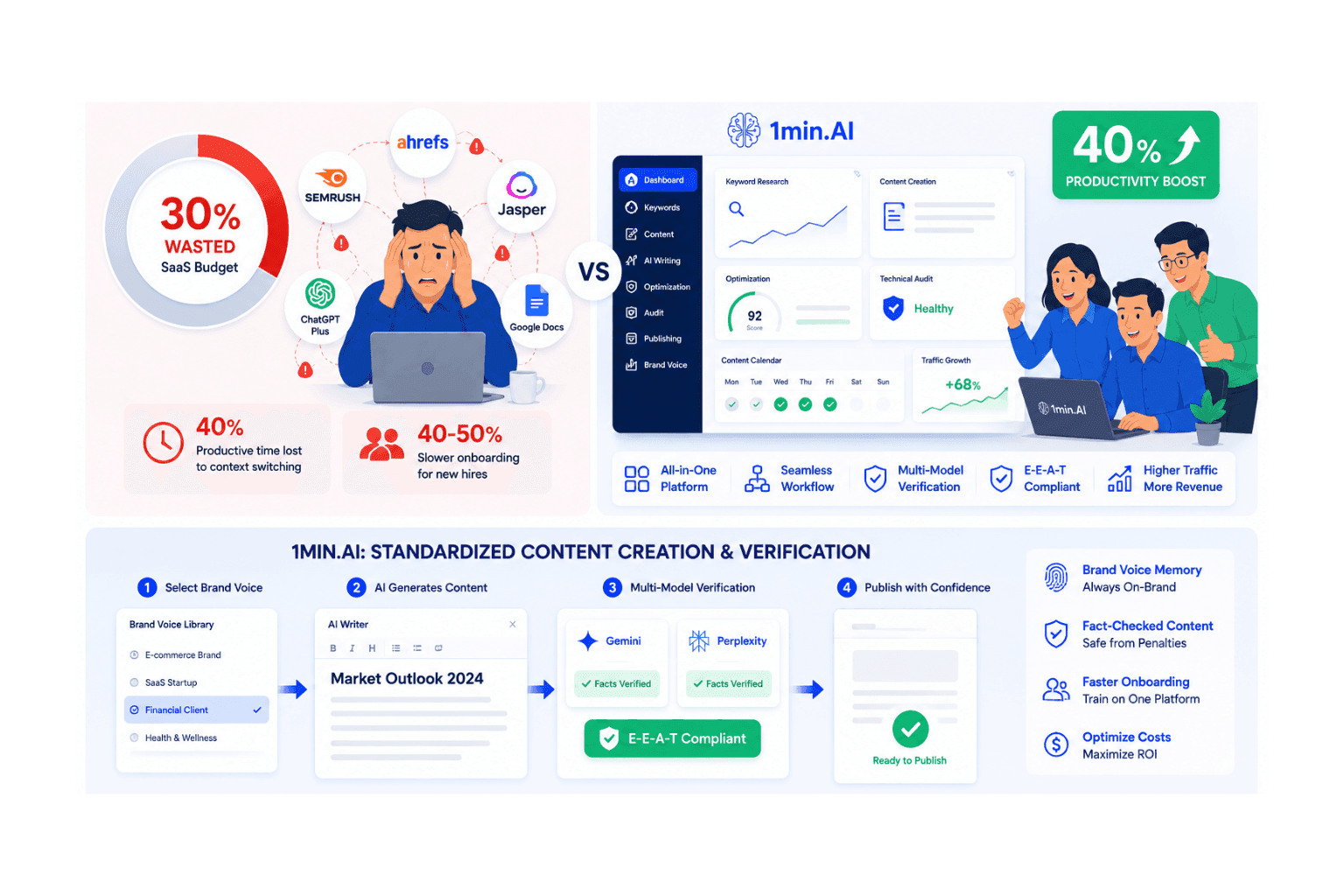
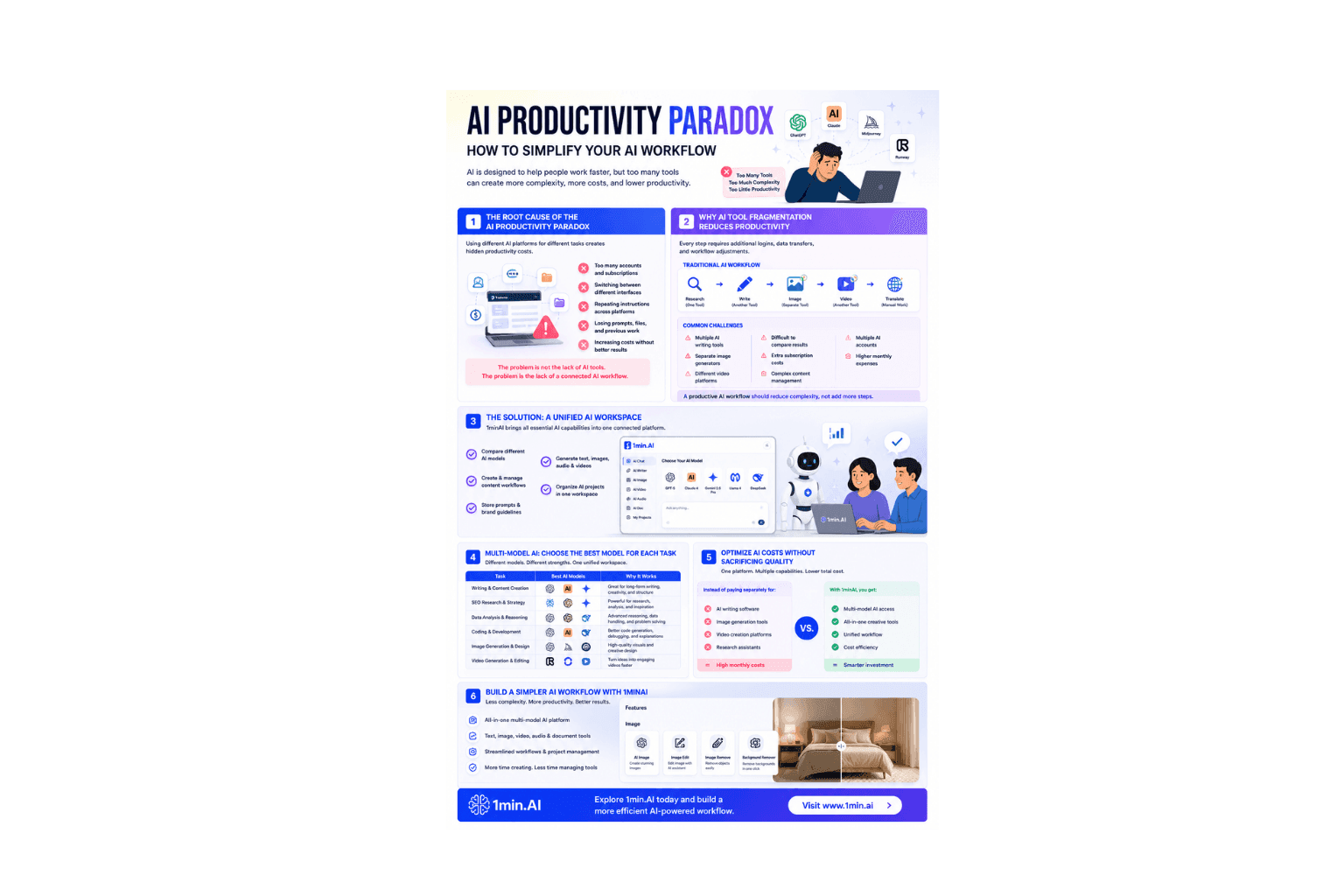
Adding a new model to a product usually means a new API key and SDK to learn, a different request and response format to parse, a separate billing dashboard to track, and new rate limits to monitor. Every additional provider adds maintenance work, not just new capability.
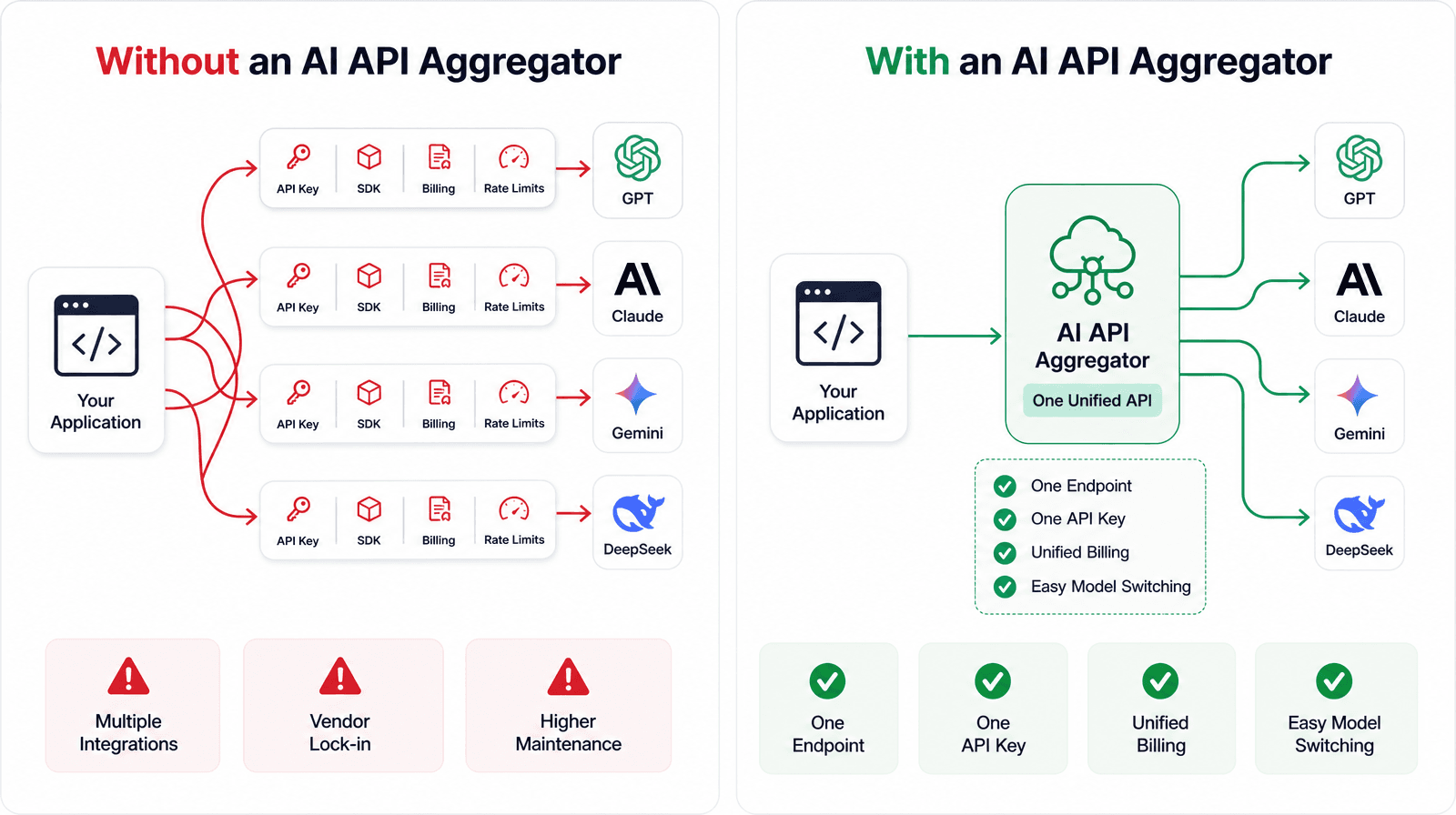
What a Unified API Changes
With one AI API aggregator, that work collapses into a single integration. You authenticate once, send requests in one format, and swap the model field when you want to test a different provider. This is the core idea behind an API aggregator: it standardizes access instead of asking you to rebuild for every new release.
How 1min.AI Works as an AI API Aggregator
One Endpoint for AI Chat
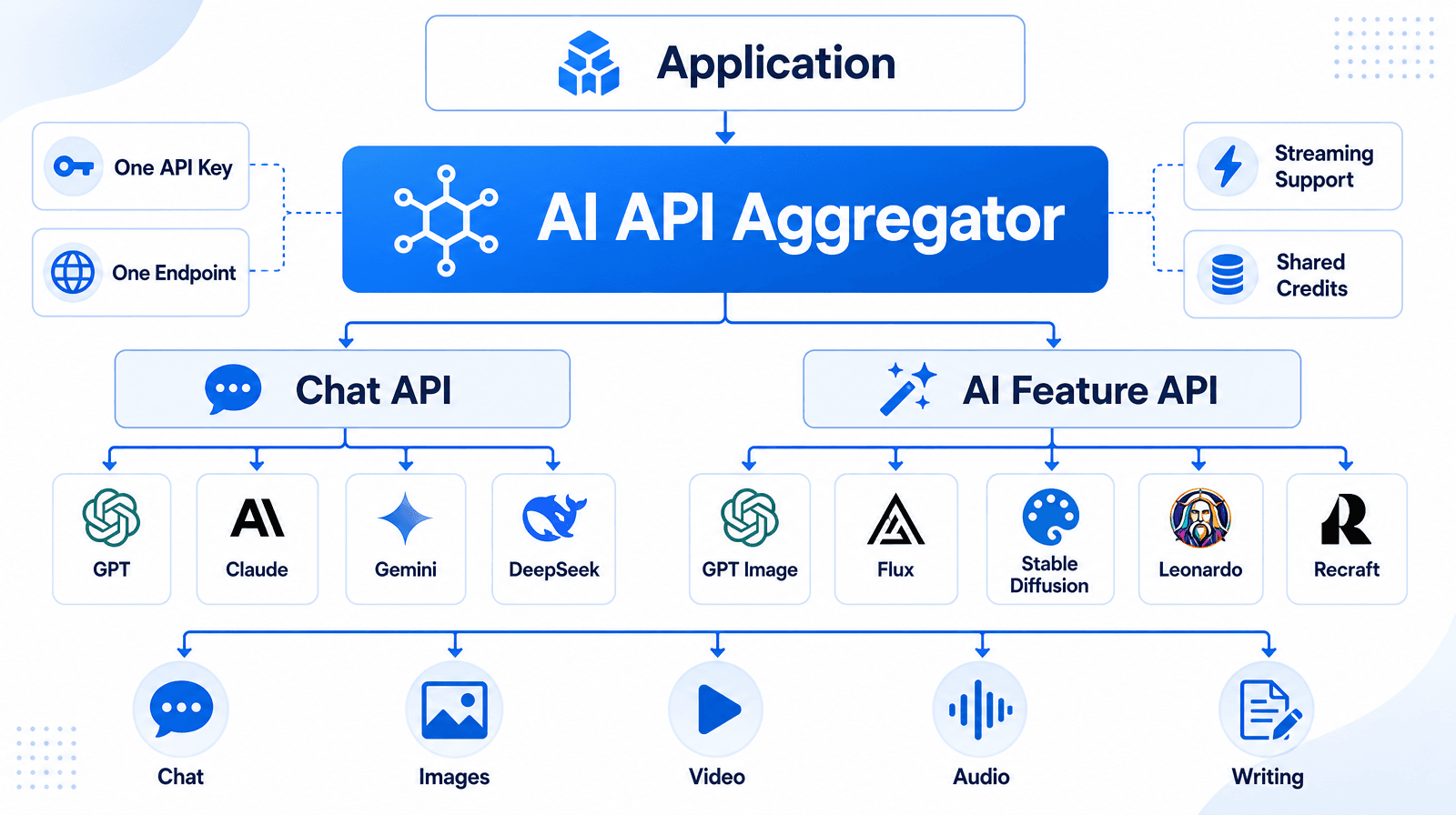
1min.AI's Chat with AI API is a unified chat endpoint for all AI chat interactions. You authenticate with an API key in the request header and send requests to POST https://api.1min.ai/api/chat-with-ai (add ?isStreaming=true for streaming responses).
You choose which model handles the request by setting the model field in the request body, for example claude-sonnet-4-6, gpt-5, gemini-3.5-flash, or deepseek-chat. Switching models is a one-line change, not a new integration, and the same endpoint supports web search grounding, image and file attachments, conversation history, and cross-conversation memory.
Beyond Chat: Image, Video, Audio, and Writing
The AI Feature API extends the same approach to non-chat tasks, with image, video, audio, and writing capabilities available through the same platform. For image work specifically, dedicated endpoints cover Image to Prompt, Image Generator, and Image Variator, each with a choice of underlying models, GPT Image, Flux, Stable Diffusion, Leonardo, and Recraft among them. Files and images used in these calls go through the Asset API first, which returns a file key you reference in the feature request.
Getting Started in Three Steps
Register at app.1min.ai and create an API key, note the default rate limit of 180 requests per minute (raise it by contacting support if needed), then check your team's credit balance, which covers usage across every model and feature in one place instead of separate invoices per provider.
Why This Approach Matters for Production Apps
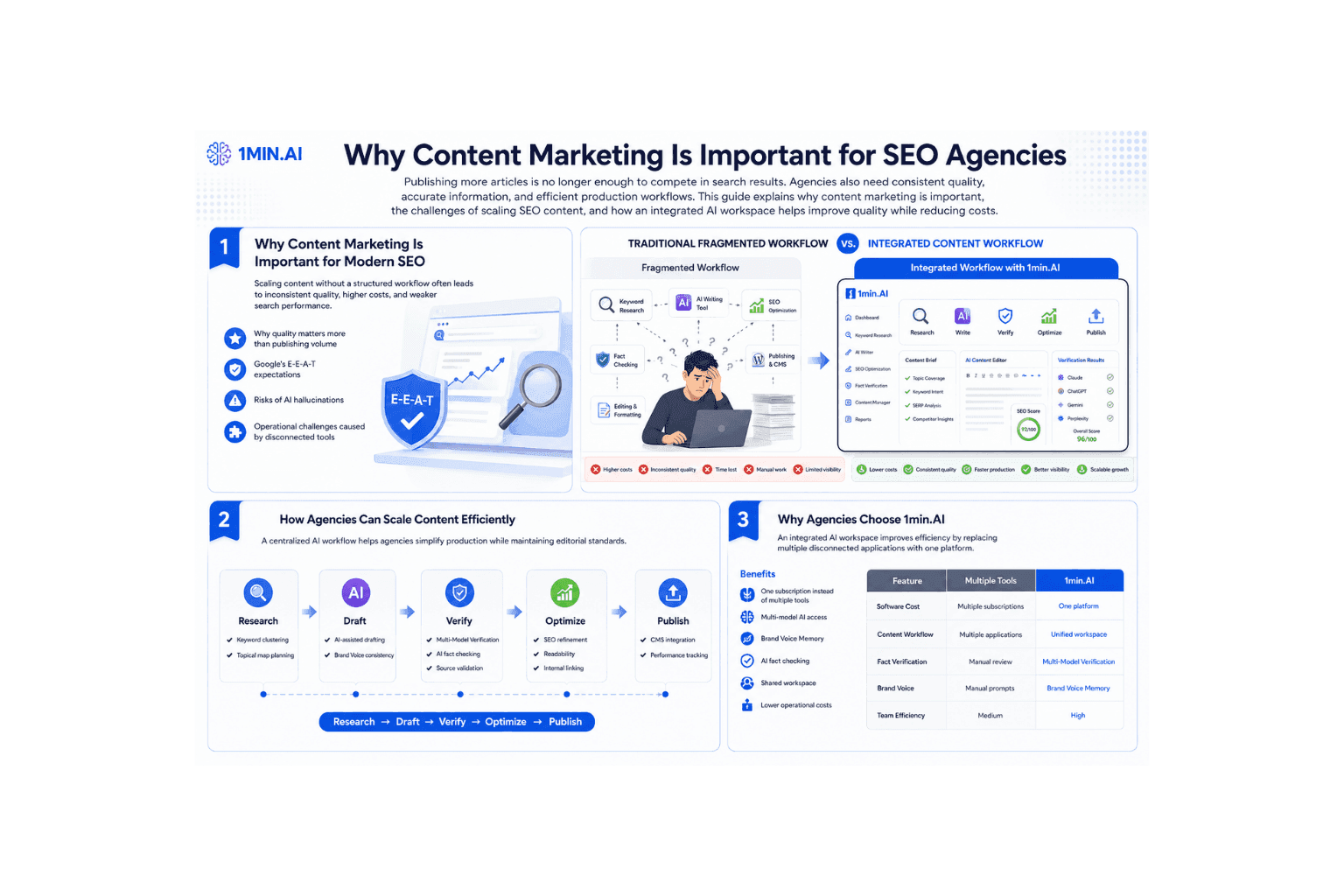
For teams shipping to production, the value of an AI API aggregator shows up less in the first integration and more in every integration that comes after it.
Faster Integration
Because requests share a standard format, adding support for a new model is a configuration change, not a new integration project.
Lower Risk of Vendor Lock In
If a provider changes pricing or availability, you can route around it without rewriting your application.
One Place to Track Cost and Usage
A single credits system replaces multiple billing dashboards, which matters for teams that need predictable, auditable AI spend.
What to Check Before You Pick One
Not every aggregator fits every stack. Before committing, check whether it lets you set the model per request (not just per account), whether it supports streaming if your app needs it, and whether rate limits and credit tracking are visible enough to plan around at production scale.
This same setup pairs naturally with the rest of a developer's workflow. Teams generating code across models often pair it with an AI coding assistant that ends context switching.
Before shipping AI-generated code, running it through a dedicated AI code review step also helps catch issues a single-model workflow can miss.
FAQ
What is an API aggregator?
It is a system that sits between your application and multiple providers, standardizing how you send requests and receive responses so you do not integrate each provider individually.
What is the best AI API provider?
That depends on which models, features, and pricing structure fit your product. An aggregator lets you test several providers under one integration instead of committing to a single one upfront, then adjust later as your needs change.
Stop managing separate AI vendor integrations one at a time. Create a 1min.AI API key, connect through the Chat with AI API or AI Feature API, and start calling multiple AI models from a single endpoint today.