
White Label AI for Small Businesses: How to Launch AI Tools for Sales & Growth

Uyen Hoang
26 August 2026
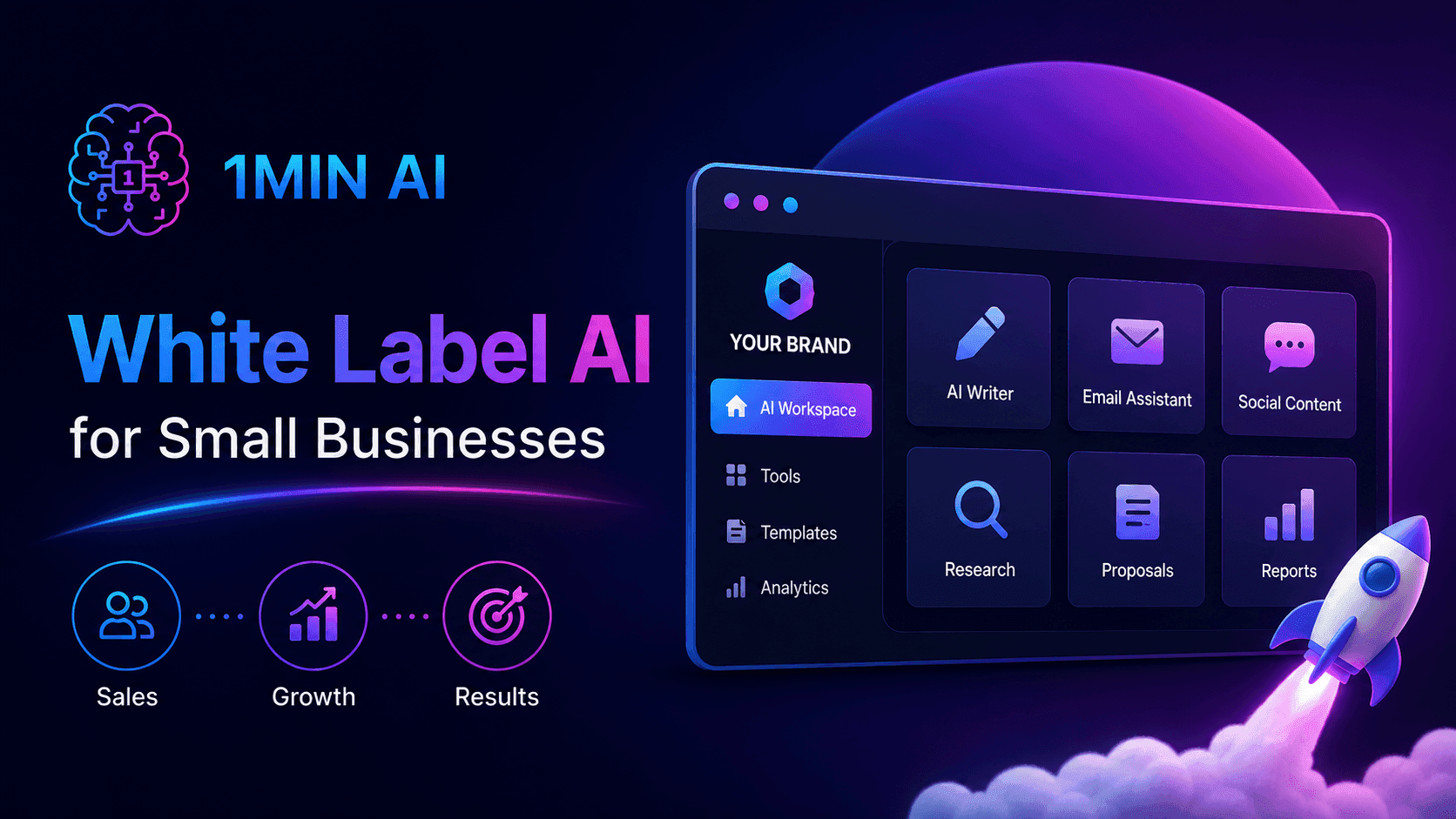
Discover how small businesses can use white label AI to launch branded sales and marketing tools without building AI infrastructure from scratch.
For a small business, growth often comes down to doing more without adding more people.
A salesperson needs to research prospects, write outreach emails, follow up with leads, prepare proposals, and keep customer conversations moving. At the same time, someone has to create marketing content, manage social media, respond to customers, and handle daily operations.
AI can help with many of these tasks. But there is a difference between using AI tools internally and building an AI-powered product or service around your business. If you want to offer AI tools to your customers under your own brand, building everything yourself can quickly become complicated. You need software development, AI integrations, infrastructure, maintenance, and ongoing technical resources.
That is where white label AI comes in.
A white label AI platform gives businesses a way to turn existing AI technology into a branded product or service without having to build the entire AI infrastructure from scratch. For small businesses, agencies, consultants, and sales-focused companies, this can create a practical path to add AI to what they already sell, and potentially create a new recurring revenue stream.
What Is White Label AI?
White label AI is an AI software solution that a business can brand and offer as part of its own product or service.
The underlying technology is provided by another company, while the business using the solution focuses on its own brand, customers, positioning, and business model.
A small sales consultancy may already help clients improve their outreach process. Instead of only selling consulting hours, the company could offer clients access to its own branded AI workspace for writing sales emails, preparing follow-ups, summarizing conversations, and creating proposals.
The consultancy does not need to build AI models or an entire AI platform itself. It uses an existing AI infrastructure and builds its customer offering around it. This is what makes white label AI software different from simply subscribing to another AI tool. You are not just using AI to run your own business. You are using AI as part of the product or service your business provides.
Why Would a Small Business Want Its Own AI Platform?
The idea becomes more interesting when you look at how small businesses actually use AI.
A typical company might already have one tool for writing, another for images, another for meetings, another for research, and another for customer communication.
Each tool solves a small problem, but the overall workflow becomes fragmented.
A business that wants to offer AI to its customers faces a similar problem.
It could simply recommend existing AI products. But then the customer relationship, product experience, and recurring subscription all belong to someone else.
A white label AI platform gives the business another option: package useful AI capabilities into an experience that belongs to its own brand.
For example, a company serving small sales teams could create an AI platform focused on the entire sales workflow.
Instead of offering a generic AI chatbot, the platform could help users:
- Research a prospect.
- Identify potential pain points.
- Write a personalized outreach email.
- Create follow-up messages.
- Prepare a proposal.
- Summarize customer conversations.
The AI technology is only the foundation. The real value comes from how the business organizes those capabilities around a specific customer problem.
Sales Is One of the Strongest Use Cases for White Label AI
Sales teams spend a surprising amount of time on work that is necessary but repetitive.
Writing another follow-up email. Summarizing another meeting. Researching another prospect. Rewriting the same proposal for another customer.
These tasks may only take a few minutes individually, but across dozens of leads, the time adds up quickly.
This makes sales a natural use case for a white label AI platform.
A business could create a branded AI workspace that helps sales teams move from prospect research to customer communication without constantly switching between different tools.
From Prospect Research to Outreach
Before sending an email, a salesperson needs context.
Who is the prospect? What does the company do? What problem might they have? Why would the offer be relevant?
AI can help organize that information into a concise summary and turn it into potential talking points.
The salesperson can then use those insights to create a more relevant outreach message.
From Outreach to Follow-Up
Getting the first email right is only part of the sales process.
Most deals require several follow-ups.
A branded AI assistant can help salespeople turn the previous conversation into a new message instead of writing every follow-up from scratch.
This is particularly useful for small businesses where salespeople often have to manage many parts of the customer journey themselves.
From Conversation to Proposal
Once a prospect shows interest, the salesperson may need to prepare a proposal.
AI can help transform notes, requirements, and product information into a structured draft.
The salesperson remains responsible for reviewing the content, pricing, and final recommendations, but the repetitive writing work can be reduced.
This creates a natural workflow:
Research → Outreach → Follow-up → Proposal → Customer communication
And that is much more valuable than offering five unrelated AI tools.
White Label AI Can Also Become a Growth Platform
Sales is only one side of the equation.
Small businesses also need to create content, promote their products, communicate with customers, and maintain a consistent online presence.
This creates another opportunity for white label AI.
Imagine a small business platform where the same customer can move from writing a sales email to creating a social media post, generating a marketing image, or drafting a product description.
The business is no longer selling "an AI writer."
It is offering an AI-powered workspace for getting business work done.
That distinction matters because customers are usually not looking for AI models.
They are looking for outcomes.
They want to:
- Write emails faster.
- Create content without starting from scratch.
- Respond to customers quickly.
- Produce marketing materials.
- Research information.
- Turn ideas into finished assets.
The AI is the technology behind those outcomes.
From AI Tool to Branded Business Product
This is where white label AI becomes especially interesting for entrepreneurs and small businesses.
Suppose you run a marketing consultancy.
You could tell clients:
"Here are five AI tools you should subscribe to."
Or you could build a branded offering around the same workflows:
"Here is our AI marketing workspace designed to help your team create campaigns, content, and visuals faster."
The second approach gives you more control over the customer experience.
It can also create opportunities to combine software with the services you already provide.
For example:
Marketing strategy + branded AI tools + ongoing support
Or:
Sales consulting + AI sales workspace + monthly optimization
The AI product becomes an extension of the business rather than a separate technology purchase.
Who Can Build a White Label AI Business?
You do not have to be a software company to take this approach.
A marketing agency could build an AI workspace for its clients.
A sales consultant could create AI tools around prospecting and outreach.
A freelancer could package their expertise into a branded AI product.
A software reseller could add AI products to its existing portfolio.
A SaaS company could launch an AI-powered companion product without building an entirely new AI infrastructure stack.
Even a founder with a specific niche idea can use white label AI to validate the business before investing heavily in custom development.
The common factor is not technical expertise.
It is having a clear understanding of who the product is for and what problem it solves.
Why Not Just Build the AI Platform Yourself?
If AI is so important, why not build everything internally?
For companies with strong engineering teams and highly specialized requirements, custom development can make sense.
But for many small businesses, the question is not whether they can build an AI platform.
It is whether they should spend their time and capital doing it.
A custom AI product may require development across multiple areas:
- AI model integrations
- Backend infrastructure
- User authentication
- Usage management
- Billing
- Product development
- Testing
- Maintenance
- Scaling
And AI technology changes quickly.
A model that is competitive today may be replaced by something better tomorrow. New image, video, audio, and reasoning models appear constantly.
A business building everything from scratch therefore has to maintain not only the software but also the AI technology behind it.
With a white label approach, much of that infrastructure can be handled by the underlying platform.
Your team can focus on the parts that differentiate your business: customers, positioning, workflows, sales, and service.
How to Launch White Label AI for Your Business
The best way to approach a white label AI product is not to start by asking which AI features you can offer.
Start with your customers.
Imagine you run a small sales consultancy.
Your customers might struggle with inconsistent outreach and spend too much time writing emails.
That problem gives you a starting point.
You could then select AI capabilities that directly support that workflow: research, writing, summarization, and follow-up generation.
Once the workflow is clear, you can package those capabilities into your branded offering.
The process can be thought of as:
Customer problem → AI workflow → Branded experience → Business model
This is more effective than simply putting every available AI feature into one platform.
Start With One Business Problem
A focused first product is easier to explain and sell.
Instead of:
"Our platform has dozens of AI tools."
Try:
"Our AI workspace helps small sales teams research prospects and create personalized outreach in minutes."
The second message immediately communicates the value.
Build Around an Existing Workflow
The AI should fit into how customers already work.
If customers spend their day in sales emails, proposals, documents, and customer conversations, your product should help them improve those workflows.
Expand Once You Understand Demand
After customers start using the product, you can add additional capabilities.
A sales-focused platform might eventually expand into:
- Proposal generation
- Content creation
- Meeting summaries
- Customer support
- Marketing content
- Image generation
This creates a broader AI platform without requiring you to launch everything at once.
How Can Small Businesses Make Money With White Label AI?
The business model depends on your audience and existing offering.
A software reseller might charge customers a monthly subscription.
A consultant could bundle AI access into a consulting package.
An agency could include a branded AI platform as part of its monthly retainer.
A SaaS company could offer an AI product as an additional subscription tier.
This is why white label AI can be more interesting than simply selling access to an AI tool.
The software can become part of a larger customer relationship.
For example:
Basic: AI platform access
Professional: AI platform + consulting
Premium: AI platform + implementation + ongoing support
The exact pricing strategy depends on the target market, but the principle is the same: AI becomes a component of your business model rather than the entire business model.
What Should You Look for in a White Label AI Platform?
Choosing the right technology partner is important because your customers will experience the platform through your brand.
The first consideration is breadth of AI capabilities.
If you start with AI writing but later want to add image generation, video, chat, or productivity features, the platform should be able to support that expansion.
The second is ease of use.
Your customers should not need to understand AI models, APIs, or infrastructure. They should be able to open the product and immediately understand how it helps them.
You should also consider branding and customization, because the purpose of white label AI is to create an experience connected to your business.
Finally, consider scalability, usage management, reliability, and pricing. Your provider's cost structure needs to make sense for the way you plan to sell the product.
How 1minAI Can Power Your White Label AI Offering
1minAI brings multiple AI capabilities into a single workspace, including tools for text, image, video, and other business workflows.
That makes it possible to think beyond a single white label AI tool.
A sales consultant could build an AI workspace around outreach and customer communication.
A marketing agency could create an AI platform for content and campaign production.
A small business software provider could offer customers a broader AI productivity experience.
Instead of building every AI capability and integration yourself, you can use an existing AI foundation and focus on creating the product experience around your audience.
The important part is not simply putting your logo on an AI tool.
It is creating something that feels useful to your customers because it is built around their workflow and your expertise.
Is White Label AI Right for Your Business?
White label AI makes the most sense when you already know who you want to serve.
If you have an existing customer base, sales channel, consulting service, agency, or software business, AI can become an additional layer on top of what you already do.
It can help you launch a new product without taking on the full cost and complexity of building AI infrastructure yourself.
For a small business, that can mean moving from:
"We use AI to work faster."
to:
"We offer AI-powered tools to our customers."
That is a much bigger business opportunity.
Frequently Asked Questions
What is white label AI for small businesses?
White label AI allows a small business to offer AI-powered software or tools under its own brand without developing the entire AI infrastructure itself.
Can I use white label AI for sales?
Yes. Sales is one of the strongest use cases. A branded AI platform can support prospect research, sales emails, follow-ups, proposals, summaries, and other sales workflows.
Can I sell AI software under my own brand?
Yes, when the provider's white label licensing and customization options allow it. Businesses can then package the AI capabilities as their own product or service.
Do I need to build my own AI model?
No. One of the main advantages of white label AI is that you can use existing AI infrastructure instead of developing your own models.
Is white label AI suitable for a small business?
It can be particularly useful for small businesses that want to launch AI products or services but do not have the technical resources to build and maintain an AI platform internally.
What is the difference between white label AI and an AI reseller program?
An AI reseller program generally allows a business to resell another company's AI product. White label AI typically provides additional branding and customization capabilities so the offering can become part of your own product or service.
Can I combine white label AI with consulting or agency services?
Yes. In fact, this can be one of the strongest business models. AI software can be combined with consulting, implementation, marketing, sales, training, or ongoing support.
Turn AI Into Your Next Business Offering
Small businesses do not necessarily need to build AI infrastructure to benefit from the AI market.
With the right white label AI platform, you can take existing AI capabilities and turn them into something more valuable for your customers: a branded product built around a specific workflow, industry, or business problem.
- For sales teams, that could mean faster prospecting and outreach.
- For marketing businesses, it could mean faster content and campaign production.
- For consultants, it could mean turning expertise into a scalable AI-powered service.
- And for software businesses, it could mean launching an AI product without starting the technology stack from zero.
1minAI White Label Service gives you the AI foundation. You build the brand, customer experience, and business around it.
Ready to launch your own AI tools for sales and growth?
Explore 1minAI White Label Service and turn AI into a product your customers can use under your brand.
Alternatives
Discover the best alternatives to 1minAI and compare features, pricing, and use cases.

1min.AI vs OpenRouter
1min.AI vs. OpenRouter: Compare the ready-to-use AI creation product against the technical API tool. Find out if you need a zero-code creative studio or a coding infrastructure hub.
 Ngoc Hong
1min.AI vs Jarvis AI
Compare 1min.AI vs Jarvis AI to discover which AI platform is better for writing, research, automation, and content creation. Find the best AI assistant for your workflow.
Ngoc Hong
1min.AI vs Taskade
Compare 1min.AI vs Taskade for AI content creation, automation, agents, and creative workflows to find the right workspace.
Ngoc HongAI Tools
Discover the best AI tools to boost productivity, creativity, and everyday work.
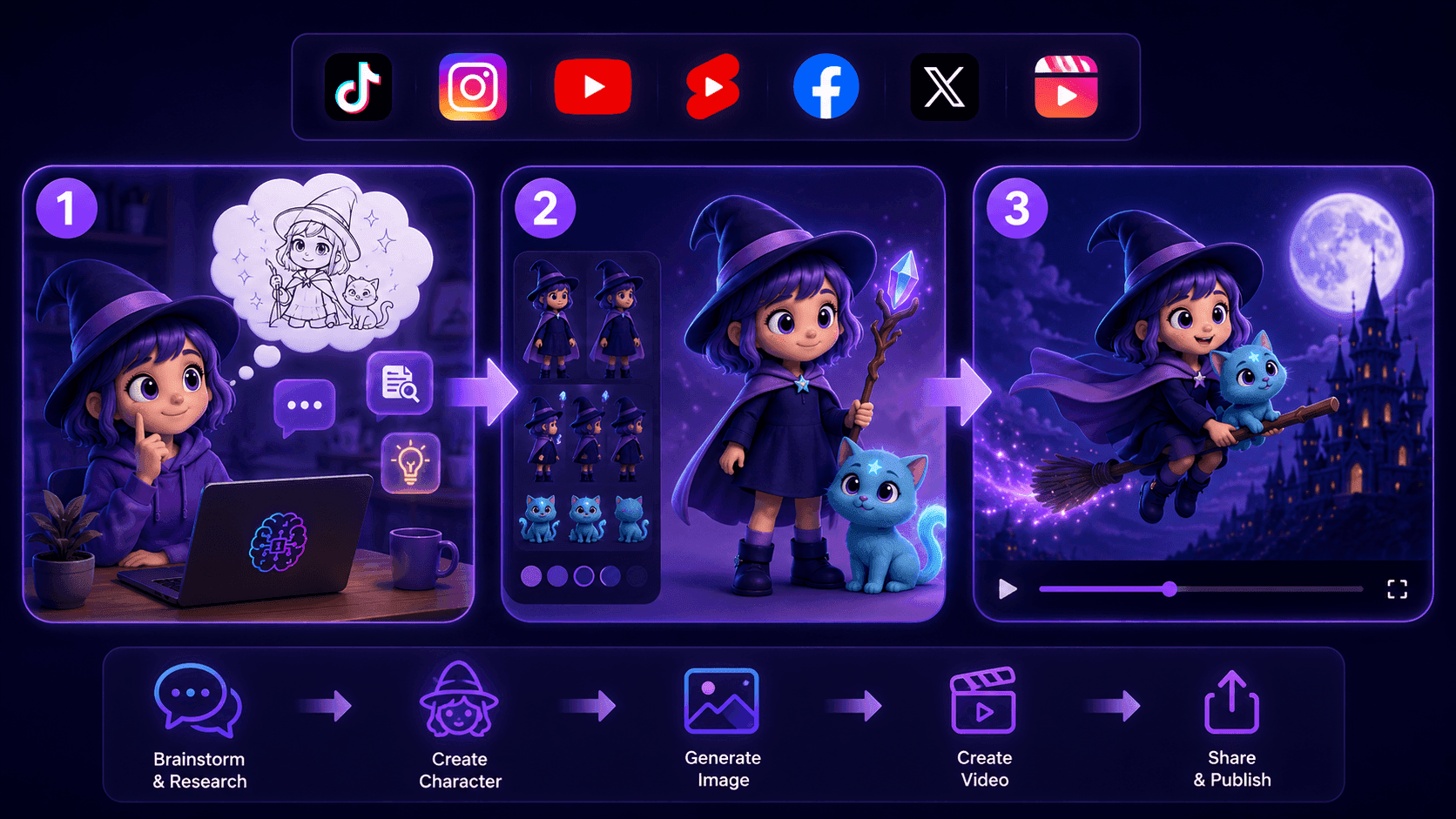
Create Consistent Cartoon Content in Just a Few Steps
Create engaging cartoon videos for TikTok and Reels with 1min.AI. Research ideas, create characters, and turn images into animated videos in 3 simple steps.
 Lien Anh Vu
One Product, 10 UGC Creatives: How AI Makes Content Testing Easier
Create more authentic UGC with an AI UGC video generator, test more creative angles and scale affiliate content without filming every version.
Lien Anh Vu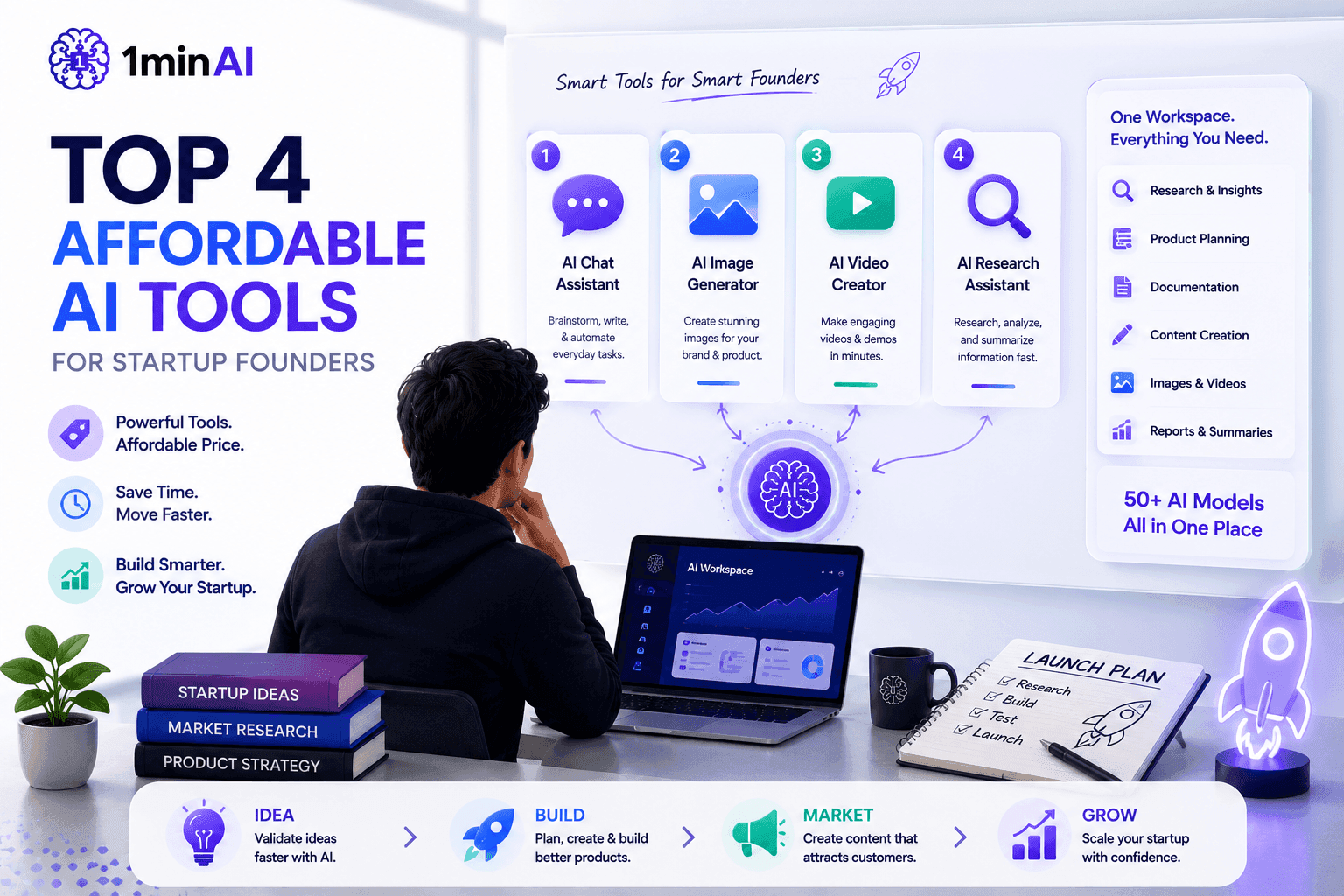
Top 4 Affordable AI Tools for Startup Founders
Discover the top 4 affordable AI tools for startup founders to validate ideas, build products, create content, and launch faster without overspending.
 Tram Ta
AI Features
Comprehensive AI features that streamline workflows, improve efficiency, and empower teams to achieve more.
Create Consistent Cartoon Content in Just a Few Steps
Create engaging cartoon videos for TikTok and Reels with 1min.AI. Research ideas, create characters, and turn images into animated videos in 3 simple steps.
Lien Anh VuOne Product, 10 UGC Creatives: How AI Makes Content Testing Easier
Create more authentic UGC with an AI UGC video generator, test more creative angles and scale affiliate content without filming every version.
Lien Anh Vu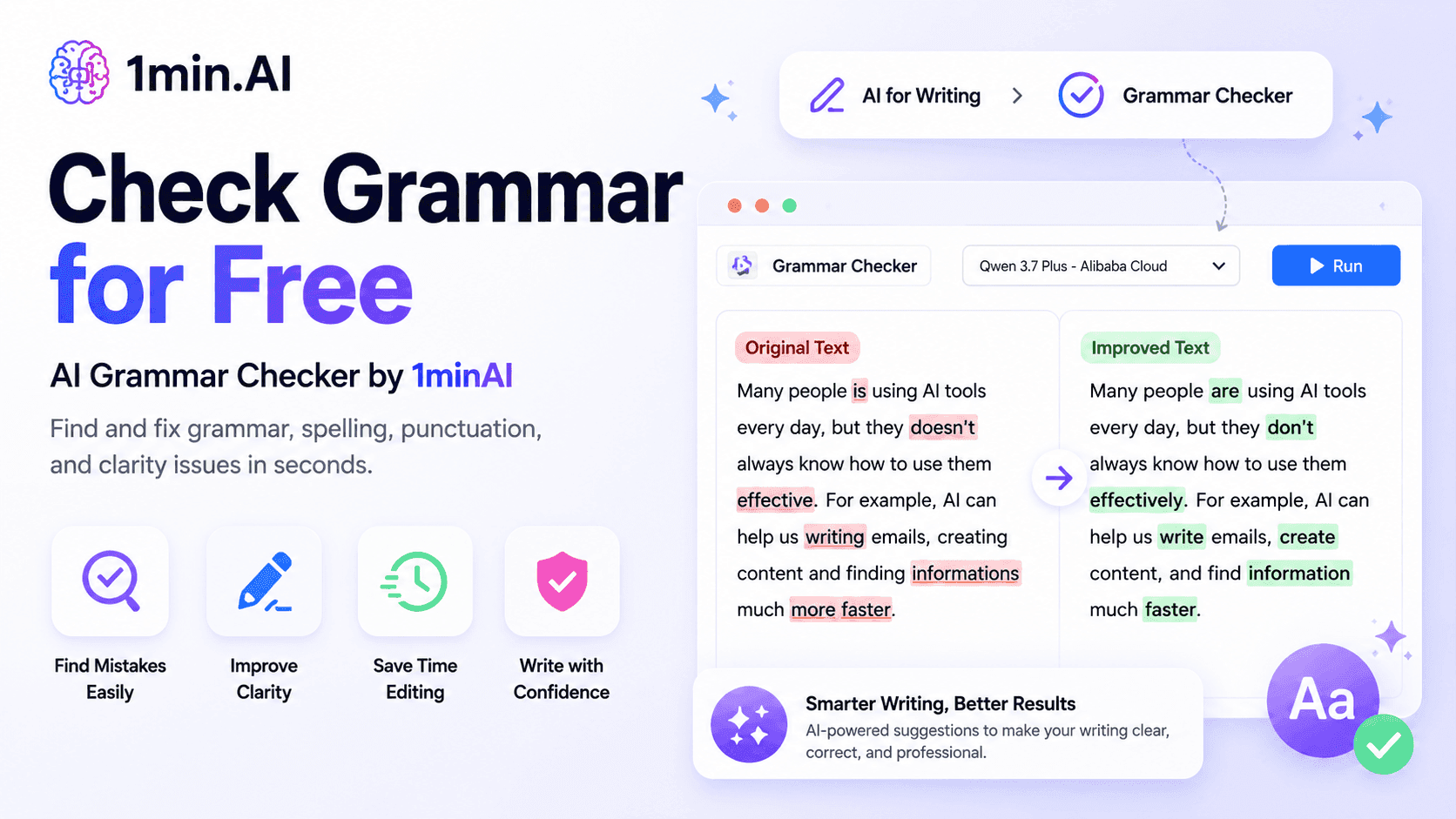
1minAI: Free AI Grammar Checker
Check grammar for free with 1minAI’s AI grammar checker. Find grammar, spelling, and writing mistakes, improve clarity, and polish your content in seconds.
Tram TaAI Use Cases
A curated collection of AI use cases for business, productivity, and industry-specific applications.
Create Consistent Cartoon Content in Just a Few Steps
Create engaging cartoon videos for TikTok and Reels with 1min.AI. Research ideas, create characters, and turn images into animated videos in 3 simple steps.
Lien Anh VuOne Product, 10 UGC Creatives: How AI Makes Content Testing Easier
Create more authentic UGC with an AI UGC video generator, test more creative angles and scale affiliate content without filming every version.
Lien Anh Vu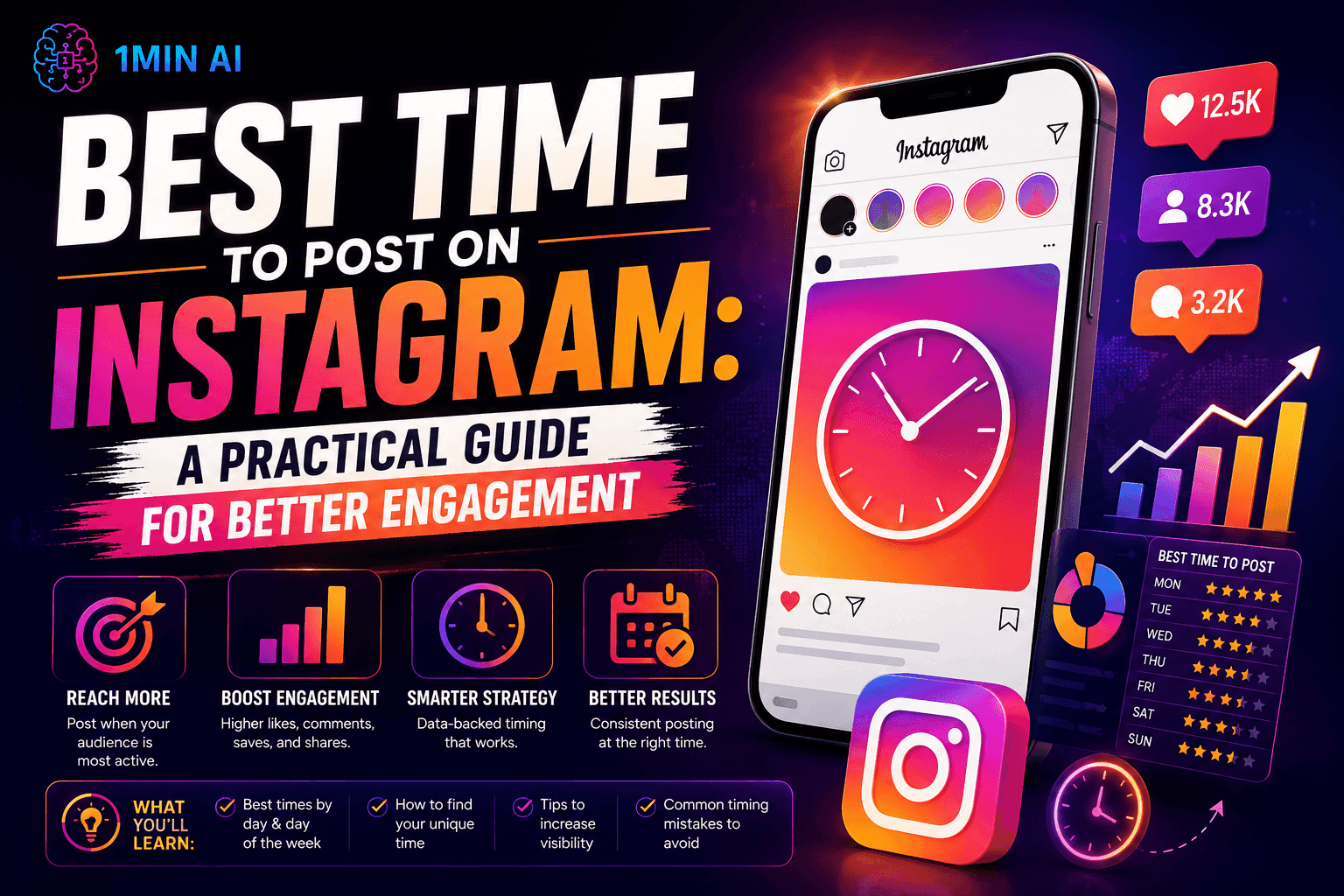
Best Time to Post on Instagram: A Practical Guide for Better Engagement
Discover the best time to post on Instagram, including the best days and times for different audiences, plus tips to find the ideal posting schedule for your account.
Tram TaAI Tutorials
Learn how to use AI with practical, step-by-step tutorials.

Black Friday AI Tool Deals in 2026
Discover what Black Friday AI tool deals 2026 has to offer. Find out how to secure the 1min.AI lifetime deal via AppSumo, Dealify, Stack Social, and verify on Trustpilot, Slashdot, and Software Advice.
 Hang Nguyen
Create Consistent Cartoon Content in Just a Few Steps
Create engaging cartoon videos for TikTok and Reels with 1min.AI. Research ideas, create characters, and turn images into animated videos in 3 simple steps.
Lien Anh Vu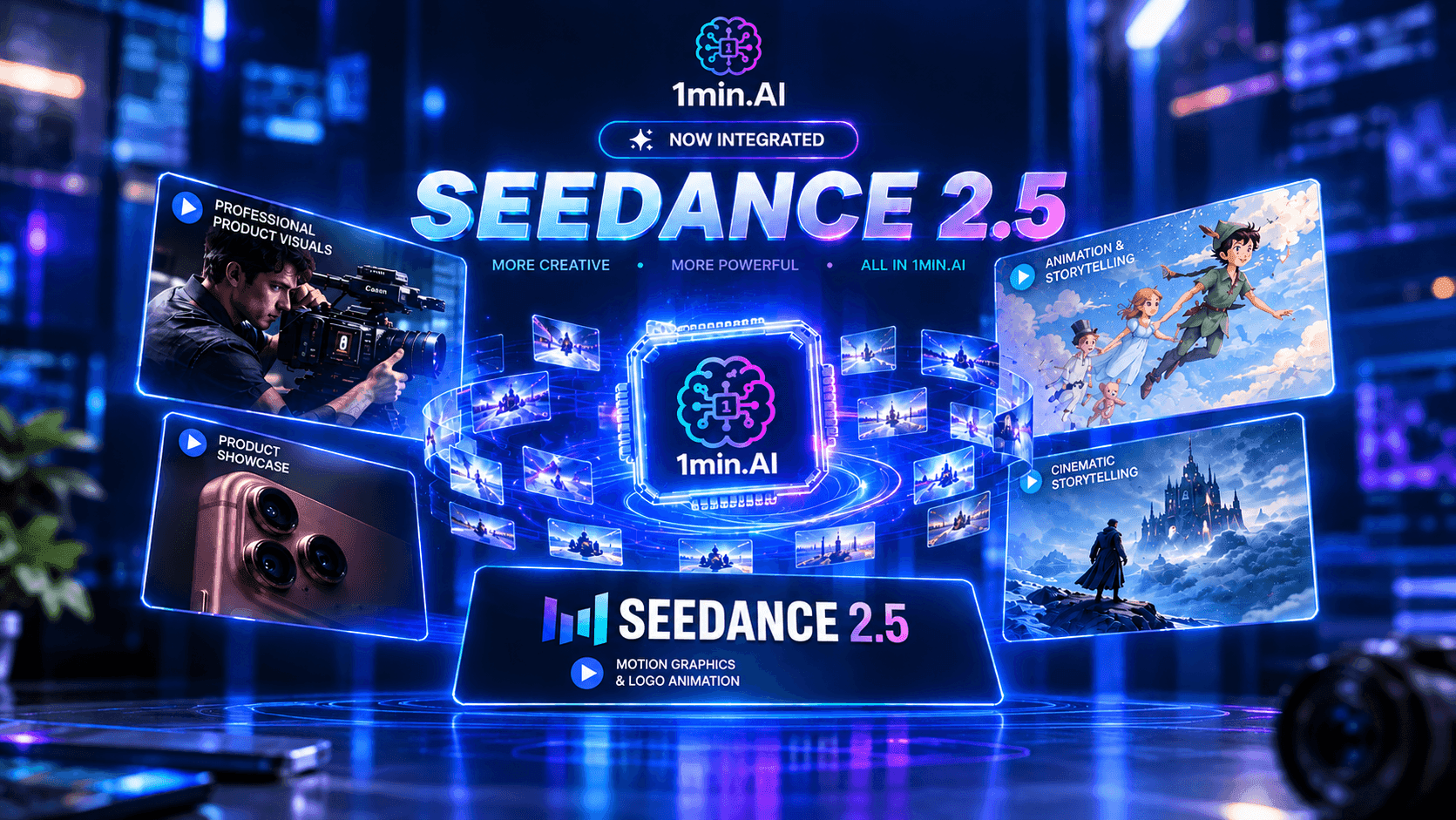
[Seedance 2.5 New] Better AI Product Videos, Less Rework in 1min.AI
Use Seedance 2.5 image to video on 1min.AI to create more consistent AI product videos, reduce failed generations, save credits, and improve UGC workflows.
Lien Anh VuAI Guides
Learn AI faster with practical guides, real-world examples, and actionable best practices.

Safely Buy AI Tools Online: 2026 Black Friday Guide
Discover how to find and secure the best Black Friday AI deals online. Learn expert strategies to avoid scams, combat subscription fatigue, and verify software.
Hang NguyenCreate Consistent Cartoon Content in Just a Few Steps
Create engaging cartoon videos for TikTok and Reels with 1min.AI. Research ideas, create characters, and turn images into animated videos in 3 simple steps.
Lien Anh Vu[Seedance 2.5 New] Better AI Product Videos, Less Rework in 1min.AI
Use Seedance 2.5 image to video on 1min.AI to create more consistent AI product videos, reduce failed generations, save credits, and improve UGC workflows.
Lien Anh VuAI Solutions
Browse the best AI solutions for automation, coding, research, productivity, customer support, marketing, and business workflows.
Safely Buy AI Tools Online: 2026 Black Friday Guide
Discover how to find and secure the best Black Friday AI deals online. Learn expert strategies to avoid scams, combat subscription fatigue, and verify software.
Hang NguyenCreate Consistent Cartoon Content in Just a Few Steps
Create engaging cartoon videos for TikTok and Reels with 1min.AI. Research ideas, create characters, and turn images into animated videos in 3 simple steps.
Lien Anh VuOne Product, 10 UGC Creatives: How AI Makes Content Testing Easier
Create more authentic UGC with an AI UGC video generator, test more creative angles and scale affiliate content without filming every version.
Lien Anh VuAI Models
Explore the world's leading AI models in one place.
Create Consistent Cartoon Content in Just a Few Steps
Create engaging cartoon videos for TikTok and Reels with 1min.AI. Research ideas, create characters, and turn images into animated videos in 3 simple steps.
Lien Anh VuOne Product, 10 UGC Creatives: How AI Makes Content Testing Easier
Create more authentic UGC with an AI UGC video generator, test more creative angles and scale affiliate content without filming every version.
Lien Anh Vu[Seedance 2.5 New] Better AI Product Videos, Less Rework in 1min.AI
Use Seedance 2.5 image to video on 1min.AI to create more consistent AI product videos, reduce failed generations, save credits, and improve UGC workflows.
Lien Anh VuAI Comparisons
Compare AI tools, models, and platforms to find the best fit for your needs.
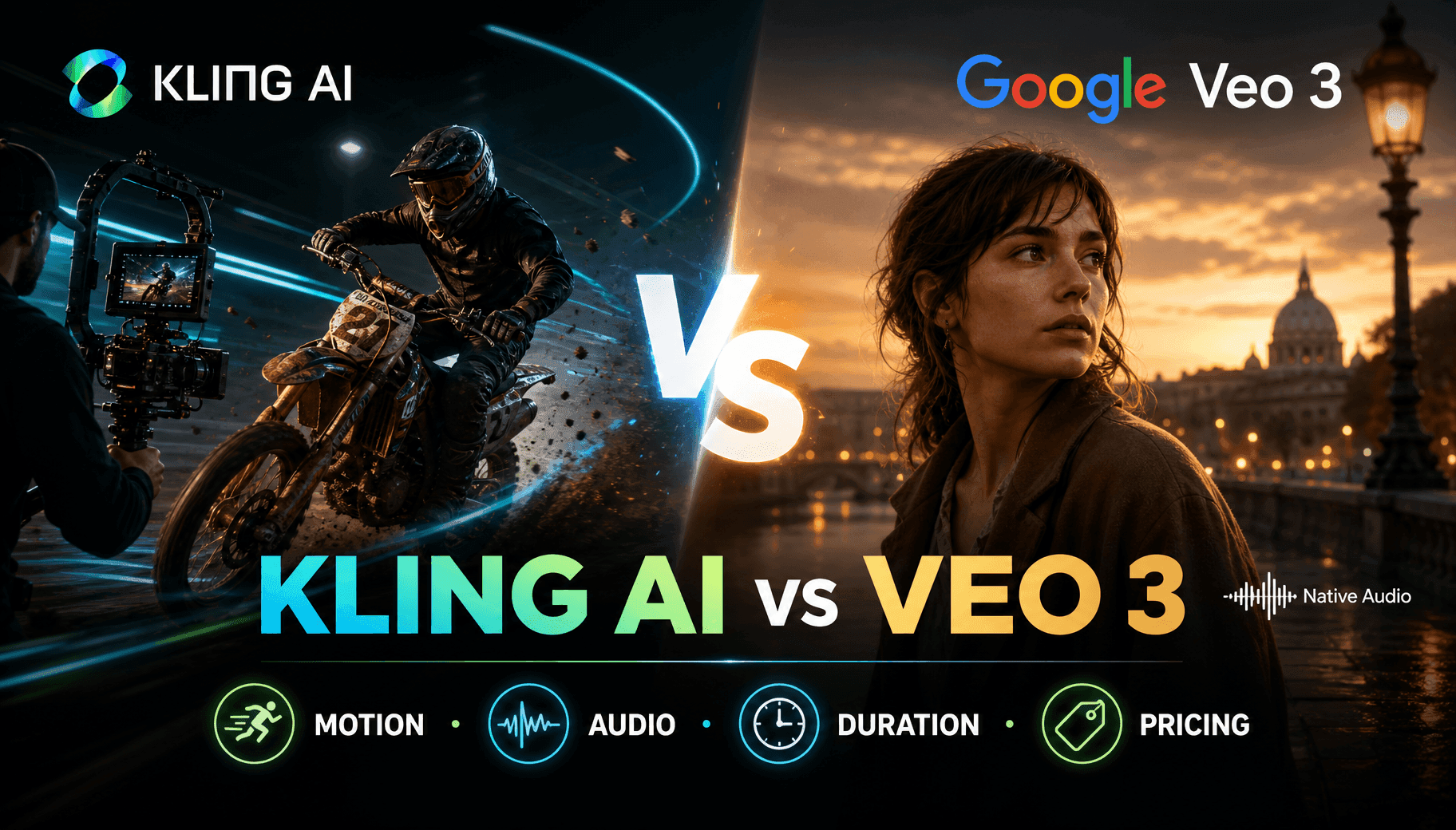
Kling AI Vs Veo 3: Which Model Wins?
Kling AI vs Veo 3: compare motion, native audio, pricing & free tiers to see which AI video generator wins for your project - try both on 1min.AI.
 Trang Tran
[Seedance 2.5 New] Better AI Product Videos, Less Rework in 1min.AI
Use Seedance 2.5 image to video on 1min.AI to create more consistent AI product videos, reduce failed generations, save credits, and improve UGC workflows.
Lien Anh Vu
DeepSeek V4 Pro vs Flash Comparison
Compare DeepSeek V4 Pro vs DeepSeek V4 Flash metrics. Optimize your agentic apps and improve AI fact checking on 1min.ai today.
Ngoc HongAI Integrations
Seamlessly integrate AI with the tools you already use to automate work and boost productivity.
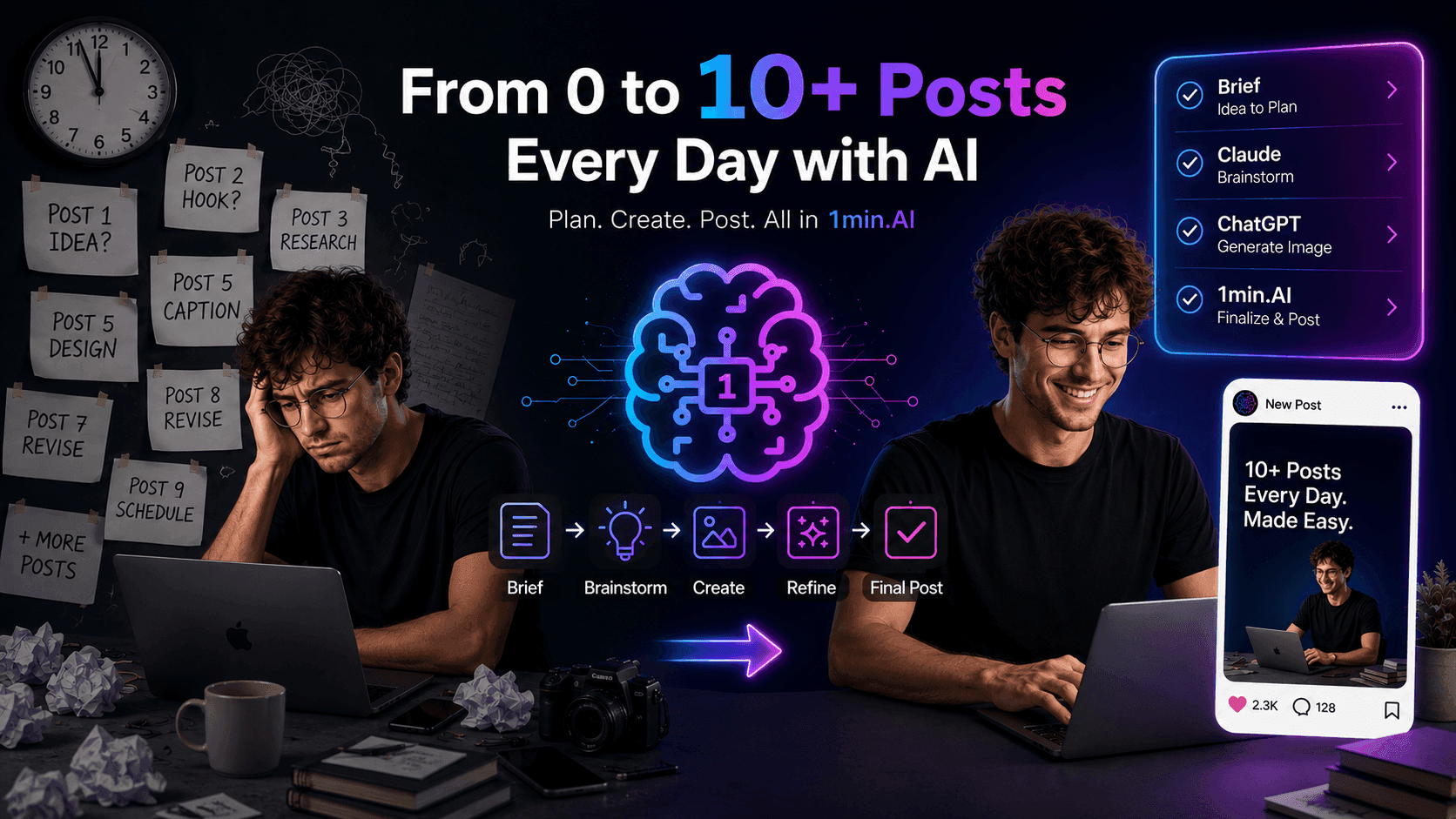
POV: You Have 10+ Posts to Make Every Day
Learn how to build an AI content workflow that helps content creators produce 10+ social media posts a day faster with AI brainstorming, image generation, and content creation.
Lien Anh Vu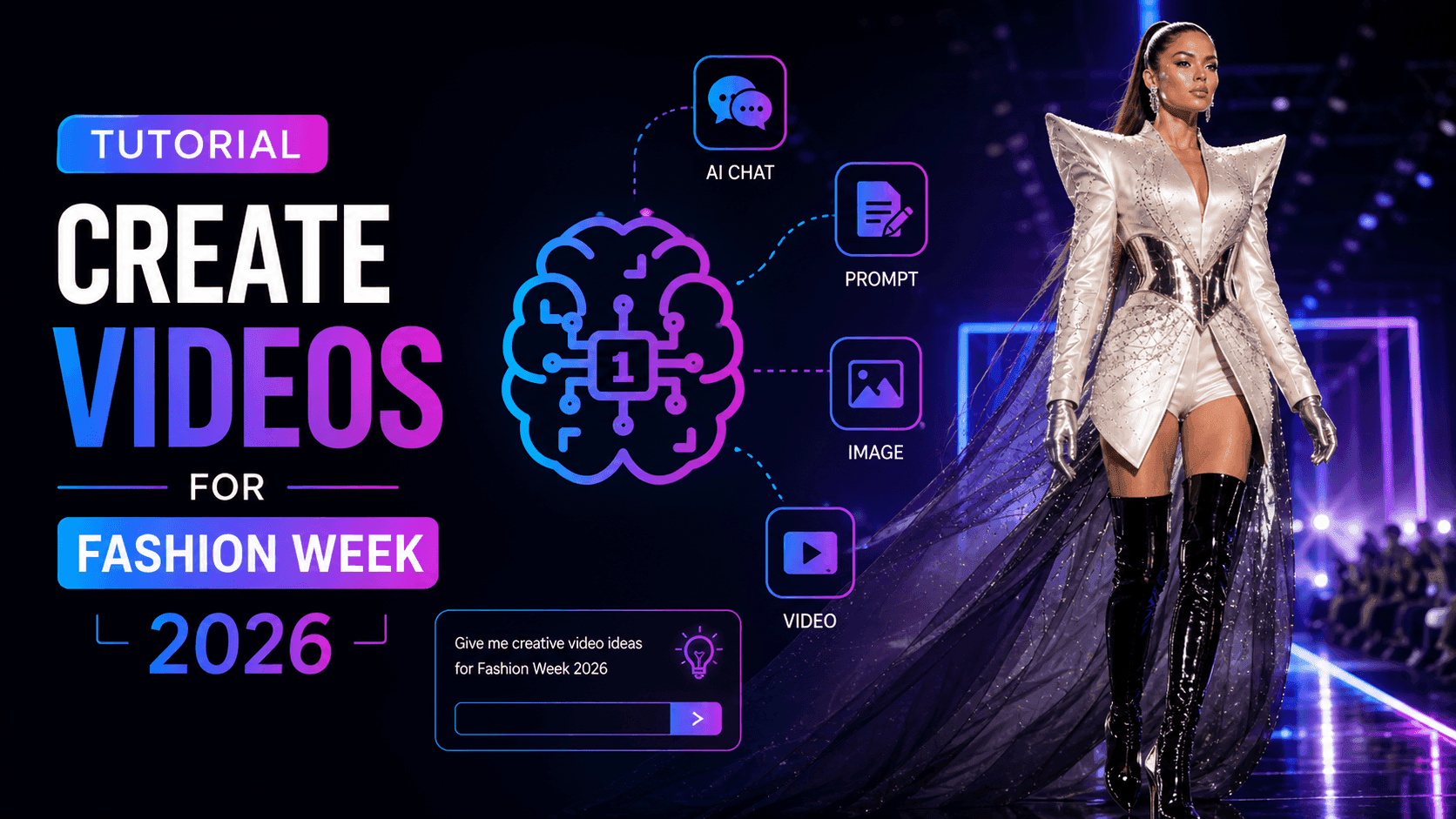
How to Use an AI Fashion Video Generator for Fashion Week 2026
Turn Fashion Week 2026 ideas into stunning fashion videos with AI. Learn how to brainstorm, create visuals, and transform images into videos with one simple workflow.
Lien Anh Vu
Stop Switching Between AI Apps: How AI Integration Transforms Employer Branding
Discover how AI integration helps HR teams streamline employer branding by combining AI writing, documents, images, video, and multiple AI models into one workspace.
Tram TaAI for Industries
Find the best AI tools and workflows for healthcare, finance, education, legal, manufacturing, retail, real estate, and more
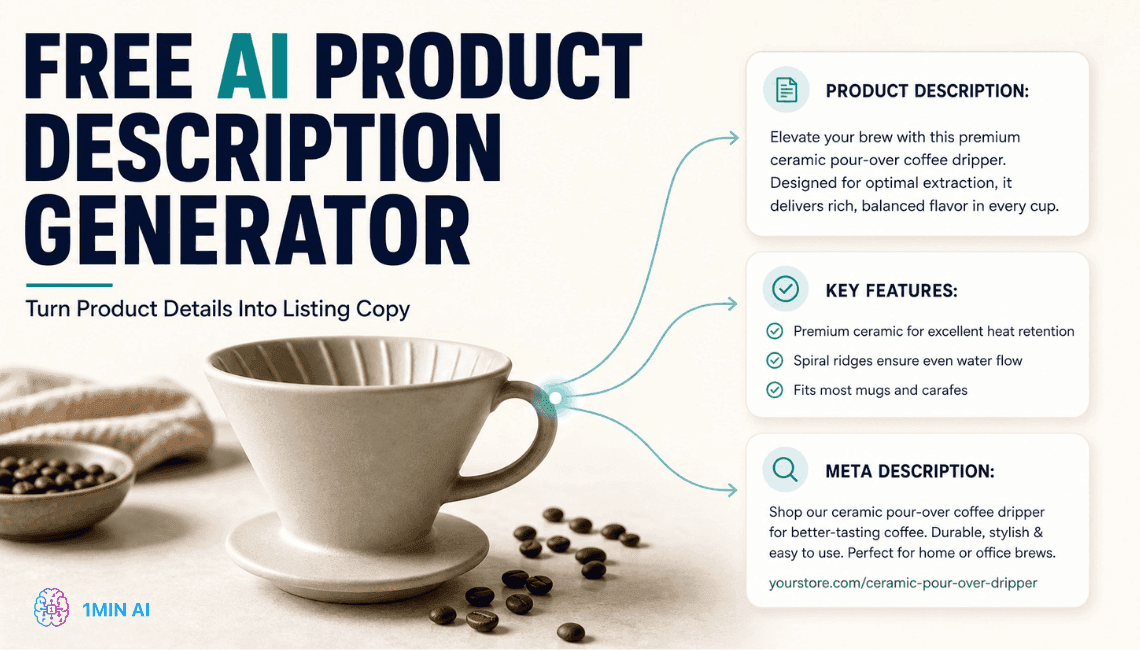
Free AI Product Description Generator
Write product descriptions that sell in minutes. Use this free AI product description generator to turn details or a photo into on-brand copy. Try 1min.AI.
Trang Tran
Best Business Productivity Tools for Startups to Maximize Profits | 1minAI
Discover the best business productivity tools for startups to save time, streamline workflows, reduce repetitive tasks, and support profitable growth with AI.
Tram Ta
Best AI Tool for Content Marketing |1minAI
Looking for the best AI tool for content marketing? See how 1minAI helps marketers research, write, repurpose, create visuals, and scale content from one AI workspace.
Tram TaAI Agents
Discover and run AI agents to automate tasks across your work and daily life.
1minAI: Free AI Grammar Checker
Check grammar for free with 1minAI’s AI grammar checker. Find grammar, spelling, and writing mistakes, improve clarity, and polish your content in seconds.
Tram Ta
AI Agents for Facebook
Use an AI Agent for Facebook to create content, generate images, schedule posts, and publish from your documents and conversations.
Ngoc Hong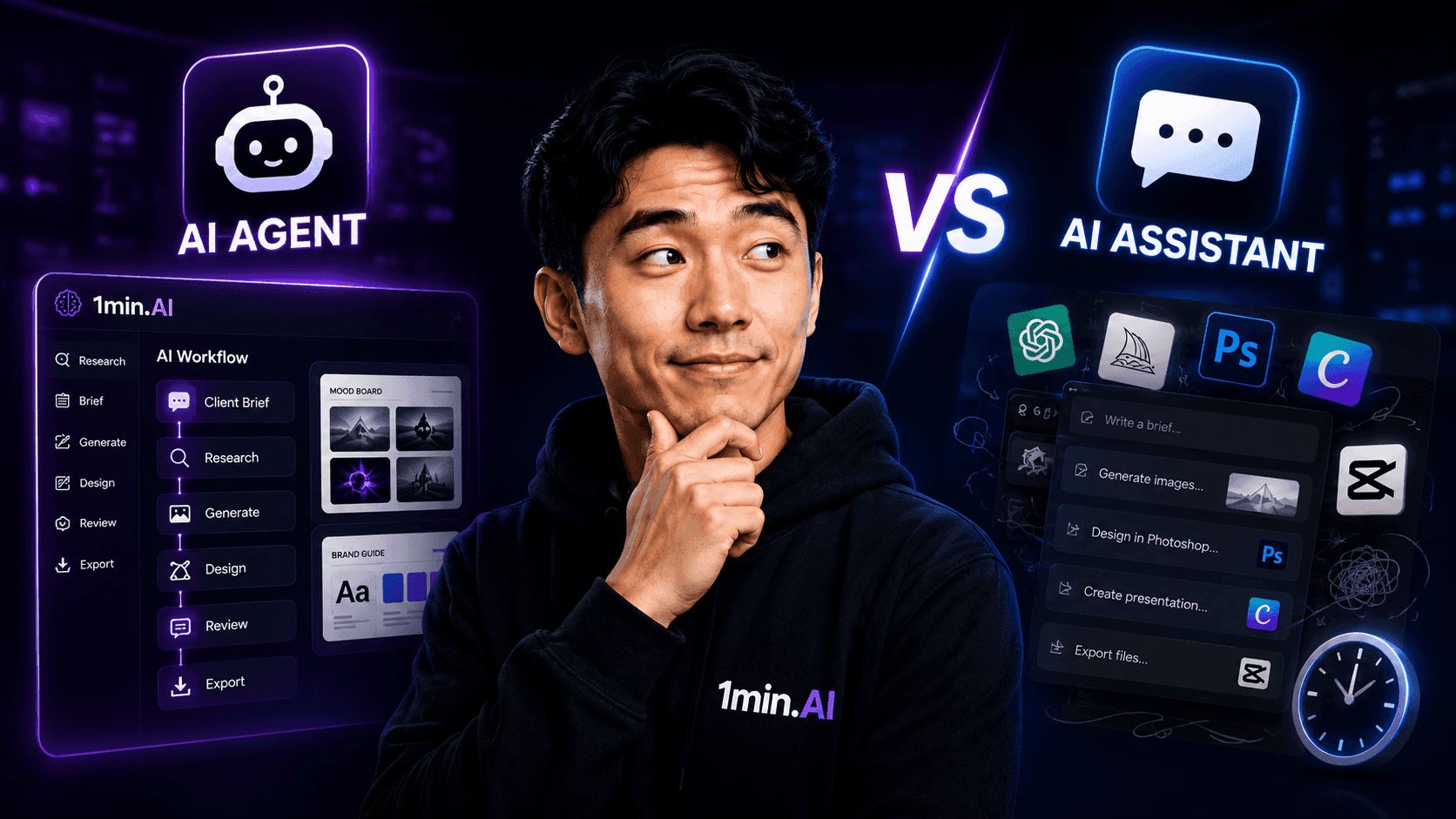
AI Agent vs AI Assistant: Which One Actually Saves Designers More Time?
Learn the difference between AI Agent vs AI Assistant and discover which solution helps designers automate repetitive work, reduce revisions, and save more time.
Lien Anh VuAI Workflows
Explore ready-to-use AI workflows for productivity, marketing, sales, support, and more.
Create Consistent Cartoon Content in Just a Few Steps
Create engaging cartoon videos for TikTok and Reels with 1min.AI. Research ideas, create characters, and turn images into animated videos in 3 simple steps.
Lien Anh VuOne Product, 10 UGC Creatives: How AI Makes Content Testing Easier
Create more authentic UGC with an AI UGC video generator, test more creative angles and scale affiliate content without filming every version.
Lien Anh VuPOV: You Have 10+ Posts to Make Every Day
Learn how to build an AI content workflow that helps content creators produce 10+ social media posts a day faster with AI brainstorming, image generation, and content creation.
Lien Anh VuNewsletter
Weekly AI Innovations with 1minAI

🔮 Weekly AI Innovations #142: Grok 4.7, Opus 5.5 & Sonnet 5.5 on 1min.ai
Access Grok 4.7, Claude Opus 5.5, and Sonnet 5.5 on 1min.ai. Cut subscription costs by up to 70% and process millions tokens in a single unified workspace.
Hang Nguyen
🔮 Weekly AI Innovations #141: Seedance 2.5 & Stable Audio 3: Next-Gen AI
Explore Seedance 2.0, 2.5, and StabilityAI's Stable Audio 3 on 1min.ai. Generate studio-grade audio and synchronized motion with next-gen generative AI.
Hang Nguyen
🔮 Weekly AI Innovations #140: Deepseek 4.1 Flash & Gemini Upgrades
Explore Deepseek 4.1 Flash and new Gemini models on 1min.ai. Plus, check our update on your Billing - Usage page for better clarity.
Hang Nguyen