
AI Content Workflow for Freelancers: From Brief to Post

Lien Anh Vu
8 October 2026

Discover an AI content workflow for freelancers. Use Claude for brainstorming and ChatGPT for images to turn client briefs into polished social posts faster.
Client feedback rarely comes as a clear list of changes. Instead, freelancers often hear “make it more premium,” “make it more engaging,” or simply “something feels off.”
The challenge is not just making another revision, but figuring out what the client actually wants without losing the original creative direction. With AI for freelancers, vague feedback can be analyzed, translated into specific changes, and turned into clearer revision options before more time is spent editing.
Why Client Feedback Can Lead to Endless Revisions
“Make It Better” Is Not a Creative Direction
A client may recognize that something does not feel right without knowing how to explain why. When they say “make it more premium,” they could be referring to the copy, tone, visual style, layout, or even the way the product is positioned.
For freelancers, the challenge is therefore not simply responding to feedback, but interpreting the intention behind it before making changes.
One Vague Comment Can Change the Entire Direction
A small comment can quickly become a long revision cycle. A freelancer might rewrite the headline, only to discover that the client was actually referring to the visual style. After the visual is changed, another round of feedback may follow because the copy no longer matches the new direction.
In many cases, the problem is not the quality of the content but a gap between what the client expects and what the freelancer understands.
AI Can Clarify Feedback Before You Start Editing
Instead of immediately asking AI to rewrite the content, freelancers can first use it to analyze the feedback and identify what might need to change.
This creates a more controlled process:
Understand the feedback → Identify the change → Revise the content → Review the result
AI supports the process, while the freelancer remains responsible for the creative decision.
How to Turn Vague Client Feedback Into Clear Revisions With AI
Start With the Original Content and Client Feedback
Before asking AI to make any changes, start by giving it the original content and the client's exact feedback. Providing both pieces of information gives AI enough context to distinguish between what has already been approved and what the client may actually want to change.
AI needs context to provide useful feedback. Give it the original content together with the client's exact comment.
Original Instagram Hook:
Your afternoon coffee ritual deserves an upgrade.
Client Feedback:
“Can you make it feel more premium?”
Instead of immediately asking AI to rewrite the headline, first ask it to interpret the feedback and identify the potential areas of change:
Analyze the client's feedback based on the original content. Identify what may need to change in the tone, messaging, copy, and visual direction. Do not rewrite the content yet.
This first step helps separate understanding the feedback from executing the revision.
Translate Vague Feedback Into Specific Changes
Once AI has identified the possible meaning behind the feedback, translate that interpretation into specific creative criteria. Breaking a subjective comment into individual elements makes the revision easier to evaluate and prevents freelancers from making broad changes that the client never requested.
“Make it more premium” is subjective, but it can be broken down into several potential creative changes.
Tone: More sophisticated and refined
Messaging: Emphasize quality and experience
Copy: Remove overly casual language
Visual: Use a cleaner and more polished direction
CTA: Keep the call to action subtle
Rather than applying every suggestion automatically, the freelancer can compare these recommendations with the original brief, brand guidelines, and approved direction. This keeps AI-generated suggestions aligned with the actual project instead of allowing the feedback to redefine the entire concept.
The freelancer can then evaluate these suggestions against the brand and decide which changes are actually relevant.
Explore Different Creative Directions
Vague feedback often has more than one possible interpretation. Instead of choosing the first direction AI suggests, use it to develop several creative routes that respond to the same client comment in different ways. This gives freelancers a clearer basis for deciding which direction best matches the client's expectations before committing to a revision.
Once the feedback is clearer, AI can help develop several possible approaches instead of forcing the freelancer into one interpretation.
Premium & Sophisticated
Emphasize quality, craftsmanship, and an elevated experience.
Minimal & Modern
Use concise messaging, restrained visuals, and a cleaner composition.
Luxury Lifestyle
Position the product as part of a polished and aspirational daily routine.
These directions can also make client communication more specific. Instead of asking an open-ended question such as “What do you mean by premium?”, the freelancer can present a few defined approaches and ask which direction is closer to the client's vision.
This gives both the freelancer and the client something concrete to react to, making the next feedback round more specific.
Revise Without Rebuilding the Content
After identifying the intended direction, focus the revision on the specific elements that need to change. AI can be especially useful here because it can work within clear constraints while preserving the parts of the content that have already been approved.
Not every piece of feedback requires a complete rewrite. If the client only wants a more premium tone, preserve the approved message and structure while adjusting the language.
Original:
Your afternoon coffee ritual deserves an upgrade.
Revised:
Elevate your afternoon ritual with a more refined coffee experience.
The goal is not to make the content completely different. It is to make the right change while preserving what already works.
Refine Client Content Faster With 1min.AI
Once the feedback has been clarified, 1min.AI can support different stages of the revision workflow, helping freelancers move from interpretation to execution without repeatedly switching between different AI tools. Instead of treating each revision as a separate task, freelancers can use AI to understand the feedback, explore possible solutions, refine existing content, and evaluate different creative directions within one workflow.
This is especially useful when working with subjective feedback because the goal is not simply to generate more content. The goal is to make each revision more intentional by connecting the client's request with the original brief, approved creative direction, and specific elements that need to change.
Analyze Feedback Before Making Changes
When feedback is unclear, the first step is understanding what the client is actually asking for. 1min.AI can help freelancers break down broad comments into specific areas that may require attention, such as tone, messaging, copy, visual direction, or positioning. This gives freelancers a clearer starting point before they begin editing.
With 1min.AI, freelancers can use AI to analyze client feedback, explore creative directions, and develop revision options before making changes.
For example, a comment such as “make it more premium” can be analyzed across tone, messaging, copy, visual direction, and CTA. This allows the freelancer to understand the possible intent behind the feedback before deciding what should actually be changed.
For instance, “make it more premium” does not necessarily mean rewriting the entire message. It could mean using more sophisticated language, emphasizing product quality, simplifying the visual composition, or changing the way the experience is positioned. Identifying these possibilities first allows the freelancer to choose the interpretation that best fits the original brief.
Instead of jumping directly from feedback to a new version, the process becomes more deliberate:
Client Feedback → AI Analysis → Creative Direction → Revision
This approach reduces the risk of making changes based on assumptions and helps freelancers enter the revision stage with a clearer understanding of what they are trying to achieve.
Refine Approved Content Instead of Starting Over
Once the client has approved the main concept, unnecessary changes can create more problems than they solve. 1min.AI can help freelancers refine specific elements while preserving the approved message, structure, or creative direction. This makes AI more useful for controlled editing rather than simply generating another completely different version.
Once the direction is clear, AI can help adjust specific parts of the content while keeping the approved concept intact.
For instance, if the client approves the message and structure but wants the tone to feel more sophisticated, the freelancer can give AI explicit constraints:
Keep the original message and structure. Make the tone more premium and sophisticated while keeping the copy concise and suitable for Instagram.
By specifying what should change and what should stay the same, freelancers can use AI for targeted revisions rather than repeatedly rebuilding the entire piece. This is especially valuable when a project has already gone through several rounds of approval, because replacing the entire concept after every comment can introduce new problems and create even more feedback.
Clear constraints help prevent AI from changing elements that the client has already approved.
Explore Visual Changes With AI
Client feedback can also point to a visual problem rather than a copy problem. When a client says that a design feels “too casual,” “too basic,” or “not premium enough,” freelancers need to determine what visual characteristics are creating that impression before rebuilding the entire design.
With AI image generation, freelancers can explore different visual interpretations of the same feedback and compare them before committing to a final direction. For example, a “more premium” treatment could involve studio photography, minimal product compositions, luxury lifestyle environments, cleaner backgrounds, controlled lighting, or a more restrained composition.
These visual explorations give freelancers something concrete to evaluate and discuss with the client. Instead of repeatedly guessing what the client means by “premium,” the freelancer can present a few distinct directions and use the client's response to narrow down the final execution.
This makes the visual revision process more exploratory and helps freelancers test potential directions before investing hours in a complete redesign.
Keep Creative Control With the Freelancer
AI can accelerate the revision process, but it should not determine the final creative direction. Freelancers still need to evaluate whether an AI-generated suggestion fits the brand, audience, campaign objective, and original brief.
AI can suggest what “more premium” might look like, but it cannot know the client's exact intention in every situation.
This is particularly important when feedback is subjective. AI can provide several possible interpretations of “more premium” or “more engaging,” but the freelancer is responsible for deciding which interpretation is strategically appropriate. If none of the suggestions clearly matches the client's intention, asking for clarification is more effective than continuing to generate new versions.
That is why AI should be treated as a creative thinking partner, not the final decision-maker. Freelancers still need to judge whether a suggestion fits the brand, audience, campaign objective, and original brief.
The value of AI is therefore not in making every creative decision automatically. It is in helping freelancers reach better decisions faster, with more options to evaluate and less time spent guessing.
Frequently Asked Questions
How Can AI Help Freelancers Understand Vague Client Feedback?
AI can analyze the original content alongside the client's feedback and identify possible areas for improvement, such as tone, messaging, copy, visual direction, and positioning. This helps freelancers turn subjective comments into more specific revision criteria before making changes.
Should I Ask AI to Rewrite the Content Immediately?
Not always. When feedback is vague, it is usually more effective to analyze the client's comment first. Once the intended direction is clearer, AI can make targeted changes while preserving the parts of the content that have already been approved.
Can AI Help With Visual Client Feedback?
Yes. AI image generation can help freelancers explore different visual interpretations of comments such as “make it more premium” or “make it feel more modern.” These visual options can help freelancers identify a stronger direction before investing time in the final design.
How Can Freelancers Reduce Unnecessary Revision Rounds?
The key is to clarify the feedback before editing. By identifying what the client wants to change, exploring a few possible directions, and confirming the strongest interpretation, freelancers can reduce guesswork and make more targeted revisions.
Should Freelancers Let AI Make the Final Creative Decision?
No. AI should support the freelancer's creative process rather than replace it. Freelancers should evaluate AI-generated suggestions against the brand, audience, campaign objectives, and original brief, and ask the client for clarification when the feedback remains ambiguous.
🚀 Build your own AI content workflow with 1min.AI Chat with AI and turn ideas into client-ready social media content faster. Start creating with 1min.AI Chat with AI today.
Alternatives
Discover the best alternatives to 1minAI and compare features, pricing, and use cases.

1min.AI vs OpenRouter
1min.AI vs. OpenRouter: Compare the ready-to-use AI creation product against the technical API tool. Find out if you need a zero-code creative studio or a coding infrastructure hub.
 Ngoc Hong
1min.AI vs Easy Peasy AI
Looking for an Easy Peasy AI alternative? Compare pricing, free plan, features and reviews of Easy-Peasy.AI vs 1min.AI before you choose.
Ngoc Hong
1min.AI vs Lovart
Compare 1min.AI vs Lovart across features, pricing, credits, brand tools, and use cases to find the right AI platform for your workflow.
Ngoc HongAI Tools
Discover the best AI tools to boost productivity, creativity, and everyday work.
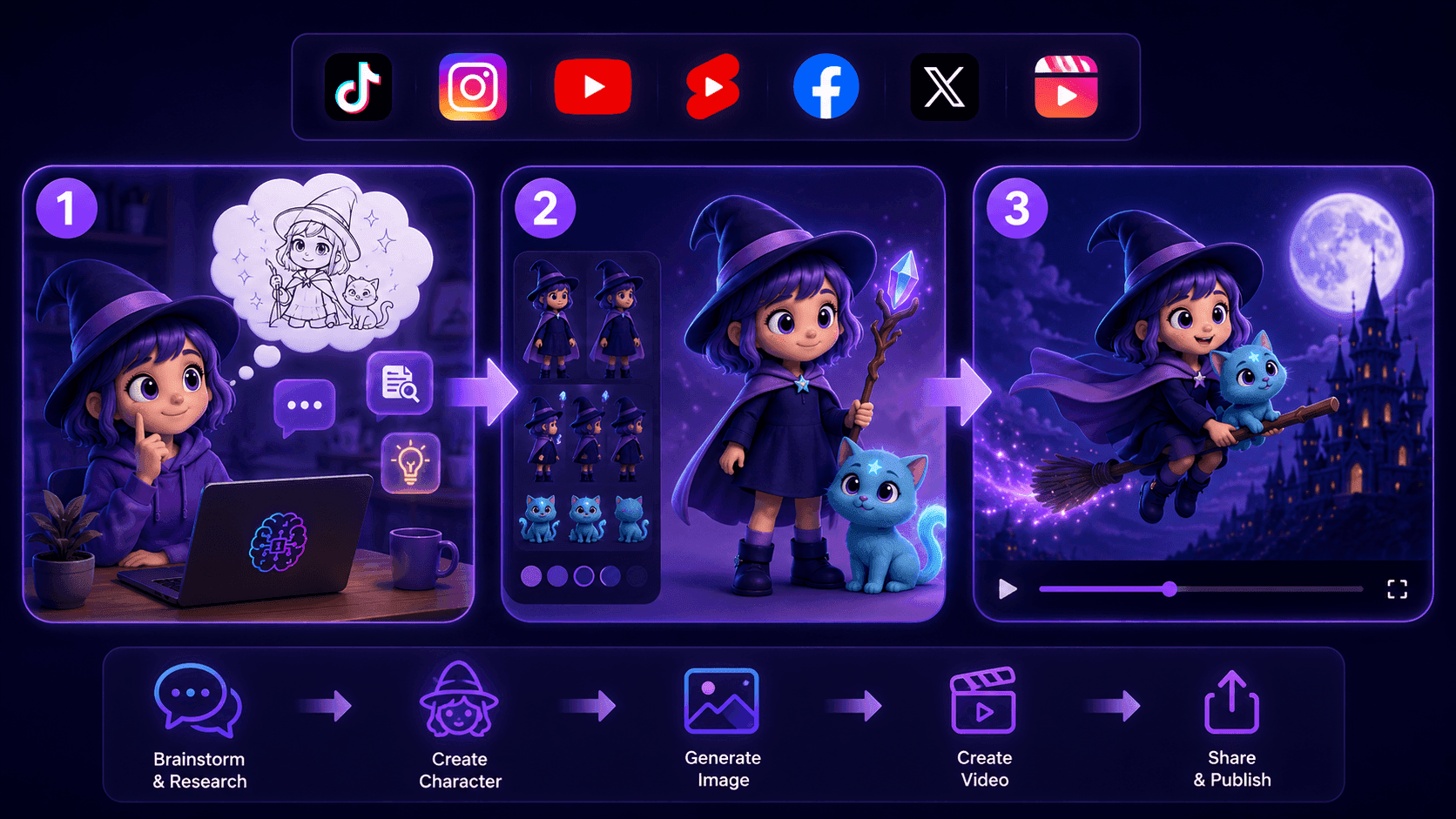
Create Consistent Cartoon Content in Just a Few Steps
Create engaging cartoon videos for TikTok and Reels with 1min.AI. Research ideas, create characters, and turn images into animated videos in 3 simple steps.
 Lien Anh Vu
One Product, 10 UGC Creatives: How AI Makes Content Testing Easier
Create more authentic UGC with an AI UGC video generator, test more creative angles and scale affiliate content without filming every version.
Lien Anh Vu
Top 4 Affordable AI Tools for Startup Founders
Discover the top 4 affordable AI tools for startup founders to validate ideas, build products, create content, and launch faster without overspending.
 Tram Ta
AI Features
Comprehensive AI features that streamline workflows, improve efficiency, and empower teams to achieve more.
Create Consistent Cartoon Content in Just a Few Steps
Create engaging cartoon videos for TikTok and Reels with 1min.AI. Research ideas, create characters, and turn images into animated videos in 3 simple steps.
Lien Anh VuOne Product, 10 UGC Creatives: How AI Makes Content Testing Easier
Create more authentic UGC with an AI UGC video generator, test more creative angles and scale affiliate content without filming every version.
Lien Anh Vu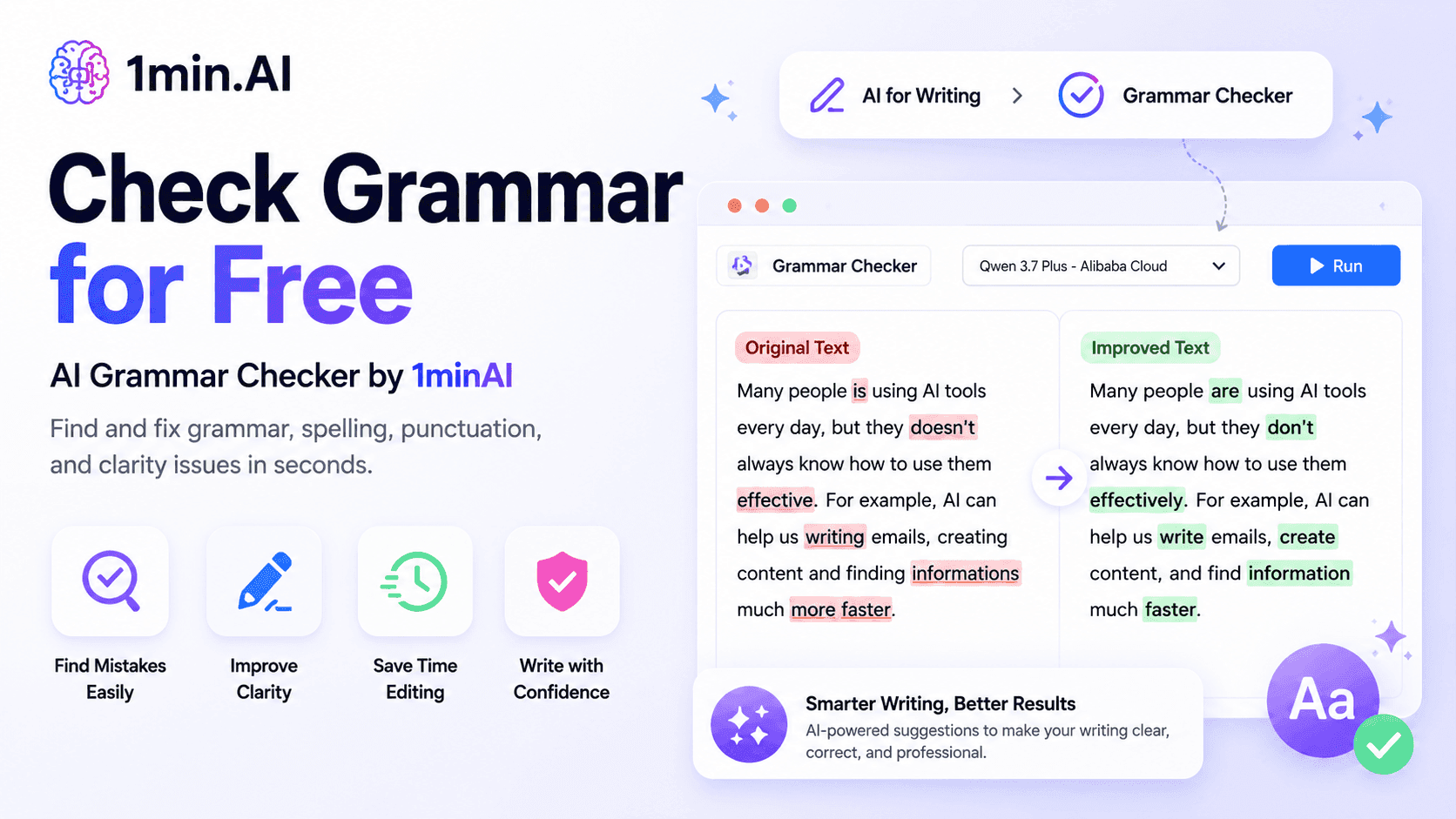
1minAI: Free AI Grammar Checker
Check grammar for free with 1minAI’s AI grammar checker. Find grammar, spelling, and writing mistakes, improve clarity, and polish your content in seconds.
Tram TaAI Use Cases
A curated collection of AI use cases for business, productivity, and industry-specific applications.
Create Consistent Cartoon Content in Just a Few Steps
Create engaging cartoon videos for TikTok and Reels with 1min.AI. Research ideas, create characters, and turn images into animated videos in 3 simple steps.
Lien Anh VuOne Product, 10 UGC Creatives: How AI Makes Content Testing Easier
Create more authentic UGC with an AI UGC video generator, test more creative angles and scale affiliate content without filming every version.
Lien Anh Vu
Best Time to Post on Instagram: A Practical Guide for Better Engagement
Discover the best time to post on Instagram, including the best days and times for different audiences, plus tips to find the ideal posting schedule for your account.
Tram TaAI Tutorials
Learn how to use AI with practical, step-by-step tutorials.

Black Friday AI Tool Deals in 2026
Discover what Black Friday AI tool deals 2026 has to offer. Find out how to secure the 1min.AI lifetime deal via AppSumo, Dealify, Stack Social, and verify on Trustpilot, Slashdot, and Software Advice.
 Hang Nguyen
Create Consistent Cartoon Content in Just a Few Steps
Create engaging cartoon videos for TikTok and Reels with 1min.AI. Research ideas, create characters, and turn images into animated videos in 3 simple steps.
Lien Anh Vu
[Seedance 2.5 New] Better AI Product Videos, Less Rework in 1min.AI
Use Seedance 2.5 image to video on 1min.AI to create more consistent AI product videos, reduce failed generations, save credits, and improve UGC workflows.
Lien Anh VuAI Guides
Learn AI faster with practical guides, real-world examples, and actionable best practices.

Safely Buy AI Tools Online: 2026 Black Friday Guide
Discover how to find and secure the best Black Friday AI deals online. Learn expert strategies to avoid scams, combat subscription fatigue, and verify software.
Hang NguyenCreate Consistent Cartoon Content in Just a Few Steps
Create engaging cartoon videos for TikTok and Reels with 1min.AI. Research ideas, create characters, and turn images into animated videos in 3 simple steps.
Lien Anh Vu[Seedance 2.5 New] Better AI Product Videos, Less Rework in 1min.AI
Use Seedance 2.5 image to video on 1min.AI to create more consistent AI product videos, reduce failed generations, save credits, and improve UGC workflows.
Lien Anh VuAI Solutions
Browse the best AI solutions for automation, coding, research, productivity, customer support, marketing, and business workflows.
Safely Buy AI Tools Online: 2026 Black Friday Guide
Discover how to find and secure the best Black Friday AI deals online. Learn expert strategies to avoid scams, combat subscription fatigue, and verify software.
Hang NguyenCreate Consistent Cartoon Content in Just a Few Steps
Create engaging cartoon videos for TikTok and Reels with 1min.AI. Research ideas, create characters, and turn images into animated videos in 3 simple steps.
Lien Anh VuOne Product, 10 UGC Creatives: How AI Makes Content Testing Easier
Create more authentic UGC with an AI UGC video generator, test more creative angles and scale affiliate content without filming every version.
Lien Anh VuAI Models
Explore the world's leading AI models in one place.
Create Consistent Cartoon Content in Just a Few Steps
Create engaging cartoon videos for TikTok and Reels with 1min.AI. Research ideas, create characters, and turn images into animated videos in 3 simple steps.
Lien Anh VuOne Product, 10 UGC Creatives: How AI Makes Content Testing Easier
Create more authentic UGC with an AI UGC video generator, test more creative angles and scale affiliate content without filming every version.
Lien Anh Vu[Seedance 2.5 New] Better AI Product Videos, Less Rework in 1min.AI
Use Seedance 2.5 image to video on 1min.AI to create more consistent AI product videos, reduce failed generations, save credits, and improve UGC workflows.
Lien Anh VuAI Comparisons
Compare AI tools, models, and platforms to find the best fit for your needs.

Kling AI Vs Veo 3: Which Model Wins?
Kling AI vs Veo 3: compare motion, native audio, pricing & free tiers to see which AI video generator wins for your project - try both on 1min.AI.
 Trang Tran
[Seedance 2.5 New] Better AI Product Videos, Less Rework in 1min.AI
Use Seedance 2.5 image to video on 1min.AI to create more consistent AI product videos, reduce failed generations, save credits, and improve UGC workflows.
Lien Anh Vu
DeepSeek V4 Pro vs Flash Comparison
Compare DeepSeek V4 Pro vs DeepSeek V4 Flash metrics. Optimize your agentic apps and improve AI fact checking on 1min.ai today.
Ngoc HongAI Integrations
Seamlessly integrate AI with the tools you already use to automate work and boost productivity.

POV: You Have 10+ Posts to Make Every Day
Learn how to build an AI content workflow that helps content creators produce 10+ social media posts a day faster with AI brainstorming, image generation, and content creation.
Lien Anh Vu
How to Use an AI Fashion Video Generator for Fashion Week 2026
Turn Fashion Week 2026 ideas into stunning fashion videos with AI. Learn how to brainstorm, create visuals, and transform images into videos with one simple workflow.
Lien Anh Vu
Stop Switching Between AI Apps: How AI Integration Transforms Employer Branding
Discover how AI integration helps HR teams streamline employer branding by combining AI writing, documents, images, video, and multiple AI models into one workspace.
Tram TaAI for Industries
Find the best AI tools and workflows for healthcare, finance, education, legal, manufacturing, retail, real estate, and more

Best AI Tool for Content Marketing |1minAI
Looking for the best AI tool for content marketing? See how 1minAI helps marketers research, write, repurpose, create visuals, and scale content from one AI workspace.
Tram Ta
7 Low-Cost AI Business Ideas for Your Startup
Explore 7 low-cost AI business ideas you can start with a small budget, from content and video services to AI consulting, reselling, and automation.
Tram Ta
How to Start a One-Person AI Business: 7 Models You Can Run Solo
Learn how to start a one-person AI business with 7 practical models, from AI consulting and content services to automation and software reselling.
Tram TaAI Agents
Discover and run AI agents to automate tasks across your work and daily life.
1minAI: Free AI Grammar Checker
Check grammar for free with 1minAI’s AI grammar checker. Find grammar, spelling, and writing mistakes, improve clarity, and polish your content in seconds.
Tram Ta
AI Agents for Facebook
Use an AI Agent for Facebook to create content, generate images, schedule posts, and publish from your documents and conversations.
Ngoc Hong
AI Agent vs AI Assistant: Which One Actually Saves Designers More Time?
Learn the difference between AI Agent vs AI Assistant and discover which solution helps designers automate repetitive work, reduce revisions, and save more time.
Lien Anh VuAI Workflows
Explore ready-to-use AI workflows for productivity, marketing, sales, support, and more.
Create Consistent Cartoon Content in Just a Few Steps
Create engaging cartoon videos for TikTok and Reels with 1min.AI. Research ideas, create characters, and turn images into animated videos in 3 simple steps.
Lien Anh VuOne Product, 10 UGC Creatives: How AI Makes Content Testing Easier
Create more authentic UGC with an AI UGC video generator, test more creative angles and scale affiliate content without filming every version.
Lien Anh VuPOV: You Have 10+ Posts to Make Every Day
Learn how to build an AI content workflow that helps content creators produce 10+ social media posts a day faster with AI brainstorming, image generation, and content creation.
Lien Anh VuNewsletter
Weekly AI Innovations with 1minAI

🔮 Weekly AI Innovations #140: Deepseek 4.1 Flash & Gemini Upgrades
Explore Deepseek 4.1 Flash and new Gemini models on 1min.ai. Plus, check our update on your Billing - Usage page for better clarity.
Hang Nguyen
🔮 Weekly AI Innovations #136: Grok 4.6 and Smart Data Retention
Discover the latest 1min.ai updates! Upgrade to Grok 4.6 for blazing-fast AI, and check our new Data Retention policies to secure your files today.
Hang Nguyen
🔮 Weekly AI Innovations #139: Dawn of the next-gen AI
Discover the immense power of GPT-6 Astra and Claude Fable 5.1. Unlock next-generation AI models on 1min.ai to solve complex tasks effortlessly.
Hang Nguyen