Free AI Checker for Your Thesis Before You Submit

Tram Ta
23 October 2026
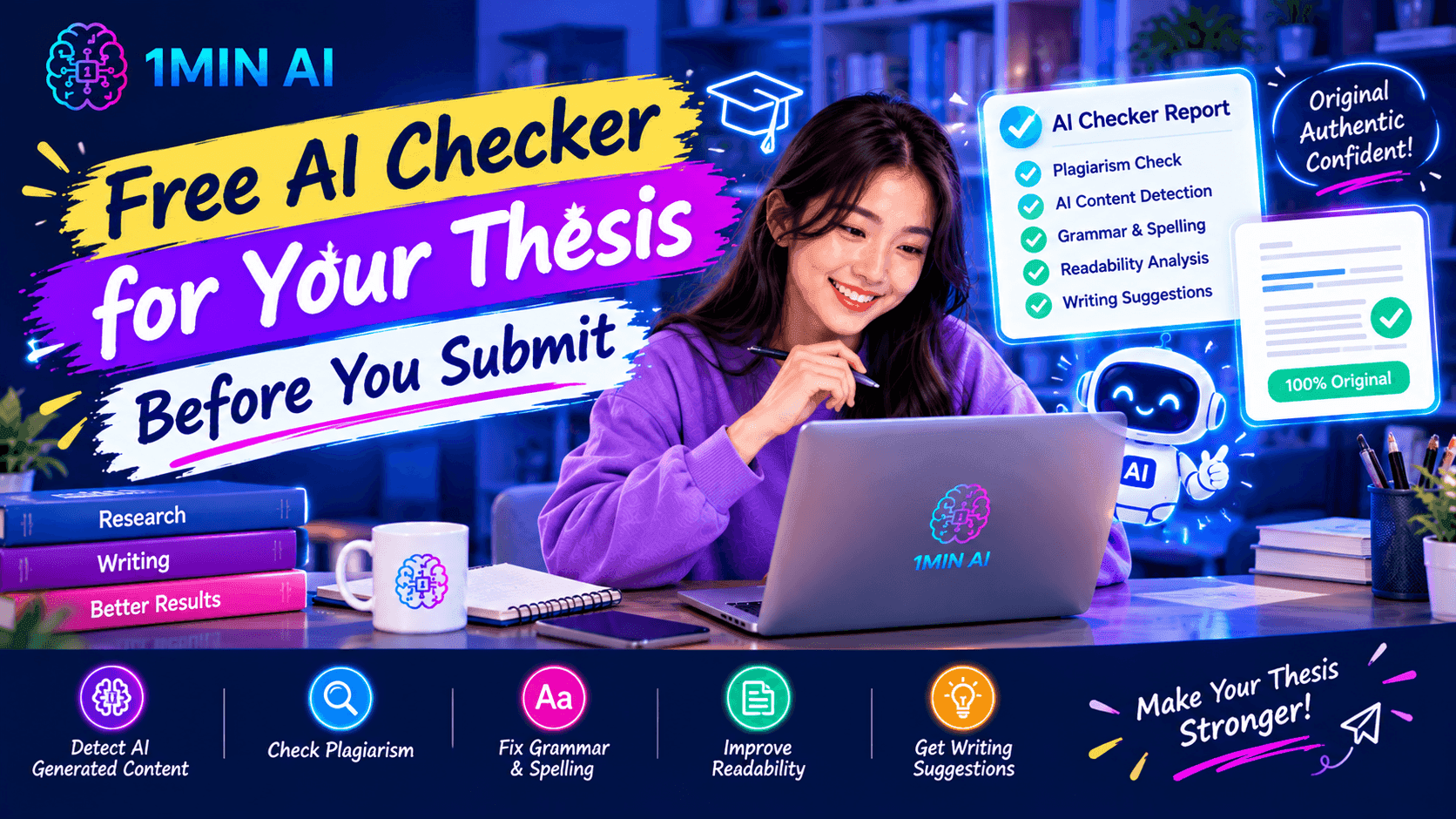
Looking for a free AI checker for your thesis? Learn how AI detection works, review your writing responsibly, and improve clarity before submission.
Finishing a thesis takes months of research, drafting, revising, and proofreading. Before submitting it, you may want to check whether your writing is clear, original, and consistent with your university's academic integrity policy. An AI checker can provide one additional signal when reviewing text, especially if you've used AI tools during permitted parts of your writing process.
However, no AI checker can guarantee that your thesis will pass an institution's review or receive a 100% human-written score. Detection tools can misclassify human writing, and their results vary depending on the text, language, and detection system.
The more reliable approach is to use an AI checker as one part of a broader review process. In this guide, you'll learn how AI checkers work, how to check thesis writing responsibly, and how 1minAI writing tools can help you review clarity, structure, and readability before submission.
What Is an AI Checker?
An AI checker is a tool that analyzes text for patterns associated with AI-generated writing. Depending on the product, it may estimate whether some passages resemble text produced by generative AI systems and display a score or highlight sections for further review.
An AI checker is different from a plagiarism checker. A plagiarism checker typically looks for matching or similar text in available sources, while an AI checker estimates the likelihood that writing resembles AI-generated content. Neither tool, by itself, establishes whether a student has followed every academic requirement.
AI checkers may be useful when you want to:
- Review writing produced with AI assistance.
- Identify passages that deserve closer attention.
- Check whether your thesis maintains a consistent writing style.
- Understand how a particular detection tool evaluates your draft.
- Prepare questions for your supervisor about acceptable AI use.
The important limitation is that a detector score is an estimate, not definitive proof of authorship. Turnitin's own guidance warns that its AI writing detection may misidentify human-written, AI-generated, or AI-paraphrased text and should not be used as the sole basis for adverse action against a student. See the Turnitin AI Writing Report guidance.
How to Use a Free AI Checker for Your Thesis
If you want to review your thesis with an AI checker, follow a process that prioritizes academic quality rather than chasing a particular score.
Step 1: Check Your University's AI Policy
Before uploading your thesis to any online tool, read your university's rules on AI-assisted writing, disclosure, and third-party services.
Some institutions restrict which tools may process student work. Your thesis may contain unpublished research, personal information, confidential interviews, or other material that should not be uploaded to an external service without permission.
Check whether your institution provides an approved AI detection tool or has specific instructions for using one.
Step 2: Prepare the Text You Want to Review
If your institution permits external checking, select a relevant passage of your draft and confirm that the tool supports your language and text format.
For a long thesis, it can be useful to review sections individually—for example, the introduction, literature review, methodology, and discussion—if the tool supports this workflow.
Keep in mind that results from short passages may be less dependable than users expect. A score from one paragraph should not be treated as a reliable verdict on an entire thesis.
Step 3: Use an AI Checker to Identify Passages for Review
You can try the 1minAI Free AI Content Detector to examine text for patterns the tool identifies as potentially AI-generated.
Review the result as a prompt for further examination, not a judgment about your integrity or authorship.
If a passage receives a high AI-detection score, ask yourself:
- Does the paragraph accurately reflect my research and reasoning?
- Can I explain the argument and evidence in my own words?
- Are the sources cited correctly?
- Does the passage contain generic claims that need stronger evidence?
- Did I use AI assistance in a way permitted by my university?
A high score does not automatically mean misconduct occurred. Likewise, a low score does not prove that a passage complies with your institution's policy.
Step 4: Review the Original Draft and Your Writing Process
Your drafts, research notes, outlines, source annotations, and revision history can help demonstrate how your thesis developed.
If you wrote a passage yourself and a detector flags it, preserve your original materials rather than repeatedly rewriting the text to chase a different score.
If you used AI for brainstorming, outlining, language editing, or other permitted tasks, follow your institution's disclosure requirements. Be prepared to explain your argument, research choices, and how you used any AI assistance.
Step 5: Improve the Writing for Academic Quality
After reviewing a passage, focus on concrete improvements: clarity, evidence, logical structure, accurate citations, and precise terminology.
For example, replace a broad statement such as “Technology has greatly changed modern society” with a more specific, evidence-supported claim that relates directly to your research question.
The goal is to make your thesis more rigorous and readable—not to disguise AI-generated text or manipulate a detection system.
How to Improve Your Thesis With 1minAI Writing Tools
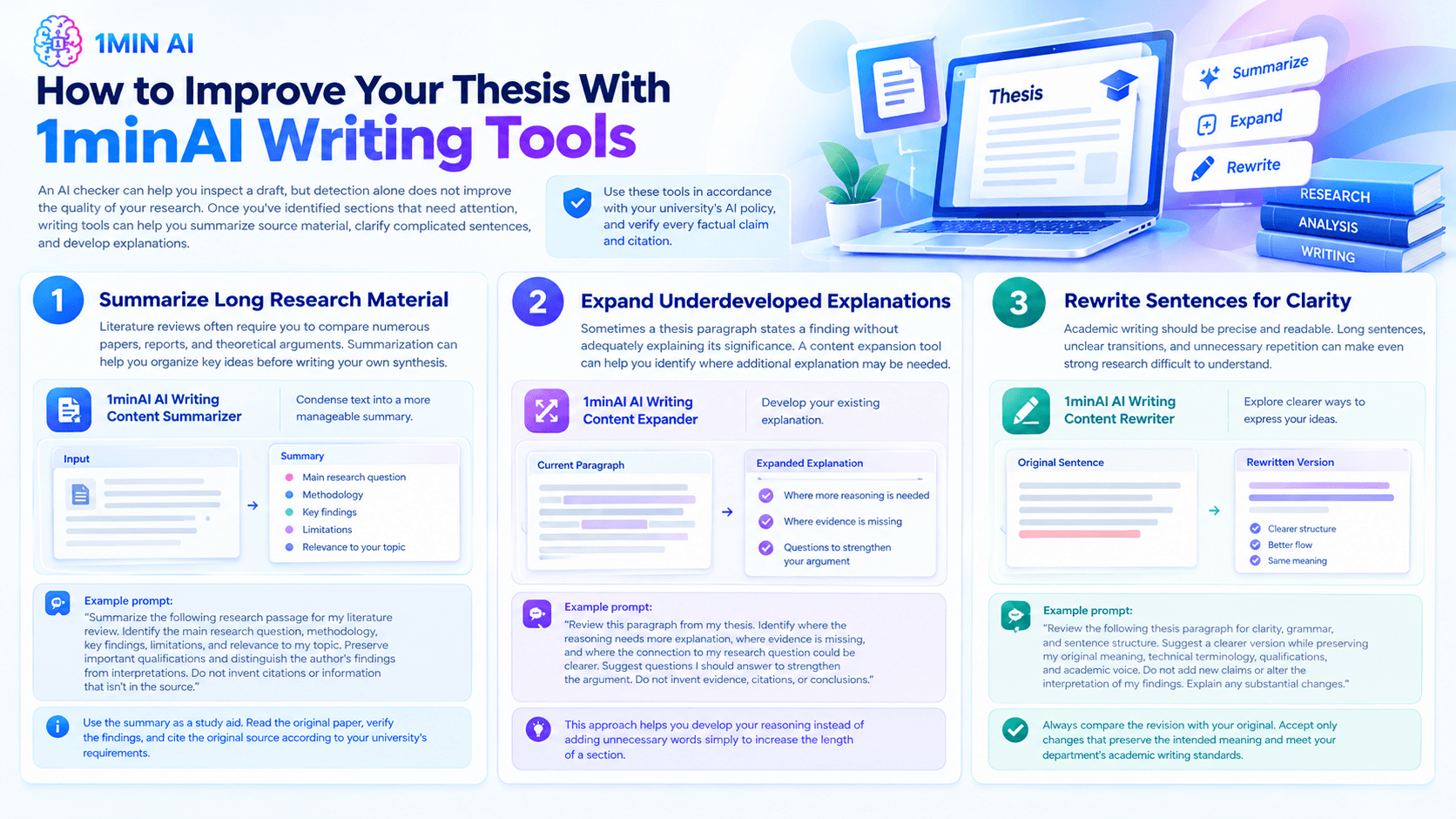
An AI checker can help you inspect a draft, but detection alone does not improve the quality of your research. Once you've identified sections that need attention, writing tools can help you summarize source material, clarify complicated sentences, and develop explanations.
Use these tools in accordance with your university's AI policy, and verify every factual claim and citation.
1. Summarize Long Research Material
Literature reviews often require students to compare numerous papers, reports, and theoretical arguments. Summarization can help you organize key ideas before writing your own synthesis.
The 1minAI AI Writing Content Summarizer can help condense text into a more manageable summary.
Example prompt:
Summarize the following research passage for my literature review. Identify the main research question, methodology, key findings, limitations, and relevance to my topic. Preserve important qualifications and distinguish the author's findings from interpretations. Do not invent citations or information that isn't in the source.
Use the summary as a study aid. Read the original paper, verify the findings, and cite the original source according to your university's requirements.
2. Expand Underdeveloped Explanations
Sometimes a thesis paragraph states a finding without adequately explaining its significance. A content expansion tool can help you identify where additional explanation may be needed.
Try the 1minAI AI Writing Content Expander to develop an existing explanation.
Example prompt:
Review this paragraph from my thesis. Identify where the reasoning needs more explanation, where evidence is missing, and where the connection to my research question could be clearer. Suggest questions I should answer to strengthen the argument. Do not invent evidence, citations, or conclusions.
This approach helps you develop your reasoning instead of adding unnecessary words simply to increase the length of a section.
3. Rewrite Sentences for Clarity
Academic writing should be precise and readable. Long sentences, unclear transitions, and unnecessary repetition can make even strong research difficult to understand.
The 1minAI AI Writing Content Rewriter can help you explore clearer ways to express your ideas.
Example prompt:
Review the following thesis paragraph for clarity, grammar, and sentence structure. Suggest a clearer version while preserving my original meaning, technical terminology, qualifications, and academic voice. Do not add new claims or alter the interpretation of my findings. Explain any substantial changes.
Always compare the revision with your original. Accept only changes that preserve the intended meaning and meet your department's academic writing standards.
A Practical AI Checker Workflow Before Thesis Submission
You can combine detection, editing, and proofreading into a single review process.
| Stage | What to do | Purpose |
|---|---|---|
| 1. Policy check | Review university rules and approved tools | Ensure compliant use |
| 2. Draft review | Read the thesis and inspect your revision history | Confirm ownership and understanding |
| 3. AI detection | Use an approved checker, if permitted | Identify passages for closer review |
| 4. Content review | Verify claims, data, and citations | Improve accuracy |
| 5. Writing revision | Clarify sentences and strengthen explanations | Improve readability |
| 6. Final proofread | Check formatting, references, and submission requirements | Prepare a complete submission |
This workflow is more useful than repeatedly checking the same text until a detector produces a preferred result. Different tools can produce different scores, and changing a score does not necessarily improve the research.
Conclusion
A free AI checker can be one useful part of your thesis review, but it is not a guarantee that your work will pass an academic review. Detection results are estimates and should be interpreted cautiously, especially when a score conflicts with your own drafts and research records.
Use an approved AI checker to identify passages worth reviewing, then focus on the things that make a thesis strong: original reasoning, credible evidence, accurate citations, clear explanations, and responsible use of AI.
With 1minAI, you can explore AI detection alongside writing tools for summarizing research material, expanding explanations, and improving clarity. Use each tool to support your learning and revision process, and always follow your institution's rules.
For further information, explore 1minAI Free AI Content Detector.
Discover more AI features: https://1min.ai/features
Try 1minAI agent now: https://app.1min.ai/ai-agent-demo
- #Commerce
Alternatives
Discover the best alternatives to 1minAI and compare features, pricing, and use cases.
1min.AI vs OpenRouter
1min.AI vs. OpenRouter: Compare the ready-to-use AI creation product against the technical API tool. Find out if you need a zero-code creative studio or a coding infrastructure hub.
 Ngoc Hong

1min.AI vs Lovart
Looking for a Lovart alternative? Compare creative workflows, pricing considerations, and practical prompts to see whether 1min.AI fits your team.
Ngoc Hong
1min.AI vs Jarvis AI
Compare 1min.AI vs Jarvis AI to discover which AI platform is better for writing, research, automation, and content creation. Find the best AI assistant for your workflow.
Ngoc HongAI Tools
Discover the best AI tools to boost productivity, creativity, and everyday work.
Create Consistent Cartoon Content in Just a Few Steps
Create engaging cartoon videos for TikTok and Reels with 1min.AI. Research ideas, create characters, and turn images into animated videos in 3 simple steps.
 Lien Anh Vu
One Product, 10 UGC Creatives: How AI Makes Content Testing Easier
Create more authentic UGC with an AI UGC video generator, test more creative angles and scale affiliate content without filming every version.
Lien Anh Vu
Top 4 Affordable AI Tools for Startup Founders
Discover the top 4 affordable AI tools for startup founders to validate ideas, build products, create content, and launch faster without overspending.
 Tram Ta
AI Features
Comprehensive AI features that streamline workflows, improve efficiency, and empower teams to achieve more.
Create Consistent Cartoon Content in Just a Few Steps
Create engaging cartoon videos for TikTok and Reels with 1min.AI. Research ideas, create characters, and turn images into animated videos in 3 simple steps.
Lien Anh VuOne Product, 10 UGC Creatives: How AI Makes Content Testing Easier
Create more authentic UGC with an AI UGC video generator, test more creative angles and scale affiliate content without filming every version.
Lien Anh Vu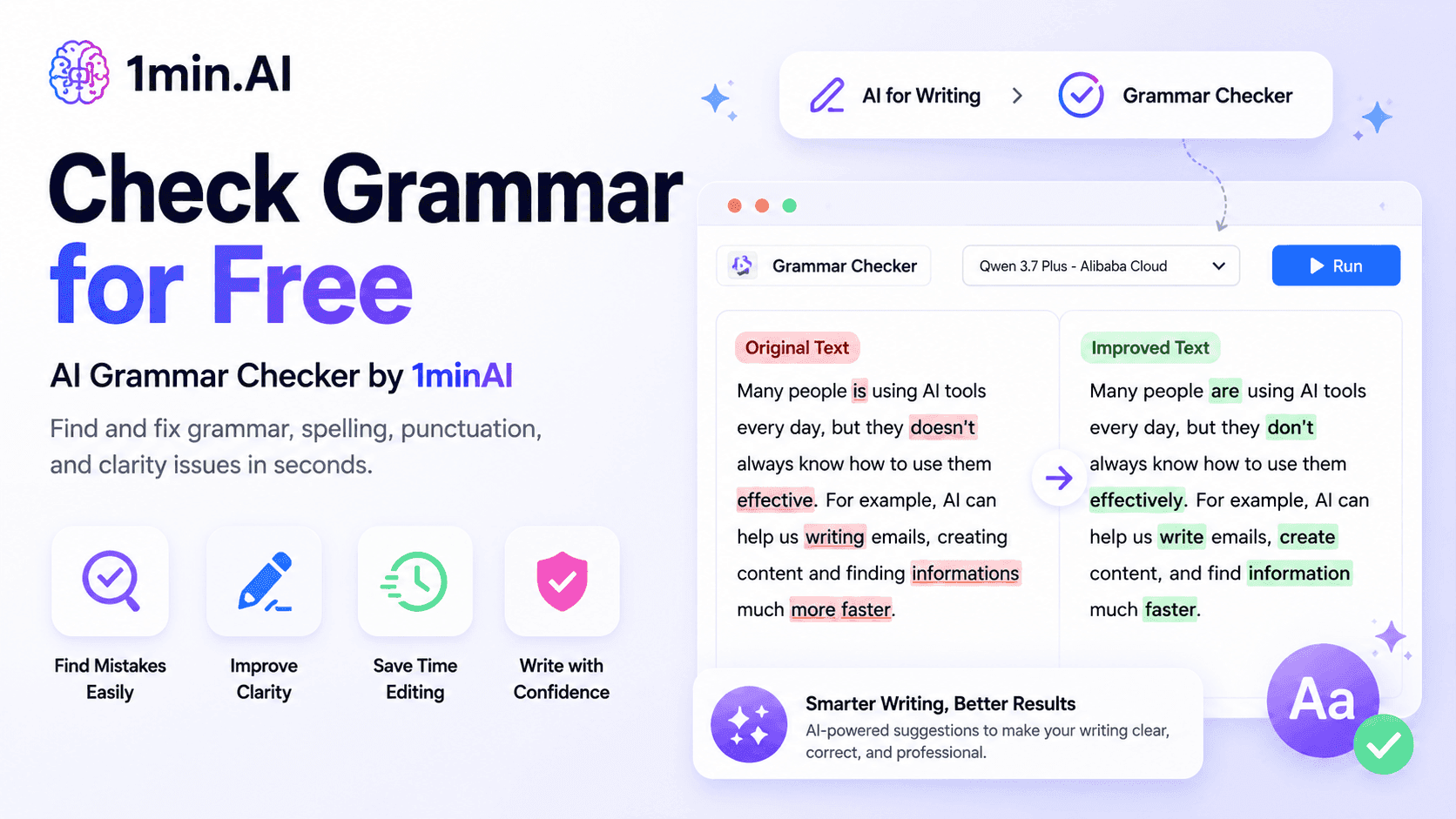
1minAI: Free AI Grammar Checker
Check grammar for free with 1minAI’s AI grammar checker. Find grammar, spelling, and writing mistakes, improve clarity, and polish your content in seconds.
Tram TaAI Use Cases
A curated collection of AI use cases for business, productivity, and industry-specific applications.
Create Consistent Cartoon Content in Just a Few Steps
Create engaging cartoon videos for TikTok and Reels with 1min.AI. Research ideas, create characters, and turn images into animated videos in 3 simple steps.
Lien Anh VuOne Product, 10 UGC Creatives: How AI Makes Content Testing Easier
Create more authentic UGC with an AI UGC video generator, test more creative angles and scale affiliate content without filming every version.
Lien Anh Vu
Best Time to Post on Instagram: A Practical Guide for Better Engagement
Discover the best time to post on Instagram, including the best days and times for different audiences, plus tips to find the ideal posting schedule for your account.
Tram TaAI Tutorials
Learn how to use AI with practical, step-by-step tutorials.

Black Friday AI Tool Deals in 2026
Discover what Black Friday AI tool deals 2026 has to offer. Find out how to secure the 1min.AI lifetime deal via AppSumo, Dealify, Stack Social, and verify on Trustpilot, Slashdot, and Software Advice.
 Hang Nguyen
Create Consistent Cartoon Content in Just a Few Steps
Create engaging cartoon videos for TikTok and Reels with 1min.AI. Research ideas, create characters, and turn images into animated videos in 3 simple steps.
Lien Anh Vu
[Seedance 2.5 New] Better AI Product Videos, Less Rework in 1min.AI
Use Seedance 2.5 image to video on 1min.AI to create more consistent AI product videos, reduce failed generations, save credits, and improve UGC workflows.
Lien Anh VuAI Guides
Learn AI faster with practical guides, real-world examples, and actionable best practices.

Safely Buy AI Tools Online: 2026 Black Friday Guide
Discover how to find and secure the best Black Friday AI deals online. Learn expert strategies to avoid scams, combat subscription fatigue, and verify software.
Hang NguyenCreate Consistent Cartoon Content in Just a Few Steps
Create engaging cartoon videos for TikTok and Reels with 1min.AI. Research ideas, create characters, and turn images into animated videos in 3 simple steps.
Lien Anh Vu[Seedance 2.5 New] Better AI Product Videos, Less Rework in 1min.AI
Use Seedance 2.5 image to video on 1min.AI to create more consistent AI product videos, reduce failed generations, save credits, and improve UGC workflows.
Lien Anh VuAI Solutions
Browse the best AI solutions for automation, coding, research, productivity, customer support, marketing, and business workflows.
Safely Buy AI Tools Online: 2026 Black Friday Guide
Discover how to find and secure the best Black Friday AI deals online. Learn expert strategies to avoid scams, combat subscription fatigue, and verify software.
Hang NguyenCreate Consistent Cartoon Content in Just a Few Steps
Create engaging cartoon videos for TikTok and Reels with 1min.AI. Research ideas, create characters, and turn images into animated videos in 3 simple steps.
Lien Anh VuOne Product, 10 UGC Creatives: How AI Makes Content Testing Easier
Create more authentic UGC with an AI UGC video generator, test more creative angles and scale affiliate content without filming every version.
Lien Anh VuAI Models
Explore the world's leading AI models in one place.
Create Consistent Cartoon Content in Just a Few Steps
Create engaging cartoon videos for TikTok and Reels with 1min.AI. Research ideas, create characters, and turn images into animated videos in 3 simple steps.
Lien Anh VuOne Product, 10 UGC Creatives: How AI Makes Content Testing Easier
Create more authentic UGC with an AI UGC video generator, test more creative angles and scale affiliate content without filming every version.
Lien Anh Vu[Seedance 2.5 New] Better AI Product Videos, Less Rework in 1min.AI
Use Seedance 2.5 image to video on 1min.AI to create more consistent AI product videos, reduce failed generations, save credits, and improve UGC workflows.
Lien Anh VuAI Comparisons
Compare AI tools, models, and platforms to find the best fit for your needs.

Kling AI Vs Veo 3: Which Model Wins?
Kling AI vs Veo 3: compare motion, native audio, pricing & free tiers to see which AI video generator wins for your project - try both on 1min.AI.
 Trang Tran
[Seedance 2.5 New] Better AI Product Videos, Less Rework in 1min.AI
Use Seedance 2.5 image to video on 1min.AI to create more consistent AI product videos, reduce failed generations, save credits, and improve UGC workflows.
Lien Anh Vu
DeepSeek V4 Pro vs Flash Comparison
Compare DeepSeek V4 Pro vs DeepSeek V4 Flash metrics. Optimize your agentic apps and improve AI fact checking on 1min.ai today.
Ngoc HongAI Integrations
Seamlessly integrate AI with the tools you already use to automate work and boost productivity.
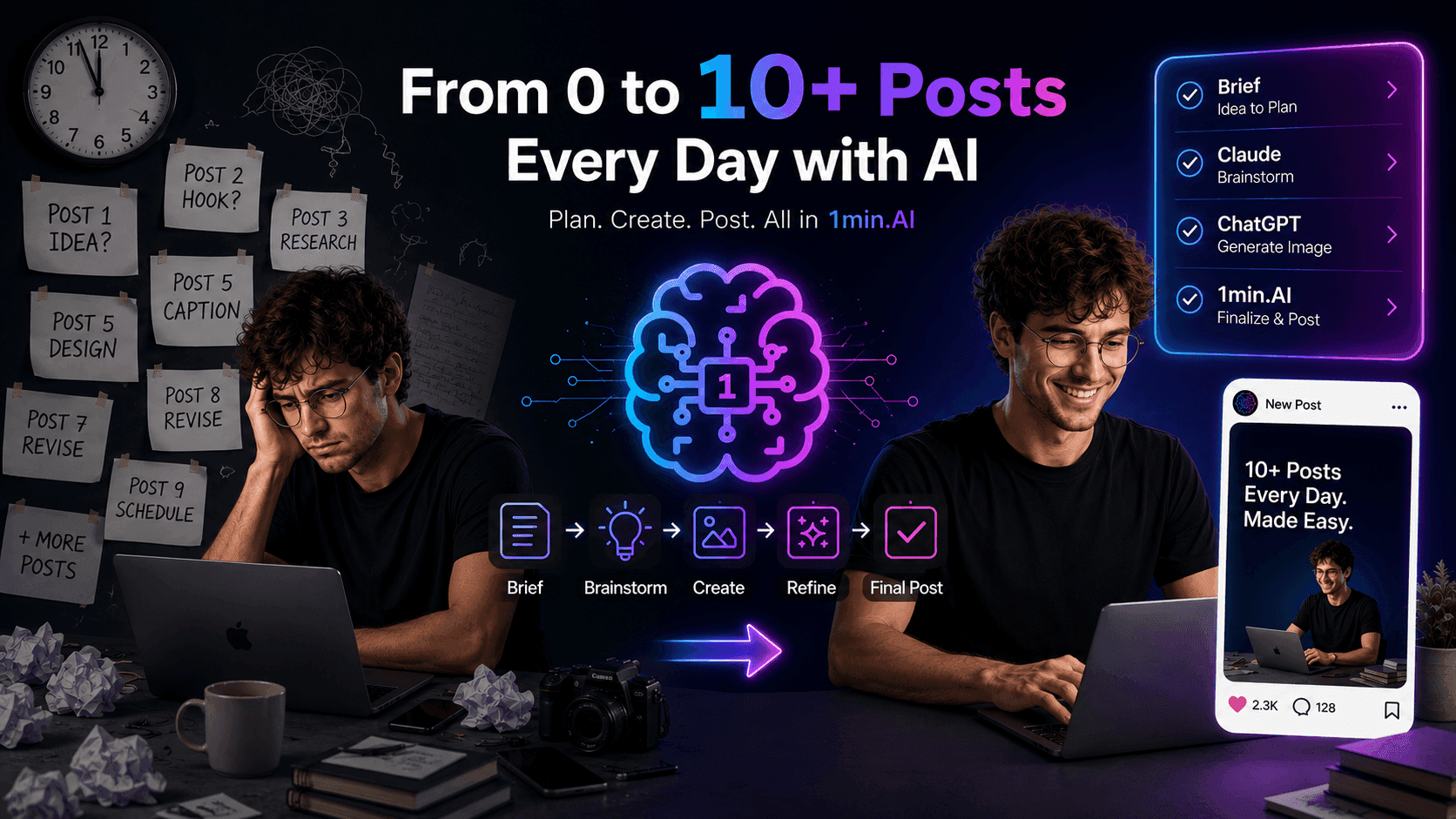
POV: You Have 10+ Posts to Make Every Day
Learn how to build an AI content workflow that helps content creators produce 10+ social media posts a day faster with AI brainstorming, image generation, and content creation.
Lien Anh Vu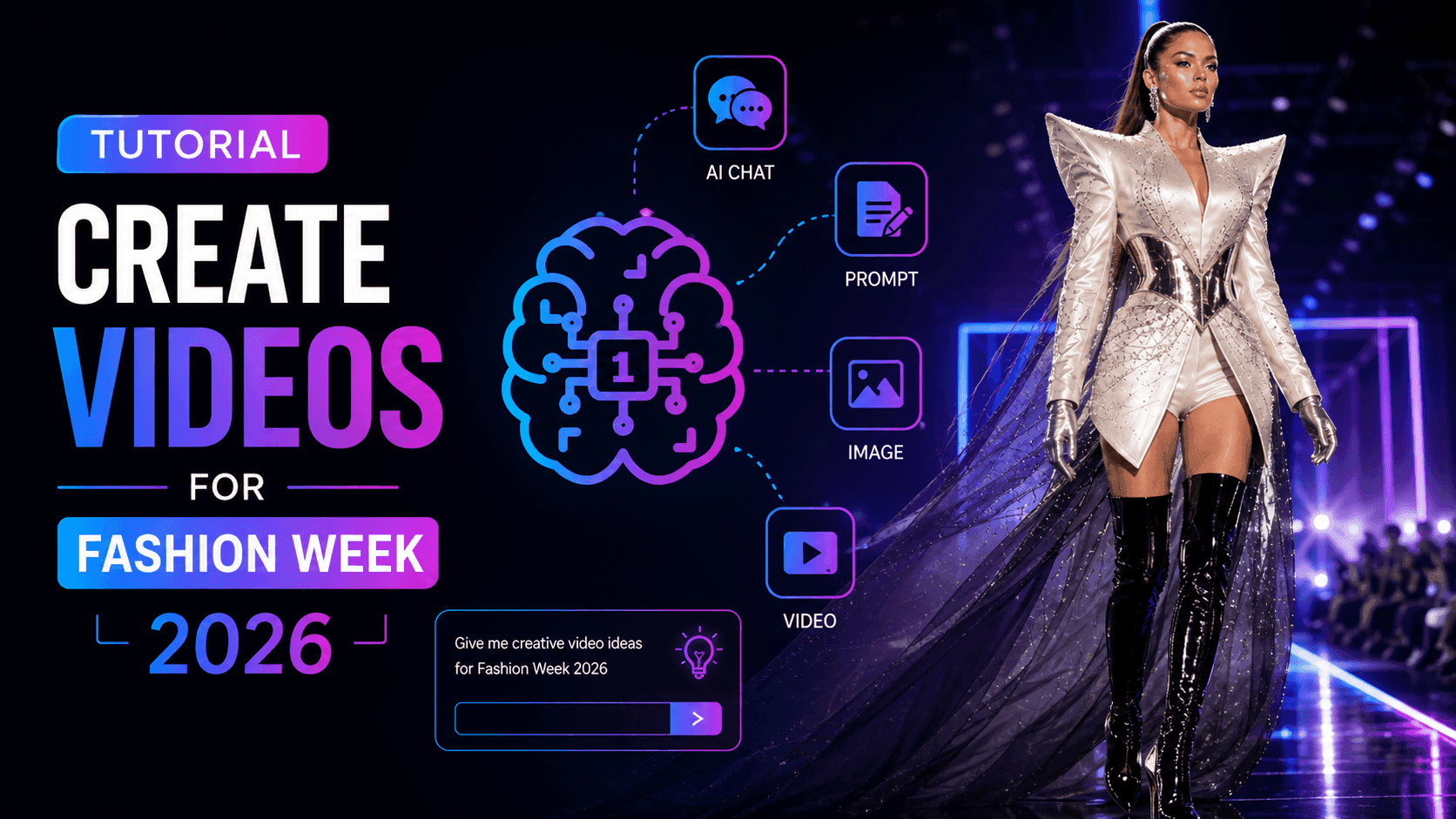
How to Use an AI Fashion Video Generator for Fashion Week 2026
Turn Fashion Week 2026 ideas into stunning fashion videos with AI. Learn how to brainstorm, create visuals, and transform images into videos with one simple workflow.
Lien Anh Vu
Stop Switching Between AI Apps: How AI Integration Transforms Employer Branding
Discover how AI integration helps HR teams streamline employer branding by combining AI writing, documents, images, video, and multiple AI models into one workspace.
Tram TaAI for Industries
Find the best AI tools and workflows for healthcare, finance, education, legal, manufacturing, retail, real estate, and more
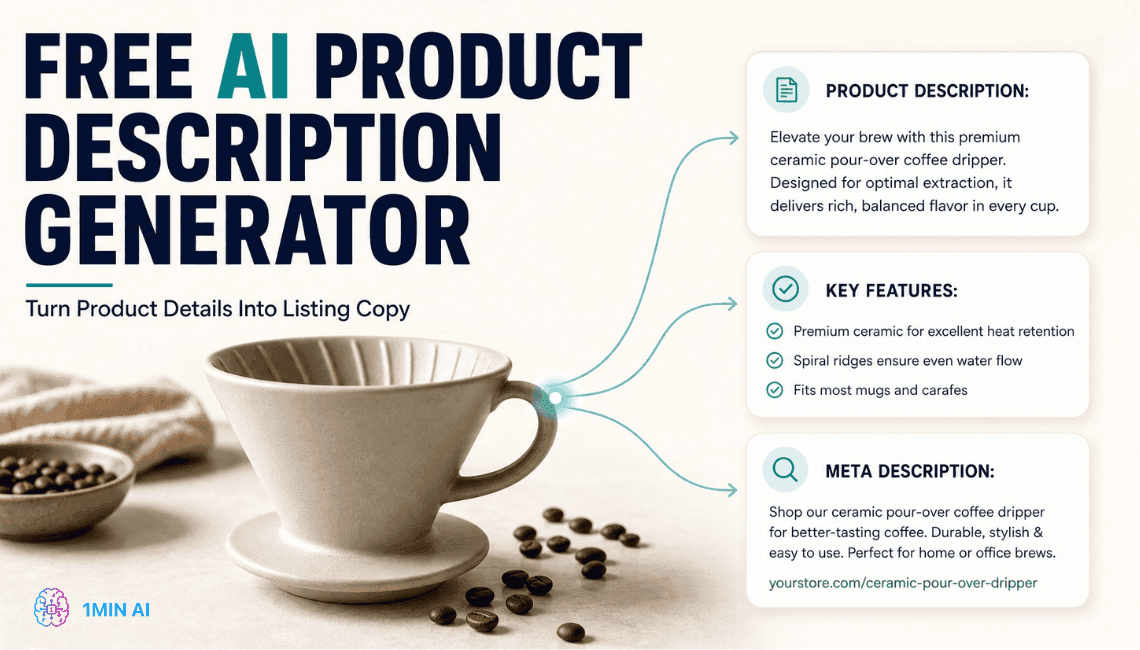
Free AI Product Description Generator
Write product descriptions that sell in minutes. Use this free AI product description generator to turn details or a photo into on-brand copy. Try 1min.AI.
Trang Tran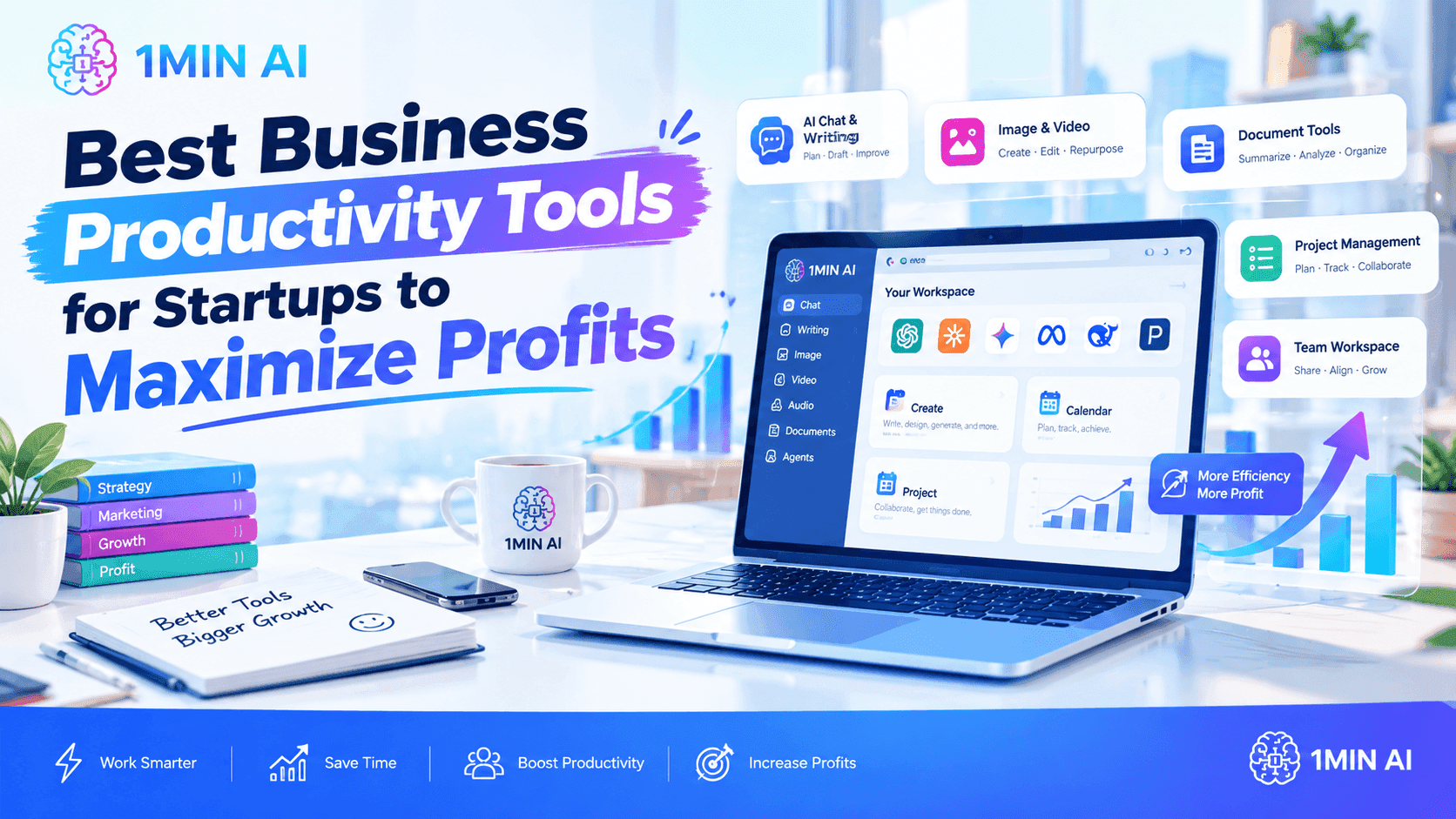
Best Business Productivity Tools for Startups to Maximize Profits | 1minAI
Discover the best business productivity tools for startups to save time, streamline workflows, reduce repetitive tasks, and support profitable growth with AI.
Tram Ta
Best AI Tool for Content Marketing |1minAI
Looking for the best AI tool for content marketing? See how 1minAI helps marketers research, write, repurpose, create visuals, and scale content from one AI workspace.
Tram TaAI Agents
Discover and run AI agents to automate tasks across your work and daily life.
1minAI: Free AI Grammar Checker
Check grammar for free with 1minAI’s AI grammar checker. Find grammar, spelling, and writing mistakes, improve clarity, and polish your content in seconds.
Tram Ta
AI Agents for Facebook
Use an AI Agent for Facebook to create content, generate images, schedule posts, and publish from your documents and conversations.
Ngoc Hong
AI Agent vs AI Assistant: Which One Actually Saves Designers More Time?
Learn the difference between AI Agent vs AI Assistant and discover which solution helps designers automate repetitive work, reduce revisions, and save more time.
Lien Anh VuAI Workflows
Explore ready-to-use AI workflows for productivity, marketing, sales, support, and more.
Create Consistent Cartoon Content in Just a Few Steps
Create engaging cartoon videos for TikTok and Reels with 1min.AI. Research ideas, create characters, and turn images into animated videos in 3 simple steps.
Lien Anh VuOne Product, 10 UGC Creatives: How AI Makes Content Testing Easier
Create more authentic UGC with an AI UGC video generator, test more creative angles and scale affiliate content without filming every version.
Lien Anh VuPOV: You Have 10+ Posts to Make Every Day
Learn how to build an AI content workflow that helps content creators produce 10+ social media posts a day faster with AI brainstorming, image generation, and content creation.
Lien Anh VuNewsletter
Weekly AI Innovations with 1minAI

🔮 Weekly AI Innovations #142: Grok 4.7, Opus 5.5 & Sonnet 5.5 on 1min.ai
Access Grok 4.7, Claude Opus 5.5, and Sonnet 5.5 on 1min.ai. Cut subscription costs by up to 70% and process millions tokens in a single unified workspace.
Hang Nguyen
🔮 Weekly AI Innovations #141: Seedance 2.5 & Stable Audio 3: Next-Gen AI
Explore Seedance 2.0, 2.5, and StabilityAI's Stable Audio 3 on 1min.ai. Generate studio-grade audio and synchronized motion with next-gen generative AI.
Hang Nguyen
🔮 Weekly AI Innovations #140: Deepseek 4.1 Flash & Gemini Upgrades
Explore Deepseek 4.1 Flash and new Gemini models on 1min.ai. Plus, check our update on your Billing - Usage page for better clarity.
Hang Nguyen