
Google Gemini 4 Carbon Model: Price, Benchmarks and Argon Comparison

Trang Tran
20 de noviembre de 2026
Google Gemini 4 Carbon model explained: price, benchmarks, Carbon vs Argon vs Opus 5.5, and how to try Gemini 4 Argon and Opus 5.5 with 1min.AI.
The Google Gemini 4 Carbon model is Google DeepMind’s strongest AI model, built for complex software engineering, long-running agent workflows, scientific research and cybersecurity. It costs $2 per million input tokens and $10 per million output tokens during the introductory period, the same as Gemini 4 Argon. So is the extra power worth it, and do you need it at all? This guide covers Carbon’s release date, pricing, benchmarks and how it compares with Argon and Claude Opus 5.5, so you can pick the right model for your work.
Key takeaways
- What it is: Google’s top Gemini 4 model for hard, multi-step tasks.
- Release date: Shared with cyber defenders on October 28, 2026. Opened to paying developers, enterprises and Google AI Ultra subscribers on November 10, 2026.
- Price: $2 input and $10 output per 1M tokens, scheduled to rise to $4 and $20. Cached input is 95% cheaper.
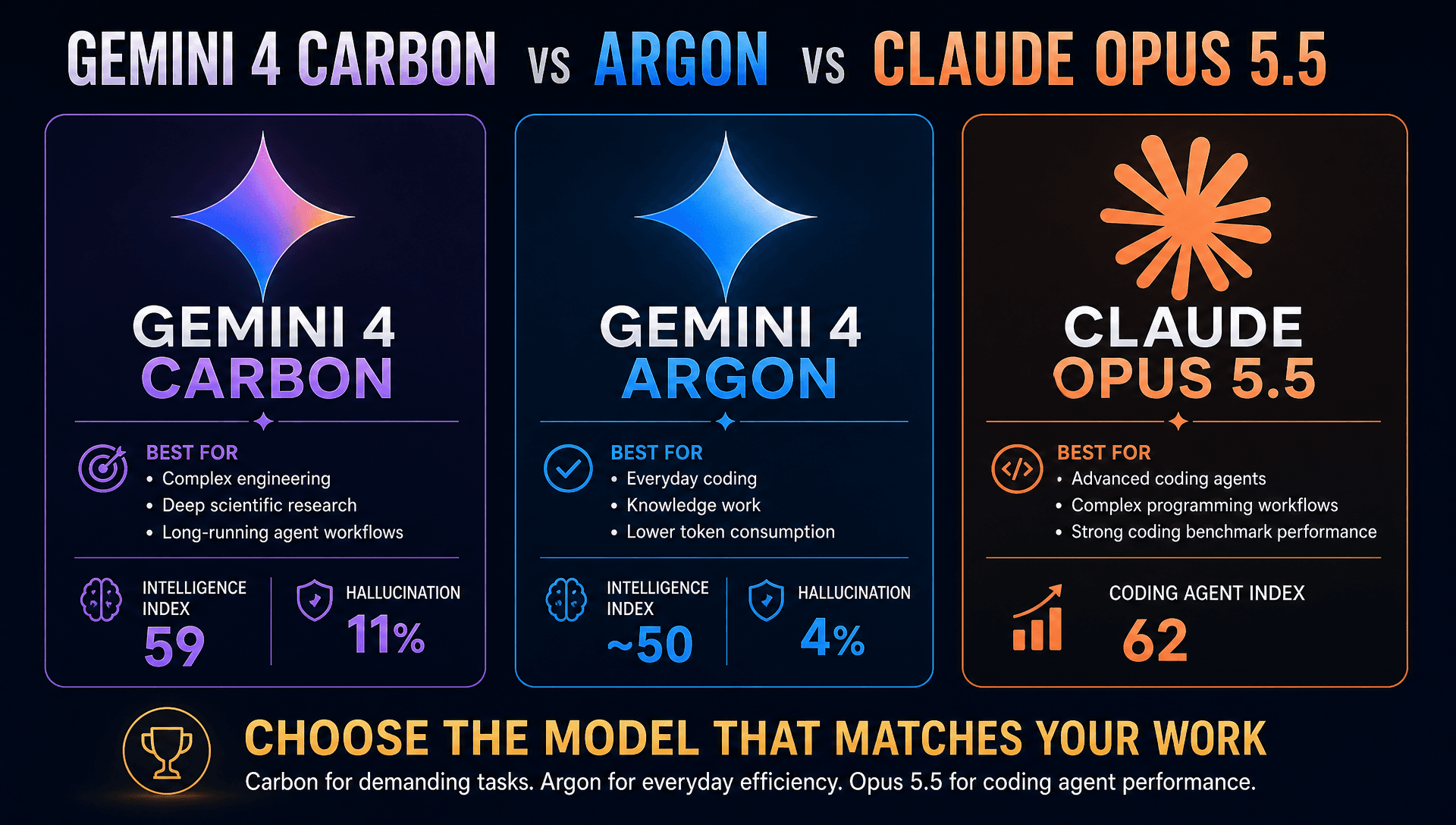
- Benchmarks: First on the Artificial Analysis Intelligence Index v5 (59), but behind Claude Opus 5.5 on coding agent tests and higher on hallucination than Argon.
- On 1min.AI: Carbon is not integrated yet. Gemini 4 Argon and Claude Opus 5.5 are.
What Is the Google Gemini 4 Carbon Model?
Gemini 4 Carbon is a proprietary frontier model from Google DeepMind and the second model in the Gemini 4 family after Argon. Google says Argon remains the better fit for most software engineering and knowledge work. Carbon is built for tasks that test a model’s limits, such as multi-step debugging, open-ended scientific research and long verification loops. It spends more tokens than Argon to reason deeply.
Gemini 4 Carbon Release Date and Public Availability
Google first gave Carbon to a subset of cybersecurity defenders on October 28, 2026 through its Fairwind Program. The public release date for broader access was November 10, 2026. You can now reach it through:
- Developers: the paid Gemini API tier in Google AI Studio and Android Studio.
- Enterprises: Gemini for business, Google Antigravity and CodeMender.
- Consumers: the Gemini app and AI Mode in Search, for Google AI Ultra subscribers.
- Scientists: a rolling application program for free Antigravity access.
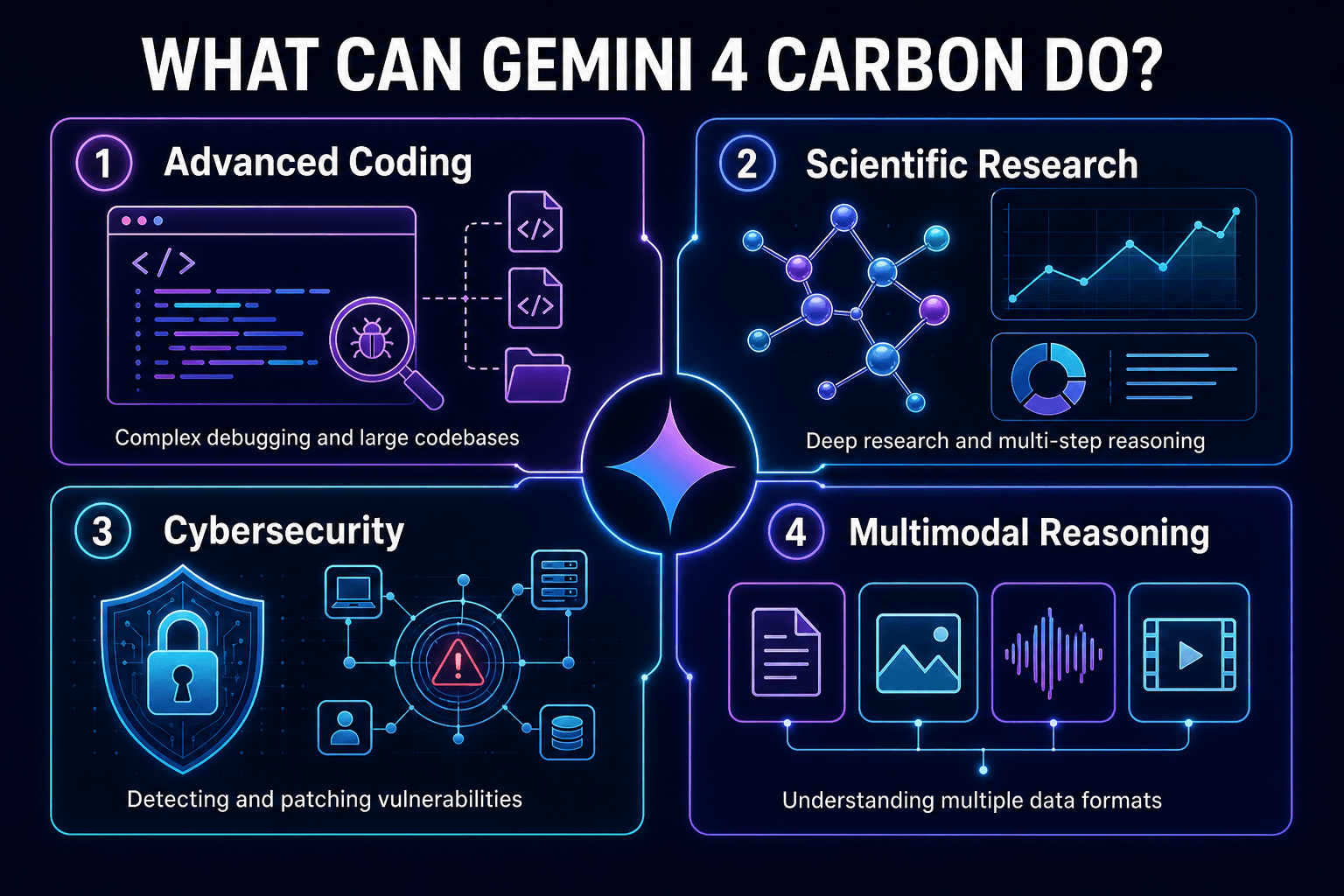
What Gemini Carbon 4 Can Do
- Long-horizon agentic work: tracks bugs, refactors large codebases and runs verification loops.
- Multimodal file reasoning: reads text, images, audio, video and PDFs, including dense charts and schematics.
- Cybersecurity: finds, exploits and patches vulnerabilities for vetted defenders.
- /swarm in Google Antigravity: turns one prompt into a team of agents, with Carbon handling architecture and auditing.
- Large context: about 1M tokens, as reported by independent trackers.
Gemini 4 Carbon Pricing
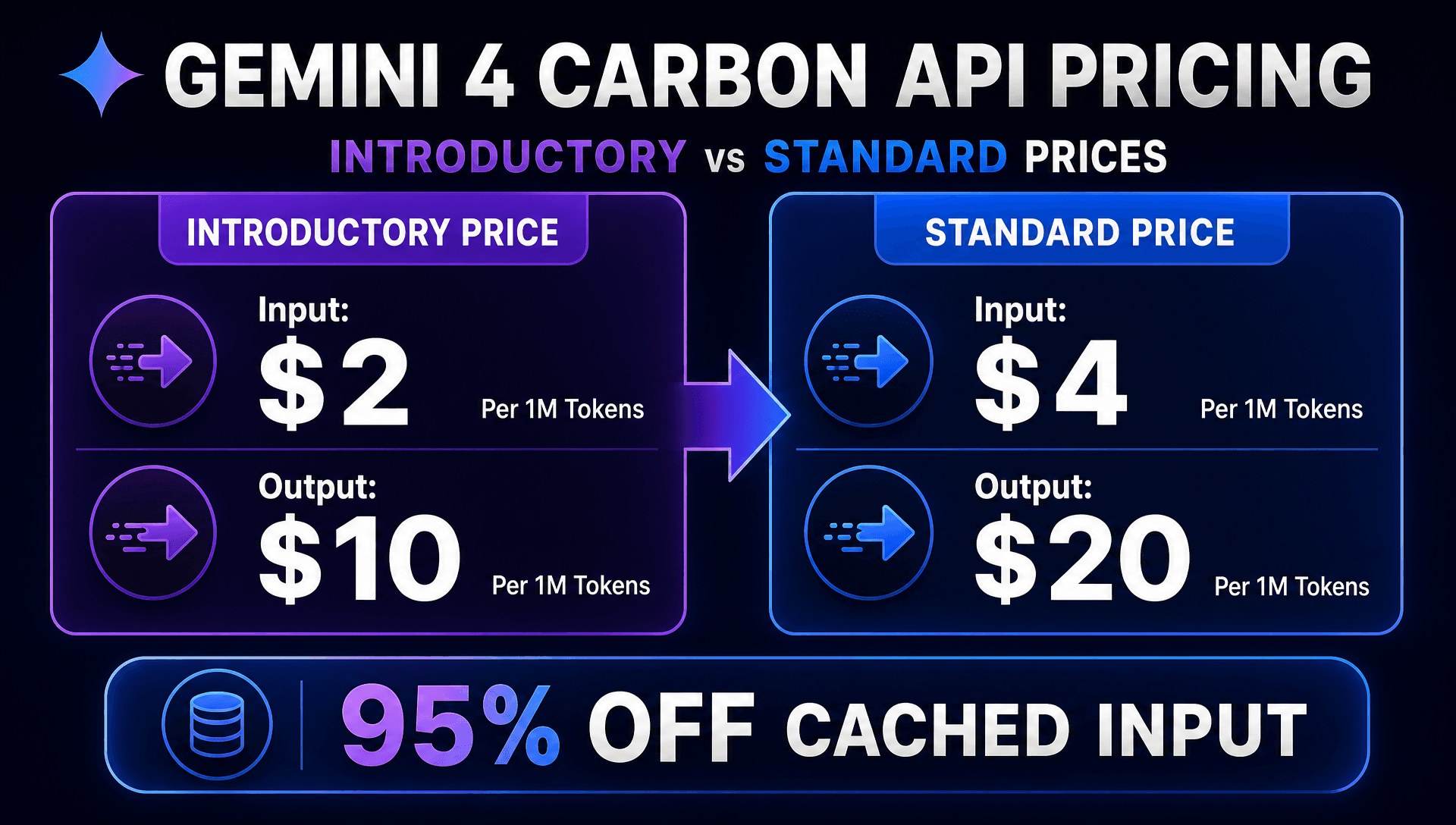
Google lists the same introductory price for Carbon as for Argon, with a scheduled increase afterward.
| Component | Introductory price | Standard price |
|---|---|---|
| Input (per 1M tokens) | $2 | $4 |
| Output (per 1M tokens) | $10 | $20 |
| Cached input | 95% off input price | 95% off input price |
Google’s announcement gives no end date for the introductory rate. Check the Gemini API pricing page before you budget.
Gemini 4 Carbon Pricing Per Task, Not Just Per Token
Carbon is verbose. Artificial Analysis recorded about 200M output tokens for a full index run, against a median of 64M. Even so, its cost per task was $7.76, versus $10.04 for Claude Opus 5.5 (max) and $7.68 for Argon. Set token budgets and output caps before running long agent jobs.
Gemini 4 Carbon Benchmarks
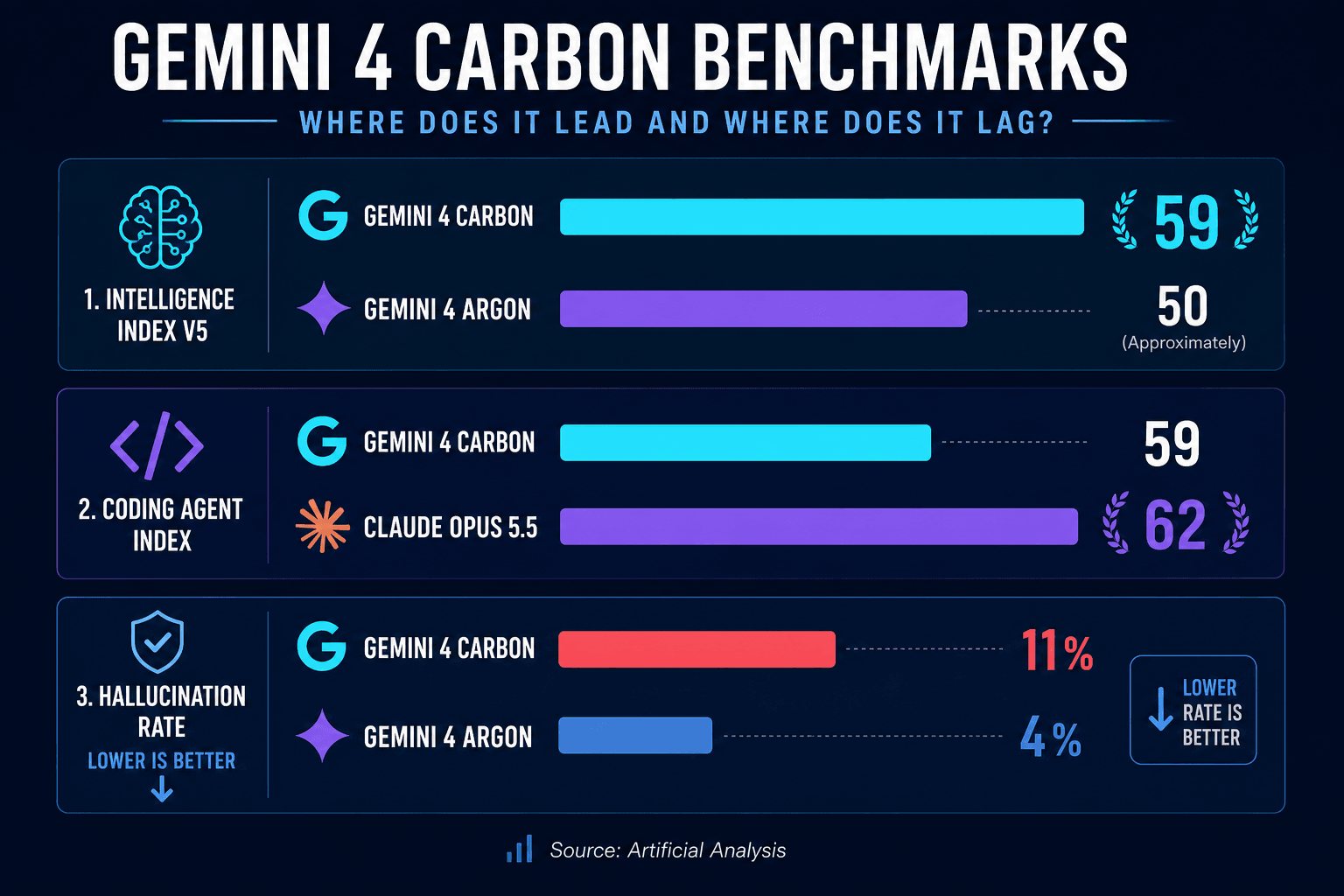
| Benchmark | Gemini 4 Carbon result | Source |
|---|---|---|
| Intelligence Index v5 | 59, ranked first (about 9 points above Argon) | Artificial Analysis |
| Coding Agent Index | 59 (Claude Code with Opus 5.5: 62) | Artificial Analysis |
| Hallucination rate | 11% (Argon: 4%) | Artificial Analysis |
| CursorBench 4.0, WANDR, AutomationBench | #1, over 2X lower cost per task than the next best external model | |
| Multimodal Knowledge Agent | #2, over 6X lower average cost than the top model | |
| Gray Swan indirect prompt injection | 0% attack success | |
| Agentic honesty (375 tasks) | 92% passed (Argon: 70%) |
How to Read the Gemini 4 Carbon Benchmark Scores
Vendor-reported scores are useful but unreplicated. Google also ran its cybersecurity benchmarks without guardrails, so a restricted deployment may score differently. The independent picture is strong overall but not best everywhere. Carbon leads on general intelligence and trails on coding agents.
Gemini 4 Carbon vs Argon: Which Model Should You Use?
Gemini 4 Carbon and Argon share the same introductory price, so the real question is task difficulty.
| Factor | Gemini 4 Carbon | Gemini 4 Argon |
|---|---|---|
| Best for | Hardest engineering, research, security | Most coding and knowledge work |
| Intelligence Index v5 | 59 | About 50 |
| Hallucination rate | 11% | 4% |
| Token use | Higher | Lower |
| Cyberattack breach rate (Google test) | 0.8% per attempt | 3.1% per attempt |
| Availability | Paid API, Ultra plans | Generally available since October 13, 2026 |
When Argon Is the Smarter Choice
- You need factual accuracy and lower hallucination risk.
- You run high-volume daily tasks where tokens add up.
- You want a model you can use right away in your workflow.
When Carbon Is Worth the Extra Tokens
- You debug across many files and subsystems.
- You run long agent loops with verification.
- You analyze dense technical documents or scientific data.
Gemini 4 Carbon vs Claude Opus 5.5 and Fable 5.2
Against Claude Opus 5.5, Carbon ranks higher on the Artificial Analysis Intelligence Index and costs about 23% less per task. Opus 5.5 leads on coding agents (62 vs 59), and the two are nearly tied on the Vals Index (70.36% vs 70.18%).
For Claude Fable 5.2, Anthropic’s top-tier model, we found no verified head-to-head benchmark with Carbon. Test both on your own prompts before you commit. You can read more about Claude Fable 5.2 in our separate guide.
Try Gemini 4 Argon and Claude Opus 5.5 on 1min.AI
Gemini 4 Carbon is not available on 1min.AI. If you want frontier Gemini 4 performance today, Gemini 4 Argon and Claude Opus 5.5 are, in one workspace, so you can compare outputs side by side.
What You Can Do With Argon and Opus 5.5
- Multi AI Chat: run the same prompt on both models and compare.
- Writing tools: Keyword Research, Content Generator, Rewriter, Content Expander, Content Shortener, Content Translator, Paraphraser, Summarizer and Grammar Checker.
- Document and code tools: Document Translator, Presentation Generator and Code Generator.
See how fast it works in this demo:
Gemini 4 Argon API Access for Developers
Both models are also available by API. Read how to use the Gemini 4 Argon API, or see how one API reaches several model families:
1min.AI is rated excellent on Trustpilot and recognized by SourceForge, Slashdot, Capterra, Software Advice and GetApp.



Gemini 4 Carbon FAQs
Is Gemini 4 Carbon available to the public?
Yes. Google opened Carbon to paying developers, enterprises and Google AI Ultra subscribers on November 10, 2026. Free Gemini users do not get it.
How much does Gemini 4 Carbon cost?
$2 per million input tokens and $10 per million output tokens during the introductory period. The scheduled standard price is $4 and $20.
Is Gemini 4 Carbon better than Argon?
Carbon scores higher on intelligence and security tests. Argon has a lower hallucination rate and uses fewer tokens, so it suits most everyday work.
What is the context window of Gemini 4 Carbon?
Independent trackers list about 1M tokens. Google’s launch post does not state it, so confirm in the official documentation.
Can I use Gemini 4 Carbon on 1min.AI?
Not yet. You can use Gemini 4 Argon and Claude Opus 5.5 on 1min.AI, including through the API.
- #Information
Alternativas
Descubre las mejores alternativas a 1minAI y compara características, precios y casos de uso.

1min.AI vs OpenRouter
1min.AI vs. OpenRouter: Compara el producto de creación de IA listo para usar con la herramienta técnica de API. Descubre si necesitas un estudio creativo sin código o una infraestructura para desarrolladores.
 Ngoc Hong
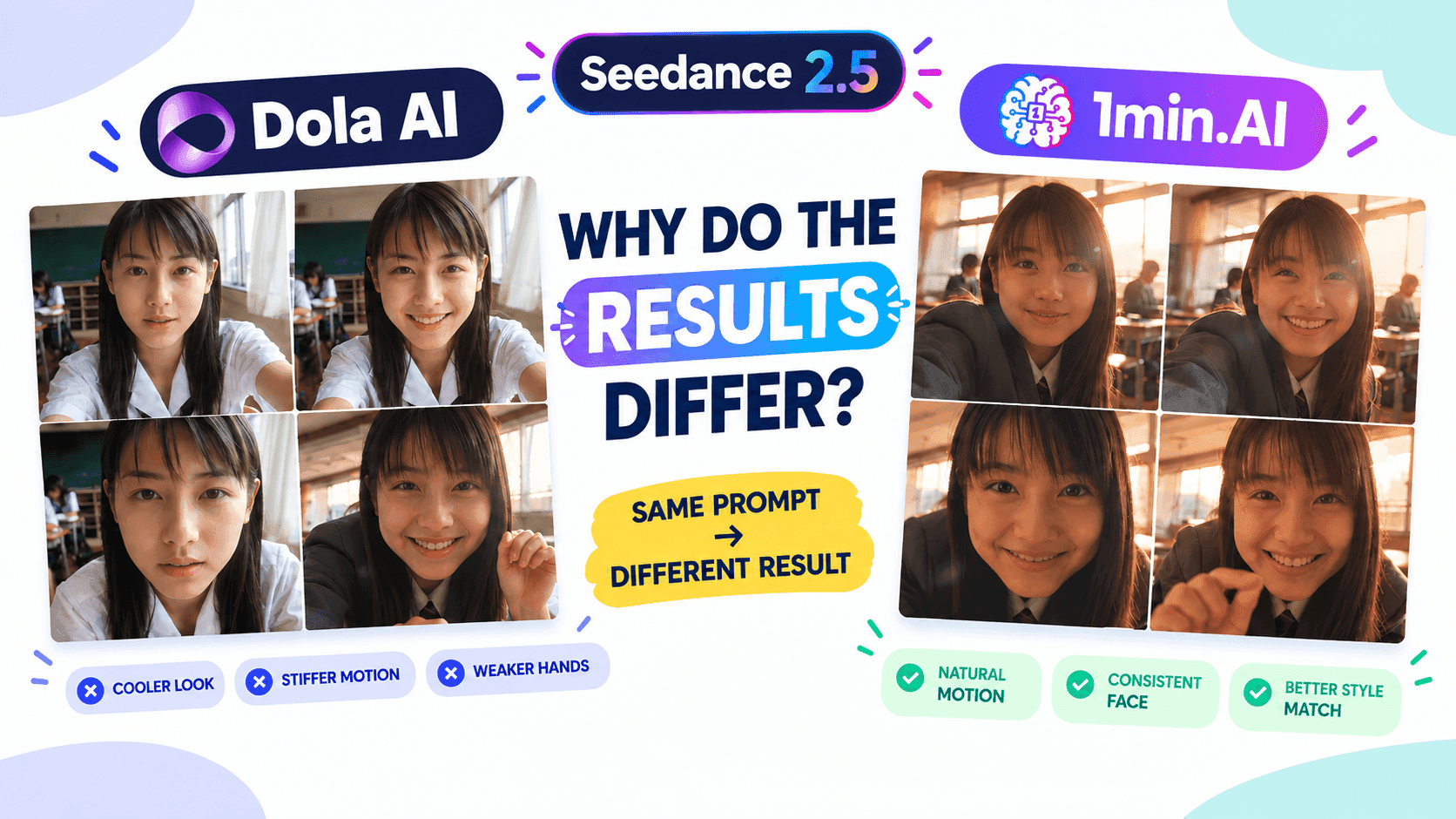
1min. AI vs Dola AI
¿Buscas una alternativa a Dola AI? Compara 1min.AI vs Dola AI en generación de video, planes gratis, precios y privacidad para elegir la app de IA adecuada.
Ngoc Hong
1minAI vs Hix AI
Compara 5 alternativas a HIX AI para chat con IA, investigación, redacción, imágenes, video, precios y flujos de trabajo de IA flexibles.
Ngoc HongHerramientas de IA
Descubre las mejores herramientas de IA para aumentar la productividad, la creatividad y el trabajo diario.
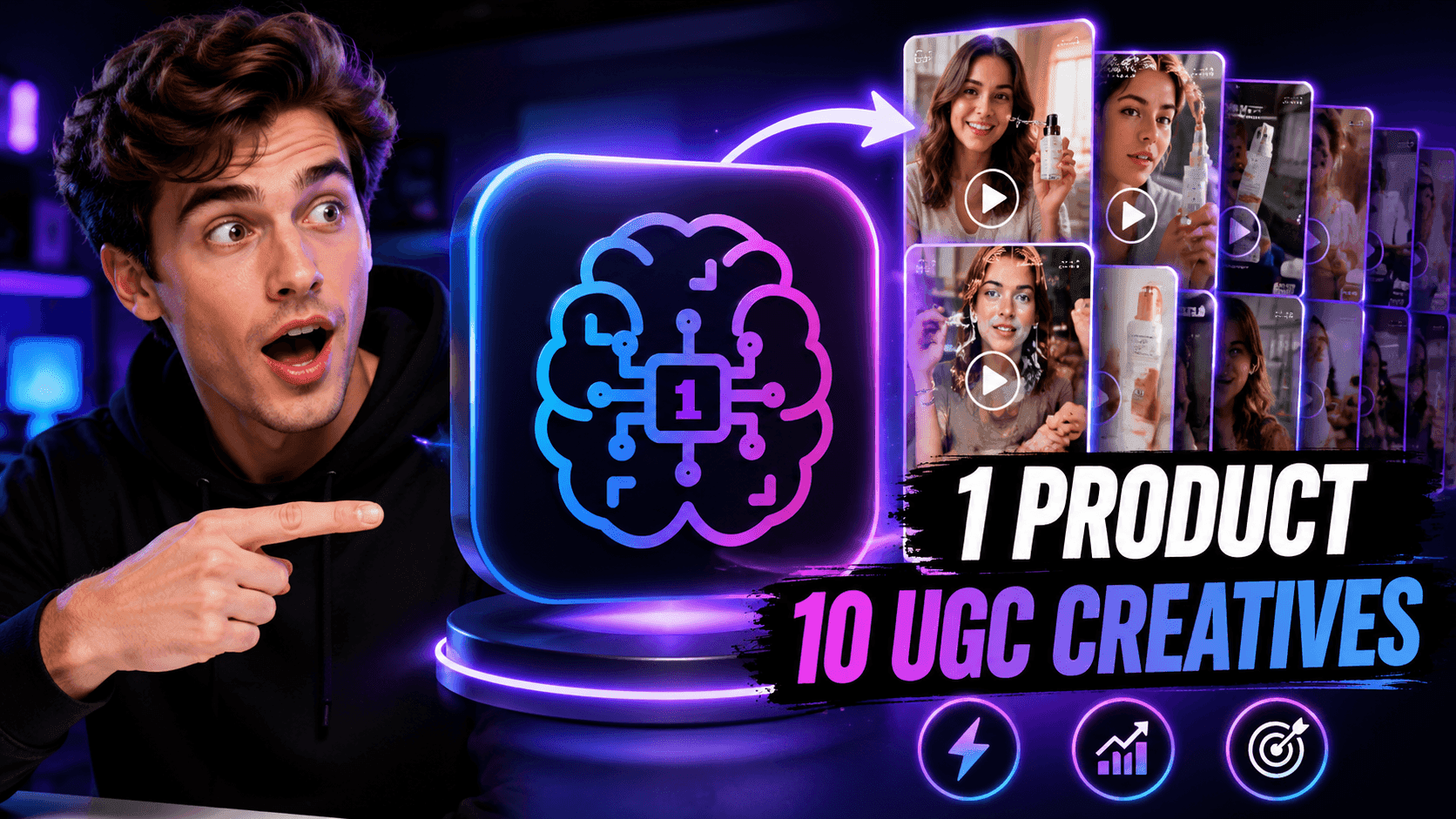
Un producto, 10 creativos UGC: cómo la IA facilita la prueba de contenido
Crea UGC más auténtico con un generador de videos UGC con IA, prueba más ángulos creativos y escala contenido de afiliados sin filmar cada versión.
 Lien Anh Vu
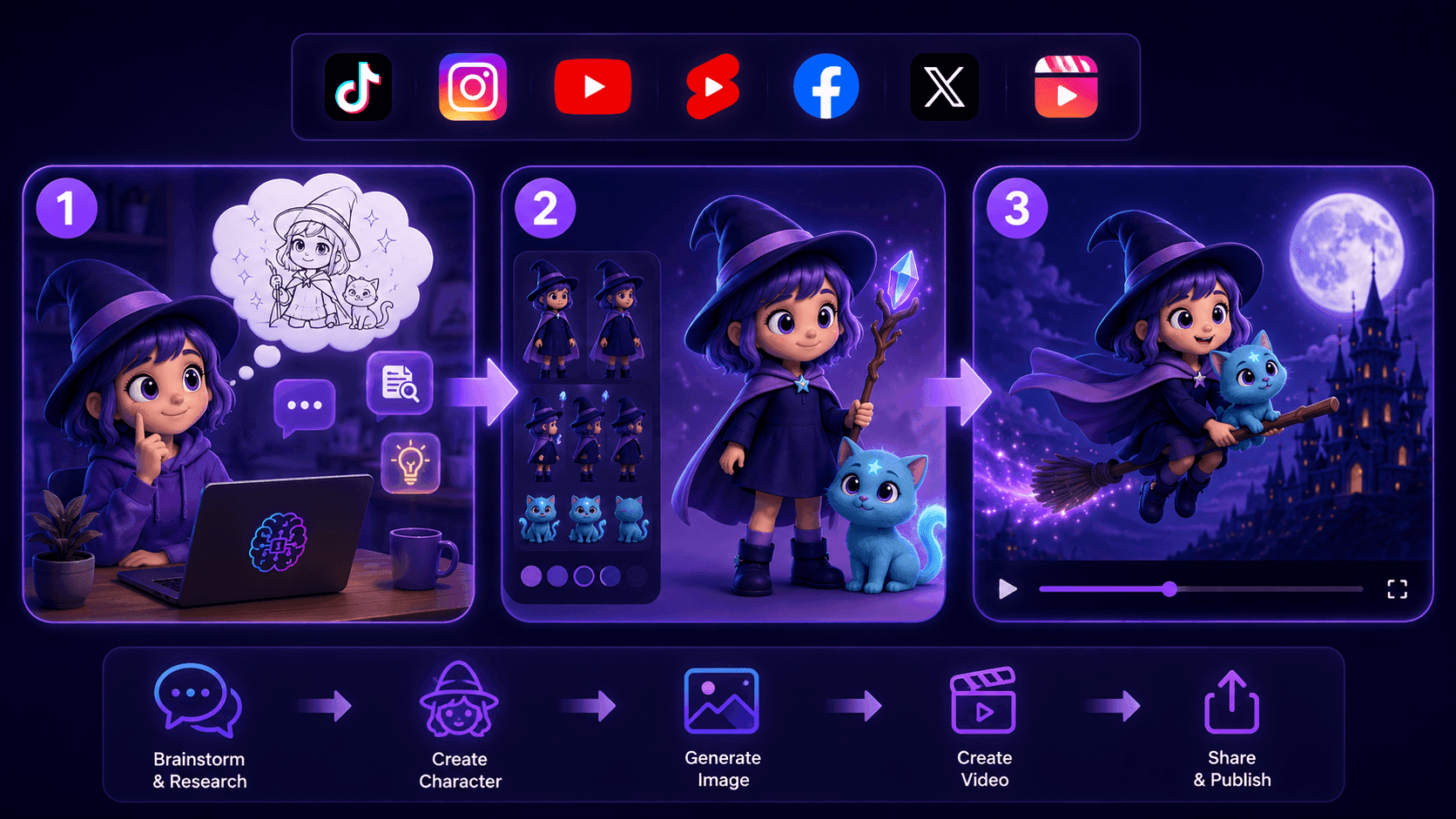
Crea contenido animado constante en solo unos pasos
Crea videos animados para TikTok y Reels en 3 pasos simples con 1min.AI, desde investigar ideas hasta personajes y videos animados.
Lien Anh Vu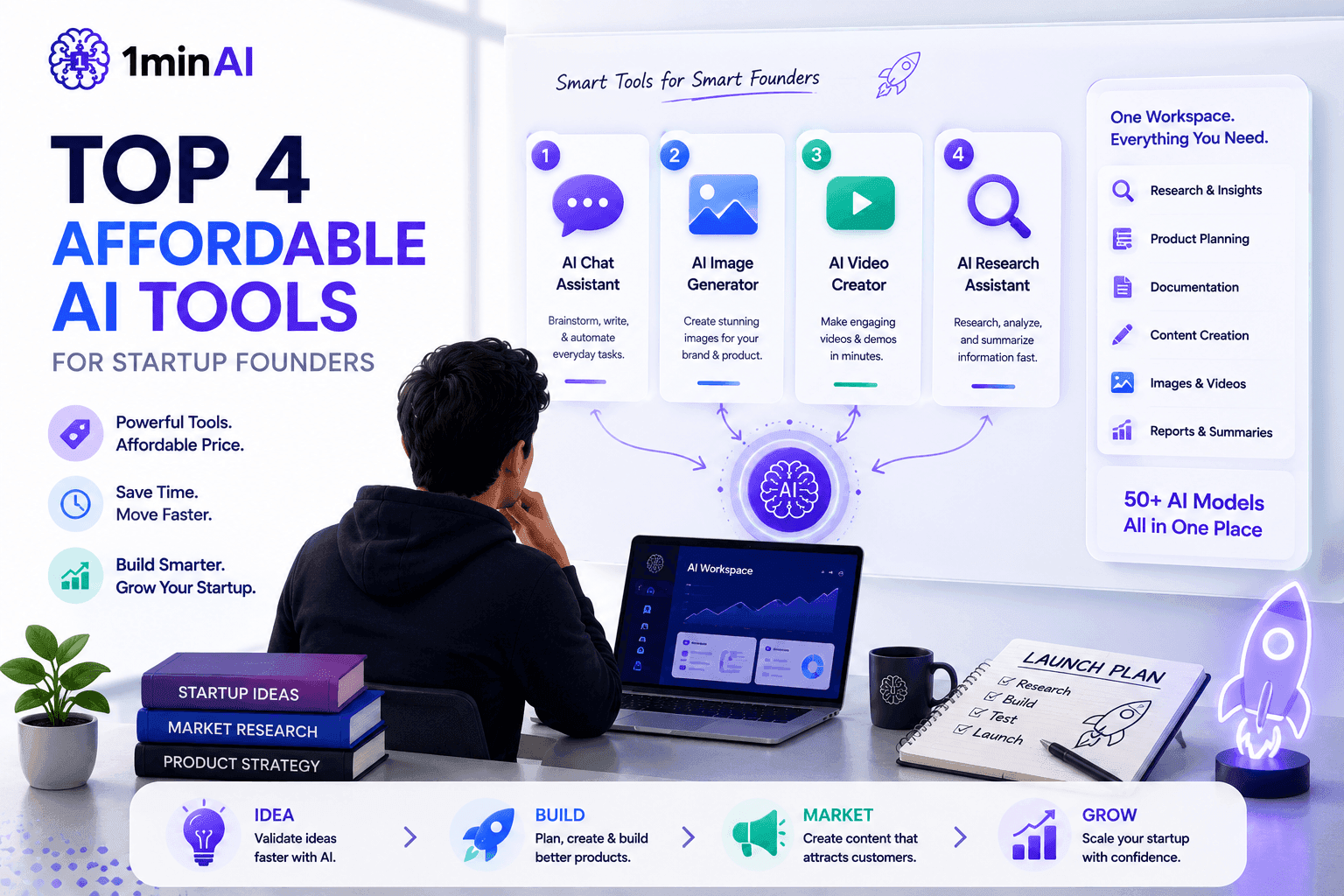
Las 4 mejores herramientas de IA asequibles para fundadores de startups
Descubre las 4 mejores herramientas de IA asequibles para fundadores de startups para validar ideas, crear productos, generar contenido y lanzar más rápido sin gastar de más.
 Tram Ta
Funciones de IA
Funciones de IA completas que agilizan los flujos de trabajo, mejoran la eficiencia y permiten a los equipos lograr más.
Un producto, 10 creativos UGC: cómo la IA facilita la prueba de contenido
Crea UGC más auténtico con un generador de videos UGC con IA, prueba más ángulos creativos y escala contenido de afiliados sin filmar cada versión.
Lien Anh VuCrea contenido animado constante en solo unos pasos
Crea videos animados para TikTok y Reels en 3 pasos simples con 1min.AI, desde investigar ideas hasta personajes y videos animados.
Lien Anh Vu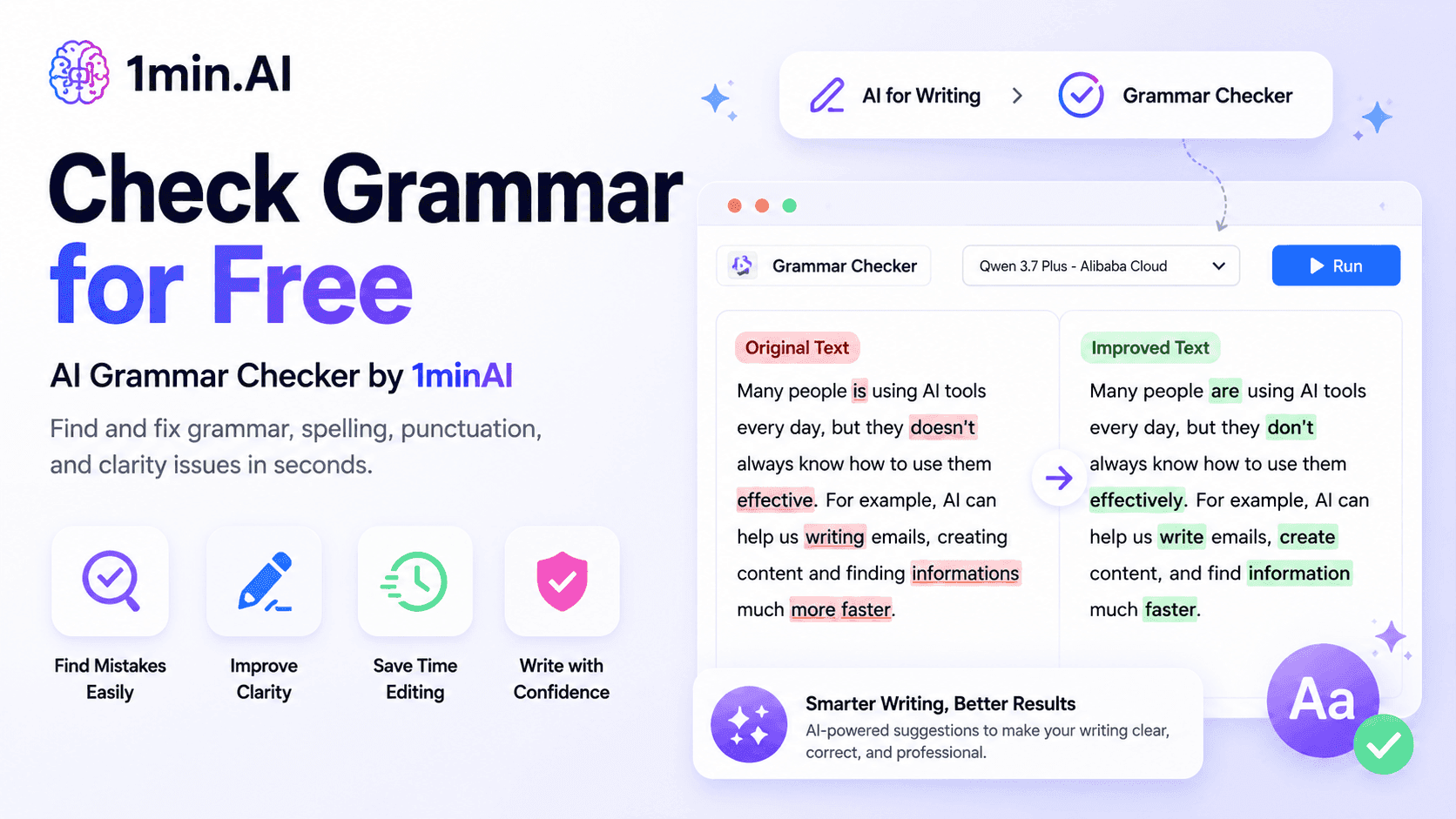
1minAI: Corrector gramatical de IA gratis
Revisa la gramática gratis con el corrector gramatical de IA de 1minAI. Encuentra errores de gramática, ortografía y redacción, mejora la claridad y pule tu contenido en segundos.
Tram TaCasos de uso de IA
Una colección curada de casos de uso de IA para negocios, productividad y aplicaciones específicas por industria.
Un producto, 10 creativos UGC: cómo la IA facilita la prueba de contenido
Crea UGC más auténtico con un generador de videos UGC con IA, prueba más ángulos creativos y escala contenido de afiliados sin filmar cada versión.
Lien Anh VuCrea contenido animado constante en solo unos pasos
Crea videos animados para TikTok y Reels en 3 pasos simples con 1min.AI, desde investigar ideas hasta personajes y videos animados.
Lien Anh Vu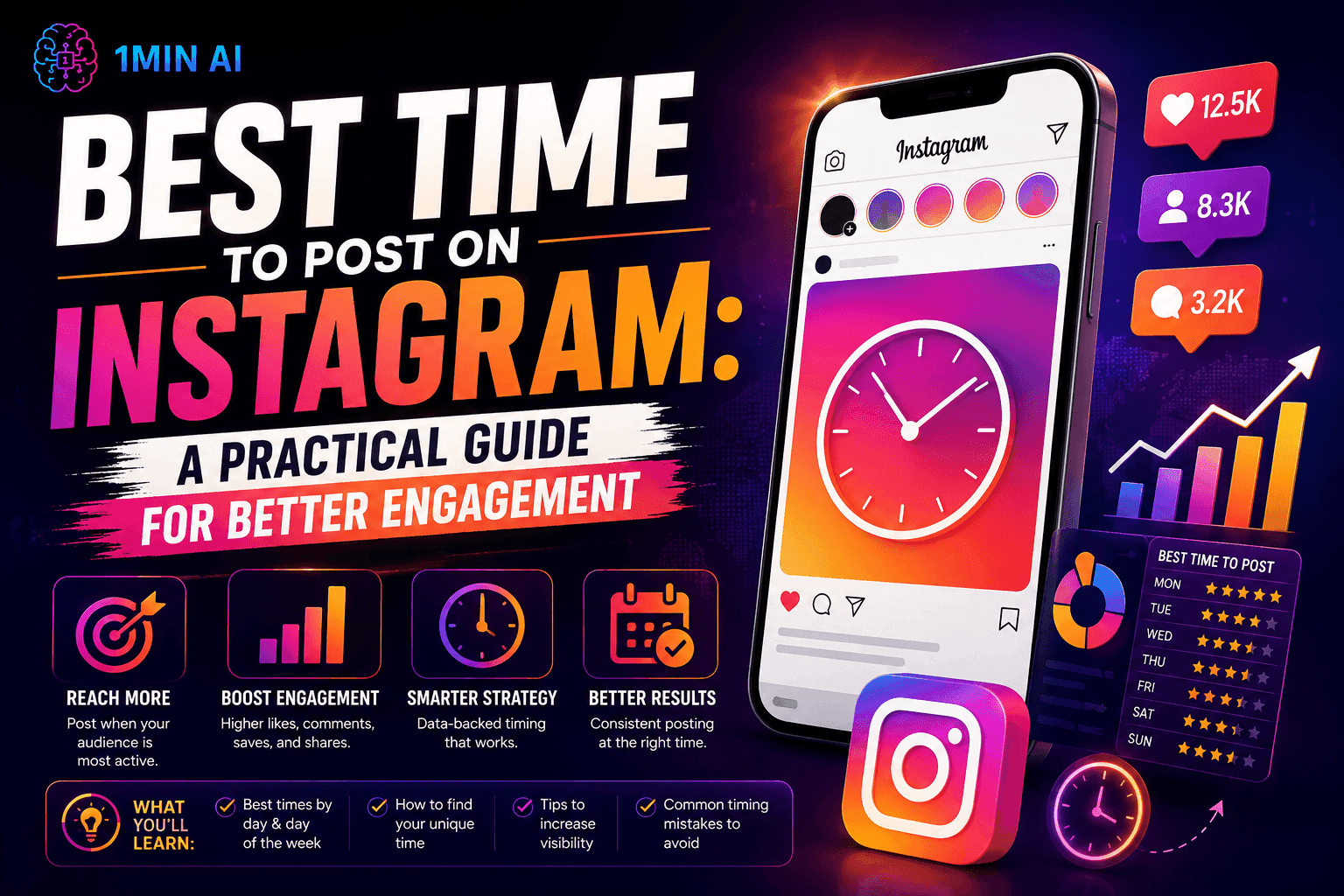
Mejor hora para publicar en Instagram: una guía práctica para mejorar la interacción
Descubre la mejor hora para publicar en Instagram, incluidos los mejores días y horas para distintas audiencias, además de consejos para encontrar el horario ideal de publicación para tu cuenta.
Tram TaTutoriales de IA
Aprende a usar la IA con tutoriales prácticos paso a paso.
Crea contenido animado constante en solo unos pasos
Crea videos animados para TikTok y Reels en 3 pasos simples con 1min.AI, desde investigar ideas hasta personajes y videos animados.
Lien Anh Vu
Ofertas de herramientas de IA para Black Friday en 2026
Descubre qué ofrecen las ofertas de herramientas de IA para Black Friday 2026. Averigua cómo asegurar la oferta de por vida de 1min.AI a través de AppSumo, Dealify y Stack Social, y verifica en Trustpilot, Slashdot y Software Advice.
 Hang Nguyen
Consistencia de producto de imagen a video con IA y Seedance para detener la deformación y escalar reseñas de productos
Detén la deformación de los logos con consistencia de producto de imagen a video con IA y genera hoy videos de reseñas con calidad de estudio en 1min.AI.
Lien Anh VuGuías de IA
Aprende IA más rápido con guías prácticas, ejemplos del mundo real y mejores prácticas aplicables.
Crea contenido animado constante en solo unos pasos
Crea videos animados para TikTok y Reels en 3 pasos simples con 1min.AI, desde investigar ideas hasta personajes y videos animados.
Lien Anh Vu
Compra con seguridad herramientas de IA en línea: Guía de Black Friday 2026
Descubre cómo encontrar y asegurar las mejores ofertas de Black Friday en IA en línea. Aprende estrategias expertas para evitar estafas, combatir la fatiga de suscripciones y verificar software.
Hang NguyenConsistencia de producto de imagen a video con IA y Seedance para detener la deformación y escalar reseñas de productos
Detén la deformación de los logos con consistencia de producto de imagen a video con IA y genera hoy videos de reseñas con calidad de estudio en 1min.AI.
Lien Anh VuSoluciones de IA
Explore las mejores soluciones de IA para automatización, codificación, investigación, productividad, atención al cliente, marketing y flujos de trabajo empresariales.
Un producto, 10 creativos UGC: cómo la IA facilita la prueba de contenido
Crea UGC más auténtico con un generador de videos UGC con IA, prueba más ángulos creativos y escala contenido de afiliados sin filmar cada versión.
Lien Anh VuCrea contenido animado constante en solo unos pasos
Crea videos animados para TikTok y Reels en 3 pasos simples con 1min.AI, desde investigar ideas hasta personajes y videos animados.
Lien Anh Vu
Generador Gratis de Tatuajes con IA: Diseños Personalizados
Convierte cualquier idea en un diseño de tatuaje personalizado con el generador gratis de tatuajes con IA de 1min.AI. Describe tu idea, elige un estilo y descarga en segundos.
 Trang Tran
Modelos de IA
Explora los modelos de IA líderes del mundo en un solo lugar.
Un producto, 10 creativos UGC: cómo la IA facilita la prueba de contenido
Crea UGC más auténtico con un generador de videos UGC con IA, prueba más ángulos creativos y escala contenido de afiliados sin filmar cada versión.
Lien Anh VuCrea contenido animado constante en solo unos pasos
Crea videos animados para TikTok y Reels en 3 pasos simples con 1min.AI, desde investigar ideas hasta personajes y videos animados.
Lien Anh VuConsistencia de producto de imagen a video con IA y Seedance para detener la deformación y escalar reseñas de productos
Detén la deformación de los logos con consistencia de producto de imagen a video con IA y genera hoy videos de reseñas con calidad de estudio en 1min.AI.
Lien Anh VuComparaciones de IA
Compara herramientas, modelos y plataformas de IA para encontrar la que mejor se adapte a tus necesidades.
Kling AI vs Veo 3: ¿qué modelo gana?
Kling AI vs Veo 3: compara movimiento, audio nativo, precios y planes gratis para ver qué generador de video con IA gana para tu proyecto. Prueba ambos en 1min.AI.
Trang TranConsistencia de producto de imagen a video con IA y Seedance para detener la deformación y escalar reseñas de productos
Detén la deformación de los logos con consistencia de producto de imagen a video con IA y genera hoy videos de reseñas con calidad de estudio en 1min.AI.
Lien Anh Vu
Comparación DeepSeek V4 Pro vs Flash
Compara métricas de DeepSeek V4 Pro y DeepSeek V4 Flash. Optimiza tus aplicaciones agentivas y mejora la verificación de hechos de IA en 1min.ai hoy.
Ngoc HongIntegraciones de IA
Integra la IA de forma fluida con las herramientas que ya usas para automatizar tareas y aumentar la productividad.
Cómo usar un generador de video de moda con IA para Fashion Week 2026
Convierte ideas de Fashion Week 2026 en videos de moda impactantes con IA. Aprende a idear, crear visuales y transformar imágenes en videos con un flujo de trabajo simple.
Lien Anh Vu
POV: Tienes más de 10 publicaciones que hacer cada día
Aprende a crear un flujo de trabajo de contenido con IA que ayuda a los creadores de contenido a producir más de 10 publicaciones al día más rápido con lluvia de ideas, generación de imágenes y creación de contenido con IA.
Lien Anh Vu
Deja de Cambiar entre Apps de IA: Cómo la Integración de IA Transforma el Employer Branding
Descubre cómo la integración de IA ayuda a los equipos de RR. HH. a optimizar el employer branding al combinar redacción con IA, documentos, imágenes, video y múltiples modelos de IA en un solo espacio de trabajo.
Tram TaIA para Industrias
Encuentre las mejores herramientas y flujos de trabajo de IA para atención médica, finanzas, educación, legal, manufactura, comercio minorista, bienes raíces y más.
Generador gratuito de descripciones de producto con IA
Escribe descripciones de producto que vendan en minutos. Usa este generador gratuito de descripciones de producto con IA para convertir detalles o una foto en texto alineado con tu marca. Prueba 1min.AI.
Trang Tran
Las mejores herramientas de productividad empresarial para startups para maximizar las ganancias | 1minAI
Descubre las mejores herramientas de productividad empresarial para startups para ahorrar tiempo, optimizar flujos de trabajo, reducir tareas repetitivas y apoyar un crecimiento rentable con IA.
Tram Ta
La mejor herramienta de IA para marketing de contenidos |1minAI
¿Buscas la mejor herramienta de IA para marketing de contenidos? Mira cómo 1minAI ayuda a los especialistas en marketing a investigar, escribir, reutilizar, crear elementos visuales y escalar contenido desde un solo espacio de trabajo de IA.
Tram TaAgentes de IA
Descubre y ejecuta agentes de IA para automatizar tareas en tu trabajo y vida diaria.
1minAI: Corrector gramatical de IA gratis
Revisa la gramática gratis con el corrector gramatical de IA de 1minAI. Encuentra errores de gramática, ortografía y redacción, mejora la claridad y pule tu contenido en segundos.
Tram Ta
Agentes de IA para Facebook
Usa un Agente de IA para Facebook para crear contenido, generar imágenes, programar publicaciones y publicar desde tus documentos y conversaciones.
Ngoc Hong
Agente de IA vs Asistente de IA: ¿Cuál realmente les ahorra más tiempo a los diseñadores?
Conoce la diferencia entre Agente de IA vs Asistente de IA y descubre qué solución ayuda a los diseñadores a automatizar tareas repetitivas, reducir revisiones y ahorrar más tiempo.
Lien Anh VuFlujos de trabajo de IA
Explore flujos de trabajo de IA listos para usar para productividad, marketing, ventas, soporte y más.
Un producto, 10 creativos UGC: cómo la IA facilita la prueba de contenido
Crea UGC más auténtico con un generador de videos UGC con IA, prueba más ángulos creativos y escala contenido de afiliados sin filmar cada versión.
Lien Anh VuCrea contenido animado constante en solo unos pasos
Crea videos animados para TikTok y Reels en 3 pasos simples con 1min.AI, desde investigar ideas hasta personajes y videos animados.
Lien Anh VuCómo usar un generador de video de moda con IA para Fashion Week 2026
Convierte ideas de Fashion Week 2026 en videos de moda impactantes con IA. Aprende a idear, crear visuales y transformar imágenes en videos con un flujo de trabajo simple.
Lien Anh VuBoletín
Innovaciones semanales en IA con 1minAI

🔮 Innovaciones semanales de IA #142: Grok 4.7, Opus 5.5 y Sonnet 5.5 en 1min.ai
Accede a Grok 4.7, Claude Opus 5.5 y Sonnet 5.5 en 1min.ai. Reduce los costos de suscripción hasta en 70% y procesa millones de tokens en un solo espacio de trabajo unificado.
Hang Nguyen
🔮 Weekly AI Innovations #143: Actualización Actualización GPT-6, GPT-6.1 y Ideogram 4.0 y Ideogram 4.0
Accede a GPT-6 Sol, Luna, GPT-6.1 Sol e Ideogram 4.0 en 1min.ai. Mejora la precisión tipográfica al 98.4% y reduce la latencia de razonamiento en un 45% en una sola plataforma.
Hang Nguyen
🔮 Innovaciones semanales de IA #141: Seedance 2.5 y Stable Audio 3: IA de próxima generación
Explora Seedance 2.0, 2.5 y Stable Audio 3 de StabilityAI en 1min.ai. Genera audio de calidad de estudio y movimiento sincronizado con IA generativa de próxima generación.
Hang Nguyen