AI Workflow vs AI Agent: Key Differences

Ngoc Hong
13 de octubre de 2026
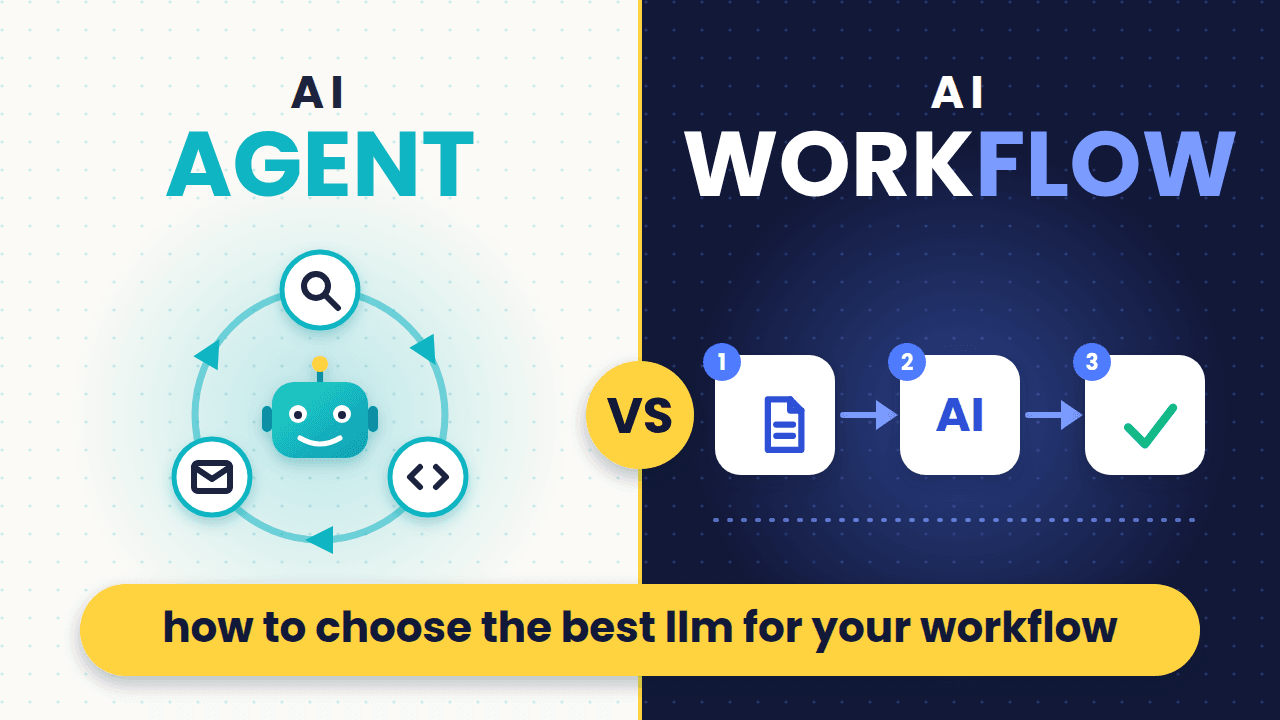
Learn the difference between AI workflows and AI agents, compare use cases, and discover how 1min.AI could support reusable business workflows.
AI Workflow vs AI Agent: Key Differences
An AI workflow follows a defined sequence of steps, while an AI agent can choose actions to achieve a goal. Both help businesses automate work, but they differ in autonomy, predictability, and control. Understanding AI workflow vs AI agent helps AI leaders, automation agencies, and business teams decide which approach fits their operations. This guide compares the two, explains agentic workflows, and explores how 1min.AI could support reusable AI processes.
What Is the Difference Between an AI Workflow and an AI Agent?
The main difference is how each system determines what to do next. An AI workflow follows a predefined process, while an AI agent can select actions based on its goal, available tools, and the information it receives.
| Factor | AI workflow | AI agent |
|---|---|---|
| Process | Follows predefined steps | Selects actions based on a goal |
| Autonomy | Usually limited to defined steps and rules | Can make decisions within assigned boundaries |
| Predictability | Easier to standardize and test | Behavior may vary with context |
| Best for | Repeatable, structured tasks | Tasks requiring decisions or adaptation |
| Control | Direct control over process steps | Requires clear permissions and safeguards |
| Example | Generate a draft from an approved brief | Research a topic and decide what to investigate next |
These approaches are not mutually exclusive. A workflow can include an AI agent as one step, while an agent can use predefined workflows or tools to complete parts of a larger task.
For example, a content team might use a workflow to turn approved keywords into an article outline and draft. An agent-based process could have more flexibility to investigate a topic, identify information gaps, and decide which research steps to take before proposing an outline.
What Is an Agentic Workflow?
An agentic workflow combines structured process design with AI-driven decision-making. It may include predefined steps, agent decisions, tool calls, and human review checkpoints within one process.
A conventional workflow might collect keyword data, group terms by topic, and generate a report according to predefined rules. An agentic workflow could also evaluate the findings, identify missing topic coverage, and select additional research actions within approved limits.
Agentic workflows are useful when a process needs both structure and flexibility. However, adding autonomy does not automatically make a workflow more accurate or cost-effective. Teams still need validation, monitoring, and clear boundaries.
When Should You Use an AI Workflow vs an AI Agent?
The right approach depends on how predictable the task is, how much autonomy it requires, and what happens if the system makes a mistake. Start with the simplest approach that reliably meets your requirements.
Use an AI workflow for repeatable tasks
AI workflows work well when the process is understood and most tasks follow the same sequence. Teams can define the inputs, expected outputs, approval rules, and quality checks in advance.
Common AI workflow examples include:
- Content production: Turn an approved brief into an outline, draft, and editing checklist.
- Document processing: Extract information from standard reports and organize it consistently.
- Lead management: Classify incoming leads using predefined criteria and route them to the appropriate team.
- Customer support: Prepare responses to common questions using approved guidance.
For creators, predefined processes can connect research, drafting, and publishing preparation. See how 1min.AI's AI workflow for Instagram creators relates to a recurring content workflow.
Use an AI agent for tasks that require decisions
AI agents are more suitable when the next action depends on what the system discovers along the way. They can evaluate intermediate results, select from available tools, and adjust their approach within defined limits.
Examples include:
- Research assistance: Investigate a topic, identify gaps, and determine which sources need further review.
- Technical troubleshooting: Examine an issue, select diagnostic steps, and suggest a solution.
- Complex information gathering: Collect details from approved sources and determine what additional information is needed.
- Multi-step planning: Break a broad objective into smaller tasks and decide which action to take next.
For example, 1min.AI's AI agent for software development and AI agent for social media management provide relevant product pages to explore agent-oriented use cases.
Agents also introduce risks. They may misinterpret results, choose unsuitable tools, or repeat actions unnecessarily. Use permission limits, logging, testing, and human approval for consequential decisions.
AI Workflow vs AI Agent: How to Choose
You do not need an agent for every AI task. Evaluate the predictability, complexity, and risk of your process before deciding how much autonomy to introduce.
| Question | Choose a workflow when… | Consider an agent when… |
|---|---|---|
| Is the process predictable? | Most tasks follow the same steps | The next step depends on new findings |
| Is strict control important? | Every action needs clear rules | Some decisions can be delegated safely |
| Are exceptions common? | Exceptions can be handled with predefined rules | The system must evaluate different situations |
| Is the task high-risk? | You need consistent, auditable execution | Autonomy is justified and tightly bounded |
| Is the process already working? | You want to automate existing steps | You need flexible decision-making beyond those steps |
A practical rule is to automate stable processes first. Once you understand their limitations, introduce agent-based decisions where they provide measurable value.
For more complex systems, a multi-agent workflow may assign different responsibilities to specialized agents. However, multiple agents also introduce coordination overhead, additional failure points, and more difficult debugging. Start with one agent or a straightforward workflow before adding complexity.
What Could 1min.AI Agent Do for AI Leaders and Automation Agencies?
AI leaders and automation agencies need to turn successful AI experiments into reusable processes without losing control over quality. An agent-based approach could help address four practical needs:
- Reusable workflows: Build a process once and adapt its inputs for different clients or departments.
- Multi-step coordination: Connect research, drafting, analysis, and other tasks around a shared objective.
- Quality control: Add validation checkpoints and flag outputs that need correction or human review.
- Human-in-the-loop approval: Keep people responsible for sensitive decisions, strategy, and final deliverables.
For agencies, the potential value is more consistent delivery across clients. For enterprise AI teams, it is a clearer path from experimentation toward repeatable operations.
These are potential use cases, not a claim that every capability is already available in 1min.AI Agent. To explore the product's current direction, visit 1min.AI AI Agents or the Multi AI Chat and AI Agent overview.
How 1min.AI Supports AI Workflows Today
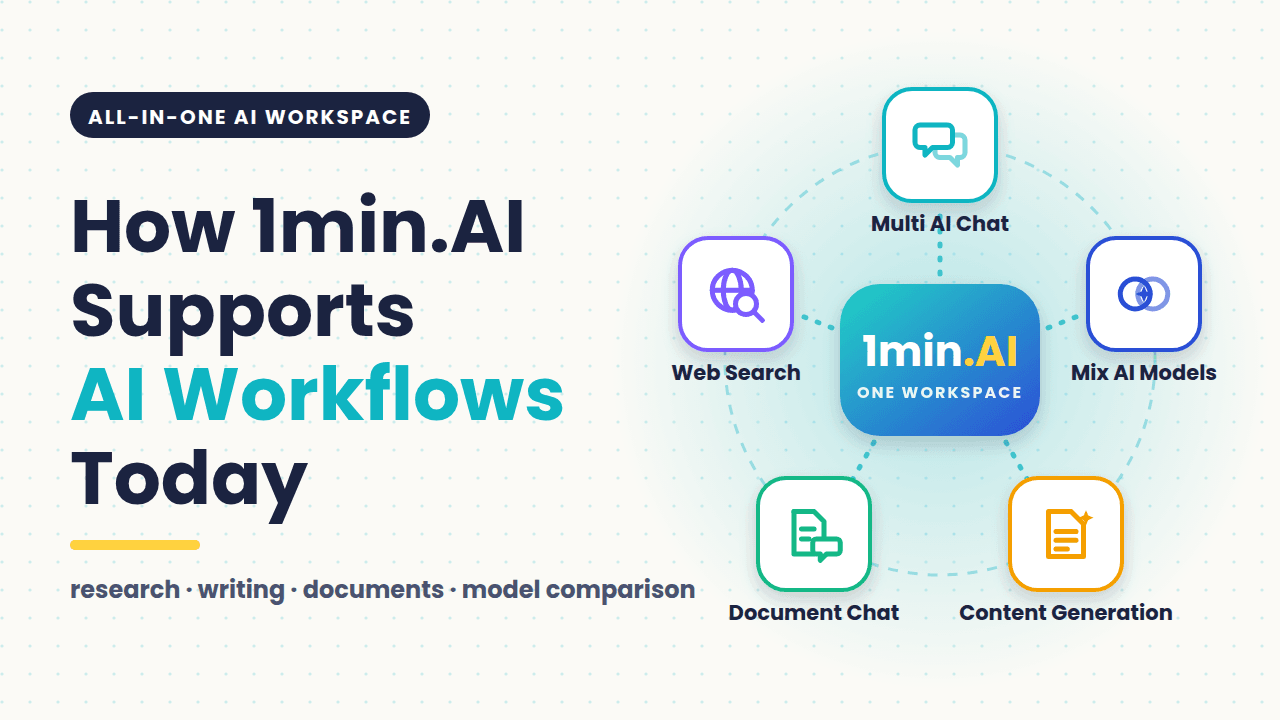
Choosing between workflows and agents is only part of building an effective AI process. Teams also need practical tools for research, writing, document analysis, and model comparison.
1min.AI brings multiple AI models and tools into one workspace, helping users carry out different stages of an AI-assisted workflow without constantly switching between separate platforms.
- Multi AI Chat: Compare responses from multiple AI models when researching a topic or evaluating different approaches.
- Mix AI Models: Combine model capabilities within a conversation to support multi-step tasks.
- Keyword research and content generation: Explore search terms and create initial drafts for editorial review using the AI content generator.
- Document Chat: Ask questions about documents and work with their contents.
- Web Search: Support research with web information, followed by source verification.
Explore the full range of capabilities on the 1min.AI features page.
These tools can support individual workflow steps, but they should not be confused with a fully autonomous AI agent. Teams still need to define their process, validate outputs, and decide which actions require human review.
For technical teams evaluating programmatic integrations, the 1min.AI API and API documentation are useful starting points for checking available integration options.
AI Workflow vs AI Agent FAQ
Is an AI agent the same as an AI workflow?
No. An AI workflow follows a defined sequence of steps, while an AI agent can choose actions based on a goal and the information available. A workflow can still include an agent as one component.
What is the difference between AI agents and automation?
Traditional automation often relies on predefined rules and triggers. AI agents can use AI-driven reasoning to select actions or adapt to changing information. Many practical systems combine both approaches, using rules for predictable steps and agents for decisions that require flexibility.
Can an AI agent be part of a workflow?
Yes. A workflow can call an AI agent at a particular step, then send its output to another tool or require human approval. This hybrid approach can balance flexibility with control.
What are examples of agentic workflows?
Examples include research processes that decide which sources to investigate next, support systems that select diagnostic actions, and content workflows that identify missing information before drafting. The appropriate level of autonomy depends on the task, permissions, and quality requirements.
Should a business start with an AI agent or an AI workflow?
Start with a workflow when the task is repeatable and the steps are known. Consider an agent when the process requires decisions that cannot be covered efficiently by fixed rules. Test both approaches against the same success criteria before expanding automation.
How can AI automation agencies use AI agents?
Agencies could use agent-based processes to support research, content preparation, document analysis, and other recurring client tasks. Reusable structures can reduce repeated setup, while client-specific instructions and human review help maintain quality.
Choose the Right Approach for Your Business
AI workflows and AI agents solve related but different problems. Workflows provide structure and consistency, while agents add flexibility when tasks require decisions along the way. For many businesses, the most effective solution combines both.
Map your current process, identify where decisions are genuinely needed, and measure accuracy, time saved, and maintenance effort. Use tools such as 1min.AI to support research, writing, and document tasks, then explore where agent capabilities could improve your workflow.
Build around the needs of the work, not the complexity of the technology.
Alternativas
Descubre las mejores alternativas a 1minAI y compara características, precios y casos de uso.

1min.AI vs OpenRouter
1min.AI vs. OpenRouter: Compara el producto de creación de IA listo para usar con la herramienta técnica de API. Descubre si necesitas un estudio creativo sin código o una infraestructura para desarrolladores.
 Ngoc Hong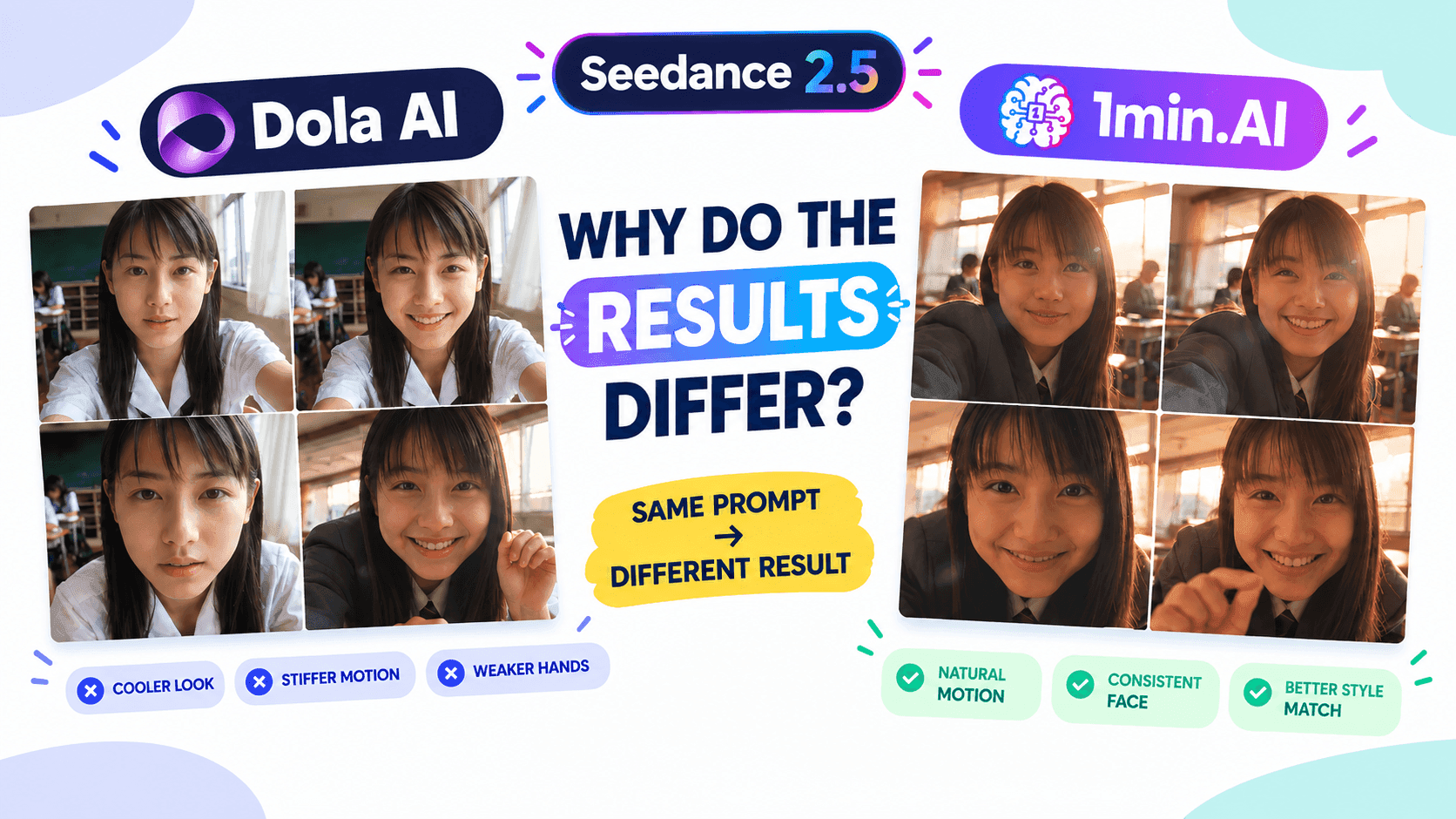
1min. AI vs Dola AI
¿Buscas una alternativa a Dola AI? Compara 1min.AI vs Dola AI en generación de video, planes gratis, precios y privacidad para elegir la app de IA adecuada.
Ngoc Hong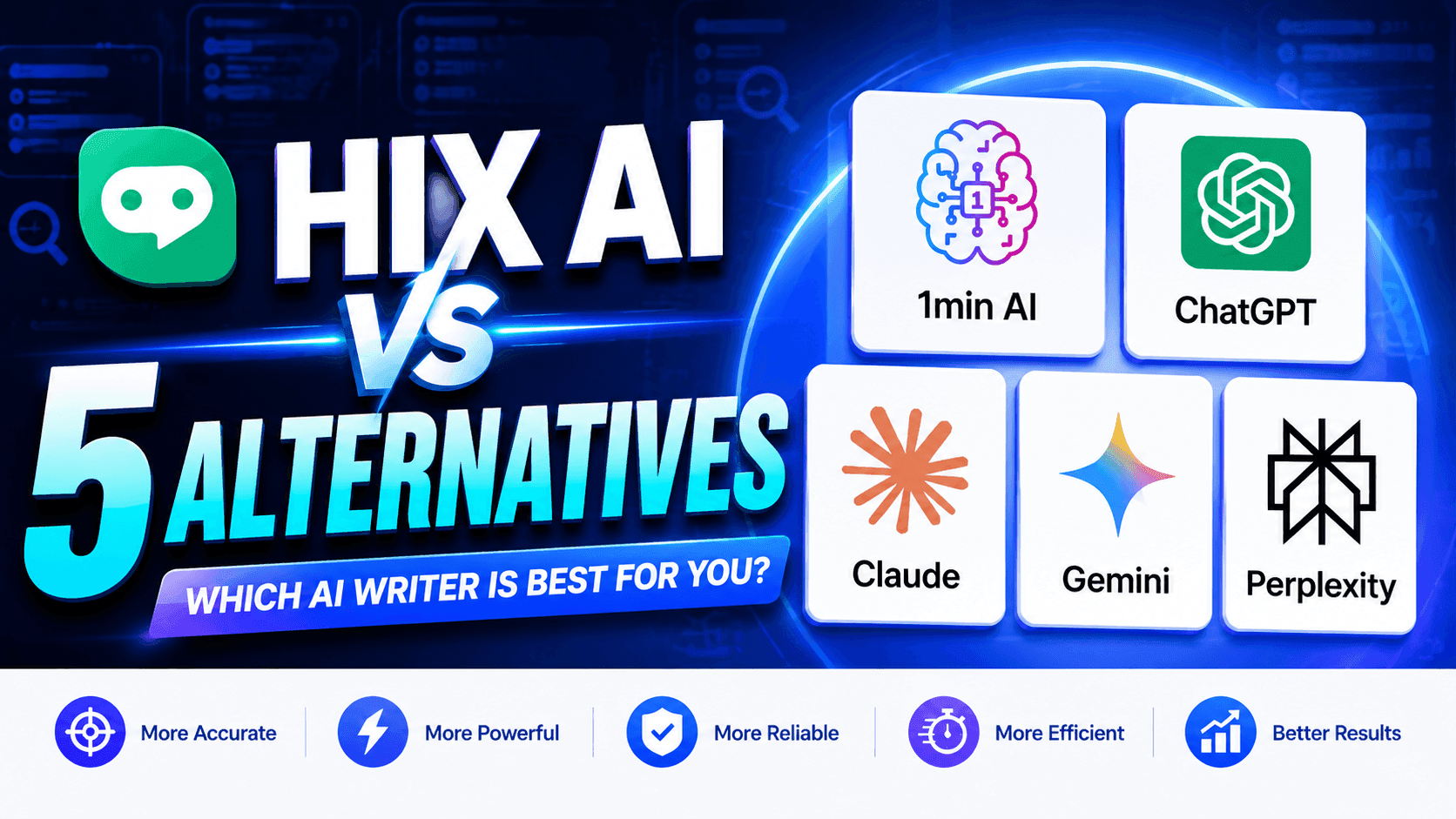
1minAI vs Hix AI
Compara 5 alternativas a HIX AI para chat con IA, investigación, redacción, imágenes, video, precios y flujos de trabajo de IA flexibles.
Ngoc HongHerramientas de IA
Descubre las mejores herramientas de IA para aumentar la productividad, la creatividad y el trabajo diario.
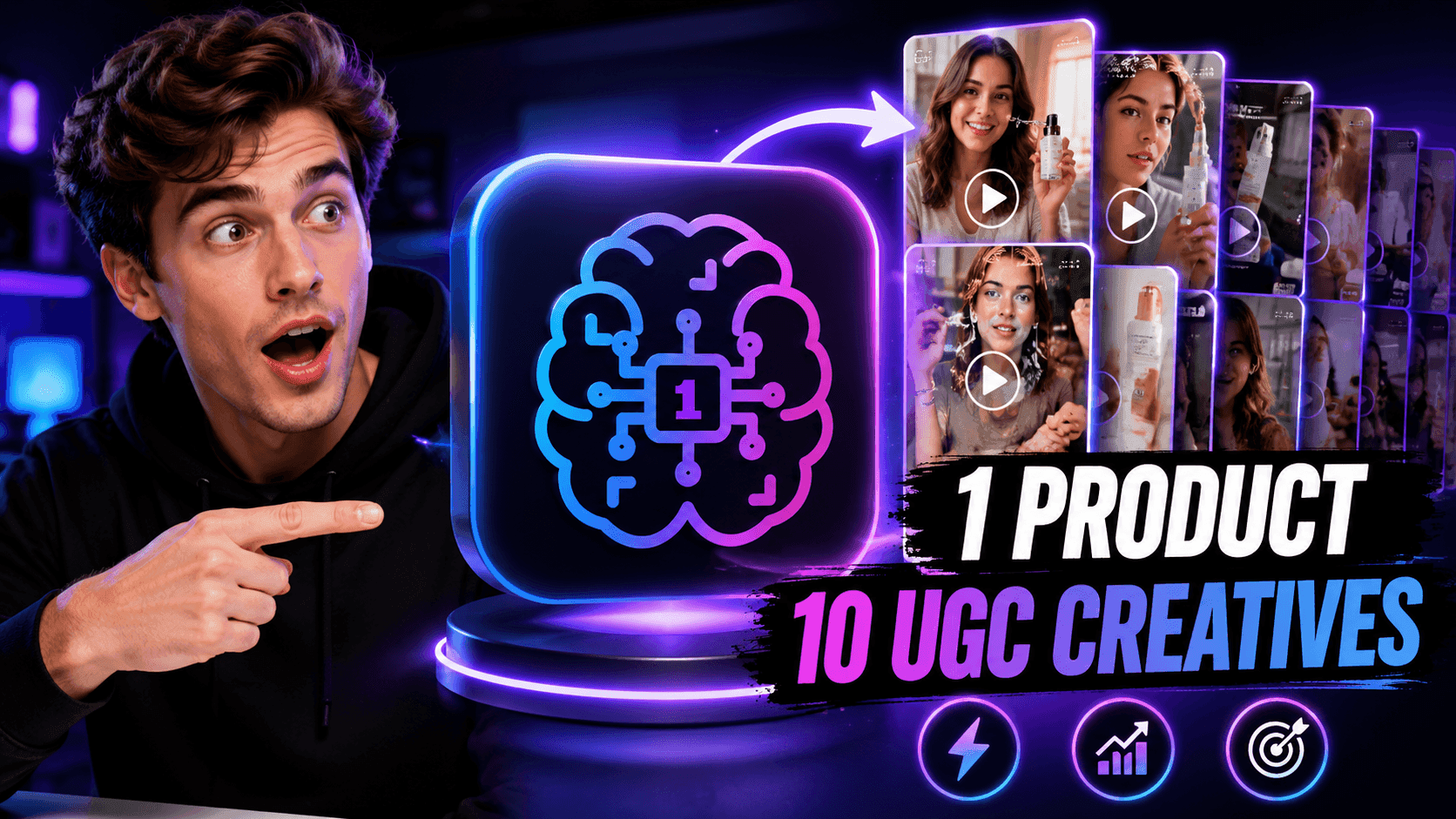
Un producto, 10 creativos UGC: cómo la IA facilita la prueba de contenido
Crea UGC más auténtico con un generador de videos UGC con IA, prueba más ángulos creativos y escala contenido de afiliados sin filmar cada versión.
 Lien Anh Vu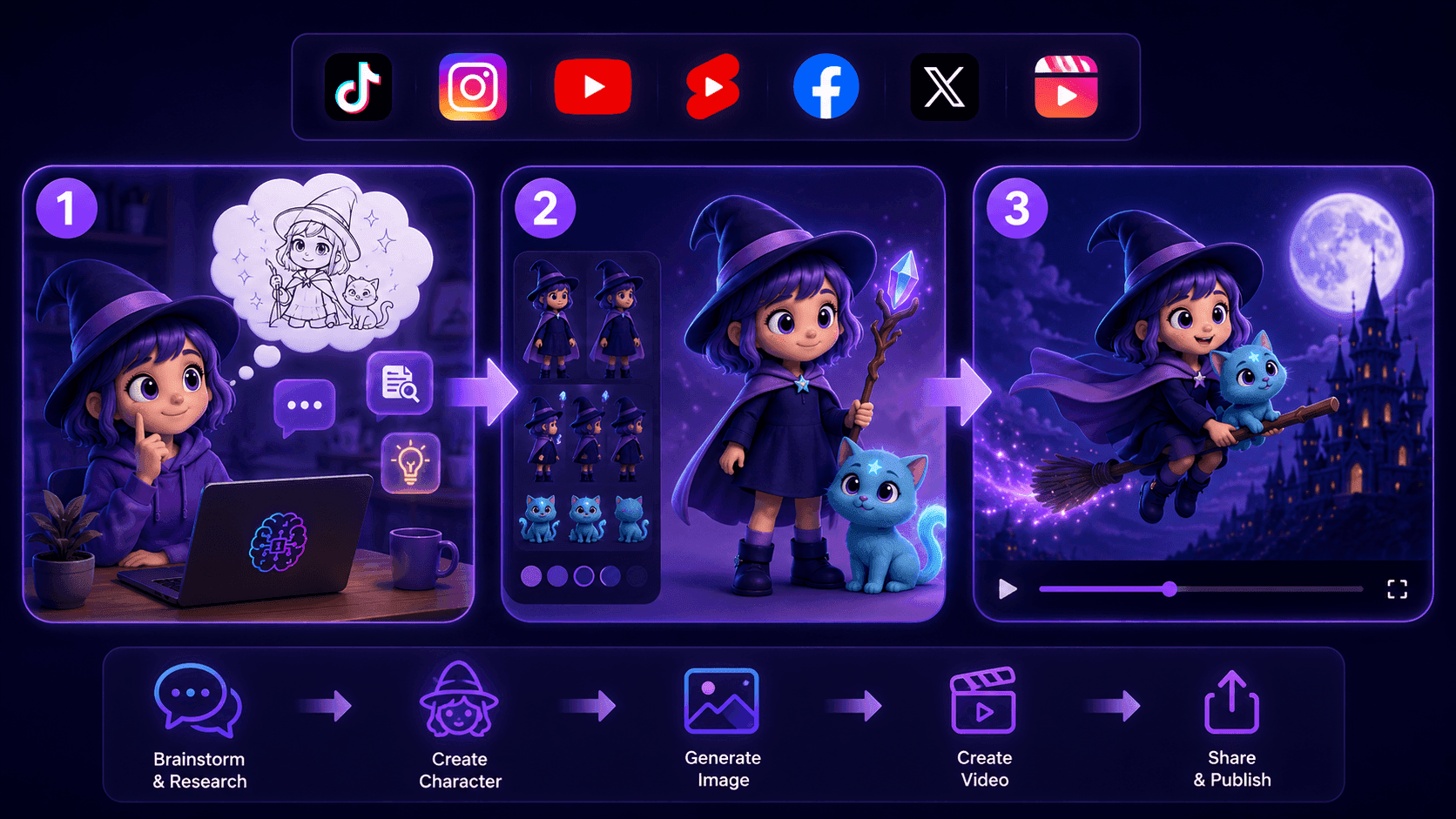
Crea contenido animado constante en solo unos pasos
Crea videos animados para TikTok y Reels en 3 pasos simples con 1min.AI, desde investigar ideas hasta personajes y videos animados.
Lien Anh Vu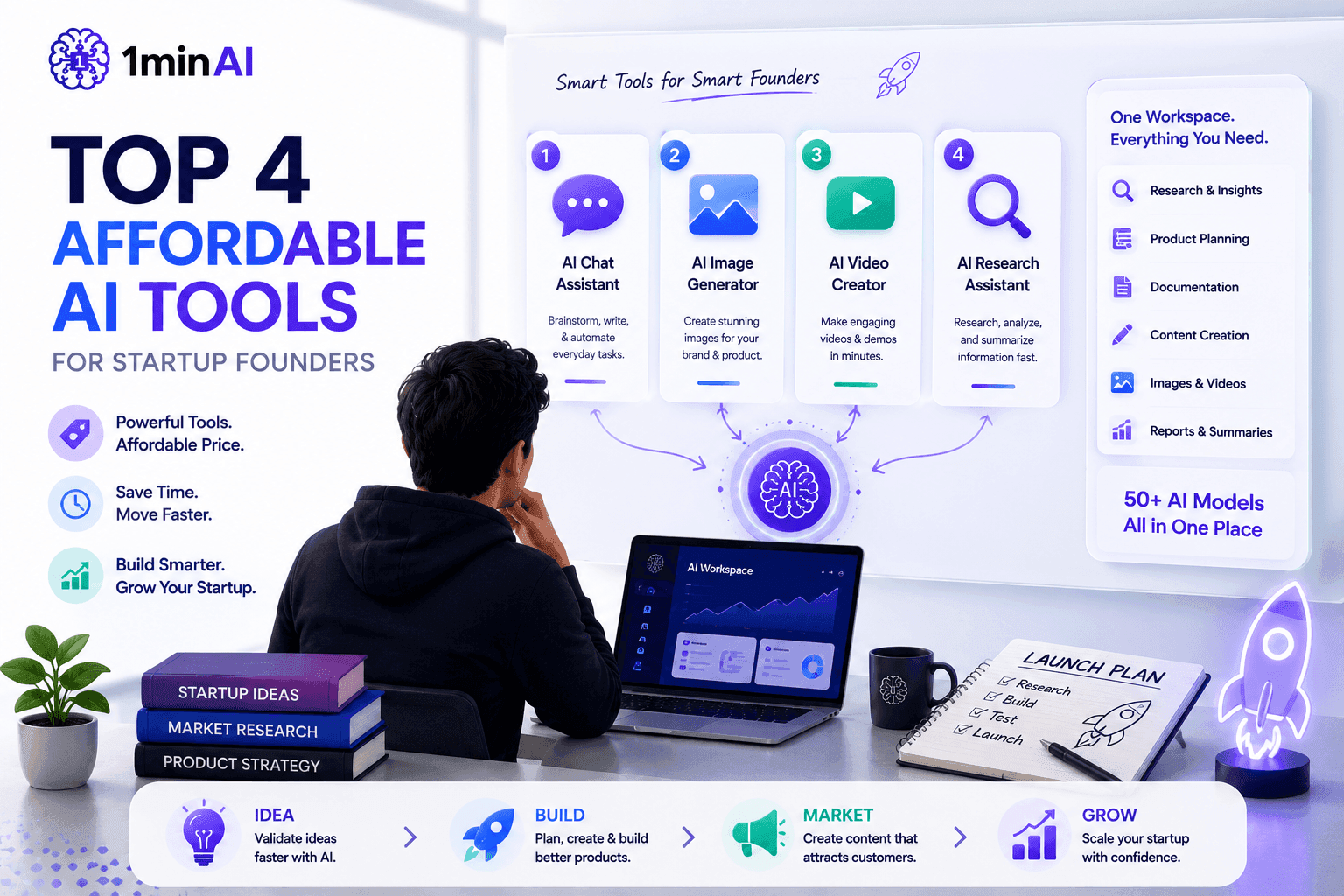
Las 4 mejores herramientas de IA asequibles para fundadores de startups
Descubre las 4 mejores herramientas de IA asequibles para fundadores de startups para validar ideas, crear productos, generar contenido y lanzar más rápido sin gastar de más.
 Tram Ta
Funciones de IA
Funciones de IA completas que agilizan los flujos de trabajo, mejoran la eficiencia y permiten a los equipos lograr más.
Un producto, 10 creativos UGC: cómo la IA facilita la prueba de contenido
Crea UGC más auténtico con un generador de videos UGC con IA, prueba más ángulos creativos y escala contenido de afiliados sin filmar cada versión.
Lien Anh VuCrea contenido animado constante en solo unos pasos
Crea videos animados para TikTok y Reels en 3 pasos simples con 1min.AI, desde investigar ideas hasta personajes y videos animados.
Lien Anh Vu
1minAI: Corrector gramatical de IA gratis
Revisa la gramática gratis con el corrector gramatical de IA de 1minAI. Encuentra errores de gramática, ortografía y redacción, mejora la claridad y pule tu contenido en segundos.
Tram TaCasos de uso de IA
Una colección curada de casos de uso de IA para negocios, productividad y aplicaciones específicas por industria.
Un producto, 10 creativos UGC: cómo la IA facilita la prueba de contenido
Crea UGC más auténtico con un generador de videos UGC con IA, prueba más ángulos creativos y escala contenido de afiliados sin filmar cada versión.
Lien Anh VuCrea contenido animado constante en solo unos pasos
Crea videos animados para TikTok y Reels en 3 pasos simples con 1min.AI, desde investigar ideas hasta personajes y videos animados.
Lien Anh Vu
Mejor hora para publicar en Instagram: una guía práctica para mejorar la interacción
Descubre la mejor hora para publicar en Instagram, incluidos los mejores días y horas para distintas audiencias, además de consejos para encontrar el horario ideal de publicación para tu cuenta.
Tram TaTutoriales de IA
Aprende a usar la IA con tutoriales prácticos paso a paso.
Crea contenido animado constante en solo unos pasos
Crea videos animados para TikTok y Reels en 3 pasos simples con 1min.AI, desde investigar ideas hasta personajes y videos animados.
Lien Anh Vu
Ofertas de herramientas de IA para Black Friday en 2026
Descubre qué ofrecen las ofertas de herramientas de IA para Black Friday 2026. Averigua cómo asegurar la oferta de por vida de 1min.AI a través de AppSumo, Dealify y Stack Social, y verifica en Trustpilot, Slashdot y Software Advice.
 Hang Nguyen
Consistencia de producto de imagen a video con IA y Seedance para detener la deformación y escalar reseñas de productos
Detén la deformación de los logos con consistencia de producto de imagen a video con IA y genera hoy videos de reseñas con calidad de estudio en 1min.AI.
Lien Anh VuGuías de IA
Aprende IA más rápido con guías prácticas, ejemplos del mundo real y mejores prácticas aplicables.
Crea contenido animado constante en solo unos pasos
Crea videos animados para TikTok y Reels en 3 pasos simples con 1min.AI, desde investigar ideas hasta personajes y videos animados.
Lien Anh Vu
Compra con seguridad herramientas de IA en línea: Guía de Black Friday 2026
Descubre cómo encontrar y asegurar las mejores ofertas de Black Friday en IA en línea. Aprende estrategias expertas para evitar estafas, combatir la fatiga de suscripciones y verificar software.
Hang NguyenConsistencia de producto de imagen a video con IA y Seedance para detener la deformación y escalar reseñas de productos
Detén la deformación de los logos con consistencia de producto de imagen a video con IA y genera hoy videos de reseñas con calidad de estudio en 1min.AI.
Lien Anh VuSoluciones de IA
Explore las mejores soluciones de IA para automatización, codificación, investigación, productividad, atención al cliente, marketing y flujos de trabajo empresariales.
Un producto, 10 creativos UGC: cómo la IA facilita la prueba de contenido
Crea UGC más auténtico con un generador de videos UGC con IA, prueba más ángulos creativos y escala contenido de afiliados sin filmar cada versión.
Lien Anh VuCrea contenido animado constante en solo unos pasos
Crea videos animados para TikTok y Reels en 3 pasos simples con 1min.AI, desde investigar ideas hasta personajes y videos animados.
Lien Anh Vu
Generador Gratis de Tatuajes con IA: Diseños Personalizados
Convierte cualquier idea en un diseño de tatuaje personalizado con el generador gratis de tatuajes con IA de 1min.AI. Describe tu idea, elige un estilo y descarga en segundos.
 Trang Tran
Modelos de IA
Explora los modelos de IA líderes del mundo en un solo lugar.
Un producto, 10 creativos UGC: cómo la IA facilita la prueba de contenido
Crea UGC más auténtico con un generador de videos UGC con IA, prueba más ángulos creativos y escala contenido de afiliados sin filmar cada versión.
Lien Anh VuCrea contenido animado constante en solo unos pasos
Crea videos animados para TikTok y Reels en 3 pasos simples con 1min.AI, desde investigar ideas hasta personajes y videos animados.
Lien Anh VuConsistencia de producto de imagen a video con IA y Seedance para detener la deformación y escalar reseñas de productos
Detén la deformación de los logos con consistencia de producto de imagen a video con IA y genera hoy videos de reseñas con calidad de estudio en 1min.AI.
Lien Anh VuComparaciones de IA
Compara herramientas, modelos y plataformas de IA para encontrar la que mejor se adapte a tus necesidades.
Kling AI vs Veo 3: ¿qué modelo gana?
Kling AI vs Veo 3: compara movimiento, audio nativo, precios y planes gratis para ver qué generador de video con IA gana para tu proyecto. Prueba ambos en 1min.AI.
Trang TranConsistencia de producto de imagen a video con IA y Seedance para detener la deformación y escalar reseñas de productos
Detén la deformación de los logos con consistencia de producto de imagen a video con IA y genera hoy videos de reseñas con calidad de estudio en 1min.AI.
Lien Anh Vu
Comparación DeepSeek V4 Pro vs Flash
Compara métricas de DeepSeek V4 Pro y DeepSeek V4 Flash. Optimiza tus aplicaciones agentivas y mejora la verificación de hechos de IA en 1min.ai hoy.
Ngoc HongIntegraciones de IA
Integra la IA de forma fluida con las herramientas que ya usas para automatizar tareas y aumentar la productividad.
Cómo usar un generador de video de moda con IA para Fashion Week 2026
Convierte ideas de Fashion Week 2026 en videos de moda impactantes con IA. Aprende a idear, crear visuales y transformar imágenes en videos con un flujo de trabajo simple.
Lien Anh Vu
POV: Tienes más de 10 publicaciones que hacer cada día
Aprende a crear un flujo de trabajo de contenido con IA que ayuda a los creadores de contenido a producir más de 10 publicaciones al día más rápido con lluvia de ideas, generación de imágenes y creación de contenido con IA.
Lien Anh Vu
Deja de Cambiar entre Apps de IA: Cómo la Integración de IA Transforma el Employer Branding
Descubre cómo la integración de IA ayuda a los equipos de RR. HH. a optimizar el employer branding al combinar redacción con IA, documentos, imágenes, video y múltiples modelos de IA en un solo espacio de trabajo.
Tram TaIA para Industrias
Encuentre las mejores herramientas y flujos de trabajo de IA para atención médica, finanzas, educación, legal, manufactura, comercio minorista, bienes raíces y más.
La mejor herramienta de IA para marketing de contenidos |1minAI
¿Buscas la mejor herramienta de IA para marketing de contenidos? Mira cómo 1minAI ayuda a los especialistas en marketing a investigar, escribir, reutilizar, crear elementos visuales y escalar contenido desde un solo espacio de trabajo de IA.
Tram Ta
Cómo iniciar un negocio de IA de una sola persona: 7 modelos que puedes operar por tu cuenta
Aprende a iniciar un negocio de IA de una sola persona con 7 modelos prácticos, desde consultoría y servicios de contenido con IA hasta automatización y reventa de software.
Tram Ta
7 ideas de negocio de IA de bajo costo para tu startup
Explora 7 ideas de negocio de IA de bajo costo que puedes empezar con un presupuesto pequeño, desde servicios de contenido y video hasta consultoría de IA, reventa y automatización.
Tram TaAgentes de IA
Descubre y ejecuta agentes de IA para automatizar tareas en tu trabajo y vida diaria.
1minAI: Corrector gramatical de IA gratis
Revisa la gramática gratis con el corrector gramatical de IA de 1minAI. Encuentra errores de gramática, ortografía y redacción, mejora la claridad y pule tu contenido en segundos.
Tram Ta
Agentes de IA para Facebook
Usa un Agente de IA para Facebook para crear contenido, generar imágenes, programar publicaciones y publicar desde tus documentos y conversaciones.
Ngoc Hong
Agente de IA vs Asistente de IA: ¿Cuál realmente les ahorra más tiempo a los diseñadores?
Conoce la diferencia entre Agente de IA vs Asistente de IA y descubre qué solución ayuda a los diseñadores a automatizar tareas repetitivas, reducir revisiones y ahorrar más tiempo.
Lien Anh VuFlujos de trabajo de IA
Explore flujos de trabajo de IA listos para usar para productividad, marketing, ventas, soporte y más.
Un producto, 10 creativos UGC: cómo la IA facilita la prueba de contenido
Crea UGC más auténtico con un generador de videos UGC con IA, prueba más ángulos creativos y escala contenido de afiliados sin filmar cada versión.
Lien Anh VuCrea contenido animado constante en solo unos pasos
Crea videos animados para TikTok y Reels en 3 pasos simples con 1min.AI, desde investigar ideas hasta personajes y videos animados.
Lien Anh VuCómo usar un generador de video de moda con IA para Fashion Week 2026
Convierte ideas de Fashion Week 2026 en videos de moda impactantes con IA. Aprende a idear, crear visuales y transformar imágenes en videos con un flujo de trabajo simple.
Lien Anh VuBoletín
Innovaciones semanales en IA con 1minAI

🔮 Weekly AI Innovations #121: Ideogram 3.0 y Claude Opus 4.7 ya están disponibles en 1min.ai
Ideogram 3.0 y Claude Opus 4.7 ya están disponibles en 1min.ai. Genera tipografía de imagen impecable y textos avanzados en una sola plataforma.
 Uyen Hoang
🔮 Weekly AI Innovations #134: Experimenta Qwen gratis en AI Chat; actualización de las series 3.7 y 3.6
¿Buscas un asistente de IA potente y gratis? Explora las últimas series Qwen 3.7 y 3.6 en 1min.ai. ¡Disfruta hoy mismo de chat de IA rápido y preciso sin costo!
Hang Nguyen
🔮 Innovaciones semanales de IA #140: Deepseek 4.1 Flash y actualizaciones de Gemini
Explora Deepseek 4.1 Flash y los nuevos modelos de Gemini en 1min.ai. Además, revisa nuestra actualización en tu página de Facturación - Uso para mayor claridad.
Hang Nguyen